










More to follow.



More to follow.

Anyone?
Thanks James Stafford





More to follow.


From top: The Dublin Tenants Association; Dr Rory Hearne
Private renters have been amongst Ireland’s forgotten and ignored households. But politicians can no longer downplay their importance and the difficult situation many live in the sector.
Over 800,000 people in this country now live in the private rented sector – that’s almost 20%, or a fifth of all households. This is double the number of households in the sector over a decade ago. And in the cities and towns it is even higher.
In Dublin, it is estimated a quarter, one in four households, are in the private rental sector. However, up to this point the voice of the private tenant has been largely absent within debates on the housing crisis, with the voices of landlords and other interests much more dominant.
We also know that the new global investor landlords like Kennedy Wilson and Real Estate Investment Trusts have the ear of the government.
So how can private renters make their voice heard in the public and political debate?
Tonight there is an important public meeting taking place in Dublin City Centre (details here) to try and do just that. If you are a tenant in the private rental sector you should try and get there.
It is being organised by the Dublin Tenants Association (DTA). DTA is a “private rented sector tenant-led support group, who believe that decent affordable and secure housing is a right for everyone” and that tenants are “primary stakeholders in the private rented sector” and, therefore, should be an important concern for housing policy.
The meeting tonight is discussing the issue of tenant security – how poor it is in Ireland, where tenants cannot get long-term leases and can be evicted relatively easily by landlords.
There will also be advice for tenants on their existing entitlements and discussion on improvements to security of tenure that could ensure tenants are not forced to go from short-lease to another short-lease and so they can actually get long term security, create a home in a community, and do not live in fear of eviction.
Charities and NGOs like Threshold, Focus, Simon and Inner City Helping Homeless, have been doing a really important job raising issues of rising homelessness resulting from unaffordable rents and evictions and poor conditions in the private rental sector.
However, they are not explicitly set up to represent and mobilise tenants in the private rental sector as a group.
There is a need, therefore, along with these important services and charities, for the growth of strong private sector tenant’s organisations, such as Dublin Tenants Association, that can organise and represent private tenants, just like trade unions do for workers or the IFA does for farmers.
Given that households renting in the private rental sector are now such a large and growing proportion of the population, and many of these households are families with children they require greater political attention and a voice of their own.
Particularly as they often face living in substandard conditions, unaffordable rents, and the lack of security of home and, therefore, an inability to set down roots and be part of a community –which is a major problem for families with children who need a secure base. They are constantly facing possibility of being moved.
Part of the reason why private tenants have been treated like second class citizens in housing and politics is that it has been reviewed as a temporary or transitory form of housing, with home ownership seen as the ideal or where people are going to. But that is no longer the case.
A majority of households aged 35 and under are now renting their home. Back in 1991, a majority of households over the age of 26 were renting their home. So now we have added a decade of renting to people’s lives.
This is ‘generation rent’. But given the lack of affordable housing many in ‘generation rent’ could be in rental accommodation for their life. Policy has to recognise this and change to reflect this new reality. It has to improve tenant’s rights to ensure they have a secure and affordable home.
The other reason why private tenants have been ignored is because they are viewed as a profit-making investment for people with money and wealth. Government and banks have promoted the private rental sector as a key investment – for people’s pensions, for the wealthy, and for global property investors like Kennedy Wilson. The buy-to-let sector has been a key area for investment.
But we have seen the failure of this approach with a high level of buy-to-lets in mortgage arrears. These are a significant proportion of the mortgages in arrears being sold off by PTSB and other banks which means the tenants in these properties are facing losing their homes also.
The government has done little because they have viewed rising rents as a key way to attract in investors and vulture funds to buy up these ‘non-performing loans’ off the banks and get them back to profitability, irrespective of the impact on those living in these properties as their home.
Government took the view that introducing greater tenants’ protections and rights would lessen their investment attractiveness and therefore refused to intervene and allowed rents rise – and homelessness rise- and left tenants be evicted.
Of course it is no coincidence either that one in five TDs and Ministers are landlords. Fine Gael and Fianna Fail have the highest number of landlords amongst their TDs, with key government Ministers such as former Minister for Environment and Housing and now Tanaiste and Foreign Affairs Minister Simon Coveney, Junior Ministers Paul Kehoe and John Paul Phelan and Dublin Bay South Fine Gael TD Kate O Connell all landlords and owners of investment properties.
This has to be a major issue of conflict of interest. It is landlords making decisions to benefit landlords. The elite in Ireland protecting the investments of the elite.
The Fine-Gael Labour Government introduced the tax break for big global investors in rental property –through the Real Estate Investment Trust tax incentive in 2013. This, added to many other tax loop-holes available for investors in Ireland, has seen investors now buying more homes than first-time buyers.
For example, just recently global property investors just bought Ireland’s tallest residential tower – the Elysian in Cork City Centre according to the Examiner. The Elysian has 211 apartments and a rent roll close to €5 million per annum. Kennedy Wilson now owns 2100 residential units in Ireland, and aims to expand to 5,000 units over the coming years.
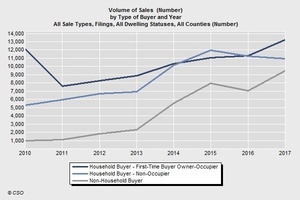
In 2010 First-Time buyers bought 12,000, or 42% of homes for sale, while investors (named in the graph below as Household Buyer-non-occupier and Non-Household Buyer) bought half that number, just 6,254, or 21% of homes for sale.
But by 2017, the proportion of First time buyers had fallen substantially as they bought just 21% of all homes for sale, while investors now bought almost twice the amount of first time buyers and increased their proportion – now buying a third of all homes (33%, 20,000 properties) for sale.
Currently private tenants are not seen as a political force in Ireland and politicians pay little attention to their concerns. But this is likely to change as private rental tenants are stuck and are increasingly frustrated and angered by an inability to buy affordable housing and unable to make a home in private rental housing.
It will also change if private tenants raise their voice – get organised and take public action – like these public meetings, the actions against landlord evictions being taken by Dublin Central Housing Action, and get involved in wider housing crisis protests such as that being held on April 7th by the National Homeless and Housing Coalition.
They need to increase their media profile and mobilise tenants to define and highlight their key policy ‘asks’ or ‘demands’. There are real political opportunities coming up in the next 18 months between local elections next year and a likely general election. These are key points where private tenants could intervene – by engaging in a voter registration drive among tenants, producing a set of policy demands and highlighting which parties support (or not) these.
The political reality is that we are in a volatile time – no political party can take for granted voter support or allegiance as was the case in the past. And none of the big parties are likely to get an overall majority in the coming election so they are reliant on others for support, and this makes governments politically weaker and more open to public opinion at times. Voters are also much more influenced by a variety of factors and are increasingly making their decisions during elections.
This means groups such as Dublin Tenants Association and other civil society and campaigning groups can have an influence, in influencing policy of government but also in the run up to and during elections if they are organised to highlight their issues at this time.
Particularly in places like Dublin, Galway, Waterford, Cork and Limerick, if private renters got organised and took action they could be a substantial political force.
Dr Rory Hearne is a policy analyst, academic, social justice campaigner. He writes here in a personal capacity. Follow Rory on Twitter: @roryhearne

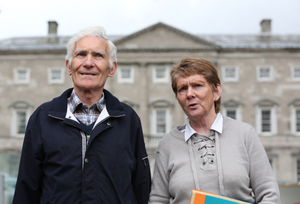

From top (left to right) Site of the Bon Secours Mother and Baby Home in Tuam, Co Galway; Peter Mulryan, Catherine Corless; Ciaran Tierney
Galway County Council is currently seeking submissions from members of the public regarding what to do with the site of the Bon Secours mother and baby home in Tuam, Co Galway. The deadline for submissions is this Friday, March 16.
Ciaran Tierney writes:
Imagine you are 70 years old.
Throughout your life you have dealt with the stigma of being branded as ‘illegitimate’ and your long quest to find your birth mother had ended in a Magdalene Laundry, where she had lived for over 30 years.
You used to visit her every fortnight, after managing to track her down, although the nuns warned you to pretend that she was your aunt.
They told you they would prevent you from visiting if you told the other inmates the truth about your relationship with your own mother and it used to pain you to see the defeat, the lack of sparkle, in her eyes.
Together with the other inmates, she washed and cleaned the clothes of the great and the good around the city and county.
For years, she never ventured outside the laundry walls even though she was just minutes from the heart of the city.
But you kept the relationship going, and enthused about how her spirit lifted just a little after you married and she met her first grandchild.
You saw flickers of her spirit on occasional weekend visits to the seaside, when the nuns finally started to allow her out of the laundry for a few hours.
She was buried in 1989, in a grave she shared with other women from the laundry.
You hoped that she was resting in peace after a tough life and you got on with your life.
And then, four years ago, your life was turned upside down once again.
Historian Catherine Corless, who has since become a good friend, was on the other end of the phone.
She told you the startling news that you had a little sister nobody had ever told you about.
She was one of the 796 ‘Tuam Babies’, who were making headlines all across the globe.
Catherine’s painstaking research had placed one of the little babies in the tiny townland in your mother’s rural community.
When you asked around, you discovered it was true. Your mother had given birth to a second child before being locked up again for years.
For all you knew, that little girl was buried in that infamous septic tank in Tuam.
But, that’s the thing. You didn’t know.
For all you know now, too, she was adopted by a loving family in the US or the UK, because nobody has any records of your little sis and what became of her after being born in that now notorious Mother and Baby Home.
That’s what happened to Peter Mulryan, a remarkable man whose quest for justice for his little sister goes on.
Now aged 74, he has been stonewalled by the authorities.
He’s concerned that they will mark the site with a memorial, before he ever finds out what happened to her and whether or not she ended up in that terrible place in Tuam.
On Sunday, he spoke movingly about giving a voice to the voiceless and the need to heal the hurt caused to generations of Irish women and their ‘illegitimate’ children.
A year ago, he brought a graveyard to tears when he spoke about his quest for justice, to find out the truth about the sister he never knew he had.
He returned to that graveyard on Mother’s Day, to pay tribute to his mother and all the other mothers who had been locked up in Magdalene Laundries across Ireland.
It is believed there were 10,000 of these women locked up in institutions throughout Ireland right up until the 1980s.
Many, but not all, were single mothers who were taken away from their families to hide their ‘shame’.
And now Peter Mulryan, like the other survivors, is wondering what is going to become of their loved-ones. They believe the Tuam site should be examined and the bodies of the infants exhumed.
They want DNA testing to be carried out on the little ones, but they are concerned now that the Irish authorities will cover up the site and just put in a memorial plaque on the unofficial burial ground.
Galway County Council is currently seeking submissions from members of the public regarding what to do with the site. The deadline for submissions is this Friday, March 16.
Family members like Peter are concerned that the local authority may decide to put a memorial in place at the site of the former septic tank rather than the more costly option of a thorough examination.
The council has listed five options for the site.
“I’m still looking for my sister. I want her file, to see what happened to her. The council are only adding more pain and hardship to the families. I would like to ask the officials how they would feel if they had a family member in the septic tank there. That’s what I ask them when I meet them and they just go cold,” he said, following a memorial service for the women of the Magdalene Laundry in Galway on Sunday afternoon.
“Those children could not be baptised. That ground was never consecrated. The authorities won’t tell us that they are sorry or admit that they were wrong.
“We never did anything wrong, but they are keeping us down by denying us justice for our loved-ones. If somebody was murdered a hundred years ago they would just go in and analyse what’s there.”
Mr Mulryan said he could not accept the argument that a full forensic examination of the Tuam site would cost too much at this stage.
Speaking beside his own mother’s shared grave, he pointed out that many of the mothers worked for free after being incarcerated in the Magdalene Laundries for decades.
“When you think of the money which was made out of these women, slaving for free in these laundries, it’s unbelievable the way they are still treating us,” he said.
Breeda Murphy of the Tuam Home Survivors’ Network said the Government should have declared the site a crime scene after Catherine Corless’ research was vindicated this time last year.
Ms Corless also faced hostility or indifference from the authorities when she researched what happened to the babies who died at the Tuam home.
“The people who have family members at the Tuam site want to bring them home and give them a proper burial. There’s nothing dignified in concealing children in a structure which was first built to contain sewage or human waste. You can never get away from that, regardless of the time period or saying that that was how things were done back then,” said Ms Murphy on Sunday.
“The way in which the Magdalene Laundry women are being treated is probably a reflection of how the Mother and Baby home survivors will be treated down the road. So I don’t see justice coming at all. I am totally disillusioned.”
A survivor of the Magdalene Laundry in Galway, Angela Fahy, said families also had to take responsibility for their role in the incarceration of women in the Magdalene Laundries.
She said there were 110 women in the Galway home when she was locked up there at just 14 years of age.
“These women were put there in secret, died there in secret, and buried there in secret,” she said.
“Their neighbours in Forster Street did not even know them. These women washed and cleaned the clothes of this entire province. Many of them never came out of there alive.
“We cannot just put this down to religion. Quite a lot of it comes down to their own families, people who denied their own flesh and blood if they had a child outside of marriage. These women had no voice for so many years, but they have now thanks to events like this.”
A year has passed since confirmation that the bodies of babies who died at the home between 1925 and 1961 were found at the site of the former Tuam Mother and Baby Home, which was run by the Bon Secours order of nuns.
Campaigners, who want the babies to be given proper burials in consecrated ground, have been inundated with messages of support from across North America over the past year.
They are insisting that cost should not be the main concern as they seek justice for the 796 ‘Tuam Babies’.
Galway County Council is facilitating a full public consultation process about what to do with the site where the ‘Tuam Babies’ were found, with submissions accepted until this Friday, March 16.
Members of the public can email TuamConsultation@galwaycoco.ie or telephone +353 (0)91 509561 if they have any queries regarding the full public consultation process.
Ciaran Tierney is a journalist, blogger, and digital storyteller, based in Galway.
For Peter and the families, it’s personal… (Ciaran Tierney)
Rollingnews

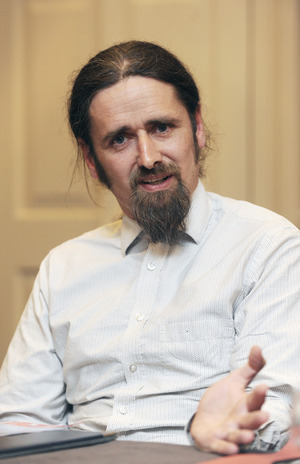
From top: The Commissioning Ceremony of new Army Officers in the Defence Forces Church, Curragh Camp, Co Kildare lin January; Luke ‘Ming Flanagan MEP
Luke ‘Ming’ Flanagan MEP writes:
In the last week, EU Defence Ministers, along with Taoiseach Leo Varadkar, met in “PESCO format” [Permanent Structured Cooperation] for the first time.
They pushed plans to strengthen European Union security and defence and cooperation between the European Union and NATO, and discussed the European Defence Fund and new laws to establish a European Defence Industrial Development Programme.
None of these PESCO initiatives are in Ireland’s interests.
The Treaty on European Union’s description of PESCO is vague, and deliberately so.
It mentions “more binding commitments”, “with a view to the most demanding missions”, to fulfil “the Union level of ambition”, but what exactly is the ambition of the European Union in the use of military force sphere?
We DO know that no matter what the propaganda coming from Fine Gael or what Taoiseach Varadkar says, ‘the most demanding missions’ have nothing to do with UN peacekeeping.
The law establishing PESCO doesn’t contain a single mention of the United Nations, nor does it refer to peacekeeping, nor even “peace”.
We know that in the Lisbon Treaty debates the European Union and the Irish Government actively suppressed discussion of the implications of the Common Security and Defence Policy, including the mutual defence clause which is an integral part of PESCO.
According to Eurobarometer surveys, carried out twice a year among EU citizens, only 12% of European citizens claim to be aware of the mutual defence clause and to know what it is.
This level of ignorance among EU citizens about the EU’s CSDP and PESCO is no accident.
Let’s look at a few facts:
1) This legally binding EU decision mandates PESCO member states to increase defence budgets, to provide troops (on stand-by) for use in EU Battle-Groups , to join “structures partaking in European external action in the military field”, and for “common funding of military CSDP operations and missions”.
2) It states quite bluntly that “Increasing joint and collaborative defence capability development projects, is among the binding commitments under PESCO”.
3) PESCO aims to establish an EU-wide arms industry, and the EU’s European Defence Agency will tell PESCO members, including Ireland, what weapons to buy.
4) International humanitarian law, also known as the laws of war, requires that all attacks be directed at military targets. Attacks cannot cause disproportionate civilian loss.
Yet, we know that in modern warfare, missiles can miss the intended targets up 90% of the time. We also know that for every one soldier killed in modern conflicts, on average, ten civilians die.
The European Union’s own European Security Strategy, adopted by the European Council in Brussels in December 2003, stated as fact that ‘since 1990, almost 4 million people have died in wars, 90% of them civilians’.
A few questions then for our Taoiseach:
1) Will the EU procure weapons including BVR or “beyond visual range” missiles?
2) Will the European Defence Agency publish the “operational pK” (probability of Kill) for the weapons it demands the PESCO member-states buy?
3) Will the Irish government support the purchase of these weapons and against whom will they be used?
4) Mindful that the US military and government pays no attention to civilian deaths in America’s wars, will the EU publish the body count of the civilians inevitably killed through the so-called “alliance of individual PESCO armies” actions in EU CSDP military missions?
The Irish political establishment tells us that PESCO is OK for Ireland to be a member of because ‘non-NATO’ Sweden is a member.
What the Irish establishment won’t say is that Swedish foreign policy is entwined with commercial arms export interests, and that the Swedish Government no longer regards itself as neutral, or even non-allied, and were active participants in the establishment of the NATO ‘no fly zone’ in Libya in 2011 because it wanted to promote sales of its fighter jets.
As Gunnar Hult of Sweden’s National Defence College said:
“(Libya) was quite beneficial to the Gripen. This is something no politician would ever admit, but it’s true. People saw it participating in air campaigns. It’s good for business.“
Ireland should have followed the path of Denmark in relation to PESCO, and secured an opt-out to PESCO and CSDP. As the PESCO law says:
“Denmark does not participate in the elaboration and the implementation of decisions and actions of the Union which have defence implications.Denmark is therefore not bound by this Decision”.
Ireland can have the same legally binding opt out.
The Taoiseach must reverse the decision he took in December 2017 to join PESCO and should instead re-orientate Irish foreign policy to neutrality and to what Ireland and her Defence Forces can do best to tackle conflicts and save civilian lives today, UN peacekeeping.
Luke Ming Flanagan is a member of the European Parliament for Midlands North West
Rollingnews
Previously: PESCO on Broadsheet










More to follow


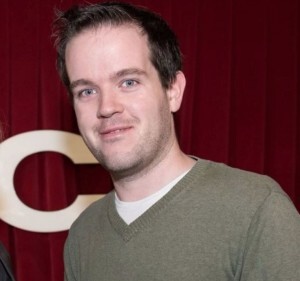
From top: US president Donald Trump and former Taoiseach Enda Kenny in the White House last year’ Leo Varadkar with actor Arnold Schwarzenegger during a visit to Santa Monica, Los Angeles yesterday; Shane Heneghan
Ahead of Taoiseach Leo Varadkar’s first visit to the White House this week.
Shane Heneghan writes:
It won’t be easy, will it? It’s not going to be one of your best photo ops. In fact, it will probably have your liberal east coast fan base up in arms- and shaking hands with the entire Choctaw nation won’t change that. It’s probably best to concede that the St. Patrick’s day rendezvous with the Donald is a necessary evil. But is it?
When your predecessor, John A. Costello, inaugurated this paddy wackery by giving Eisenhower a bowl of shamrock in the 1950s, the atmosphere was very different.
Ireland was going through it’s toughest decade economically of the 20th, century and immigration was threatening to push the population below two million. America’s economy, by contrast was roaring ahead and national self confidence was still sky high after victory in world war two.
But Taoiseach, you are no John A. Costello and, it goes without saying that Trump is not Ike.
Does it really have to be a given that our head of government has to slavishly kow-tow to the President of the United States on our national holiday every single year regardless of who holds either office?
Surely other countries on the radar would be just as accommodating. I have a few suggestions on your alternatives.
Berlin: You came to power seeking to lead a government of the “European centre” so for Paddy’s day why not go to the centre of Europe? Poor auld Angie has had a rough few months putting a coalition together. I know you can sympathise with this and we all know she has a green pants suit she’s just dying to wear for the occasion.
London: Not a conventional choice, I grant you. But our Theresa is another women in dire need of a break and could do with putting things into soft focus for a while- it just might help ease the brexit tensions. Plus, if you ask nicely, I’m sure she’ll let you see the Hugh Grant staircase again too.
Edinburgh: By contrast you could seek to emphasise older Celtic links as Nicola Sturgeon is hugely popular in Ireland and in general. The optics of a visit to Scotland would just scream “Hey Theresa, I got a hard border for ya, it starts in Berwick-on-Tweed!” Plus a photo of you in a kilt will totes break the internet- you can’t buy that.
Paris: We all know you want another chance to spring some more leaving cert French on us and the reflective glow factor from Emmanuel Macron is massive, I don’t need to tell you that- but be careful of being burned a la Icarus by flying to close to the sun (king).
Ottowa: You know who you’re real ideological soul mate in North America is and he doesn’t live on Pennsylvania avenue. We can bet he’s got a pair of green socks just waiting for the occasion.
Joking aside, politely refusing to meet Trump for just one year out of his four year term could send a powerful statement around the world about your government’s values. Think about it. It might be one of the most powerful diplomatic tools you have at your disposal.
Shane Heneghan is a Brussels-based election and poll watcher. Follow Shane on Twitter: @shaneheneghan
Pics: Rollingnews/Leo Varadkar










More to follow.


More to follow.