Author Archives: Bodger

This afternoon.

Church of St. Paul of the Cross, Mount Argus, Harold’s Cross, Dublin 6

Scenes following the the funeral service for Fianna Fáil Minister Martin O Donoghue.

From top: Former leader of the Progressive Democrats Des O Malley; John Bowman of RTE; Former Fianna Fáil Minister Mary Hanafin, Former Fianna Fáil Minister Michael Woods; Vincent Browne and unidentified priest; President Higgins and Brother Kevin, of the Capuchin Homeless Centre unidentified Passionist.

Rollingnews

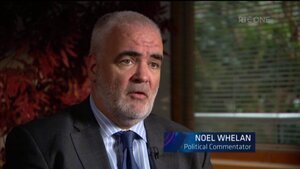
Barrister and Irish Times columnist Noel Whelan

This morning.

On RTÉ Radio One’s Today with Miriam O’Callaghan.

Barrister Noel Whelan told Miriam he’s not going to run for president.

Miriam O’Callaghan: “Noel, are you in or out?”

Noel Whelan: “I’m out. I made a decision at the end of February, that if the sitting president [Michael D Higgins] wasn’t contesting that I would put a campaign together. I spent about seven or eight weeks with a core team of about a dozen, some of whom I’ve worked on referendum and political campaigns before – considering the question. I came to the conclusion then, particularly in the last couple of months when President Higgins, the information about President Higgins running again firmed up that he, we have a good president. He was likely to be reelected in circumstance where he’s offering himself again.”

“In the last two weeks, I suppose I felt it was important enough to reconsider the decision again for two reasons. One, because I was surprised by the extent of reaction to the people saying they wanted to have an election and I think there’s a majority, a substantial majority, sorry, minority – I emphasise it is a minority – that has issues around the president contesting again in circumstances where he promised one term. And, secondly, I think the fact that Fianna Fáil and Fine Gael didn’t have a candidate and weren’t in a  position to or had decided not to, as it were, compel their councillors. Then that had opened, in my case, at least, a pathway to getting a nomination onto the ballot paper.

“But, having revisited it again and, you know, Eileen Gleeson, actually, is the best person to explain what the presidency was on a panel with you here two weeks ago. She said to people and it’s worth bearing in mind across the next three months. That when you hear the candidate, close your eyes and imagine, can they hold it at the UN General Assembly on behalf of Ireland? How do they sound, she said, at a diaspora event, in an Irish event, in Auckland or Chicago or Toronto? And how would they deal with a political crisis like we had, to some extent, after the last election. And she said you need to think of the person in that context.

“Now, I’m very conscious that anybody who puts his or her name up for consideration for the presidential election is going to be met with the suggestion, well ‘who do they think they are?’. And, you know, I come from a family of 12, from a  small, rural post office in a little village in south Wexford, the first of any generation to get the chance to go to college which changed and transformed my life. And to think of oneself in that role or to have people say it, each of the candidates has is, ‘you should think about applying for putting up for that role’, is a big reach and ambition.

“But if I didn’t done reaches and ambitions in my life, I wouldn’t be where I am now.”

O’Callaghan: “Did you consider it seriously?”

Whelan: “I did. We spent eight weeks. And I’ll be straight, if Michael D Higgins wasn’t running then we wouldn’t have waited until now, we would have put a campaign in place, beginning last April.”

Listen back in full here

Previously: It Starts Here

Andrea writes:

Hi there, I found a set of keys in the Killiney, Co Dublin area and I was hoping you can help get them reunited with the owner. They were found on the pavement at 7am on Saturday morning in a housing estate. There are quite a few keys (see pic) and a USB attached.

I snooped and there was a picture of a driver’s licence for John Micheal Corcoran – with an address in Rathmines. Also a lot of images from travelling and Trinity College events. You can contact me on andreadsomers@msn.com if the owner comes forward. I will pop them to the local Dun Laoghaire Garda station if there is no response. Many thanks in advance…

This morning/afternoon

Swords, Dublin

Picketing pilots outside Ryanair head office as part of their series of 24-hour official IALPA (Irish Air Line Pilots’ Association) actions in a dispute over terms and conditions.

In other news, where are all the female pilots?

Anyone?

UPDATE:

Hello!

There she is.

Sam Boal/RollingNews

Áine Fitzgerald, in the Limerick Leader, writes:

A bank’s effort to repossess the house of a woman in Limerick has been described as “scandalous, inhuman and an evil state of affairs”.

The woman in her 50s with one child owes just €16,000 on the property which is worth over €300,000. She was five months in arrears.

She ended up in Croom Hospital after an “extremely serious accident,” and contacted the bank to explain her situation and vowed to repay the money owed. She is incapacitated on ongoing basis.

But last week the Bank of Ireland brought an application at the Repossession Court to have the house repossessed, which was vehemently opposed by her solicitor, Ger O’Neill.

‘Evil move’ by bank to repossess home of sick Limerick mum (Limerick Leader)

‘Do Better’

A short documentary on the housing crisis.

Featuring Master of the High Court: Edmund Honohan. SafetyNet founder: Dr Austin O Carroll. Inner City Helping Homeless CEO: Anthony Flynn, North Dublin Bay Housing Crisis Community Activist: Aisling Hedderman. And Ireland Professor of Poetry 2013-2016. playwright Paula Meehan, and Bohemian F.C. Poet in Residence: John Cummins.

Directed and edited by Jamie Goldrick for PushPull media

Thanks Seamus

High Court

The public restaurant and bar in the Four Courts is due to close on July 31st and be replaced with consultation rooms. This is a disturbing development. The public who attend at the Four Courts are generally litigants or would-be litigants with their much-needed support from family and friends or witnesses.

Their experiences may be stressful and sometimes deeply upsetting. Their day may be long and involve anxiously waiting around or being in court.

It is reasonable that they should expect there to be somewhere that they may go within the building for a short break or for lunch, especially on occasions when time may be limited.

Come July 31st, those members of the public will have no alternative but to join what will be an extremely long queue at the tiny Friary Café, that seats about 20 people, or else leave the complex altogether to find refreshment nearby (time permitting).

I cannot think of any other public service building that requires people to attend all day that does not provide some form of restaurant or café-style facilities for their welfare.

With respect to the views of the OPW, we should prioritise the welfare of the public over the provision of consultation rooms.

Marie O’Shea, BL
Dublin 7.

Lunch at the Four Courts (The Irish Times)

Rollingnews

Last night.

In Tuam, Co Galway…

Where the Minister for Children Katherine Zappone met with residents of Tuam and members of the Tuam Mother and Baby Home Survivors group.

Joe Little, of RTE, reports:

“….Ms Zappone told her audience of over 100 people at the private meeting that she is assessing whether to fully excavate the Tuam site or to test all the land for out-of-the-ordinary soil patterns and then excavate those pinpointed areas along with the current memorial Garden and a series of underground chambers.

“Ms Zappone also warned that many urgent legal issues remain to be dealt with.

“Such issues include making sure the Government has the legal authority to exhume the human remains, examine them, carry out successful DNA tests where possible and to reinter them in a place to be agreed.”

Zappone assessing whether to fully excavate Tuam site (RTE)

Pic: Donal O’Keeffe

The irish Times’ property supplement

On Saturday, during the ‘Danielle Carroll Summer School’ the matter of the Irish Times and the property industry was raised.

The event, named in honour of a young mother who took her own life while living in emergency accommodation, heard from investigative journalist Gemma O’Doherty.

Ms O’Doherty said the Irish Times was repeating the mistakes of a decade ago producing ‘property porn’ in an overheated market.

She said this was helping to pay the salary of journalists such as Kitty Holland, a fellow speaker at the school; with her socially aware journalism providing cover for the paper’s fawning property coverage.

For a newspaper to feature a mother and her children forced to sleep in a car while extolling the value of a one-bedroom cottage in Dublin 8 priced at €500,000 is more than just bad taste.

The reaction was swift.

While acknowledging the paper was partly ‘culpable’ in overheating the property market, Ms Holland then tweeted that Ms O’Doherty was an ‘appalling fantasist’ among other things and stated:

“Soaring house prices would happen with or without the Irish Times. Yes we sell advertising and yes wages have to be paid. Wouldn’t it be wonderful if journalists would work for nothing? The target of ire re housing crisis should [be] our neo-liberal economy. But that needs thought.”

In 2016, when Geraldine Kennedy was invited by the joint committee on the crisis and asked to explain her paper’s role in the boom and crash of the Celtic Tiger, she took a similar route.

She laughed at the mention of economist David McWlliams, who had predicted the crash, calling him ‘entertaining’ but like a ‘stopped clock’.

She described Dr Julien Mercille as a “world class conspiracy theorist’ for highlighting the internal contradictions at the Irish Times.

She stated unambiguously that the standard of news journalism and property journalism at the paper was identical.

Property revenue, she said, had “enabled us to have a correspondent in London, Washington, Paris, Berlin, one in Moscow and for a while one in China.”

It also helped secure matching salaries of €300,000-plus for the paper’s then managing director Maeve Donovan and Ms Kennedy, whose pay at that time was comparable to the editor of The Daily Telegraph.

Ms Kennedy was appointed editor of The Irish Times in October 2002, and retired in June 2011.  In her first four years in charge of the paper, revenue from property advertising increased from €10 million in 2002 to €22 million in 2006.

This was 17% of the total revenue of the business compared to 7 per cent of the Irish Examiner’s and 9 per cent of the Irish Independent and Sunday Independent combined.

Between these years the price of an ordinary home increased each year by the equivalent of the average industrial wage and the average timespan of a mortgage between parents and their children increased from 20 years to 40 years

Unlike most other newspapers, the Irish Times is owned by a trust and the structure allows for the editor to have a seat on the board.

But Ms Kennedy stated during her time as editor:

“The property bubble was never raised or discussed by the board.”

In August 2006, the Irish Times began the purchase of Myhome.ie which would eventually cost upwards of €40 million (and would have been €50 million if it reached certain boom-era targets}; enough to produce the entire paper without ads for a full year.

The actual deal with MyHome.ie, whose shareholding was controlled by three estate agents and a bank, was not signed off until the second quarter of 2007.

Some months after Morgan Kelly’s article in the Irish Times in December 2006 showing how threadbare the underlying  economy was.

Asked if she had voted against the deal at board level, Ms Kennedy said:

“I expressed reservations about the decision but one was not asked for one’s support since there was no vote.”

Ms Kennedy was asked did she not think of calling a vote?

“No, I did not. I did not feel strongly enough about it because there was a case for diversifying in The Irish Times and property was a big revenue stream for the newspaper.”

Did anyone in the Irish Times publish an article criticising the purchase of MyHome.ie?

“We published a story about it. It was announced in The Irish Times.”

But, she was asked, did anyone write any critical comment on it?

“No, but nobody was stopped from doing so. That is very important.”

Following the crash, the paper embraced the new politics of austerity with gusto.

Dr Mercille, Ms Kennedy’s ‘world class conspiracy theorist’, outlined, with evidence, that 57% of all opinion articles and editorials in The Irish Times discussing Irish Government budgets between 2008 and 2013 supported austerity with opposition only to specific cuts voiced by 15%.

Ms Kennedy, who had left the paper in 2011, said:

“I believe, personally, and would probably have pursued the policy as editor, that there was very little option for Ireland unfortunately but to try to get its house back in order. It required great sacrifices by ordinary people.”

A deputy noted that political parties are subject to limits on donations and protest that those donations have absolutely no effect on their policies, but nobody, least of all the Irish Times, believes them.

Ms Kennedy said the Irish Times should be believed because of its ‘wonderful’ journalism.

A generous bonus structure for property sales executives at the paper remained after the crash.

In fact, little has changed in the way the paper approaches property advertising, property journalism or, indeed, constructive criticism.

Ms Kennedy was asked: did The Irish Times contribute to the property boom?

“I suppose there is the fact that people were looking at houses and here one had a supplement where one could look at beautiful houses. Did that encourage people to go out and buy them?

I do not know. If they were to go out and buy them they have to get mortgages and everything like that. We were not telling them to go out and buy them or get mortgages”

Earlier: Day For Danielle