

Category Archives: Misc

90431556Michael Taft

From top: Junior Minister Damien English and Minister for Housing, Planning, Community and Local Government Simon Coveney TD launching Pillar 2 of Rebuilding Ireland in September; Michael Taft

Public agencies, not just local authorities, have the land. We have the workers ready to build. and we certainly have the need.

Michael Taft writes:

The recent Saville Report, A Rent Forecasting Model for the Private Rented Sector in Ireland, should be a wake-up call to all policy makers.

Based on the relationship between private sector rents and the vacancy rate (the number of vacancies per 1000 rental units), Dr. John McCarthy estimates that rents will rise over 20 percent over the next two years.

Yes, there is a current rent freeze. But this doesn’t apply to new units coming into the market – and supply is growing, albeit at a slower rate than demand. Nor does it apply when a unit becomes vacant – when the current tenant leaves. And the freeze is only temporary and, unless extended, will be gone in less than two years.

Given that rents in Dublin rose by 10 percent in the last 12 months with rents rising faster outside Dublin (e.g. Cork rents grew by 15 percent), Dr. McCarthy’s prediction is reasonable.

With a one-bedroom apartment averaging €1,300 in Dublin city, we could see this rising close to €1,600 by 2018.

This is not good – for tenants, for the economy or for the Exchequer; the Government’s Housing strategy is premised on placing the majority of those on social housing waiting lists in private accommodation. Rising rent supplements for more people would seem to be in the offing.

Though the Government is set to publish proposals regarding the private rented sector in a few weeks, the early signals are not promising.

First, the Government seems intent on confining direct housing provision for the ‘poor’ only – what’s called residual housing.

Second, in answering a parliamentary question regarding affordable and non-speculative social housing units such as limited equity associations and long-term fixed leasing, Minister Simon Coveney didn’t refer to the public sector.

Rather, he confined his response to Approved Housing Bodies which the the National Economic and Social Council stated were incapable of dealing with the scale of the problem.

Third, the only budgetary measure regarding rent was to give a tax-break to landlords, many of whom have exploited market conditions to drive up rents to already unsustainable levels.

Let’s cut through this morass. While the delivery vehicles and planning logistics can be quite complex, the basic approach is rather simple: build units and rent them. Here are three models that could be developed – in both the best and worst case scenarios.

Cost Rental

Cost rental accommodation is just what it says – rents based on costs, not market-pricing. Take the cost of building/acquiring a unit with interest payments and amortisation, add in maintenance costs, property tax and a small percentage for a sinking fund – and charge rent at that level. Subsequent increases would be confined to a rental-inflation index to create certainty and tenants would have the full range of rights regardless of the law. This is the basic model pursued in other continental European cities. The NESC (in the link above) devoted an entire paper to this model – which could cover not only low-average income earners but those on the waiting list as well, creating a ‘unitary’ model where the distinction between public and private is blurred.

Limited Equity Housing

Even more provocative is the hybrid limited-equity model. In this instance, a person purchases 50 percent of the equity in the house and pays a monthly rent. So for a two-bedroom house costing €205,000 (not counting site costs or infrastructure), the owner/tenant would pay half through a mortgage and pay an additional ‘rent’. The owner/tenant would ‘own’ the house like any other owner but would only have to come up with smaller upfront costs. However, the house or apartment would be non-speculative which means that when the owner/tenant leaves the premises they would only receive their original mortgage which would be inflation-indexed. They could not sell their equity on the open market, nor could they release equity through another mortgage (unless the collateral was on some other asset); they could not automatically pass it on through inheritance or gifts or sub-let it out. In other words, it would be non-speculative housing but one that could be owned for life.

Temporal Ownership Schemes

In this model, a tenant pays an upfront amount to the owner/landlord for the ‘right to own’ a property for a set number of years. Lorcan Sirr has written about this model as it applies in Spain. When the contract ends the property reverts back to the owner – which can be a public, private or cooperative landlord. Temporal owners have all the rights and responsibilities of the property: they can sell the contract or leave it in a will – until the end of the ownership period.
The value to the tenant is certainty of tenure for the period. The value to the landlord is that they have been paid for a certain period (no vacancies, no looking for new tenants, no missed monthly rents, etc.). Further, tenants usually take care of property that they are going to reside in the long-term.Here’s an example: a tenant purchases a 10-year contract for a house/apartment. They get a mortgage for €90,000 and pay it over to the owner/landlord. The monthly mortgage payments would be €870 to €905 per month. This would remain constant throughout the ten years.


The best-case scenario would be if these models could be done ‘off-the-books’; that is, the cost of construction would not be a cost to the Exchequer. This could be done, as in continental European countries, through public housing associations. These would operate commercially at arms-length distance from the central and local government – though local governments could establish these associations by applying for Approved Housing Body status.

Even in this case, the state would still be involved through capital grants and, in the case of temporal ownership, provision of low-cost mortgages.

In the worst-case scenario these models would be on the books. However, this might go no further than the initial once-off capitalisation – the housing associations would still be commercial, albeit not-for-profit, entities. It would also allow for non-market transfers between public agencies (e.g. derelict / vacant land owned by one agency transferred to a housing association).

There is also the possibility of a state Rent Benefit which could be tied to income. This could be paid to all tenants of cost-rental models – whether in the public, private or non-profit sectors.

This would ensure that the Rent Benefit doesn’t inflate the market as it would be paid in regard to rents that are controlled by costs and not subject to market pricing.

In all probability it would be a combination of both. You would start up models, test their capacity and reform them to take them off-the-books. This experimentation would, therefore, entail both tenure and financing models. However, these models would not be a substitute to social housing building but a complement.

The main thing is to start building – and renting, long-term leasing or selling at affordable prices. Public agencies, not just local authorities, have the land. We have the workers ready to build. And we certainly have the need.

Now all we need is a bit of imagination.

Michael Taft is Research Officer with Unite the Union. His column appears here every Tuesday. He is author of the political economy blog, Unite’s Notes on the Front. Follow Michael on Twitter: @notesonthefront

1

The Bird is back.

Sinead Harrington writes:

Republic of Telly returns to our screens tonight with a star studded cast. In tonight’s episode Nathan Carter stars in the ‘Republic’s Carboot Karaoke’ with a surprise intervention from Blathnaid Ní Chofaigh, Vogue Williams hosts ‘Explosé’ at the Irish Ploughing Championships, Charlie Bird (top) investigates how the best fans in the world survived life after the Euros 2016 and Mattress Mick, Ireland’s craziest salesman, transforms himself in to Donald J Trump to give us the latest update on the American elections…

Republic of Telly tonight on RTÉ2 at 10pm.

map

derek

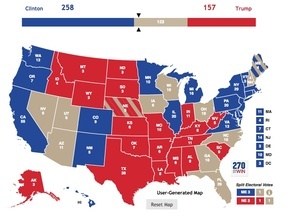
From top: Swing states that can decide the US Presidential Election; Derek Mooney

The battleground stakes will decide the US Presidential election while Ireland’s political battleground is the new and first time voter.

Derek Mooney writes:

There are now, mercifully, only two more weeks of campaigning left in the U.S. presidential election. These campaigns seem to start earlier and last longer with each electoral cycle.

This one started early in 2015 with Hilary Clinton launching her bid in April, and Donald Trump launching his, descending a golden escalator, in June.

Paradoxically, while the modern presidential campaigns have been expanding in length, they have (until this cycle) been contracting in their reach, with the focus going to the 9 or 10 swing/battleground states seen as potentially winnable by either side.

They are the States that both candidates and their surrogates have visited most regularly. They are where the campaigns have focussed their biggest spends. Voters living in States such as Florida, Ohio Virginia, can expect to receive multiple messages from either candidate seeking their vote.

Live in one of the other 40 or so States and you won’t get much attention.

You won’t get the big campaign visits, the telephone canvassing or the big TV adverts. It is as if your vote is not as important or as valuable, as your State is seen as being firmly and unshakeably in either the Dem or GOP column and not in play.

The same is true in the UK. About 56% of the seats in the UK. are viewed as so secure and safe as to be hardly worth contesting. Both the Labour and Tory parties each have a slew of safe seats where their majorities are so large that they could, in the caustic words of the late Tony Banks MP, run “a pig’s bladder on a stick” and get them elected.

So, just like the US., UK. general elections are fought and decided in a number of swing/battleground constituencies.

This is no coincidence. One of the main reasons for US. and UK. elections being played out in only a portion of constituencies is the voting system. Both use the first-past-the-post system where the winner is the one who gets more votes than the next highest person.

The U.S. presidential system has the added complication of the Electoral College of 538 votes. Each State has a number of votes in the Electoral College, roughly proportionate to its population and these are allocated to the winning candidate, but let’s not make this too complicated just now.

One of the other consequences of using a first-past-the-post voting system is that it usually leads to – and probably enshrines – a two party system: hence the Dems and GOP in the U.S. and the Tories and Labour in the UK.

Our PR system means that every vote counts and that you cannot ignore large swathes of territory or take groups of voters for granted. The multiple seat aspect makes our system even more competitive again. In multiple seat constituencies the campaign battle is often fought on two fronts with the competition occurring not just between parties, but also between candidates from the same party.

As a former campaign manager I can tell you that I often spent as much time and energy tracking the activity of our own party running mates as I did of the other crowds.

This is not to say that campaigns do not target swing voters or battlegrounds areas as in the US or the UK. it is just that they are not as easily identifiable or grouped geographically.

New and first time voters are one such a key battleground as parties know that new voters no longer just vote the way their parents did.

Irish voters have become more willing to change their party allegiance. They are now, to use a phrase a colleague of mine coined some years ago, more politically promiscuous. This is not something new. The trend was evident as far back as the 1990s, though it was blurred by the strength and attraction of the Bertie factor back then.

Voters have to be won over and won back at each election. Their loyalty cannot be presumed from electoral cycle to electoral cycle.

OK, although I have just spent the last 600 plus words trying to explain why we do not have definable electoral battlegrounds here like those in the UK. and the US., let me try a dreadfully unscientific exercise to show where we might have some non-definable, non geographic battlegrounds.

Though the hard numbers may differ, most of the recent opinion polls have shown minimal movement between the parties and groupings since the last election.

The results have been fairly consistent put Fianna Fáil and Fine Gael within an ass’s roar of each other with support levels in the mid-to-high 20s, trailed by Sinn Féin in third place in the mid to high teens, and then by the “others” – who largely stay where they were, or drop slightly.

So, taking this minimal movement as a starting point let me take a huge leap and submit (i.e. presume) that all bar the last seats in the 40 Dáil constituencies can be considered reasonably safe – though I know that such a suggestion will send the incumbents into paroxysms of rage.

So, if an election were to be called in the near future the virtual “battleground” of these 40 last seats would break down as follows (based on who now holds these final seats):

Fine Gael 18
Fianna Fáil 8
Sinn Féin 3
Labour 4
Others 7 (Inds, Ind Alliance, AAAPBP, Green)

Fine Gael’s total here is somewhat overstated as it held some of these final seats against another FG candidate. If you crudely correct for that (by going to the second last seat in each case) you get the following “battlegrounds”:

Fine Gael 13
Fianna Fáil 8
Sinn Féin 6
Labour 4
Others 9 (Inds, Ind Alliance, AAAPBP, Green)

This still leaves Fine Gael potentially quite vulnerable. It is far more susceptible to a swing against it than any other party, with the exception of the Labour party which has 4 out of its 7 seats in this potential battleground. Fianna Fáil is in a stronger position with about 82% of its current lot of seats looking secure. The figure for Sinn Féin is about 74%.

Obviously this back of the envelope exercise ignores a range of critically important factors including election timing, retirement of sitting TDs, automatic re-election of the Ceann Comhairle and, of course, how the next election campaign is fought and how big is the swing, if any.

This is just intended as a very general indication of the virtual battlegrounds which may be in play.

The good news is that these battlegrounds are so virtual and undefinable that every vote will count.The bad news is that because every vote will count, when the next election comes you can expect to be asked for that vote several times over, unlike the good people of the least swing State in the U.S. Kansas.

Derek Mooney is a communications and public affairs consultant. He previously served as a Ministerial Adviser to the Fianna Fáil-led government 2004 – 2010. His column appears here every Monday mid-afternoon. Follow Derek on Twitter: @dsmooney


screen-shot-2016-10-24-at-16-06-21

screen-shot-2016-10-24-at-16-15-51

The cover of the Report on the Concentration of Media Ownership in Ireland and Denis O’Brien

This afternoon.

Sinn Féin MEP Lynn Boylan has published a Report on the Concentration of Media Ownership in Ireland, which she commissioned on behalf of the European United Left/Nordic Green Left group of the European Parliament.

It was written by lawyers in Belfast and London.

Ms Boylan’s report follows a report in March – about media plurality and ownership in Ireland by the Centre for Pluralism and Media Freedom, led by Dr Roderick Flynn of Dublin City University.

From the report:

Ireland has one of the most concentrated media markets of any democracy. Accumulation of what has been described as “communicative power” within the news markets is at endemic levels, and this, combined with the dominance of one private individual media owner in the State, creates what the Media Reform Coalition has described as “conditions in which wealthy individuals and organisations can amass huge political and economic power and distort the media landscape to suit their interests and personal views”.

The two most important controlling entities in the Irish media landscape are the national State broadcaster, RTÉ, and an individual businessman, Denis O’Brien…

…First, Mr. O’Brien has initiated a large number of sets of proceedings since 2010, including 12 cases against media organisations in relation to their coverage of his business affairs. Analysis stretching back almost two decades, to 1998, suggests that Mr. O’Brien has regularly made threats of legal action, and instituted legal proceedings, against journalists and media organisations.

Any wealthy individual bringing such a large number of claims seeking to restrict press coverage of their business dealings would raise concerns regarding freedom of expression and the potential for such litigious profligacy to have a ‘chilling effect’ on newsgathering and reporting in the public interest. However, when the wealthy individual in question is also the “largest owner of private media in the State,”  those concerns and risks are substantially increased.

The Report’s authors are aware of suggestions that there are legal bars to any such action being taken, but we reject any suggestion that it is not legally permissible to address the status quo and that tackling the current concentration of media ownership is impossible given the importance of property rights in the Irish Constitution and/ or the European Convention on Human Rights (ECHR).

On the contrary, our conclusion is that there is, in principle, no such legal bar. A retrospective mechanism could indeed be permissible under the Irish Constitution, EU law, and the ECHR.

…The devil is very much in the detail, and these are difficult issues. What is now needed is a careful review of the detail, and, accordingly, the Report recommends that the Government establish a cross-disciplinary Commission of Inquiry.

Read the report in full here

Rollingnews

screen-shot-2016-10-24-at-15-15-32

Protesters at a pro-choice rally in Dublin last year

Una Mullally, in The Guardian, writes:

The movement to repeal the 8th is growing, especially since the equal marriage referendum last year inspired a generation of young Irish people. In the days after that referendum, the question that Irish people hear repeatedly from abroad was raised: how can Ireland have gay marriage and not abortion? It’s one that can only be answered by acknowledging that misogyny in Ireland runs even deeper than homophobia.

What the equal marriage referendum taught us was that change comes from the bottom up. And we don’t just need one voice advocating for change, but many. The recent March for Choice in Dublin was replicated in cities around the world, with tens of thousands of people turning out to demand reproductive rights.

…Women are now telling their abortion stories in great numbers for the first time, and as we learned during the equal marriage referendum campaign, you can’t beat real-life experiences with abstract arguments.

Successive Irish governments haven’t listened to their female citizens. But what Irish governments really dislike is being embarrassed from abroad. As a nation, we are insecure, obsessed with our identity and what people think of us. So if politicians don’t have the guts to tackle this issue then they need to be shamed into action.

Solidarity matters because the extended hand often feels so much warmer than your own. The idea that people you don’t even know care about you is important. It bolsters you. And while solidarity from outside Ireland exists in pockets, we now need it from Britain en masse.

British people need to stomp on the streets and on the floors of parliament to help shame our government. British people should especially demand that women in Northern Ireland have the same reproductive rights as in England, Scotland, and Wales, and that those rights be extended to women on the Isle of Man too.

A strip of sea separates us, but we are just like you. We watch EastEnders, shop in Topshop, cry at Bake Off and drink gin. Your football teams are our football teams. We don’t earn enough and are sick of the rain. We are not “other”.

Irish women need British help to change our abortion laws (The Guardian)

Earlier: Free Tomorrow?

gsocnoirin

jim

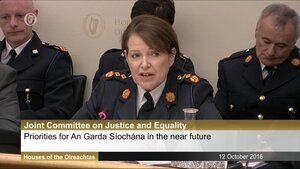
From top: Garda Siochana Ombudsman Commission office; Garda Commissioner Nóirín O’Sullivan; and Fianna Fáil justice spokesman Jim O’Callaghan

This morning, the Irish Examiner reported that GSOC cannot obtain documents in relation to the O’Higgins Commission which investigated complaints made by Sgt Maurice McCabe.

In addition, it also reported that Garda Commissioner Nóirín O’Sullivan cited legal restrictions under the Commission of Investigations Act 2004 as reasons for why she could not give GSOC certain documents in relation to a public interest investigation regarding Sgt McCabe’s claims.

This is despite the fact that it was Commissioner O’Sullivan who originally called on GSOC to carry out such an investigation.

Further to this…

After recently telling RTÉ’s Six One News that he had “confidence” in Ms O’Sullivan. Fianna Fáil’s justice spokesman Jim O’Callaghan spoke to Áine Lawlor on RTÉ’s News at One about his proposal to get around the legal issues.

Áine Lawlor: “Jim O’Callaghan is proposing a change in the Commission of Investigation’s Act that would overcome this hurdle and he joins us now from our Dáil studio. Good afternoon, Jim O’Callaghan.”

Jim O’Callaghan: “Good afternoon.”

Lawlor: “The specific problem. What is it? That nobody basically can have access to the private papers, the private recordings, or testimonies given to a private commission of inquiry – even though there’s public interest investigation going on by GSOC. Is that it?”

O”Callaghan: “Yes that is the problem. In June of this year, the Tanaiste referred to GSOC, the issue about the two conflicting accounts of the meeting in Mullingar, in 2008. She made that reference under Section 102 of the Garda Siochana Act. We now learn that GSOC wrote to An Garda Siochana, seeking access to all documents, including transcripts. Now the Garda aren’t allowed to provide those transcripts because of Section 11 of the Commission of Investigation Act 2004. So I would have thought that if the story in the Examiner today is correct that there is a relatively simple method of getting around this problem which would be by amending Section 11, to provide for one other provision whereby the information could be provided. And that would be if there’s an ongoing investigation being conducted by GSOC under part 4 of the Garda Siochana Act.”

Lawlor: “And, indeed, you’ve sent us a copy of your proposed Commission of Investigation amendment bill. It’s nice and short. We understand this matter has been referred to the Attorney General. Do we know if she is looking at a simple legislative change, like yours, would unblock this roadblock?

O’Callaghan: “Well, we had a similar roadblock, in respect of the Judge Cregan inquiry [into IBRC transactions and write-offs] when Judge Cregan said that the underlying legislation didn’t allow him access to confidential information. And there was a small amending piece of legislation introduced in order to facilitate him. So the alternative here is that the GSOC inquiry doesn’t go any further. I don’t think that’s an option. Consequently, I think we should give consideration to amending the legislation. Obviously, it’s all dependent on the story in the Examiner being correct. If the story is correct, well then I think the only solution to it would be to provide for some amending legislation.”

Lawlor: “And, should it be true, would it not have dawned on anyone back in June, particularly given that this kind of roadblock around the privacy of commission of inquiries that that had cropped before, that might be an issue in this case.”

O’Callaghan: “Well, I have to say, I was slightly surprised when I heard that GSOC hadn’t commenced there investigation into this. They were asked to investigate two conflicting accounts of a meeting that took place in Mullingar and they say they need the transcripts, they’re the investigator. But I would have thought they should be able to commence the investigation even if they didn’t have access to the transcripts. So, it’s an investigation that could, in my opinion, be conducted without the transcripts. However, they’re the investigator. They said they need them and they’re not going to commence unless they get them and I think we need to respond to what they state.”

Listen back in full here

Previously: Untold Damage