New year’s reflection. Portmarnock Co. Dublin.
(Thanks Fran Cassidy)



Behold: the spectacular result of a single exposure and a lot of careful planning. To wit:
The photographic goal was achieved by precise timing — needed for a nearly full moon to appear through the eye-shaped arch, by precise locating — needed for the angular size of the Moon to fit iconically inside the rock arch, and by good luck — needed for a clear sky and for the entire scheme to work. The seemingly coincidental juxtaposition was actually engineered with the help of three smartphone apps. The pictured sandstone arch, carved by erosion, is millions of years old and just one of thousands of natural rock arches that have been found in Arches National Park near Moab, Utah, USA. Contrastingly, the pictured Moon can be found up in the sky from just about anywhere on Earth, about half the time.
(Image: Zachery Cooley)

The ghost town of Dikson island in the Russian Arctic, photographed last winter in the surreal light of the Aurora Borealis by Evgenia Arbugaeva.
That’s right. Photographed.



https://vimeo.com/478504402
Stills and footage from an ongoing project by photographer Søren Solkær in the marshlands of southern Denmark where every spring and autumn, an estimated million migrating starlings converge in vast murmurations. Sez he:
At times the flock seems to possess the cohesive power of super fluids, changing shape in an endless flux: From geometric to organic, from solid to fluid, from matter to ethereal, from reality to dream—an exchange in which real-time ceases to exist and mythical time pervades. This is the moment I have attempted to capture—a fragment of eternity.
A book of the project is released this week.
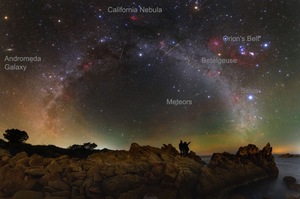
So much detail. Far too much for one photograph, that’s for sure. To wit:
The featured dark sky composite combines over 60 exposures spanning over 220 degrees to create a veritable menagerie of night sky wonders. Visible celestial icons include the Belt of Orion, the Orion Nebula, the Andromeda Galaxy, the California Nebula, and bright stars Sirius and Betelgeuse. You can verify that you found these, if you did, by checking an annotated version of the image. A bit harder, though, is finding Polaris and the Big Dipper. Also discernible are several meteors from the Quandrantids meteor shower, red and green airglow, and two friends of the astrophotographer. The picture was captured in January from Sardinia, Italy. You can see sky wonders in your own night sky tonight — including more meteors than usual — because tonight is near peak of the yearly Orionids meteor shower.
(Image: Tomáš Slovinský)


Exquisite portraits of common European birds captured mid-flight by fine art photographer Mark Hervey.
Name them flappers though.

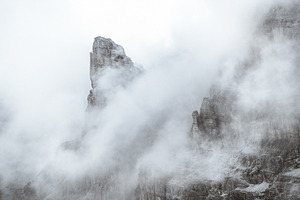
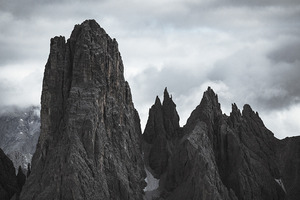


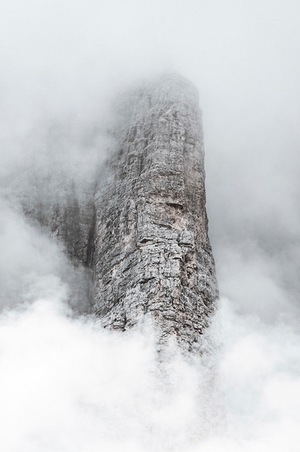
From the Sempiternal Series, featuring the rugged peaks of the Dolomites mountain range in northeast Italy – atmospheric studies in light and dark by Roland Krämer.

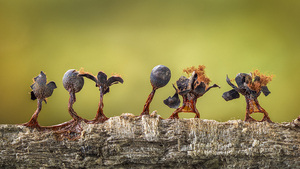


A selection of winners from the 2020 Close Up Photographer Of The Year.
Above: a multi-hued glass worm by Andrei Savitsky; fruiting bodies of the slime mold Metatrichia floriformis growing on a decaying beech trunk by Bary Webb; a bioluminescent Lamprigera beetle in the Borneo rainforest by Chien Lee; a spider at Turjanos nature conservation area, Kisőrös, Hungary by Csaba Daroczi; an eel larva off the island of Lembeh (Indonesia) during a blackwater dive by Galice Hoarau (the overall winner); a great crested tit in a wood in Switzerland by Giacomo Redaelli; a butterfly on the wall of an abandoned building site in Yorkshire by Mike Curry and a springtail on an icy lake at Csongrád-Bokros, Hungary by Tamás Koncz-Bisztricz (young photographer of the year).
More here.

Old Ireland tweetz:
Staff and customers at the Bailey Bar, Duke Street Dublin 1960’s. Photograph by Harrison Forman and part of American Geographical Society Library, University of Wisconsin-Milwaukee Libraries collection.
Not a plate of tapas between ’em.
Mmf
Yesterday: The Men In White Coats