
TapeS #vinb
— Elaine Byrne (@ElaineByrne) February 26, 2013
*Popcorn*



Taoiseach Enda Kenny responds to questions concerning that Michael Lowry phone call from Fianna Fáil leader Micheál Martin in the Dáil minutes ago..
Enda Kenny: “The transcript that was handed in. I agree with you. If any further information is of relevance well that should be forwarded to the appropriate authorities aswell. Whether there’s validity or veracity in all of what was contained in the transcript, that’s not for me to judge. This house set up the Moriarty Tribunal to deal with a number of specific issues. And, as you’re aware, once the tribunal is set up, the house has no further function in determining the outcome of the tribunal, which in this case was reported by Moriarty two years ago.”
Micheál Martin: “Taoiseach, no-one has denied the veracity of the transcript. Nobody. So it seems to me, the transcript stands as a bona fide conversation between Mr Lowry and between Mr Kevin Phelan. I’ve already referred to the documentation that Senator David Wilson received, which details over 60 meetings that occurred between Deputy Lowry and Mr Phelan, in relation to the Doncaster deal, or another, sorry, in relation to the Doncaster deal. But it’s not for us to judge those, that particular documentation.
But suffice to say, Taoiseach, but that there’s enough new material there for this house to revisit the issue. The tribunal was established by way of motion to the house, from the then government, on subject to amendments from across the house. You know what I’m saying, when I ask you would you facilitate a re-examination of this by Moriarty.
Will you bring a motion to the house on this specific issue? Because does it not concern you, Taoiseach? And it does concern me. And you made comments about others, and they may be valid but what’s before us now, Taoiseach, what’s before us now, is material that’s emerged in the public domain, which, at the very minimum casts doubt about the level of cooperation that was afforded to the tribunal, that casts doubt over the truthfulness of the evidence that was provided to the tribunal. And it is material that the chairman did not see, prior to him coming to his conclusions.
Does that not concern you? That a tribunal established by the Oireachtas may have been fatally undermined? May be hindered? That people were having discussion in advance about people who knew was giving evidence, who wasn’t giving evidence, who wouldn’t be turning up, who would be turning up, what they would be saying. I mean these are very fundamental issues that go to the heart of what we should be involved in, in this chamber, and in this Oireachtas. And it is..you have a huge majority here, I’ve no doubt you’d have the full cooperation…”
Ceann Comhairle: “Question please, Deputy.”
Martin: “And the very basic question is will you bring a motion to the house to invite the chairman of the tribunal to examine the new material that has come into the public domain and to re-examine this particular issue?”
Kenny: “Well, I have no intention of reopening the Moriarty Tribunal or any other tribunal that is reported to the house. I’m not sure whether you’re…I didn’t realise that you seem to be amnesiac in some respects here. Because there were other claims made at other tribunals about the extent of information and knowledge of veracity over what was given at the tribunals. Obviously when somebody goes before a tribunal, they take an oath to tell the truth. Now, if there is information out there, that somebody has access to, well then I would suggest that they would bring that information to the appropriate authorities, Deputy Martin.”
Previously: “Denis, Myself, Baldy.”
Dear Mr Lowry, Please Answer The Following (Conor Ryan, Irish Examiner)


On RTÉ’s Drivetime Fergal Keane (top), spoke to Mary Wilson about the Association of European Journalists’ event which Frank Daly (above) addressed in Dublin yesterday.
He explained how Mr Daly announced that a post-speech questions and answers session was going to be off the record.
At which point Mr Keane left.
He explained:
Now remember, this is a room full of journalists. Now many of those journalists are retired but there very senior journalists there aswell, many household names, senior business journalists, some public relations people, who are former journalists. And they were all paying €35 per head for lunch.
…And ‘off the record’ is a term which has a pretty strict definition in journalism. It means essentially a secret briefing, where you can use the information in the future, but you can’t say where it came from and people do it for all sorts of reasons. Politicians, everybody, it’s…it’s the bread and butter of what we do. But the uniquely secretive nature of Nama and the vast amounts of public money, and the public interest involved, as you heard Frank Daly set out himself earlier, made this briefing of particular public interest so as far as I was concerned, I wanted to record it.
He added:
And you can hear now what happened next. You’ll hear the end of Frank Daly’s speech and then the voice of the Association of European Journalists’ chairman telling me to take away my microphone and the last voice you’ll hear is that of Frank Daly himself.”
Daly finishes speaking.
Clapping.
AEC representative: ”Fergal, do you want to collect that?”
Keane: ”Sorry?”
AEC: ”Do you want to collect that (the microphone)?”
Keane: ”Why would I collect it?”
AEC: ”Because we’re switching to the Questions and Answers.”
Keane: ”And?”
AEC: ”That’s partly off the record.”
Keane: “So I’m not allowed record that.
AEC: “No.”
Keane: Inaudible.
Frank Daly: “Well, we can do a deal.”
Laughing in the room.
Tom Lyons of the Sunday Independent who had remained at the Q and A said of the five questions asked only one of them was answered ‘off the record’.
He assured listeners that, while he could not disclose what was said, it was something Daly had already mentioned in his speech.
Pic:Indymedia

Really?
Finance Minister Michael Noonan on Bloomberg Television’s ‘The Pulse’ earlier today.
It was all smiles until around 9.30, when he was asked about the Bundesbank’s president Jens Weidmann’s recent comments regarding the legality of the promissory note deal.

In a much more sombre exchange with news anchor Guy Johnson at 10.38.
Guy Johnson: “No rules were broken.”
Michael Noonan: “No rules were broken.”
Johnson: “Do you expect any challenge? Do you expect a legal challenge to emanate from German? Could there be a challenge? And how destabilising would that be?”
Noonan: “I don’t expect any legal challenge from any authority or any institution in Europe. Individuals frequently take cases, we have a string of them in the Irish courts always, but they don’t go very far.”
Yikes.
Previously: Not So Fast
There’s A Touch Of That About It
Watch his full interview here.
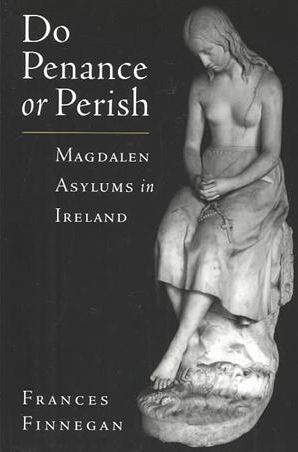
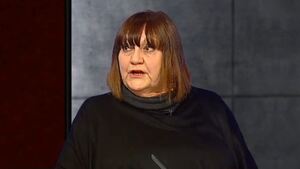 Frances Finnegan, above, historian and author of Do Penance Or Perish: A Story Of Magdalene Asylums In Ireland, top, was on Tonight With Vincent Browne last night.
She appeared with laundry survivor Gabrielle O’Gorman, Labour minister of state Kathleen Lynch, and Sinn Féin deputy leader Mary Lou McDonald.
Vincent Browne: “I’ve been reading your book, Frances. Do Penance Or Perish: Magdalene Asylums in Ireland. The story is horrific. It’s far, far worse than what was presented in the McAleese report.”
France Finnegan: “Or in the..the report that’s just come out?”
Browne: “Yeah. You wrote this…how long ago?”
Finnegan:“It took me 21 years to write. I came to Ireland in 1979 (from UK) and started work on it. I was given access to the Good Shepherd magdalene order, to all their records. Then, unfortunately, the college in which I worked bought the Good Shepherd, so I was actually working in the place that I had been writing about. I too thought it was a very generous apology. What I would like to say is, I’m glad that it was made and it should have been made more strongly I think, on behalf of the Irish people, who gave the religious orders free reign to do exactly what they wanted to. They were not accountable, for all the period I studied, they were an enclosed order. People weren’t going in and inspecting these places. And everyone, even the taxi drivers I came in with (to the show) were saying ‘You’ve got to say: Everyone knew about what was going on’. They did. It was an uncaring nation. And I have to say this, writing that book, I found just how oppressive it could be – as an Englishwoman coming here, a historian, making this exposure, which was the first exposure of it, I couldn’t get it published, there was a lot of opposition to it being published. I had to bring it out myself and then three years later, Oxford University Press took it over. Right up until yesterday there was, it seems to me there’s been a whitewash and there is still. You know, they’re using nonsense language like residents for these people. That is ridiculous. They weren’t residents; they were prisoners. They were penitents. These houses weren’t homes and refuges in the sense, that is almost being made in that report. They were places where women were punished. They were penitentiaries and if you look at any newspapers accounts, up until the 1950s, there was no question about what they were, everyone knew. Irish society knew where to send their errant daughters, they knew where to get their washing done, they knew where to get cheap workers after they, if they managed to get out of those places. They knew about them, there was no doubt at all. And they did not care. And when they brought out the book…that book has been around now for what? How many years? If it came out in 2001?”
Kathleen Lynch: “12 years.”
Finnegan: “12 years. We did Sex In A Cold Climate. The Channel 4 documentary. It’s never been shown on Irish TV. Everybody was shocked and amazed by that. I’m sick of the Irish public being shocked and amazed. Every week they’re shocked and amazed. When that rather, well, fictitious film, The Magdalene Sisters, came out, I was in Cork at the premiere, because I was to do the documentary. The middle class audience stood up and gave it a standing ovation, I was amazed – two of the biggest magdalene asylums in the country were in Cork. This was a class issue as much as a gender issue. The women of the poor, the children of the poor were put into these places. It was middle class people who benefited from it. And now, I’ve got a nasty suspicion the religious orders are somehow going to get out of this, almost untarnished. And the State is responsible. That’s not the case.”
Gabrielle O’Gorman: “The nuns should pay.”
Finnegan: “Of course, and they’re pleading poverty. But in the period I looked at, which was up to the 1900 and then beyond if women were still alive, I was only allowed to go up 1900 on their sources, the State wasn’t involved at all. It couldn’t be. You really think that enclosed magdalene laundries allowed men in there as inspectors. They resisted, absolutely resisted factory and workshop legislation and were proud of it, I’ve read their annuls. I think there’s a bit of a whitewash still. And all this business about girls being in there for not paying tickets…
O’Gorman: “Or someone voluntary, which is not true.
Finnegan: “But I mean a lot of them were in there for being unmarried mothers. I met dozens of women. So what? You know? They were stripped of their sexuality by people who wanted to be celibate. I think some of them were bit deranged in fact, you know? They were obsessed with other people’s sexuality. Surveillance, watch them, watch them all the time, don’t let them do this…I’ve got all the books on it, that the founders of that order wrote, or you know, the rules for the direction of the classes. They treated those women, certainly up to the 1950s, well they were called children even if they 70 or 80 years of age, they were made to work…
O’Gorman: “That was a controlling…”
Finnegan: “Of course it was a surveillance and controlling. I think it was quite sick and warped – to want to strip…”
O’Gorman: “It was a crime: women against women, wasn’t it?”
Finnegan: “It was and they had these auxillaries. They never put men in these penitentiaries. For every woman that was in there for a sexual reason, there must have been a man somewhere around. This was a useful way of getting rid of unwanted women because there was still a fear of female sexuality I believe, well I know. Even the language used and now they’re trying to sort of lessen it again. I think it’s quite sad. And I must say, some of things in the inquiry, I’d have to take issue with. I’ve looked at it, but I want to…the numbers are wrong. I’m not happy about the graves. You know, when the book came out, and Sex In A Cold Climate came out, those graves were penitent plots. The next thing you know, they’ve suddenly got a few names on marble slabs. When I used to look at those graves, those plots, it was just a penitents’ plot with…they didn’t have names. Now it’s all the names they’ve put up. This has been a real, quick whitewash. And I’m afraid…Can I just say one little thing as an example of this? I worked in the regional technical college in Waterford, as I told you, just became WIT, and bought the Good Shepherd convent. Within a year of getting into that place, they set up a prize for students to, because it became the department…humanities department, sorry…music students to write a piece of music, arts students to write a picture, social care people to do an essay on 150 years, or 100 years, of caring in that institution. I tried to have that stopped. I thought it was such an insult to the women who’d suffered there, and the children on the other side in the industrial school. And yet they would not stop doing it. Even invited to go to the Good Shepherd nuns for a briefing. I think that was an enticement to the students, like a pied piper. Talk about propaganda and hiding history. What sort of nation is that? It was only the year before I retired that that was stopped. It went on for ten years. I think it was an outrage.
O’Gorman: “Don’t you think it was all part of this Hidden Ireland?”
Finnegan: “Well it was part of the cover-up because the nuns were in nextdoor. They’ve still got women in their care. These are women who gave evidence, a lot of them. How are they going to give evidence about the conditions when they’re still being looked after by those people. I’ve met some of them.”
Later
Finnegan: “The report says there was no evidence of any sort of abuse.”
Mary Lou McDonald: “Which is the most astonishing thing.”
Finnegan: “I find that rather strange because I’ve met so many women, in the course of doing this work and that is what I find the most frightening. Because there’s still seems to be…”
O’Gorman: “In denial.”
Finnegan: “Yeah. So when is this going to come out really? I can’t believe that all these women who’ve been talking to me have been telling lies. Of course not. The whole regime was intolerable. What normal woman would want to be in there, especially, after you’ve had a baby. You know, some of us might be mothers (in the studio), to have your baby taken away? How many women perhaps committed suicide. I think I would have done.”
O’Gorman: “Oh, many, many, many.”
<
Finnegan: “Yeah. Well there was no evidence of that in this report. Suicides. People have said to me ‘how many women committed suicide?’ People who went in there, I’m talking about. I’ve wondered that myself.”
Later
Finnegan: (Directed at Kathleen Lynch) “But can I ask you one thing? When I was doing this (her book) what were the trade union movement doing? I gave a lecture to the national trade union movements, saying this is the most exploited labour force in the country. Where was the trade union movement? Where was the women’s lib movement? Where was the medical profession? I mean, in that report, they talked to doctors, sort of from 1990-2000. I would like to talk about doctors in the Fifties. I suspect, I’ve a horrible feeling, that if we still needed women to do our washing, they’d still be incarcerated. The domestic, I was only asked this on Women’s Hour, ‘why did it stop?’, the domestic washing machine stopped it I think.”
O’Gorman: “Exactly right. Yeah.”
Finnegan: “I coined that phrase. If we still needed them, they’d still be there. They’d still be incarcerated. Stripped of their sexuality, treated like whatever, virtual slaves. And we’d still be doing it. Isn’t that an awful thought.”
Browne: “The two issues that I just want to raise finally, with regard to this, and one is the McAleese Report itself. You have to admire Martin McAleese for the work that he did, given the resources that he had, but the committee that he chaired was a committee of insiders. And the remit was not to examine what had gone on in the laundries over the years, it was a very narrow remit. And no adequate at all, I would have thought, to do justice to the horrors that were inflicted on these women for so long.”
Finnegan: “Well I gave evidence to that. And I got the feeling they didn’t really want to know about it. They’ve seized anything out of there that kind of fits in with what…But I did feel that a lot of my evidence was almost, you know…well, they didn’t, you know, well it wasn’t used, was it?”
Previously: Omission To Prey, Magdalene: A Conclusion
 A tearful Enda Kenny in the Dáil, in the last few minutes:
“This is a national shame.”
Pic: RTÉ
His speech, which can be watched here, in full below:
“I begin today’s debate by thanking Dr Martin McAleese and his team for their excellent work on this report.
I thank equally all the women who met with them to assist in its compilation. I also thank the religious orders who cooperated fully with Dr. McAleese.
Together they have helped provide Ireland with a document of truth.
The Magdalene laundries have cast a long shadow over Irish life over our sense of who we are.
It’s just two weeks since we received this report: the first-ever detailed Report into the State’s involvement in the Magdalene Laundries.
It shines a bright and necessary light on a dark chapter of Ireland’s history.
On coming to office the Government was determined to investigate the facts of the State’s involvement.
The government was adamant that these ageing and elderly women would get the compassion and the recognition for which they have fought for so long deserved so deeply and had, until now, been so abjectly denied.
The reality is that for 90 years Ireland subjected these women and their experience to a profound and studied indifference.
“I was determined because of this that this Government – this Dáil – would take the necessary time not just to commission the Report but to actually study it and having done so to reflect on its findings.
I believe that was the best way to formulate a plan and strategy that would help us make amends for the State’s role in the hurt of these extraordinary women.
I’m glad that so many of the women themselves agreed with that approach.
And I’m glad that this time of reflection gave me the chance to do the most important thing of all: to meet personally with the Magdalene Women. To sit down with them, face to face, to listen to their stories.
It was a humbling and inspiring experience.
“Today, as their Taoiseach, I am privileged to welcome some of these women to this House many of whom have travelled long distances to be here.
I warmly welcome you every one of you to your national parliament, to Dail Eireann.
What we discuss today is your story. What we address today is how you took this country’s terrible ‘secret’ and made it your own. Burying it carrying it in your hearts here at home, or with you to England and to Canada America and Australia on behalf of Ireland and the Irish people.
“But from this moment on you need carry it no more. Because today we take it back. Today we acknowledge the role of the State in your ordeal.
We now know that the State itself was directly involved in over a quarter of all admissions to the Magdalene Laundries.
Be it through the social services reformatories psychiatric institutions county homes the prison and probation service and industrial schools.
“In fact we have decided to include all the Magdalene women in our response regardless of how they were admitted.
Dr McAleese set out to investigate five areas in particular;
1: The routes by which the women entered the laundries
2: Regulations of the workplace and State inspections
3: State funding of and financial assistance to the laundries
4: The routes by which the girls and women left the laundries
5: Death registrations, burials and exhumationsIn all five areas there was found to be direct State involvement.
“As I read this Report and as I listened to these women, it struck me that for generations Ireland had created a particular portrait of itself as a good living God-fearing nation.
Through this and other reports we know this flattering self-portrait to be fictitious.
It would be easy to explain away all that happened – all we did in those great moral and social salves of ‘the culture back then’ = the ‘order of the day’, ‘the terrible times that were in it’.
“Yes, by any standards it was a cruel, pitiless Ireland distinctly lacking in a quality of mercy. That much is clear, both from the ages of the Report, and from the stories of the women I met.
As I sat with these women as they told their stories it was clear that while every woman’s story was different each of them shared a particular experience of a particular Ireland judgemental intolerant petty and prim.
In the laundries themselves some women spent weeks others months more of them years. But the thread that ran through their many stories was a palpable sense of suffocation not just physical in that they were incarcerated but psychological .spiritual social. Their stories were enriched by an astonishing vividness of recall of situation and circumstance.
“Here are some of the things I read in the report and they said directly to me:
“The work was so hard, the regime was cruel.”
“I felt all alone, nobody wanted me.”
“They sent me because they thought I was going to a good school.”
“I seen these older people beside me, I used cry myself to sleep.”
“I was bold, I wasn’t going to school.”
“I was locked up I thought I would never get out.”
“We had to sew at night even when we were sick.”
“I heard a radio sometimes in the distance.”
“We were not allowed to talk to each other.”
“Your letters were checked.”
“I was so short I needed a stool to put washing in.”
“The noise was desperate.”
“I thought I would go mad from the silence.”
“The heat was unbelievable.”
“I broke a cup once and had to wear it hanging around my neck for three days.”
“I felt always tired always wet .always humiliated.”
“My father came for me after three months but I was too ashamed to go home.”
“I never saw my Mam again she died while I was in there.”“The Magdalene Women might have been told that they were washing away a wrong or a sin but we know now and to our shame they were only ever scrubbing away our nation’s shadow.
Today, just as the State accepts its direct involvement in the Magdalene Laundries society too has its responsibility.
I believe I speak for millions of Irish people all over the world when I say we put away these women because .for too many years we put away our conscience.
We swapped our personal scruples for a solid public apparatus that kept us in tune and in step with a sense of what was ‘proper behaviour’ or the ‘appropriate view’ according to a sort of moral code that was fostered at the time particularly in the 1930s, 40s and 50s.
“We lived with the damaging idea that what was desirable and acceptable in the eyes of the Church and the State was the same and interchangeable.
Is it this mindset then this moral subservience that gave us the social mores the required and exclusive ‘values’ of the time that welcomed the compliant, obedient and lucky ‘us’ and banished the more problematic, spirited or unlucky ‘them’?
And to our nation’s shame it must be said that if these women had managed to scale the high walls of the laundries they’d have had their work cut out for them to negotiate the height and the depth of the barricades around society’s ‘proper’ heart. For we saw difference as something to be feared and hidden rather than embraced and celebrated.
“But were these our ‘values’?
Because we can ask ourselves for a State – least of all a republic.
What is the ‘value’ of the tacit and unchallenged decree that saw society humiliate and degrade these girls and women?”What is the ‘value’ of the ignorance and arrogance that saw us publicly call them ‘Penitents’ for their ‘crime’ of being poor or abused or just plain unlucky enough to be already the inmate of a reformatory, or an industrial school or a psychiatric institution?
We can ask ourselves as the families we were then what was worthy what was good about that great euphemism of ‘putting away’ our daughters our sisters our aunties ?
Those ‘values’ those failures those wrongs characterised Magdalene Ireland.
“Today we live in a very different Ireland with a very a different consciousness awareness – an Ireland where we have more compassion empathy insight heart.
We do because at last we are learning those terrible lessons. We do because at last we are giving up our secrets.
We do because in naming and addressing the wrong, as is happening here today, we are trying to make sure we quarantine such abject behaviour in our past and eradicate it from Ireland’s present and Ireland’s future.
“In a society guided by the principles of compassion and social justice there never would have been any need for institutions such as the Magdalene Laundries.
The Report shows that the perception that the Magdalene Laundries were reserved for what were offensively and judgementally called “fallen women” is not based upon fact at all but upon prejudice. The women are and always were wholly blameless.
Therefore, I, as Taoiseach, on behalf of the State, the government and our citizens deeply regret and apologise unreservedly to all those women for the hurt that was done to them, and for any stigma they suffered, as a result of the time they spent in a Magdalene Laundry.Continue reading →

Further to our post on the Magdalene report.
The many defenders of the report maintain that Martin McAleese did the best job he could, given the very narrow remit he was handed by the government.
Namely to investigate the extent of state involvement in the running of the laundries
But Mr McAleese frequently went outside his remit.
And not to the benefit of the women who worked in the laundries.
His remit-breaching culminated in Chapter 19, entitled Living and Working Conditions, which has three strands – testimonies from the women who lived there, the religious orders who ran the laundries and others who would have witnessed the workings of the laundries, such as visiting doctors, priests, etc.
While Mr McAleese was under no obligation to carry out any of this work, what’s intriguing is what material ended up in Chapter 19.
The Justice for Magdalenes group carried out exhaustive research and gathered testimonies from the women, which ran to 800 pages (above).
But these lengthy first-hand accounts [see section at end of post], which included allegations of cruel mistreatment were not included in the report. Instead, there are quotations from survivors claiming no physical abuse took place at the laundries.
Chapter 19’s testimonies from those who witnessed the workings of the laundries also spoke relatively well of the laundries, while the less-favourable testimonies gathered by the JFM group were not included.
So why haven’t these women’s stories been published?
And of the testimonies it took It seems the Committee felt there was information circulating about the laundries which was factually unverified and took it upon itself to correct this based on the information which had come before it in the course of its work.
This was despite the fact that the information in question had not been compiled as part of a proper investigation into living and working conditions but rather in the context of giving women who wanted to share their stories a voice as outlined above.
It appears that the women who wished to tell their stories were those who voluntarily approached the Committee or were put forward by interest groups.
There is no reference to there having been any attempt on the part of the Committee to request stories from women in the laundries generally.
In the absence of this, presumably many women in the laundries would not have known of the facility to contact the Committee and tell their story about life within the laundry (particularly as the Committee’s official remit was confined to State involvement).
The Committee acknowledges that its investigation into conditions within the laundry is a story-telling exercise and incomplete and it says that, because of this, it is not going to make formal findings of fact.
However, in Chp 19, it does make formal findings of fact in particular that stated above, namely that life in the laundry was not as bad as life in reformatory schools and that the factual evidence before it contradicted other accounts of life in the laundry.
If these are not findings of fact, what are?
In addition, although Chp 2 and Chp 19 justify inclusion of living and working conditions on the basis of the entitlement of women to have their stories told and recorded by far the greater weight in Chp 19 is given to the stories of others, some of whom had very limited involvement with the laundry e.g. a novice who spent a week there and GPs and charity workers who visited very occasionally and were not there on a day-to-day basis.
Some of these people are named and some are not named and there is no indication in either Chp 2 or Chp 19 as to why some are named and some are not named.
But that’s for another day.
What The Magdalene Report Left Out (And In)Continue reading →

Women do just as well as men whey they on ticket, there is NO voter bias says Gail McElroy #ccven
— Jane Suiter (@JaneSuit) February 16, 2013
Political scientist Jane Suiter quotes Trinity College Dublin political scientist Dr Gail McElroy from the Constitutional Convention in the Grand Hotel, Malahide, Co Dublin, this afternoon.
Read more of Dr McElroy’s media myth-busting research on female representation in Irish politics here.
It includes some nice easy-to-read statistical analysis, like this:

(Sam Boal/Photocall Ireland)

 You may recall Finance Minister Michael Noonan (above) joking about the legality of last week’s promissory note deal.
Well, it seems there are some people, who aren’t laughing – namely the Bundesbank’s president Jens Weidmann (top) who feels the deal is dangerously close to illegal monetary financing.
This morning’s Irish Times reports:
“The Bundesbank is unhappy with what it sees as indiscreet statements by Irish politicians on the role played by various officials in reaching the agreement.
There is annoyance, too, that remarks in Ireland on the resulting cost savings only highlighted the legal questions surrounding the arrangement.
For his part, Mr Weidmann said that Irish remarks had “underscored the fiscal elements in this transaction”.
Article 123 of the EU treaty forbids the ECB from engaging in monetary financing. However many officials close to the deal have conceded that both the original promissory note deal and its successor arrangement did just that – or at least came very close.
Yesterday, Mr Weidmann reiterated his “strict” definition of monetary financing and urged EU leaders to “accept the limitations of article 123 for our actions”.
Mr Weidmann said he was not “passing a legal judgment on a particular transaction”, but said the liquidation of IBRC had “repercussions” which the ECB would have to ensure conformed to its rules.”
Oh.
Bundesbank Concern At Irish Deal (Derek Scally, Irish Times)
Previously: There’s A Touch Of That About It
(Sasko Lazarov/Photocall Ireland)

Haven’t the foggiest.
Stop shouting.
The European Union and the US are to begin negotiations for the BIGGEST bilateral trade agreement ever.
“The EU and US have decided to take their economic relationship to a higher level by agreeing to launch negotiations for a comprehensive trade and investment agreement. When negotiations are completed, this EU-US agreement would be the biggest bilateral trade deal ever negotiated – and it could add 0.5% to the EU’s annual economic output.
In a joint statement (MEMO/13/94), President of the United States of America Barack Obama, European Commission President José Manuel Barroso and European Council President Herman Van Rompuy stressed that through this negotiation, the United States and the European Union will have the opportunity not only to expand trade and investment across the Atlantic, but also to contribute to the development of global rules that can strengthen the multilateral trading system.
“The Transatlantic Trade and Investment Partnership will aim to go beyond the classic approach of removing tariffs and opening markets on investment, services and public procurement. In addition, it will focus on aligning rules and technical product standards which currently form the most important barrier to transatlantic trade. Studies show that the additional cost burden due to such regulatory differences is equivalent to a tariff of more than 10%, and even 20% for some sectors, whereas classic tariffs are at around 4%.”
This is a good thing, right?
Anyone?
More here