Um.

This morning.

David Higgins tweetz:

A colleague just paid €8 for this salad in O’Brien’s Cafe, Dun Laoghaire [Shopping Centre, Dun Laghiare, County Dublin].

She went back and asked them to fill it to the normal level but they refused! “That’s what you ordered” was their reply. Our whole office has noticed them cheating their customers lately. Won’t be going back…

Uncle Tom’s Cabin, Dundrum Road, Dundrum, Dublin 14

Ruadhan writes:

There goes the least PC named pub in Dublin…

In fairness.

Uncle Tom’s Cabin?

Iconic Dundrum pub set for redevelopment after being sold for €3m (Dublin Live)

Scenes from last year’s Dublin Cat Fair

Mad for moggies?

Cat crazy?

Read on.

Cat behaviourist Alice Chau-Ginguene writes:

Following the great success of Dublin Cat Fair on 2017 and 2018, it is coming back for the third year. It will be taking place at the Clanna Gael Fontenoy GAA Club, Dublin 4 next SUNDAY, November 24  from 10am.

Fair-goers will be able to see hard-to-find cat products, quality food, even collections of cat perfume (who knew?).

Not all products are for cats though, there are equal amount of products for cat people, cat-inspired accessories, art and so much more. Christmas shopping can be done at carefully selected stalls.

There will be free lectures by industry experts such as cat behaviourist Alice Chau-Ginguene (Maow Care), Veterinary Surgeon Julia Ivanova (Vets for Cats, a cat only house call service) and cat vet nurse Paula Sanfey (who maintain a cat nursing Facebook page “The Purrfect Nurse”), to name just a few.

This is the first and only event of this kind in Ireland

Tickets are just €10 Euro for an adult, €5 Euro for a child, and €20 for a family (2 adults, 2 children). Entry is valid for the full day. Children under 3 are FREE.

Dublin Cat Fair 2019

From top: Members of the Air Corp inspected at Baldonnel by Paul Kehoe, Minister of State at the Department of Defence in 2016.;  Derek Mooney

Several times over the past few years I have written about the need for a mature and grown-up public debate on Irish security and defence policy.

It is why the recent initiative by the folks at Slándáil, headed by former Irish Army office, Dr Gerry Waldron is so welcome.

Launched at the end of September, Slándáil has set itself the not unambitious task of generating and encourage such informed debate with a two-day policy forum/summit at DCU next February.

While the forum itself will look at a range of global and national factors from the implications of climate change to the future of the Defence Forces and of policing, much of the discussion will focus on contemporary cyber challenges, as Waldron explained in a recent interview with the Irish Times.

The pity is that this awareness of the cyber threat has not yet filtered through those with political responsibility for the defence agenda in government.

The State’s National Cyber Security Strategy is now two years out of date. It should have been updated in 2017. It wasn’t.

The updated strategy is said to be ready and is only awaiting a launch date. If only it was a minor housing programme in one of the four by-election constituencies, then it would be besieged by hard-hatted ministers eager to unveil it.

As I pointed out here before, it takes “a rare political talent to make the Irish defence brief controversial, yet the hapless Paul Kehoe appears to have somehow managed it”.

A series of high-profile but exasperated interventions from Defence Forces representative organisations and an array of retired Defence Force officers have highlighted the ongoing deterioration in morale and actual capacity within the defence forces.

These public criticisms were uncharacteristic. They were not born of a desire to score points or make noise, but rather of a need to provoke the Minister and Department to act after years of exasperation at the unresponsiveness of pleas made through the usual channels.

It did appear, briefly, that their urgings were having some impact with word coming out that an inter-departmental working party including officials from the departments of Defence and Taoiseach – An Taoiseach also being Defence Minister – would be established to see examine how the chronic recruitment and retention problems besetting the Defence Forces could be tackled.

Result?

Well… you’d like to think so, but so far it is looking like nothing has changed.

The €32m “increase” in funding announced at the Budget has be viewed alongside the annual underspends of €20-25million per annum over the past few years, totalling some €140 million – most achieved by running the Defence Forces at well below their budgeted strength.

It is why no one who understands the chronic skills shortage within the Defence Forces was shocked when it was announced that the government was withdrawing the Air Corps operated air-ambulance service, based at Athlone, for 16 days between now and the end of February. This is being done for “training and staff shortage issues”. First the ships, now the aircraft.

In a rare public contribution in his other role as cabinet level Defence Minister, an Taoiseach dismissed any concerns over this cutback saying it was “only for the next four months” so that Air Corps air ambulance staff could come off service for four days per month to provide training for new cadet recruits.

This makes it sound like this is a problem born of progress, but it isn’t.

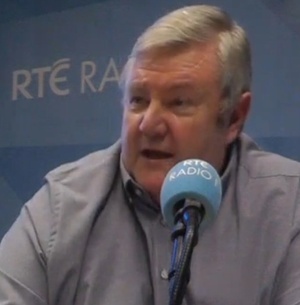
There were local warnings of this happening as far back in April. The meagreness of the government’s response to the Athlone air ambulance crisis, as evidenced last week on RTE Radio 1’s Saturday with Cormac Ó hEadhra, is just one more symptom of years of political indifference on Defence.

It is an indifference that should not be measured in terms of inputs only. The solution to the current problems lie not just in simply spending more money on defence. More money will be needed, but first we need to make some decisions about the defence and security outputs we need.

The key question is what do we expect of our Defence Forces in 2020?

Ask most Oireachtas members this question and you get a long, rambling response that talks about the great role the Irish Defence Forces have played in UN peace support operations since 1958.

It is not that the answer is wrong, it is that this is only part of the answer. The Defence Forces indeed play a vital role in UN peacekeeping as leaders and participants in UN led and UN mandated missions.

We have the longest unbroken record of overseas service with the United Nations of any country. We currently have over 650 defence force personnel serving on overseas missions across 14 different countries.

Given that personnel are on 4 or 6 monthly rotations that means that almost 1,700 Irish troops will serve on overseas missions this year.  While this is down on the averages up to 2008, it is still a respectable figure for the Defence Forces’ off-island role.

The problem comes when you ask about the Defence Forces’ role on-island.

While these are still considerable, as evidenced by the 2018 year end report, the end of “the troubles” and development of various capacities within the Gardaí has somewhat reduced the calls on the Defence Forces to deliver its traditional ATCP (aid to the civil power) and ATCA (aid to the civil authority).

And – although units such as the Army Ranger Wing and the Ordnance (Bomb Disposal) Corps are world leaders, trained and equipped to the highest international standards – we still, in the words of UCD’s Prof Ben Tonra:

“…lack the minimum conventional combat capability necessary to provide for any territorial defence based on credible deterrence.”

This is not something new and, despite my penchant for sticking it to Varadkar, not something that even I can blame on him.

Successive governments have, based on the best available (military) intelligence and threat assessments, judged that we did not need fighter, attack or transport aircraft, combat tanks or heavy artillery to provide on-island defence.

Reasonable decisions, in hindsight, based on getting the greatest return on the money spent.

But what of the future?

Has the threat changed?

In a word: yes.

Ireland is now strategically important to Europe’s digital economy. As I have said before, up to 40% of the EU’s personal data is stored here. This makes us an increasingly important target for a range of malign actors, state and non-state. We are now the sixth most cyber attacked country in the EU.

The presence of so many global IT giants here has put Ireland at the nexus of a cyber security threat, into which the Irish State is operating with virtually no virtual protection capacity of its own.

The tech corporations see the threat and prepare accordingly, but they protect themselves – the bits in between, the critical pieces of national infrastructure such as hospitals, transport and information systems are the responsibility of the State.

Last month’s World Economic Forum survey of global CEOs reported that cyberattacks are now seen as the second biggest global threat to business. Cyberattacks are the number-one risk for businesses in the US, Canada, the UK and Germany and have edged out all other risks in France and Italy to be their number one concern for the first time.

Meanwhile EU leaders, including Merkel, Juncker and Macron want the EU to develop its own data and cloud services to counter the US and China’s dominance of the global digital economy.

This would mean more business for Ireland, but with that business comes more risk – yet that risk comes, in turn, with huge potential for Ireland to be a world leader in cyber security, particularly in training the next generation of cyber security specialists.

The critical importance of the IT and digital sector to the Irish economy makes cyber security a national defence issue. The Defence Forces have a key role in delivering this key element of on-island defence, along with a range of other State agencies.

To do this they must have the resources and capacity and to achieve this they must have the policy framework and political leadership they have not been shown in almost a decade.

Derek Mooney is a communications and public affairs consultant. He previously served as a Ministerial Adviser to the Fianna Fáil-led government 2004 – 2010.  His column appears here every Monday.Follow Derek on Twitter: @dsmooney

Rollingnews

Gulp.

Mark at Weatheir writes:

Counties Tyrone and Roscommon were Ireland’s coldest locations overnight with mercury levels dropping to minus 5 Celsius at the Met Éireann stations.

The air temperatures at Castlederg (Tyrone) and Mount Dillon (Roscommon) were the lowest recorded in Ireland since February.

Coldest night in Ireland since February (Weatheir)

Yesterday.

Homeless campaigner Sister Stanislaus Kennedy ‘Sr Stan’ made an urgent appeal for donations as she launched Focus Ireland’s Christmas appeal (with the charity’s youngest supporter, 3-week old Amélie Conney, and mother Aoife who works for the charity).

Over 140 babies were born into homelessness in the nearly 600 families supported by the charity in Dublin alone.

Focus Ireland

Leon Farrell/Photocall Ireland

Yesterday.

Blanchardstowm, Dublin 15.

Ann Summers wooed Blanchardstown shoppers with a guest appearance by Love Island’s Maura Higgins – who is the face of their latest lingerie campaign – including ‘social influencer’ Niamh Cullen (pic 3) and Ciara Hodson (left) and Yasmine Barber (pic 4).

Leon Farrell / Photocall Ireland

From top: Thomas Pringle TD; filmmaker Paddy Slattery, right, on set directing his debut feature film Broken Law

Tomorrow in the Dáil.

Donegal Independent TD Thomas Pringle will be tabling a motion for the right to a personal assistance service for people with disabilities in Ireland.

The motion calls on the Dáil to legislate for the establishment of a commissioner of independent living within the Department of Social Protection tasked with establishing a comprehensive personal assistance service (PAS).

The motion can be read in full here.

Ahead of tomorrow’s motion, award-winning filmmaker Paddy Slattery, from Tullamore, Co Offaly, writes:

“Imagine being told you don’t have a right to lead an independent life.

Imagine being told you don’t have a right to design your own daily/nightly routine.

Imagine being told your basic needs will be met on someone else’s limited and degrading terms, if at all.

Imagine your life’s goals and ambitions having to be curtailed or moulded around someone else’s limited schedule.

Well, people with disabilities in Ireland (myself included) don’t have to imagine because without a Personal Assistant Service (PAS) we would be incapable of undertaking the most basic of physical or sensory needs without relying heavily on help from our family, our friends and nurses.

I happen to be one of the very fortunate few living with a disability and provided with a PAS. Without it, I may as well kiss my ambitions of filmmaking goodbye. I may as well do our government a favour, curl up in a ball and die.

You see, our government believes we shouldn’t have a right to a Personal Assistance Service. In fact, our government considers it an unnecessary expense and would much rather spend a hell of a lot more of our Tax payer’s money (yes, I also pay tax) on institutional care and carer related services.

What this actually means is that people like me should be “looked after” or “nursed” on a very limited and set schedule, because they don’t think our basic human rights and needs should be met or even recognized as WE see fit.

This is 2019. Not 1919. We are capable of deciding what’s best for US.

What does Independent Living actually mean for people with a disability?

Independent Living is about people with disabilities having the freedom of CHOICE in terms of housing, transportation, education and employment.

Independent living is about choosing what aspects of social, economic and political life people with disabilities want to participate in.

It’s about having control over your life, to have a family, to get a job, to participate socially and to realise your goals and dreams.

For many people with disabilities, Independent Living can be best achieved through the Personal Assistance Service (PAS).

A PA does not “look after” or “care for” me. With the PAS, WE are in control and direct the PA to carry out tasks both inside and outside of the home, including personal care, domestic duties, assisting in day-to-day tasks such as shopping, support in the workplace or socialising.

A distinct benefit of PAS is that it reduces dependence on family and friends. The confidential relationship that develops between us and our PAs allows us to maintain a private life and our dignity.

The PAS is often the difference between existing and living.

Some not-so fun facts:

Because our government doesn’t recognize the right to a Personal Assistant Service, it currently operates as a Pilot Project which renders it ineffective for most people availing of the service.

In 2017, 84 percent of those in receipt of a PA service received less than three hours a day and 42 percent of these people were in receipt of between one and five hours a week. This is only an average of 42 minutes a day.

As far back as 1996, it was identified that an average need for 10 hours of PA service per person per week could only respond to essential personal care needs, not quality of life requirements and it would certainly not enable full participation in the community.

Currently there is no legal right to personal assistance in Ireland. There is no standardized procedure or application process and those in receipt of this support have no security regarding the continuation or extent of their service due to lack of legislative protection.

So what now?

Tomorrow a motion will be brought before the Dáil to debate our right to a Personal Assistance Service (PAS). Right now we all need to become active and let our elected representatives know that this is a human rights issue.

We need you to mobilise friends and family to email your local TDs to ensure they participate in the debate and vote in favour of the Motion.

This is URGENT as this is our opportunity to have our voice heard!

We are simply asking our TDs to support this disability rights campaign. We need our TDs to be part of the debate when the motion is put to the Dáil tomorrow.

If you have read this extremely important appeal, thank you so much for your time.

Please share this message and feel free to tag any politicians you might know on social media.”

Pic: David Foley

Previously: Life In The Moment

Thanks Paddy

From top: O’Devaney Gardens in Dublin 7; Sinn Féin TD Eoin Ó Broin

This morning.

Via Sinn Féin Housing Spokesman Eoin Ó Broin:

“Dublin City Council is led by a coalition of councillors from Fianna Fáil, the Green Party, the Social Democrats and the Labour Party, known as the Dublin Agreement Group.

On Monday, November 4th, the Dublin Agreement Group announced that they had secured a new deal with Dublin City Council management and Bartra for the O’Devaney Gardens development.

On foot of their announcement, the deal was approved by a majority of city councillors at the monthly council meet that night.

“The Dublin Agreement Group claimed to have secured an additional 30% of the development for affordable rental housing. This would be delivered through a purchase agreement between Bartra and an Approved Housing Body.

“However correspondence between the Minister for Housing Eoghan Murphy and Dublin City Council Mayor and Fianna Fáil councillor Paul McAuliffe, secured under Freedom of Information, shows clearly that no affordable rental accommodation has been secured for this development.”

The minister’s letter issued to Mayor McAuliffe on November 6th states that no new deal has been secured for the O’Devaney site;

That no funding for affordable rental units has been requested from or approved by his department; that additional affordable units would not be in line with the tenure mix agreed by the department in 2017;

That the rents charged on any such units would not be affordable as the units would be purchased at market rather than cost price;

That no legal advice has been sought by Dublin City Council to determine whether the inclusion of affordable rental units would breach the procurement process and open the council up to legal challenge from unsuccessful bidders; and crucially that councillors from other parties voted for the deal ‘under the impression’.

That a new deal or agreement had been reached when it had not.

There are only two conclusions that could be drawn from the minister’s letter.

Either the Dublin Alliance Councillors are incompetent or they deliberately misleading their fellow councillors and the public.

They secured a majority of support from their fellow councillors for the transfer of a multi-million euro strategic housing development site to a private developer on the basis of a claim that is completely false.”

Thud.

Dublin City Councillors and public misled on O’Devaney Gardens Deal – Eoin Ó Broin TD (Sinn Fein)

Murphy says agreement on O’Devaney Gardens cannot proceed (RTÉ)

Previously: O Devaney Gardens On Broadsheet

Rollingnews

Meanwhile…

Broadsheet.ie