
Previously: Iona Lot Of Airtime



 He’s up for the ‘best job in the world’.
Comment moderator on Broadsheet.
A lifestyle photographer in Australia.
Heber Hanly writes:
I am writing to inform you that I have been shortlisted as part of the Best Jobs in the World competition. It is a competition run by the Australian tourism board to find people both locally and internationally to work in certain jobs. I am one of three Irish people selected in the shortlist.
The role I am attempting to fill is that of lifestyle photographer. If I get it I will essentially be doing is working as a photojournalist in Melbourne for 6 months. Now that I have been selected I have to begin promoting myself in local media. When I heard this I thought about contacting you guys as you directed a lot of traffic towards my Junior Spesh video (which I would like to really thank you for as it brightened my day).
Watch here: ‘Best Job in the World’ (Australia.com)


 Graphic designer and best-dad-ever contender David LaFerriere has been drawing illustrations on his kids’ school lunch sandwich bags for the last five years.
He’s photographed 1,100 of them and you can explore the entire collection on his Flickr stream.

 Some empirical evidence.
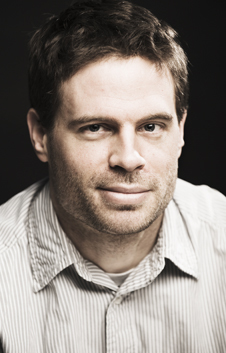
An investigation into the Irish media’s role in Ireland’s housing bubble by Canadian academic Dr Julien Mercille, above, of University College Dublin is out.
A synopsis of the article has been published on Social Europe Journal, in which Dr Mercille writes:
“It is not too difficult to identify a housing bubble in the making, based on simple indicators such as the P/E (price/earnings) ratio and the price-to-income ratio. This is what a few analysts did, such as The Economist magazine, which stated in 2002 that Ireland’s real estate market had been ‘displaying bubble-like symptoms in recent years’ and estimated that it was then overvalued by 42 per cent. However, the Irish media were almost without exception cheerleaders for the booming property market, only dampening their enthusiasm months after prices had started to decline in late 2007 and 2008.”
“One way to illustrate this claim is simply to count the number of references in the press to the notion of a ‘bubble’ in the housing market before and after the crash. The figure [below] shows this for the Irish Times, Ireland’s newspaper of record. It can be seen that before 2008-2009, there were comparatively few articles that even mentioned that the market might be in bubble territory. On average, the newspaper had 5.5 times more articles on the bubble per year in 2008–2011 than in 1996–2007. For the newspapers Irish Independent and Sunday Independent, which boast a high readership, it was even worse: they had on average 12.5 times more articles mentioning the bubble in 2008–2011 than in 1999–2007. And that doesn’t mean that such articles published before the crash warned of a bubble—very, very few did, and many only talked about it to attempt to reassure readers that in fact, it didn’t exist.”

“Some Irish Times articles’ titles give an idea of media coverage,” Dr Mercille adds:
‘Bricks and Mortar Unlikely to Lose Their Value’ (11 December 2002),
‘Prices to Rise as Equilibrium is Miles Away’ (18 March 2004),
‘House Prices “Set for Soft Landing”‘ (22 November 2005),
‘Property Market Unlikely to Collapse, Says Danske Chief’ (2 February 2006)
And
‘House Prices Rising at Triple Last Year’s Rate’ (29 June 2006).”
He continues:
“Another way to look at the performance of the Irish media before the crisis is to consider that between 2000 and 2007, the Irish Times published over 40,000 articles on economic topics – but only 78 were about the real estate bubble, or 0.2 per cent of the total. In other words, any article that might have been critical about the housing market was effectively lost in a sea of uncritical reporting. That’s a very poor record for one of the most important economic events in Ireland over the last decades.”
“Television displayed the same behaviour as the print press. During the boom, the state broadcaster, RTÉ, fed the national obsession with property by airing shows like House Hunters in the Sun, Showhouse, About the House and I’m an Adult, Get Me Out of Here. In particular, Prime Time, a leading current affairs programme, remained essentially silent on the dangers inherent in the rapid growth of the property market.”
“Between 2000 and 2007, it presented over 700 shows, but only 10, or about 1 per cent of the total, talked about the housing boom. Worse, the majority of these had guests arguing that there wasn’t any bubble. This is not surprising, as most of them were either affiliated with the property and financial industries or politicians from Ireland’s establishment parties (Fianna Fail, Fine Gael and Labour), which all had direct or indirect political or economic interests in sustaining the fiction that the Irish economy was booming, and would not stop booming. They were quickly brought back to their senses, but alas, too late.”
The full academic journal is available to purchase – at a knock-down-price! – here.
Previously: A Reason We’re In This Mess
Pic: UCD
H/T: Rob Kitchin
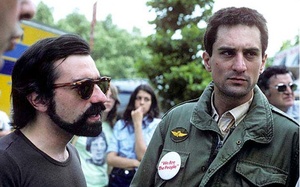

‘While preparing for his role as Travis Bickle in Taxi Driver, De Niro obtained a cab driver’s license, and when on break would pick up a cab and drive around New York for a couple of weeks’ – Wikipedia
Robert De Niro’s Taxicab License, 1975 (Retronaut)
(Hat tip: Whaddyanuts?)


Micheal Martin wishes Enda Kenny and Eamon Gilmore a happy birthday today – says “birthdays are about the only thing uniting both of you”.
— Justin McCarthy (@JustinTodayFM) April 24, 2013


If you are going to get knifed.
Do it in a DoodleMoose Design.
DoodleMoose Design’s new reasonably-priced feshtival range.
Ideal for the ‘bants’ and nocturnal, camp site bilingual ‘craic’.
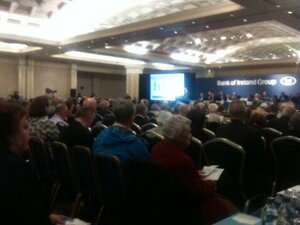
Slip of the tongue from 1st shareholder to ask a question at BOI AGM, praises new Chairman’s “expensive” experience instead of “extensive”
— Brian O’Donovan (@BrianODTV3) April 24, 2013
Former Lloyds TSB banker Archie Kane was appointed chairman of Bank of Ireland last summer, a reported €390,000-a-year position.
Shane Ross reported at the time:
“A little digging does not soothe the soul. It is deeply disturbing. The news from Scotland about Archie was not reassuring.”
“Richie Boucher will be delighted to learn of the type of paydays Archie has enjoyed over the last 10 years as a director of the ailing Lloyds Bank. But even Richie might wonder why Archie left Lloyds last year, seemingly at the height of his earning power.”
“Richie might wonder how Lloyds was prepared to lose a man of such talent, whom it had rewarded for a decade with the sort of outlandish take-home pay that would make Michael Fingleton blush. Yet Lloyds let him go.”
“On March 1, 2011, a new chief executive, Antonio Horta-Osorio, arrived in Lloyds from Spain’s Santander Bank. Within weeks, long-time Lloyds insurance boss Kane and its retail boss Helen Weir had retired. Reuters described the speed of the departures as a “boardroom cull”. The Mail Online said Kane had been “shown the door”.
“Kane’s insurance division had been regarded as a moderately successful arm of the troubled bank, justifying his sky-high bonuses during his 10 years in the boardroom. Yet just a month after he left Lloyds, a landmark court case found that Lloyds and other banks were liable for vast compensation payments to clients who were victims of mis-selling of insurance policies.”
“The offending policy was known as Payment Protection Insurance (PPI), a product designed to compensate vulnerable borrowers who lose their jobs or become too sick to work. PPI was a paradise for unscrupulous sales people. Tens of thousands of Lloyds clients were victims.”
“Lloyds was the worst PPI sinner of all the UK banks, although the mis-selling scam was widespread.”
“Lloyds threw in the towel. The new chief executive decreed that the bank must set aside £3.2bn to pay compensation to customers who were victims of the mis-selling. The bank was forced to declare a loss of over £3bn for the year.”
“The bank never suggested that Kane had deliberately mis-sold PPI products. Yet nine months after he left, in February this year, it made a dramatic announcement. The Daily Telegraph carried the story: “Lloyds Bank strips 13 directors of more than £2m in bonuses”.
“Among the five executive directors stripped of their 2010 bonuses was Archie Kane, now governor of the Bank of Ireland. It was the first ever clawback of its kind. The reason given was the bank’s role in the mis-selling of PPI.”
“Kane and three others were ordered to surrender 25 per cent of their 2010 bonuses. Kane had received a bonus of £767,000. He was compelled to forgo £190,000 of it.”
…
“The appointment of Kane is a banker’s response to the sacrifices made by the people of Ireland to rescue the Bank of Ireland. The board has delivered the ultimate insult, confirmation that in Ireland the banker is still boss.
From the board’s point of view they made the ideal choice. Governor Kane will fit in perfectly with the prevailing culture at the Bank of Ireland and the deteriorating standards at the Central Bank. Although he is one of the first bankers ever to have been forced to return a bonus, he is still up there with the best of the £10m plutocrats. He will understand Richie Boucher perfectly. Nothing has changed.”
Meanwhile:
“F-you Richie Boucher” says one Bank of Ireland shareholder but the next one to speak praises the CEO #TV3News
— Brian O’Donovan (@BrianODTV3) April 24, 2013
Pic: Brian O’Donovan
Shane Ross: No bonus for B of I governor (Sunday Independent)