Tag Archives: An Garda Síochána

904331339043313590433137
904331539043314490433139
90433142

This morning.

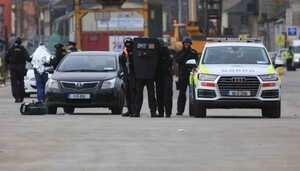
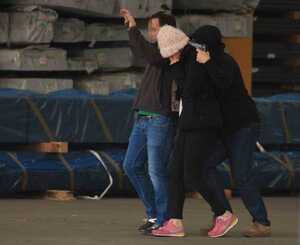
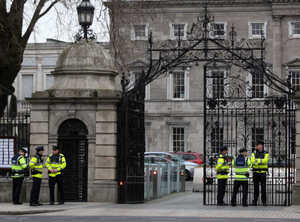
Drogheda Pier, Drogheda, Co Meath County Louth.

Scenes from a garda exercise involving members of the Emergency Response Unit (ERU) freeing two hostages from a ‘terrorist gunman’ holed up in a port warehouse. Members of the ERU also boarded a trawler on which they discovered ‘explosives’.

Inside job.

Eamonn  Farrell/Rollingnews

Anarchy!

123

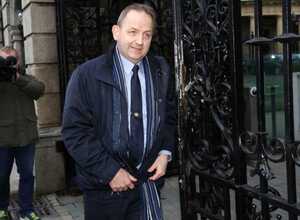
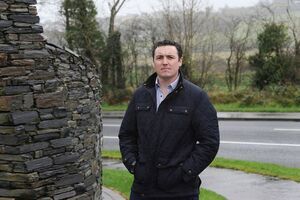
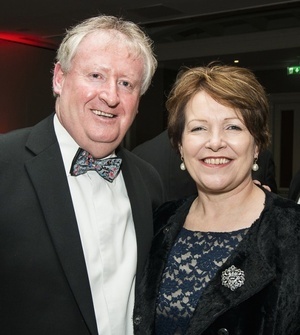
From top: Maurice McCabe; Keith Harrison; Garda Commissioner Noirin O’Sullivan and her husband Chief Superintendent James McGowan

Yo may recall the two recent protected disclosures sent to the Tanaiste and Minister for Justice Frances Fitzgerald.

They were reportedly sent by Sgt Maurice McCabe and Supt Dave Taylor, former head of the Garda Press Office – with Supt Taylor stating he was instrumental in the campaign to discredit Sgt McCabe.

Yesterday, Philip Ryan, on Independent.ie, reported on a meeting that took place between the two gardai in which Supt Taylor told Sgt McCabe about the campaign.

Mr Ryan reported:

Taylor said three phones, which are currently in garda custody as part of the investigation into leaks, held the evidence to back up his claims.

He said the phones contained chains of text messages outlining the plot to target McCabe by spreading vicious lies about the whistleblower and his family.

The texts were sent to senior gardai, members of the media, and prominent politicians.

The allegations could never be printed due to the defamatory nature of the claims, but they spread like wildfire in political and garda circles.

No matter how many times independent investigations proved McCabe’s claims were correct, there was always a cloud over his reputation.

Taylor told McCabe he regretted the role he played in spreading the rumours but insisted he was acting under instruction.

He claimed former garda commissioner Martin Callinan knew what was going on, as did his successor Noirin O’Sullivan, who was then a deputy commissioner.

It was further reported that, in February 2015, Ms O’Sullivan’s husband Det Supt James McGowan seized Supt Taylor’s phone and laptop two months before Supt Taylor was arrested for allegedly leaking information to a journalist in relation to a Roma child being taken into custody over fears she had been kidnapped.

On Friday, Minister for Justice Frances Fitzgerald appointed former High Court judge Justice Iarlaith O’Neill to review Sgt McCabe and Supt Taylor’s claims.

Further to this, the solicitor of fellow Garda whistleblower Keith Harrison, Trevor Collins spoke to Cathal MacCoille on RTE’s Morning Ireland this morning.

It came after Colm Burke, on yesterday’s This Week, reported on a letter Mr Collins sent to Ms Fitzgerald, on behalf of Mr Harrison, following the appointment of Justice O’Neill.

During the Morning Ireland interview, Mr Collins raised concerns about the scope of the new inquiry.

Cathal MacCoille: “I asked him [Trevor Collins] to outline what his client Keith Harrison’s objections to the review as proposed.”

Trevor Collins: “Well my client, two and a half years ago, Cathal, made a disclosure, a protected disclosure to, at that time, the Confidential Recipient which was later referred to GSOC and, following on from that, my client has had to endure a campaign that has been orchestrated, we believe, senior members of An Garda Siochana – the sole purpose of which has been to undermine his credibility and effectively destroy his reputation and this campaign has been endured by my client. We have made known to the minister and Tanaiste that this has been ongoing and that we’ve called upon her to take action.

“My client was astounded to learn, on Friday evening, the terms of references as they have been established in circumstances where, if you take it that, all week, the allegations that were before the Dail and that are on the Dail record that there appears to be a deliberate and high-level smear campaign against whistleblowers within An Garda Siochana, we took it that the Tanaiste would take the necessary steps to inquire into these very serious issues of public concern and it is disappointing to learn that she has chosen to, effectively, cherrypick and base any inquiry solely upon the disclosures of Sgt McCabe and Superintendent [Dave] Taylor rather than the other whistleblowers who have suffered similar treatment at the hands of An Garda Siochana.”

MacCoille: “And I know that you’ve put that view in a letter to the Minister on the 8th of October, seeking a wider review than that established – have you got any response?”

Collins: “As yet, no.”

MacCoille: “What do you make of the limitation of this inquiry, as set up by the Minister to the two protected disclosures made to her as Minister for Justice? That’s not including, obviously a disclosure from your client, Keith Harrison. Is that not a… why is that not a fair enough thing to do. If it’s on her desk, formally, a protected disclosure, why is it not reasonable for her to limit the inquiry purely to those two disclosures?”

Collins: “Well, the issue here is that, as An Tanaiste’s press release states, in her own words, she states it is vitally important that the claims that people make in disclosures are properly addressed and she states that they should be proper, just and fair to all and the rights of everyone, to fair and proper procedures have to be vindicated – these are her words. And my submission is that while we are a whistleblower and my client had made known to the Minister the serious issues that are, that he has suffered and the victimisation, the intimidation, the ostracization that is ongoing. I have outlined to her, in no uncertain terms the issues that I believe are of public concern and they have been on her desk since May, at the very least. This is the fourth or fifth time that I’ve written to the minister on this matter and to simply ignore these issues and leave my client in limbo does not vindicate his rights.

MacCoille: “Can you give us some more detail on, without naming people obviously, on the kind of pressure you say Keith Harrison, your client, has undergone because of being a whistleblower?”

Collins: “Well what I can say, without going into detail, is he has been the subject of surveillance, he has suffered victimisation, bullying harassment, as has his family. There has been a dissemination of rumour and innuendo which has been solely designed to undermine his credibility and that has been circulated within certain members of the media, certain politicians and his Garda colleagues. And, furthermore, there’s been a deliberate frustration of GSOC’s investigations of his disclosures. The whole campaign and operation here is designed to frustrate any investigation into my client’s disclosures, to discredit him and to destroy his reputation. So that if any findings are made, that his credibility and integrity is in his question.”

MacCoille: “And it’s his belief, is it, that all of this dates back, or starts with the time in 2009 when he stopped a Garda colleague for drink driving – a charge which was subsequently dismissed in the court?”

Collins: “There was particular issues that relate from 2009 to 2014. But they are being dealt with in a separate forum. The issues that we have put before the Minister relate to the period after his disclosure, his protected disclosure became known and, following on from that, the treatment he has suffered is what has caused us serious concern. And this treatment has been dished out effectively by An Garda Siochana.”

MacCoille:How sure can he be, given what we’ve heard several times from the Garda Commissioner [Noirin O’Sullivan] that she supports whistleblowers and would not support any campaign against him and how sure can Keith Harrison be that this was organised at a senior level, as he alleges?”

Collins: “Recently, we’ve learned of an instance where certain issues were disseminated from Garda Headquarters to members of the media. This has confirmed what…this is one of the issues, this is one of the facts that have been confirmed to our client and this is confirmed to him that what he believed to be the case is in fact true.”

MacCoille: “Confirmed by a journalist?”

Collins: “I cannot go into it any further than that, Cathal, but what I can say is that the similarities as between the whistleblowers and so far as what has been reported and the treatment, it’s, you’re talking about whistleblowers from different divisions but they’re suffering the same type of treatment.”

Later

Collins:This appears to be a flawed inquiry from the very outset. If Mr Justice O’Neill is unable to deal with and look into whistleblowers and their treatment, from the outset, rather than having it done in a piecemeal fashion where you’re dealing with Sgt McCabe and Supt Taylor, and their disclosures, and effectively leaving aside and not vindicating the rights of the other whistleblowers, in so far as the complaints and issues they brought to the attention of the minister.”

Listen back in full here

90423610 90423620 90423621

This morning.

Leinster House, Kildare Street, Dublin 2.

Ciaran ONeill, President of the Garda Representatives Association, calls on the government to “honour the term of the Haddington Road agreement” which ends today.

Under the Financial Emergency Measures In The Public Interest Act, organisations who have not signed up to the Landowne Road agreement will be subjected to a pay freeze from tomorrow.

This includes new Garda recruit earning €23,171 a year.

Leah farrell/Rollingnews

Screen Shot 2016-06-27 at 14.26.44

Dublin-Seven-Website-Only

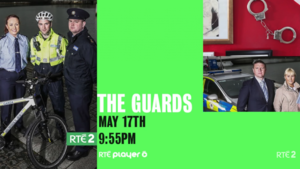
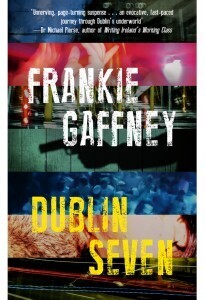
From top: RTÉ documentary The Guards; Frankie Gaffney’s book Dublin Seven

The uncompromising reticence to discuss the matter of Garda corruption is incredibly sinister.

Frankie Gaffney writes:

A recent RTÉ fly-on-the-wall documentary, The Guards, was advertised with an emotive montage of individual Gardaí speaking to camera, intimately relating various bad experiences they’d endured during duty: “I’ve been called names”, “I’ve been headbutted”, “I’ve been kicked”, and so on.

I can identify with their trauma. Living in the inner-city, I’ve been verbally abused, threatened, punched, kicked, had my home smashed up, and had money and personal belongings stolen from me.

But I didn’t feel safe calling the police. Why? Because all these actions were carried out by members of An Garda Síochána on operational duty. And it all happened before I was eighteen.

I was six years old the first time I was strip-searched.

Our national broadcaster chose to air this documentary at the height of a policing crisis. The programme provided a lengthy forum for Gardaí to boast unchallenged of the prowess their new initiatives. “New” intiatives which include a continuation and escalation of their futile war on drugs.

As Noam Chomsky has pointed out, it is not actually a war on drugs, or on people who take drugs, it is instead a war only against poor people who take drugs.

If ever a policy was designed to inflict misery on the weak and vulnerable it is this idiotic and evil folly.

It would have more useful, if instead of this programme, sympathetic to our newly discredited police force to the point of sycophancy, we had a documentary about the assaults Gardaí perpetrate on working-class young people and vulnerable addicts.

Or perhaps an investigation into some of the suspicious deaths of those under arrest. Deaths like that of 20-year-old Terence Wheelock, a young man with no history of self-harm who police assert hung himself in custody.

Or Brian Rossiter who was only 14 years of age when he died from brain injuries in a police cell. His parents were told by Gardaí that disciplinary proceedings arising from incident were “none of their business”.

As Fr Peter McVerry put it, speaking of how young people in the inner-city relate to the police, “neither group has any respect for each other, but it is up to the Gardaí to show some respect for the people they have power over”.

It is the Gardaí, remember, who, acting freely as adults, swear an oath, don a uniform, and are paid money to uphold the law. In my experience, this means nothing to them.

RTÉ’s The Guards continues a long tradition throughout Ireland’s media of unquestioningly accepting any narrative offered by Gardaí, and relating stories from only their perspective.

Our media is beholden to An Garda Síochana, not least because members of the force continue to feed journalists stories at their individual discretion, without anything approaching due process. The most obvious exemplar of this is the country’s highest profile (and highest-paid) crime correspondent, Paul Williams.

In perhaps the most egregious example of the power Williams wields, he went on the Late Late Show one week before the election, and explicitly warned viewers not to vote for Sinn Féin – because a vote for them would endanger lives.

He contended his antipathy for this political party was due to their intention, if elected, to abolish the Special Criminal Court. This is a proposal backed by both the Irish Council for Civil Liberties and Amnesty International.

The Special Criminal Court was established in 1972, purely to deal with the escalation of IRA violence at the time. The court was always intended as a temporary measure, to be abolished when the Troubles ended. There is no jury.

According to Williams it’s only the gangsters and drug-dealers “smirking on Francis St” (did he see this?) that want this extraordinarily draconian “Star-Chamber” style court abolished. Yet ironically, the court has used its full set of powers to prosecute anti-drug activists in the past (with convicted heroin dealers appearing as witnesses for the State).

Williams, who also receives 24-hour protection from the police (paid for by the taxpayer), has little or nothing to say on the subject of Garda corruption other than to deny its existence. Throughout his career, he has backed up An Garda Síochána to the hilt.

The fanciful depiction of the Gardaí as the perpetual good-guys continues into fiction. Also from RTÉ, the phenomenally succesful Love/Hate fed audiences hungry for an insight into Dublin’s underworld.

I admit to a love/hate relationship with this drama.

The writing, the directing, the acting, the storytelling as a whole – at times all were fantastic. The show displayed serious Irish talent, and made incredibly compelling viewing. It deserved its success. Like most Dubs, I was excited all week for the next episode. But the “Guards = good”, “gangsters = bad” narrative is just not real life. Not even close.

The recent epidemic of corruption in an Garda Siochana was just the tip of the iceberg. Prior cases in Donegal and ongoing revelations from Leitrim demonstrate this clearly.

Yet any concessions from the establishment that there may be the remotest hint of corruption within the force have to be bitterly fought for. The reticence to even discuss the subject, the bitter resentment and persecution displayed towards those who raise it, and the silence on the potential for deeper problems, is incredibly sinister.

For example, anyone with the remotest concern for policing standards should have been screaming from the rooftops the moment the now faithfully departed Commissioner Callinan denied (prior to any inquiry) that there was corruption in an Garda Siochana.

All organisations the size of An Garda Siochana (approaching 13,000 members) will, as a matter of course, have some corruption. Callinan was claiming nothing short of omnipotence. This disgraceful – despicable – assertion from that blustering buffoon should have seen him sacked on the spot. Yet it went largely under the radar.

This thundering disgrace masquerading as a public servant went on to refer to the courageous whistleblowers, who stood up to bullying and smear tactics in pursuit of the truth, as “disgusting”. The whole squalid episode was shameful, exposing for all to see the rotten core of this state.

Yet now, after some cosmetic changes, some optics, a few soundbites and some window dressing, the situation has been remedied in the goverment’s eyes. You may proceed.

Last month Jim McGowan was promoted to the position of chief superintendent, an appointment which came – coincidentally – just two weeks before responsibility for promotions was to be handed over to an independent authority.

Jim McGowan also happens to have been the officer in charge of a a Garda unit specifically established to prosecute (or persecute?) political activists.

The same unit that designated 20 Gardaí in Tallaght to evidence gathering duty over a single protest in Jobstown – a protest at which nobody was even injured.

The same unit that sent 10 Gardaí in three cars to bang on a family’s front-door at 7am, to arrest a 16-year-old water protestor before he went to school. This, apparently, is what makes you rise in the ranks of An Garda Síochána.

Jim McGowan also happens to be Noirin O’Sullivan’s husband.

The commissioner’s attention certainly doesn’t seem to be focused on ending nepotism, or the unhealthy influence of party political interests on policing. Or, for that matter, on tackling corruption.

Nope, business as usual.

Nobody seems to be asking what part such frivolous and petty diversions of resources (or indeed potential high-level corruption) might play in allowing the gangs to operate as smoothly and effectively as they do.

The financial crisis that was used as an excuse for a massive transfer of wealth from the poor to the rich (and gargantuan cuts in health spending) was, in this country, brought about by recklessness, poor regulation and criminality in the banking and financial sectors.

To prevent this happening again, the Office of the Director of Corporate Enforcement (ODCE) was established. It was recommended that a dedicated team of forensic accountants be set up to target “white-collar crime”.

One accountant was assigned to this task. I say “was”, because this accountant has subsequently been transferred to other duties. For the past six months no accountants have been employed in this task.

While the media have been focused on gossip and speculation about the personalities involved in a petty “gangland” feud, in Ireland today a white-collar is carte blanche to commit crime. The type of crime that crippled this economy, consigned thousands to emigration, and has led this country to a situation where 10 people every week commit suicide.

And Paul Williams proclaims it is a vote for a party that wants to end this status quo that would endanger lives?

I see muscle bound men driving SUV’s with tinted windows, wearing balaclavas, carrying automatic weapons. These are the Gardaí.

If the children of the north inner-city Dublin are scared, what are they seeing that is scaring them?

“We need to demilitarise our police departments so they don’t look and act like invading armies,” said US presidential hopeful Bernie Sanders.

Creator of The Wire, David Simon, said Baltimore police treated people the same way “an Israeli patrol would treat Gaza, or the Afrikaners would have treated Soweto back in the day . . . they’re an army of occupation”.

Any of these comments could be applied to inner-city Dublin today.

Unlike our newspapers, unlike our documentaries, unlike our dramas, Simon’s magesterial American TV series The Wire did show the back-story behind their characters. It showed the reasons people fall into cycles of crime and addiction, what it is that causes poor and vulnerable people to to enter an inescapable spiral of criminality – a cycle that damages themselves as much as anyone else.

It showed how social conditions, inequality and deprivation, compel people to criminality. It also showed that corruption and profiteering from drugs and “gangland” extends right the way throughout our society, throughout our institutions, throughout the police force.

All the way to the top of the political ladder. Our writers, our journalists, our newspapers, our broadcasters, need to take note – and start telling the full story too. Anything less is a lie.

Frankie Gaffney is the author of Dublin Seven

90419623 90419624

A logo that doesn’t look like Bank of ireland’s?

This afternoon.

Leinster House, Kildare Street, Dublin 2

General Secretary of Association of Garda Sergeants and Inspectors John Jacob, with President of the Association of Garda Sergeants and Inspectors Antoinette Cunningham (top) and members of both organisations protesting over the Government “reneging on their promises and obligations in relation to members of the Gardai who are seeking a pay restoration”.

Rollingnews

90418088

It is understood the female resident was living in Bungalow 3 at the Health Service Executive-run facility.
The woman got into difficulty when she went to a common kitchen area to get something to eat, shortly before 10pm yesterday.
….Efforts to revive the woman were unsuccessful and she was pronounced dead at the scene.

Resident dies at Áras Attracta centre (RTÉ)


image

The Garda Síochána Ombudsman Commission has launched an investigation after the death of a man in garda custody in Co Mayo.

It is understood the man was detained [at Westport Garda station, above] earlier today and became unwell. He subsequently died..

Man Dies In Garda Custody (RTÉ)

Rollingnews


image

The Save Our Community Meeting in the Anner Hotel Thurles, Co Tipperary last October

Up to 1,500 people gathered at a meeting in Thurles on Thursday night to call for urgent reforms of bail laws to help tackle a growing “epidemic” of rural crime

Senior gardaí were present for the meeting, including Assistant Commissioner Jack Nolan and Chief Supt Catherine Kehoe for the Tipperary division.

The gathering heard calls for a series of tough measures to help combat the problem, such as electronic tagging of convicted criminals, stronger trespass laws and greater Garda resources.

Calls for bail law reform to tackle rural crime ‘epidemic’ (Irish Times, October 8, 2015)

Burglaries were down by 5 per cent, 26,246 report crimes last year. That development will come as a relief to the Garda and Government who had both been under pressure over the continued rise in burglaries.

The debate about rural crime was a feature of the election campaign, with claims that burglaries were occurring most frequently in rural areas, despite data showing the problem was growing much faster in Dublin.

…Like drugs offences, gun crime has declined significantly, halving in some areas…

Murder rate falls to 21 year low but threats to kill rise, CSO finds (Irish Times, today)