


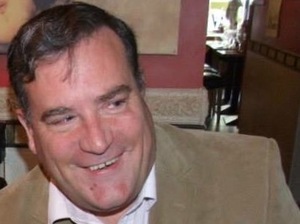
From top: The Welsh Assembly building, Cardiff; Dan Boyle
Part of negotiations to offer a new progressive force in Welsh politics the author warns of the dangers of excluding possibilities.
Dan Boyle writes:
Since the turn of the year I have been involved in that most uncomfortable of euphemisms – backroom discussions. I found myself approached, on behalf of my employers, by people previously unknown to me who wanted to talk about a new way of doing Welsh politics.
Intrigued and never adverse to talking, my curiosity sucked me into a process. The instigator was a man that I found since to be wholly honourable in the selling of his concept, and in his belief to involve others in its progress.
The concept was that a progressive alliance of political parties [Plaid Cymru,Wales Green Party and Welsh Liberal Democrats] could maximise votes [in elections in May] into additional Welsh Assembly seats, that would have offered the prospect of an alternative government being available to the Welsh electorate.
It was and remains a bold theory. One that sadly, on this occasion, has not come to pass.
That it came so close to being seriously considered is somewhat surprising, but perhaps is also an indication that a different way may be closer than had been hoped.
Politics, as that most trite of cliches goes, is the art of the possible. This process has illustrated to me why, even with those whose political instincts are open and pluralistic, what is known by whom and when is by necessity a cautious process.
Those of us tasked to listen and explore consulted narrowly, slightly expanding each time the numbers whose opinions were sought. The three political groupings involved would pride themselves on their internal democracy, the Wales Green Party especially so. It was particularly difficult for me to go before our National Council to present them with a series of what ifs and maybes with no names or pack drills.
The reason for seeming subterfuge wasn’t based on lack of trust. It was born of a belief that any group, and all groups are political, should have the freedom to see ideas develop in neutral situations.
In the end it was all academic. A third political party [Welsh Liberal Democrats] whose involvement in the process had seemed tentative, and was based more on preserving what they had rather than explore possibilities, exhibited the coldest of feet.
Abstracting this experience towards Ireland, to what could be an historic election in eight days times, it seems we are just as bad at excluding possibilities.
Like a pop up shooting gallery political media throughout the World (Ireland is no different in this) engage in a process of seeking definitive statements from political parties on will they or won’t they be in government with each other. It would be better if these alternatives could be offered before an election. However the suggestion of possibilities is to suggest political weakness.
The success of Syriza in Greece and Podemos in Spain is that they are less traditional political parties, more cohesive electoral arrangements designed to maximise the impact of previously unheard voices and opinions.
The choice is simple – we either do things as we have always done them or we do them differently. Nothing in politics changes until we change the way politics is done.
Dan Boyle is a former Green Party TD. His column appears here every Thursday. Follow Dan on Twitter: @sendboyle