

Tag Archives: Dan Boyle

Dáil_Chamberdan

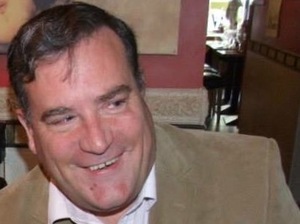
From top: Dáil; Dan Boyle

The current situation in Leinster House should be seen as the  best opportunity since the inception of the State to bring about a real democratic revolution.

Dan Boyle writes:

The Green Party I joined, with its single town councillor in Killarney, sought to push all the right counter culture buttons. To be a political party trying to bring about a different political culture, everything was done differently often just for its own sake.

The cult of personality was frowned upon. There would be no party leader. The sole leadership position was that of co-ordinator, really an administrator. Even this had to be rotated every six months lest anyone become drunk with power.

Group decisions were made by consensus- agreed unanimity. This led to many long, fruitless discussions on the most banal of subjects. It also led to the development of individual ‘conscience’ of the party events, where one person on a whim could block any decision.

The Greens eventually decided, somehow, that a party leader was necessary, that the general public had the right to expect a consistent representative of the party, emblematic of its values, with whom to interact.

Consensus decision making eventually made way for weighted majority voting. It still requires two thirds of the membership to approve major decisions for the party.

The experiments in democratic decision making have had their uses. Frustrating, and often ridiculous, these experiments may have been, but traditional methods deserve to be challenged. They certainly haven’t delivered better outcomes.

The idea that those who acquire 50% support in a parliament get the right to make 100% of decisions, is itself and always has been perverse.

This is why the current situation in Leinster House should be seen as an opportunity. The best opportunity since the inception of the State to bring about a real democratic revolution.

Minority government could see so many changes being brought about quickly. Accountability becomes a prerequisite. The culturally corrupt elements of government, like jobbery, become impossible to implement.

Backbench TDs would have the ability to change, even initiate, legislation. Something other than fixing the road.

A minority government persistently below the artificial level of 50% support would constantly have to think about what it does and how it justifies what it is doing.

Why couldn’t this be calibrated even further?

The more important the decision the more weighted the majority to secure it should be. This would help give adequate consideration to each decision, as well as help achieve a better sense of ownership of what is eventually decided.

Democracy should be more diffuse. It has to be more diverse. A word of warning though. A broader democracy removes the possibility of being able to blame ‘someone’ else.

The Yes Minister series had a running joke that to bring about changes was ‘brave’, meaning politically naive and stupid. The current situation makes change possible. It also requires some level of courage to move our politics beyond the party political.

Ego and self aggrandisement remain the prime motivators in our politics. We need to get to the we did this instead of I did this type of politics.

At the election count when I was elected to the Dáil I quoted The Smiths “I was looking for a job and then I found a job. And Heaven knows I’m miserable now”.  Today the appropriate Morrissey lyric would be “How soon is now?”.

Dan Boyle is former Green Party TD and campaign manager for the Greens in Wales. Follow Dan on Twitter: @sendboyle
ffroscommon

dan

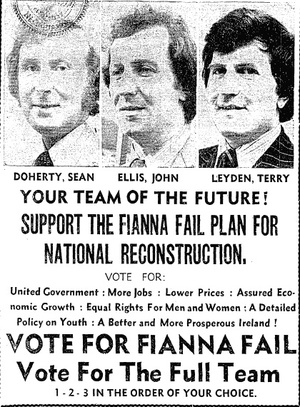
From top: Roscommon Fianna Fáil General Election literature 1977; Dan Boyle

It is time to end the necrophiliac practice of Irish politics [canvassing at funerals].

It diminishes us all.

Dan Boyle writes

As the prospect of another election in 2016 slightly recedes, I’d like to give some attention to one of the more distasteful aspects of Irish political campaigning.

A good friend recounted to me the antics of a very successful, and renowned candidate, from the recent general election.

It was his habit to attend as many local funerals as possible, in order to place his colourfully liveried 4 x 4 in front of the funeral cortège to allow for maximum public visibility.

I would have had my own experience of this, if not as blatant. Before my election I would have worked as a community development worker for Muintir na Tire in County Cork.

A high profile, key volunteer with the organisation would have experienced a terrible family event, when a teenage son would have succumbed to cancer. The funeral was a major event in the most remote of rural parishes.

Ten minutes into the funeral mass a local Fianna Fáil TD put into play his well practiced routine. At this time he deliberately and calculatedly entered the church. He walked up the centre aisle looking for the highest available seat. All in the name of maximum visibility. I have despised the man ever since.

A third distasteful incident was listening to the tributes in Dáil Éireann on the death of Sean Doherty, former Cathoirleach of the Seanad, Minister for Justice and TD for Roscommon. He of journalist phone tapping fame, and probably more famous for his Nighthawks TV interview that stuck the final knife in the back of Charlie Haughey.

A Roscommon TD recounted a story to the Dáil that he felt was humorous.

The story concerned the rivalry between Doherty and his Fianna Fáil stablemate, Terry Leyden. The death of a person of status in Roscommon made all public representatives adjust their schedules accordingly.

Sean Doherty managed to attend the funeral. When sympathising with the widow he needed to find out where he stood as regards his rival.

Has Terry been?” he asked when offering his ‘sympathies’.

“He came to the removal last night Sean,” the widow responded.

Slightly panicking at this answer, he was forced to think on his feet.

I’m glad. I had asked him to come along,” replied Sean, ‘honour’ thus being retrieved.

Jesus wept I thought as I was listening to this. It elicited laughter in the chamber, but to me it illustrated so many of the things that continue to be wrong with Irish politics.

It has always been thus and will always be thus you might say. I don’t. It is receding and is now more of a rural than an urban preoccupation.

That it exists at all reflects badly on all of us. It is time to end, to bury, this necrophiliac practice of Irish politics. It diminishes us all.

In my public career I had a strict friends, family, neighbours rule in relation to funerals. It probably cost me votes, although I don’t care if it did or not.

Seeing an end to this type of gombeenism is a funeral I would gladly attend.

Don Boyle is a former Green Party TD. Follow Dan on Twitter: @sendboyle

haulbowlinedan

From top:  Haulbowline island, Cork Harbour; Dan Boyle

What do Cork Harbour’s industrial policy and a South Wales steelworks have in common?

Slow death.

Dan Boyle writes:

The big political issue of the moment in Wales, indeed in the UK, is the imminent closure of its steel industry. The largest plant at Port Talbot employs four thousand people. There is an obvious social cost to these employees if the plant were to close suddenly.

There is also a horrible irony in seeing the country that invented the Industrial Age soon being without one of its core components.

As a Green I have some ambivalence about this situation. Steel manufacturing is far from the cleanest of industries. However every economy needs a strong manufacturing base. Green technology depends on high quality steel for everything from wind turbines to electric cars.

Port Talbot itself bears all the marks of being the industrial sacrifice area of Wales. It is as if the valleys have been kept clear so as to squeeze the country’s quota of pipes and plumes into this small piece of the Welsh coast.

Industrial policy in Ireland once saw Cork Harbour being promoted in a similar way.

Up until the 1990s the main employers were the NET/IFI fertiliser plant at Marino Point, and the Irish Steel plant on Haulbowline island.

A number of pharmaceutical plants opened during the 1970s attracted by a blind eye approach to environmental standards. Those standards did improve but the biggest pollution was still being done by the state owned and managed facilities.

It was simple brutal economics that did it for IFI and Irish Steel in the end. Sourcing materials and expanding markets proved impossible to secure.

IFI was wound down. Irish Steel endured an agonisingly slow death, being sold to an Indian asset stripper who scampered away when the five year subsidy period finished.

The legacy has been two horribly contaminated sites, Haulbowline being by far the worst. In the last two general elections both Michéal Martin and Simon Coveney produced greenprints showing what could be done with Haulbowline.

Neither has progressed any of the plans contained in those documents.

The person who has done most for Haulbowline has been John Gormley, who as the Green Minister for the Environment oversaw more hazardous materials being removed from the island, and more monitoring information being made public, than any time before or since.

I fear something similar may happen to Port Talbot. Buying time whilst kicking to touch is a certain recipe for a slew of unresolved social, economic but particularly environmental problems lingering in the region.

The filling the space responses of traditional political parties here come across as implied silent prayers – please Lord gets us over the election so we can spend the next five years not having to address this.

I’m only waiting for some politician/political party to provide a colourful brochure depicting a future Port Talbot with luxury hotel in place of the blast furnace, and a marina capable of berthing hundreds of yachts.

That’ll work. Ireland and Wales are more alike than I had realised.

Dan Boyle is a former Green Party TD (and senator) and currently working with the Wales Green Party. Follow Dan on Twitter: @sendboyle
Top pic: Denis Hogan

90087672
dan

From top: Ciaran Cuffe, Dan Boyle and Eamon Ryan during the break of a conference of members of the Green Party on whether or not to enter a coalition Government with Fianna Fail, June 2007; Dan Boyle

It is inexcusable that five weeks after a general election the two largest parties, ideologically indistinct, have yet to seriously broach the subject of being in government together.

Dan Boyle writes:

This time around, to the relief of many, I have had absolutely nothing to do with talks on forming a new government.

From what I have been able to gleam it seems that Fine Gael has learned absolutely nothing either from the recent election.

Like the other centre right party (with whom it has ‘nothing’ in common) it believes itself to be natural party of government.

When circumstances have deprived them of that they reach out to others, whom they believe will be happy with a seat at the big table, to allow Fine Gael to continue to do what it has always done in government.

It was the party’s approach in the last government that contributed to its loss of mandate. The last thing the party should expect is to be able to carry on as it has before.

I sat across a table when [Fianna Fáil grandee] Seamus Brennan made his “You’re playing senior hurling now lads.” remark. It was funny and was said without malice. However it had an implied intent of letting us know what our supposed place was.

Fine Gael seem to be approaching these discussions on government without humour, expecting a respect that frankly it isn’t due. Without being willing to shed any of its acquired baggage Fine Gael is making it impossible to acquire new partners to form a new government.

Perhaps that’s its intention.

Whatever the strategy, or lack of it, it is inexcusable that five weeks after a general election the two largest parties, ideologically indistinct, have yet to seriously broach the subject of being in government together.

In Spain or Portugal clear ideological differences exist among their political parties, making coherent government there difficult.

In Ireland it is only nuances of tone magnified by ego, pride and imagined slights, that prevent Fine Gael and Fianna Fáil from looking in the mirror and seeing each other’s reflection.

We’ve done single party majority and minority governments. We’ve done two party and multi party coalitions. Now it’s time for the Grand Coalition. It’s the last dance of the evening where the band is playing the last song in its repertoire.

It isn’t the government I want. I’m fairly sure the policies it will put in place will rub badly with me and many others. It is though the government that most of the voters in Ireland want and have chosen. It reflects the Ireland of 2016.

If it happens I don’t see it heralding any great left right divide in Irish politics. The salami slicing of the left will ensure that doesn’t happen.

We also need to be aware that over the last decade of electoral change the left vote hasn’t really changed at all. Sinn Féin’s vote has increased by about 7%. PABAPA secured less votes in this election than The Greens did in 2007.

The left vote may have gotten harder but it hasn’t gotten any larger.

So to my friends in Fine Gael and Fianna Fáil I say give it a bash lads. It’s not as if you have any principles to lose.

Dan Boyle is a former Green Party TD (and senator). Follow Dan on Twitter: @sendboyle

90222181

dan

From top: Counting during the seanad election, 2011; Dan Boyle

But it’s our rotten borough.

Dan Boyle writes:

I’m coming home again to vote in that other election. The rotten borough one. This time I’ll be using my National University vote. It has, at least, the credibility of being the largest electorate and thus potentially the most democratic vote for The Seanad.

Since 1993, with the exception of 2007, I was an elector (one of about one thousand) and sometime candidate on the vocational panels. They are not actual rotten boroughs but they are not far off it.

The petty ‘gift’ giving I miss. The offers of pens, ties, boxes of chocolate, music CDs, mini tricolours, or holidays in Connemara, all unsolicited, made me feel ‘special’. I was never offered the bottles of Jameson, but there were tales of councillors who would put a particular value on their vote.

If the vote buying wasn’t distasteful enough in its own right, the vote swapping has been the most uncomfortable aspect of the Seanad. For smaller parties it’s necessary as it compensates for the lack of proportionality in the system. Votes are maximised. It leads to some very strange bedfellows.

In 1993 The Greens were involved in an arrangement with Democratic Left and the Progressive Democrats. In 2007, having agreed to participate in government, we were obliged to vote with and for Fianna Fáil candidates.

.On other occasions there have been arrangements with Labour and for lower preferences with Sinn Féin. As recently as 2007 Labour and Sinn Féin had an arrangement with each other on vote sharing.

The most frequent vote sharing occurs between Fianna Fáil and Fine Gael. Those parties that can’t be in government together. These have been informal arrangements to ensure that the ‘county’ gets represented. Because of these arrangements, and lower population ratios, a disproportionate number of Senators have tended to come Connaught and from the border counties.

I contested the Seanad on a number of occasions. They were fishing expeditions, attempts to work out the labyrinthine processes. These included five panels with different numbers of seats being contested. There is no reason for this, the Constitution doesn’t specify why the panels shouldn’t have near equal numbers of seats.

The reasons why De Valera developed the vocational panels, and why this formulation has been defined by the Constitution, was that he was a great admirer of the Corporatist system being practiced that time by Dr. Salazar in Portugal.

We’re still living with this 1930s slightly democratic House of Parliament.

I enjoyed my time as a Senator better than my being a TD, despite the heightened political circumstances. There was a better, more reflective, type of debate there. There was better scrutiny of legislation.

In 2013 I campaigned strongly for The Seanad to be retained. If and when reformed it has the potential to be the arm of accountability our system of government still sorely lacks.

As for my vote, my precious vote, I’m looking for a context to have it used. That has to be worth at least one bottle of Jameson.

Dan Boyle is a former Green Party TD (and senator). Follow Dan on Twitter: @sendboyle

whitehouse

dan

From top: Taoiseach Enda Kenny with President Obama at the White House this week; Dan Boyle

Is that Shamrock in your pocket?

Or are you just identifying with an Ireland, which if it ever existed, certainly doesn’t exist now?

Dan Boyle writes

Growing up in Chicago as a child, I always had a sense of being distinct. I was part of a tribe, a tribe that thought itself and wanted others to believe it was special.

This was particularly true on the Irish Day – Paddy’s Day. The parade down State Street I remember as always being impressive, spectacular, entertaining.

The Chicago River was dyed green for the occasion. No ecological hang ups then. If questions were asked it was probably thought that an already badly polluted river could hardly be damaged any further.

In the evening we would be at a social in some parish hall. The band would never veer from three/four time, each tune they played would have a toor-a-loora chorus.

Later in the evening, after the appropriate amount of drink was taken, some loud voices would have been raised and arms flayed about energetically, in that male bonding ritual ‘we’ were renowned for. This to us was what being Irish was all about.

The family return to Ireland removed a lot of the mystique that had been created. Paddy’s Day wasn’t celebrated with anything like the same sense of pizzaz.

Walking (never in formation, never in time) with the Boy Scouts behind a half loader lorry stopping every five yards (we hadn’t gone metric yet) carrying the usual tableau of an embarrassed St. Patrick wearing a cotton wool beard, rarely stirred the loins.

In the years since, Ireland as is and Ireland as imagined in the United States of Irish America, are as as far apart as ever. Although it is now a different chasm which exists between the two alternate realities.

The US of A seems to have sunk further into a myth of identifying with an Ireland, which if it ever existed certainly doesn’t exist now.

An Irish political party (known to us all) which fundraises quite successfully there, certainly doesn’t want to disabuse that deluded branch of our diaspora of its cartoon, cardboard vision of Erin.

In Éire Nua we have a more confident sense of ourselves now, a sense of that has less need of being informed by how others see us. A confidence born from challenging our own myths, in becoming less accepting of the systems, the structures and the people who were meant to be obeyed in the Ireland that was.

We are leaving the old Ireland behind us. A new Ireland may be uncertain but we carry a hope it can be better.

The one link that remains at this time of year, between a modern forward looking Ireland and an Irish America ingrained in a mythological past, is the visit to The White House by the Taoiseach of the time, even the temporary ones.

When this embarrassing ritual is removed from the calendar, Ireland will have taken a huge step in achieving political maturity. I have never been persuaded by arguments that these displays of obsequiousness do anything to promote tourism or industrial investment.

The place of an Irish head of government is in Ireland on our national holiday. These occasions have the opposite effect of diminishing our sense of national pride.

We no longer need to warm ourselves over the embers of a dying empire. 2016, not its twentieth century counterpart, is the time for Ireland to take its place among the nations of the World.

A wider World. A more real World.

Dan Boyle is a former Green Party TD . Follow Dan on Twitter: @sendboyle
leinsterhouse

dan

From top: Leinster House this morning Dan Boyle

The opening of a new Dáil today contains the possibility of real change.

Dan Boyle writes:

Unlike the Mother of Parliaments, from which we have inherited many unnecessary and often silly procedures, the opening of our parliament lacks the pompous pageantry in which Westminster seems to revel.

The opening of a new Dáil is more like an All Ireland final day. Crowds of supporters there to support their team. Knowing glances and nods being cast in the direction of those famous players from previous championship finals. Those most known for their fouling seeming to be granted a perverse level of respect.

On my first day my Mother found herself in the visitors’ gallery sat next to Gerry Adams. Then he was still member of parliament and assembly member for West Belfast.

He began the dialogue. “You have someone here belonging to you Ma’am?,” he burred as if he were an Irish Clint Eastwood. She replied with appropriate maternal pride that it was I, Dan Boyle of the Green Party. The conversation, having been polite, friendly even, didn’t continue beyond that exchange.Retrospectively I would have liked The Ma to have reached the question “What was it like in the IRA, Gerry?,” .

The business of the first day of The Dáil is a number of set pieces interspersed with long periods of nothing happening. The election of the Ceann Comhairle, followed by the election of Taoiseach, is followed by the Taoiseach presenting his (it has always been his) government to the house.

There has rarely been any uncertainty in relation to any of this. The changes that could have been made have been studiously avoided. The opening of this new Dáil contains that doubt, a doubt that probably hasn’t existed since 1948. This uncertainty may mean that real change can at last happen.

Let’s hope so. It would be nice to see all TDs being truly equal. A Ceann Comhairle who insists that members of the Executive give answers to questions asked not mere responses.

A parliament where legislation drafted is informed by the contributions of each member who speaks in debates, and who when offering amendment to the legislation will only be impeded by the quality of the argument they make.

Committees would see research and pertinent questioning being rewarded, with grandstanding being derided as the loudest sound from the emptiest vessel exercise it is. We may even see senior civil servants emerge from the shadows to have accountability applied to them for their role in the decision making process.

Public appointments would be made through reformed committees, where applied experience rather than implied patronage would see the right, or at least more properly accountable, people being appointed.

In 2002, on our first day, Eamon Ryan and I shared the last four minutes of speaking time. My garbled two minutes were an attempt at revisiting The Gettysburg Address. I made the reference to government of the people, by the people, for the people.

We may be closer to that goal than we ever have been in our history. Then again we may not.

Dan Boyle is a former Green Party TD. Follow Dan on Twitter: @sendboyle

Top pic via Samantha Libreri

90382846dan

Top (from left Labour’s Brendan Howlin, Joan Burton and Ged Nash last year: Dan Boyle

His predictions were almost spot on.

Time then for some schadenfreudin’.

Dan Boyle writes:

I wouldn’t be the gambling type. At least not with money. It could be argued that on more than a few occasions I have let my fate up to the Gods.

I have, however, welched on one bet. Made in the dying embers of what is now the government before last, it was the Labour Party’s Brendan Howlin.

We were in the Members Bar of Leinster House. I was expressing the hope that The Greens might return two TDs in the form of Trevor Sargent and Eamon Ryan. Not a hope says the bould Brendan dancing with glee already then on our yet to be dead corpse.

There was something in the sheer nastiness of his approach that goaded me into accepting a challenge I shouldn’t have. I subsequently never honoured the bet, fearing the sadistic glee in which it would have been received.

The Germans have a word for it. I can’t lie and say I haven’t felt a least some of that enjoyment from the Labour Party’s current predicament. It is though an enjoyment mixed with a small degree of sympathy.

The decent members of a proud party were sold myths about ‘saving the country’ by those who wanted to hold office just one more time. I have choked on the irony of listening to many Labour spokespersons talk about, despite knowing their party was being damaged, that the national interest came first.

When Greens were making the same arguments in 2011 it was Labour representatives who were doing the most baying.

There has also been an element of Stockholm syndrome in merging with, then becoming unidentifiable with, their coalition partners.

The Fine Gael failure has been just as marked. There are many reasons why Fine Gael has never come out of government successfully, none of which the party will ever admit to itself.

A story John Gormley once told me, which I’ve written about before, bears retelling. Before he was in elected politics FG canvassers called to his house.

Asking them what they thought the difference between FG and FF were they advanced what they believed was the killer argument.

“I think you’ll find in Fine Gael there is a better class of person”.

The sad thing is that many of their members do believe this. This sense of priggishness, that only they have the moral fibre and character to act on behalf of the nation, is the characteristic trait most seen and least liked by the general public.

There is little likelihood the party will suddenly develop any sense of modesty yet.

It’s reward may be to remain in office but with power removed, this now placed more firmly into the hands of its errant sibling, Fianna Fáil.

Dan Boyle is a former Green Party TD. Follow Dan on Twitter: @sendboyle

90210217

Dan Boyle

Fine Gael and Fianna Fáil will be quite close to each other in terms of seats. It shouldn’t be a surprise if FF has the greater numbers.

Sinn Féin will make a further advance, perhaps an extra dozen seats. This will fit in with their masterplan but the progress will seem less fluent that it has been.

….Labour seems to heading to a single figure representation in the next Dáil. The party’s lowest ever representation in Dáil Éireann.

…Which brings us to the independents and ‘others’.  Ten TDs would now carry these affiliations. This number is likely to double in a new Dáil. Renua and the Social Democrats will add to their numbers but not significantly, not having had a long enough lead in time. The next parliament will determine whether either party can be sustainable into the future.

…There will be a Green Party presence again in the next Dáil. Whether this will be a plural presence will depend on circumstances.

…As to what government we will have, it will involve Fine Gael and Fianna Fáil. It may be a coalition. It may be a supply and confidence arrangement. There may be a rotating Taoiseach. The one certain outcome is that there will not be a natural coming together of these parties. That may take another five years

I Predict The Right, Dan Boyle, August 12, 2015

In fairness.

Rollingnews

90409750
dan

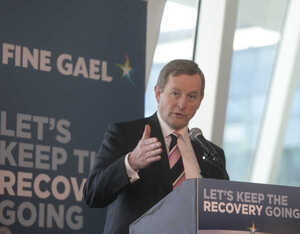
From top: Enda Kenny yesterday at Fine Gael’s last press conference before Friday’s poll; Dan Boyle

The whingers among us have been indulged by a political class willing to say or do anything to get and to stay elected.

Dan Boyle writes:

It could yet be the Enda Kenny’s finest contribution to Irish politics to have brought about a much needed public debate on the art of whinging.

Of course, in the context of general election, he was wrong to say it. It was seen, justifiably, as an attempt to shut down criticism.

Any criticism. If criticism can’t be voiced during an election campaign, in the face of a failed political system and a self congratulatory government, when can it be?

In a less contentious environment the role played by whinging and those who whinge should be subject to a more critical evaluation.

There are a number of things that whinging isn’t. It isn’t a cry of righteous indignation nor is it a plea for social justice. What makes whinging different from other, more legitimate, forms of protest, is that it is inherently self centred and antithetical to the common good.

Our politics have really suffered from the belief that those with the loudest voices, or with particular bargaining power, should be dealt with first. The converse is more likely to be true – those who are least likely to be heard suffer most.

Why do we allow whingers to set political agendas when there are so many more important things to be angry about? Homelessness, income inequality, the lack of social mobility and yes damn it climate change.

Some of these issues haven’t been mentioned at all in the election campaign, others have just been peripherally. Issues such as the quality of our collective approach to mental health, or the prevalence of suicide in our society, have been marginally more mentioned but have hardly been mainstream.

The classic whinger will reduce all of our society’s woes into one particular issue. An issue that affects them and largely them. Alone. There is no wider picture. There is no long term thinking. Here we are now entertain us politics has reached its zenith.

This isn’t necessarily the fault of the electorate. The whingers among us have been indulged by a political class willing to say or do anything to get and to stay elected.

So how do we break this cycle? How do we find a better place on the spectrum between those polar opposites of traditional expectation and fashionable disregard? We could challenge our own shibboleths by not necessarily supporting those who tell us what we want to hear most. Those we find more annoying at least have the capacity of surprising us least.

Capacity, competence, the ability to go against the grain; the certain vote losers of the past should be the qualities we identify with more. There won’t be a revolution but we may be inching towards a type of politics where values, ideas and policies hold greater currency.

The plutocracy of those who were meant to offer political choice in this country, that unholy trinity of Fianna Fáil/Fine Gael (certainly spawned from the one zygote) and the Labour Party (now wholly lacking in spirit); who collectively once won 98% support of the electorate but together now struggle to pass 50%, no longer hold sway.

We seem, at last, to be evolving into a philosophically based, policy driven system found in most mature democracies.

Of itself this new dispensation won’t necessarily be better. It won’t offer any guarantees that our path to Nirvana has to divert, once more, through Hades. At best it should stop us whinging that we’re any better or worse than anywhere else.

Dan Boyle is a former Green Party TD. His column Follow Dan on Twitter; @sendboyle