

Tag Archives: Disclosures Tribunal

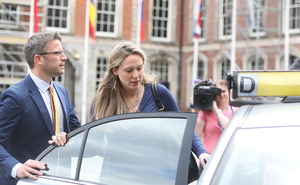
From top: Social worker Laura Brophy; Senior Counsel Michael McDowell with his client Garda whistleblower Sergeant Maurice McCabe

Yesterday.

The Disclosures Tribunal heard from the woman who made a complaint to gardaí against Sgt Maurice McCabe in December 2006 which was investigated by the DPP who subsequently ordered that no prosecution take place.

Readers will recall that the woman is being referred to as Ms D during the tribunal. Her parents are referred to as Mr D, who is a guard, and Mrs D.

The tribunal has already heard that Ms D’s 2006 complaint resurfaced during a counselling session seven years later in 2013, in Cavan, with RIAN counsellor Laura Brophy.

It’s also heard how an erroneous allegation of rape against Sgt McCabe ended up being attributed to Ms D when Ms Brophy sent a botched referral to Tusla in August 2013.

The tribunal is not re-examining Ms D’s allegation of 2006 but it is examining how her allegation became conflated with the allegation of rape and how, and if, this was circulated between RIAN, Tusla and An Garda Siochana.

The examination of this matter is part of a wider investigation into allegations of a smear campaign orchestrated by former Garda Commissioner Martin Callinan with the knowledge of the current Garda Commissioner Noirin O’Sullivan – as alleged by the former head of the Garda Press Office Supt Dave Taylor.

Ms D, Mr D and Mrs D gave evidence yesterday in relation to all or some of the following:

– Ms D’s initial contact with RIAN counsellor Laura Brophy in July 2013;

– how journalists called to their home in early 2014;

– how Ms D conducted an interview with Paul Williams, of the Irish Independent, in March 2014 after Mr D had a conversation with Det Supt John O’Reilly, in which she told Mr Williams that Sgt McCabe had ruined the careers of some gardaí and tore the garda family apart in Cavan/Monaghan;

– how Ms D subsequently met with Fianna Fáil leader Mícheál Martin and former Minister for Justice Alan Shatter after that;

– how Ms D made a complaint to GSOC in July 2014, in which she told GSOC two unsubstantiated rumours about Sgt McCabe, namely that Sgt McCabe would “hang around the girls’ secondary school in suspicious circumstances” – something Ms D told GSOC Dept Supt O’Reilly told her father, Mr D; and that a girl from Clones, Co Monaghan had made a similar allegation to Ms D, something which was told to her by Mr D.

– how neither Ms D or Mr D told GSOC of the error made by Rian counselling when a contaminated referral was sent containing an unrelated rape allegation to Tusla in August 2013

– how Mr D became aware of the error after Supt Leo McGinn showed him the Tusla referral with the incorrect allegation of rape in May 2014;

– how Mr D told Ms D of this error;

– how Ms D went on to tell Ms Brophy of the error.

The tribunal also heard that Mr D believed the 2006 allegation pertaining to Sgt McCabe and his daughter was an “open secret” among gardaí; while Ms D said Baileboro and Virginia in Cavan are small towns and that the 2006 allegation was known in the area.

Counselling with Laura Brophy

Readers will note that Ms Brophy has told the tribunal that she held two counselling sessions with Ms D on July 24, 2013 and August 7, 2013.

Ms Brophy has already given evidence to the tribunal about how, on August 9, 2013, she referred Ms D’s allegation to Tusla as a retrospective disclosure of abuse without realising that she had added an allegation of rape – wholly unrelated to either Ms D or Sgt McCabe – to Ms D’s allegation.

This had the effect of it appearing that Ms D was accusing Sgt McCabe of rape which Ms D had never done. Tusla is obliged to inform An Garda Síochána of such allegations and vice versa.

Readers will recall Ms Brophy has already told the tribunal that she sent this referral to Tusla – after the two counselling sessions – on the basis that Tusla had no knowledge of the 2006 allegation and that, therefore, the matter had not been considered by a social worker.

She said this was her understanding based on a phone call she had had with Breige Tinnelly, of Tusla. However Ms Brophy was aware that the gardai were aware of the matter and that it had gone to the DPP.

Ms Brophy also specifically told the tribunal that if she had been given Sgt McCabe’s identity during her first session with Ms D, she would have been “obligated to send in a report [to Tusla] regardless of whether or not [Ms D] consented”.

But as Ms D had not identified Sgt McCabe to Ms Brophy during the first session, Ms Brophy said the purpose of her arranging to meet Ms D again was to obtain the alleged perpetrator’s identity.

Ms Brophy told the tribunal:

“I was leaving it to her to make that decision [to identify Sgt McCabe]. That is why I arranged to meet her again.”

Diarmuid McGuinness SC, for the tribunal, previously asked Ms Brophy to confirm if Ms D had given her consent to Ms Brophy about the sending of the referral, which, unbeknownst to her, turned out to be catastrophically wrong.

Ms Brophy told the tribunal:

“Well, it was — I suppose it was what I would call an informed disclosure, which I differentiate between informed and consent, so I am not saying that she was pleased about it going in, but I had said that I wouldn’t be able to unless the identity of the alleged was given to me and that was then given to me on our second appointment, so it’s my understanding that she was — it was informed disclosure planned.”

When asked if Ms D had been reluctant for a referral to go in, Ms Brophy said: “That’s correct.”

The tribunal has also previously heard Ms D signed a Confidentiality in Counselling form given to her by Ms Brophy during the first session, on July 24, 2013, while the only notes Ms Brophy took during the first session pertained to the Assessment of Counselling form she filled out.

The tribunal heard she didn’t take any notes of the second session. Instead, she returned to the assessment form and added Sgt McCabe’s details to it. Specifically, she said:

“I didn’t add to it, apart from the information that I received, which was the identifying information of the alleged at the time.”

The tribunal heard that the only other notes that Ms Brophy took, pertaining to her contact with Ms D, were in relation to telephone calls she had with Ms D after the error became known to her, by Ms D, in May 2014.

Further to this…

Yesterday.

Ms D told the tribunal that she attended counselling with Ms Brophy after her mother encouraged her to do so.

Mr D told the tribunal that Ms D would get upset every time she saw or heard Sgt McCabe’s name mentioned and that’s why her mother proposed that she go to counselling – particularly as she was planning to go back to college in September 2013.

“I said ‘just go, keep your mum happy,” Mr D said.

Readers may wish to note that Sgt Maurice McCabe was not mentioned in the national media until January 2014.

Ms D told the tribunal yesterday that she could not recall having two counselling sessions with Ms Brophy but conceded that, if documents showed there had been two meetings, she accepted that.

She said she never told Ms Brophy anything different to what she told the guards in 2006.

Asked about the referring of her allegation on to Tusla, Ms D told the tribunal that she could recall Ms Brophy saying something to the effect that her allegation would be something that she might have to refer on. Ms D said this “straight away” got her back up.

“‘Refer what?’ I said…I couldn’t understand,” Ms D told the tribunal.

Ms D said she told Ms Brophy that the matter had already been investigated, that the DPP had ordered that there was to be no prosecution, and that Tusla were made aware of the matter in 2006.

Ms D told the tribunal:

“I was there to get counselling to deal with the emotions I was feeling. I was not there to make any complaint or to lodge any referral.”

Asked if Ms Brophy had explained to her the issues around confidentiality, Ms D said: “I honestly don’t recall it being explained to me in depth.”

Ms D’s attention was then brought to the confidentiality form that she signed on July 24, 2013.

She conceded it looked familiar and that she signed it on July 24, 2013.

Ms D was then asked about Ms Brophy’s evidence that the purpose of Ms D returning for a second counselling session on August 7 was that it was to give Ms D time to think about disclosing Sgt McCabe’s identity to Ms Brophy.

Ms D said: “I don’t really recall the second meeting.”

Ms D repeated that she was there to deal with current emotions and not there to either make a complaint or to have anything referred on to Tusla. She also said that she could not recall Ms Brophy telling her that Tusla did not have a referral from the matter in 2006.

“Nor did she tell me she was going to make a retrospective referral,” Ms D told the tribunal.

Ms D said she didn’t think the matter was going to be referred as she believed the matter had been dealt with.

Under cross-examination from Mr McDowell SC, he asked Ms D to confirm if she made it clear to Ms Brophy that Tusla were made aware of her complaint in 2006/2007 and she said: Yes.

Mr McDowell also asked her to confirm if she made it clear to Ms Brophy that the gardai were aware and she said: “Of course.”

Mr McDowell put it to Ms D that, from Ms D’s evidence, Ms Brophy was “pushing the referral”. Ms D said: “Yes.”

Asked if she was “pushing against that”, Ms D said:

“Exactly. I did not go to Laura Brophy to have a referral. I didn’t want the matter referred. As far as I was aware Tusla had on my file the complaint from 2006 and obviously the gardaí were aware, as I made the complaint to them.”

Mr McDowell later asked Ms D if she accepted that, in a second meeting with Ms Brophy, in August 2013, that she did in fact identify Sgt McCabe to Ms Brophy. Ms D said: Yes.

Mr McDowell said he didn’t want to get into what Ms D did or didn’t say to Ms Brophy but drew her attention to the fact that Ms Brophy has already told the tribunal that Ms D had fears of an adverse effect on her chances of becoming a guard.

Ms D said she could recall telling Ms Brophy that she wanted to be a guard but should couldn’t recall saying that she feared the matter would have an adverse affect on her chances of becoming a guard.

Mr McDowell asked if it’s fair to say she must have been unhappy with her encounter with Laura Brophy, Ms D said: “Yes it wasn’t an enjoyable experience.”

Ms D’s father – a guard who is referred to as Mr D in the tribunal – was asked if he asked Ms D about her counselling session. He said he “didn’t go into the ins and outs of it” but “I do remember she was quite annoyed when she came home. She said the counsellor had to refer it [to Tusla]. She was annoyed, chairman, very annoyed.”

Ms D’s mother – referred to as Mrs D in the tribunal – told the tribunal that she drove Ms D to the first counselling session and walked her into the reception. Asked about Ms D’s mood after the first appointment, Mrs D said:

“She was in an absolute foul mood. When she came out she was like a demon.”

Mrs D said her daughter was upset because the counsellor told her she was going to have to make a referral.

Journalists calling to the D family

The tribunal heard how how two journalists called to the D family’s home in early 2014 at a time when Ms D was attending college in the south east of Ireland.

Mr D told the tribunal that he believed the 2006 allegation “was an open secret in the guards and journalists were aware”. He said: “I presumed to myself that this is why there was a sudden media interest.”

Mrs D recalled how Debbie McCann, of the Irish Mail on Sunday, was the first to call to the house “out of the blue” in February 2014 for what was a five-minute encounter.

Mrs D said Ms McCann was heavily pregnant at the time and she presumed Ms McCann was somebody looking for directions. However, once Ms McCann introduced herself as a journalist, Mrs D realised this wasn’t the case.

Mrs D said she instantly “horrified” as she tried to understand why Ms McCann called to the house. Mrs D said Ms McCann “said something about the whistleblower” and Mrs D told her that the D family were not speaking to anybody.

Asked if she understood why Ms McCann was there, Ms D said she assumed it had something to do with Ms D and her complaint against Sgt McCabe of 2006.

Asked why she made that assumption, Mrs D said because Ms McCann said something to the effect that she knew she had been though a hard time but “there’s obviously another side of the story”. Mrs D said Ms McCann told her she got the D family’s address or details from “downtown”.

Mrs D told the tribunal that, in hindsight, she felt she was perhaps a bit rude to Ms McCann as she was heavily pregnant and didn’t invite her in.

The tribunal heard that, a few days after Ms McCann called to the house, another journalist Eavan Murray, currently of the Irish Sun, also called to the D family home. Mrs D said she could recall that Ms Murray was “a big tall girl”.

When Mr D was giving evidence, he mentioned Ms Murray getting in contact and told the tribunal that, also around that time, Mick O’Toole, of the Irish Daily Star, sent him a message on Facebook.

When Mrs D was giving evidence, and asked if she asked Ms Murray how she knew to call to the house, Mrs D replied that she couldn’t remember.

However, unlike Ms McCann, Mr and Mrs D had tea with Ms Murray. Asked what they talked about while having tea, Mrs D said:

“I suppose I probably would have said that our daughter had gone through a tough time and that all this McCabe stuff wasn’t helping her, probably something along those lines.”

Interview with Paul Williams

Both Ms D and Mr D were asked about Ms D being interviewed by Paul Williams, of the Irish Independent, in March 2104.

Ms D told the tribunal she had asked to meet Mr Williams herself.

She said she had “a personal grievance against” Sgt McCabe since 1998 and that, while she had tried to deal with it herself and cope with it, she was very upset when he became a public figure and “was being described as a heroic man”.

She told the tribunal:

“I felt very unhappy. I was very upset and I wanted people to know there was another side to this man.”

She said she wanted to speak to somebody to get “her side of the story out”.

She said Mr Williams was one reporter she knew of and she had discussed some of his articles in college. She said: “He was one reporter I would have been happy to speak to.”

The tribunal heard Mr Williams first met with Ms D’s parents on March 5 – while she was at college – and then on March 8, 2014, she gave him an interview when he called to her house.

Ms D said she did not speak to any other journalists in 2014.

Asked if anyone prompted her to speak with Mr Williams, she said: “No, I wanted to speak to him myself.”

And asked if she discussed meeting with Mr Williams with anyone other than her family, she said: No.

Under cross-examination from Michael McDowell, SC, for Sgt McCabe, Mr McDowell read a section of transcript of Ms D’s interview with Mr Williams.

Mr McDowell said Ms D told Mr Williams that a lot of gardai in Baileboro/Cavan district are upset, questioning their own work, doubting themselves and their own ability and that the Garda family in the tight-knit division had been ripped apart.

Mr McDowell said Ms D told Mr Williams that people were afraid to speak to each other, didn’t know who to trust and that Sgt McCabe had ruined the careers of a lot of gardai and retired gardaí.

“He is not a nice man, Paul,” the tribunal heard Ms D told Mr Williams.

Mr McDowell asked Ms D who specifically she was referring to when she told Mr Williams that Sgt McCabe had ruined careers.

Ms D said:

“Honestly I don’t know who I was specifically referring to. Perhaps that was a flippant remark. I don’t have specific names.”

Mr McDowell put it to Ms D that, at that time, nobody was accepting Sgt McCabe’s allegations and that, in fact, he was the man who was being ostracised, yet she was saying he had ruined a lot of careers.

Ms D said as it was more than three years ago when she made this claim, she couldn’t recall what she meant by saying it.”

Mr McDowell said: “You must have meant something.”

She replied: “I don’t recall.”

Mr McDowell suggested to Ms D that perhaps she was referring to her father, Mr D.

Ms D said: “No, he didn’t ruin my father’s career.”

Mr McDowell put it to her that Mr D was removed from the crime investigation section after Sgt McCabe took disciplinary action against Mr D and others back in January 2006. Mr McDowell reminded her that this happened 11 months before she made the allegation against Sgt McCabe.

Ms D said that timeline of events was “correct”.

The tribunal heard Ms D say that while speaking with Mr Williams and telling him she was “very unhappy with how her complaint was handled”, Mr Williams suggested to her that, if she had a complaint, speaking to GSOC was an avenue for her to pursue if she so wished.

Under cross-examination from Mr Fanning SC, for Mr Williams, Ms D was asked if it would be fair to say that, during her and Mr Williams’s interview, Mr Williams referred to GSOC in the course of a question but didn’t advocate what route she take. Ms D said that would be fair.

When Mr D was asked about how Paul Williams came to contact his daughter, Mr D explained that it came as a result of a conversation he had with Det Supt John O’Reilly.

While Mr D couldn’t recall the date of his encounter with Det Supt O’Reilly, he said he believed Ms McCann had called to the house before his conversation with Det Supt O’Reilly.

Mr D told the tribunal that he and Det Supt O’Reilly had been friends for 25 years and that they met up regularly. He said he couldn’t recall if they had this particular conversation about Ms D in either of their houses or if it was over a pint.

Mr D told the tribunal that he remembers Det Supt O’Reilly asking him how Ms D was coping with all the media attention Sgt McCabe was getting at the time in early 2014. The tribunal heard Det Supt O’Reilly knew of the 2006 allegation.

“I said not very well, she’s frustrated, she just feels that this side of McCabe has just been brushed under the carpet, her voice is lost and she’d love to speak to somebody,” Mr D told the tribunal.

Mr D said he told Det Supt that journalists had contacted the D family unsolicited but that he counselled his daughter to be wary.

Mr D told the tribunal that Det Supt O’Reilly asked if she would speak to someone like Paul Williams. He said he replied that he didn’t know but that he’d say it to Ms D. He told the tribunal that he said to Det Supt O’Reilly maybe he (Det Supt O’Reilly) could contact Paul Williams and he (Mr D) would ask Ms D if she would like to speak to Mr Williams

The tribunal heard Det Supt O’Reilly gave Mr D the phone number of Mr Williams and Mr D subsequently contacted Mr Williams and arranged for Mr Williams to call to the D family home.

Under questioning from Michael O’Higgins, for the Garda Commissioner, Mr D was asked if he had any sense that Det Supt O’Reilly was “sent to you with a view of smearing” Sgt McCabe.

Mr D said: “No, I know him 25 years. I genuinely believe the man was trying to help, as I would do if the situation was reversed.”

In response to questions under cross-examination from Michael McDowell, Mr D said Ms D was very angry that Sgt McCabe had been getting “unlimited praise” in media around this time of March 2014.

He said: “Despite my own reservations, she felt strongly that she wanted to meet someone, so I gave her the number of Paul Williams.”

Mr McDowell asked Mr D about his contact with Mr Williams. Mr D said, as far as he could recall, he rang Mr Williams to tell him where the D family lived and he called to house where he spoke to Mr and Mrs D briefly. They then organised the interview with Ms D for a Saturday.

The tribunal heard Mr Williams subsequently visited the home on a Saturday, with a videographer, and talked to Ms D in the sitting room privately.

Mr McDowell recalled what Ms D told Mr Williams in relation to the claim Sgt McCabe was “tearing the Garda family in Baileboro/Cavan apart” and that he “ruined” the careers of certain gardaí. Mr McDowell asked Mr D if this was something Ms D had heard from him (Mr D).

Mr D conceded that Ms D may have heard him say a few guards had gotten in trouble but he said he would never have used the word “ruined” and that he would never had said anything that strong.

Meeting Micheál Martin and Alan Shatter

The tribunal heard about how Ms D went on to meet the leader of Fianna Fáil Mícheál Martin and met with former Justice Minister Alan Shatter in 2014.

In relation to her meeting with Mr Martin, Ms D said Mr Williams told her it was Mr Martin who had given the then Taoiseach Enda Kenny Sgt McCabe’s dossier of allegations of Garda misconduct in relation to Cavan/Monaghan [on February 19, 2014].

Ms D said, at this time, she felt her case wasn’t investigated properly and that she felt her case was more serious than some of the cases Sgt McCabe was claiming needed to be looked at.

Asked if she could recall Mr Williams giving her a lift to meet with Mr Martin, Ms D said she couldn’t recall that.

Later in the tribunal, Mr Fanning, SC, for Paul Williams, put it to Ms D that, according to Mr Williams’ statement, he collected Ms D from a train station and brought her to the Dáil to meet Michael Martin. Mr Fanning said Mr Williams claims he also collected her after the meeting and brought her back to the train station.

Ms D conceded that that was possible as she would have been travelling up from the south east.

Ms D explained that she went on to meet Alan Shatter, who resigned as Minister for Justice on May 7, 2014, after Mr Williams contacted her and told her that Mr Shatter was aware of the situation and wanted to speak to her about the matter.

Ms D subsequently met Mr Shatter on June 17, 2014 in the Merrion Hotel in Dublin for an hour and a half.

Ms D was asked what her did she understand to be the purpose of that meeting and she started to cry.

She told the tribunal: “I was there because Micheal Martin did nothing after I had met with him. I wanted my case to be reinvestigated, the way the case was handled to be looked at. I felt nobody seems to be listening to me so I felt Alan Shatter might be able to do something.”

Mr McDowell later told the tribunal that Mr Shatter later called for Ms D’s allegations to be investigated.

GSOC

The tribunal heard Ms D made a statement to GSOC on July 3, 2014. Her father Mr D also made a statement to GSOC, the tribunal heard.

In her statement, among other matters, Ms D told GSOC that Mr Williams told her senior members of An Garda Siochana and in the Government were aware of her allegations.

Under cross-examination Mr McDowell recalled how Ms D indicated to GSOC that Sgt McCabe “had been hanging around the girl’s secondary school in suspicious circumstances”. She told GSOC that this was something Det Supt O’Reilly told her father.

Mr McDowell asked Mr D if Ms D had heard that from him?

He said: No.

Mr McDowell then recalled Ms D’s other claim to GSOC that “another young woman in Clones made a similar allegation about Sgt McCabe” and went on to ask him if Ms D had heard that from him.

Before Mr D could answer, Mícheal O’Higgins SC, for the Commissioner, interrupted to ask Judge Charleton if these were questions that Mr McDowell should have put to Ms D, as opposed to Mr D.

Mr Charleton said the questions were relevant.

Mr McDowell continued. “So none of that came from you?”

Mr D admitted that he did tell her he’d heard a rumour, or a “whisper”, from a retired guard that some girl in Clones had made an allegation. Mr D told the tribunal he doesn’t know where the retired guard heard it from and that he might have mentioned it “in passing” to his daughter.

However, Mr D repeated that he would not have told her any rumour about Sgt McCabe at the girls’ secondary school.

He told the judge that the rumour in relation to Clones “was put to me was a whisper”.

At another stage in the tribunal’s proceedings, Mr D was asked if he was involved in any campaign to discredit Sgt McCabe and he said: “Absolutely not. My only concern was, and still is, my daughter. She was extremely distraught at the time.”

Mr McDowell also asked Mr D why neither Ms D nor Mr D mentioned to GSOC about the “monumental cock-up” of August 2013 when Ms D’s allegation was mixed up with an allegation of rape.

Mr D said: “Because I thought it had been dealt with.”

One matter that Mr Williams had reported in his articles on Ms D (though unidentified) was that her allegation was never put on PULSE. Mr McDowell asked Mr D if this was something he informed Ms D and GSOC of and he said: Yes.

Mr McDowell asked Mr D if he was aware that the sergeant who conducted the investigation at the time, in 2006, said he was not putting it on PULSE. Mr D said he was not aware of that.

Mr McDowell asked Mr D if he accepted that the sergeant was “attempting not to give undue circulation of the incident”.

Mr D replied:

“I don’t accept that. If an allegation is made to An Garda Siochana, you’re obliged to record it on PULSE.”

Mr McDowell asked Mr D if it would be fair to say that, from the beginning of 2006 onwards, he and Sgt McCabe were on poor terms.

Mr D said he wouldn’t use that phrase but he said they weren’t friends.

In relation to the disciplinary procedure of 2006, Mr D said it “wasn’t Sgt McCabe’s fault what happened, it was my own fault.”

The tribunal heard that Ms D also wrote to Sean Guerin in early 2014 about her allegation from 2006.

She said she understood that Mr Guerin was undertaking an investigation into Sgt McCabe’s dossier and that she couldn’t understand why her case could not be included.

“I felt it should have been included,” she said.

Mr D being informed by Supt McGinn

Readers will recall how the tribunal has already heard how Mr D was shown the incorrect Tusla referral by Supt Leo McGinn in “early May”. He can’t recall the specific date.

This was his statement which he largely repeated while giving evidence yesterday:

“Early May, my superintendent, Leo McGinn, asked me did I have a minute. I went into his office. He handed me a HSE referral form and asked ‘is that your lassie? I said ‘yeah, that is her’. I saw the detail of the allegation, digital penetration. I couldn’t believe it. I got a fierce shock. I couldn’t think straight. I felt had she told the counsellor this and not told us. Had this actually happened. She had maybe told the counsellor but had not told us. I was sick to my stomach. I couldn’t wait to get out of the office.”

“I didn’t say anything to Leo McGinn as I didn’t know what was going on.”

The mistaken referral implied that Ms D was accusing Sgt McCabe of rape. Mr D told the tribunal he “almost collapsed” when he saw the allegation.

Mr D subsequently set out to contact his daughter who was in the south east of the country at the time by calling her but that she could be bad at responding to calls at the best of times. Yesterday, the tribunal heard Mr D couldn’t recall if he spoke to her on the same day he found out or if it was the day after.

Mr D told the tribunal that he was relieved that the rape allegation had nothing to do with her.

Asked if he contacted Supt McGinn to tell him this was a mistake, he said: “I don’t remember. I recall I would have contacted Supt McGinn and told him it was incorrect.”

Asked when he told Supt McGinn this, Mr D said: “I don’t remember.” However, he said: “I remember speaking to Leo McGinn and saying it’s an almighty cock-up.”

Asked if he could recall a conversation with Supt McGinn as to whether the error had been fixed or if any new corrected notification had come in, Mr D said: “I don’t chairman.”

Mr D was asked if Supt McGinn ever showed him a correct referral and Mr D said “a few weeks later” he could recall Supt McGinn saying ‘this is a new referral’.

However, Mr D couldn’t recall if Sutp McGinn showed him the corrected referral or if he had just told him.

Asked if he believed the error had been corrected, Mr D said: “Absolutely.”

Mr D told the tribunal: “If there’s a mistake of that magnitude, I just presumed it would be fixed. I couldn’t conceive it wouldn’t be fixed.”

Under cross-examination from Michael McDowell SC, for Sgt McCabe, Mr D was asked if it ever occurred to him that it was extraordinary for Supt McGinn to show him this referral and that it was none of Supt McGinn’s business to draw Mr D’s attention to it. Mr D said he believed Supt McGinn showed it to him out of “common decency” and that they had been working together for four years.

Mr McDowell said: “This is no criticism of you…it was a huge breach of confidentiality to bring that form to your attention.”

Mr D said he didn’t accept that as it was about his daughter.

Mr McDowell asked if Supt McGinn knew of the 2006 allegation Ms D had made against Ms D and he said: “Not to my knowledge”. Mr D also confirmed it was the first time he interacted with Supt McGinn in relation to Ms D.

Mr McDowell asked Mr D if, once he spoke with Ms D and learned that the rape allegation was a mistake, did he go back to Supt McGinn and tell him the referral was wrong.

Mr D said that, from his memory, whether it was the next day, or the following Monday, he would have told him this was a monumental cock-up.

Mr D added: “I can’t honestly remember did he know at that stage or did he undertake to contact Tusla.”

Ms D was also asked about the time she learned of he error.

She said as soon as she received the call from her father, she could tell he was agitated and that he, more or less, asked her, “what the hell have you said to this counsellor?”

She said she didn’t know what he was talking about and when he explained to her what he read on the Tusla referral, she said became livid, upset and stressed. She said she told her father she never used the words pertaining to Ms Y’s allegation of vaginal and anal digital penetration.

Asked what she did on foot of getting this call from her father, Ms D told the tribunal that she believes she rang Ms Brophy to inform her of the error but said she doesn’t have “full recollection” of that call.

She said she knows she told the tribunal’s investigators that she didn’t have contact with Laura Brophy but that she’s seen documentation and notes by Ms Brophy with details of phone calls that they shared after Ms D informed her of the error.

Readers will recall that the tribunal has already heard evidence from Ms Brophy that she had two phone calls with Ms D on May 14, 2014 and then another phonecall on May 16, 2014

The May 16 call was in respect of the stated knowledge of the superintendent in Baileboro Garda Station.

Ms D said:


“I’m not saying I didn’t but I don’t remember those calls. I don’t recall speaking with her. She said she has notes. I can’t say I didn’t but I don’t recall making those calls myself. I don’t disagree with her but I don’t recall what was said.”


Ms D was also asked about a letter that Ms Brophy told the tribunal she sent to Ms D on May 16, 2014. Ms D said: “I never got that letter.” She said the first time she saw that letter was when she met investigators of the tribunal.

Asked if anyone else got the letter, she said: “Definitely not, definitely not.” She added that if her parents had received it, they would have sent it on to her.

Under cross-examination from Mr McDowell, he said to Ms D that Ms Brophy has given evidence that, on May 16, 2014, Ms D told her the superintendent in Baileboro was unaware of the error and that the superintendent was due to meet with “the Garda Commissioner” (the tribunal has heard it’s understood this might actually refer to area commissioner or assistant commissioner).

The tribunal has also heard that, on foot of this knowledge that the superintendent wasn’t aware, Ms Brophy sent a letter, by registered post, to the superintendent.

Mr McDowell asked Ms D if it was Ms D who asked Ms Brophy to send the registered letter but Ms D said “I can’t recall making that call”.

Mr McDowell continued and put it to Ms D that if it had been a suggestion made by her, it would have been a strange thing to ask unless “you were getting a request from somebody else”.

Ms D repeated that she didn’t recall saying that.

Mr McDowell asked Mr D if he would have told Ms D to tell Ms Brophy to send a registered letter and Mr D said: No.

Mr McDowell pointed out that an average person would not start talking about registered letters and Mr D accepted the point.

Mr McDowell also put it to Mr D that it was “remarkable” that Ms D was able to tell Ms Brophy that the superintendent wasn’t aware of the error.

Mr D told Mr McDowell: “It is and it wasn’t me.”

Mr D also said that the reference Ms Brophy made to the “commissioner” also did not come from him.

Ms D was asked about her knowledge of what happened in relation to the referral containing the digital rape allegation after she informed Ms Brophy of the error.

Ms D said: “Once I bought the error to her [Laura Brophy’s] attention, I assumed the error would be fixed and that would be the end of it. I was never informed of what happened.”

Asked if she ever wondered what happened, she said: “To be honest, I imagine, once the call was made, I believed that was the end of it. I was [in the south east] and wanted to get on with my life.”

Asked if her father ever told her if the error was remedied, she said: “I can’t recall.”

Asked if she hoped or assumed the matter was remedied, she said: “I assumed Laura Brophy would have corrected her error and that that would have been the end of it.”

Mr McDowell asked when she became aware that a corrected Garda referral had been made, Ms D said: “I can’t recall when or if I had known there was a corrected referral sent in.”

Mr McDowell asked Ms D if she’s aware now that a corrected referral was sent to Tusla, and she said: Yes.

Mr McDowell then said: “You cant tell us when you first became aware?”

She said: “Yes.”

While cross-examining Mr D, Michael McDowell, for Sgt McCabe, asked Mr D if he ever thought to wonder what was going to happen with the corrected referral.

Mr D said: “No I didn’t.” He said this was because the matter had been referred to almost 10 years previously, had gone to the DPP and so he “didn’t expect any action on it”.

Mr McDowell also brought Mr D’s attention to May 7 – when Supt McGinn first got the referral with the wrong digital penetration allegation and how he immediately wrote to Chief Superintendent Sheridan, suggesting that an investigation take place into the matter or that it be handed over to the cold case.

Mr McDowell asked Mr D if Supt McGinn ever indicated to Mr D that he was going to “haul that back in” once it was known that the rape allegation was an error.

Mr D said he presumed Supt McGinn would have done this once the error was known.

Mr McDowell highlighted how while Ms D made a complaint to GSOC and met with Michael Martin, Mr D was also claiming that she wanted didn’t want it to go to Tusla or the gardai and that she wanted to move on with her life.

Mr D said: “She didn’t want the allegation investigated again, she wanted the investigation investigated.”

May 2015

Ms D was also asked about the letter Tusla social worker Kay McLoughlin sent to her in May 2015 seeking an appointment with Ms D on June 2, 2015.

Readers will recall how Ms McLoughlin has already told the tribunal how she sent this letter.

Ms D said she remembered her mother calling her to say a letter had arrived from Tusla and asking her if she (Ms D) wanted her to open it and read it to her.

Ms D said, from what she could recall, the letter said an appointment was being made for her, for June 2, 2015, and that they wanted to discuss something with her.

Ms D asked her mother to call Ms McLoughlin to find out what it was about and Ms McLoughlin told Mrs D that she needed to speak with Ms D directly.

Ms D said she couldn’t recall the full conversation but she does remembering asking “what in god’s name did they want to discuss?” – as this was a year after she made Tusla aware of the mistake that they had made.

She also said she couldn’t understand why Tusla would want to discuss a complaint she had made almost 10 years previously.

Ms D told the tribunal she didn’t attend the meeting.

In July 2016, Ms D moved home.

The tribunal heard Ms D was sent a letter from SART in August 25, 2016. She said she couldn’t recall receiving that letter but she does recall saying she didn’t want to follow up the matter with SART.

She said she wanted to put a lid on the matter and move on with her life.

Asked about the letter that Sgt McCabe was sent in December 2015, which Mr D saw through the tribunal investigation, and if he was shocked by its contents, he said: “Absolutely horrified. I still find it unbelievable.”

The tribunal continues today with evidence from Paul Williams and Debbie McCann, staring from 10am.

Rollingnews

From top: Sergeant Maurice McCabe with his wife Lorraine; Social worker Laura Brophy

Today.

From noon.

At the Disclosures Tribunal in Dublin Castle.

The tribunal will hear from Ms D in a private sitting.

Readers will recall Ms D was aged 14 in December 2006 when she made a complaint to gardai that Sgt Maurice McCabe held her above a sofa and made “dry humping” motions towards her during a game of hide and seek when she was aged six or seven in 1998.

The tribunal has already heard that Ms D’s claim was investigated by the DPP who subsequently ordered that no prosecution take place.

It’s also heard that, according to Sgt McCabe’s legal counsel, the DPP queried how Ms D’s parents could have reached the conclusion that a sexual assault had occurred even as described.

Ms D parents – referred to as Mrs D and Mr D, who’s a garda, – will also give evidence today.

Mr D, the tribunal has heard, “lost his position and was reverted to other duties” after Sgt McCabe “caused the institution of serious disciplinary procedure against” Mr D in January 2006 – 11 months before Ms D made her complaint.

The tribunal is not re-examining Ms D’s allegation but it is examining how her allegation became conflated with another much more serious and wholly separate allegation of rape pertaining to a Ms Y when HSE counsellor Laura Brophy sent a referral to Tusla on August 9.

This referral was sent after Ms Brophy held two counselling sessions with Ms D.

Ms Brophy sent this referral, she told the tribunal, on the basis that it was her understanding that Tusla had no knowledge of the 2006 allegation and that, therefore, the matter had not been considered by a social worker.

She said this understanding was based on a phone call she had had with Breige Tinnelly, of Tusla. However Ms Brophy knew the matter had been sent to the DPP.

Michael McDowell SC, for Sgt McCabe, in a previous sitting, asked Ms Brophy if she was aware that in 2006/2007, the gardai were obliged to inform the HSE of all such incidents. Ms Brophy said that this was her confusion at the time and that’s what she wanted to check when she rang Ms Tinnelly.

Mr McDowell argued that Ms Brophy was misinformed by Ms Tinnelly and that “the reality is that a report was going in on this occasion, no matter what” and that Ms Brophy’s claim – that she wouldn’t have sent in the report had been told that the matter was already known to Tusla – “is not supportive on the paper”.

Ms Tinnelly has yet to give evidence.

Mr McDowell also asked Ms Brophy about an article by Conor Lally in The Irish Times from earlier this year, in which Ms D is quoted speaking negatively about her counselling session with Ms Brophy.

At one point in the article, Ms D said:

“I knew by her [Ms Brophy] she was going to report it whether I wanted to or not.”

Brophy told the tribunal that that wasn’t her recollection of their meeting.

Tusla didn’t become aware of Ms Brophy’s mistake until May 14, 2014 – when Ms D called Ms Brophy to inform her of it.

The tribunal has also heard Michael O’Higgins SC, for the Commissioner Noirin O’Sullivan, read to the tribunal excerpts of a statement made by Ms D’s father in relation to when he became aware of the false allegation related to his daughter and Sgt McCabe – before it was known that it was a mistake – in May 2014.

He said:

“Early May, my superintendent, Leo McGinn, asked me did I have a minute. I went into his office. He handed me a HSE referral form and asked ‘is that your lassie? I said ‘yeah, that is her’. I saw the detail of the allegation, digital penetration. I couldn’t believe it. I got a fierce shock.

“I couldn’t think straight. I felt had she told the counsellor this and not told us. Had this actually happened. She had maybe told the counsellor but had not told us. I was sick to my stomach. I couldn’t wait to get out of the office.”

“I didn’t say anything to Leo McGinn as I didn’t know what was going on.”

Previously: No Recollection

‘There Isn’t An Error In His Favour’

Tusla social worker Eileen Argue at the Disclosures Tribunal this afternoon

This afternoon.

At the Disclosures Tribunal.

Judge Peter Charleton closed his eyes and appeared to rest his head, allowing it to hang down in front of him, for several noticeable moments while listening to a witness give evidence.

The witness was Tusla social worker Eileen Argue who has worked as a social worker since 2006.

At the time Mr Charleton rested his head, she happened to be repeating that she couldn’t recall her contact with Sgt McCabe’s Tusla file in April and May 2014.

Specifically she couldn’t recall her involvement, if any, in Laura Connolly’s sending of a Garda notification containing a false allegation of rape against Sgt McCabe to Tusla and Ms Connolly’s acceptance that Ms Argue directed her to open intake records on four of Sgt McCabe’s children, two of whom were over 18 at the time, on April 30, 2014.

Readers will recall how Ms Argue has previously been referred to in the tribunal by other witnesses who’ve given evidence, including Ms Connolly.

Ms Connolly has already told the tribunal how, on April 30, 2014, she plucked Sgt McCabe’s unallocated file randomly from a filing cabinet and sent a Garda notification with a monumental error as her notification contained an amalgamation of Ms D’s ‘hide and seek’ allegation with that of a rape allegation which pertained to neither Sgt McCabe nor Ms D.

It appeared that Sgt McCabe was accused of raping Ms Y during a game of hide and seek.

Ms Connolly – who also told the tribunal “I have no recollection of any involvement in this case” – told the tribunal the files would have been left in a referrals tray for Ms Argue but, despite this, they were not discussed at the following weekly referrals meeting and there was no action recorded.

Ms Connolly told the tribunal she couldn’t recall discussing Sgt McCabe’s file with Ms Argue on that day. The two women’s offices are on the same floor.

Last week, Mr McDowell asked Ms Connolly who would have decided which files were to be discussed at the weekly referrals meeting, and Ms Connolly said that was the decision of the social work team leader. Asked if that was Eileen Argue, Ms Connolly said, yes.

Another witness to have mentioned Ms Argue is Laura Brophy.

Ms Brophy was the RIAN counsellor who was the first person to mistakenly conflate a 2006 allegation of inappropriate touching by Ms D against Sgt Maurice McCabe with an unrelated rape allegation when she referred the matter to Tusla in August 2013.

She sent this referral to Tusla, thinking it just contained Ms D’s 2006 allegation, even though Ms D’s allegations had already been referred to the HSE in 2006/2007.

Ms Brophy previously told the tribunal how she had trouble contacting Ms Argue when she first learned of the error on May 14, 2014.

Ms Brophy hand-delivered a letter outlining what had happened but, according to Ms Brophy, as she couldn’t get a hold of Ms Argue she couldn’t enquire about Tusla’s communication with the gardai.

On May 15, 2014, Ms Brophy wrote in an email to her superior Fiona Ward that Ms Argue had been in contact with Chief Superintendent James Sheridan but that Ms Argue could not guarantee the return of the report by Chief Superintendent Sheridan.

On May 20, Ms Brophy emailed Ms Ward again to tell her she was still waiting to hear back from Ms Argue about Chief Superintendent Sheridan and the gardaí’s knowledge of the mistake and the actions taken.

Further to this…

This afternoon.

Ms Argue told the tribunal she couldn’t recall if she knew Sgt McCabe, has very little recollection of events pertaining to Sgt McCabe and said all her information is based on her review of the files for the purposes of the tribunal.

She was reminded that she, like area manager Gerry Lowry, had attended several child protection conferences with Sgt McCabe and they were both even assigned to the same CORE meetings in relation to particular cases in 2006, 2008 and 2009.

Ms Argue couldn’t recall these meetings.

Readers will recall Ms Lowry also told the tribunal he couldn’t recall being at the same meetings as Sgt McCabe, even though he chaired them.

Ms Argue was also reminded of a meeting of social workers on April 24, 2007 where Ms D’s allegation and Sgt McCabe were discussed.

At that meeting, it was decided that Sgt McCabe would be met by a social worker from Meath – and not Cavan/Monaghan – as he worked with the social workers from Cavan/Monaghan. This meeting was also told that the DPP had ordered that no prosecution against Sgt McCabe be brought.

Sgt McCabe was never met by a social worker.

Ms Argue couldn’t recall this meeting.

Ms Argue was asked if she read stories about Sgt McCabe in the media in 2014 and if she knew if he was regarded as a whisteblower. She said she remembered some mentions of Sgt McCabe but couldn’t recall the context of those reports.

Asked when she did see or hear the media reports, did she link the Sgt McCabe mentioned in the press with the Sgt McCabe she shared meetings with from 2006 to 2009, she couldn’t recall.

Asked about her involvement with Ms Connolly’s actions pertaining to Sgt McCabe’s file – the sending of the Garda notification and the opening of the child intake files – Ms Argue said she can’t recall any specifics but, at the time, they would have been looking at many unallocated cases with tasks outstanding.

Readers will recall how the tribunal has already heard that a handwritten comment left by Keara McGlone on the file – in August 2013 – stated: “duty to guard notify and await assessment of allocation”.

The tribunal has also previously heard of a post-it note on the file which stated: “Duty to notify allocation to AGS and file in the cabinet, Eileen.”

When Ms Connolly was asked if this post-it prompted her to send the Garda notification in April 2014, she told the tribunal: “it’s a possibility”, adding that she first heard of the post-it note when she was interviewed by the tribunal’s investigators earlier this year.

This afternoon, it was put to Ms Argue that this post-it seemed to be a direction given by her.

Ms Argue accepted it was her handwriting but couldn’t recall writing it.

Ms Argue was also unable to recall if she reviewed Sgt McCabe’s file at that time.

She said:

“I don’t recall if I read the file. It looks more like I looked at the intake record. It was more likely, at that time, that that is possibly what happened. I can’t be 100% certain.”

The tribunal has already heard of a note Ms Connolly sent to Ms Argue in which she outlines that Sgt McCAbe had four children – two aged under 18 and two aged over 18 – and asks Ms Argue how she should proceed.

The tribunal has heard of another note from Ms Connolly which states:

“Case direction from Eileen: Complete intake records X 4 on children.”

Ms Argue said:

“I don’t recall giving that direction. I don’t believe that I would have directed for two intake records for two children over 18.”

Asked if she is now doubting Ms Connolly’s evidence, Ms Argue said she wasn’t saying that but she doesn’t recall these notes and doesn’t believe she would direct anyone to open files on people aged over 18.

Ms Argue also couldn’t recall a letter she recieved from Laura Brophy outlining the error she made.

“I’m not saying I didn’t receive it but I don’t recall receiving it,” she said.

In relation to the amended Garda notification in May 2014 – created after Ms Brophy made Tusla aware of her mistake – Ms Argue was reminded of how it still contained one of the three incorrect sentences that Ms Brophy had added to Ms D’s file, namely that the perpetrator threatened to hurt Ms Y’s father if she spoke out.

The Garda notification was sent from Ms Argue’s email. She conceded that it was sent from her email but she couldn’t recall doing so. She also said couldn’t recall studying the file before sending the garda notification.

Asked if she accepted this was a very sloppy amendment, Ms Argue replied “In what way?”.

Given that Ms Brophy sought all copies of the incorrect file to be returned to RIAN, Ms Argue was asked if she arranged this but she said she can’t recall.

Ms Argue was asked if there had been gossip or rumours in the Cavan social work department about Sgt McCabe.

She said she couldn’t remember specifically and that conversations tended to be of a personal nature and not what was going on in newspapers.

Under cross-examination from Michael McDowell, SC, for Sgt McCabe, Mr McDowell recalled Ms Argue’s statement to the tribunal submitted on March 21, 2017.

He put it to Ms Argue that she attempted to mislead the tribunal’s investigators by failing to mention, in her statement, that she had been consulted by Ms Connolly when she was creating the Garda notification and the intake records on Sgt McCabe’s children.

Ms Argue rejected this assertion.

Mr McDowell asked Ms Argue why she thought Sgt McCabe’s file was suddenly dealt with on April 30, 2014.

Ms Argue couldn’t recall but said, at the time, they were dealing with unallocated cases in the ‘Measuring The Pressure’ system they operated.

Mr McDowell suggested instead of the Measuring The Pressure system, perhaps, a little bit of pressure had come on her to deal with the file as nothing had “budged” in nine months.

Ms Argue said she couldn’t say if there was any pressure put on her on that particular day on that particular file.

Mr McDowell suggested somebody might have gone to her and asked what’s happening to the Sgt McCabe file. She said she didn’t recall anybody going to her about the file.

Judge Peter Charleton listed a sequence of events to Ms Argue before Sgt McCabe’s file was dealt with on April 30, 2014.

These included former taoiseach Enda Kenny getting a dossier of allegations compiled by Sgt McCabe in February 2014, Irish Independent journalist Paul Williams calling to Ms D’s house and interviewing her; former Garda commissioner Martin Callinan resigning in March, Paul Williams writing further articles in April; Ms D making a complaint to GSOC (which subsequently found there was no case to answer) on April 29, 2014 and then “lo and behold” Laura Connolly plucking Sgt McCabe’s file from the cabinet randomly the very next day.

Judge Charleton also conceded that while the Irish Independent would like everyone to read it, they don’t; however he suggested it’s likely somebody in Ms Argue’s office did read the Irish Independent.

Ms Argue repeated that, at the time Sgt McCabe’s file was revisited in April 2014 – the first time since August 2013 – they were looking at unallocated cases and Sgt McCabe’s was such a case.

At the very end of Ms Argue’s evidence yesterday, Mr McDowell reminded the tribunal that after Ms D made a complaint against Sgt McCabe in December 2006, the gardai were obliged to contact the HSE which they did.

The person to take the call from the gardai, regarding this notification, was Ms Argue.

Readers will recall that the tribunal has already heard that the social worker who wrote an acknowledgment letter to the then superintendent in Baileboro Garda Station pertaining to the same allegation by Ms D, on January 2, 2007 was Gerry Lowry.

Earlier: ‘I Don’t Know If It Was Through Intention. I Can’t Explain It’

Previously: Another Day, Another Error

Leah Farrell/Rollingnews

Clair Tobin, centre, and Linda Creamer, right, arriving at the Disclosures Tribunal this morning

This morning.

At the Disclosures Tribunal in Dublin Castle.

It is continuing to hear evidence about how a 2006 allegation of inappropriate touching by a Ms D against Sgt Maurice McCabe became conflated with a 2013 allegation of rape concerning another person entirely and how this false allegation of rape was circulated between the counselling service Rian, Tusla and An Garda Siochana.

It’s part of a wider investigation into allegations of a smear campaign orchestrated by former Garda Commissioner Martin Callinan with the knowledge of Garda Commissioner Noirin O’Sullivan against Sgt Maurice McCabe.

A short-ish timeline of some of the evidence heard to date can be read here.

Yesterday and this morning, the tribunal heard evidence from regional social worker Clair Tobin who has worked with the Sexual Assault Response Team since June 2016. She previously worked with Tusla.

The Sexual Assault Response Team was set up in 2016, the tribunal heard, in response to the number of retrospective allegations which were unallocated and on waiting lists to obtain an allocated social worker.

Readers will recall Sgt McCabe’s flawed case was such a case.

Ms Tobin was allocated Sgt McCabe’s case in August 2016 – some eight months after Kay McLoughlin, of Tusla, sent Sgt McCabe a Barr letter (a letter which notifies an alleged abuser of the allegation made against them) in December 2015 which stated Tusla was investigating Sgt McCabe in relation to an allegation of rape which did not pertain to him at all.

This Barr letter was sent after Ms McLoughlin’s superior Gerry Lowry – who knew this allegation was incorrect – failed to open an email attachment which contained Ms Loughlin’s draft letter containing the fall allegation in May 2015.

Readers will recall that Sean Costello, SC, for Sgt McCabe, wrote back to Ms McLoughlin to say the allegation was wholly untrue in January 2016 but Tusla did not respond to Mr Costello until June 20, 2016.

Further to this, Ms Tobin, of SART, has given evidence to the tribunal about its review of the case and Tusla’s handling of the case.

She explained the purpose of their review yesterday to the tribunal, saying:

“It probably had a dual function in terms of identifying what had or hadn’t happened on the file, but also to indicate what needed to happen.”

Asked if she had any document or guidance in writing, which set out the purpose of the review, she said: No.

Yesterday, Ms Tobin told the tribunal that, on June 27 – seven days after Tusla finally responded to Mr Costello – she and her co-worker, Lisa O’Loghlen, met with MIchael Cunningham, who was the then duty social work team leader in Cavan, and he gave them a number of files and a synopsis of the files.

These files included those of Ms D and Sgt McCabe.

Yesterday, she told the tribunal:

“I suppose when we took the file we were quite, I suppose, for want of a better word, horrified as to how the case had been managed… I suppose our role within SART was to deal with the allegation and the assessment of the allegation and we felt that there was a bigger issue behind that.”

Yesterday and this morning, Diarmuid McGuinness SC, for the tribunal, went through a list of documents pertaining to Ms D and Sgt McCabe and, as he went through them, he asked Ms Tobin if she had seen the said documents in the files they were given.

Some she did, some she didn’t, the tribunal heard.

For example, based on the information given to Ms Tobin, she was unaware that a Garda notification was made in respect of Sgt McCabe by Laura Connolly in 2014. Readers will recall it was Ms Connolly who also created intake records on Sgt McCabe’s then four children, two of whom were adults, under the direction of Eileen Argue.

Ms Tobin told the tribunal she didn’t know of the Garda notification until RTE’s Prime Time aired the matter in February 9, 2017.

In addition, Ms Tobin said the files she was given didn’t make clear that the DPP had instructed no prosecution on the basis that no criminal offence had taken place.

The tribunal heard the minutes of a management meeting on April 21, 2007, in which it was noted that the file returned from the DPP no prosecution, was not in the file given to Ms Tobin.

This morning, as she continued to give evidence under cross-examination, from Michael McDowell SC, Ms Tobin was asked about the material that was and was not on the file.

Ms Tobin said she couldn’t comment on whether some of the material had possibly been deleted from the file or just wasn’t on the file. But she agreed that some material had not been forwarded to her.

Asked if realising this later made her feel more horrified in regards to the handling of the case by Gerry Lowry – Tusla’s area manager – she conceded that yes, she was more concerned and more horrified.

Mr McDowell sought to confirm with Ms Tobin that it couldn’t have been the case that she just skipped through the file and missed crucial documents.

She said:

“I’m very careful and given the gravity of what was on the file, I would have made sure I read everything on the file.”

Mr McDowell also asked if there was no evidence in the file from Mr Lowry in which he admitted something had gone very, very wrong and was accepting of his role. Ms Tobin agreed.

Judge Peter Charleton, who’s overseeing the proceedings, asked Ms Tobin if, given what she knows now, did she think she had been sent a sanitised version of the file, as opposed to the file with all the “warts” and “defects”

She said: Yes.

Asked, why this might have been the case, she said:

“I don’t know if it was through intention. I can’t explain it. Stuff wasn’t put on the file when it should have been.”

Ms Tobin added that this is not necessarily unique to this case as people do fail to put things on file but she said items missing from this file were significant.

Judge Charleton asked Ms Tobin if she was aware of the phrase “covering yourself in paper” and proposed that it can sometimes mean removing paper that’s embarrassing.

Ms Tobin said she couldn’t tell if it was professional negligence or intentional and said she couldn’t speak for Cavan’s professional practice of day-to-day operations but she said:

“In my own practice, you make sure everything on that file, that should be on that file, is on that file.”

Mr Charleton said the missing documents, in the worse case, could indicate a cover-up, or secondly, though not as bad, could indicate an “instinctive reaction to circle the wagons and to pretend things weren’t as bad as they were”. He wondered if Ms Tobin had a third category.

She said:

“I really don’t know. It’s really poor management of the file. I think it should have been allocated to deal with straight away.”

She added that if such allegation is made against a member of An Garda Siochana, a teacher or someone in her own organisation – in SART, the matter would be immediately responded to and allocated.

Linda Creamer, service director for Dublin North East with Tusla, is also giving evidence today.

She told the tribunal that the matter should never have been handed over to SART and that she believed somebody in the role of area manager, such as Gerry Lowry, should have been able to handle it.

Asked if she believed it was a case of a “hot potato” being handed over to SART, Ms Creamer said:

“Well they believe SART had more skills then they had. My view would be the pincipal social manager and area manager should be well able to deal with a file like this.”

She said the reason given about skills was not a valid reason to hand it over.

Ms Creamer was also asked if she believed SART was given a sanitised file, she said she didn’t believe anything “sinister” was going on but that there was incompetence in relation to the governance of the file and that there might have been an effort to pass it on for somebody else to take responsibility.

Asked to comment on the possibility of any Garda influence on how the matter was handled, Ms Creamer said that it would be easier for her to agree with that possibility but that she believed it was “absolute incompetence”.

“I don’t believe there was collusion.”

Ms Creamer also said that she would never allow for child intake forms to be created on Sgt McCabe’s children without speaking with Sgt McCabe first.

Eileen Argue, whom the tribunal has already heard directed Laura Connolly to create these intake forms in 2014, will be giving evidence this afternoon.

Previously: Disclosures Tribunal: At A Glance

Another Day, Another Error

Leah Farrell/Rollingnews

UPDATE:

After Ms Creamer was finished giving evidence, she said the following:

“Chairperson, if I could just take the opportunity, it’s — I have been here for the week listening to the evidence and I just want to say that Tusla is in a major transition programme. I am not making that as an excuse for what has happened, but we genuinely are extremely sorry to the McCabe family.

“To go through such stress and receive such a letter at such a time – at any time – is completely unacceptable. And we are in the business of putting families together and supporting families to be together, we are not in the business of trying to destroy families.

“And stress like this could have gone that route, so I just want to acknowledge Tusla’s apology for what has happened to the McCabes and we will cooperate with anything else in the future. Thank you.”

Sgt Maurice McCabe arriving at the Disclosures Tribunal in Dublin Castle this morning

Further to our post this morning in relation to some of the most recent evidence given at the Disclosures Tribunal…

Some readers felt the post was too complicated and involved so much scrolling (due to an ongoing fault in the ‘Read More’ feature of our Android App which should be fixed next week) it has resulted in cases of thumb chafing.

Below is a shorter, comprehensive and scroll-friendly timeline of of the evidence heard so far…

– Ms D’s father, a sergeant, worked with Sgt McCabe in Baileboro when Sgt McCabe was sergeant in charge.

– Sgt McCabe brought disciplinary measures against Mr D for ‘ serious misbehaviours‘ on duty, in January 2006 .

– As a result, Mr D lost his position and was reverted to other duties

– Mr D’s daughter, then 14, made a complaint to An Garda Siochana against Sgt McCabe in December 2006 claiming that, during a game of hide and seek in 1998, Sgt McCabe made a ‘humping’ motion towards her.

– The DPP rejected the allegation in 2007 and even queried how the complainant’s parents could have reached the conclusion that a sexual assault had occurred even as described.

– The Garda Commissioner, Sgt McCabe’s employer, was made aware of this matter.

– In 2013, Ms D raised the allegation with Rian counsellor Laura Brophy.

– Ms Brophy sent a referral to Tusla even though there was no need to as the matter had already been referred.

– Ms Brophy first made a verbal referral – which was correct in so far as it related to just the 2006 allegation.

– However, Ms Brophy also made a written referral. In this referral, Ms Brophy mistakenly added a completely separate allegation of rape against a Ms Y to Ms D’s file. The effect of this mistake was that it was suggested Sgt McCabe raped Ms D.

– Days after Ms Brophy’s verbal and written referrals were made to Tusla, social work team leader Keara McGlone opened a file on Sgt McCabe. This file was based on the verbal report given by Ms Brophy so it related solely to the 2006 allegation and not the false rape allegation.

– Ms McGlone left a handwritten comment ‘Duty to guard notify and await assessment or allocation’ on a form added to Sgt McCabe’s file.

– Subsequent to that, Ms McGlone sent a private and confidential email to superintendent Noel Cunningham in which she sought a meeting to discuss Sgt McCabe.

– Supt Cunningham never responded to this letter. This wasn’t an official Garda notification.

– Ms McGlone’s file on Sgt McCabe then sat in a filing cabinet from August 2013 until April 30, 2014.

– On April 29, 2014, Ms D made a complaint to GSOC in relate to the Garda investigation into her 2006 allegation.

– On April 30, 2014, Laura Connolly plucked Sgt McCabe’s file randomly from a cabinet which contained unallocated cases.

– Ms Connolly sent a notification of Sgt McCabe’s file to the gardai even though she was aware the 2006 allegation had already been sent to the gardai and DPP had ordered for no charges to be brought.

– While sending the Garda notification, Ms Connolly made a monumental error by combining both the 2006 allegation, which was found to have no foundation by the DPP, and the 2013 allegation of rape pertaining to Ms Y which had nothing to do with Ms D but was wrongly recorded by counsellor Laura Brophy. The Garda notification therefore appeared to say that Ms D was accusing Sgt McCabe of raping Ms D during a game of hide and seek.

– Ms Connolly told the tribunal when faced with a verbal and written referral pertained to the same matter, she would “follow the content of the written report from the professional”.

– Ms Connolly wasn’t made aware of the Ms D/Ms Y mix-up until she had an interview with the tribunal’s investigators on June 23, 2017.

– Ms Connolly told the tribunal that she was never informed of her mistake by anyone – neither her colleagues not solicitors.

– On April 30, 2014, Ms Connolly also created intake forms on Sgt McCabe’s then four children, two of whom were aged over 18, under the direction of Eileen Argue.

– After Ms Connolly’s Garda notification was sent, Superintendent Leo McGinn notified Ms D’s father of the wrongly perceived allegation of rape.

– Mr D told Ms D.

– In May 2014, Ms D told counsellor Laura Brophy that there was an allegation of rape against Sgt McCabe wrongly attributed to her.

– Ms Bophy immediately amended Ms D’s report and wrote and hand-delivered a letter to social services in Cavan.

– Tusla’s Eieen Argue sent an email to Gerry Lowry at 11.13 [unclear if it’s am or pm], which was copied to Louise Carolan, telling him of what Ms Brophy had told Tusla in regards to “MMcC”

– Two months later, in August 2014, Mr Lowry replied by way of principle social worker
– and social worker Kay McLoughlin’s direct supervisor – Seamus Deeney in August 2014,
with a one-line reply: “Dear Seamus, This should not have been sent to me.”

– A year later, on May 7, 2015, social workers Kay McLoughlin and Gail Penders were reviewing files when Ms McLoughlin sent Mr Lowry and Mr Deeny an email about Sgt McCabe, raising her concerns that he hadn’t been contacted since 2007. Ms McLoughlin said in the email: “It has come back in again due to media coverage of Mr. McCabe.”

– In this email, Ms McLoughlin attached a draft Barr letter (a letter which notifies an alleged abuser of the allegation made against them) which she had drafted and which stated that Tusla was investigating Sgt McCabe in relation to an allegation of rape.

– Mr Lowry – who knew the allegation of rape was false – never opened the attachment and never saw the incorrect Barr letter.

– On December 29, 2015, the Barr letter was sent to Sgt McCabe – informing him that Tusla was investigating him for rape.

– Sean Costello, SC, for Sgt McCabe, wrote back to Ms McLoughlin to say the allegation was wholly untrue in January 2016.

– Tusla didn’t reply to Mr Costello until June 20, 2016.

– The matter was referred from Tusla to the new SART [Sexual Assault Response Team] which was set up in August 2016.

Earlier: Another Day, Another Error

Previously: ‘There Isn’t An Error In His Favour’

Leah Farrell/Rollingnews

Clockwise from top left: Gerard Lowry, of Tusla; Sgt Maurice McCabe; Kay McLoughlin, of Tusla, at the Disclosures Tribunal this week

At the Disclosures Tribunal.

In Dublin Castle.

The tribunal – into allegations of a smear campaign orchestrated by former Garda Commissioner Martin Callinan with the knowledge of Garda Commissioner Noirin O’Sullivan against Sgt Maurice McCabe – heard from Tusla area manager Gerard Lowry and social work team leader Kay McLoughlin over the past few days.

The current section of the tribunal is seeking to understand how a 2006 allegation of inappropriate touching by a Ms D against Sgt Maurice McCabe became conflated with a 2013 allegation of rape concerning a Ms Y against somebody else entirely, and how this false allegation of rape against Sgt McCabe came to be circulated between the counselling service Rian, Tusla and An Garda Siochana.

Readers will recall a previous post outlining a timeline of some of the evidence given at the tribunal up to when Mr Lowry started to give evidence earlier this week.

This can be read here.

The questioning of Mr Lowry and Ms McLoughlin centred on events at Tusla which led to a so-called Barr letter being sent to Sgt McCabe on December 29, 2015 informing him that he was being investigated by Tusla for rape.

A Barr letter gives an alleged abuser notice of an allegation made against them invites them to respond, while child protection services have a duty to inform An Garda Siochana of allegations of abuse against named individuals and vice versa.

Coincidentally, Mr Lowry was the social worker who wrote an acknowledgement letter to the then superintendent in Baileboro Garda Station on January 2, 2007 – after a Garda notification was made to the child services in respect of Ms D’s initial complaint from December 2006.

In any event, the Barr letter sent on December 29, 2015, was sent despite Tusla having already been informed – in May 2014 – that the allegation of rape was mistakenly added to a retrospective abuse referral from Rian counsellor Laura Brophy in August 2013.

Readers will recall Sgt McCabe’s file sat in a filing cabinet from August 2013 until April 2014 when Tusla’s duty social worker Laura Connolly randomly plucked Sgt McCabe’s file and, without realising it, repeated the false allegation of rape to gardai by sending them a Garda notification with wholly wrong information.

This was because she combined a report of Ms D’s 2006 allegation, which was found to have no foundation by the DPP in 2007, and Ms Brophy’s written referral to Tusla which contained Ms Y’s 2013 allegation of rape against a man who wasn’t Sgt McCabe.

Ms Brophy’s inaccurate written report wasn’t returned to Rian until July 2014, the tribunal has already heard.

Ms Connolly’s report had the effect that it looked as if Sgt McCabe was being accused of raping a girl during a game of hide and seek.

Following Ms Connolly’s Garda notification, a garda notified Ms D’s father of the false allegation; Mr D told Ms D and, in May 2014, Ms D told counsellor Laura Brophy that there was an allegation of rape against Sgt McCabe attributed to her but that she had never made such an allegation.

The tribunal has already heard that Ms Bophy immediately amended Ms D’s report and wrote and hand-delivered a letter to social services in Cavan.

It also heard that, in an incident report, dated May 14, 2014, Ms Brophy wrote about how she was having trouble trying to contact Eileen Argue.

Specifically, the tribunal heard, the incident report stated:

I hand-delivered the letter and the accompanying amended report to social work service in Cavan, care of Ms. Eileen Argue, team leader. As Ms. Argue was not present when I delivered the letter I did not get this opportunity to enquire about their communication with Gardaí regarding the original report.

…I agreed to contact Ms. Argue to request that they send us back the original report to be destroyed and to get an update on their contact with gardaí so that I could contact the correct person in the gardaí dealing with the report to request that they also send back their copy of the original report to be destroyed. I tried to contact Ms. Argue by phone in her office in Monaghan but did not get to speak with her. However, I left my number for her to contact me.

The tribunal heard of a separate letter Ms Brophy sent to her superior Fiona Ward the following day, May 15, 2014, at 3.02pm, in which she said:

“I just want to update you of my contact with Eileen Argue, team leader in the Cavan Social Work Service. I had some difficulty in getting hold of Ms. Argue so it was just minutes ago I was able to speak with her directly.

“Ms Argue informed me that she contacted the chief superintendent in charge of this investigation and he informed her that the alleged has not been contacted in relation to this case as they were just beginning to look into the report from social services yesterday.

“Ms. Argue informed him of the error on the report and has told him that she will issue him with a new amended report and a copy of my letter to social work explaining the administrative error. I requested that we get the original report with the errors on it back to be destroyed and she said that they were going to do that on their end but could not guarantee that the chief superintendent will return it but she will request this. Ms. Argue informed me that he mentioned something about keeping the original along with the updated report…”

And yet, on the same day that Ms Brophy learned of her error and attempted to contact Ms Argue, to no avail – on May 14, 2014 – Ms Argue sent an email to Mr Lowry at 11.13 [unclear if it’s am or pm], which was copied to Louise Carolan, stating:

“Dear Gerry,
I hope this finds you well. Please see information below. This information is in relation to MMcC, who allegations were made against him by an adult who alleged that she was sexually abused as a child by him. A garda notification was forwarded by our department based on the information received from Laura Brophy, Rian services.

As stated below, Laura Brophy contacted our department today in relation to her referral and the content of same. She advised that there was information provided which did not relate to Ms. D and was in relation to another person, against another man and not the man MMcC. This notification needs to be amended as soon as possible and the relevant superintendent needs to be updated with regard to same.”

Mr Lowry told the tribunal he knew Ms Argue was referring to Sgt McCabe when she wrote the initials ‘MMcC’ as he said he had heard that there had been, what he called, a re-referral from the Rian counselling service to child protection services concerning Sgt McCabe.

It’s understood this is referring to Ms Brophy’s wrongful referral of August 2013.

Asked how he knew this about Sgt McCabe, Mr Lowry said he couldn’t recall exactly but he suspected it was from conversations with principle social worker Louise Carolan.

Specifically, Mr Lowry said:

“Between August 2013 and May 2014 I was certainly informed that this case had come back in.”

Ms Carolan, the tribunal heard, has not said this in her statement to the tribunal.

Mr Lowry acknowledged that he knew of the media attention Sgt McCabe was getting at the time in relation to reports about Garda whistleblowing.

He said he “didn’t link the ongoing issues within Garda Síochána with this allegation. I didn’t see that there would be, it would be interpreted that there would be a link.”

And he said he instructed that the case be dealt with “in the normal way”.

Patrick Marrinan SC, for the tribunal, thanked Mr Lowry for saying he knew of the media references regarding Sgt McCabe.

Mr Marrinan explained that the tribunal’s legal team had written to Tusla asking it to provide statements from everyone in Tusla who dealt with the files pertaining to Ms D and Sgt McCabe and it proved very difficult.

He said:

“By and large, the statements that we received were of perhaps, like your own, one page in length, and didn’t really deal with the issues and just simply said — referred to an email and I passed the file from A to B. But we received no information and our investigators then went out and investigated and took statements and asked questions of almost all the witnesses from Tusla…

“And despite that, and sometimes spending upwards of 17 hours with witnesses, it wasn’t until late in the day that Mary Tiernan indicated that she knew Maurice McCabe.

“And up until she introduced that, the Tribunal were unaware that anybody in Tusla knew of Maurice McCabe, knew anything about him being in the media, knew anything about the earlier investigation of him, and she said that she knew him because of attending — he was the garda liaison officer, which apparently is incorrect, but nevertheless, had attended meetings. And that is the first that the Tribunal heard of it, after some two months of investigations.”

Mr Marrinan further suggested that other workers in Tusla must have been aware of Sgt McCabe’s media profile given Mr Lowry was told about him from someone else, possibly Louise Carolan – who was on sick leave from May 2014 until she left the service in May 2015 – and that Eileen Argue must have also been aware of Sgt McCabe’s profile given her use of the initials ‘MMcC’ in her email to Mr Lowry.

Readers should note the tribunal heard Ms Kay McLoughlin – who worked in the Cavan social work department from July 2006 to May 2007 and reported to Mary O’Reilly and Carmel McCauley and was made principal social worker for Cavan-Monaghan in January 2016 – also knew of Sgt McCabe’s profile in the media.

In any event, further to Ms Argue’s letter informing Mr Lowry of the Ms Brophy’s error, Mr Lowry replied by way of principle social worker – and Ms McLoughlin’s direct supervisor – Seamus Deeney some two months later – in August 2014 – with a one-line reply:

“Dear Seamus,
This should not have been sent to me.”

Mr Lowry – who was asked if he discussed the matter with either Seamus Deeney, a principle social worker, or Ms Argue and said no – explained his reasons for sending this email to the tribunal, stating:

“That email from me is to highlight to Seamus and to Louise Carolan at that time or I think it’s — that that matter should have gone through the principal social worker, not sent directly to me. That was the point I was trying to make; that these issues needed to be dealt with through the appropriate line management process at that time in August.

“So that is following on — and I know I was on annual leave for the month of month of June. I think Louise Carolan, who was Eileen Argue’s principal at that point in time in May, also went on long-term sick leave in June and I know another team leader also went on sick leave in June. There was a lot happening. I think, my memory is when I came back, I saw that e-mail and I was making my point to Seamus about the appropriate line management process.”

Mr Lowry admitted his response was wholly inadequate, saying:

“The matter was brought to my attention, I should have paid more attention to the issue and I should have asked for a file review, etcetera, and I didn’t do that.”

In addition, he said:

“I think part of the misinterpretation at the time is that it was a Rian data breach and that, therefore, it was their responsibility to address it. But obviously we had our own Tusla issues that we should also have addressed at the time.”

Asked if he had made inquiries or asked for a report, perhaps from Ms Argue, as to what had happened, he said: “I regret that I didn’t.”

Asked if he had taken any steps to make sure that this didn’t happen again, he said: “I did not.”

Incredibly, the tribunal also heard from Mr Lowry that he was not aware of the MsD/MsY error at that point and did not become aware until the tribunal process this summer.

However, a day later, under cross-examination by Paul McGarry SC, for Sgt McCabe, Mr McGarry said that in the aforementioned email from Ms Argue to Mr Lowry, on May 14, 2014, it included an email from Pamela Armitage.

Ms Armitage’s email is what Ms Argue was referring to when she wrote ‘please see information below’. It stated:

“Dear Eileen Laura Brophy, Rian, just called to say she made an error in her report re Ms. D. The line that “this abuse involved digital penetration, both vaginal and anal” is an error and should not be in the referral. It is in fact a line from another referral on another adult that has been pasted in, in error. Laura has apologised and is sending us an amended report asap.”

Asked if he read this email, Mr Lowry said he thought he did.

As per the claim that he didn’t know of the Ms D/Ms Y mix-up until this summer, Judge Peter Charleton asked Mr Lowry how was he to know what he had to sort out, if he didn’t know what was wrong.

Mr Lowry said:

“In May I was aware that Rian had sent inaccurate information, the rape offence, and that that information had to be returned. And I said to Eileen Argue, return the inaccurate information. My error was not checking what records we had created based on the Rian inaccurate information.”

“I did realise how serious the error was. I think by me saying destroy or get rid of the inaccurate information, I thought at that point in time that that was an adequate response.”

Mr Marriman asked Mr Lowry:

“So you were happy just to leave it and apparently Sergeant McCabe’s file goes back into the filing cabinet and lies dormant there, is that what happened?”

Mr Lowry replied:

“That is what happened.”

Indeed.

A year later, on May 7, 2015, social workers Kay McLoughlin and Gail Penders were reviewing files when Ms McLoughlin sent Mr Lowry and Mr Deeny the following email pertaining to Sgt McCabe.

It said:

“Dear Gerry and Seamus,
I, along with Gail, have been reviewing files on the MTP today. One relates to Maurice McCabe and I would like to discuss this case with you both before taking any action as it appears that this concern was referred to us in 2007 and Mr. McCabe was never met. It has come back in again due to media coverage of Mr. McCabe.”

“The outstanding actions are that Mr. McCabe be written to outlining the allegations and then be met and afforded an opportunity to respond.”

” We would have to advise him that we would need to tell his wife about this information so as she can be protected. It is likely she is aware of the allegations as a file was sent to the DPP.”

“However, no prosecution was directed. Mr. McCabe has female children and the victim was a seven-year-old child when the alleged incident occurred. My issues are that we are proposing to tell this woman that we have concerns after not doing it for possibly up to eight years, and also I am not confident about sending the Barr letter –“”– that may be out of date.” [referring to address].

Attached to this email was a draft Barr letter, composed by Ms McLoughlin, which stated that Tusla was investigating Sgt McCabe in relation to an allegation of rape.

It stated:

“Dear Mr McCabe,

I am a child protection social worker employed by the Child and Family Agency, and I am investigating allegations made by Ms. D. The CFA has responsibility for the protection of children under the Childcare Act of 1991. The CFA is obliged to investigate allegations of abuse and to reach a determination as to whether there are sufficient grounds for believing that you may potentially pose a risk to children.

The allegations made by Ms. D are as follows:

That on one occasion between 1998 and 1999 at the home of Maurice McCabe, Ms. D alleged that Maurice McCabe sexually abused her. The abuse allegedly involved digital penetration, and the victim was aged six to seven years old. It is reported that this allegation was investigated by An Garda Síochána some years later. A file was sent to the Director of Public Prosecutions, who directed that no prosecution take place. I would like to meet with you to discuss the allegations and allow you an opportunity to respond. A decision has not yet been reached with regard to the allegations and the purpose of this proposed meeting is to give you an opportunity to respond. On this basis, I would like to meet with you on –”

[date given]

“– in the CFA office [named venue]. If you intend to be accompanied by a supporting person for the meeting, please notify me. If you do not wish to attend or provide a response in writing, a determination will have to be made as to whether you may pose a risk to children without the benefit of your views. It may be necessary to carry out further investigations in light of information you provide. I will inform you of any proposed further investigations.

“I will provide you with the outcome of the Social Work Department’s assessment and give you an opportunity to respond to it, either by way of a further meeting or in writing. If the assessment outcome is that you may pose a risk to children, I will have to bring this view to the attention of any relevant third party. This may include your employer or your family. You will be notified prior to this being done. Please note that for the purpose of confidentiality the details of any allegations will not be discussed over the phone, should you choose to phone prior to your appointment.”

Mr Lowry replied to Ms McLoughlin on very same day.

He said:

“Dear Kay,
Thanks for the update and bringing this matter to my attention. I have a memory of this matter, that this matter was reported to An Garda Síochána at some stage. So you would need to coordinate with them before taking the steps outlined below. I will discuss with you.”

This would seem to indicate that Mr Lowry had no qualms with the allegations that Ms McLoughlin was suggesting would be put to Sgt McCabe.

However.

The tribunal heard Mr Lowry never even opened the attachment in May, nevermind read the draft Barr letter, and so never informed Ms McLoughlin that she – like Laura Connolly and Laura Brophy before her – had repeated the monumental error of putting into an official or legal document an allegation of rape that was never made against Sgt McCabe.

Mr Lowry would later admit to Paul McGarry SC, for Sgt McCabe, that if he had read the Barr letter:

“Well, it may have prompted my memory in terms of the inaccuracy of the situation. But I think I saw the immediate e-mail. I know there was further detail in the attachment. In the rush of work, I didn’t go into it in that level of analysis.”

The draft letter was eventually sent to Sgt McCabe some seven months later, on December 29, 2015.

Mr Lowry told the tribunal:

“I didn’t [read the draft letter]. Seamus was Kay’s direct manager at that point in time and she provided a detailed response. I replied suggesting that she certainly liaise with An Garda Síochána before doing anything.”

Mr Lowry’s evidence prompted Mr Charleton to say:

“People attach things to emails to be read, otherwise they don’t attach them at all. ‘Here is a picture of my dog,’ they expect you to open the picture before you comment ‘Isn’t that a nice dog’.”

The tribunal heard that Mr Deeney responded to Ms McLoughlin on May 8, 2015, and outlined to her that, following a conversation they had about the matter on May 7, the following five steps needed to be taken.

They included:

– “We would contact the alleged victim as there is some discrepancy in the allegations forwarded to us.”
– “Determine we need to interview anyone else who may be of relevance, e.g. the counsellor”
– Inform Sgt McCabe
– “inform the alleged abuser of the allegations. 4. Plan the action to be taken to inform third parties in relation to the allegations, e.g. his wife.”
– “Determine protective action and plan for the case.”

Mr Lowry told the tribunal he did not discuss the matter with Mr Deeney.

In addition, at the tribunal, Mr Lowry was asked five questions, to which he replied: “I did not.”

They were:

Did you follow up at all with Kay McLoughlin?

Did you follow up with Séamus Deeney?

Did you make sure that there couldn’t be any misunderstanding by Séamus Deeney as to the discrepancy?

Did you try and make sure that there couldn’t be any misunderstanding with Kay McLoughlin about the discrepancy?

Did you advise Kay McLoughlin that, look, the contents of your letter are clearly wrong, this relates to a wrong allegation that was made in 2014 and notified to the Gardaí, did you advise her of that?

After Ms McLoughlin sent the letter on December 29, 2015, solicitors for Sgt McCabe, Sean Costello wrote two letters to Ms McLoughlin.

The first was a short response, dated January 20, 2016, in which it stated that Sgt McCabe would not be meeting with Tusla.

The second, on January 28, 2016, outlined the serious errors as outlined by Ms McLoughlin.

Both letters can be read here.

Despite Mr Lowry knowing Ms D’s case file was closed in 2007; knowing of the 2013 referral from Laura Brophy and knowing that this included an incorrect allegation which was notified to the gardaí; and knowing that in May 2014, the gardai were notified of this error; and knowing that Ms Brophy’s incorrect report had been sent back to Rian from Tusla in July, 2014, Mr Lowry instructed Ms McLoughlin to review the Garda file in relation to Sgt McCabe.

On Febuary 8, 2016, he sent the following letter to Ms McLoughlin. Readers will note that Emer O’Neill worked on the original 2006 allegation.

“Dear Kay
As discussed, please review Emer O’Neill’s and the Garda file, update the attached and revert to me.”

Mr Lowry told the tribunal:

Kay had obviously made a mistake in her letter. So I was asking her, as her supervisor at that point, to say go and check that information with the key sources of the information.

…There was uncertainty still at that point, unfortunately still, in Ms. McLoughlin’s perspective about the case. Therefore, I was saying to her as her supervisor, go check that information as part of our preparation for the apology.

The following day, Ms McLoughlin emailed Mr Lowry and told him that, having reviewed the file, the digital penetration allegation was a mistake by Ms Brophy.

It was put to Mr Lowry that he knew this already.

On February 26, 2016, Ms McLoughlin sent another email to Mr Lowry, which included Sean Costelloe’s second letter, saying:

“Hi Gerry, I am sending this to you again as it has gotten forgotten about. We need to discuss a response.”

The tribunal hear that, by April 8, 2016, Mr Lowry still hadn’t reviewed Sgt McCabe’s case.

It was suggested to Mr Lowry, at the tribunal, that, at this point Mr Lowry should be apologising to Sgt McCabe, that Sgt McCabe should be told the allegation relayed to him was unfounded and that the matter would be going no further.

Mr Lowry agreed.

And yet, he told the tribunal:

“…at that point the regional SART team was in the process of being set up with a view to the regional SART team taking all cases of this nature with a view to a standardised response.”

Asked if he was satisfied with how he handled the matter from January 2016 to June 2016, Mr Lowry said:

“No. I was inefficient at getting back to Kay to deal with the status of the case and the apology letter.”

So, five months on from Sean Costello’s letter, on June 20, 2016, Ms McLoughlin drafted an apology for Sean Costello and this was approved by Mr Lowry and sent to Sean Costello.

It stated:

“Dear Mr Costello,

Thank you for your letter dated 28th of January of 2016. As outlined in my initial letter, my remit in relation to this matter is carried out under the Childcare Act 1991, and in particular section 3 of that act.

The Child and Family Agency is a statutory body charged with the responsibility for the protection and welfare of minors pursuant to the Childcare Act 1991.

In fulfilling this obligation, when the Child and Family Agency receives allegations of a child protection nature we are obliged to assess the allegations and to come to a conclusion whether the protection of a minor is at issue.

I acknowledge your client Maurice McCabe’s response to the allegations, which is that he deems them to be wholly untrue. I also note from your letter that his employer and family are aware of these allegations.

I acknowledge that the Garda investigated allegations made by Ms. D in 2006. This service was aware of the investigation at that time. Information provided to this service, then known as the HSE, concurs with your client’s account, in that the allegation arose in the context of a game of hide and seek.

Ms. D alleged Mr. McCabe leaned over her when she was bent over a chair and held her by the waist and, in her own words, was “humping her”. I apologise that a mistake was made in my previous correspondence.

I can confirm to you that no allegation of digital penetration has been made in
relation to your client. I am not sure of any other allegation made by the complainant, Ms. D, regarding a third party.

If further information regarding this matter comes to our attention I will bring it to your attention.”

Asked about why the letter – which was supposed to be an apology – repeated Ms D’s 2006 allegation, Mr Lowry referred to the allegation as “outstanding accurate information”.

He did tell the tribunal:

“I think in hindsight I probably would have made the apology more prominent.”

Sean Costello responded to this letter and stated: “We are shocked and taken aback by the contents of your letter and its implications.”

It added:

The suggestion that you intend to investigate and reach a determination in relation to our client as a risk to children is legally unfounded. In particular, your letter admission that you have been aware of the false allegations for ten years and have done nothing at all in relation to them is both unexplained and inexplicable.

If there had been any basis for believing that there was any ground for inquiry as to whether our client posed a risk to children, we would expect that you would have acted at that time.

… It is also astonishing that it took you five months to advert to what you now call a mistake. Even now you make no explanation for the making of that false allegation. Your apology without explanation is both wrong and bewildering.

…In particular, we now formally request that you explain in what circumstances you reopened this matter and that you furnish us with a copy of any and all allegations or statements, including notes of interviews or otherwise, medical reports upon which you have acted in reopening this matter.

We regard your letter of the 29th December 2015 and your letter of the 22nd June 2016 as evidence of a gregarious misfeasance in public office.

For your information, the allegations have already come to the knowledge of Mr. Seán Guerin, senior counsel, and the Commission of Investigation as chaired by Mr. Justice Kevin O’Higgins prior to their making a report and has been indirectly referred to in the public domain.

Mr Costello asked for an urgent and immediate reply.

Mr Lowry told the tribunal this did not happen. Asked why, he said:

I think at that point we felt a bit overwhelmed by it and I know the SART [Sexual Assault Response Team] team were starting to get involved in August of that year and the whole case was transferred to SART at that point in time.

Mr Lowry told the tribunal that he asked Ms McLoughlin to ask SART to take over the case from her. Asked if he was just shovelling the problem over to another unit, Mr Lowry insisted this was not the case.

But Mr Marrinan SC, for the tribunal, put it to him:

“… They wrote a letter to Ms. D, I think they may have written two letters to Ms. D. She didn’t turn up and they wrote to Sergeant McCabe, to cut a long story short in relation to it, and said the case is closed.“

The tribunal heard SART started to take over the case just hours after the letter from Sean Costello arrived.

Readers should also note that the tribunal heard from Paul McGarry SC, for Sgt McCabe, that Ms D didn’t want to have anything more to do with the case from August 2016.

At this point, Mr Justice Charleton recalled an interview Ms D gave to Conor Lally, of The Irish Times this year, the second time Mr Charleton has mentioned it.

Mr Charleton said:

“It may be a little unfair, Mr. McGarry, to say that Ms. D said she didn’t want anything more to do with it…I’m not criticising anybody for that, but people, I know, in a particular context, do go a bit hot and cold about things.”

The tribunal also heard of a statement from Lisa O’Loghlen, of SART, about the events concerning Sgt McCabe and Ms D which contained several inaccuracies and errors.

These included the sentence:

“Social Work Department received a copy of Ms. D’s Garda statement taken on 5th December 2006 and used this to write to Detective Sergeant McCabe in December 2015. However, unfortunately, inaccurate details of the disclosure were given in the letter”.

This, Mr Marrinan SC, suggested or implied Ms D’s 2006 statement was the origin of the litany of errors. Mr Marrinan said Ms D had been consistent in making her allegation.

It addition, it stated: “Social Work Department finding was inconclusive at that time on file, but no report as to how social work came to that conclusion”.

Another error is that Sgt McCabe’s rank is described as Det Sgt.

Mr Marrinan added that Ms McLoughlin never even looked at Ms D’s original statement before she sent the letter to Sgt McCabe.

Just before Mr Lowry finished giving evidence, a somewhat exasperated Judge Charleton drew the tribunal’s attention to a letter sent from chief superintendent James Sheridan to the Assistant Commissioner of the Northern Region [it’s believed he’s referring to Kieran Kenny] on July 3, 2104.

He said:

“I don’t intend to go through this letter in full, but this seems to be a letter from superintendent James Sheridan to the Assistant Commissioner of the Northern Region, who would be, I suppose, a regional commander. And if you look through it, it’s dated 3rd July 2014. Basically, he’s able to tell his commanding officer what happened. If you look in the first page he says, look, here is what the original allegation was, here’s how we actually looked into it, is the next page, why did we not put it on PULSE, and that’s said there as well, and then an error comes, how did it happen, and if you see the end of 1821, they said it was a cut-and-paste error, so they were able to say that and say that’s it. I still can’t understand why nobody could do that in Tusla.”

Mr Lowry said:

“I think we didn’t assign a worker to do that at any stage. It wasn’t assigned to a social worker. It was being dealt with by managers as an add-on to the work. The unallocated lists with lots of children at high risk dominated our thinking and our anxiety, and these kind of cases where they were retrospective adults against adults didn’t get the attention that they required.”

When giving evidence, Ms McLoughlin told the tribunal that she knew a matter pertaining to Ms D had been ‘re-referred’ but she could not recall the details. This is a reference to the verbal and written referral made by Laura Brophy to Tusla in August 2013.

Ms McLoughlin told the tribunal:

“I can’t recall but I believe I was aware that it had come in again, but I can’t recall where or who or when. It’s possibly some time in late 2013, after August.”

She added:

“It’s possible I overheard a conversation in the office… it’s possible I may have overheard conversations about it. The walls are quite thin between the offices, so it is possible to overhear conversations.”

When cross-examined by Mr McDowell SC, for Sgt McCabe, Ms McLoughlin said:

“I can’t remember how I became aware of it, but it was a small office at the time, a small department. I was aware of the case. I can’t remember how I was aware, but it was discussed possibly in my presence and I was aware of it.”

She was asked of her knowledge of Ms D and events in 2005, 2006 and 2007. She said:

“I was aware that the case was open and allocated to Rhona Murphy. I was aware that there was an allegation in relation to the daughter of one guard who made allegations in relation to another guard.”

She knew the guard’s identity. She also knew it was dealt with in 2006/2007.

Asked how she knew of it, if she didn’t work on it, she said:

“…we were a small team, we were often aware of each other’s work…”

Again, under cross-examination from Mr McDowell – who suggests she and her colleague were not Trappists – she said:

“I may have been in somebody’s presence, I could have been in the administration office when somebody was pulling the file or asking somebody to complete something on the file, or something like that. It’s possible. But these are just scenarios. You know, we do sometimes know about each other’s cases.”

Ms McLoughlin was asked about 2013 and 2014 and if there was a waiting list at that stage, for unallocated cases. She said there was.

She also said that, contrary to  what Laura Connolly – who  plucked Sgt McCabe’s file randomly in April 2014 before sending a Garda notification and creating intake records on four of his children, two of whom were adults – said about the filing cabinet containing files not in  chronological order, Ms McLoughlin said:

“The files are stored, yes, in the order. It starts with the oldest files moving through our filing system right up to the most recent 2017, for instance, and they would be at the end of the filing cabinet. So closed, opened — closed would not be in that filing cabinet…just open files.”

It was in late 2014 when Ms McLoughlin, Gail Penders and Seamus Deeney started to review files that were awaiting allocation.

Ms McLoughlin told the tribunal that a lack of resources didn’t allow her to allocate Sgt McCabe’s file to a social worker but she email Mr Lowry on May 7, 2015 – to flag Sgt McCabe’s file with him. She told the tribunal she hadn’t seen the file prior to May 2015.

She said:

“I think because of the high profile of Mr McCabe I did want to bring it to Gerry’s attention…I didn’t have the resources to allocate the case to. We had social workers dealing with high end child protection cases and it was difficult to allocate lower priority cases at that time.”

Ms McLoughlin was asked about what she could recall from Sgt McCabe’s file at the time. She was able to recall seeing some documents and not others. It was put to her that the false allegation of rape was on six documents of the 30 pages of material in the file at that time. She agreed.

Some of the pages included details for the correction of the error – which was discovered in May 2014.

Ms McLoughlin was asked if she opened the file before she emailed Mr Lowry and Mr Deeny in May 2015 – and attached the draft Barr letter. She said she did.

And yet, despite the documents in the file outlining the error, Ms McLoughlin still repeated the allegation of digital penetration in her draft Barr letter. She was asked if she got her information from the file prior to writing the draft Barr letter.

She said:

“I don’t have a specific memory of it but I believe I did take information from the file. I possibly had access to the Ms. D file also. But I have no specific memory.”

Asked if she accepted she “missed a crucial part of what was on the file relating to Sergeant McCabe”, she said: “Absolutely, I accept that.”

She added:

“I have to say that I did not review the file in its entirety at that time. I had no cause to know that an error had been made in it, so I — that is possibly a reason why I didn’t, you know, review the file in its entirety. I suppose I looked for the concerns on the file, I found some documents that highlighted the allegation of digital penetration and I used those to include in the letter.”

“I failed to appreciate that there was a significant error on the file and I failed to review the file thoroughly.“

Ms McLoughlin told the tribunal that it wasn’t usual for her to send an email, such as the one she sent to Mr Lowry about Sgt McCabe, saying:

“I wouldn’t send such an email as this about other cases.”

Ms McLoughlin was also asked about the line “ It has come back in again due to media coverage of Mr. McCabe” that she made in her email to Mr Lowry and Mr Deeney.

She said:

“It was speculation on my part. I would suggest that I put that in there because if somebody, as in this case Ms. D has made an allegation about Maurice McCabe in 2006 and if it comes back up again in the media, for somebody in that situation it may raise issues for them. I was aware she had gone to a counsellor and, therefore, I felt that Mr. McCabe’s name being in the public domain may have triggered issues for her, and that was my assumption. I didn’t know that.”

Ms McLoughlin was asked if she had bypassed procedure – by writing up a draft Barr letter without being officially allocated the case per se or without any initial or further assessment.

She told the tribunal:

“I had not intended to issue that letter at that time, it was just to bring the concerns to Séamus and Gerry’s attention in terms of how we proceed.”

Asked if she could recall having a discussion with either Mr Deeny or Mr Lowry about her email, she said she had no recollection.

In regards to this part of Mr Lowry’s reply to Ms McLoughlin: “I have a memory that this matter was reported to An Garda Síochána at some stage, so we would need to coordinate with them before taking the steps outlined below. I will discuss with you” [as mentioned above], Ms McLoughlin was asked if she did coordinate with any members of the gardai after this reply.

She said: “Not at that point, no.”

But, she said:

“I believe that I raised the matter with Sergeant Byrne at a garda liaison meeting in October 2015.”

Sgt Bryne was one of the liaison gardai from the Bailieboro district and, yesterday, the tribunal heard that Sgt Byrne had given the tribunal a letter he had sent to Ms McLaughlin in November 2014, seeking a meeting with her.

In it, he sought to arrange this meeting, and said:

“I understand you are the new social work team leader for the area and I am writing to you with a view to organising a joint agency liaison meeting at your earliest convenience. The last meeting held was in December 2013 with Ms. Keara McGlone.”

Ms McLaughlin said she couldn’t recall the letter.

The tribunal heard Ms McLoughlin wrote to Ms D seeking to organise a meeting with her on June 2, 2015 but Ms D failed to attend. Ms D was sitting exams at the time and agreed to meet Ms McLoughlin after the exams. However no date was set.

Mr McDowell also asked Ms McLoughlin about the Barr letter she drew up in May 2015 – which was subsequently sent to Sgt McCabe in December 2015.

Mr McDowell said: “Did nobody at the water cooler or at the coffee table or in general conversation around the office or speaking through walls, ever alert you to the fact that a monumental error had taken place in respect of Sergeant McCabe in 2014?”

She said: “No, I wasn’t aware of it.”

Mr McDowell called it “a bit of a mystery that a very, very serious error had come to light in respect of this file and nobody at your level is made aware of it”.

Mr McDowell queried why Ms Argue, Mr Deeney and Mr Lowry were aware, but Ms McLoughlin wasn’t. He suggested that there might have been an effort to hush it up in the office. Ms McLoughlin disagreed that this would have been the case.

Mr McDowell reminded the tribunal that Ms Connolly wasn’t aware of the “highly erroneous Garda notification” she made when she sent a Garda notification with the false rape allegation to the gardai in April 2014 until the she was informed of her mistake by the tribunal’s investigators.

Ms McLoughlin was asked yesterday by Conor Dignam SC, for the Garda Commissioner:

“Was there any direction or influence or other agenda going on when you made your mistakes in relation to this file?”

Judge Charleton interrupted and said:

“In other words, it’s the same question again… were you the puppet of the Gardaí in relation to anything?”

Ms McLoughlin replied:

“No, no, no. I have a duty of care to all clients who come on my desk and if I felt I was in some way biased or even very acquainted with somebody I wouldn’t deal with the case. I have no agenda, and nor was I aware of any agenda.”

Readers should note that, similarly, Mr Lowry told the tribunal on Thursday:

“The errors on this are entirely to do with our local management. We weren’t talking or thinking with members of An Garda Síochána sufficiently about this. So, I don’t see any evidence, anything to suggest that there was any collusion, liaison, coordination, with An Garda Síochána about this.”

Readers may also wish to note that Mr Lowry, whose brother-in-law is a retired garda, gave the tribunal a one-page statement ahead of his appearance at the Disclosures Tribunal. In it, he didn’t outline that he knew Sgt Maurice McCabe going back to as early as 2004 or that he knew of anything in relation to Ms D’s allegations concerning Sgt McCabe in 2006/2007.

And yet the tribunal heard, as mentioned above, that Mr Lowry was the person who wrote an acknowledgement letter to the then superintendent in Baileboro Garda Station on January 2, 2007 – after a Garda notification was made to the child services in respect of Ms D’s initial complaint of December 2006.

Child protection services have a duty to inform An Garda Siochana of allegations of abuse against named individuals and vice versa.

In this letter, Mr Lowry acknowledged receipt of the Garda notification and said social worker Rhona Murphy had been assigned to the case. Mr Lowry told the tribunal he had no recollection of this letter.

Although he sent this letter, Mr Lowry told the tribunal:

“I wasn’t involved in that case management process, in regard either to the child, Ms. D, or to Maurice McCabe.”

Mr Lowry also told the tribunal he couldn’t recall having ever attended a meeting with Sgt McCabe.

And yet, the tribunal was told of several child protection conferences held between 2004 and 2009 – therefore, before and after the DPP investigated Ms D’s 2006 claim against Sgt McCabe and directed that no prosecution should be taken, with the observation that it was doubtful the allegations should constitute a crime at all – which were chaired by Mr Lowry and were attended by Sgt McCabe.

The tribunal also heard that, at some of those meetings, it was decided that Sgt McCabe, Mr Lowry and social work team leader Eileen Argue would be on the same CORE team – in other words a team of the key players involved in a case who would take care of that case.

Today, the tribunal will hear from Sergeant Tony Byrne, Orla Curran, Pamela Armitage, Clair Tobin, Briege Tinnelly, Dr. Gerard O’Neill and Ann Masterson.

Transcripts for the days’ proceedings can be read here

TLDR?

Previously: ‘There Isn’t An Error In His Favour’

Gerard Lowry, the Cavan-Monaghan area manager with Tusla

Further to this morning’s earlier post in relation to the Disclosures Tribunal currently under way in Dublin Castle…

Readers may recall how Sgt McCabe wasn’t told of the false allegation of rape until a letter was sent to him on December 29, 2015.

The rape allegation pertained to a Ms Y and had nothing to do with him but ended up being associated with him on Tusla and Garda files from August 2013, following a series of communications between Rian counselling, Tusla and the gardaí.

The letter informing Sgt McCabe of the allegation – without acknowledging it was a mistake even though Tusla had been informed it was a mistake in 2014 – was sent to him in a letter by Kay McLoughlin, of Tusla, on December 29, 2015.

Kay McLoughlin’s letter stated:

“Dear Mr McCabe,

I am a child protection social worker employed by the Child and Family Agency, and I am investigating allegations made by Ms. D. The CFA has responsibility for the protection of children under the Childcare Act of 1991. The CFA is obliged to investigate allegations of abuse and to reach a determination as to whether there are sufficient grounds for believing that you may potentially pose a risk to children. The allegations made by Ms. D are as follows:

That on one occasion between 1998 and 1999 at the home of Maurice McCabe, Ms. D alleged that Maurice McCabe sexually abused her. The abuse allegedly involved digital penetration, and the victim was aged six to seven years old. It is reported that this allegation was investigated by An Garda Síochána some years later. A file was sent to the Director of Public Prosecutions, who directed that no prosecution take place. I would like to meet with you to discuss the allegations and allow you an opportunity to respond. A decision has not yet been reached with regard to the allegations and the purpose of this proposed meeting is to give you an opportunity to respond. On this basis, I would like to meet with you on –”

[there is no date]

“– in the CFA office [named venue]. If you intend to be accompanied by a supporting person for the meeting, please notify me. If you do not wish to attend or provide a response in writing, a determination will have to be made as to whether you may pose a risk to children without the benefit of your views. It may be necessary to carry out further investigations in light of information you provide. I will inform you of any proposed further investigations.

“I will provide you with the outcome of the Social Work Department’s assessment and give you an opportunity to respond to it, either by way of a further meeting or in writing. If the assessment outcome is that you may pose a risk to children, I will have to bring this view to the attention of any relevant third party. This may include your employer or your family. You will be notified prior to this being done. Please note that for the purpose of confidentiality the details of any allegations will not be discussed over the phone, should you choose to phone prior to your appointment.”

Mr McLoughlin’s superior Gerard Lowry has told the tribunal he did not notify Ms McLoughlin that this letter was wrong.

Yesterday, the tribunal heard Ms McLoughlin had emailed a copy of the letter to Mr Lowry for review, prior to it being finalised, but Mr Lowry did not open the draft letter which was attached to the email.

In response to this letter, two letters were sent by Sean Costello, on behalf of Sgt McCabe.

On January 20, 2016, the first letter stated:

“Dear Ms. McLoughlin Please note that we have been consulted by Mr. McCabe concerning your letter of the 29th December 2015. We are to take our client’s further instructions and shall respond to you within seven days. In those circumstances our client will not be attending the meeting with you tomorrow.”

Further to this…

This morning.

The tribunal has heard about the second letter sent by Sean Costello to Tusla, on January 28, 2016.

The second letter refers to the DPP’s order not to prosecute Sgt McCabe in relation to Ms D’s 2006 allegation pertaining to an incident in relation to a game of hide and seek in 1998.

In his letter, Mr Costello outlined that not only did the DPP say that “no criminal offence had been described or disclosed”, the DPP also queried how the parents of Ms D could reach the conclusion that a sexual assault had occurred as described.

In the same letter, Mr Costello outlined that Mr D – the father of Ms D – “lost his position” after Sgt McCabe, who was the sergeant in charge at Baileboro Garda Station, implemented serious disciplinary procedures against Mr D, who was also a sergeant.

Also in the letter, Mr Costello said, it was only after the disciplinary procedure was taken against Mr D, that Ms D made the the original complaint in 2006.

Readers will note that Judge Charleton told the tribunal that Sgt McCabe denies there was a game of hide and seek in their home in 1998 – as alleged by Ms D in her 2006 allegation – and that it was “highly unlikely there was ever” a game of hide and seek as one of his children has serious special needs.

Meanwhile…

Yesterday, the tribunal also heard Mr Lowry say:

My memory then and now is that I have never actually been at a meeting with Sergeant McCabe about any matter.

The tribunal then heard a list of dates in which Mr Lowry chaired child protection conferences which were were attended by Sgt McCabe.

Mr Lowry accepted the record.

This morning, Mr Lowry was asked about this again.

He said he chaired approximately 100 such conferences a year for approximately 10 years and while he still couldn’t remember Sgt McCabe being at any of those meetings, he “fully accepted he was there” based on the records of the meetings.

In addition, the tribunal heard of an email Ms McLoughlin sent to Gerry Lowry and Seamus Deeney, Kay’s direct manager at the time, in May 2015 – some seven months before Ms McLoughlin sent her letter to Sgt McCabe.

It stated:

“Dear Gerry and Seamus,

I, along with Gail [Penders], have been reviewing files on the MTP today. One relates to Maurice McCabe and I would like to discuss this case with you both before taking any action as it appears that this concern was referred to us in 2007 and Mr. McCabe was never met. It has come back in again due to media coverage of Mr. McCabe.”

Asked about this email this morning and the comment “It has come back in again due to media coverage of Mr McCabe”, Mr Lowry said:

“The media coverage didn’t influence our response.“

The tribunal also heard this morning hat the the number of referrals to Tusla amounted to 440 in Cavan and 263 in Monaghan in 2006, with these figures rising to 1,261 and 908 respectively in 2013.

Mr Lowry provided the tribunal with a report he compiled in 2014 in which Mr Lowry highlighted staffing level concerns in respect of the number of referrals.

The tribunal continues.

Earlier: ‘There Isn’t An Error In His Favour’

UPDATE:

The second letter sent from Sean Costello to Ms McLoughlin, on January 28, 2016, said:

Dear Ms McLoughlin

Please note that we act on behalf of Mr. Maurice McCabe. Your letter dated 29th December 2015 is to hand and we have our client’s instructions concerning same. At the outset, we might ask you to state on what authority or remit you are considering this complaint and proposing to engage in a process which may ultimately result in some determination as to whether or not our client may (pose a risk) to children. You might, therefore, provide us with the statutory authority or other legal basis on which you are dealing with this matter. We await an urgent reply to this letter.

For your own information, and entirely without prejudice to the foregoing request, our client has instructed us to address this wholly false and malicious allegation to which you refer. The allegation is wholly untrue. The incident alleged to have occurred in 1998 and a complaint which was made in December 2006 were subject to a full investigation by An Garda Síochána.

The file, as you are aware, was sent to the Director of Public Prosecutions. What you may not know is that our client, when originally informed of the complaint, insisted that Ms. D be interviewed again in the presence of an independent social worker and that her allegation be carefully recorded. Both her accounts were sent to the DPP in the file.

The DPP not merely directed that no prosecution take place, but you should know that the DPP clearly stated that no criminal offence had been described or disclosed in the complaint. Our client is accordingly astonished to read the allegation now being made. This allegation of digital penetration was never made before and is in fact a new and entirely false allegation.

It can be easily demonstrated that this claim of digital penetration was never made to the Gardaí or to the independent social worker and our client has never heard any such suggestion until now. The DPP could never have found that the complaint disclosed or described no criminal offence if the allegation of digital penetration had been made to the Gardaí or social worker.

Our client had been sergeant in charge of Bailieboro Garda Station at the time of the making of the complaint. In 2006 he became aware of serious misbehaviours on the part of Ms. D’s father, who was also a sergeant in the station.

Our client caused the institution of serious disciplinary procedure against the complainant’s father in January 2006. The result being that her father lost his position and was reverted to other duties. It was only in the aftermath of Sergeant McCabe initiating the disciplinary procedure and other matters that Ms. D, in the company of her parents, made the original complaint, but in totally different terms against our client. In respect of the original complaint, which Sergeant McCabe knew to be wholly false, when this complaint was made our client insisted on being interviewed.

Our client also insisted that the complainant be interviewed by the Gardaí and a social worker without the presence of her parents. Our client, when interviewed, insisted on knowing the exact allegation being made. He was informed the allegation being made by Ms. D was that sometime when she was aged six, during a game of hide and seek with our client’s children in our client’s house, in the course of that game she alleged that he lent over her in a humping fashion.

This is and was utterly denied by our client. As we stated above, the original allegation was considered and decided on by the Director of Public Prosecutions, who not only found that no criminal offence whatsoever had been described or disclosed, but also queried how the complainant’s parents could have reached the conclusion that a sexual assault had occurred even as described.

We would also wish to inform you that our client’s family and employer, the Commissioner of An Garda Síochána, are now and have always been fully aware of the allegation made by Ms. D. If the purpose of the inquiry which you have made in your letter was, as your letter suggests, to enable consideration to be given as to whether his family and employer should be informed, that purpose is long since spent. We await hearing from you by return and pending receipt of a satisfactory reply to our request concerning your authority or remit, we will be in a position to take our client’s instructions if necessary.


Sgt Maurice McCabe and, clockwise from top left: Rhona Murphy, of Tusla; Mary O’Reilly, of Tusla; Fiona Ward, of Rian counselling; Keara McGlone, of Tusla; Laura Connolly, of Tusla; and Laura Brophy, of Rian counselling, at the Disclosures Tribunal

At the Disclosures Tribunal in Dublin Castle.

The tribunal is currently examining how a 2006 allegation of inappropriate touching by a Ms D against Sgt Maurice McCabe became conflated with a 2013 allegation of rape concerning a Ms Y against somebody else entirely, and how this false allegation of rape against Sgt McCabe came to be circulated between the counselling service Rian, Tusla and An Garda Siochana.

This module is part of a wider examination of claims by the former head of the Garda Press Office Supt Dave Taylor that former Garda Commissioner Martin Callinan, with the knowledge of the current commissioner Noirin O’Sullivan, orchestrated a smear campaign to discredit whistleblower Sgt McCabe’s character.

Since last week, the tribunal has heard from several witnesses.

A common refrain from most, if not all, witnesses has been that they have little recollection of certain matters; that they don’t pay close attention to the news; and that while some protocols were followed, others were not.

In relation to the widespread lack of knowledge regarding the position of Sgt McCabe within An Garda Siochana – given the stories about him in the press in relation to Garda whistleblowing – yesterday Supreme Court judge Peter Charleton even asked one witness, Laura Connolly, if she knew Leo Varadkar was Taoiseach and if Enda Kenny was the previous taoiseach.

She said she did.

The tribunal has heard from child protection social worker Rhona Murphy.

Ms Murphy told the tribunal she was phoned by Ms D’s mother, Mrs D, in December 2006, and that Mrs D said Ms D had alleged that, in 1998, during a game of hide and seek in a man’s house, the man held Ms D over a sofa – while they were fully clothed – and touched her inappropriately. The word ‘humping’ was used to describe the motion.

Ms Murphy subsequently visited the D family home, on December 12, 2006 – the same day a meeting of the Child Protection Strategy Risk Management Committee in Monaghan, attended by Ms Murphy, discussed Ms D’s allegation – and she was informed, she believes by Mr D, that Ms D’s allegation pertained to Sgt Maurice McCabe.

Ms Murphy recorded the name of Sgt McCabe, his wife, details pertaining to their children, including their ages, and the McCabes’ address.

It was agreed at a meeting of social workers – including Eileen Argue – that, on April 24, 2007, Sgt McCabe would be met by social workers. However this never occurred.

Ms Murphy later closed the case pertaining to Ms D and her allegation against Sgt Maurice McCabe in October 2007. This was after the DPP had ordered that no charges be made against Sgt McCabe.

The tribunal heard a credibility assessment was never carried out on Ms D. Ms Murphy said it would have been unfair on Ms D, an adolescent, “to go through the allegation time and time again”.

After Ms Murphy closed the case, she wrote a letter to her superior, acting principal social work manager Mary O’Reilly, concerning Sgt McCabe, noting that Sgt McCabe had not yet been met by a social work team member.

She told the tribunal Sgt McCabe was supposed to have been met by a social worker from Meath as, it was her understanding, Sgt McCabe was the garda liaison officer for the HSE in Cavan/Monaghan and the go-to person for matters concerning child protection in the area.

The tribunal also heard from Mary O’Reilly.

Ms O’Reilly told the tribunal she had “no memory of receiving” the October 2007 letter from Ms Murphy, in relation to Ms Murphy’s concerns that Sgt McCabe hadn’t been seen by a social worker.

The tribunal also heard from Rian counsellor Laura Brophy.

Ms Brophy was the counsellor whom Ms D had a counselling session with in July 2013 and who made the original mistake of reporting the two unrelated allegations pertaining to Ms D and Ms Y in a retrospective abuse form against Sgt McCabe to  Briege Tinnelly, of Tusla, on Friday, August 9, 2013.

Ms Brophy would also have sent this to her superior Fiona Ward on the same date.

Ms Brophy told the tribunal she sent this form without realising the form contained the unrelated allegation of rape and without spotting that Ms Y’s surname was in the report.

She said she made what she thought was a referral solely relating to the 2006 allegation on the basis of a phone call she had had with Ms Tinnelly, of Tusla, who, Ms Brophy claims, told her the matter had not been previously referred.

In light of this, Ms Brophy submitted a retrospective disclosure of abuse report to Ms Tinnelly. However, Ms Brophy knew the matter had already been referred to the DPP back in 2006. In 2006, gardai were duty bound to notify the HSE of such matters.

Yesterday, the tribunal heard that, in regards to their surnames, Ms D and Ms Y shared the first, fifth and sixth letters in their names, while the second, third and fourth letters were different.

The tribunal also heard from Tusla social work team leader Keara McGlone.

Ms McGlone – who married a garda based in Monaghan Garda Station in 2015 and who told the tribunal she was liaising with members of An Garda Síochána from 2010 – wrote a letter to Superintendent Noel Cunningham on August 15, 2013, after Tusla received the referral from Ms Brophy.

The letter stated:

“Dear Superintendent Cunningham, Health Service Executive Child and Family Services have recently received a referral from Rian, a therapeutic counselling service for adult survivors of child sexual abuse. The referral states that Ms. D, now aged 21, has discussed during counselling sessions that she was sexually abused during her childhood by an adult male, M. McC.”

“I note from the social work file that you conducted a criminal investigation into these allegations in 2007. However, it appears the alleged perpetrator was not met with by Health Service Executive at that time.”

“I would like to meet with you to discuss the case prior to making any contact with the alleged perpetrator.”

The tribunal heard Supt Cunningham never responded to this letter – though he did open it in September, 2013 after returning from leave – while Ms McGlone didn’t make any follow-up inquiries with Supt Cunningham.

At this time, Sgt McCabe was still not informed of the entirely false allegation of rape levelled against him.

In addition, on August 13, 2013, the tribunal heard Ms McGlone opened Tusla’s first file on Sgt McCabe.

In her statement to the tribunal, Ms McGlone said:

“As I had identified that there was an outstanding assessment to be completed in relation to Mr McCabe’s response to the allegations and an assessment of any future risk, if any, that he may pose, a file was opened in his name and the case was placed on the Measuring the Pressure [MPS] system, a list of cases on a database awaiting allocation to a social worker for assessment.”

Ms McGlone said this file she created was based on the verbal report given by Ms Brophy to Ms Tinnelly over the phone which referred solely to Ms D’s 2006 allegation – not the rape allegation pertaining to Ms Y.

Ms McGlone also told the tribunal she never saw Ms Brophy’s written report which contained the false allegation of rape and which was sent to Tusla on August 9, 2013.

Yet, on Friday, August 9, 2013, Ms McGlone wrote the comment ‘Duty to guard notify and await assessment or allocation’ on a form added to Sgt McCabe’s file. She was asked by Sgt McCabe’s legal counsel Michael McDowell why she wrote this.

She told the tribunal:

“I can’t be a hundred percent certain on this, I don’t recall even completing that form…”

However, Ms McGlone said she likely wrote it as a means to clarify the allegation relayed by Ms Brophy over the phone to Ms Tinnelly was the same from 2006.

The tribunal also heard she made the decision to write the handwritten comment “Duty to guard notify” without speaking to Briege Tinnelly.

The following Monday, the tribunal heard that Ms McGlone learned that, on January 2, 2007, the gardaí had already notified Tusla of Ms D’s 2006 allegation.

Despite this, Ms McGlone still sought to seek clarification from the gardaí and went on to request a meeting with Supt Noel Cunningham in a “private and confidential” email. Ms McGlone agreed that sending a “private and confidential” email to Supt Cunningham wasn’t the standard form notification procedure.

Ms McGlone never amended the file to take out the comment “Duty to guard notify”.

She admitted to the tribunal:

“Perhaps I should have amended that note to ‘Await contact from Superintendent Cunningham’, but I didn’t do that.”

The tribunal was told Ms McGlone’s file on Sgt McCabe sat in a filing cabinet from August 2013 until April 30, 2014.

The tribunal also heard from  director of counselling with RIAN – and Ms Brophy’s superior – Fiona Ward.

Under cross-examination by Michael McDowell SC, for Sgt McCabe, Ms Ward was asked about what action was taken in respect of Sgt McCabe once it became known that Ms Brophy had made such a catastrophic mistake in May 2014. He asked:

“Can I ask you, at any stage within your service was there any discussion about informing Sergeant McCabe about all of this?

She replied:

“From what I can recall, I think I would have maybe discussed it with the counsellor at the time in relation to that, but my memory is that because we had had no contact with Mr McCabe that we would have felt that if that information — if that was to be done, that that might be more appropriate within the Social Work Department. That is my vague recollection. I have no specific record.“

He then asked:

“Did you discuss it with the Social Work Department that, between the pair of you, the pair of institutions, somebody owed Sergeant McCabe the small civility of telling him that his reputation was being shredded in private as a result of gross incompetence?”

She replied:

“No, unfortunately not.”

Further to this.

The tribunal heard evidence from Tusla duty social worker in Cavan town Laura Connolly last Friday and yesterday.

It also heard from Tusla’s area duty manager Gerard Lowry yesterday.

Laura Connolly was the next person to deal with the file on Sgt McCabe after Ms McGlone – some eight months later – on April 30, 2014.

And she was the person who sent a notification of Sgt McCabe’s file to the gardaí, containing a combination of both the 2006 allegation, that was found to have no foundation by the DPP, and the 2013 allegation of rape pertaining to Ms Y which had nothing to do with Ms D but was wrongly recorded by counsellor Laura Brophy.

The Garda notification therefore appeared to say that Ms D was accusing Sgt McCabe of raping Ms D during a game of hide and seek.

Interestingly, Ms Connolly consistently used Ms D’s name and not Ms Y’s name, even though Ms Brophy’s report contained Ms Y’s name twice and Ms D’s name twice.

Ms Connolly’s Garda notification stated:

“Ms. D is attending counselling with Rian. During the course of counselling she alleged that she experienced sexual abuse in childhood. This abuse involved digital penetration, both vaginal and anal. This abuse is alleged to have occurred on one occasion in 1998 to 1999. Ms. D reports being aged six or seven years old at the time of this alleged abuse. Ms. D alleges that the alleged perpetrator of this abuse threatened her father if she said anything. Ms. D alleges that this incident of alleged abuse occurred while she and her parents were visiting the home of the alleged perpetrator. Ms. D alleges that her parents and the alleged perpetrator’s wife were in another part of the house and she was playing hide and seek with the alleged perpetrator and his two daughters, who were then aged approximately three years and five years of age.”

In addition, it stated:

“Ms. D informed her parents of this alleged abuse when she was aged 11 or 12 years of age. Ms. D made a statement to An Garda Síochána at the time. A file was sent to the DPP. However, no prosecution was directed.”

The tribunal has heard that this Garda notification set in train the following sequence of events: the notification was sent to the Gardaí; someone in the Gardaí notified Ms D’s father of the false allegation; Mr D told Ms D and, in May 2014, Ms D told counsellor Laura Brophy that there was an allegation of rape against Sgt McCabe attributed to her but that she had never made such an allegation.

Though the tribunal heard Ms Connolly had “very little actual memory” of plucking the file from a four-drawered cabinet in the “duty room”, it also heard she was working as duty social worker on that day, April 30, 2014, when she pulled what “happened to be” Sgt McCabe’s file.

Being a duty social worker meant she had to complete outstanding tasks on cases awaiting allocation.

The files in the cabinet were not in any chronological order, with regard to month or year of acceptance, but were maintained on a so-called Measuring the Pressure (MTP) system which, the tribunal was told, was to assist team leaders in recording cases that were open and awaiting allocation.

Ms Connolly told the tribunal:

“I am categorical in my position that my working on Mr McCabe’s file on the 30th April 2014 is nothing more than a coincidence with everything else that I am now aware of was going on in the media surrounding Mr. McCabe and An Garda Síochána.”

It was put to Ms Connolly that, in February 2014, the Government had appointed a senior counsel to review claims made by Sgt McCabe.

It was also put to her that, on April 12 and 15, 2014, there had been articles written by Irish Independent journalist Paul Williams and that, while nobody was named in the articles, they pertained to Ms D.

The April 12 article reported that Ms D felt  “the investigation into her complaint was flawed” .

The tribunal also heard that the day before Ms Connolly picked out Sgt McCabe’s file, Ms D had made a complaint to GSOC in relate to the Garda investigation into her 2006 allegation.

Ms Connolly told the tribunal:

“Mr McCabe was of no significance to me, nor An Garda Síochána and all of the events that were surrounding that.”

She added:

“Why I am certain that Mr McCabe had no significance or interest to me, was that I was taken by surprise when my area manager, Mr Gerry Lowry, contacted me in February of this year to advise me that, potentially, I may have a role in the Tribunal, and it was only at that point I became aware of my involvement on the particular case.”

Ms Connolly told the tribunal she notified the gardai because of the handwritten comment left by Ms McGlone on a form, containing just the 2006 allegation, which said “Duty to guard notify”.

Ms Connolly was asked about her memory of sending the Garda notification form.

She said:

“…from review of the paper I’m aware that a Garda notification form was created and an e-mail sent from my account with the Garda notification, so I have no reason to suggest that it was anyone other than me that created that Garda notification.”

Ms Connolly was repeatedly asked why she would have notified gardai given the allegations had been previously referred to the gardai and that the DPP decided no charges be brought against Sgt McCabe.

She said:

“This was now a retrospective allegation of sexual abuse which Tusla had received, and our practice has been, and continues to be, that when we receive retrospective allegations of sexual abuse, we notify An Garda Síochána.”

Asked by Kathleen Leader BL, for the tribunal:

“Is there anything else you can tell the Tribunal as to the purpose of Garda notification in 2014?”

Ms Connolly replied:

“No, I have nothing further to add.” 

As mentioned above, in her Garda notification, Ms Connolly combined both the written report from Ms Brophy – which contained the wholly unrelated allegation of rape pertaining to Ms Y – and the verbal referral Ms Brophy made to Ms Timmelly, which only pertained to Ms D’s 2006 allegation.

Explaining her actions, Ms Connolly said:

“My practice where I noticed that a telephone call from a professional is followed up within a number of days with a written report from the professional, I would follow the content of the written report from the professional.”

Ms Connolly also failed to spot that Ms Y’s name was in the report – a name inconsistent with that of Ms D – and didn’t even become aware of this discrepancy until she had an interview with the tribunal’s investigators on June 23, 2017.

She said:

“The first that I became aware that Ms Y’s name was located in two places in this form was at my interview with the [tribunal] investigators on the 23rd June this year. Up until then, I had assumed that the description of the abuse — I wasn’t aware that another person’s surname was located in two places in the form.”

She added:

“I am of the belief that in the busyness of the office environment and in scanning this report to elicit the detail to put in to the Garda notification, that I overlooked that in the body of that report there was the reference to another person.”

Ms Connolly later told the tribunal that she was never informed of her mistake by anyone – neither her colleagues nor solicitors.

Supreme Court judge Peter Charleton asked if the mistake ever even came up during a tea break with her colleagues. She said it didn’t.

In addition, Ms Connolly, from the file, was aware the 2006 allegation had already been sent to the gardai and DPP had ordered for no charges to be brought. Asked if this made her question whether or not it was necessary to send a Garda notification, Ms Connolly said: No.

Also, given that the cabinet file contained Ms McGlone’s report of August 9, 2013, which had the added comment ‘Duty to garda notify’ and Ms McGlone’s letter to Supt Noel Cunningham, from of August 15, 2013, seeking a meeting to clarify matters, Ms Connolly was asked if these documents didn’t prompt her to seek more information before notifying the gardai.

She said:

“I would expect if the team leader had wanted that the Garda notification be held off on it being sent until an outcome of this was known, it would have been amended on the file.”

She added that she didn’t consider contacting Supt Cunningham.

Last Friday, the tribunal also heard about an undated post-it note, which didn’t state which file it related to, stating “Duty to notify allegations on to Garda Síochána and filing cabinet, Eileen.”

Eileen is Eileen Argue, who was the acting social work team leader at the time. She had taken over Keara McGlone’s job at this point.

Ms Connolly was asked if it was this post-it note which prompted her to choose Sgt McCabe’s file from the cabinet and carry out the garda notification. She said “it’s a possibility”, adding that the first she heard of the post-it note was when she was interviewed by the tribunal’s investigators earlier this year.

Under cross-examination from Mr McDowell yesterday, Ms Connolly’s attention was brought to an intake record for Sgt McCabe’s file in which, Mr McDowell said, there is a line through a box marked “Notified to An Garda Síochána”.

Mr McDowell asked what the tick through the box conveyed to Ms Connolly.  She said:

“For any, if you want, lay person reading that, you would assume that that means it has already been notified to An Garda Síochána. Unfortunately, the action box doesn’t give us scope to indicate the task has yet to be done. So that box would be ticked to indicate that the duty social worker is to Garda notify. That does not indicate to me that the notification has already been completed.”

Mr McDowell replied:

“So it’s in the past tense and it’s ticked, but you say that it conveys to you that it was something which yet required to be done?

She said:

“That’s correct.”

The tribunal heard Ms Connolly and Ms Argue’s offices are on the same corridor. Ms Connolly said she has no recollection of discussing Sgt McCabe’s file with Ms Argue on that day.

In addition to sending a Garda notification, Ms Connolly also sent a note to Ms Argue in respect of Sgt McCabe’s two children at the time of Ms D’s allegation, then aged two and three, which stated:

“Eileen, I have checked system and we have no record of file on Maurice McCabe’s two children at the time.”

Ms Connolly named the two daughters, who would have been 18 at this point, in the note.

The same note stated:

“Maurice has two other children now who weren’t born at the time of the alleged incident.”

These two children, at this point under the age of 18, were also named.

The note further stated:

“How do you want to proceed regarding the McCabe children? Case direction from Eileen: Complete intake records x4 on children.”

The tribunal was told Ms Connolly must have looked back at Rhona Murphy’s report in Ms D’s file, from December 2006 in relation to Ms Murphy’s contact with Ms D’s family, in order to obtain the names and ages of Sgt McCabe’s children. This was because  Ms Murphy’s note of these details was the only time the details of Sgt McCabe’s children appeared on file.

It was put to Ms Connolly that, if she had looked at Ms Murphy’s report, she would have seen the 2006 allegation had nothing to do with any allegation of rape.

Ms Connolly was asked if she could recall reading Rhona Murphy’s report. She said: “I can’t specifically recall.”

However she did say “It’s very likely, yes” that she got the details of Sgt McCabe’s children from Ms Murphy’s report.

Asked if she could could “in any way explain” why she didn’t realise the allegation as recorded by Ms Murphy differed to Ms Brophy’s written report – which contained Ms Y’s rape allegation wholly unrelated to Sgt McCabe – Ms Connolly said:

“I can’t explain further, no.”

Asked if she could have gotten the details from elsewhere, she said:

“No, I don’t believe I did.”

Ms Connolly was also asked why, while creating intake records on Sgt McCabe’s children, she created intake records for two of his children given they were over 18 years of age at the time.

On Friday, Ms Connolly was asked what she did with Sgt McCabe’s file once she had completed the intake records.

She said her “routine practice at that time was to leave the intake records and any relevant files in what was called a referrals tray”.

The tray would hold all new intake records created during a week and were left for the team leader. They would then be brought to a weekly referrals meeting the following Monday.

The tribunal heard these weren’t discussed the following Monday and that there was no action recorded by the team leader. They also weren’t signed off by the team leader at that time, Eileen Argue.

Asked if she could explain to the tribunal why the case wasn’t discussed, Ms Connolly said: “I can’t.”

Yesterday, under cross-examination from Mr McDowell, Ms Connolly spoke about leaving files on the referrals tray for Ms Argue.

Mr McDowell said to Ms Connolly that she must have discussed the matter with Ms Argue, given that Ms Connolly notes a response from Ms Argue in her note:

“How do you want to proceed regarding the McCabe children? Case direction from Eileen: Complete intake records x4 on children.”

Ms Connolly agreed but said she couldn’t recall that discussion.

Mr McDowell asked:

“Are you telling the Tribunal that you didn’t have a discussion with Ms Argue before you started carefully going through this file, looking for details of the McCabe children?”

She responded:

“I have no recollection of any involvement in this case.”

Mr McDowell suggested to Ms Connolly that she must have spent the most of April 30, 2014 working on this case file – between reading it carefully, preparing a Garda notification form, interacting with Ms Argue and then proceeding to prepare separate children notification forms at a later stage.

Ms Connolly agreed but added:

“I can’t proportion what length of time I spent on the file.”

Mr McDowell asked Ms Connolly if she ever discussed the file and her note with Eileen Argue. She said: No.

Asked if she would have expected Ms Argue to have looked at the file before giving Ms Connolly the direction to open the files on Sgt McCabe’s children, Ms Connolly said:

“I can’t state if Ms Argue reviewed the files or not, and perhaps that is something she will be able to assist with in her evidence to the Tribunal.”

Mr McDowell went on to ask Ms Connolly:

“Are you trying to cover for her at this stage?”

She replied:

“Absolutely not.”

Mr McDowell asked about the referral meetings and the fact that, after Ms Connolly’s serious error on April 30, 2014, and the fact that Ms Brophy subsequently notified Tusla of the error, the case was not discussed at the following week’s meeting where Ms Connolly and Ms Argue would have been present.

She said: No.

Mr McDowell put it to Ms Connolly that it seemed wholly exceptional that the file was not considered for the immediate referral meeting after Ms Brophy made Tusla aware.

She agreed.

He then asked who decides which files are discussed. Ms Connolly said:

“Well, all new intake records are left in the referrals tray in the duty room and they are all taken in a bundle by the duty social worker that week, and the referrals meeting is led by the social work team leader.”

Mr McDowell asked if that’s Eileen Argue and Ms Connolly agreed.

Mr McDowell then asked:

“So the files would have been taken in a bundle for consideration at the next referrals meeting the following week, but for some reason this file was never so considered, is that right?… That must have been Ms Argue’s decision, mustn’t it? It wasn’t your decision?”

Ms Connolly said:

“No, it wasn’t my decision, no.”

Yesterday, area manager Gerry Lowry also gave evidence and he will be further questioned and then cross examined this morning from 10am.

Just before the tribunal’s proceedings ended yesterday, Patrick Marrinan SC, put it to Mr Lowry the following:

“There isn’t an error in his [Sgt McCabe’s] favour. Nobody made a mistake by which he benefited, do you understand?”

Mr Lowry agreed that he did understand.

Mr Marrinan added:

“And there are those who may say that this litany of grave errors can’t just simply be coincidence after coincidence after coincidence that is being suggested, do you understand?”

Mr Lowry agreed that he did understand but told the tribunal:

“I think they are terrible errors consistently, but they were absolutely coincidences. Bad file management.”

The other witness scheduled to appear tomorrow is Kay McLoughlin.

Transcripts of each day’s proceedings can be read here

Previously: Disclosures Tribunal on Broadsheet

Photographs: Rollingnews

From top: Michael McDowell; Keara McGlone and Carmel McAuley arriving at the Disclosures Tribunal on Thursday

You may recall how allegations against Sgt McCabe were not made known to him for nine years.

Rian counsellor Laura Brophy sent the contaminated retrospective abuse report to Tusla – which is central to the Disclosures Tribunal – following two counselling sessions with Ms D in 2013, on August 9, 2013.

It contained an allegation of rape against another person, referred to as Ms Y – an allegation which had nothing to do with Sgt McCabe.

Ms Brophy said that if she had known that a referral to Tusla had previously been made in relation to Ms D’s 2006 allegation, she wouldn’t have sent the referral.

Earlier this week, at the Disclosures Tribunal, counsel for Sgt McCabe, Michael McDowell argued that as it was known that Ms D’s allegation of 2006 had gone to the DPP – who decided that no charges be brought and observed that it was doubtful the allegations should constitute a crime at all – and that gardai at the time would have been obliged to inform the HSE of all such incidents, this referral should never have been made.

Readers will also recall how earlier this week the tribunal heard that a “private and confidential” letter had been sent by social work team leader Keara McGlone to Superintendent Noel Cunningham on August 15, 2013.

The letter states:

“Dear Superintendent Cunningham, Health Service Executive Child and Family Services have recently received a referral from Rian, a therapeutic counselling service for adult survivors of child sexual abuse. The referral states that Ms. D, now aged 21, has discussed during counselling sessions that she was sexually abused during her childhood by an adult male, M. McC.”

“I note from the social work file that you conducted a criminal investigation into these allegations in 2007. However, it appears the alleged perpetrator was not met with by Health Service Executive at that time.”

“I would like to meet with you to discuss the case prior to making any contact with the alleged perpetrator.”

On Wednesday, Mr McDowell highlighted this letter to point out the inconsistency with Ms Brophy’s decision to send the referral – which turned out to be contaminated with an unrelated allegation.

He asked:

“I am just wondering, how could it be that you [Laura Brophy] were told that there was no evidence of a social work file on the 8th or 9th of August in the course of a phone conversation, when, a week later, people are examining its contents and relying on its contents to contact Superintendent Cunningham?”

Further to this.

This morning, at the tribunal…

Keara McGlone is giving evidence and is being asked about this letter.

She was asked if she received a response from Supt Cunningham to this letter.

She said no.

She was asked if she received a response from anyone on his behalf.

She said no.

She was asked if she made any further inquiries.

She said no. She said she was awaiting allocation for the case and she had no more involvement with it.

She was asked if she was not anxious about the fact that Sgt McCabe had not been met with someone from the HSE.

She said she was working on some 230 cases at that point and the matter wasn’t one of high priority.

Readers will recall how Sgt McCabe first learned of the circulated allegations made against him on December 29, 2015.

The tribunal continues.

Rollingnews

UPDATE:

This afternoon.

During the continuing questioning of social work team leader Keara McGlone.

Judge Charleton asked Mícheál O’Higgins SC, for the Garda Commissioner, why Supt Noel Cunningham didn’t respond to Ms McGlone’s letter.

Mr O’Higgins explained that, in his statement, Supt Cunningham said he was on leave until September, at which point he returned and opened the letter, and then his father died in October.

Mr Charleton said he couldn’t understand why the death of Supt Cunningham’s father would be relevant saying: “We all have dead relatives”.

Mr O’Higgins said that Supt Cunningham “divined from the letter correctly” that the subject of the letter related to the 2006 allegation and while “that doesn’t excuse the non-answering of the letter and he acknowledges that”, he married up the letter with the remainder of a file he had.

The tribunal continues.

Garda Commissioner Noriin O’Sullivan and former Minister for Justice Frances Fitzgerald

This afternoon.

At the Disclosures Tribunal.

Legal counsel for Sgt Maurice McCabe Michael McDowell SC, while questioning Fiona Ward – a director of counselling with RIAN – claimed he was of the understanding that the former Minister for Justice Frances Fitzgerald was informed of “the whole situation” pertaining to Sgt McCabe in 2015.

Mr McDowell made the point as he was asking Ms Ward why “nobody bothered” to tell Sgt McCabe about the allegations that he said led to his reputation being “shredded in private”.

When this was queried by Supreme Court judge Peter Charleton, Mr McDowell said he could be wrong but repeated it was his recollection that Ms Fitzgerald was informed in 2015.

Readers will recall that Sgt McCabe was not made aware of the matters until December 29, 2015.

In February of this year, Ms Fitzgerald said she was not aware of the Tusla error and released a statement saying the Minister for Children Katherine Zappone had informed her in January, 2017, that she intended to meet with Sgt McCabe but that Ms Zappone did not inform Ms Fitzgerald of any details in relation to Tusla.

At the same time, Taoiseach Enda Kenny also said that he was also aware of Ms Zappone’s meeting with the McCabes and was also not made aware of the details of their meeting.

Readers will also recall how two protected disclosures were made to Ms Fitzgerald by Sgt McCabe and former head of the Garda Press Office Superintendent Dave Taylor, in relation to the same matter, in October 2016.

Ms Fitzgerald later appointed Mr Justice Iarfhlaith O’Neill to investigate the disclosures and Justice O’Neill’s report was given to Ms Fitzgerald in December 2016.

Ms Fitzgerald then announced that it was establishing the current Disclosures Tribunal on February 7, 2017.

Rollingnews

Earlier: Disclosures Tribunal: Day Two

Yesterday: Meanwhile, At Dublin Castle