
Tag Archives: Disclosures Tribunal

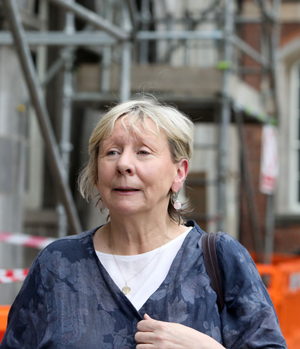
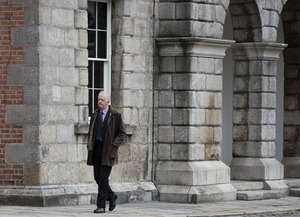
From top: Counsellor Laura Brophy and her partner, Supreme Court judge Peter Charleton; Sgt Maurice McCabe and his wife Lorraine outside Dublin Castle yesterday

Yesterday.

On day two of the Disclosures Tribunal in Dublin Castle.

The tribunal heard from two witnesses – counsellor Laura Brophy who works with HSE’s counselling service, Rian, and her line manager Fiona Ward.

The tribunal is investigating claims of an orchestrated smear campaign against Sgt Maurice McCabe.

Readers will recall how an allegation of inappropriate touching was made against Sgt McCabe by a 14-year-old girl in 2006 but, after it was investigated by then Inspector Noel Cunningham, the DPP directed that no prosecution be taken – with the observation that it was doubtful the allegations should constitute a crime at all.

The person who made this allegation is referred to as Ms D in the tribunal. Her father, also a guard, was a colleague of Sgt McCabe’s.

Sgt McCabe was not made aware of this allegation until nine years later, in December 2015.

The tribunal is not re-examining Ms D’s allegation but it is examining how her allegation – pertaining to 1998 when she was aged 6 or 7 – became conflated with another much more serious allegation of rape when counsellor Laura Brophy sent a retrospective disclosure of abuse report to Tusla, following two counselling sessions with Ms D in 2013.

During yesterday’s sitting, it was queried if Ms Brophy was misinformed by a member of Tusla before she sent the catastrophic retrospective disclosure; that of the three sentences that were wrongly attributed to Sgt McCabe in the abuse report, Tusla left one on the amended report in its communication with the gardaí; Supreme Court judge Peter Charleton outlined a “curious coincidence” of the timing of the erroneous report; and it heard Ms D herself is proposing to give evidence.

On Tuesday, during the first day of sittings, Ms Brophy explained that, on August 9, 2013, she had sent the retrospective abuse report – which contained the false allegation of rape – to Tusla because it was her understanding that Tusla had no knowledge of the 2006 allegation and that, therefore, the matter had not been considered by a social worker.

Ms Brophy said this understanding was based on a phone call she had had with Breige Tinnelly, of Tusla.

On Tuesday, it was put to Ms Brophy that, in her notes of the phone call, she made no note of this claim made by Ms Tinnelly.

Ms Brophy said that finding out that information was the purpose of her call and that, had Ms Tinnelly said there had been a previous referral, she wouldn’t have sent it.

Yesterday, Ms Brophy repeated this, saying:

“That is why I felt compelled to send the report and it was advised that I would send in a report.”

The tribunal heard yesterday that Ms Tinnelly, in her report of the phone call, also didn’t make reference to Ms Brophy asking if a referral had been previously sent.

It also heard that in Ms Tinnelly’s notes of the phone call, they also didn’t make reference to Ms Brophy asking her if a referral had been previously sent.

Ms Tinnelly did however note that Ms D had previously notified the gardai and that the DPP directed that there be no prosecution.

It was also brought to Ms Brophy’s attention that Ms Tinnelly created an “intake form” on the same date Ms Brophy sent her the retrospective abuse report, August 9, 2013.

Ms Brophy told the tribunal that she wasn’t aware Ms Tinnelly was creating such a report. Ms Tinnilly will be giving evidence to the tribunal at a later date.

Under cross-examination from Michael McDowell, Ms Brophy was asked to look at notes of a meeting that she had had with her line manager Fiona Ward in July 29, 2013.

The notes were written up by Ms Ward and Ms Brophy agreed that any information Ms Ward had at that point would have originated with Ms Brophy.

In the notes, it states: “Statement made at the time, case didn’t proceed.”

Mr McDowell put it to Ms Brophy that this showed that, in July 2013, Ms Brophy knew that the statement made by Ms D in 2006 proceeded to the DPP and didn’t proceed.

Ms Brophy agreed.

But Mr McDowell said:

“You said yesterday that if the gardaí already knew about it, there would be no point in telling them again about it, isn’t that right?”

Ms Brophy replied:

“Can I clarify that because I am not sure that is exactly what I said?”

She then explained that her main concern wasn’t about the gardaí knowing and that she was aware information was passed to the gardaí and that Ms D had made a statement. Instead, Ms Brophy said, her concern was that Ms D may not have had any contact with social workers.

Mr McDowell asked Ms Brophy if she had asked Ms D if she had had any dealing with social workers and Ms Brophy said Ms D had told her she couldn’t recall. Mr McDowell noted that Ms Brophy did not make a note of this.

Mr McDowell also asked Ms Brophy if she was aware that in 2006/2007, the gardai were obliged to inform the HSE of all such incidents. Ms Brophy said that this was her confusion and that’s what she wanted to check.

Ms Brophy added:

“That was my purpose for ringing social workers, to ask them would it have been reported, and they said they couldn’t confirm so then I had to elaborate further.”

Returning to the notes, Mr McDowell asks Ms Brophy to read out a section, which states: “Didn’t know of social worker involvement or not.”

After reading this, Ms Brophy said:

“So my apologies, that does actually answer your previous question, yeah; I didn’t know.”

Fiona Wards notes also included the following: “Father a garda. She wants to become a garda. Concerned alleged perpetrator (now in his 40s) still a garda, has two daughters of his own. Garda involved in… case of whistleblowing”.

Readers will recall that Sgt McCabe’s identification wasn’t made known to Ms Brophy until August 7, 2013 – when Ms Brophy held her second counselling session with Ms D.

Readers will also recall that on Tuesday, the tribunal heard that, prior to being informed of Sgt McCabe’s identity on August 7, 2013, Ms Brophy says she spoke to a social worker on July 30, 2013, and asked hypothetically – without identifying Ms D – what would or could happen about the type of allegation that Ms D had disclosed.

Ms Brophy said she was told that nothing could have been guaranteed at that point. She also explained that she told Ms D she would find out what she could for her, and that Ms D was concerned that Sgt McCabe would become aware of her identity.

Yesterday, Mr McDowell asked Ms Brophy about this concern Ms D had – of being identified to Sgt McCabe – and queries if Ms Brophy had asked Ms D about her concerns.

Ms Brophy said she felt it was “self-explanatory” and that many of her clients have the same concerns.

However, Mr McDowell argued that Ms D had already made a complaint, which had gone to the DPP. He said: “So there couldn’t have been any secret that she was a person who had made a complaint about it?”

Ms Brophy said Ms D wasn’t keen on it being reported.

Mr McDowell also drew attention to a part of Ms Ward’s notes, of her July 29, 2013 meeting with Ms Brophy, in which it states that Ms D was “concerned about impact of reporting to SW [social work] given she wants to join the Gardaí.”

And a section where it states: “Contact social work department. Social work said… need to have name and details and talk to the client and Gardaí.”

Mr McDowell put it to Ms Brophy:

“So that is, by the 29th, you are telling Ms Ward that you had contacted them and that they had told you that there would be a need to contact the Gardaí, is that right?”

Ms Brophy replied:

“I can see that it’s written on that date, I am just not sure that that is when I had the interaction but I can see that it’s written there.”

Mr McDowell says this “strongly suggests” that Ms Brophy had already been in contact with Tusla about the matter.

Ms Brophy conceded that that was what was written.

In addition, Mr McDowell recalled a note that Ms Brophy took of the meeting in which she states:

“I phoned SW today and spoke with duty social worker, Briege Tinnelly, who I informed about alleged and concerns about the report having been passed to SW [social work] ten years ago.”

Mr McDowell pointed out that this note doesn’t say “I wonder was it passed to them?” Ms Brophy said she supposed she was ringing to clarify matters.

Mr McDowell asked if Ms Tinnelly was able to give Ms Brophy an answer immediately on the phone – in regards to whether a referral had been previously made. Ms Brophy said it was her understanding that Tusla had a record on their system. She couldn’t recall how long it took Ms Tinnelly to retrieve the information, if it was minutes or seconds.

Ms Brophy’s Assessment of Counselling form – she filled out in relation to Ms D’s first initial counselling session – included a list of bullet points.

One was:

“This man was a garda in Bailieboro but has since moved. “Forced out” when the allegations came out.”

Mr McDowell told the tribunal it is an undisputed fact that Sgt McCabe was not “forced out” of Baileboro.

In any case, the tribunal heard that on the form, in the section where it asks for – names, address and occupation of alleged abuser – these were left blank but that Ms Brophy came back at a later stage and filled them in.

Ms Brophy said she could not fill that section out until after the second counselling session – on August 7, 2013 – because it wasn’t until the second session that Ms D identified Sgt McCabe.

Mr McDowell put it to Ms Brophy that Ms D was holding back on giving her Sgt McCabe’s name until Ms Brophy could “give her further assurances”. Ms Brophy said that was her best recollection.

“But you did write down at the time “has two daughters at the time aged approximately three and five years.”…You see the point is, you must have known that at the time because on the 29th of July, Fiona Ward, you tell her that?…Could it have been the case that you took it down at the time and knew well at the time who it was?“

Ms Brophy said that if that had been the case, she wouldn’t have needed to meet Ms D a second time – to get Sgt McCabe’s identity – and would have just sent the report in after the initial assessment.

A letter sent by social work team leader Keara McGlone to Superintendent Noel Cunningham on August 15, 2013 was also brought to the attention of Ms Brophy at the tribunal yesterday.

The letter states:

“Dear Superintendent Cunningham, Health Service Executive Child and Family Services have recently received a referral from Rian, a therapeutic counselling service for adult survivors of child sexual abuse. The referral states that Ms. D, now aged 21, has discussed during counselling sessions that she was sexually abused during her childhood by an adult male, M. McC.”

“I note from the social work file that you conducted a criminal investigation into these allegations in 2007. However, it appears the alleged perpetrator was not met with by Health Service Executive at that time.”

“I would like to meet with you to discuss the case prior to making any contact with the alleged perpetrator.”

Mr McDowell pointed out an inconsistency.

He asked:

“I am just wondering, how could it be that you were told that there was no evidence of a social work file on the 8th or 9th of August in the course of a phone conversation, when, a week later, people are examining its contents and relying on its contents to contact Superintendent Cunningham?”

Ms Brophy said she isn’t in a position to answer that.

Mr McDowell argued that Ms Brophy was misinformed by Ms Tinnelly and that “the reality is that a report was going in on this occasion, no matter what” and that Ms Brophy’s claim – that she wouldn’t have sent in the report had been told that the matter was already known to Tusla – “is not supportive on the paper”.

The tribunal heard that, on August 9, 2013 – the same day Ms Brophy sent the retrospective abuse report, with the false allegation – Ms McGlone and Ms Tinnelly co-signed off on a Child Welfare and Protection document in which Sgt McCabe is identified which said the matter was going to be reported.

Mr McDowell queried, given this, how it could be that Ms McGlone, on August 15, wrote in a letter to Superintendent Noel Cunningham “I note from the social work file…” when six days previously she co-signed off on a referral on the basis that there had been no social work file.

Mr McDowell asked Ms Brophy if anyone contacted her to say that she had been misinformed and she said ‘No’.

Mr McDowell drew Ms Brophy’s attention to an interview with Ms D in The Irish Times from earlier this year. The article was written by Conor Lally.

In the article, quotes are attributed to Ms D in which she speaks negatively of her counselling session with Ms Brophy, though Ms Brophy is not named in the piece. Mr McDowell read out excerpts, saying:

When she was taking it down she said something, I don’t know her exact words, she said ‘I will have to refer this on’. The woman said ‘I remember straight away it got my back up. I was thinking refer what on? This has been reported, this has been investigated and the DPP said insufficient evidence, that is all, that is that, there is nothing going to change, I have accepted that’.”

And later:

‘I remember coming out of the counselling session and I was more annoyed than when I went in.'” “‘… more annoyed than when I went in’,” all right? “‘I remember thinking, stirring up shit for what? I knew by her she was going to report it whether I wanted to or not’, the woman said.”

Ms Brophy said this was not her recollection of their meeting.

Mr McDowell asked Ms Brophy if she had ever led Ms D to believe that she was going to report the matter whether Ms D liked it or not. Ms Brophy said she didn’t have the information to do so.

Ms Brophy was again asked about her contact with Supt Leo McGinn – after she was made aware of the error by Ms D on May 14, 2014. It was Supt McGinn who first made Ms D’s father of the “digital penetration” error without realising it was an error.

On Tuesday Ms Brophy told the tribunal that, on May 16, 2014, Ms Brophy sent a letter by registered post to Leo McGinn stating that, further to their call about the error, she’d amended the report and enclosed a corrected report. She apologised and requested that any copy of the erroneous report be retracted and replaced

Ms Brophy’s contact with Supt McGinn followed Ms D telling her that the superintendent hadn’t been told that there was an error made in relation to Sgt McCabe.

Mr McDowell asked Ms Brophy why she contacted the guards, given that her initial retrospective abuse report was never sent by her to the guards in the first place. He referred to an email Ms Brophy sent to Eileen Argue, a social work team leader, in which she stated:

“I have agreed to send the superintendent the amended and correct report by registered post today.”

Mr McDowell asked with whom she “agreed” to do so.

Ms Brophy said it was possible that she felt “it would be for the best to send” it by registered post to ensure that the gardai got the correct report. She said it was her understanding that the false allegation of digital penetration was the subject of a live Garda investigation.

In relation to the retrospective abuse form – which contained the serious errors – Ms Brophy identified three sentences that were wrong and needed to be removed.

But Mr McDowell informed Ms Brophy that, of the three sentences that she identified as wrong and asked to be removed, one remained on the Garda complaint.

Mr McDowell asked Ms Brophy:

“When did you first learn that only two of those sentences had been removed and that the, the content about threatening the father had been left on the amended and improved report?”

Ms Brophy responded:

“You are the first person to tell me that.”

Mr McDowell, in discussion with Supreme Court judge Peter Charleton, explained that it was Tusla which left in the incorrect sentence in their communication with the gardai.

Ms Brophy said she thought the matter had been resolved.

But the tribunal was reminded that, on December 29, 2016, Sgt McCabe received a Barr letter from a Ms O’Loghlen about an allegation of digital penetration of Ms D.

Ms Brophy said nobody ever came back to her about the matter after her attempts to clear the matter up in 2014.

Ms McDowell also asked Ms Brophy about the apologies, including letters, which were given to Ms D. He asked:

“Did anybody in the whole process ever think of apologising to Sergeant McCabe and his family for what had happened, to your knowledge?… did anybody in the system ever ask you to participate in making some redress to Sergeant McCabe?”

Ms Brophy said: “Not that I can recall.”

Michael O’Higgins SC, for the Commissioner Noirin O’Sullivan, read to the tribunal excerpts of a statement made by Ms D’s father in relation to when he became aware of the false allegation related to his daughter and Sgt McCabe – before it was known that it was a mistake – in May 2014.

“Early May, my superintendent, Leo McGinn, asked me did I have a minute. I went into his office. He handed me a HSE referral form and asked ‘is that your lassie? I said ‘yeah, that is her’. I saw the detail of the allegation, digital penetration. I couldn’t believe it. I got a fierce shock. I couldn’t think straight. I felt had she told the counsellor this and not told us. Had this actually happened. She had maybe told the counsellor but had not told us. I was sick to my stomach. I couldn’t wait to get out of the office.”

“I didn’t say anything to Leo McGinn as I didn’t know what was going on.”

This latter line ‘didn’t say anything’ suggests Mr D did not explain to Supt McGinn that this much more serious allegation was wholly different to Ms D’s original 2006 allegation.

Under cross examination, Mr O’Higgins drew Ms Brophy’s attention to an email Ms Brophy sent to her line manager Fiona Ward on May 15, 2014, in relation to a communication Ms Brophy had with Eileen Argue, a team leader in the Cavan Social Work Service. Ms Brophy had been experiencing some difficulty in getting a hold of Ms Argue.

The email states:

“Hi Fiona, I just wanted to update you of my contact with Eileen Argue team leader in the Cavan Social Work Service. Ms Argue informed me that she had contacted the chief superintendent in charge of this investigation and he informed her that the alleged has not yet been contacted in relation to the case as they were just beginning to look into the report from social services yesterday.”

This email indicates gardai had just started looking into the false allegation – as referred in August 2013 – just days before Ms Brophy had sent Supt McGinn a corrected version of the report on May 16, 2013.

In addition, the tribunal heard that, even when the error had been made clear, it had still been said to Ms Argue that somebody within An Garda Síochána would keep the original report along with the updated report.

Mr O’Higgins stated that, according to records, the matter had been given over to the Assistant Commissioner, as opposed to the Commissioner as said by Ms Brophy in evidence on Tuesday.

Under cross-examination from Michael Cush, for the HSE, Mr Cush brought Ms Brophy’s attention back to what Mr McDowell had highlighted earlier in relation to Ms Tinnelly.

Mr Cush said:

“McDowell suggested to you that that part of the note is easier to explain if you knew that it had been passed ten years ago, whereas I understand you to be saying that your concern was to ascertain whether it had been passed ten years ago because you didn’t know?”

Ms Brophy replied: “Yes, that’s correct.”

Mr Cush also returns to the “standard intake form” co-signed by Ms Tinnelly and Ms McGlone on August 9, 2013. Mr Cush states in Section 12 of the form there is essentially a question “Known to social work department,” and the entry is “No”. Elsewhere, in handwriting, somebody raised the question: “Query previously known?”

The tribunal heard that Ms Tinnelly, in her statement to the tribunal, said she ticked ‘No’ on that form, and Ms McGlone, in her statement to the tribunal, said: “The box on section 12 in this case is ticked ‘no’ which means there wasn’t an existing record for Maurice McCabe.”

Mr Justice Charleton also asked Ms Brophy several questions.

He asked if it was the case that Ms D told her that Sgt McCabe had been mentioned in a college lecture, in which he was “held up as an example of how to do things in Irish life” and that Ms D “was taking a contrary view”?

Ms Brophy said this was not told to her.

Justice Charleton also told how it’s his understanding that Sgt McCabe started to get media attention as a Garda whistleblower in December 2013/early 2014.

Ms Brophy said the stories about whisteblowing within the guards and the penalty points controversy didn’t impact her at all and this only became apparent when she went to resolve the error in May 2014.

Mr Charleton asked if Ms Brophy was aware that there was an investigation into a missing computer from a Garda station at around this time, relating to an individual who was abusing children. She wasn’t.

Mr Charleton was speaking in relation to Fr Michael Molloy, of Kill in Cootehill, Co Cavan, from whom a computer was seized by gardai in 2007 and brought to Baileboro Garda Station, on the same day of his arrest.

The computer was never forensically examined and was never mentioned in the file prepared for the DPP by Superintendent Noel Cunningham, even though it was referred to in statements made by a victim and a garda. The O’Higgins commission of investigation would later find the investigation into Fr Molloy to be have “major flaws”.

In November 2009, Fr Molloy was sentenced to five years imprisonment on the count of defilement of a child under 15; three years on the count of defilement of a child under 17; and three years on the count of possession of child pornography, all sentences to run concurrently.

In 2010, Bishop of Kilmore Leo O’Reilly wrote to Cootehill Garda station requesting the computer be located and returned to him as a matter of urgency. But the computer was missing and never subsequently found.

In 2012, a report by Detective Superintendent Tom Maguire stated that, on foot of an investigation into the missing computer by Supt O’Brien, he was of the opinion that Sgt McCabe was in breach of discipline over the missing computer. This opinion was formed before he is appointed to investigate Sgt McCabe.

In February 2012, disciplinary proceedings began against Sgt McCabe, over the missing computer. On June 21, 2013, Sgt McCabe, during his formal disciplinary interview, over the missing computer, said he had nothing to do with the investigation of Fr Molloy and that he never had the computer in his possession.

Then, on July 24, 2013, Sgt McCabe was told that he was, in fact, not in breach of discipline. This decision was based on obvious inconsistencies in the evidence of a garda which was the only evidence against Sgt McCabe. On August 6, 2013, the disciplinary investigation officially ended.

Mr Charleton said:

“… there is kind of a curious coincidence of the report in error going in or around the time when, if it was deliberate, and please park that for the moment… it could be regarded as causing maximum trouble? In other words, escalating something into something that it was not, with a view to doing somebody down, if you get my drift?”

He added:

“On the 21st of June 2013 in relation to this case concerning a computer, it’s called the Molloy case, it’s in the public domain, I am entitled to mention, it’s also in the O’Higgins Report, it concerns a sexual abuse, but it just so happens that a computer on which perhaps other records might have been stored went missing out of Garda custody. You appreciate that when something as evidence is brought into Garda custody, that it’s kept there for the purpose of the case, and even if somebody wants a computer for their teenage nephew, or whatever, it still remains Garda property until the absolute end of the case?

“That went missing, and a disciplinary interview had taken place on the 21st of June 2013 with Sergeant McCabe in relation to the missing computer.

“And it so happens that on the 18th of July 2013 Ms. D was referred to Rian, the counselling service, and then the plan was for you to meet her, which you did, on the 24th of July 2013… and the 7th of August 2013. And then on the 24th of July, in the Molloy case, this is the missing computer, Sergeant McCabe was notified by Detective Superintendent Maguire that he was not in breach of discipline in relation to the missing computer, and allegation that he was in charge of the exhibits having been resolved in his favour, that he wasn’t?

“Which would appear to indicate that if you were so minded, and please, I have underlined the word ‘if’, by making this error deliberately, it would have caused an enormous amount of trouble and perhaps supported those in the Gardaí who were against Sergeant McCabe, do you appreciate that?”

Ms Brophy said she did appreciate this timeline of events.

Mr Charleton contined:

“…in the light of all of that, how would you countenance doing such a thing deliberately for whatever motive against somebody; in other words, making the error that you made but instead of it being an error it being deliberate?”

Ms Brophy said “I would never be complicit in something like that.”

The tribunal also heard evidence from Fiona Ward yesterday afternoon and she will continue to be questioned from 2pm today. In addition, Carmel McAuley and Keara McGlone will also give evidence.

The sitting is expected to end at 6pm.

A transcript of yesterday’s proceedings can be read here
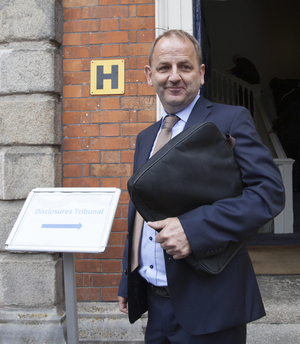
From top: Sgt Maurice McCabe; Counsellor Laura Brophy, and social workers Rhona Murphy and Mary O’Reilly at Dublin Castle for the Disclosures Tribunal yesterday

Yesterday.

At the Disclosures Tribunal in Dublin Castle.

The tribunal heard from three witnesses – HSE social workers Rhona Murphy and her superior Mary O’Reilly and psychologist and counsellor Laura Brophy who works with HSE’s counselling service, Rian.

The tribunal is investigating claims of an orchestrated smear campaign against Sgt Maurice McCabe.

Readers will recall how an allegation of inappropriate touching was made against Sgt McCabe by a 14-year-old girl in 2006 but, after it was investigated by then Inspector Noel Cunningham, the DPP directed that no prosecution be taken – with the observation that it was doubtful the allegations should constitute a crime at all.

The person who made this allegation is referred to as Ms D in the tribunal.

Her father, also a guard, was a colleague of Sgt McCabe’s.

Sgt McCabe was not made aware of this allegation until nine years later, in December 2015.

Continue reading →

Moment of laughter at the Disclosures Tribunal when Supreme Court judge Peter Charleton stopped proceedings as a woman attempted to leave the hall but couldn’t open the door.

As he stopped the proceedings to draw attention to her plight, he said he didn’t want to be accused of false imprisonment.

FIGHT!

Rollingnews

From top: Justice Peter Charleton and Sergeant Maurice McCabe arriving for the first day of public hearing at the Disclosures Tribunal in Dublin Castle

This morning

At Dublin Castle.

The Disclosures Tribunal, which is investigating claims of an orchestrated smear campaign against Sgt Maurice McCabe, will hear from its first witnesses.

Those scheduled to appear before Supreme Court judge Peter Charleton work with either the HSE, the child and family agency Tusla or the Rian Counselling service. They are: Rhona Murphy, Mary O’Reilly, Mary Tiernan and Laura Brophy.

Their appearance pertains to the tribunal’s term of reference (d) which is:

“To investigate the creation, distribution and use by TUSLA of a file containing false allegations of sexual abuse against Sergeant Maurice McCabe that was allegedly sent to Gardai in 2013, and whether these false allegations and/or the file were knowingly used by senior members of An Garda Siochana to discredit Sergeant McCabe.”

Further to this…

Readers will recall how an allegation was made against Sgt McCabe in 2006 which was
subsequently investigated, a file was sent to the DPP with the recommendation that there was no grounds for a prosecution, and the DPP directed that no prosecution be taken – with the observation that it was doubtful the allegations should constitute a crime at all.

The person who made this allegation is referred to as Ms D in the tribunal.

While the tribunal won’t be re-examining Ms D’s allegation per se, it will be looking at how her 2006 allegation was central to a much more serious false allegation being levelled against Sgt McCabe in 2013 – via a referral to Tusla from Rian counselling – and how gardai subsequently became aware of this serious allegation.

Ms D attended two counselling sessions with Laura Brophy at RIAN, a free counselling service under the remit of the HSE, for unrelated personal matters, on July 24, 2013 and August 7, 2013.

From the tribunal’s opening statement on its evidence gathered to date…

“… During the course of the initial assessment in July 2013, Ms D discussed the 2006 allegation and Ms Brophy accurately recorded it in her own handwritten notes.

… the Children First Guidelines place various obligations on members of organisations such as the HSE to refer allegations of child abuse on to the appropriate authorities.

Within the HSE, if there is suspicion of child abuse or neglect, gardaí may also be notified of the suspected abuse. In this case, it seems that initially, a verbal referral of the actual allegations which had been made in 2006 were conveyed to a social worker, Briege Tinnelly in the HSE by Laura Brophy.


Ms Brophy made a verbal referral which was recorded as follows in an intake record completed by Briege Tinnelly, signed off by HSE line manager, Keara McGlone:

Laura advised that she has a client called [Ms D] … [who] told Laura that she was abused when she was 6 or 7 by [Sergeant McCabe] … it was reported to Gardaí and there was no prosecution from the DPP … [Ms D] was playing hide and seek in [Sergeant McCabe’s] house when [he] put her on the couch, tickled her and touched her inappropriately whilst gyrating on top of her with clothes on … Laura agreed to send in standard notification form.

The intake record also noted a “duty to Garda notify & await allocation”.

After making a verbal referral on 9th of August 2013, Ms Brophy completed a typed retrospective disclosure of abuse report on the same date which provided the following under the heading of “Description of abuse”:

[redacted] informed me that she suffered sexual abuse in childhood. The abuse involved digital penetration both vaginal and anal. The alleged would also threaten [redacted’s] father if she said anything.

According to Ms Brophy, a genuine mistake was made, that in filling out the report to forward to social workers in the HSE, she states that she used the template of a retrospective disclosure of abuse report relating to another one of her clients, Ms Y, and that she mistakenly failed to remove the “Description of abuse” section which related to that client and therefore did not include the correct information about Ms D’s allegation, which she had verbally conveyed to Ms Tinnelly on that day.

This form was sent to the HSE on the 9th of August 2013. It appears that nothing was done, in house, as it were, in relation to this matter until the following year as the file awaited allocation within what became the Child and Family Agency, or Tusla.

However a letter dated the 15th of August 2013 from Keara McGlone was sent to the Superintendent in Monaghan, who at the time was Superintendent [Noel] Cunningham, referring to Ms D by her actual name and to “MMcC”, seeking a meeting with him.

This referred to the criminal investigation that he had carried out in 2007 but did not contain any detail let alone the inclusion of an allegation of digital penetration in the referral, allegedly included in error from the Ms Y file.

Superintendent Cunningham was not on duty for extended periods in or around that time and did not apparently see the letter in this period. He, however appears to have had possession of it and produced it from a safe in early 2017.

It is accurate to record here that both Ms McGlone and the Superintendent have each confirmed to the Tribunal that Superintendent Cunningham did not reply to the letter and that Ms McGlone did not make any further contact with him in relation to this matter.

…in early 2014, some journalists sought to contact Ms D…”

Continue reading →

[soundcloud url=”https://api.soundcloud.com/tracks/329638815″ params=”auto_play=false&hide_related=false&show_comments=true&show_user=true&show_reposts=false&visual=true” width=”100%” height=”450″ iframe=”true” /]

Readers will recall how the O’Higgins Commission of Investigation, led by Judge Kevin O’Higgins, looked into allegations of malpractice made by Sgt Maurice McCabe (top).

After it was published, it emerged that claims made by Noirín O’Sullivan’s senior counsel to the O’Higgins Commission of Investigation – that Garda whistleblower Sgt Maurice McCabe was acting out of malice – were proven to be untrue during the commission.

However, these details weren’t included in Justice O’Higgins’ findings.

Further to this…

The Disclosures Tribunal, led by Supreme Court Judge Peter Charleton, is looking at allegations that a smear campaign was conducted against Sgt McCabe by former Garda Commissioner Martin Callinan – with the knowledge of Garda Commissioner Nóirín O’Sullivan – as alleged by the former head of the Garda Press Office, Superintendent David Taylor.

Earlier today.

Michael Clifford, in this morning’s Irish Examiner, reported that the head of HR in An Garda Siochana John Barrett has told the Disclosures Tribunal that a member of Garda management told him that they were “going after” Sgt Maurice McCabe in the O’Higgins Commission of Investigation.

It’s reported this occurred before the O’Higgins Commission started in 2015.

In an interview earlier today for Eamon Dunphy’s podcast The Stand, Mr Dunphy spoke to Mr Clifford about this claim and about the Disclosures Tribunal.

At one point they talked about the media in respect of the Disclosures Tribunal and about how some journalists have ignored letters sent to them by the tribunal. The letters were a means for the tribunal to get answers about any possible contact they had with Supt Dave Taylor in respect of Sgt McCabe.

It should be noted that Supt Taylor has provided the tribunal with a waiver of any journalistic privilege and is not claiming privilege over his identification as the source of any information to journalists relating to Sgt McCabe, while similar waivers have been signed by Garda Commissioner Noirin O’Sullivan and former Garda Commissioner Martin Callinan.

Mr Clifford said:

“The media are going to come under focus very much and, personally, I think it’ll be a good thing for the media because if there are faults within how the media operates then they’ll be aired and hopefully we’ll be able to address them in some way.”

“But 23 journalists were named the last day, at the tribunal, as having had contact with David Taylor at this time and the tribunal has indicated, there are, what you might call, varying degrees of co-operation being extended from members of the media as to whether or not they’ll help.”

They also discussed the matters pertaining to the Garda College.

The interview can be listened to in full above.

Readers may wish to note the Disclosures Tribunal will start to hear evidence on Tuesday, July 4.

An opening statement about the tribunal and some of the evidence gathered to date can be read in full here.

Previously: Disclosures And Non-Disclosures

A Templemore Timeline

From top: Sergeant Maurice McCabe; Former Garda Commissioner Martin Callinan and Garda Commissioner Noirin O’Sullivan

On Wednesday.

At the Disclosures Tribunal.

In George’s Hall, Dublin Castle.

Diarmuid McGuinness SC, counsel for the tribunal, read out an opening statement outlining the progress the tribunal is making and an overview of the evidence gathered to date.

Readers will recall how the tribunal is examining claims that a smear campaign was conducted against Sgt Maurice McCabe by former Garda Commissioner Martin Callinan – with the knowledge of Garda Commissioner Nóirín O’Sullivan – as alleged by the former head of the Garda Press Office, Superintendent David Taylor.

Both Mr Callinan and Ms O’Sullivan deny the allegations.

In reading out the opening statement, Diarmuid McGuinness SC explained that Fianna Fáil TD John McGuinness, RTÉ journalist Philip Boucher-Hayes and Comptroller and Auditor General Seamus McCarthy have all told the tribunal about claims former Garda Commissioner Martin Callinan made to them directly about Sgt Maurice McCabe.

He also read out statements made by former Sunday Independent editor Anne Harris, journalist Gemma O’Doherty, and Labour TD Brendan Howlin, about a conversation he had with former Irish Mail on Sunday journalist Alison O’Reilly and a follow-up statement from Ms O’Reilly.

He also explained how the tribunal wrote letters to almost 30 journalists but “with a few exceptions” many of these letters have gone unanswered (more below). Diarmuid McGuinness SC didn’t specify who responded and who didn’t respond.

The Comptroller and Auditor General Seamus McCarthy said he and former Garda Commissioner Martin Callinan met at a meeting of the Public Accounts Committee [PAC] on January 23, 2014. It was at this meeting that Mr Callinan, who sat next to Noirin O’Sullivan, referred to former Garda John Wilson and Sgt Maurice McCabe as “disgusting”.

Mr McCarthy told the tribunal:

Commissioner Callinan referred to Sergeant McCabe by name and made statements to the effect that Sergeant McCabe was not to be trusted, that he had questions to answer, and that there were allegations of sexual offences against him.

In his response, Mr Callinan said:

I did not at any point state that Sergeant McCabe was not to be trusted nor that he had questions to answer. I did not state that there were any allegations of sexual offences against him.

Mr McGuinness told the tribunal a meeting took place between him and former Garda Commissioner Martin Callinan on the 24th of January, 2014 – the day after the PAC meeting – in the carpark of Bewley’s Hotel, Newlands Cross, Co. Dublin. Mr McGuinness told the tribunal:

Mr Callinan asked if I was aware of issues surrounding Mr McCabe’s personal life. I stated that I had heard vague rumours and gossip that Mr McCabe had abused someone and that he was a paedophile but that I had been assured by Mr McCabe that these rumours were lies, that he had heard them before and that they were malicious falsehoods.

Mr Callinan stated to me that the rumours were true, that Mr McCabe had sexually abused someone and that he was not a credible person. Mr Callinan stated that an investigation into Mr McCabe’s activities was underway. Mr Callinan then asked me was I aware that Mr McCabe had sexually abused family members. I was shocked and extremely troubled by what Mr Callinan was telling me because the allegations being made were extreme and the person relaying them to me, as well as the fact that an investigation had commenced, was the Commissioner of An Garda Síochána.

When he left my car, Mr Callinan put his hand on my arm and stated that Mr McCabe was not reliable and could not be trusted and suggested that I had gotten myself and the Public Accounts Committee into a lot of trouble by pursuing the penalty points issue.

In addition,  Deputy McGuinness’s statement to the tribunal states that he kept a handwritten note of the meeting. Part of that note reads:

Callinan
McCabe
Sexual abuse!
Individual + family
Don’t trust him
Story not credible
Investigations ongoing
He’s not credible

In his response, former Garda Commissioner Martin Callinan told the tribunal:

I did not at any time state to Mr McGuinness that Mr McCabe had sexually abused anyone or that he was not a credible person… I never at any stage indicated to Mr McGuinness that Sergeant McCabe had sexually abused family members.

Mr Boucher-Hayes told the tribunal of a conversation he had with Mr Callinan outside an RTE studio on December 17, 2013, as part of Crimecall programme. There had been a disagreement about whether Mr Boucher-Hayes could ask Mr Callinan about the penalty points allegations made by Sgt Maurice McCabe.

Mr Boucher-Hayes said:

He offered me background information on the penalty point story. But the majority of his information related solely to the two whistleblowers, John Wilson and Maurice McCabe, not to the substance of the story. He offered a negative but cursory impression of John Wilson, before speaking at some length on Maurice McCabe’s character. I had not asked any questions to elicit this information.

He told me that McCabe was a troubled individual and that he had a “lot of psychological issues and psychiatric issues”. He claimed that McCabe was motivated by a set of grievances against Garda management and that he was famous with An Garda Síochána for this. He warned me that McCabe was not to be trusted and went onto add that there were other things he could tell me about him “horrific things, the worst kind of thing” but he did not elaborate further.

In his response, Mr Callinan said:

I did not speak “at some length” on Sergeant McCabe’s character as indicated. I did not state that Sergeant McCabe had “a lot of psychological issues and psychiatric issues,” and was “motivated by a set of grievances against Garda management and that he was famous within An Garda Síochána for this.”

I did not indicate to Philip Boucher Hayes that Sergeant McCabe was not to be trusted, nor did I state there were other things I could tell him about “horrific things, the worst kind of thing.” I do not know what Philip Boucher-Hayes is referring to.

In addition, Superintendent Dave Taylor has told the tribunal that, in the company of now Garda Commissioner Noirin O’Sullivan, Garda communications director Andrew McLindon, Assistant Commissioner John O’Mahoney and Fianna Fáil TD John McGuinness that Mr Callinan called Sgt Maurice McCabe a ‘kiddie fiddler’.

This took place after the PAC meeting in January 2014, in which Martin Callinan referred to former Garda John Wilson and Sgt Maurice McCabe as “disgusting”.

Meanwhile…

Superintendent Dave Taylor has provided the tribunal with a waiver of any journalistic privilege and is not claiming privilege over his identification as the source of any information to journalists relating to Sgt Maurice McCabe.

Similar waivers have been signed by Garda Commissioner Noirin O’Sullivan and former Garda Commissioner Martin Callinan.

However…

Diarmuid McGuinness SC notes:

This waiver, and the similar waivers signed by Commissioner Nóirín O’Sullivan and former Commissioner Callinan, have been notified to several journalists. The journalists named by Superintendent Taylor are Paul Williams, Paul Reynolds, Conor Lally, John Mooney, Michael O’Toole, Cormac O’Keefe, John Burke, Daniel McConnell, and Juno McEnroe.

In particular Superintendent Taylor reiterated in his statement to tribunal investigators that Paul Reynolds and Conor Lally would have received negative briefings by him about Sergeant McCabe.

Sir, the tribunal has also identified from telephone data other journalists that Superintendent Taylor contacted during the relevant period.

Arising out of its investigations to date the tribunal has now written to the following journalists: Sarah Bardon, Ali Bracken, Tom Brady, Jennifer Bray, Stephen Breen, John Burke, Paul Connolly, Dyanne Connor, Ken Foy, Fran Greany, Mark Hilliard, Mick McCaffrey, Juno McEnroe, Cathal McMahon, Emma McMenamey, John Mooney, Eavan Murray, Niall O’Connor formerly of the Irish Sun, Niall O’Connor currently of the Irish Independent, Mick O’Toole, Paul Reynolds, Joe Walsh, Debbie McCann, Alison O’Reilly, Paul Williams, and at a later date, Conor Lally, Daniel McConnell and Cormac O’Keefe.

In the first instance, the tribunal wrote to most of these journalists on the 15th of March 2017 and requested statements from anyone who may have information relevant to the terms of reference. Regrettably, many of these letters went unanswered.

Five weeks later on the 21st of April 2017, the tribunal wrote again to these journalists, informing them of the waivers referred to earlier and asking the following series of questions:

1. Can you confirm your mobile phone number and work phone number?
2. Was this number your mobile phone number in the years from July 2012 until Feb 2017?
3. Were you briefed negatively about Sergeant McCabe by anyone? And if so, by whom?
4. Have you any information or evidence about an orchestrated campaign directed by senior officers of the Garda Síochána, to discredit Sergeant Maurice McCabe by spreading rumours about his professional and personal life?
5. Were you contacted by Superintendent David Taylor in relation to Sergeant Maurice McCabe?
6. Were you briefed negatively by Superintendent David Taylor in relation to Sergeant Maurice McCabe?
7. Were you briefed negatively by Superintendent David Taylor in relation to Sergeant Maurice McCabe to the effect that his complaints had no substance?
8. Were you briefed negatively by Superintendent David Taylor in relation to Sgt McCabe to the effect that the Gardaí had fully investigated complaints and had found no substance to his allegations and that he was driven by agendas?
9. Was your attention drawn by Superintendent Taylor to an allegation or suggestion of criminal misconduct made against Sergeant McCabe in any respect?
10. Was your attention drawn by Superintendent Taylor to an allegation that the root cause of Sergeant Maurice McCabe’s agenda was revenge against an Garda Síochána?
11. Were you informed by Superintendent David Taylor that he was instructed/directed by former Commissioner Callinan and /or (then) Deputy Commissioner Nóirín O’Sullivan to contact the media to brief the media negatively against Sgt Maurice McCabe?
12. Are you aware and have you any evidence of any attempt made by former Commissioner Callinan or Commissioner O’Sullivan or any other senior member of an Garda Síochána to discredit Sergeant Maurice McCabe by reference to an allegation of criminal misconduct made against him ?
13. Were you informed by a journalist or any other person of any matters referred to in the questions above?
14. Have you any knowledge, information or evidence relating to any of the matters above? 15. Have you any knowledge, information or evidence relating to any matters within the Terms of Reference of the Tribunal?
16. Have you any records (however made, wherever stored) of any communications from or with Superintendent Taylor or former Commissioner Callinan, Commissioner O’Sullivan or any other senior Gardaí relating to any of the above matters?

With a few exceptions, the journalists have either ignored these letters, or refused to answer these questions, citing journalistic privilege. Many of them nonetheless wish to make generalised academic arguments about the nature of journalistic privilege to the tribunal.

In addition…

Former editor of the Sunday Independent, Anne Harris told the tribunal:

In the years 2013 and 2014, matters raised by whistleblower Sergeant Maurice McCabe, such as the termination by senior gardaí of fixed penalty points, as well as allegations of murder and abductions not properly investigated, came to prominence. From the first instance that the Sunday Independent began to report on these matters, certain journalists came to my office to warn me off Sergeant McCabe.

I was given varying accounts of an alleged case of child sex abuse by him, which was apparently being investigated. This was repeated several times by a very reputable journalist, one who had shown great courage in exposing incidents of corruption and terrorism. I made enquiries and was satisfied that the matter had been investigated by the DPP, and the complaint found to be without grounds.

The Sunday Independent continued to report on Sergeant McCabe’s concerns and the consequent treatment of him. In 2013, the allegation that Sergeant McCabe as a “paedophile” was stated in my office by senior executive from the wider “Group” editorial hierarchy of Independent Newspapers.

I am certain that a whispering smear campaign was being conducted and that the media were being used. The pressure on me was less about publishing the sex abuse allegation – it would have been difficult within the laws of libel – but had the clear purpose of discrediting him, and therefore censoring the issues he was raising.

Labour leader and TD Brendan Howlin also made a statement to the tribunal about a conversation he had with journalist Alison O’Reilly, then of the Irish Mail on Sunday.

Diarmuid McGuinness SC writes:

According to Mr Howlin, Ms O’Reilly informed him that another journalist, Ms Debbie McCann, had told her “that the Commissioner had given information to her claiming serious sexual misconduct on the part of Sergeant McCabe.”

Ms O’Reilly then informed Mr Howlin that Ms McCann described Sergeant McCabe in very derogatory terms following a conversation with Commissioner O’Sullivan and that these matters were being discussed generally in the Mail on Sunday office. Ms O’Reilly also told Mr Howlin that Superintendent Taylor and Commissioner O’Sullivan had both provided this type of information to Ms McCann. Obviously some of what Ms O’Reilly recounted to Mr Howlin was hearsay evidence.

…In response to Mr Howlin’s statement, Ms Alison O’Reilly sent a very helpful and detailed statement to the Tribunal which covers not only her account of her conversation with Mr Howlin, but also her knowledge of events from 2013 until the present as seen from the perspective of the media. This statement is of great assistance to the Tribunal and has opened up a number of avenues of enquiry. Some of the information is hearsay but is nevertheless helpful in identifying journalists who it appears have first-hand knowledge of who may have been behind a campaign to blacken Sergeant McCabe’s good name.

Journalist Gemma O’Doherty told the tribunal that she was:

Well aware of the whispering campaign against Sergeant McCabe and when I was informed about the allegations of child sexual assault against him, I put them to him. He immediately informed me as to what happened and when I did some further investigation into the allegations, I found them to lack credibility entirely.

It was in 2013 that I first became aware that Sergeant McCabe was being associated with an allegation of child sexual assault. Rumours about this were circulating in a number of Dublin newsrooms at the time. It is my understanding that a copy of the garda file concerning the allegations had been provided to Mr Paul Williams (Special Correspondent) by senior gardaí in Garda Headquarters and that was how ‘the word’ got out.

The fact that a Garda investigation file was said to exist and that it contained damaging details concerning Sergeant McCabe, gave the story certain credibility but knowing Sergeant McCabe, I was in no doubt that this was a malicious campaign against him orchestrated by certain people who wanted to silence him and knew they couldn’t.

I spoke to Garda Wilson about the allegations that I had heard concerning Sergeant McCabe. He was aware of them. He said that a number of journalists were on the story but that it was untrue. One such individual was Paul Williams. Paul Williams has significant garda connections which both he and [Independent News and Media] rely upon for exclusive information… It is my understanding that the same firm of solicitors represents Paul Williams, [Independent News and Media] and the woman who was purportedly behind the allegations of sexual abuse concerning Sergeant McCabe…

Rumours circulated that a copy of the garda file had been given to Paul Williams and that it revealed that Sergeant McCabe was under investigation for child sexual abuse… Garda Wilson also informed me that a reporter named Debbie McCann, who worked for the Irish Daily Mail and whose father was a senior garda, was allegedly one of the journalists that was putting the word out that Sergeant McCabe was a child sex abuser. He said that she called him a ‘paedo’.

Readers will recall how Paul Williams, in the Irish Independent, wrote a series of articles in April 2014 concerning the woman – referred to in the tribunal as Ms D – who was at the centre of an allegation made in 2006 against Sgt Maurice McCabe.

This allegation, readers will recall, was investigated and a file was sent to the DPP with the DPP subsequently directing that no prosecution be taken – with the observation that it was doubtful the allegation should constitute a crime at all.

In relation to this…

Diarmuid McGuinness SC writes:

Sir, in early 2014, some journalists sought to contact Ms D, at whose instigation is not yet entirely clear. However, Ms D engaged in contact with a journalist in relation to her initial complaint in 2006. This appears to have been as a result of an inquiry made by her father of her as to whether she’d be prepared to speak to a Mr Paul Williams. He in turn appears to have been nominated to her father by a friend of his, who is a Detective Superintendent in the gardaí.

Meanwhile…

Diarmuid McGuinness SC told the tribunal that of the 15 phones that are of interest to the tribunal – six granted to Garda Commissioner Noirin O’Sullivan; six to former Garda Commissioner Martin Callinan and three to Superintendent Dave Taylor – just four have been located.

Read the opening statement in full here

Then Garda Commissioner Martin Callinan and then Deputy Commissioner Noirin O’Sullivan at the Public Accounts Committee in January 2014 

Earlier today.

Diarmaid McGuinness SC, counsel for the Disclosures Tribunal, began its opening statement at Dublin Castle.

The tribunal, overseen by Supreme Court judge Peter Charleton, is initially examining allegations of a smear campaign by Garda management against Sgt Maurice McCabe.

From the tribunal…

Read the opening statement in full here

Previously: Maurice McCabe on Broadsheet

Clockwise from top left: Sgt Maurice McCabe, Mr Justice Peter Charleton, Garda Keith Harrison, Superintendent David Taylor, and Garda Commissioner Nóirín O’Sullivan 

Yesterday evening.

Supreme Court judge Peter Charleton published his first interim report on the Disclosures Tribunal.

In it, he loosely outlines when certain hearings pertaining to the tribunal will take place (more on this below)

In addition, he lists the parties – including journalists – who have been represented before the tribunal so far, and who represented them.

In relation to journalistic privilege, Mr Charleton writes:

Another privilege that is claimed is in respect of those who engage with journalists in the public interest to enable them to carry out the vital role of calling democratic and executive institutions to account. Some journalists have given witness statements in which they have helpfully specified conversations that have taken place outside of what they perceived to be the cloak of any such privilege, if it exists.

Others have refused to say whether there is any relevant testimony which they might offer. The extent of that privilege and the circumstances under which is arises are both likely to occupy time.

As for his appeal for cooperation from all interested parties, when he made his opening statement about the tribunal, on February 27, 2017, Mr Charleton said:

“There were many useful pieces of correspondence received, including from concerned members of the public, though the general level of response was very disappointing.”

In addition:

“On 30 March 2017, the Tribunal sat to hear applications for representation from interested parties… On that day, several representatives of journalists indicated an intention to apply for representation but declined to answer any questions from the tribunal as to whether the individual or organisation seeking representation even had any relevant testimony to offer the tribunal.

It is important to record that not all journalists or media organisations took that approach. The full transcript of that hearing and the ruling of the tribunal as of 3 April 2017 are both available on the tribunal’s website.”

On the tribunal’s intended schedule, he writes:

The Tribunal is grateful for the co-operating of parties in its work to date and it is hoped the Tribunal will conclude hearing evidence before the end of this year.

It appears useful to the work of the Tribunal to divide its consideration of matters into about five substantial sections. What follows is only an outline.

Of pressing public concern is whether or not files in certain State agencies, who here might be identified as Rian, the Health Service Executive and the Child and Family Agency, otherwise Túsla, were created and distributed or otherwise used by senior members of our police force in inventing or furthering a false allegation of sexual abuse against Sergeant Maurice McCabe. 

This will be the first section of public hearings. It is hoped to engage in these and to complete them in July of this year. Progress on this matter has moved very far but the analysis of relevant computers is essential and there are further interviews to be conducted by our investigations.

Concerns in relation to Garda Keith Harrison and his family and the same State agencies might be regarded as being similar in kind, if not in detail, and it is hoped to engage in public hearings on that issue in September of this year. Again, considerable work has been done.

As to what may have been briefed to the then Garda Press Officer, Superintendent David Taylor for dissemination to journalists by former Commissioner Martin Callinan and then Deputy Commissioner Nóirín O’Sullivan, this is the subject of an inquiry in respect of which public hearings are hoped to be held, perhaps following a short break, in November.

Allied to this section are concerns in relation to an engagement between former Commissioner Martin Callinan and John McGuinness TD that is said to have taken place on 24 January 2014, in a very specific location, according to the terms of reference.

These sections do not seem to be divisible and evidence on one may be of assistance in the determination of what attitude was taken by those senior officers to Sergeant Maurice McCabe, if any, and as to how they responded or acted.

A specific, and it would seem relatively short inquiry, is to be made in relation to broadcasts on RTE of 9 May 2016. This, in fact, consisted of several broadcasts and commentaries, and as to whether Commissioner Nóirín O’Sullivan was influencing, or had dictated, the terms of these in some way.

The O’Higgins Commission was of course the subject of the commentary in relation to these broadcasts. It may be logical to consider that with the question as to whether false allegations of sexual abuse or any other unjustified grounds were inappropriately relied upon by the Commissioner during the hearings before Mr Justice Kevin O’Higgins.

It is hoped to dispose of these matters in December of this year. It is not within the terms of reference to re-run the O’Higgins Commission but, instead, that report is part of the evidence before the tribunal. It might usefully be read by all interested parties.

Read the interim report in full here

Disclosures Tribunal

1835 Tribunals_90503801

TGroves

From top: Media outside Dublin Castle this morning ahead of the Disclosures Tribunal into the alleged smearing of garda whistlebower Maurice McCabe; Tony Groves

There will be individual embarrassing moments and several more mea culpas before we arrive at a consensus that a good man was done down by a system and that, because the system is to blame, nobody is to blame.

Tony Groves writes:

There’s a story, perhaps apocryphal, that while preparing for the biggest court case of his nascent career, Cicero spent his time practising only oration and voice projection.

When asked if he would not be better off spending his time learning the legal arguments for the case, he is said to have replied “Only a bad orator need learn to be a lawyer”.

Now this story is most likely baseless, but I couldn’t help thinking about it while watching the Garda Whistleblower controversy evolve. Thirty Six times Clare Daly, Luke Ming Flanagan and Mick Wallace raised concerns to the Dail, but it was only when RTE broadcast the widely known slurs, that the “government” deigned to actually address the issue.

When I say address it, I mean speak around it, throw shapes of indignation and then search for a vehicle to park it in, while they can get back to the business of making announcements and issuing plans that hope to lead to future announcements of updated plans.

There has arguably never been a more inefficient government, nor have we ever had a more unambitious opposition.

All of which leads me to the vehicle of a public inquiry and back to Cicero.

Up and down the country, Lawyers, Barristers and Public Relations Gurus are practising their oration and vocal projection. Headline writers can today file their copy for the upcoming Charleton Inquiry.

Words like Defiant, Refute and Rebut will be thrown around like “mea culpas” at a Fine Gael Parliamentary Party meeting. Phrases like “unaware of”, “not privy to”, “had no knowledge of” and “in the strongest possible terms” will be deemed acceptable answers to the most important questions.

All the while, we will be placated with fluff pieces that assure the public that the Judge has the “power to compel” and “ask the hard questions” that will “bring closure”.

Those responsible will point at the next person up in a vicious blame circle. Sincere expressions of sincere regret will be made that would make the Banking Inquiry blush.

There will be individual embarrassing moments and several more mea culpas before we arrive at a consensus that a good man was done down by a system and that because the system is to blame, nobody is to blame. Sure we all partied, on his good name.

Cicero won his case, he rose in esteem by defeating his rival orator (Hortensius) and climbed the rungs of power. The guilty party (Gaius Verres, Governor of Sicily) was sentenced to exile and was given the traditional nine days to squirrel away as much plunder to feather his retirement nest.

Our guilty parties will also be “exiled” and in the words of Oliver Callan be “subject to the full rigours of a massive pension”. Cicero said we must “let the welfare of the people be the ultimate law”.

Ultimately, I predict that the conspirators and the participants in this sinister plot will fare out very well.

The more things change, the more they stay the same.

Tony Groves is a full-time Financial Consultant and part-time commentator. With over 18 years experience in the Financial Industry and a keen interest in politics, history and “being ornery”, he has published one book and writes regularly at Trickstersworld

Rollingnews