
Tag Archives: Dr Julien Mercille

90356452

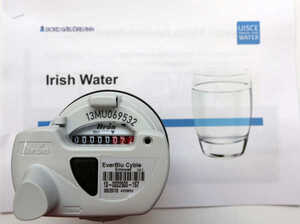
Sierra-LogoWater meter (top) supplied by Sierra (above), a subsidiary of Siteserv


The siteserv transaction.

Everything you wanted to know about the government’s priorities.

Dr Julien Mercille writes:

A lot of attention has been paid to the ongoing Siteserv controversy—but the implications for progressive politics have largely been missed in media commentary.

To begin, let’s recap some basic facts.

Siteserv is a construction services company that borrowed a lot from Anglo Irish Bank between 2006 and 2008 and accumulated a debt of €150 million. When the economic crisis struck, the government took over Anglo Irish and changed its name to IBRC.

The government (i.e., taxpayers) was thus made responsible for Siteserv’s debts and tried to get whatever it could out of those bad loans.

But instead of appointing a receiver to Siteserv to recoup those monies, IBRC let Siteserv handle the process themselves… and in 2012, Siteserv was sold to a company controlled by Denis O’Brien for €45 million.

A number of issues have been reported about the deal (although a full investigation has yet to be conducted).

First, Siteserv shareholders received €5 million from the sale. This is important because normally, shareholders, especially when they invested in a company that couldn’t even pay its debts back, are supposed to be wiped out before the creditors (in this case, IBRC). But here, taxpayers absorbed the losses.

Second, the result from the sale are as follows: shareholders got €5 million; state-owned IBRC got €40 million; and IBRC wrote off €110 million of debt it was owed by Siteserv—so the taxpayer took a hit of €110 million.

Third, it has been reported that there were other, more lucrative offers on the table for Siteserv that were rejected.

Fourth, Davy Stockbrokers and Arthur Cox solicitors acted for both sides of the transaction (Siteserv and Denis O’Brien’s company), which is not a transparent practice as it is difficult to obtain the best deal for the government when those overseeing the process simultaneously work for the buyer and the seller.

Fifth, the Central Bank of Ireland reviewed the deal just after it was finalised, but did nothing. The Irish Stock Exchange was also asked recently about a reported spike in Siteserv shares trading just before IBRC received bids from parties interested in buying Siteserv.

The Stock Exchange refused to comment, saying it was precluded from doing so on such matters.

Sixth, the government now wants to review the 2012 sale of Siteserv by using the audit firm KPMG. That is, even if KPMG was involved in the sale. In fact, so far, KPMG has been paid more than €70 million for its services in the liquidation of IBRC.

So asking KPMG to review itself is not exactly an instance of accountability. Indeed, Transparency International Ireland urged the government to remove KPMG from the review.

But our Minister of Finance, Michael Noonan, appointed a former judge to supervise KPMG in the review process. So, the plan is that a judge-reviewer will review the KPMG reviewer. It seems to be difficult to find an objective and neutral reviewer.

Seventh, in 2013, a year after it was bought by Denis O’Brien, Siteserv won several contracts to install water meters in Ireland (through its subsidiary GMC/Sierra). It was bad enough that taxpayers absorbed losses in the sale as stated above, but now Siteserv is benefiting again from the water charges.

A couple of points may be made about all this.

First, there have been accusations that the whole thing shows once again that the government is incompetent, mismanages everything and doesn’t learn from the mistakes of the past.

For example, Shaun Connoly wrote in the Examiner an article entitled “Incompetent Government will Bury the Controversy” in which he wonders if Enda Kenny “really not understands the laws of this country”? He also complains that we are faced with a “rotten system where nothing gets done properly and no lessons are ever learned”.

But the problem with this view is that it assumes that the government is actually trying to manage things properly for the common good, and that if only it could be more competent at doing so, things would improve.

However, in fact, the nature of the state is not to serve the people and to govern for the population as a whole.  This should be clear after a €64 billion bank bailout, a blanket guarantee making ordinary people responsible for €365 billion of bank liabilities, and six years of harsh austerity directed at the general population and the more vulnerable that has pushed the deprivation rate from 11.8% of the population in 2007 to 30.5% in 2013.

So by that standard government performance in the Siteserv deal is not too bad at all.

Siteserv shareholders have benefited. Denis O’Brien has benefited. Firms that have been paid fees to oversee the process have benefited. Taxpayers absorbed losses instead of private interests and bondholders, thanks to the socialisation of Anglo Irish debts.

And everything was kept quiet for about three years until one TD, Catherine Murphy, asked sustained questions—that’s not too bad, although in an ideal world, the deal would have been kept quiet forever.

Second, and related, how can we make sure this won’t happen again? UCD Professor of Politics David Farrell writes in the Irish Times that the controversy highlights “two major weaknesses in our political system”: first is “a Government that is not held adequately into account by parliament” and second is “a mindset that privileges secrecy over openness”.

Farrell’s solution is thus that “there needs to be a culture shift”, meaning that Ministers and civil servants “need to appreciate the principles that underline Freedom of Information—namely, to provide citizens with the information they deserve to know”.

Therefore, “instead of waiting behind closed doors” for information requests, the government should “simply put the information out there as a matter of course”.

The problem with this approach is that again, it assumes that if we could only convince those politicians to be more aware of the need for openness and transparency, things would get better.

It’s not incorrect per se, but the problem is that those politicians know very well that secrecy benefits them and those in power—that’s why they’re keeping things secret! Therefore, hoping they will change on their own won’t work.

So what are we left with? The way to change things is by redistributing economic and political power in society—that’s how you keep the powerful accountable, and in fact, that’s how you make sure nobody is too powerful relative to others.

If ordinary people had the same economic and political power as elites, there simply wouldn’t be too many elites around, by definition. A minority would not make decisions that affect everybody else’s lives.

Power would be decentralized, not concentrated in the hands of a few. In short, what we need is a drastic reorganization of power in society.

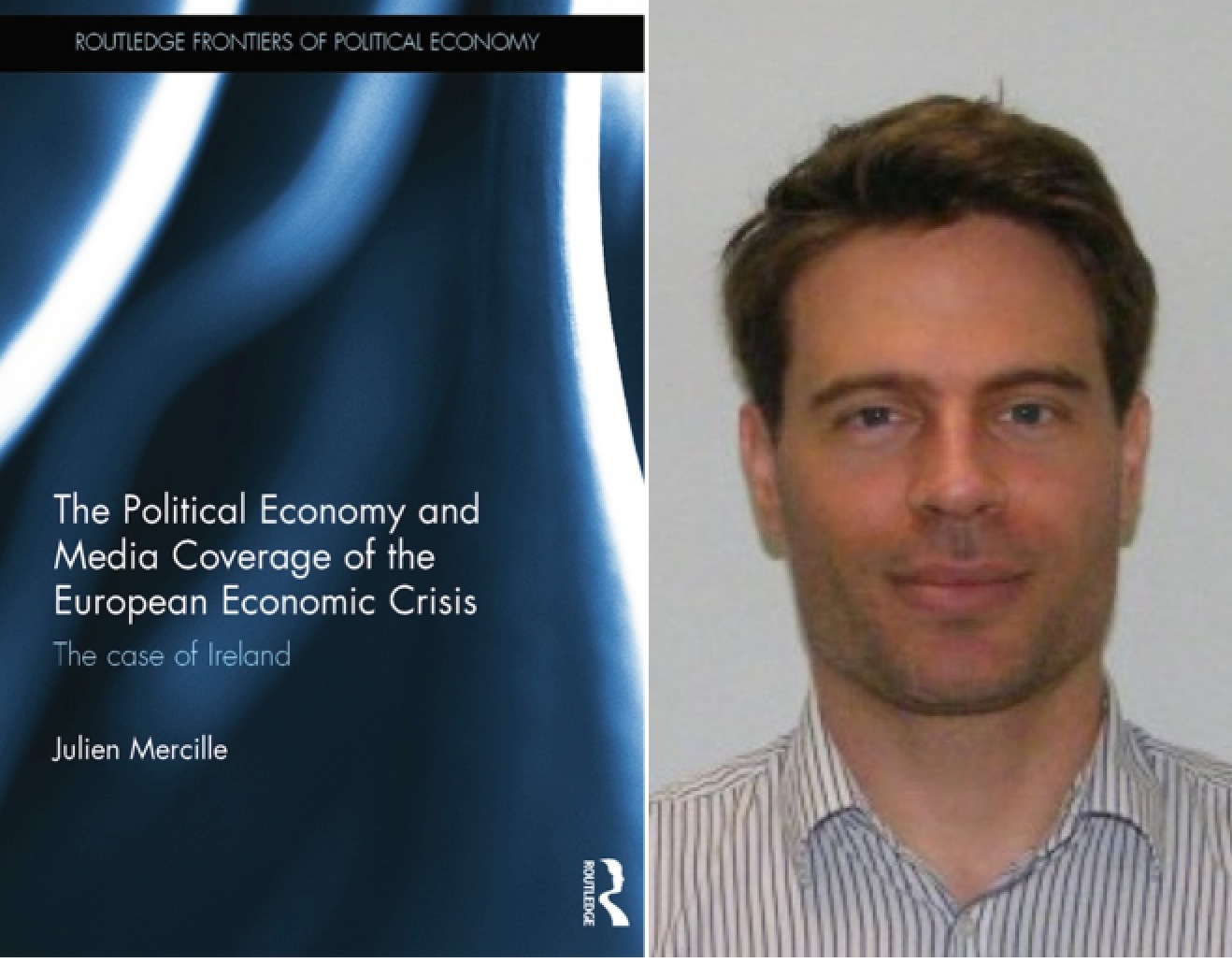
@JulienMercille is lecturer at UCD and the author of The Political Economy and Media Coverage of the European Economic Crisis: The Case of Ireland (2015, Routledge). His new book, Europe’s Treasure Ireland (Palgrave), will be out in July 2015.

STJulien Mercille hi resFrom top: yesterday’s Sunday Times editorial and Dr Julien Mercille

It’s Monday.

It’s Beefcake O’Clock.

It’s Mercille on Monday

Dr Julien Mercille writes:

An important report on the anti-water charge movement was released last week, written by Rory Hearne from Maynooth University. It surveyed 2,556 people and concluded that Ireland is witnessing the ‘birth of a new civil society’, an important development.

The most significant consequence of the anti-water charge protests is that they are democratising the country. This is why elites are worried and have reacted hysterically: they want this popular movement repressed, and quickly.

There is nothing surprising in this. Power always fears real democracy, in which people have a say over what affects their lives. It directly threatens power systems where decisions are taken at the top and imposed on the population.

Yesterday, in yet another example of elites’ hatred of real democracy, the editors of the Sunday Times wrote a revealing piece entitled ‘Politicians “of the People” Doth Protest Too Much’.

They are dismayed that the Dail, ‘the institution responsible for drafting laws which the citizens are expected to obey is increasingly populated by individuals who believe such laws do not apply to them’.

They are appalled that some public representatives, let alone ordinary people, dare challenge government policy and power. They state that ‘this lawless attitude is spreading like a virus, particularly among the “can pay, won’t pay” brigade’, referring to the anti-water charge movement.

The notion of a ‘virus’ spreading and ‘infecting’ the country is a recurrent theme among the powerful. It is code for saying, ‘we need to smash this resistance movement to our rule, otherwise, others could get ideas and join the protests, and we’ll lose control and be kicked out of power’.

That’s how dictators in the Middle East were thinking during the Arab Spring. That’s what demonising Syriza by European and Irish elites is about. That’s what the US war on Vietnam and elsewhere to prevent ‘dominoes’ from falling was about, and there are countless other examples past and present. The point is always the same: don’t give oxygen to incipient protest movements, or they could spread like wildfire.

The editors give a few examples of those they want to see put in their place:

Mick Wallace and Clare Daly, for attempting to search US military airplanes at Shannon airport and refusing to pay their €2,000 fine.

Joan Collins, for being one of 15 people arrested at a protest against the installation of water meters. The editors were outraged that after being released from garda custody, ‘she didn’t go to work—she returned to the protest’.

Richard Boyd Barrett, Tommy Broughan, Gerry Adams, Mary Lou McDonald and Pearse Doherty, for announcing they will not pay their water charges.

And as always, Paul Murphy, who declared, ‘I’m elected to break the law’.

The editors’ conclusion is that such TDs have ‘nothing to offer other than protest’ and that ‘Sinn Fein and a raggle-taggle bunch of left-wing independents are addicted to populism and publicity stunts. They are nowhere near ready to govern, and voters in search of a stable government should reflect on that’.

Another thing we could reflect on is the extreme aversion of elites to democracy and people power. Before anyone says this is conspiracy theory, re-read the above paragraphs: it’s not a conspiracy, it is stated explicitly.

The establishment has indeed good reasons to be worried, as revealed by the survey’s key findings:

54% of respondents had never protested before joining the anti-water charge movement.

This means that the water protests have overcome and eliminated atomisation: people do not feel they’re just alone being frustrated and know there are some channels formed to organise and voice their discontent.

Everybody is aware that people around the country are opposed to Irish Water. In November, more than 100 local Right2Water protests took place in Ireland, gathering over 150,000 people. A third of households liable for water charges still have not registered.

No matter the outcome of the water protests, the human and institutional networks formed will outlast them and serve to organise other campaigns on other issues. This is why the current movement is so significant.

– The main reasons for protesting are that ‘austerity has gone too far’, the need to ‘stop the future privatisation of water’ and to ‘abolish water charges’.

This may sound obvious, but it may still come as a surprise to some politicians so out of touch with popular aspirations that it’s almost comical.

For example, the Labour Party’s Eamon Gilmore declared not so long ago that he could not understand the protests, saying: ‘Well I find them hard to understand because in fact the water meters are being installed to enable households to reduce what they will have to pay’.

Go figure. War is Peace, Freedom is Salvery, and Water Meters Save you Money.

92% said they wouldn’t pay their water charges and 83% said they would vote for broadly left parties in the next election, including the Anti-Austerity Alliance, People Before Profit, independents, and Sinn Fein.

A clear majority said they had voted for government parties in 2011 but would not repeat that mistake again. 78% said the most effective way of changing things in this country is through protesting, against only 28% who said it is by contacting a political representative, pointing to the high level of disillusion about the political class.

In short, if there’s one thing that unites this country, it is lack of trust in the political class. Organising the protests into an effective force for change will remain an ongoing challenge, but with potentially far-reaching consequences for real democracy in Ireland.

@JulienMercille is lecturer at UCD and the author of The Political Economy and Media Coverage of the European Economic Crisis: The Case of Ireland (2015, Routledge). His new book, Europe’s Treasure Ireland (Palgrave), will be out in July 2015.

mercille

This morning.

French-Canadian beefcake boffin Dr Julien Mercille is currently addressing the banking Inquiry over the media’s role in the financial crisis.

FIGHT!

Watch LIVE here (committee room 1)

More as we get.

The accumulation of sovereign debt in Ireland and Europe gave rise to the possibility of default and restructuring. However, the media described a potential default as a ‘cataclysm’, an ‘evil day’, ‘an unmitigated disaster’, ‘hugely damaging’, a ‘doomsday scenario’ and likely leading to ‘intolerable contagion effects’ throughout the eurozone. However, scholarship on sovereign debt restructuring reveals that countries that decide to cancel the repayment of their debts typically suffer only short-term economic costs and that long-term negative consequences are not significant, so that overall, defaulting often yields positive outcomes, as in Argentina and Greece.
The media have also strongly endorsed austerity since 2008. At the outset of the crisis, the media called explicitly for a campaign to ‘educate’ the public about the need for austerity. The Irish Times editors complained that ‘Members of the general public still do not appreciate the possible extent of the economic downturn’ and editors thus asserted that ‘the Government will have a major job to do in educating public opinion about unpalatable economic realities and the need for civic discipline’.

From Dr Mercille’s opening address.

Full transcript

Update:

90374414

Desert-booted, knapsack-carrrying chiselled egghead Mercille outside Leinster House this morning.

(Sam Boal/Photocall Ireland)

90372561
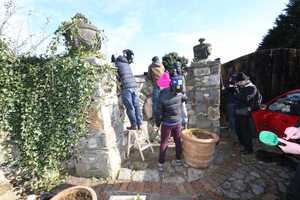
t4_-371666110Gorse Hill, Killiney, last week (top) and Dr Julien Mercille (above)


Dr Julien Mercille writes:

Since 2009, there have been 3,865 home repossessions in Ireland (1,114 were ordered by courts and 2,751 were voluntarily surrendered or abandoned).

Also, the Central Bank has just released new figures showing that there are still more than 100,000 homes in arrears, or 15% of mortgage accounts. The evidence suggests that banks will seize even more homes in the near future.

If an opinion poll was taken today asking Irish people, ‘Can you name one of those repossession cases?’, probably 95% would answer ‘the rich guy in Killiney whose Gorse Hill mansion Vincent Browne showed us on television… the one with a tennis court, swimming pool, stone lions, and a nice view on the Bay’.

The ‘rich guy’ is Brian O’Donnell, a solicitor and developer who not so long ago controlled a €1 billion property empire but went bankrupt in 2013.

When Bank of Ireland moved to seize his €7 million palatial house over an unpaid debt of €71.5 million, a group calling itself the New Land League tried to block the repossession.

It just so happens that the New Land League, set up in 2013, is led by Jerry Beades, who is also a developer and a former member of Fianna Fail’s National Executive who collaborated closely with Bertie Ahern in the not so distant past.

According to press reports, he also accumulated multi-million euro bank debts over which he has been in legal battles with the banks.

The media has paid so much attention to that story that by now we know a lot about the intricate details of the lives of the O’Donnells, Jerry Beades, Gorse Hill itself and the New Land League. Yesterday, in a long Sunday Independent front-page ‘Exclusive’, ‘first-ever’ interview, the children of the O’Donnells told their stories. And that passes for investigative journalism.

One issue is, why is the media so focused on this case, but not on the thousands of others who have or are at risk of losing their house?

For example, just as the Gorse Hill soap opera is unfolding, a Limerick father called Ger Lonergan who is undergoing treatment for cancer risks losing his home due to a mortgage debt of €32,000.

He became unable to make payments due to illness and was diagnosed a few months ago with cancer. Permanent TSB has asked for a possession order to seize the house in which he lives with his wife and two daughters. Mr Lonergan says he gets a disability payment of €78 a week.

Whatever the details of this specific case, it’s not hard to imagine many other similar ones in the country. And ‘imagine’ is the right word, since we haven’t heard much about them.

The reason is that our mass media is not representative of popular interests. It cares about those of the better off and the stories that concern them, but not so much about the conditions faced by ordinary people.

That’s why all newspapers have ‘Business’ and ‘Money’ sections, but no ‘Poverty’ or ‘Human rights’ or ‘Deprivation’ sections. There are ‘Sports’ and ‘Lifestyle’ or ‘Living’ sections, but those don’t challenge Ireland’s power structure or injustice (they’re just about shopping and entertainment), so they may be printed.

The same goes for sensationalist stories like Gorse Hill. Narrowing down the discussion to the swimming pool and the paintings in the house, while not making links or comparisons with ordinary people at risk of losing their homes saves the government and bankers some embarrassment over kicking out ordinary and sick people out of their homes.

Another effect is that whenever the important issues of repossessions, evictions and mortgage arrears are brought up in public discourse, the picture conveyed is one of arrogant rich people living in mansions and too stubborn to vacate their house that they bought thanks to property speculation during the housing bubble years.

Many of us will have little sympathy for such individuals and might even secretly cheer for the courts and banks to kick them out of their house.

The result is that issues of repossession and arrears are misrepresented and turned upside down, and thousands of people whose lives are directly affected by them will not receive the attention they deserve.

@JulienMercille is lecturer at UCD and the author of The Political Economy and Media Coverage of the European Economic Crisis: The Case of Ireland. He will provide evidence to the Banking Inquiry on the role of the media during the housing bubble years.

Related: Banks attempt to repossess 7,000-plus homes (irish Times)


brickindocover

Mercille

Irish Independent coverage (top) and Dr Julien Mercille.

Isis, crisis and kicking against the bricks.

Dr Julien Mercille writes:

The Irish establishment has reacted hysterically to popular opposition to the water charges. In an almost comical performance, the media has focused laser-like on Joan Burton’s feelings while trapped in her car and on the protests’ alleged ‘violence’. But it has turned a blind eye to the violence of austerity across the country.

We’re not supposed to talk about it because it lends direct support to the protests, but the background to the recent events is that since 2009, austerity has attacked communities, families and individuals throughout the country, and the poor and vulnerable have paid the heaviest price.

Here is a short list:

-There are now 1,230,000 people suffering from deprivation, or 27% of the population—up from 12% in 2007.
-Between 2009 and 2014, health spending was cut by a mind-boggling 27%. On top of that, we know that privatised, for-profit health care systems result in more people who die, worse care, and more money wasted, but the government is doing nothing apart from cutting even more.
-Communities have been faced with a string of cuts over 2008-2014, including:
-Violence against women programme: -38.2%
-Women’s organisations: -48.7%
-Projects for youth: -44.1%
-Community development: -43.6%
-Voluntary social housing: -50.0%
-Drugs programmes: -37.0%
-Family Support Agency: -32.5%

-The number of people sleeping rough in Dublin is at its highest since records began, having tripled in five years. There are 700 homeless children living in emergency accommodation; the number of homeless families in this situation has more than doubled in the past year.

We could go on, but the point is that it should come as no surprise that people are out in the streets trying to force politicians to back off. It would be surprising if it didn’t happen.

But we were told that the protests signaled that we in Ireland were ‘heading to an ISIS situation’, in reference to the violent fundamentalist Islamic State group in Iraq and Syria. In a ‘sinister twist’, a ‘sinister fringe’ has ‘infiltrated’ and ‘hijacked’ the protests (Tom Brady, Niall O’Connor and Fionnan Sheahan, Irish Independent). The protesters are responsible for the ‘creeping anarchy’ threatening the peace by engaging in ‘rampant law-breaking and thuggery’ (Stephen O’Byrnes, Irish Times).

TD Paul Murphy has been a special target, described as a ‘ridiculous’ and ‘immature’ posh kid who is ‘privately educated’ and ‘unapologetic about the ugly antics of protesters’. The Irish Independent pictured Murphy on the front page of its Weekend Review with a big communist logo in the background. Clearly, he must be friends with Stalin, no? (Kim Bielenberg, Fionnan Sheahan, Irish Independent).

The fears of Joan Burton when trapped in her ministerial car have received an incredible degree of attention. If that passion for details was applied to the hardships of ordinary people living under austerity, there would be no secrets left about how bad austerity is as an economic strategy.We have been told that Burton was ‘abused’ and that her ‘necklace was broken’. She said ‘I was frightened’.

But if the media was serious about discussing feelings of fear and abuse, it would investigate those of the hundreds of thousands of people throughout the country suffering from deprivation, or who fear losing their jobs, or fear not to make ends meet because they lost their jobs, or fear to end up on the street because they can’t make ends meet, or fear they can’t provide for their kids because they can’t keep up anymore. Or look at those who fear death from cancer because waiting times are too long because the health care system is privatised and wasteful. Or those who fear they will have to emigrate because there are no jobs available in Ireland.

But the media cares about the interests of those in power, so it won’t talk about that. The focus is on the two hours Joan Burton spent in her car.

There has also been much talk about the ‘intimidation’ and ‘violence’ associated with the protests. There have been endless assertions that: Throwing a water balloon is violent; throwing an egg is violent; tapping on a car is violent; shaking a car is violent; intending to shake a car is violent; a megaphone is very suspicious.

The media likes to narrow it down to those questions only because it diverts attention from what really matters. It ensures that we don’t ask the questions that should be asked:

Is suicide or depression due to austerity-induced unemployment violence against the unemployed? Is lack of access to a rape crisis centre closed by cutbacks a form of violence and intimidation against victims? Is being forced into homelessness humiliation and intimidation? Is someone forced to die of cancer because of waiting lines a victim of violence? Is enforced deprivation intimidation?

The media and the establishment may reflect on those matters. Everybody else knows the answers.

Julien Mercille is a lecturer at UCD and the author of The Political Economy and Media Coverage of the European Economic Crisis: The Case of Ireland (Routledge).

The Media And The Water Protests (Julien Mercille, Right2Water.ie)

Previously: Julien Mercille on Broadsheet

Screen-Shot-2014-09-10-at-11.35.57

The Critical Media Review sat down with French Canadian buff boffin Dr Julien Mercille, of UCD, whose book on the media’s role and collusion in the boom and bust was published last week to much acclaim and some fury.

Julien, Why does the media fail us so?

Julien Mercille: “The media serves the interests of its owners and the corporate class of which they are part. They serve an ideological function in presenting government policy and interests in a positive light. All along the economic crisis, the media consistently endorsed and supported virtually all government policies (the major ones, at least), confining debate to details and losing sight of the big picture.”

Critical Media Review: “Do you think the severe concentration of media ownership in Ireland plays a role in this?”

Mercille: “Yes, to some extent. A lot of the media is owned by Independent News and Media, for example. But an issue that’s probably more important to me is the nature of media entities. As of now, they’re all corporate or state-owned with significant commercial interests (RTE), so even if you had more of those, it would be better, but not that much. What’s missing is a diverse media in the sense of more alternative, strong media outlets. That would provide significantly more diverse coverage, alternative viewpoints, etc.”

CMR: What about RTÉ, has the public media been any better at covering the crisis?

Mercille: “No, it’s the same thing. It’s owned by the government, so it’s no surprise that it reflects government views. For example, during the housing bubble years, RTÉ’s Prime Time show, the leading current affairs programme, ran about 700 shows. Only 1% of its shows addressed the housing bubble, let alone criticising it.”

CMR: “Do you see any room or agency for progressives working in the Irish media sphere?”

Mercille: “Yes, there are many actually, but there number will be limited as long as the structure of the media landscape remains as it is. Vincent Browne, Gene Kerrigan, Colette Browne, Fintan O’Toole and others give good progressive viewpoints.”

CMR: “If the media is so heavily biased towards neo-liberal economic policy can it play any progressive role in Irish society and democracy?”

Mercille: “It plays a role as it is now, but it could play a much more meaningful role if it was restructured along the lines mentioned above, i.e. by encouraging alternative media outlets that reflect to a greater extent the interests of the population as a whole.”

CMR: “Do new online media channels offer any hope for you?”

Mercille: “I don’t think online media improves or worsens the potential for better news, it’s just another medium. There are a lot of good websites and blogs obviously, but there are also a lot of mainstream news websites that actually dominate the internet.”

CMR: “What is your advice to political activists in terms of relating to the media?”

Mercille: “On one hand I’d say try to present your message in a way that’s “respectable” so as not to worsen an already difficult situation in reaching out to the media and getting covered. On the other hand I’d say that it’s not good to change your message and actions too much just so that the media will be more likely to give you coverage, it’s better to do what you think is best for whatever project you have, and not think too much about “convincing” the media to give you coverage, otherwise it can often lead to hitting walls and waste of time and going in the wrong direction. So a balance has to be struck and that depends on context and the specific case at hand.”

*swoon*

More here: Economics, Media and Crisis – Interview with Julien Mercille (CriticalMediaReview)

Previously: J’Accuse

Thanks Henry Silke

Screen Shot 2014-09-10 at 11.35.57

It’s here.

French-Canadian UCD dreamboat boffin Dr Julien Mercille’s book on media’s coverage of the Irish economic crisis has just been published.

The Political Economy and Media Coverage of the European Economic Crisis: The Case of Ireland (Routledge) examines the role of RTÉ, Irish Times, Irish and Sunday Independents, The Sunday Business Post and others in:

*Creating and fuelling the boom

* Failing to warn about the bust

* Providing little or no balance covering the subsequent austerity measures.

Julien writes:

“The book shows that the Irish media has largely conveyed the views of corporate and political elites from the housing bubble years, through the bank and EU-IMF bailouts, and up to this day and age of austerity. The effects on public debate have been highly negative, to put it mildly. Oh, and there is also a special section on Marc Coleman to set the record straight on his performance…”

Gulp.

Meanwhile, among those who couldn’t put it down…

“A book of record… An exceptionally rare example of an academically rigorous analysis forcing the powerful light of transparency and exposure into the murky world of Irish policy advocacy and punditry… A captivating account.”
Constantin Gurdgiev, Trinity College Dublin

“Shows how the “responsible”, “balanced”, “non-ideological” Irish media have consistently supported policies that favour elites and disfavour most people, notably people in disadvantaged communities.”
Vincent Browne.

“Julien Mercille delivers both a stinging critique of how Irish media narrowed the debate on crisis and austerity and a comprehensive analysis of that limited public discourse.
Seán Ó Riain, Author of The Rise and Fall of Ireland’s Celtic Tiger

“Anyone who cares about democracy and economic policy should read this book and be deeply worried by it.”

Mark Blyth, Professor of International Political Economy, Brown University and author of Austerity: The History of a Dangerous Idea

“Superb… A model for examining the news media across the world.”
Robert W. McChesney, co-author, The Endless Crisis

“Tells the story of the economic crisis well and explains the media’s role in convincing the public that it was all very complicated and that government policy can do little to improve the situation.”
Dean Baker, Center for Economic and Policy Research

There’s a catch.

The book costs about the same as a small house.

Dr Julien Mercille

Previously: For Those Who Shouted Stop He Salutes You

No Mercille

julienAd7374348St1Sz225Sq102046727V0Id3[Julien Mercille, top and a Irish Times banner ad from 2011]


The general stance in favour of fiscal consolidation presented by news organisations is illustrated by an editorial statement in the Irish Times that called for a campaign to ‘educate’ the public about the need for reducing the deficit. ‘Members of the general public still do not appreciate the possible extent of the economic downturn’, given that two-thirds of respondents in a national poll ‘took the view that the Budget was too tough, with 10 per cent believing it was not tough enough’.

The editors thus concluded that ‘the Government will have a major job to do in educating public opinion about unpalatable economic realities and the need for civic discipline’


And how.

You may recall UCD Professor Julien Mercille and his damning academic study on the Irish media’s role in inflating the boom (and the hand to hand combat with economist Marc Coleman over same).

Dr Mercille has now turned his attention to whether newspaper coverage of austerity policies in Ireland has been fair and balanced.

He writes:

Anybody who reads the Irish press knows that it varies from centre-right to right. There’s almost nothing left of centre.

Ireland is actually quite special in this respect in Europe. There’s no equivalent of the British Guardian here for example. No Monde Diplomatique either.

I wanted to see how this played out in the coverage of austerity since 2008.

I looked at all editorials and opinion articles on austerity published since 2008 in the Irish Times, Irish Independent, Sunday Independent, Sunday Business Post and Sunday Times.

This returned 929 articles.

The main conclusion: the media have been relentless cheerleaders for austerity.

The key points of the study revealed:

(1) Support for fiscal consolidation is overwhelming: only 10% of articles on the topic are against it, 58% support it, and 32% don’t voice a clear opinion.

(2) Keynesian stimulus is out of the picture: only 2% of articles stated a preference for increasing government spending. This is astonishing. It is the main progressive alternative to austerity, but yet, we never hear about it.

(3) Those who say that trade unions monopolize the debate are dead wrong: excluding regular journalists, 29% of the authors of the articles are mainstream economists, 28% are working in the financial or corporate sector, and 20% are political officials in the three main political parties, which have all supported austerity. In short, the overwhelming majority of writers (77%) come from elite political or economic elite institutions. The remainder is composed of 9% of academics (excluding mainstream economists), 7% of members of progressive organisations (like Social Justice Ireland), and only 3% are trade union officials. It is thus a very conservative cast of writers who are allowed to take part in the debate in the national media.

The media have announced their role in convincing the public that austerity is good for them very clearly.

At the outset of the crisis, in November 2008, an Irish Times editorial called for a campaign to ‘educate’ the population about the need for austerity and ‘civic discipline’.

The problem was that Irish people did ‘not appreciate the possible extent of the economic downturn’ because only 10% of them thought the budget should be tougher while two-thirds thought it should be less tough, according to a national poll. The editors thus concluded that ‘the Government will have a major job to do in educating public opinion about unpalatable economic realities and the need for civic discipline’.

The media’s pro-fiscal consolidation views can be assessed by looking at the following sample of article titles published since 2008: ‘Commitment and Stamina are Required for Fiscal Consolidation’ (Irish Times), ‘New Budget will Prove Tough but Necessary’ (Sunday Independent), ‘Austerity Vital to Maintain our Economic Sovereignty’ (Irish Times), ‘We Need to Stop Living in Denial and Cut Costs Even Further’ (Sunday Independent), ‘We Must Suffer the Pain Now—Or Else we will Blight Future Generations’ (Sunday Independent), ‘Bill is Tough but Necessary’ (Irish Times), ‘Tough Budget Would Restore Confidence’ (Irish Times), ‘Supplementary Budget can Begin Urgent Task of Restoring Depleted Tax Revenues’ (Irish Times), ‘Budget May Cut Wages and Raise Taxes to Restore Competitiveness’ (Irish Times), ‘[Austerity] Budget Will Restore Confidence and Hasten Economic Recovery’ (Irish Times) and ‘Tough Budget Needed to Stave Off Grimmer Future’ (Irish Times).

The case is so overwhelming that it may even surprise its proponents.

Full report [with data, etc] is available here.

Julien Mercille is the author of the forthcoming book The Role of the Media in the European Economic Crisis: The Case of Ireland (Routledge, June 2014).

 Previously: For Those Who Shouted Stop He Salutes You

The Why

Calling It

The Irish Media – Cheeleaders For Austerity (Julien Mercille, Social Europe Journal)