
 That’s the one at the corner of Stephen’s Green and Harcourt Street.
Hang on.
Wouldn’t it be more expensive to close it down?
Oh, that’s just Anglo.



That’s the one at the corner of Stephen’s Green and Harcourt Street.
Hang on.
Wouldn’t it be more expensive to close it down?
Oh, that’s just Anglo.
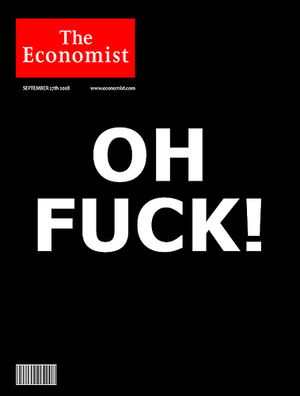
Can you explain What you mean by this?
A farmer goes into an embattled tractor dealer and reaches an understanding on the purchase of an expensive tractor. He goes to his local bank manager to get financing; as agriculture is not doing too badly despite the recession, there is some hope. But the bank has an unexpected response: we can’t give you a loan to buy that tractor, but we can finance one very like it — that we recently repossessed. So banks are in the farm machinery business, at the expense of actual farm machinery businesses.
OK. That’s one example. Big swinging.
A recreational golf player reports that it’s a good time to play golf in Ireland. Some local courses that had gotten shabby and run-down are finally having some needed working capital put into them, and now they look good. How did this happen? The banks took them over and will do anything to attract a bit of business, even if it means putting in some additional money.
Right.
Then there’s the miseries of the hotel business. Apparently the hotels being run by banks have gotten hold of the forthcoming wedding parties at neighbouring hotels, and are calling the couples directly with offers of a better deal — enough of a better deal to cover the lost deposit at their original booking. And finally, one of the big fish: Arnott’s, is now owned by Ulster Bank (RBS subsidiary) and Anglo Irish Bank.
That Means…
The Irish debt crisis has put the banks into lines of business that they never planned to be in. With the result that significant sectors of the Irish domestic economy are now being run by them.
I’m convinced. Thank you.
But
What?
There is exactly one sector of the economy that the government has declared off-limits from the process of debt distress, restructuring, and external management.
The fishing sector?
How many leaving cert points did you say you got?
(more on this excellent website)
(Mock-up: p45.net)

Back from Spain. Nice colouring. Lemon hat, lemon coat; makes him see gold in the mirror. The bit of tan. Brown pants in case anyone from RTE recognises him.
Retired on a pension pot of €27 mill after riding Irish Nationwide into the ground (requiring a €3.2 bill bailout). Also trousered a €1 mill bonus which he promised to pay back, before he realised what “promised” meant.
You’d think that with €28 mill he’d be getting into something fancier than a weeny little Ford Focus. But it’s all about the optics, baby (see also Fitzpatrick, Sean, collected from Bray cop shop in son’s VW Golf).
You didn’t see the goat-eed one on the telly last night? Oh, you were celebrating the leaving results? You don’t know who this man is? You’re off to Canada?
Never mind, link to the realplayer vid here.
Then read this. When Fingers ruled the world.

Unless you bought in Dalkey.
Collapsing House Prices: We Ain’t Seen Nothing Yet (Irish Independent)

This just in:
The Emerald Isle’s national debt officials have pulled off an impressive performance Tuesday, selling €1.5 billion of bonds in a sale that was closely watched for signs of trouble given resurfacing worries about financial problems in the euro zone.
In a sign of the confidence investors still have in Ireland, the country sold €500 million of bonds maturing in 2014, paying an average interest rate of 3.627%. The size of investor demand was more than five times the amount of new bonds on offer.
 And got torn a new one.
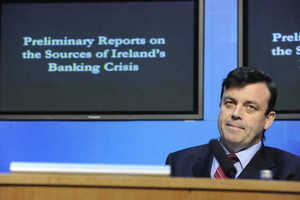
Translation: I’m a very cold dude.
Lenihan Should Resign Because Of Ill-Health (Sam Smyth, Irish Independent)
 Look. We’ve beaten the Dutch.
Top Six Most Indebted Nations In The World
1. Ireland – Debt/GDP: 997% the economy reversed course in 2009 and contracted 7%. This eroded tax revenues and sent the annual deficit to a record 14.3% of GDP. The European Union set a target for Ireland to reduce that figure to 3% by 2014, but the International Monetary Fund has indicated that the deadline will be missed. Moody’s has subsequently lowered its bond rating.
2. Netherlands – Debt/GDP: 467%
3. United Kingdom – Debt/GDP: 409%
4. Switzerland – Debt/GDP: 273%
5. Portugal – Debt/GDP: 228%
6. Austria – Debt/GDP: 214
 La La La La. I’m not listening:
“Ireland’s Treasury now has to pay investors a premium of nearly 3 percentage points to get investors to buy its 10-year bonds instead of safer Germany’s. This so-called “risk premium” stood at around 2.4 percentage points a week ago.”
“In the derivatives market, it now costs over $270,000 a year to insure $10 million of Ireland’s government debt against the risk of default, compared with $207,000 in early August, a massive 30% jump.”
“The Emerald Isle also had to throw investors a bone: The average interest rate on Ireland’s six-month borrowing today was 2.458% compared with 1.367% on a similar bill in July.”

YES!
And by yes we mean ‘not for a while so stop asking’
Bank Of Ireland Post Huge Losses Amid Dud Loans (Business Week)