Tag Archives: Fr Niall Molloy

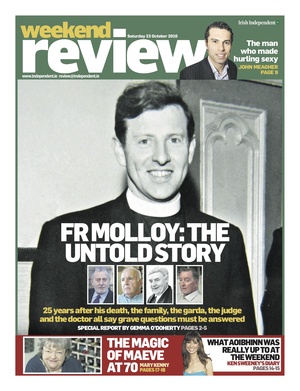
fr-niall-molloy-1[Gemma O’Doherty’s investigation into the death of Fr Niall Molloy for the irish Independent in 2010]

The Case of Cynthia Owen, the murder of Fr Niall Molloy and the treatment of of journalist Gemma O’Doherty made it to the floor of the Dail during the Alan Shatter Confidence debate yesterday. to wit

 Joe Higgins: “I want the Minister or senior gardaí to answer why during a two year audit of An Garda Síochána by the Data Protection Commissioner, which produced a 95-page report only a few weeks ago about data protection issues, there is not a single mention of a phone call, a taped phone call or anything relating to that. I want the Garda to explain who held off the truth from whom. I want the Data Protection Commissioner to make a statement on this incredible circumstance.”
It is time for a commission of inquiry into the circumstances surrounding the death, and the investigation of the death or murder, of the Reverend Niall Molloy as pursued relentlessly by the journalist Gemma O’Doherty. It is one of the longest running miscarriages of justice cases in the history of the State. The Government must move on this.”

Richard Boyd Barrett: “We cannot have confidence in the Minister for Justice and Equality. His appalling behaviour in dealing with the penalty points scandal, the whistleblowers, the bugging scandal in GSOC and now the taping controversy has been well rehearsed here, so I will not go through it. All of those things have brought the administration of justice and policing in the State into disrepute. That is why he has to go.  There are a couple of other people who deserve to be mentioned in the short time I have. Irish Independent journalist, Gemma O’Doherty, was sacked for door-stepping Commissioner Callinan over the issue of penalty points that he may have had quashed last year, by the editor-in-chief of Independent Newspapers who was a former editor of the Garda Review. It is alleged in newspaper reports that he had his penalty points quashed. This is the sort of State we live in.
“I would gain some return of confidence in the Minister for Justice and Equality if we put all of that aside and going forward he looked interested in bringing justice to people who have been denied it. Three times in the last two weeks I have asked about the appalling case of Cynthia Owen, a child who was ritually raped and made pregnant at the age of ten. Her baby was murdered and she alleges that gardaí were involved in that abuse. The case was closed down after six weeks and nobody was ever brought to trial over it.
“There was a sham investigation years later when the victim of this heinous crime was not even interviewed. The person who carried out that investigation had said publicly a few weeks before that cases of abuse like this should not be investigated at all. Ms Owen has asked the Minister, Deputy Shatter, through her solicitor, for a meeting. She is seeking a commission to investigate this heinous crime, yet the Minister still says “No”. How can one have confidence with issues like that?”

Transcript via Oireacthas.ie

ConorB

[Conor Brady, former member of the Garda Síochána Ombudsman Commission (GSOC) and former editor of the Irish Times]

Mr Brady spoke to Seán O’Rourke on RTÉ Radio One last Friday in relation to the controversies surrounding the gardaí of late, but specifically about Sgt Maurice McCabe, Justice Minister Alan Shatter and Garda Commissioner Martin Callinan following Minister’s Shatter speech in the Dáil last Wednesday.

Conor Brady: “I think by and large the minister did well (in the Dáil) but I think, as you say, it’s, it’s, we have a kind of a Garda-free zone for a few days and it’s possibly time to stand back and take a look at where we are.”

Seán O’Rourke: “And, in regard to the way he outlined in very great detail, the complaint came in, it was, you know, it went initially to GSOC, there was a letter to the minister, certainly the file moved.”

Brady: “The file moved and he followed it through at every stage but, you know, very often in these statements and in these trails, investigations have to be evidence-led and evidence has got to be recorded and logged and very often what isn’t said and what isn’t detailed can be just as important as what is logged and what is said. I take a little, I differ from the minister in one point he made and I think it’s a significant point of emphasis. He talked about Sgt McCabe’s complaints about Garda activities in the, complaining about the conduct of policing in the Cavan area, in the Baileboro area where he was, where he was based as sergeant. And the minister stated quite rightly that GSOC did not appear, did not take any further action on the complaints of Sgt McCabe. Now what the minister said is GSOC did not appear to have felt it necessary to take any further action. And I don’t think that’s really telling the full story. It would be more accurate to say that GSOC felt it was not possible to take any further action.

O’Rourke: “Why would that have been?”

Brady: “Well, because when the complaints came in, for example, we set down a number, we opened a public interest investigation. A number of very senior experienced officers from GSOC, former police detectives from outside of the State, along with one or two former gardaí themselves, working with GSOC, went to interview the witnesses in some of the cases that Sgt McCabe had complained about. And while the witnesses were quite willing to tell them what happened in some of these allegations of malpractice and neglect of duty, when it came to making statements they weren’t going to do that. So our officers had to go back to us and say ‘look you know, this woman has told us what happened, she’s quite prepared that we should know, but she’s not going to make a statement’.”

O’Rourke: “Are you talking about people who would have complained to the gardaí and that, in those instances, not enough had been done but in other words the complainant…”

Brady: “Some of the cases that Maurice McCabe was talking about, where he alleged neglect of duty by fellow gardaí, where he had alleged that guards were not doing the job that they were paid to do, the way they were doing it. And the, as I say, the, any investigation…”

O’Rourke:So we’re talking about civilians not being willing to give the statements that were…”

Brady: “And indeed other gardaí not being willing to confirm details of complaints.”

O’Rourke: “And, so in that situation, were GSOC’s powers limited then? Were, is there no obligation on guards to provide information and to answer questions put forward and to cooperate with GSOC itself?”

Brady:There are requirements that they should but it’s not, it’s not always easy to get the evidence of that either. All I’m saying is that the complaints made by Maurice McCabe, I think the minister has shown, yes, that there was a response by the bureaucracy, a response by the Garda authorities, a response by GSOC, a response by the Department of Justice but that doesn’t mean that Sgt McCabe’s complaints are not founded. What I’m saying is that rather than having it said that we didn’t find it necessary to go any further, my recollection of it is that we simply came up against a blank wall: evidence wasn’t there, people weren’t prepared to talk about things and in that situation you can’t take an investigation further.

O’Rourke: “And there were some instances I think where GSOC itself recommended that disciplinary action be taken but the Commissioner, using his powers or his discretion chose not to – what did you think of that?”

Brady: “Well that again that is a further flaw I would suggest in the legislation and it is not mirrored in the legislation. For example, in Northern Ireland, if, if the Northern Ireland Police Ombudsman recommends disciplinary action be taken against a member of the PSNI then the Chief Constable doesn’t have an option in that and the same in England and Wales. If we stand back from all this, I think what we’re seeing here is a series of fissures, cracks, flaws, very deep flaws in the 2005 legislation. There are, we’ve seen, that effectively, the relationship between GSOC and the Garda Síochána is unsustainable, it’s bedevilled by mistrust. The whistleblower system has broken down and other flaws such as the one you now have just shown us, the legislation is really, it has failed to pass its first tests.”

O’Rourke: “Well that’s something that’s going to be the subject of amending legislation in the aftermath presumably of the two reports that are being worked on at the moment. But, going back to the exchanges in the Dáil, what about the insights fresh or otherwise that were given into the Commissioner’s behaviour, Garda Commissioner Martin Callinan. He insisted that he had directed Sgt Maurice McCabe to cooperate with the investigation on the penalty points controversy. McCabe insisted that that was not so. Alan Shatter seemed to accept that there was two sides to that story.”

Brady: “He did, he accepted that there were two sides to the story and it looks,  it again I think the system can cover itself. But, at the same time, Sgt McCabe can also argue that he wasn’t in fact directed to cooperate with the inquiry and I can see many reasons why he would have been very nervous about cooperating with the inquiry.”

O’Rourke: “Yes, he was invited to, he said ‘look if you’ve got any more stuff, right stop printing the stuff off on PULSE and go to John O’Mahoney’, or that’s the place to go if you’ve any further concerns.”

Brady: “Yes, that really isn’t the way. If the guards really want to talk to somebody about something, you know, that isn’t the way they usually go about it. They send two fellas out in a car and they can find you. And you can in fact. If the guards feel that in order to get to the truth of something, that they want to talk to some individual, they’ll find a way of doing it.”

O’Rourke: “And I think Assistant Commissioner O’Mahoney’s explanation to the PAC, the Public Accounts Committee earlier on was that, look, you know we didn’t go after him, we didn’t look to interview him on the basis he was dealing with anonymous complaints?”

Brady: “I’ve no direct knowledge of what Assistant Commissioner O’Mahoney put to him but what I’m saying is that I think if the inquiry really wanted to get him into it and to have him as a source, I feel that a more assertive approach would have been possible and would have been the norm for gardaí. As I say, if they want to talk to you about something else, they know pretty well how to, how to find you and where to find you. ”

Later

Brady: “There’s a very long tradition in the Garda Síochána, as in probably other institutions of the State aswell, there is a long tradition of whistleblowers or complainants actually being punished and rarely having any, in fact, never to my knowledge, having any acknowledgement – for none of them has it represented career advancement or an enhancement  their circumstances. If you go back even to the fingerprint scandal in the technical bureau in the 1970s which undermined the reliability of the entire fingerprint system. I could have resulted in chaos in the courts. And the two detectives who brought it to public attention were penalised whereas the people who had been responsible for the errors, and the flaws in the system, one of them was promoted. So the history, the history isn’t good there. You have a long tradition there of people who get, who suffer for putting their head above the parapet and I think Fintan O’Toole, I thought made a rather good point, had a good way of putting it in the Irish Times yesterday: it wasn’t just, this isn’t just the guards we’re talking about here, it is the institutional response of the State. So many of the State’s institutions that if there is criticism, or if there is, if there are questions raised there is almost an automatic reaction on the part of the establishment that such criticisms are coming from people who are either malign or misguided and therefore they have to be rubbished.”

O’Rourke: “And are suspect.”

Brady: “And are suspect.”

O’Rourke: “But do you look at it though from the point of view of Martin Callinan, working up there in Garda headquarters, he gets reports of these two gentlemen, [former Garda John] Wilson and McCabe  off from PULSE which is  breach of security, a breach of all sorts of regulations and legislation which I couldn’t identify but let’s take that as a, as the situation, what is he to do? I mean other than to tell them to stop.”

Brady: “Of course, yes, I agree but there have been many, many, many many abuses of PULSE which we encountered when we were, when I was in the Ombudsman Commission. Many abuses, cases of guards accessing the system, for nefarious purposes, using the information on it for nefarious purposes. In one case I recall accessing PULSE to retrieve information to blacken the reputation of a young man who’d been killed in a road accident, where he had been run over by a car driven by guards.”

Listen back here

Meanwhile, you may recall Independent TD Mick Wallace’s references to sacked Irish Independent journalist Gemma O’Doherty and the unsolved Fr Niall Molloy case when he responded to Minister Shatter last Wednesday.

Well, there were other TDs who mentioned the same matter, namely Independent TD Finian McGrath, United Left Alliance TD, Clare Daly, Socialist Party TD Joe Higgins, People Before Profit TD Joan Collins and Sinn Féin TD Padraig MacLochlainn.

They said:

Deputy Finian McGrath: I thank the Ceann Comhairle for the opportunity to speak in this urgent debate regarding allegations relating to An Garda Síochána, the role of the Minister for Justice and Equality and the GSOC issue. The Minister still does not get it. Sergeant McCabe’s name was dragged through the mud; John Wilson, another whistleblower, was forced to leave his job; Deputy Clare Daly was handcuffed and arrested and the entire issue leaked to the national media; Deputy Wallace was spied on and his details leaked on “Prime Time”; Oliver Connolly was dismissed; and the well-known journalist Gemma O’Doherty played a huge price for challenging the quashing of the Commissioner’s penalty points. These are huge issues and there are many more out there that should and will be dealt with and will come out in the future. Does he now get it? Does he accept responsibility as part of his brief as Minister for Justice? Another significant issue is the case of Fr. Niall Molloy. Ten National Bureau of Criminal Investigation detectives were assigned to investigate the murder of Fr. Molloy. Most of the evidence was based on the great work and research done by Gemma O’Doherty yet she was not even interviewed once even though her investigation led to the re-opening of the cold case. I have also raised this issue many times in the Dáil. Does the Minister get that? Does he understand the significance of it? Does he grasp the reality that many people are losing trust and confidence in the leadership and management of the gardaí? That leadership starts with the Minister. When it comes down to it, I ask myself who do I believe. Who do I trust? I know clearly that I trust John Wilson and Sergeant Maurice McCabe because I want a Garda service that serves the people in a fair and impartial manner. I honestly hope that after all this mess and after the entire truth comes out, we will have a Garda Síochána that serves all citizens fairly and professionally. In the meantime, I want an independent commission of inquiry as I believe it is the only way to get to the truth and to get justice for all the victims of these particular incidents. We need to see that public confidence is maintained in the Garda Síochána.

Deputy Joe Higgins: Sections of the media have acted as a journalistic Praetorian guard for the Garda Commissioner and management undermining the complaints of legitimate whistleblowers. That is extremely consistent with the previous acts of Independent Newspapers which sacked journalist Gemma Doherty for having the audacity to question why the Garda Commissioner himself was forgiven penalty points. It is not just the Garda who need democratic supervision, but the billionaire-owned media also needs to be subjected to the democratic control of ordinary citizens to see if it could tell the truth and really represent the interests of ordinary people for a change.

Deputy Clare Daly: We know that in 2012, ten gardaí were appointed to investigate the tragic case of Fr. Niall Molloy on foot of new information from Gemma O’Doherty. Guess what they found? Nothing. They found no evidence and no prosecutions were brought. I might add that no one spoke to Gemma O’Doherty either. Those involved in internal investigations are obviously fond of not interviewing the person who brings new information to light. I could also mention our own cases. People the length and breadth of this country contacted us on foot of the work we did originally. In October of last year, we went to the Department of Justice and Equality with almost 30 citizens who wished to hand in details of tragic cases of Garda malpractice that resulted in citizens of this State failing to achieve justice. We did not know if all of those allegations were true, but we knew that the people in question sincerely believed them to be true. The citizens who wanted to hand in their details, who had an average age of approximately 60, and four Deputies from this House were locked out of the Department of Justice and Equality. We had to negotiate on the telephone to get the door open. There is a problem of culture here.

Deputy Joan Collins: I do not know where the Taoiseach has been for the past period of time but even GSOC has said that it does not have the powers that are needed to investigate independently matters. There has been and will continue to be a culture regarding this issue unless fundamental legislation is introduced to separate the powers of the State and the powers of a body doing its job. We have seen the Fr. Niall Molloy cover up. The journalist who re-investigated it, Gemma O’Doherty, was never even asked to go to that investigation. This is another situation where the person involved has not been brought into an investigative process. Will the Taoiseach establish an independent police authority? This is what is needed. Will such an authority appoint the Garda Commissioner and will the Commissioner be accountable to the authority? These fundamental questions were included in the legislation brought forward by Deputy Wallace last year and need to be addressed. This subject should be discussed.

Deputy Padraig MacLochlainn: When An Garda Síochána was dealing with the cold case review of the Fr. Niall Molloy case, the journalist, Gemma O’Doherty, whose immense work almost definitely led to that review, was not questioned by the team doing that cold case review. We have a culture where people who have made allegations, done the work and put their concerns about important matters of public interest in the public domain, or by whatever channel is necessary, are not even interviewed. It is indefensible. It is nonsense. The Minister should have apologised today on the record.”


wallaceM

http://www.youtube.com/watch?v=CCpoyYCZABM&feature=youtu.be

During the second stage debate of the Thirty-fourth Amendment to the Constitution (Judicial Appointments) Bill 2013 in the Dáil last Friday, Independent TD Mick Wallace spoke about unsolved murder of Fr Niall Molloy in 1986.

It follows last December’s appointment by Justice Minister Alan Shatter of Mr Dominic McGinn, Senior Counsel, to carry out an independent examination of the Report of the Garda Serious Crime Review Team relating to the death of Fr Molloy.

From around 1.50 on the video, above, Mr Wallace said:

A final example of what can go wrong when judicial appointments are political and when judges are too close to political parties is the case of Fr. Niall Molloy’s murder. Mr. Justice Frank Roe was appointed President of the Circuit Court just before Richard Flynn was tried for the manslaughter of Fr. Niall Molloy in 1986.

Judge Roe was a personal friend of Richard Flynn, the defendant. Despite this fact, he first decided to assign the case to himself, in an extreme abuse of the power that came with his role as President. He then withdrew the case from the jury after three and a half hours, without letting it consider any of the evidence and directed it to acquit. One eye witness reported that the then deputy leader of Fianna Fáil, Brian Lenihan Snr., was in the room which was the scene of the murder.

Although I welcome the eventual appointment of Dominic McGinn, senior counsel, to review the Garda investigation into the Fr. Niall Molloy murder and hope the facts and background to the case, to include its strongly political background, can finally be ascertained and that the family of Fr. Niall Molloy may gain some justice and peace, it is yet again a shame that this decision to review has only come after a delay of almost 30 years.

If the Minister, Deputy Alan Shatter, would only decide matters based on his ministerial responsibilities to justice rather than on political motivations and his own political survival, we might see more decisions based on transparency and accountability and fewer underhand tactics employed such as delay and confusion, dismissal of allegations, discrediting of real victims such as whistleblowers and the Garda Síochána Ombudsman Commission, GSOC, and misrepresentation of law and fact. These tactics never work on a permanent basis, as the Minister is now discovering to his peril. The truth generally comes out.

Hmmm.

Previously: “We Do Have Truth, But We Don’t Have Accountability”

When He Was In Justice


Previously: Fr Niall Molloy on Broadsheet

frniallmolloy

There will be no public inquiry into the 1985 death of Fr Niall Molloy [above] despite earlier calls by the highly regarded Garda cold case team, the Irish Daily Mail can reveal.

…recently the Garda Serious Crime Review Team recommended a public inquiry into the killing, according to Department of Justice sources.
However, following consultation between Justice Minister Alan Shatter, the Garda Commissioner and the Cold Case Team, this recommendation has been changed.
….The Mail understands that gardaí believe there were two possible reasons Fr Molloy was killed. The fallout over money was one factor, while another motive may have been resentment. It is understood that the priest had formed a close relationship with a female close to one of the suspects in the case.
Gardaí believe that two people may have been involved in the killing and others at the party were aware of it.
Cold case officers were ‘very surprised’ that a guest list was not provided to investigating detectives, while some of those who attended refused to co-operate later with the cold case investigation.

From Ali Bracken in today’s Irish Daily Mail (not available online)

Meanwhile…

Speaking to Shannonside news nephew of the late Fr Molloy Bill Maher says the family have not been officially informed of this but they’re disgusted if it is true.


No Public Inquiry In Molloy Case (Shannonside)

Previously: Fr Niall Molloy on Broadsheet

Noonan95487773_396222987094253_1876985178_n(Michael Noonan, top, and Fr Niall Molloy, above)

“[Fianna Fail senator Terry Leyden] also said that it was generally accepted that “the wrong man was on trial” for Fr Molloy’s death.”

“He indicated that he had recently raised the Fr Molloy case with Minister Michael Noonan, who had been Minister for Justice at the time of the Castlecoote priest’s death.”

“The Fianna Fail Senator revealed that Minister Noonan had registered some concerns about the case with the Secretary General of the Department of Justice some time after Fr Molloy’s death.”

“He was told by a TD from Laois/Offaly at the time that no-one ever will stand trial for this murder. I won’t name that person now but the Minister told me himself. He was so concerned he went to the Secretary General of the Department of Justice to report what was said to him,” Senator Leyden said.”


From yesterday’s Roscommon Herald, by Maresa Fagan.

No political cover-up in Fr Molloy case – Leyden (Via frmolloy.com)

Previously: Meanwhile, In Castlecoote

(Eamonn Farrell/Photocall Ireland)

Meanwhile…

90317818Michael Noonan with Brendan Howlin (right) on RTE R1’s Today with Sean O’Rourke this morning.

(Laura Hutton/Photocall Ireland)

Molloy15 Molloy12

Molloy14 Molloy16 Molloy17 Molloy18Around 60 to 70 people attended last night’s public meeting in Castlecoote Parish Hall, Co. Roscommon, regarding the unsolved murder of Fr Niall Molloy at the home of Richard and Therese Flynn, Kilcoursey House, in Clara, Co. Offaly in 1985.

Gemma O’Doherty, who was recently sacked from the Irish Independent addressed the meeting. Her work on the murder case led to the Gardaí reopening the case in 2010. The DPP recently decided not to pursue it any further.

During the meeting, Fianna Fáil Senator Terry Leyden told the meeting the late Brian Lenihan Snr and his wife Anne were not at the home of Richard and Therese Flynn on the night Fr Niall Molloy was murdered.

It also heard Fine Gael TD Frank Feighan tell members of the Molloy family that he would speak to Justice Minister Alan Shatter about the case.

(From top: Gemma O’Doherty addresses the meeting; Eamon Touhey, Fine Gael Roscommon County Councillor Dominic Connolly and Brian Sheridan; Seán O’Brien, John Wilson, Gemma O’Doherty, Fr. Arthur O’Neill and Senator John Kelly; Fianna Fáil Senator Terry Leyden; Kate, Barry and Liz Molloy; and Fine Gael TD Frank Feighan with Kate, Barry and Liz Molloy.)

Previously: Fr Niall Molloy on Broadsheet

Pics: Andrew Fox


Molloy


“The file was stamped “top secret” but it’s content related to one of the most explosive criminal investigations and trials this century. The file was so important that garda authorities were willing to trade it for a convict’s release from high security prison.”

“Within the folder were two documents, letters from a Circuit Court judge to the office of the Director of Public Prosecutions. They gave the judge’s thinking on a death that has mystified Ireland for nine
years.”

“Fr. Niall Molloy died in a violent argument in the bedroom of Theresa and Richard Flynn in Co. Offaly in 1985. The following year, with official investigations apparently concluded, Richard Flynn stood in a circuit court dock charged with manslaughter and assault.”

“He was acquitted after Justice Frank Roe accepted expert evidence that the priest may have not have died from his injuries but from a heart attack. An inquest jury found the priest died from head injuries sustained in the fight, a difference of opinion that led to nine years of speculation, some of it aired publicly in the Dáil.”

“This week it is Judge Roe’s letters to the DPP that bring new questions to a mystifying case. The Sunday Independent has also learned that Fr. Molloy’s last will and testament, believed missing for nine years, is said to have been sent to his Diocesan headquarters, and may have made provisions for Mrs. Flynn.”

“Judge Roe’s letters are remarkable, both for their contents and for the method by which they were made public. The Garda file in which they were held was one of 145 stolen by the late Martin Cahill, Dublin’s infamous General, from Garda headquarters.”

“Cahill used the file about Fr. Molloy’s death to bargain with the authorities, effectively promising its return upon release from an English high-security prison of a close criminal associate. The man was transferred to an open prison and then finally back to Ireland.”

“The file was returned but not before the General had taken photocopies of its content for further use. He told associates he planned to make its contents public, but he had not decided on the nature and date of their release when he died. Cahill had, however made sure a colleague was kept fully aware of the file’s location, and of its content.”

“Last week the Sunday independent was shown the two letters. One is hand-written and, from other examples of his hand writing, the hand of Justice Frank Roe, can be identified.”

“The first hand-written letter dates from before charges were made against Richard Flynn, and is a communication from Mr Roe to Eamon Barnes, the Director of Public Prosecutions. The letter says Mr Roe knew Fr. Molloy and the Flynns.”

“The second letter was written after the trial and is an explanation – the word ‘explain” is actually used – of Judge Roe’s reason for the dismissal of the charges against Richard Flynn.”

“Mr. Roe last week refused to discuss the letters. “That case is dead and buried,” he said. “I have nothing to say.””

“He also refused to comment on why he sent the hand-written letter to the DPP, and would not elaborate on his associations with Fr Molloy and the Flynns.”

“They were lovely people all of them.” he said “God bless them all.”

An extract from a front-page article by Veronica Guerin, published by the Sunday Independent almost 19 years ago, on October 16, 1994.

Related: The death of Fr Niall Molloy – as a member of the Flynn family, I’m appealing for the truth to be made known (Gemma O’Doherty, Irish Independent)

Previously: A Sordid Cover-Up

Gemma O’Doherty on Broadsheet.ie

Justice For Fr Niall Molloy (Facebook)

gemmaYou may recall the protest outside the office of Independent News and Media, on Talbot Street, Dublin last week.

It followed Irish Independent journalist Gemma O’Doherty (above) – whose reporting on the 1985 murder of Fr Niall Molloy helped reopen the case – being made redundant.

The move to let O’Doherty go came several months after she doorstepped Garda Commissioner Martin Callinan to confirm that he had penalty points wiped from his record.

The Phoenix is today reporting O’Doherty’s editors were apparently furious with her approach regarding Callinan, with then editor Stephen Rae apparently telling O’Doherty her behaviour was that of a ‘rogue reporter’.

But her pursuit of the Fr Molloy story had already caused tensions with gardai and a government extremely sensitive to Fine Gael connections with the case.

Judge Frank Roe presided over the trial of Richard Flynn, who was charged with Fr Molloy’s manslaughter and assault.

Judge Roe threw out the case after deciding the possibility of Fr Molloy having a heart attack and striking his head while falling over couldn’t be ruled out.

Judge Roe was a prominent Fine Gael supporter and even ran for the party. And Michael Noonan was Justice Minister when Roe was appointed President of the Circuit Court.

An obituary of Judge Roe in The Dundalk Argus in 2003 reads:

“A staunch Fine Gael supporter like most of his family, he was once election agent for Paddy Donegan and stood as a unsuccessful candidate for the party in Louth in 1948 and 1951.”

Last November, Independent TD Finian McGrath attempted to raise the issue of the Fr Molloy case at an Oireachtas justice committee meeting – where Commissioner Callinan was present – but he was ruled out of order by committee chairman and Fine Gael TD David Stanton.

The committee then went into closed session and the gardaí, media and onlookers were asked to leave.

Previously: Meanwhile on Talbot Street

Pics: The Argus

molloy
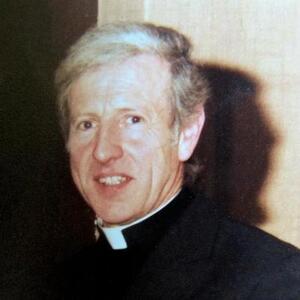
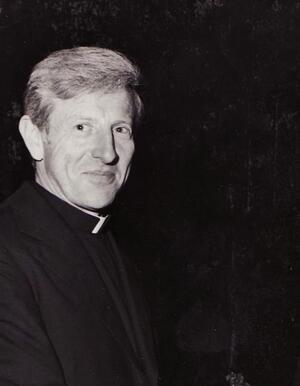
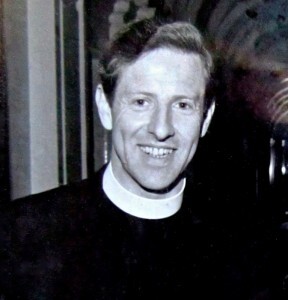
Fr Niall Molloy, 52, above, was found beaten to death at the home of this friends, Richard and Theresa Flynn, in Clara, Co. Offaly, a day after their daughter’s wedding in 1985.

Nobody has ever been convicted in relation to the death.

Earlier this week, it was reported that the DPP had finished its review of a Garda investigation into the killing, and ruled no charges will be brought.

Fr Molloy’s family are now seeking a commission of inquiry, to investigate all of the circumstances surrounding the priest’s death.

Colin Maher writes:

Niall was my granduncle, being the youngest brother of my grandmother, Eileen Maher. He was from a family of five girls and three boys who lived just outside Roscommon town.

Niall’s father, William J Molloy,was a successful businessman who had emigrated from Mayo to New York as a young man, and returned to Ireland to set up business with this brother in Roscommon town, and to raise his family there.

From a young age, Niall and my grandmother carried on their father’s interest in horses. Niall was a very accomplished horseman and involved himself in showjumping, gymkhanas, etc…He entered the priesthood and was ordained in the 1950s in Rome.

Niall worked in various parishes in the West, and also as an Army Chaplain in Athlone Army Barracks and on deployment in Cyprus. He always kept up his keen interest in horses. Prior to William Molloy’s death in 1965, he gifted Niall a sum of money in the region of £60,000 (not an inconsiderable amount at the time). Niall used some of this money to invest in horses, and it was in effect to be his retirement fund.

Niall had been a friend of Theresa Flynn, nee Brennan, for a long number of years. Their friendship was based on a mutual love of horses. Theresa was married to Richard Flynn, a businessman. In later years they lived with a family of several children in Tober, Westmeath on a large farm. The sold the land and retained the house presumably due to financial pressure. They then bought the property called Kilcoursey House on the outskirts of Clara, Offaly, with surrounding land.

Their son David Flynn resided in the house in Tober. Richard Flynn involved himself with various businesses including a small network of car accessory outlets. He was undoubtedly in financial difficulty at the time, and so the family was forced to sell the land at Tober, and downsize to Kilcoursey House.

At this time, Niall was a curate in Castlecoote, a small parish about five miles from Roscommon town. He had taken over the parish and lived in a caravan for a while, as the parish house was in such bad condition that it had to be demolished. He lived in the caravan adjoining the church and eventually built a small bungalow on the grounds. He was extremely popular with all age groups in the parish, and was very approachable but was a generally quiet and gentle type of person.

Niall Molloy and Theresa Flynn set up a business, jointly-owned, in which they dealt in horses and also purchased lands on the outskirts of Athlone town. Niall had a very good eye for horses and enjoyed the business. They bought and sold horses very successfully, and the horses were stables at Kilcoursey House. Niall very frequently visited Kilcoursey House to ride the horses, and they gave him his own room in the house, where he stayed if too tired to travel back to Castlecoote.Continue reading →