

Never mind.
The ‘Iona’ Valentine’s card.
Send it to someone of the same gender.
Update: The card is intended as satire and not affiliated with the Iona Institute
From Fergus O’Neill at GrandGrand
Thanks Spaghetti Hoop



Never mind.
The ‘Iona’ Valentine’s card.
Send it to someone of the same gender.
Update: The card is intended as satire and not affiliated with the Iona Institute
From Fergus O’Neill at GrandGrand
Thanks Spaghetti Hoop


On the streets of Galway City yesterday.
Photographs by Chris Tierney (top) writes:
“So I hear tell that the controversy over the Iona/RTÉ payout is all a load of twitter generated fury. Funny that, because I decided to go out and see if I could find some flesh-and-blood people who would also have a thing to say…’
More Here: Send A Message To RTE/Iona (Chris Did This)
Thanks James Hooper

 Oh.
Coverage in the Irish Times (top) and on the RTE News website of the LGBTNoise demonstration against RTE’s payment and apology to the Iona Institute and John Waters for comments made by Rory O’Neill on The Saturday Night Show.
How many?

YOU decide.
Previously: Gaiety Pride


This afternoon.
David Norris addresses the protest on South King Street, Dublin [outside the Gaiety Theatre] over the payment and apology to John Waters and the Iona Institute by RTE for comments made by Rory O’Neill/Miss Panti on The Saturday Night Show last month.
“Around 2,000 people,” sez Buzz.
Liam Geraghty writes:
Full speeches from Caroline Earley, Senator David Norris, David Carroll, Max Krzyzanowski as well as Tara Flynn and John Moyne’s performance of ‘The Case for Mammy / Daddy Marriage’ at today’s ‘Speak Out Against Homophobia’ protest. Listen here.
Thanks Buzz, Kat, Kealen McCluskey, CairoTango and WSM Ireland
Video via Wolfgang Schmidt

In the Seanad this morning.
Fianna Fail Senator Averil Power on the RTE apology and payment to members of the Iona Institute over comments made by Rory O’Neill, Miss Panti on the Saturday Night Show.
Tis on.
Update:
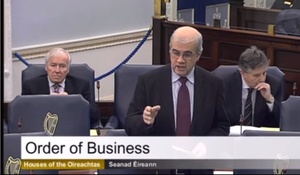
Fianna Fail Senator Jim Walsh defends the Iona Institute and tastefully introduces the death of Tom O’Gorman into the proceedings.
Meanwhile…

Dee Reddy writes:
“The Streisand effect is the phenomenon whereby an attempt to hide, remove, or censor a piece of information has the unintended consequence of publicising the information more widely, usually facilitated by the Internet.” This seems to be working for Panti so I’ve created this little meme to encourage people to show their continued support. If we all continue to talk about this issue then it won’t go away.”

Like cash money?
Really?
REALLY
REALLY?
Yes.
Via The Iona Institute
“ON Saturday Night Live (sic) last weekend, presenter Brendan O’Connor read out an apology to Breda O’Brien, The Iona Institute, and writer and broadcaster John Waters after a guest a fortnight before had accused all of the aforementioned parties of being ‘homophobic’.
RTE has also agreed to pay damages to the injured parties.
The apology read: “On the Saturday Night Show on the 11th of January last, comments were made by a guest suggesting that the journalist and broadcaster John Waters, Breda O’Brien and some members of the Iona Institute are homophobic. These are not the views of RTÉ, and we would like to apologise for any upset or distress caused to the individuals named or identified. It is an important part of democratic debate that people must be able to hold dissenting views on controversial issues.”
We might add that it is also a very important part of democratic debate that individuals do not constantly have their motives and intentions called into question.
Accusations of ‘homophobia’, which are made with great regularity in the debate about same-sex marriage and adoption, are precisely an attempt to demonise and impute the worst of motives to those who believe that marriage is the sexual and emotional union of a man and a woman by definition, and that children deserve the love of both a mother and a father whenever possible.
The accusations are an attempt to bring the debate to an end.
It is similar to what sometimes happens in the abortion debate when extremists on both sides attribute nothing but the worst possible motives to their opponents.
It should be noted that no-one can ever point to a quote from The Iona Institute that can be any stretch be called genuinely abusive or ‘homophobic’.
The problem is that merely believing that marriage is the sexual union of a man and a woman, and that children deserve the love of both a mother and a father whenever possible is automatically deemed to be ‘homophobic’ by those wishing to close down this debate.
Apart from accusations of ‘homophobia’, The Iona Institute also receives abusive and even threatening phone calls and emails from those opposed to our point of view.
Yesterday, for example, we received an email which said: ‘Please, if you are reading this, kill yourself.”
The email added: “I will put it to you this way, if I had met anyone from your institute I would not think twice about kicking their f**king face in.”
During the various national debates on abortion there are always calls for a ‘calm and reasonable’ debate.
We must also have a calm and reasonable debate about same-sex marriage and adoption.
The RTE apology is an extremely valuable and important contribution to having such a debate.”
Hardcore.
RTE Apologises to Iona Institute (Iona Institute)
Meanwhile,
John Waters’ replacement on the Broadcasting Authority.
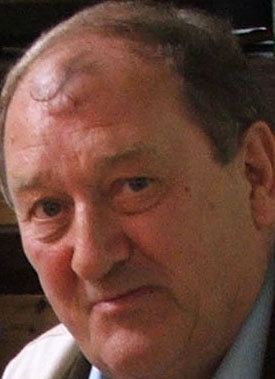
The Cabinet has approved the appointment of former Irish Times journalist Séamus Martin to the board of the Broadcasting Authority of Ireland.
You’ll know de brother.
Journalist Séamus Martin appointed to Broadcasting Authority of Ireland (Irish Times)

[Rory O’Neill, above, and the RTE campus]
The following is part of a submission by Mark Cullinane, a student and member of the RTÉ’s Audience Council, to the RTÉ Board yesterday,
Although this topic has received minimal coverage and discussion in print and broadcast media, this issue has generated enormous amounts of interest and amongst friends and acquaintances offline and online. I am raising all of this here today simply because this sequence of events raises a series of important questions concerning not only how public debate is and should be conducted on RTÉ but also the operation of power in this country.
Firstly, why did RTÉ in their initial statement make a link between the interview being edited and Tom O’Gorman’s tragic death? Mr O’Gorman was not mentioned in the interview, and his death took place afterwards. The statement’s claim that the show’s removal from the RTÉ Player is ‘standard practice in such situations’ is simply untrue.
Although programmes are occasionally withheld from the Player for reasons of sensitivity, for example the recent Prime Time segment on the direct provision regime and the créches investigation from last year, in this case, editing the interview to remove a reference to the Iona Institute simply because it happened to be Tom O’Gorman’s employer is quite extraordinary. Censoring an interview on the basis of a link this tenuous, were it to actually become ‘standard practice’, would mean that censorship would occur on a daily basis. For RTÉ to draw an unnecessary link between the interview’s removal and O’Gorman’s death is unseemly.
The legal basis for removing the segment of the interview, in the absence of RTÉ elaborating on both the content of any legal complaint and RTÉ’s subsequent legal advice, it is difficult to comment. What is known however is that John Waters, if he is indeed the complainant as the Irish Independent has asserted, was until a couple of days ago effectively one of RTÉ’s regulators. As solicitor Simon McGarr has pointed out, this “was not merely a letter from an aggrieved citizen to a broadcaster. It was also a letter from one of that Broadcaster’s regulators seeking to have that broadcaster censor a citizen, who was both contributing to a matter of public debate and engaging in a defence of a minority of which he is a member, bona fide and without malice.”
I do not purport to represent the LGBT community in Ireland, but as a member of that community, like Rory O’Neill, I feel it important to bring to your attention how many people feel about RTE’s handling of this situation.
Having suggested on Twitter I may raise this topic today, I put out a further message soliciting views on this issue. I received a range of responses (some of whom, I should say, were supportive of RTÉ’s actions) but what most of them boiled down to was this: many people feel that their national broadcaster is condoning prejudice against them and other LGBT people.
Many feel that RTÉ have, in the interests of legal expediency, protected the sensitivities of those who regularly make discriminatory remarks about LGBT people and even the sensitivities of those surrounding an entirely unrelated death, but that the sensitivities of the group whom Rory O’Neill was speaking up for have been ignored. This is evident in the original statement, the subsequent apology and the act of censorship itself.
The apology read out by [Brendan] O’Connor illustrates just how problematic RTÉ’s response has been. In particular, the line: “It’s an important part of democratic debate that people must be able to hold dissenting views on controversial issues…” simply begs a whole series of new questions.
What counts here as the ‘dissenting view’ and what in fact is the ‘controversial issue’ being referred to? Are racist or sexist views categorised as ‘dissenting views’ on ‘controversial issues’ which must be similarly protected and will those who name these views as such be subject to legal threats and censorship?
Many feel that in this instance, anti-gay commentary has been accorded a legitimacy that would not be shown towards other forms of discriminatory views. A strong view exists that RTÉ should have stood by its man, O’Connor, and O’Neill, for a host of reasons- on the merits of any such legal case, on the principle of free speech, and on the principles of public service which RTÉ is supposed to cherish.
Despite the virtual media blackout on this whole issue, to many who have familiarised themselves with events, it appears that RTÉ took the easy route out and has been cowed. Even if that is not the case, this perception now exists and something must be done to rectify it.
I believe that RTÉ needs to answer why a link was drawn between the death of Tom O’Gorman and the removal of the interview, and why an apology was subsequently issued.
I say all this and ask these questions not to bash RTÉ but because this affair and the reaction to it reflects the growing pains of society, and how the media should respond to a society that has at least nominally has rejected sexism and racism, but where negative reactions to homosexuality still exist and which have real consequences.
The ongoing existence of anti-gay discrimination which O’Neill sought to highlight in the censored portion of his interview will come into clearer public view with the upcoming referendum on gay marriage. It is essential that this affair does not become a template for how negative attitudes towards homosexuality may be responded to in the future, and in my view imperative that the organisation formulates a better way of managing the balance between respecting human dignity and upholding freedom of expression.
By apologising to a few, RTÉ have hurt many. But something good can come from this, if RTÉ sees this as a signal that this is a topic that must be met head on. I look forward to a response from the broadcaster in this spirit.”
Mark Cullinane
Previously: Waters, Panti And RTE
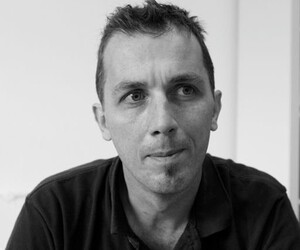 [Philip O’Connor]
Further to the Iona/ John Waters Saturday Night Show apologia.
A missive from Team Panti.
Philip O’Connor writes:
Rather than being cowed by legal threats, surely the media has very valid questions to ask – starting with exactly who Iona represent, and where they get their money.
The views expressed by Iona – especially in relation to gay people – are very much at odds with the liberal secular society that Ireland has become. Indeed, Rory O’Neill suggested that the only time he experiences homophobia is online or at the hands of Iona and Waters.
When they’re done with that, they can ask why Iona is given so much room in the media. In any other country in the world, an organisation as litigious as Iona would never be asked to participate in anything. Nor would anybody else with their solicitor on speed dial.
When all that is over, perhaps someone would sit down and ask David Quinn, Waters et al to explain how their utterances – perceived by many outside themselves and their supporters as being homophobic – are acceptable.
For Iona, Quinn and Waters, it might be a hard sell. Take this quote from an interview with Waters:
“This is really a kind of satire on marriage which is being conducted by the gay lobby. It’s not that they want to get married; they want to destroy the institution of marriage because they’re envious of it…”
Now if you believe – as Waters suggests earlier in that interview – that marriage is a fundamental building block of society, then he is essentially accusing the gay lobby (many of whom are presumably gay themselves) of trying to destroy it.
How, exactly, is that not homophobic?
Is it reasonable to suggest that gay people are, in trying to secure equal treatment in the eyes of the law, trying to destroy the very fabric of society?
No, it isn’t.
So what should they have done?
Well, if he disagreed with the apology, O’Connor – a columnist with the Sunday Independent and thus not without either power or a platform to exert it – should have resigned.
In the interests of public service, RTE should have stood by its man. If they were to go to court – as evidenced above, examples of the irrational fear of homosexuality displayed by both Waters and Iona are not hard to find – they wouldn’t be without hope of winning.
But it is the Irish Times and the rest of the media that is probably deserving of the most criticism. It is one of the functions of mass media to provide a platform for debate, but yet again they have abdicated this responsibility.
It may be expensive to defend oneself against even the most frivolous of libel accusations in Ireland, but the price for not doing so is the ability to report and to comment without fear or favour.
The views expressed by Rory O’Neill are not those of RTE, but they are those of many people in the gay community.
His airing them on an RTE programme is the very point of public service, and of mass media in general – to provide a platform for debate and scrutiny, and for holding people to account.
It should be remembered that Ireland has, since its inception, struggled in terms of holding those in power to account, whether it be politicians, religious leaders or captains of industry.
All have at various points used the solicitors to muzzle reporting and debate.
But in the end, all of them were eventually caught with their Pantis down.
Caught with our Pantis down (Philip O’Connor, Our Man In Stockholm)
Earlier: Alternatively
Thanks Philip
Meanwhile…on #teampanti
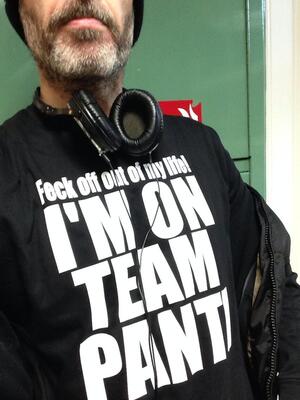


Via Mark O’Halloran, Panti, WellNowUniverse, Anthony Finucane

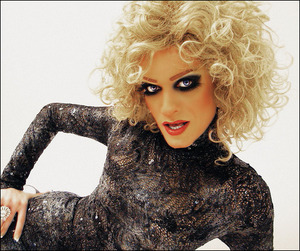 [John Waters, top, and Miss Panti, above]
Since her appearance on the Saturday Night Show a fortnight ago Miss Panti, also known as Rory O’ Neill, has received legal correspondence from three members of the Iona Institute…and one from Irish Times columnist John Waters.
Solicitor Simon McGarr on his blog Tuppenceworth.ie writes
[When RTE removed Miss Panti’s interview from the RTE Player] RTE initially sought to obscure the source of this legal concern, telling TheJournal.ie that the censorship was:
due to potential legal issues and for reasons of sensitivity following the death of Tom O’Gorman as would be standard practice in such situations.
The unseemly attempt to use Mr. O’Gorman’s death as an explanation was overtaken by events when, on Thursday the 16th January, the Irish Independent ran a story headed “RTE cuts part of show after legal complaint from Waters”;
It removed the entire programme earlier this week, after claims that comments made by a guest about journalist John Waters were defamatory.
The Irish Independent understands that representatives of Mr Waters sent a legal letter to the broadcaster, seeking the removal of the interview.
…
Mr Waters refused to comment when contacted by the Irish Independent. However, sources confirmed that he contacted the broadcaster and asked for the programme to be removed.When he did not receive what he saw as a satisfactory response, his solicitors sent RTE a legal letter.
Now, this is where we reach an interesting point. Because, provided we accept that the Irish Independent was accurate, this was not merely a letter from an aggrieved citizen to a broadcaster.
It was also a letter from one of that Broadcaster’s regulators seeking to have that broadcaster censor a citizen, who was both contributing to a matter of public debate and engaging in a defence of a minority of which he is a member, bona fide and without malice.
This is, to put it mildly, an unusual situation.
John Waters is not just a private citizen. He is a member of the Government-appointed Broadcasting Authority of Ireland. And as part of that appointment he has to accept certain constraints on his behaviour. Firstly, uniquely amongst all citizens, the nine members of the BAI are told to protect one constitutional right above all others.
The Broadcasting Act 2009 sets out the obligations and function of the Authority and its members in Section 25 (1) of the Act. They must ensure
(b) that the democratic values enshrined in the Constitution, especially those relating to rightful liberty of expression, are upheld,
and
(c) the provision of open and pluralistic broadcasting services.
This section sets out what are the primary duties of the Authority and each of its members. They place an obligation on all the Authority members to be act to ensure that the right to freedom of expression is “especially” upheld and that broadcasting services are “open and pluralistic”. This is actually their job.
There is a corollary of this.
The nine members of the Broadcasting Authority of Ireland must not seek to lightly restrict liberty of expression on the basis of claims of defamation untested before the courts. The inhibitions on them before seeking the silencing of debate are significantly higher than on the rest of us.
A broadcasting Regulator who is obliged to uphold the constitutional “liberty of expression” above all other democratic and Constitutional values and to act to “ensure the provision of open and pluralistic broadcasting” can choose to follow their statutory duty. Or they can contact a broadcaster and obtain the silencing of a dissenting view without testing the legitimacy of their complaint before a court.
But I can’t see any way that they can do both.
More here: The BAI, John Waters and regulating away Other voices (Simon McGarr, Tuppenceworth.ie)
Update: Helpful BAI Statement on new Code of Business Conduct Issued today (Simon McGarr, Tuppenceworth.ie)

Donal Mulligan writes:
Tonight’s the night – Ireland qualify for Eurovision on Saturday based on tonight’s semi-final, so I thought people might need something to focus their intercessory pleas for Ryan Dolan’s success. (It’s a t-shirt design paying homage to Linda Martin’s divinity, for the Eurovision Party in Pantibar at the weekend). Linda’s no virgin, but she’s as good a sacred idol as any to appeal to. Though Dana probably wouldn’t approve…
Thanks Buzz