
Tag Archives: Mother and Baby Home Commission

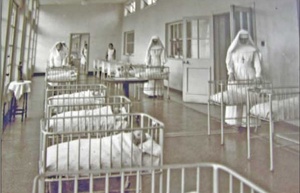
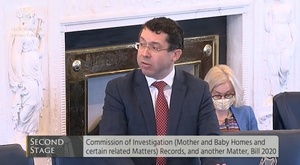
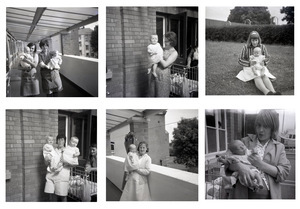
From top:  St Patrick’s Mother and Baby Home, Navan Road, Dublin,1960s; Dr Maeve O’Rourke (left) and Minister for Children, Disability, Equality and Integration Roderic O’Gorman

This morning.

On RTÉ’s Morning Ireland.

Dr Maeve O’Rourke, Lecturer & Director of Human Rights Law Clinic in NUI Galway, spoke to Mary Wilson on the passage of the the Commission of Investigation (Mother and Baby Homes and certain related Matters) Records and another matter, Bill 2020.

The bill, at its second stage in the Seanad, is intended to seal all records gathered by the commission for 30 years (apart from a database sent to Tusla).

Mary Wilson: “Let’s talk about what’s happening in the Seanad today, maybe first of all. They’re going to debate amendments to this Bill. What’s the significance of this Bill and what it’s seeking to do?”

Dr Maeve O’Rourke: “This Bill, the minister says, it’s just a pretty technical, small bill. The Commission seems to have got in touch with the Department to say it feel it would have to destroy the personal data that it gathered if it doesn’t get this extra legislation. It doesn’t really make sense to me because the existing 2004 Commissions of Investigation Act requires every commission to transfer every single document it gathered or created. But we don’t have a massive problem. Those of us who are advocating with, you know, clarifying that, the Commission. The bigger problem is the other part of this Bill chops off part of the archive that, under the existing act, should all go to the minister and sends it to Tusla without the minister even keeping a copy.

“Tusla has been criticised for decades and more recently extremely intensely by the very body, the Collaborative Forum of People with Experience of Mother and Baby Homes, that was set up to advise the Department of Children on what it should do with records of mother and baby homes.

They say very clearly and it’s clear from Tusla’s public statements that it operates a blanket policy of considering adopted people’s first names to be third-party data. And it operates a risk assessment of all adopted people, who apply for their name, by trying to contact natural extended family members, even where parents are dead, to try and obtain consent for the disclosure to an adopted person of their first name at birth. Now that is…”

Wilson: “But, Maeve, you know, are their clear and important issues of confidentiality here? Commitments that were given? The Minister for Children saying the information from the commission has to be protected because he’s committed to introducing birth information and tracing legislation in the future?”

O’Rourke: “Well, the GDPR is perfectly fine legislation for personal data access. But also I think what those arguments that you are reflecting there go to is the fact that, apart from what goes to Tusla, every other document in the entire archive of the Commission of Investigation is, according to the department, to be sealed for the next 30 years.

Now, that includes every single record that came from every Government department that gave evidence to the Commission that should actually be in the National Archives, every document that came from the archives of the church, the institutions, the dioceses, the bishops, of course all of the transcripts of testimony, of survivors and that, apparently, is to kept from the survivors themselves and evidence that would have been given by various experts, historians, not to mention the people who ran the institutions.

“No justification has been given for why this material, en masse, needs to be sealed. And one of the crucial amendments that we are seeking today in the Seanad and that people have put in, in the Dail, is that anonymised index would be produced within a month or soon after that by the Government when the minister gets the index. So that consultation can be had into the legislation that’s needed now to unseal further parts of the archive because they can show, by sending some of it to Tusla, that actually the Oireachtas can legislate to unseal.”

Wilson: “Can you do that though without going back to each and every individual who gave evidence perhaps or who gave statements under a commitment of confidentiality and asking them to be released from that commitment of confidentiality?”

O’Rourke: “We’re saying that the anonymised index is what should be produced now. Then there can be consultation over the legislation that releases things. People can give consent if they wish to get their statement back. But no Government department was entitled, as a right, to give evidence, that should be in the National Archives, to a Commission of Investigation and therefore to say ‘I gave my evidence in confidence, this can never be revealed’. We know that abuse of an inordinate scale happened in mother and baby homes and that the report will reveal this.

“But the report cannot be the monopoly on history and on telling history. 4,000 pages is never going to be enough to give all perspectives, to go behind everything happened. And survivors of abuse have a right to piece the history together for themselves. And our State needs to be able to learn and future generations need to be protected. And we cannot do that if we’re not willing to allow truth telling and access to information.”

Last evening: Burying Their Past

Top pics by Margaret Moloney via ‘Fallen Women’ project by Emer Gillespie
RollingNews

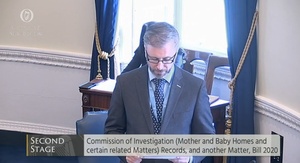
Minister for Children, Disability, Equality and Integration Roderic O’Gorman introducing his bill to the Seanad yesterday seal the archive of  Mother and Baby Homes Commission for 30 years (except for a database on mothers and children detained in 11 institutions which it wants to give to TUSLA)

This afternoon.

Breeda Murphy, PRO of the The Tuam Mother and Baby Home Alliance writes:

‘In recent days the controversy over the depositing of evidence related to the Commission’s investigation into Mother and Baby Homes (including the Tuam home) has gained momentum.

The Minister has explained the reasons for legislation being due to the dissolution of the Commission of Investigation when evidence gathered will have to be placed somewhere or destroyed with timeline of October, 2020. The Cabinet and Minister have agreed its best lodged with Tusla.

However, Minister O’Gorman did not address the opportunity that presents of keeping a copy of the entire archive within his own department.

Yesterday when he spoke in Seanad, he admitted the concern expressed among the various communities and groups involved and representations made to local representatives and members of the house, etc.

Ministers and TDs have outlined that they are inundated with emails, (in some cases receiving up to 6000 in the last two days) calls, snail mail and texts as this affects people who have been disadvantaged for decades through no fault of their own.

Survivors and families through a campaign for transparency outlined that the many records relate to their time in the ‘home’ and that indeed their own testimony forms part of the collection.

And of interest to survivors and families and applicable to public interest is the vast collection of administrative data which reveals the extent of the State’s involvement, entry routes and exit pathways, the welfare/care structure, the monies paid regularly from exchequer, maintenance orders, minutes of council meetings, etc. They are all there too.

They go a long way to explaining ‘the system’ that was in operation for decades.

The Minister can, at the stroke of a pen keep a full copy of the archive in his Department. He has told Seanad members that he understands perspectives of those affected and that he will advance comprehensive information and tracing legislation. But that doesn’t guarantee access.

Why can the entire lot not be indexed and archived like any other such important resource?

Regarding access to one’s own information, Niamh Herbert wrote on Twitter:

‘I sat with a Social Worker & a student Social Worker earlier this year for an adoption tracing information meeting. Both of them confirmed they knew MY OWN birth name but they couldn’t tell me because of GDPR.

I’m not angry because I can’t even process it. There’s an approx 2 year waiting list to contact the birth mother to ask permission to share my birth name, which can be refused. In the case of her death the decision is passed to next if kin for them to decide on her behalf. We have no rights. That’s not even half of it.

And in case it wasn’t obvious – there’s also absolutely ZERO rights to any medical history unless permitted by the birth mother or her next of kin. I have no family medical history for myself, or to pass on to my children.’

That is not the fault of the social worker but of the policy makers who have not amended the legislation. There was a time last year when it looked as though any such records would be sealed for 75 years under the failed Retention of Records Bill. To a person who survived those institutions now in their 70s or 80s (as is the age of many Tuam survivors), it’s meaningless.

Minister O’Gorman is a law lecturer who understands the significance of legislation to provide access. Even if he is unsure, even if he has misgivings, there is nothing to stop him accepting the data and keeping a copy.

There was political will in the Seanad yesterday  to tackle this once and for all.

Senator Ivana Bacik explained the Labour party could not support the Bill currently given the rush to get it through without commitment provided as to future access.

Senator Michael McDowell raised the issue of privacy rights afforded to those who contributed to the Confidential Committee.

Senator Alice Mary Higgins wants assurances as to how and where the archive material will be stored and stressed the need for a timeline, mentioning the importance of providing closure.

Senator Aisling Dolan said she was fortunate and privileged last year to receive testimonies when our Alliance presented to the 39 Galway County Councillors where she was then a member.

Senator Gerard Craughwell spoke movingly of young women leaving his own community for a period of time who they knew had given birth to a child. His words ‘no one ever asked where they were, we all knew. Nobody ever spoke about it”

Senator Mary Fitzpatrick urged the Minister to provide an assurance that all living survivors would gain access to their own data and to house the archive in a suitable repository such as the former Magdalene Laundry in Sean McDermott street.

Senator Lynn Boylan pointed out that the Government is not bound by the 2004 Act but has legal experts who are able to legislative for amendments. And some senators tabled up to 20 amendments to the Bill in its current format.

We have the opportunity, the capacity and the courage as citizens to lead on preservation and ultimately access of records related, including records held by Religious Institutions.

This is our history. We must ensure it doesn’t get hidden away because the people who suffered most – many who never made it out – and some who did are no longer with us deserve so much more.

We owe it to them just as much as survivors we battle with today to make sure they too are remembered as central to the case for justice. After all, it was their ‘absence’ in 2014 via Catherine Corless’s research, that prompted the Government to act in the first instance.’

Breeda Murphy.

The Tuam Mother and Baby Home Alliance.

Meanwhile...

Senator Ronán Mullen

Yesterday.

During the debate on the Commission of Investigation (Mother and Baby Homes and certain related Matters) Records and another matter, Bill 2020: Second Stage, Senator Ronán Mullen followed a number of speakers critical of the Catholic Church’s role in the homes.

Senator Ronán Mullen: “I would like to say a little about how we talk about the past. There was harshness in our past but when we think about the decade of commemorations that we are going through, we see how dangerous it is to get into the business of assigning blame. Senator Dolan referred to the Catholic Church and people talk about the dark periods in Irish history.

Are people open to recognising that even though there was harshness, there were people who had positive experiences of how they were treated? Are people open to considering that some who worked in these institutions had the best of intentions? Do people think that things were significantly better in other countries? Do they think that the church institutions involved were only doing it for money or the sexual control of people’s lives?

Is it not the case that, in the context of a poor and difficult society, some, many or most of those people were trying to be a part of a caring agenda? Are people interested in that kind of nuance or do we all want to be running with the pack in condemning the past? It is easy to condemn the past because the people who were involved are either dead or weak and voiceless now.”

Senator Lynn Ruane: “This line of debate is insulting to the survivors about whom we are speaking. We are speaking about a specific area of the church and institutions. We are not here to defend something that clearly happened. It is disrespectful.”

Continue reading →

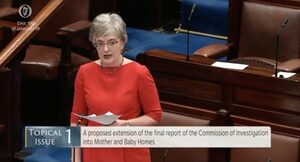
Minister for Children and Youth Affairs Katherine Zappone

Tomorrow.

Minister for Children and Youth Affairs Katherine Zappone is expected to bring two reports concerning the Mother and Baby Home Commission to Cabinet tomorrow – to seek its approval to publish them.

The reports are the a) Recommendations from the First Report from the Collaborative Forum for Former Residents of Mother and Baby Homes and Related Institutions and b) the Fifth Interim Report of the Commission of Investigation (Mother and Baby Homes and certain related Matters).

The Fifth Interim report is expected to focus on burial arrangements made for women and children who died while living in the institutions under the commission’s remit.

It’s also expected to include technical reports prepared on the burial site associated with the former Bon Secours Mother and Baby Home in Tuam, Co Galway and the commission’s assessment of burial arrangements at the other institutions within its remit.

The institutions are: Ard Mhuire, Dunboyne, Co Meath; Belmont (Flatlets), Belmont Ave, Dublin 4; Bessboro House, Blackrock, Cork; Bethany Home, originally Blackhall Place, Dublin 7 and from 1934 Orwell Road, Rathgar, Dublin 6; Bon Secours Mother and Baby Home, Tuam, Co. Galway; Denny House, Eglinton Rd, Dublin 4, originally Magdalen Home, 8 Lower Leeson St, Dublin 2; Kilrush, Cooraclare Rd, Co Clare; Manor House, Castlepollard, Co Westmeath; Ms Carr’s (Flatlets), 16 Northbrook Rd, Dublin 6; Regina Coeli Hostel, North Brunswick Street, Dublin 7; Sean Ross Abbey, Roscrea, Co Tipperary; St. Gerard’s, originally 39, Mountjoy Square, Dublin 1; St. Patrick’s, Navan Road, Dublin 7, originally known as Pelletstown; and subsequent transfer to Eglinton House, Eglinton Rd, Dublin 4, and The Castle, Newtowncunningham, Co Donegal.

The four county homes under its remit are: St Kevin’s Institution (Dublin Union); Stranorlar County Home, Co Donegal (St Joseph’s); Cork City County Home (St Finbarr’s); and Thomastown County Home, Co Kilkenny (St Columba’s).

Previously: ‘Delay, Obfuscation And The Blurring Of Boundaries’

‘One Of The Lowest, Dirtiest, Most Mean Spirited Political Tricks’

Thanks Bebe

Screen Shot 2017-03-28 at 16.23.55Screen Shot 2017-03-28 at 16.26.07

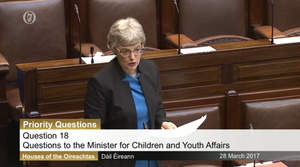
From top: Sinn Féin TD and spokesperson for Children and Youth Affairs Donnchadh Ó Laoghaire and Minister for Children and Youth Affairs Katherine Zappone


You’ll recall the second interim report from the Commission into Mother and Baby Homes which was given to the Minister for Children Katherine Zappone last September.

This interim report was to identify any matters that the commission felt warranted further investigation as part of the commission’s work.

Last week Fiach Kelly, in The Irish Times, reported that the indemnity agreement signed in 2002 between the then Minister for Education Michael Woods and 18 religious congregations – which served to cap the orders’  liability – may be extended to include children abused in mother and baby homes.

Mr Kelly reported:

Well-informed sources said the delay in its publication was due to the controversial nature of the proposed form of redress.

One source suggested that it may never be published if there had not been public outcry over the commission’s confirmation last month of the discovery of the remains of babies and infants at the site of a former mother and baby home in Tuam, Co Galway.

Further to this.

This afternoon.

In the Dáil, during Priority Questions.

Sinn Féin TD Donnchadh Ó Laoghaire raised the second interim report in the Dail this afternoon after asking what steps the State is taking in regards to protecting unmarked graves – other than the remains recently found at the Bon Secours mother and baby home in Tuam, Co. Galway – in order to prevent them from being interfered with.

Mr Ó Laoghaire also claimed that the second interim report does not recommend widening the terms of reference in the Commission into the Mother and Baby Homes.

From their exchange…

Donnchadh Ó Laoghaire: “It’s my understanding, Minister, that the second interim report was before Cabinet this morning. The 27th of July last year, you issued a press release saying that the commission was to report back in September. That report has still not been published. Now you’ve committed to publishing it by the end of the month. It’s not published today, to the best of my knowledge. I presume it will be published in the coming days so I want to hear from you, when you intend to publish it.”

“But also, minister, to outline the reason for the delay because it has been with your department and with you for some six months now. And that has caused a great deal of concern and anxiety among survivors and I think it’s important that we get a sense of, for what reason was, what I think, was an inordinate delay in publishing this report was.”

“And also to state, Minister, it’s my understanding or has been reported that the report does not recommend an expansion of the terms of reference. That being case, I believe that the Commission [into Mother and Baby Homes] is no longer fit for purpose.”

Katherine Zappone: “Thank you, deputy Ó Laoghaire, I’m interested in your comments in that regard. I’d like to bring my comments though, responses, back to the question that you actually have asked me. As I know, I will take up some of those issues later on in terms of other questions and I think again in terms of the question about making decisions to bring forward injunctions. The Government, arguing, has the responsibility, something that we should consider, I’m saying I’m not necessarily, not willing to consider that. But my understanding and in terms of the advice that I have received that in order to do that, we need to have it brought to our attention, that there are some real concerns in relation to a preventative measure, in terms of different sites that may require, that may require an injunction. On the basis of people who have an interest in that regard. And so I would be open to hearing from those and consider the issue again in that regard.”

Acting Ceann Comhairle: “Thank you, Minister…”

Anyone?

Previously: ‘What’s In It That’s So Frightening?’