
Tag Archives: Noirin O’Sullivan

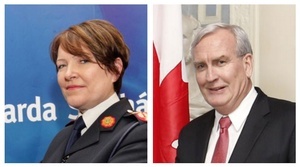
From top: Sergeant Maurice McCabe; Former Garda Commissioner Martin Callinan and Garda Commissioner Noirin O’Sullivan

On Wednesday.

At the Disclosures Tribunal.

In George’s Hall, Dublin Castle.

Diarmuid McGuinness SC, counsel for the tribunal, read out an opening statement outlining the progress the tribunal is making and an overview of the evidence gathered to date.

Readers will recall how the tribunal is examining claims that a smear campaign was conducted against Sgt Maurice McCabe by former Garda Commissioner Martin Callinan – with the knowledge of Garda Commissioner Nóirín O’Sullivan – as alleged by the former head of the Garda Press Office, Superintendent David Taylor.

Both Mr Callinan and Ms O’Sullivan deny the allegations.

In reading out the opening statement, Diarmuid McGuinness SC explained that Fianna Fáil TD John McGuinness, RTÉ journalist Philip Boucher-Hayes and Comptroller and Auditor General Seamus McCarthy have all told the tribunal about claims former Garda Commissioner Martin Callinan made to them directly about Sgt Maurice McCabe.

He also read out statements made by former Sunday Independent editor Anne Harris, journalist Gemma O’Doherty, and Labour TD Brendan Howlin, about a conversation he had with former Irish Mail on Sunday journalist Alison O’Reilly and a follow-up statement from Ms O’Reilly.

He also explained how the tribunal wrote letters to almost 30 journalists but “with a few exceptions” many of these letters have gone unanswered (more below). Diarmuid McGuinness SC didn’t specify who responded and who didn’t respond.

The Comptroller and Auditor General Seamus McCarthy said he and former Garda Commissioner Martin Callinan met at a meeting of the Public Accounts Committee [PAC] on January 23, 2014. It was at this meeting that Mr Callinan, who sat next to Noirin O’Sullivan, referred to former Garda John Wilson and Sgt Maurice McCabe as “disgusting”.

Mr McCarthy told the tribunal:

Commissioner Callinan referred to Sergeant McCabe by name and made statements to the effect that Sergeant McCabe was not to be trusted, that he had questions to answer, and that there were allegations of sexual offences against him.

In his response, Mr Callinan said:

I did not at any point state that Sergeant McCabe was not to be trusted nor that he had questions to answer. I did not state that there were any allegations of sexual offences against him.

Mr McGuinness told the tribunal a meeting took place between him and former Garda Commissioner Martin Callinan on the 24th of January, 2014 – the day after the PAC meeting – in the carpark of Bewley’s Hotel, Newlands Cross, Co. Dublin. Mr McGuinness told the tribunal:

Mr Callinan asked if I was aware of issues surrounding Mr McCabe’s personal life. I stated that I had heard vague rumours and gossip that Mr McCabe had abused someone and that he was a paedophile but that I had been assured by Mr McCabe that these rumours were lies, that he had heard them before and that they were malicious falsehoods.

Mr Callinan stated to me that the rumours were true, that Mr McCabe had sexually abused someone and that he was not a credible person. Mr Callinan stated that an investigation into Mr McCabe’s activities was underway. Mr Callinan then asked me was I aware that Mr McCabe had sexually abused family members. I was shocked and extremely troubled by what Mr Callinan was telling me because the allegations being made were extreme and the person relaying them to me, as well as the fact that an investigation had commenced, was the Commissioner of An Garda Síochána.

When he left my car, Mr Callinan put his hand on my arm and stated that Mr McCabe was not reliable and could not be trusted and suggested that I had gotten myself and the Public Accounts Committee into a lot of trouble by pursuing the penalty points issue.

In addition,  Deputy McGuinness’s statement to the tribunal states that he kept a handwritten note of the meeting. Part of that note reads:

Callinan
McCabe
Sexual abuse!
Individual + family
Don’t trust him
Story not credible
Investigations ongoing
He’s not credible

In his response, former Garda Commissioner Martin Callinan told the tribunal:

I did not at any time state to Mr McGuinness that Mr McCabe had sexually abused anyone or that he was not a credible person… I never at any stage indicated to Mr McGuinness that Sergeant McCabe had sexually abused family members.

Mr Boucher-Hayes told the tribunal of a conversation he had with Mr Callinan outside an RTE studio on December 17, 2013, as part of Crimecall programme. There had been a disagreement about whether Mr Boucher-Hayes could ask Mr Callinan about the penalty points allegations made by Sgt Maurice McCabe.

Mr Boucher-Hayes said:

He offered me background information on the penalty point story. But the majority of his information related solely to the two whistleblowers, John Wilson and Maurice McCabe, not to the substance of the story. He offered a negative but cursory impression of John Wilson, before speaking at some length on Maurice McCabe’s character. I had not asked any questions to elicit this information.

He told me that McCabe was a troubled individual and that he had a “lot of psychological issues and psychiatric issues”. He claimed that McCabe was motivated by a set of grievances against Garda management and that he was famous with An Garda Síochána for this. He warned me that McCabe was not to be trusted and went onto add that there were other things he could tell me about him “horrific things, the worst kind of thing” but he did not elaborate further.

In his response, Mr Callinan said:

I did not speak “at some length” on Sergeant McCabe’s character as indicated. I did not state that Sergeant McCabe had “a lot of psychological issues and psychiatric issues,” and was “motivated by a set of grievances against Garda management and that he was famous within An Garda Síochána for this.”

I did not indicate to Philip Boucher Hayes that Sergeant McCabe was not to be trusted, nor did I state there were other things I could tell him about “horrific things, the worst kind of thing.” I do not know what Philip Boucher-Hayes is referring to.

In addition, Superintendent Dave Taylor has told the tribunal that, in the company of now Garda Commissioner Noirin O’Sullivan, Garda communications director Andrew McLindon, Assistant Commissioner John O’Mahoney and Fianna Fáil TD John McGuinness that Mr Callinan called Sgt Maurice McCabe a ‘kiddie fiddler’.

This took place after the PAC meeting in January 2014, in which Martin Callinan referred to former Garda John Wilson and Sgt Maurice McCabe as “disgusting”.

Meanwhile…

Superintendent Dave Taylor has provided the tribunal with a waiver of any journalistic privilege and is not claiming privilege over his identification as the source of any information to journalists relating to Sgt Maurice McCabe.

Similar waivers have been signed by Garda Commissioner Noirin O’Sullivan and former Garda Commissioner Martin Callinan.

However…

Diarmuid McGuinness SC notes:

This waiver, and the similar waivers signed by Commissioner Nóirín O’Sullivan and former Commissioner Callinan, have been notified to several journalists. The journalists named by Superintendent Taylor are Paul Williams, Paul Reynolds, Conor Lally, John Mooney, Michael O’Toole, Cormac O’Keefe, John Burke, Daniel McConnell, and Juno McEnroe.

In particular Superintendent Taylor reiterated in his statement to tribunal investigators that Paul Reynolds and Conor Lally would have received negative briefings by him about Sergeant McCabe.

Sir, the tribunal has also identified from telephone data other journalists that Superintendent Taylor contacted during the relevant period.

Arising out of its investigations to date the tribunal has now written to the following journalists: Sarah Bardon, Ali Bracken, Tom Brady, Jennifer Bray, Stephen Breen, John Burke, Paul Connolly, Dyanne Connor, Ken Foy, Fran Greany, Mark Hilliard, Mick McCaffrey, Juno McEnroe, Cathal McMahon, Emma McMenamey, John Mooney, Eavan Murray, Niall O’Connor formerly of the Irish Sun, Niall O’Connor currently of the Irish Independent, Mick O’Toole, Paul Reynolds, Joe Walsh, Debbie McCann, Alison O’Reilly, Paul Williams, and at a later date, Conor Lally, Daniel McConnell and Cormac O’Keefe.

In the first instance, the tribunal wrote to most of these journalists on the 15th of March 2017 and requested statements from anyone who may have information relevant to the terms of reference. Regrettably, many of these letters went unanswered.

Five weeks later on the 21st of April 2017, the tribunal wrote again to these journalists, informing them of the waivers referred to earlier and asking the following series of questions:

1. Can you confirm your mobile phone number and work phone number?
2. Was this number your mobile phone number in the years from July 2012 until Feb 2017?
3. Were you briefed negatively about Sergeant McCabe by anyone? And if so, by whom?
4. Have you any information or evidence about an orchestrated campaign directed by senior officers of the Garda Síochána, to discredit Sergeant Maurice McCabe by spreading rumours about his professional and personal life?
5. Were you contacted by Superintendent David Taylor in relation to Sergeant Maurice McCabe?
6. Were you briefed negatively by Superintendent David Taylor in relation to Sergeant Maurice McCabe?
7. Were you briefed negatively by Superintendent David Taylor in relation to Sergeant Maurice McCabe to the effect that his complaints had no substance?
8. Were you briefed negatively by Superintendent David Taylor in relation to Sgt McCabe to the effect that the Gardaí had fully investigated complaints and had found no substance to his allegations and that he was driven by agendas?
9. Was your attention drawn by Superintendent Taylor to an allegation or suggestion of criminal misconduct made against Sergeant McCabe in any respect?
10. Was your attention drawn by Superintendent Taylor to an allegation that the root cause of Sergeant Maurice McCabe’s agenda was revenge against an Garda Síochána?
11. Were you informed by Superintendent David Taylor that he was instructed/directed by former Commissioner Callinan and /or (then) Deputy Commissioner Nóirín O’Sullivan to contact the media to brief the media negatively against Sgt Maurice McCabe?
12. Are you aware and have you any evidence of any attempt made by former Commissioner Callinan or Commissioner O’Sullivan or any other senior member of an Garda Síochána to discredit Sergeant Maurice McCabe by reference to an allegation of criminal misconduct made against him ?
13. Were you informed by a journalist or any other person of any matters referred to in the questions above?
14. Have you any knowledge, information or evidence relating to any of the matters above? 15. Have you any knowledge, information or evidence relating to any matters within the Terms of Reference of the Tribunal?
16. Have you any records (however made, wherever stored) of any communications from or with Superintendent Taylor or former Commissioner Callinan, Commissioner O’Sullivan or any other senior Gardaí relating to any of the above matters?

With a few exceptions, the journalists have either ignored these letters, or refused to answer these questions, citing journalistic privilege. Many of them nonetheless wish to make generalised academic arguments about the nature of journalistic privilege to the tribunal.

In addition…

Former editor of the Sunday Independent, Anne Harris told the tribunal:

In the years 2013 and 2014, matters raised by whistleblower Sergeant Maurice McCabe, such as the termination by senior gardaí of fixed penalty points, as well as allegations of murder and abductions not properly investigated, came to prominence. From the first instance that the Sunday Independent began to report on these matters, certain journalists came to my office to warn me off Sergeant McCabe.

I was given varying accounts of an alleged case of child sex abuse by him, which was apparently being investigated. This was repeated several times by a very reputable journalist, one who had shown great courage in exposing incidents of corruption and terrorism. I made enquiries and was satisfied that the matter had been investigated by the DPP, and the complaint found to be without grounds.

The Sunday Independent continued to report on Sergeant McCabe’s concerns and the consequent treatment of him. In 2013, the allegation that Sergeant McCabe as a “paedophile” was stated in my office by senior executive from the wider “Group” editorial hierarchy of Independent Newspapers.

I am certain that a whispering smear campaign was being conducted and that the media were being used. The pressure on me was less about publishing the sex abuse allegation – it would have been difficult within the laws of libel – but had the clear purpose of discrediting him, and therefore censoring the issues he was raising.

Labour leader and TD Brendan Howlin also made a statement to the tribunal about a conversation he had with journalist Alison O’Reilly, then of the Irish Mail on Sunday.

Diarmuid McGuinness SC writes:

According to Mr Howlin, Ms O’Reilly informed him that another journalist, Ms Debbie McCann, had told her “that the Commissioner had given information to her claiming serious sexual misconduct on the part of Sergeant McCabe.”

Ms O’Reilly then informed Mr Howlin that Ms McCann described Sergeant McCabe in very derogatory terms following a conversation with Commissioner O’Sullivan and that these matters were being discussed generally in the Mail on Sunday office. Ms O’Reilly also told Mr Howlin that Superintendent Taylor and Commissioner O’Sullivan had both provided this type of information to Ms McCann. Obviously some of what Ms O’Reilly recounted to Mr Howlin was hearsay evidence.

…In response to Mr Howlin’s statement, Ms Alison O’Reilly sent a very helpful and detailed statement to the Tribunal which covers not only her account of her conversation with Mr Howlin, but also her knowledge of events from 2013 until the present as seen from the perspective of the media. This statement is of great assistance to the Tribunal and has opened up a number of avenues of enquiry. Some of the information is hearsay but is nevertheless helpful in identifying journalists who it appears have first-hand knowledge of who may have been behind a campaign to blacken Sergeant McCabe’s good name.

Journalist Gemma O’Doherty told the tribunal that she was:

Well aware of the whispering campaign against Sergeant McCabe and when I was informed about the allegations of child sexual assault against him, I put them to him. He immediately informed me as to what happened and when I did some further investigation into the allegations, I found them to lack credibility entirely.

It was in 2013 that I first became aware that Sergeant McCabe was being associated with an allegation of child sexual assault. Rumours about this were circulating in a number of Dublin newsrooms at the time. It is my understanding that a copy of the garda file concerning the allegations had been provided to Mr Paul Williams (Special Correspondent) by senior gardaí in Garda Headquarters and that was how ‘the word’ got out.

The fact that a Garda investigation file was said to exist and that it contained damaging details concerning Sergeant McCabe, gave the story certain credibility but knowing Sergeant McCabe, I was in no doubt that this was a malicious campaign against him orchestrated by certain people who wanted to silence him and knew they couldn’t.

I spoke to Garda Wilson about the allegations that I had heard concerning Sergeant McCabe. He was aware of them. He said that a number of journalists were on the story but that it was untrue. One such individual was Paul Williams. Paul Williams has significant garda connections which both he and [Independent News and Media] rely upon for exclusive information… It is my understanding that the same firm of solicitors represents Paul Williams, [Independent News and Media] and the woman who was purportedly behind the allegations of sexual abuse concerning Sergeant McCabe…

Rumours circulated that a copy of the garda file had been given to Paul Williams and that it revealed that Sergeant McCabe was under investigation for child sexual abuse… Garda Wilson also informed me that a reporter named Debbie McCann, who worked for the Irish Daily Mail and whose father was a senior garda, was allegedly one of the journalists that was putting the word out that Sergeant McCabe was a child sex abuser. He said that she called him a ‘paedo’.

Readers will recall how Paul Williams, in the Irish Independent, wrote a series of articles in April 2014 concerning the woman – referred to in the tribunal as Ms D – who was at the centre of an allegation made in 2006 against Sgt Maurice McCabe.

This allegation, readers will recall, was investigated and a file was sent to the DPP with the DPP subsequently directing that no prosecution be taken – with the observation that it was doubtful the allegation should constitute a crime at all.

In relation to this…

Diarmuid McGuinness SC writes:

Sir, in early 2014, some journalists sought to contact Ms D, at whose instigation is not yet entirely clear. However, Ms D engaged in contact with a journalist in relation to her initial complaint in 2006. This appears to have been as a result of an inquiry made by her father of her as to whether she’d be prepared to speak to a Mr Paul Williams. He in turn appears to have been nominated to her father by a friend of his, who is a Detective Superintendent in the gardaí.

Meanwhile…

Diarmuid McGuinness SC told the tribunal that of the 15 phones that are of interest to the tribunal – six granted to Garda Commissioner Noirin O’Sullivan; six to former Garda Commissioner Martin Callinan and three to Superintendent Dave Taylor – just four have been located.

Read the opening statement in full here

Head of Human Resources at An Garda Siochana John Barrett at a meeting of the Public Accounts Committee yesterday

Yesterday.

Several senior members of the civilian staff at An Garda Siochana attended the Public Accounts Committee to discuss the internal audit report into the Garda College, compiled by head of internal audit Niall Kelly and given to the PAC earlier this year.

Mr Kelly’s report was carried out for head of human resources John Barrett, who started his job in October 2014, becoming aware of financial irregularities at the college in June 2015.

Mr Kelly’s report found concerns similar to ones previously highlighted in a separate report by Barry McGee in 2008.

Mr Kelly’s report audited expenditure worth €112million from January 1, 2009 to March 31, 2016 and identified 48 separate bank accounts relating to the college.

It found, among other matters, that money was transferred between accounts – for example, €400,000 was transferred from its bar account to its restaurant account, while €100,000 was transferred from its Sportsfield Co Limited to the Garda Boat Club, a private sports club.

It also found 37% of its laundry and services account had nothing to do with laundry or services and, instead, was spent on meals/entertainment, contributions to charity, contributions to parish clergy, and “golf society”.

In addition, rent worth €124,903 was collected for the use of Dromard Farm even though the OPW legally owned the land and, therefore, was entitled to the money.

Readers will recall how Garda Commissioner Noirin O’Sullivan told PAC on May 4 that she first learned of the concerns on July 27, 2015 and that, the following day (July 28, 2015) she set up a steering committee to look into the matters.

Further to this…

Those attending PAC yesterday included Mr Kelly; Mr Barrett; Michael Culhane – Executive Director, Finance and Services; Ken Ruane – Head of Legal Services; Joseph Nugent – Chief Administrative Officer; Michael Howard – former Head of the Garda Audit Committee.

Some notes from the meeting:

– PAC heard that, on June 30, 2015, Garda’s head of legal affairs Ken Ruane met Mr Barrett and was told about the issues relating to the college. Mr Ruane was also told that the matters had been reported to the Garda’s chief administration officer Cyril Dunne who passed them on to Ms O’Sullivan. Mr Ruane told PAC he had notes to prove his concerns were passed to Ms O’Sullivan.

– PAC heard that the steering group to look into the Garda College issues was in operation since July 2, 2015.

– None of the civilian staff at PAC could say definitively if An Garda Siochana is tax compliant.

– Head of Legal Affairs in An Garda Síochána Ken Ruane told the PAC he was asked to change minutes he took of a meeting of the steering group, on August 6, 2015, by the CAO Cryil Dunne.

– In a letter from Michael Culhane to Noirin O’Sullivan in October 2015, Mr Culhane asked: “Is JB (John Barrett) unwittingly guilty of a criminal offence under the Official Secrets Act?” Mr Barrett  told PAC he sought, directly and through his solicitor, to get this letter six times but was denied. He eventually got the letter but 85% of it was redacted. At PAC, Mr Culhane admitted this claim was unwise.

– In a letter Michael Culhane sent to Niall Kelly in February of this year, he accused Mr Kelly of being unprofessional, misleading and mischievous. At PAC, Mr Culhane withdrew the claim.

– The PAC heard senior gardaí have made out cheques, of up to thousands of euro, to themselves.

– Mr Kelly said they are now being examined to see if these cheques have been vouched for – with one audit going back to 1998.

– Social Democrat TD Catherine Murphy asked Mr Kelly if there was any indication of any Templemore monies being sent to a bank account in Dublin under the control of a former senior Garda officer. Mr Kelly said he’d rather not answer that question because it’s the subject of audit.

– In a June 25 email sent by Barry McGee, the author of a report in 2008 which identified many of the issues/concerns highlighted in Niall Kelly’s 2017 report, to John Barrett, Mr McGee wrote:

“I think the problem in approaching the solving of this, is that because of the potential negative reputational risk for the organisation – in that once this starts to be sorted it hits the public media, either though audit etc, it could have very big ramifications – like the accounting officer [Garda Commissioner Noirin O’Sullivan] appearing before the PAC, etc – so it is how to solve this quiety without risking exposure – again this is just my opinion – so this report was quiet [sic] sensitive – Michael [Culhane] has said it you wish to meet to discuss this etc might be useful – It is not necessarily a nice report, I would like to think that the report is more based on systems and how systems  were set up and evolved possibly incorrectly particularly with view to the way government accounting and government accounting regulations apply currently.”

“For example, today or at the moment, the Garda Siochana organisation cannot for example open a bank account without seeking sanction from the DPERs, whereby if you have to write to them setting the purpose of the bank account and they give sanction for the same to open it – and of course setting up companies or entities would need ministerial sanction I would imagine as it is a big deal in principle to set up a sub company from a department – for example,

in terms of the purchase of land, this is a problem for the college because the Garda Commissioner is not meant to hold any lands under legislation as far as I am aware and such lands will have to be transferred by some mechanism to the OPW.

– Mr Kelly told PAC that, following a meeting on October 1, 2015, in which Noirin O’Sullivan perused the 2008 McGee Report, she felt the 2008 report was “overly critical”. Mr Kelly also said there was a reticence among Commissioner and others to accept the conclusions of the 2008 report.

Meanwhile, just before the meeting finished up last night, Mr Barrett said the following:

“Chairman, I come before you knowing the democratic power of this institution you represent the people of Ireland, you are the elected representatives. And I come here hoping to leave, having answered your questions fully and thoroughly.

I see this as a very significant matter for an organisation who must enjoy the trust of the people of Ireland, who must enjoy that trust because the powers that can be exercised – caution, arrest, detention – are of such constitutional significance that we need to have our house, not just in order, but in absolute order.

“So I sit here with a sense of embarrassment that we haven’t. But with no sense of personal regret that I raised this issue and that I continue to believe that I did the right thing in persisting.

“And there’s credit due to people on my right and on my left for their assistance in this regard. But I think it is clear, I feel quite frankly, that I didn’t have universal support and that reality is a reality that I want you to consider.

“I look, as I said to Mr [David] Cullinane, I look for no bouquets in this, I feel that I am doing my job but I want you to understand it’s not easy. And the assistance that you can give in ensuring that the standards that are required of us are demanded by you consistently and that we deliver – that will embolden others to do the right thing and to step forward in difficult situations. That is a key cultural change that you can help make.”

The PAC meeting can be watched back in full by downloading the video files from here [Committee Room 3].

Previously: What’s Another Smear

‘A Bank Account In Dublin Under The Control Of A Former Senior Garda Officer’

‘I Was Counselled To Be Very Careful’

An Garda Siochana’s executive director in finance and services Michael Culhane, head of internal audit Niall Kelly, head of human resources John Barrett at PAC this morning

You may recall head of human resources at An Garda Siochana John Barrett.

He was the civilian member of the guards who told Garda Commissioner Noirin O’Sullivan about the financial irregularities at the Garda College in Templemore, Co Tipperary on July 27, 2015.

This is the date Ms O’Sullivan told the PAC, on May 4, that she first heard of the irregularities.

Mr Barrett claims they, and others, discussed the matters for more than two hours. Ms O’Sullivan said they were discussed over a “very brief” meeting while having tea.

You may also recall how, in his notes, of the July 2015 meeting, Mr Barrett maintains he was “counselled to be very careful” when he “referred to the loss of all books of account prior to a date which coincided with the retirement of a restaurant manager”.

In September 2015, Mr Barrett urged Ms O’Sullivan to inform the Minister for Justice Frances Fitzgerald and the Comptroller and Auditor General (C&AG) of his concerns about Templemore but Ms Fitzgerald wasn’t informed until some weeks later.

Further to this…

Several civilian members of An Garda Siochana are before the Public Accounts Committee today.

These include:

Niall Kelly – Head of Internal Audit (author of the audit report); John Barrett – Executive Director, Human Resources and People Development; Michael Culhane – Executive Director, Finance and Services; Ken Ruane – Head of Legal Services; Joseph Nugent – Chief Administrative Officer; Michael Howard – former Head of the Garda Audit Committee.

Mr Kelly, who was the author of Garda College interim audit report on serious financial irregularities at the Garda College, was the only person to give an opening statement to the Public Accounts Committee.

In it, he said:

“In regards to interference and non co-operation and withholding of information from internal audit, there are three periods of time that should be considered. Firstly, the period from 2008 to 2011. Secondly, the period from July 2015 to March 2016 and thirdly, the period from September 2016 to March 2017.”

Further to this…

Readers should note documentation sent to the Public Accounts Committee, ahead of today’s meeting, includes a letter which was sent from the executive director of finance Michael Culhane to Noirin O’Sullivan on October 25, 2015, urging her to investigate Mr Barrett.

In relation to this letter…

Catherine Connolly: “As a lay person looking at it, and we have all these reports and they haven’t been acted on, isn’t that right? 2006, I don’t know what happened the 2006 report. But the 2008 [McGee] report made very strong recommendations. Your colleague Mr Kelly says some were acted on, some were reversed and some weren’t acted on at all. Can you stand over that?”

Michael Culhane: “Well, I can’t stand over that because I mean, I can only…”

Connolly: “You can or you can’t?”

Culhane: “I can-well in terms of, I can only give advice.”

Connolly: “No, can you stand over that, sorry? Do you accept that the 2008 [report] wasn’t implemented.”

Culhane: “I do yes.”

Connolly: “Ok, and that parts of it that were implemented were reversed, that’s what Mr Kelly says clearly in…”

Culhane: “I accept his evaluation.”

Connolly: “You accept that, ok. Have you confidence in your colleague Mr [John] Barrett?”

Culhane: “I accept his professionalism, yes.”

Connolly: “You do. But, at the same time, you’d like him to be examined under the Official Secrecy Act?”

Culhane: “Well, I had concerns about, I had concerns about, in terms of what he actually, the manner in which he was treating confidential documents.”

Connolly: “And do you still have concerns?”

Culhane: “Well, given the passage of time, and on reflection, no I don’t.”

Connolly: “Ok, and do you regret doing that?”

Culhane: “I suppose with the benefit of hindsight, it probably wasn’t wise to make that statement.”

Connolly: “Ok.”

A few seconds later

John Barrett: “I have asked three times myself personally, four times through my solicitor to have the document that has just been referred to, that was released to your committee [PAC] yesterday, given to me. 85% of the document, that eventually was released under Freedom of Information – consider how this might play – was redacted in protection of the very issues that the Finance Director has now discussed. That reflects the situation in its reality.

“And his correspondence was made available to your committee, I think it’s important that you have it. I discovered the existence of that letter almost a year to the day after it had been written. I think it is appalling that such information and the interesting inversion of trust that was presented to you, appalls me.

We requested legitimately a letter written about me, that I had no knowledge of, that alleges a potential criminal offence, breaks of natural justice, constitutional procedure, none of that existed. And I discover it, yesterday, as being included in the PAC to this committee.”

Sean Fleming (chairman): “Which letter are we referring to?”

Barrett: “The letter of the 25th of October 2015…”

Alan Kelly: “Just to clarfiy, you were not aware that this was, it wasn’t provided to you under the requests that you made, but yet it was provided to this committee.”

Barrett: “Correct.”

Kelly: “Yesterday.”

Barrett: “Yes, sir… I wrote directly, myself, when I became aware this letter existed, I asked for a copy…I wrote to the Commissioner three times to the best of my knowledge.”

Meanwhile…

Sinn Féin TD David Cullinane at PAC this morning

Later

David Cullinane: “There’s been two sets of correspondence. One in relation to Mr Barrett where you attempt to undermine his work and another set of correspondence in relation to Mr Kelly, where you attempt to undermined his work and you say in writing that the report was ‘unprofessional, misleading and mischievous’. So you have a duty and responsibility to inform this committee today, how you believed that his report was unprofessional, misleading and mischievous. You have a duty and you haven’t done that. So please explain to me how the report was unprofessional, misleading and mischievous.”

Culhane: “There’s a lot of working parts in the report and, indeed, in the operation of An Garda Siochana. So, I suppose, by summary of views that I had in terms of the contents of the report, and I again, you’ve said it several times before, but I mean there was a history there, which, in relation to the college which wasn’t adequately explained.”

Cullinane: “Do you believe, one final question: And I want to put this to Mr Kelly and Mr Barrett, do you believe, Mr Kelly, when that letter was written and when Mr Culhane said your report was unprofessional, misleading and mischievous and he went further and asked you to amend your report, did you see that as a direct interference in your report and an attempt to get you to either water down or lessen the content of your report?”

Niall Kelly: “Yes.”

Cullinane: “Yes. And did you have a similar experience, Mr Barrett?”

Barrett: “With respect to the letter of October 15, I never saw the letter until yesterday.”

Cullinane: “But now that you’ve seen it, would you see that as an attempt to undermine…”

Barrett: “Absolutely, very deliberate collaring of what I felt was my obligation to deal and illuminate these matters which have long since been left to continue.”

Cullinane: “And do you now see that as serious, Mr Culhane, that we have the head of internal audit and we have the head of human resources, both seeing it in the same way that I can, that you tried to undermine their work. We talked earlier about the circling of the wagons, about, you said it yourself, things should be kept inhouse, do you not see that you are part of the problem? And that you, by what you’ve put in writing and we’ve heard from two senior people, in civilian roles in An Garda Siochana, they felt you were trying to interfere with their work.”

Sean Fleming (chair): “Just answer that last question.”

Culhane: “I don’t see, I don’t see myself as being part of the problem. I think I see myself as being part of the solution because of the actions that I have taken on the issues identified in the 2008 report. I had no desire to undermine the professionalism of these two gentlemen. Niall Kelly is an independent auditor and he produces his reports without any, in terms of, without any need for any reference to me. So, I don’t see that I’d be interfering with his independence.”

Cullinane: “You tried to get him to alter his report. You threatened him with legal action. You said if he did not amend his reports, you would seek legal advice and you would take legal action and you’re sitting there telling me that you did not try to interfere with the work of internal audit. It’s incredible for you to say that. How could you threaten legal action against the head of internal audit, almost unprecedented, and then say ‘that wasn’t an attempt by me to interfere with the work’. You cannot say that Mr Culhane.”

Fleming: “Mr Culhane, today, in front of the PAC, do you still stand over that sentence: “in omitting these acts, the report is unprofessional, misleading and mischievous” today, the 31st of May 2017, would you agree with that today?”

Culhane: “On reflection, chairman, I probably, it was an unwise use of those words.”

Fleming: “Would you like to withdraw that statement?”

Culhane: “I think it would be, yes…”

Fleming: “Because before the committee, that statement is in writing before this committee.”

Culhane: “Yes I would like to withdraw it yes..”

Fleming: “You’ll withdraw that statement then?”

Culhane: “Yes.”

Fleming: “That’s helpful.”

Meanwhile…

Labour TD Alan Kelly at PAC earlier today

Later

Barrett: “…in the period that had elapsed from July [2015] when I originally prepared a report to go to Mr [Michael] Howard, through Mr [Cyril] Dunne, and we’re reaching now into the third week of September and I have concerns that the thing is not being treated in the multi-million off-balance sheet as Michael Culhane described it activity that is continuing. It is an active, ongoing enterprise within an organisation that I have line responsibility for. And so, in setting it out very clearly, I do go through the very specific issues that Fennelly raises in relation to what a Section 41[which provides that anything of significant relevance should be brought to the attention of the Minister for Justice] is intended to do and how it is that this applies absolutely to the matters of gravity that I dealt with in my report of the 6th of July. And I was very deliberately putting it on the record.”

Alan Kelly: “How would you see Mr [Cyril] Dunn reacted?”

Barrett: “I think that question could be better put to Mr Dunne but…”

Kelly: “Of course, but I want your opinion.”

Barrett: “My opinion is that we were at that point into a situation where the past history that I’d become aware of was repeating itself, as in the 2008 report, nothing was done, it continued. I felt there was a danger, quite frankly that my report of July 2015 was going to go the way of its predecessors.”

Kelly: “Ok.”

Meanwhile…

Social Democrat TD Catherine Murphy

Later

Catherine Murphy: “Another thing that strikes me, I’d like to clear a few of these things first, one thing that strikes me is: the idea that you were keeping contemporaneous notes, that you were referencing some of your meetings with Mr [head of legal affairs Ken] Ruane, the idea that the internal auditor [Niall Kelly] is sending himself registered, it is yourself Mr Kelly...?”

John Barrett: “Oh, I do that, I do that.”

Murphy: “I mean that strikes me as a self protection mechanism. Would that be correct?”

Barrett: “Let’s look at what we’ve recently read in our newspapers, concerning whether records were destroyed or whether telecommunications equipment survived. I was very conscious of the fact is that what I was dealing with here was well known, understood for a number of years and the curiosity in my mind was why was this not dealt with expeditiously?”

Murphy: “Yeah.”

Barrett: “Relating to material sums of money, in the public vote, in the period 2004 – 2014, it’s €12.4million of taxpayers’ money…”


More to follow.

Watch live here.

From top: Solidarity TD Mick Barry; Taoiseach Enda Kenny

Earlier.

During Leaders’ Questions.

Solidarity TD Mick Barry raised the matter of Garda Commissioner Nóirín O’Sullivan’s missing phone.

He said:

“Former Garda Press Officer Superintendent Dave Taylor claims that he sent a text to Noirin O’Sullivan, some years ago, in which he told her that a journalist had interviewed a person making allegations against Maurice McCabe. Taylor claims O’Sullivan sent a one-word reply, ‘perfect’.

“We are told now that Noirin O’Sullivan’s phone from that time has gone missing and cannot be provided to the Charleton Tribunal. Perfect.

“Dave Taylor’s phone hasn’t been provided to Charleton either. It was taken from him, as part of an internal Garda investigation, led by Noirin O’Sullivan’s husband and has not been returned to him.

“So. Noirin O’Sullivan’s husband has Dave Taylor’s phone. And Noirin O’Sullivan can’t find her own phone. Perfect again.

“A senior Garda source told The Irish Times ‘a search of Garda HQ has taken place in recent weeks to try and find the missing phones’. It goes on to say, ‘but there’s little hope of the material being found at this stage’. I’d say there isn’t all right, Taoiseach.

“Was that phone officially reported missing? If so, when exactly? Was [former Garda Commissioner] Martin Callinan’s phone officially reported missing? When exactly?

“By the way, I’m given to understand that Noirin O’Sullivan used a second phone, a personal phone, known as the off-site phone for some Garda business. Has this phone been sought? Has she lost this phone too?”

In his reply, Taoiseach Enda Kenny said:

“You come in here with a report, which is a report from a journalist I understand, that a phone is missing from the, that was in the possession of the Garda Commissioner. I don’t have the, I don’t know whether that’s a true statement or whether it’s not. Whether it’s an allegation that stands up or not.”

“But I expect that Justice [Peter] Charleton will find out the truth of that.”

Previously: ‘Perfect’

The Smoking Phone

Garda Commissioner Noirin O’Sullivan at the Policing Authority last November

You may recall the Disclosures Tribunal, led by Supreme Court judge Peter Charleton, which is investigating allegations of a smear campaign against Sgt Maurice McCabe and claims made by Garda Keith Harrison.

In yesterday’s The Sunday Times. John Mooney reported that a phone used by Garda Commissioner Nóirín O’Sullivan – during 2013/2014, the time of the alleged smear campaign against Sgt Maurice McCabe – has gone missing.

Mr Mooney reported:

It was one of a number of smartphones sought by Peter Charleton, the Supreme Court judge who is investigating whether there was a conspiracy among senior gardai to smear McCabe after he exposed abuse of the penalty-points system and raised concerns about policing in Cavan/Monaghan.

A phone used at the time by Martin Callinan, the former commissioner, has also gone missing as have mobile handsets used by other garda witnesses.

Charleton sought possession of the phones in an order his tribunal served on Garda headquarters. The judge also sought possession of Sim cards, copies of call logs and data, text messages, emails and all documents concerning a number of garda whistleblower controversies.

The missing mobile phones and Sims are unlikely to be found, according to sources in Garda headquarters.

“No one knows what became of them,” one source said. “There is no record or log to clarify if they were destroyed, recycled or fitted with new Sim cards and given to other officers. There is no central log showing what becomes of official phones.”

Emails that O’Sullivan would have sent from her phone using a private Gmail account would have been automatically deleted every 30 days, and so no record of them is likely to be found either….

Garda chief’s phone missing in smear probe (John Mooney, The Sunday Times)

In addition.

Readers may recall a report about Garda Keith Harrison by RTÉ’s This Week two weeks ago.

It reported that Garda Harrison only recently became aware that gardaí had created a Garda “profile” report on him – shortly after he raised concerns about Garda management.

This came to light after Garda Harrison’s legal team was sent a large volume of documents, following a data protection request by his team.

The tranche of documents that Garda Harrison’s team received did not include the actual profile but it included a heavily redacted email from September 1, 2014, which was sent to a series of gardaí, up to and including one at the rank of chief superintendent. Their names were all redacted.

The only unredacted line in the email stated: “I refer to meeting on 18 August … I now attach profile concerning Garda Keith Harrison” while at attachment was named ‘keith harrison profile.doc’.

Further to this.

Francesca Comyn, in yesterday’s Sunday Business Post, reported that the High Court has ordered Garda Commissioner Nóirín O’Sullivan to release the suspected surveillance profile on Garda Harrison following further discovery sought by Garda Harrison’s solicitor Trevor Collins.

Ms Comyn reported:

The court order is in itself unusual in that it requires an affidavit of compliance to be personally sworn by Garda Commissioner Nóirín O’Sullivan, rather than another member of the force. O’Sullivan has been given ten weeks to comply with the ruling, which seeks a number of further records.

Noirin O’Sullivan ordered to hand over whistleblower surveillance file
 (Francesca Comyn, The Sunday Business Post)

Gardaí created ‘profile’ report into whistleblower, new documents reveal (RTE, May 14, 2017)

Meanwhile…

Commissioner O’Sullivan and Canadian ambassador to Ireland Kevin Vickers

In yesterday’s Irish Mail on Sunday.

Sam Smyth, in his column, hinted that Ms O’Sullivan might be headed for Canada…

He wrote:

The Mounties in the Rockies are calling Nóirín O’Sullivan to Canada, I’m told. Word is the embattled Garda Commissioner may be taking up a position there; both academia and security have been mentioned.

The Canadian ambassador to Ireland, Kevin Vickers, is understood to been helpful through her recent crisis – and other friends think Nóirín would be well advised to quit before a new taoiseach is in place.

Hmm.

Rollingnews

Yesterday.

The new Commission on the Future of Policing in Ireland met for the first time.

At a media briefing, when asked about calls for Garda Commissioner Nóirín O’Sullivan to stand down, head of the commission Kathleen O’Toole – who was on the panel which appointed Ms O’Sullivan to Garda Commissioner in 2014 – said:

“I don’t think it would make a difference whether it was Nóirín O’Sullivan or someone else. I think this management team inherited a poison chalice. And I think we need to get beyond the finger-pointing and the name-calling. We want to look to the future.”

Further to this…

During Leaders’ Questions, taken by Tánaiste and Minister for Justice Frances Fitzgerald, Independents 4 Change TD Mick Wallace spoke about Ms O’Toole’s comments and, later, revisited the protected disclosure made by whistleblower Garda Nick Keogh.

Readers will recall how Garda Keogh, in May 2014, as a member of the drugs squad in Athlone, made a formal complaint to the then confidential recipient Judge Pat McMahon about a garda in the drugs squad and their alleged involvement in the supply of heroin in Westmeath, Offaly and Longford.

Garda Keogh also claimed a State mobile phone was supplied by a senior garda to a suspended garda whom Garda Keogh alleged had links to the drugs trade in Co Westmeath.

In November 2014, Mr Wallace told the Dail that since Garda Keogh had made his complaint, he had been subjected to constant harassment by senior management, manufactured complaints were made against him, and his activities were monitored. In December 2015, Garda Keogh went on sick leave.

In 2016, John Mooney, in The Sunday Times, reported that an internal investigation found evidence to substantiate “many” of Garda Keogh’s claims.

However, Garda Keogh still has to see any report of this investigation and it’s understood none has been published.

In addition, Mr Mooney reported that the DPP told Garda Headquarters that there was insufficient evidence to prosecute those implicated, but that a senior garda and a drugs squad garda in Athlone would face disciplinary proceedings.

Readers may also recall how, in January of this year, GSOC requested to oversee the disciplinary investigation of the two gardai but Garda Commissioner Nóirín O’Sullivan refused GSOC’s request.

From today’s Leaders’ Questions…

Mick Wallace: “Tánaiste, yesterday Kathleen O’Toole confirmed the suspicion of many, that the Commission on the Future of Policing in Ireland is a fig leaf to divert attention away from the crises in Garda management. She said that their task is not to scrutinise the performance of individuals and that Garda management inherited a poison chalice. What she forgot to tell us is that the present commissioner was part of the poison when she got the job in 2014. Why did they appoint someone that was part of the problem?”

“Head of GSOC [Garda Siochana Ombudsman Commission] Mary Ellen Ring said last week, I would have thought you could have this commission done and dusted by December the 1st, if they just sat down and read the [Garda] Inspectorate’s reports and that there was no guarantee that the report delivered by the Commission on the Future of Policing in September 2018 would be acted upon.”

“As the head of the Garda Inspectorate Robert Olsen, previous reforms identified had not been implemented. No one, he said, had made the change happen. In the last few weeks, things have got so bad at Garda Headquarters that a decision was made to grant a barrister and junior counsel to both the Commissioner and her most senior Assistant Commissioner, at the expense of the State. They can’t even be in the same room without being lawyered up.”

“As a result of the failure to resolve issues around the complaints made by the same Assistant Commissioner, including interference in the interview process for the Commissioner’s job back in 2014. Despite the expenditure of tens of thousands in consultancy payments to a company to investigate the issue – a job that was never tendered.”

“Interestingly, that same interview panel that trawled the world before deciding that Noirin O’Sullivan was the best person to replace Martin Callinan, involved not only Josephine Feehily, who in her role as head of the Policing Authority has failed to recommend the removal of the Commissioner; Kathleen O’Toole, who yesterday indicated that she wanted to take the heat off Noirin; but also Vivienne Jupp, a former executive of global management consultancy Accenture, a company which benefited from multi-million euro contracts with An Garda Siochana.”

“Vivienne Jupp was also instrumental in establishing Cyril Dunne as Chief Administrative Officer inside An Garda Siochana who was among the first to be made aware of the Templemore scandal.

“Yesterday, the outgoing Taoiseach said if a minister were in charge of a calamity, like that in the Office of Director of Corporate Enforcement, they’d be immediately sacked. Tanaiste, you might find yourself heading up a different department in a few weeks time, the present commissioner has given more than enough proof that she is not the person to bring An Garda Siochana forward.”

“Minister, Tanaiste, this might be your last few weeks in justice, would you not consider doing what needs to be done in the best interests of An Garda Siochana because the legislation allows for you to remove the commissioner when it is in the best interests of An Garda Siochana and it certainly would be.”

Later

“The house that is known as An Garda Siochana is falling down around her ears. While scandals, which can only be described as white collar crime continue to escalate around Templemore, at the other end of the scale, the plot thickens around the Garda involvement in the heroin trade in Athlone.

“On the 19th of May, 2017, presiding Circuit Court judge Keelan Johnson expressed his displeasure, annoyance and frustration at being seriously misled by a garda. The judge outlined, in public, in open court, that, on the 7th of June, 2016, while sentencing a woman on drug offences, committed on the 2nd of June, 2015, a garda purposefully, and deliberately misled him and the court.”

“The same drugs operation, for which other gardai have been found to have had an involvement in, as a result of the protected disclosure of Garda Nick Keogh three years ago, yet, nobody’s been arrested, nobody’s been charged, three years later. Why? Because some of Noirin’s inner circle are being protected.”

Previously: A Breathtaking Timeline

Clockwise from top left: Sgt Maurice McCabe, Mr Justice Peter Charleton, Garda Keith Harrison, Superintendent David Taylor, and Garda Commissioner Nóirín O’Sullivan 

Yesterday evening.

Supreme Court judge Peter Charleton published his first interim report on the Disclosures Tribunal.

In it, he loosely outlines when certain hearings pertaining to the tribunal will take place (more on this below)

In addition, he lists the parties – including journalists – who have been represented before the tribunal so far, and who represented them.

In relation to journalistic privilege, Mr Charleton writes:

Another privilege that is claimed is in respect of those who engage with journalists in the public interest to enable them to carry out the vital role of calling democratic and executive institutions to account. Some journalists have given witness statements in which they have helpfully specified conversations that have taken place outside of what they perceived to be the cloak of any such privilege, if it exists.

Others have refused to say whether there is any relevant testimony which they might offer. The extent of that privilege and the circumstances under which is arises are both likely to occupy time.

As for his appeal for cooperation from all interested parties, when he made his opening statement about the tribunal, on February 27, 2017, Mr Charleton said:

“There were many useful pieces of correspondence received, including from concerned members of the public, though the general level of response was very disappointing.”

In addition:

“On 30 March 2017, the Tribunal sat to hear applications for representation from interested parties… On that day, several representatives of journalists indicated an intention to apply for representation but declined to answer any questions from the tribunal as to whether the individual or organisation seeking representation even had any relevant testimony to offer the tribunal.

It is important to record that not all journalists or media organisations took that approach. The full transcript of that hearing and the ruling of the tribunal as of 3 April 2017 are both available on the tribunal’s website.”

On the tribunal’s intended schedule, he writes:

The Tribunal is grateful for the co-operating of parties in its work to date and it is hoped the Tribunal will conclude hearing evidence before the end of this year.

It appears useful to the work of the Tribunal to divide its consideration of matters into about five substantial sections. What follows is only an outline.

Of pressing public concern is whether or not files in certain State agencies, who here might be identified as Rian, the Health Service Executive and the Child and Family Agency, otherwise Túsla, were created and distributed or otherwise used by senior members of our police force in inventing or furthering a false allegation of sexual abuse against Sergeant Maurice McCabe. 

This will be the first section of public hearings. It is hoped to engage in these and to complete them in July of this year. Progress on this matter has moved very far but the analysis of relevant computers is essential and there are further interviews to be conducted by our investigations.

Concerns in relation to Garda Keith Harrison and his family and the same State agencies might be regarded as being similar in kind, if not in detail, and it is hoped to engage in public hearings on that issue in September of this year. Again, considerable work has been done.

As to what may have been briefed to the then Garda Press Officer, Superintendent David Taylor for dissemination to journalists by former Commissioner Martin Callinan and then Deputy Commissioner Nóirín O’Sullivan, this is the subject of an inquiry in respect of which public hearings are hoped to be held, perhaps following a short break, in November.

Allied to this section are concerns in relation to an engagement between former Commissioner Martin Callinan and John McGuinness TD that is said to have taken place on 24 January 2014, in a very specific location, according to the terms of reference.

These sections do not seem to be divisible and evidence on one may be of assistance in the determination of what attitude was taken by those senior officers to Sergeant Maurice McCabe, if any, and as to how they responded or acted.

A specific, and it would seem relatively short inquiry, is to be made in relation to broadcasts on RTE of 9 May 2016. This, in fact, consisted of several broadcasts and commentaries, and as to whether Commissioner Nóirín O’Sullivan was influencing, or had dictated, the terms of these in some way.

The O’Higgins Commission was of course the subject of the commentary in relation to these broadcasts. It may be logical to consider that with the question as to whether false allegations of sexual abuse or any other unjustified grounds were inappropriately relied upon by the Commissioner during the hearings before Mr Justice Kevin O’Higgins.

It is hoped to dispose of these matters in December of this year. It is not within the terms of reference to re-run the O’Higgins Commission but, instead, that report is part of the evidence before the tribunal. It might usefully be read by all interested parties.

Read the interim report in full here

Disclosures Tribunal

templemoreScreen Shot 2017-05-09 at 17.27.14Screen Shot 2017-05-09 at 17.28.52

From top: Garda College, Templemore; John Barrett, executive director of human resources and people development at An Garda Siochana; Garda Commissioner Noirin O’Sullivan

You may recall how the Garda College in Templemore, Co Tipperary, was the subject of a Public Accounts Committee (PAC) meeting last Thursday.

It followed PAC receiving, last March, a 44-page Garda Internal Audit Section (GIAS) report on serious financial irregularities at the Garda College and a further 13-page interim audit report in relation to how the recommendations of the GIAS report were being implemented.

The interim audit report on the recommendations was carried out by the head of internal audit Niall Kelly.

Among those attending last week’s PAC meeting included Garda Commissioner Nóirín O’Sullivan; Kenneth Ruane, head of legal affairs;  Joseph Nugent, chief administrative officer, Deputy Commissioner Dónall Ó Cualáin, with responsibility for governance and strategy; Michael Culhane, executive director of finance and services; John Barrett, executive director of human resources and people development; and Mr Kelly.

Readers will recall how, during last week’s PAC meeting, Ms O’Sullivan maintained that this meeting was “a very brief conversation” while they were having tea, while Mr Barrett maintained that the meeting last for more than two hours.

Specifically, Ms O’Sullivan said:

“On the 27th of July, I believe there was a very brief conversation in a room after a meeting in Templemore, in which Mr Barrett raised certain issues specifically around some work he was doing when I was present along with the two deputy commissioners and the chief administrative officer. My recollection [as regards the length of the meeting] is very brief.”

Continue reading →

Screen Shot 2017-05-09 at 14.16.15

Screen Shot 2017-05-09 at 14.19.58

From top: Taoiseach Enda Kenny and Sinn Féin leader Gerry Adams

This afternoon.

During Leaders’ Questions.

The leader of Sinn Féin Gerry Adams told the Dáil new documentation has been provided to the Public Accounts Committee (PAC) by the executive director of human resources and people development at An Garda Síochána John Barrett.

Readers may recall how Mr Barrett last week told PAC, in the presence of Garda Commissioner Nóirín O’Sullivan, that he held a meeting with Ms O’Sullivan for “over two hours” in which he raised issues about the Garda College in Templemore, while Ms O’Sullivan, in contrast, said it was “brief” while she has “having tea”.

Mr Adams said the new documentation provided to PAC shows further contradictions.

During his exchange with Mr Kenny.

Gerry Adams: “Taoiseach, I understand that documentation has been given to the Public Accounts Committee by John Barrett, which completely contradicts and undermines the account given by the [Garda] Commissioner OSullivan last Thursday about her conversations with Mr Barrett over financial irregularities at Templemore. And this latest development today comes after contradictory statements from the Commissioner O’Sullivan and the executive director of human resources, the aforementioned Mr Barrett. So I want to ask you: why you would then end the never-ending crisis and scandal surrounding the senior management of An Garda Siochana.”

Later

Adams: “Taoiseach, the Commissioner’s position is untenable but it’s not easy to understand why you will not remove her from office. There’s no rational explanation. The majority of parties here in Leinster House now want the Commissioner to go and you need to act in the best interests of An Garda Siochana, for the sake of the people of this state, the Commissioner needs to go and go now. So, will you finally accept this reality and relieve Noirin O’Sullivan from her duties as Commissioner, if she refuses to resign.”

Kenny:  “The Public Accounts Committee and this house, as deputy Adams well knows, is removed from influence of the Oireachtas. And I’m not aware of the papers you refer to being given to the Public Accounts Committee. They have certainly not come into my possession nor should they if they’re given to the chairman or a member of the Public Accounts Committee. I have confidence in the Garda Commissioner to do her job.”

“This morning, the Cabinet approved the nomination of Kathleen O’Toole, who is the chief of police in Seattle, to chair the review body dealing with the, with An Garda Síochána. She is an outstanding person of very great experience, both in the legal terms, in policing terms, with a deep understanding of the position that applies here in Ireland. I would expect that nomination to be ratified by Cabinet next week.”

“In addition, the Cabinet also approved this morning the terms of reference for Project Eagle which was a matter that was raised by people here on a number of occasions and, following receipt of further observations, from the Fianna Fail party, and Deputy Wallace, I took those account and had approval given for the terms of reference for that. These are actions that are being taken by Government in respect of matters of public concern.”

Previously: Why The Long Face?

Watch Dáil proceedings live here