


Actual things that exist.




Will you stay up?
Broadsheet on the Telly returns tonight at 10.45 streaming LIVE above and on our YouTube channel.
Join our panel of real people as we dissect the stories of the week without fear, favour and, in some cases, proper lighting.
Any requests, shout outs, applications to participate and suggestions to broadsheet@broadsheet.ie marked ‘Telly’.
Thanks all
Previously: Broadsheet on the Telly on Broadsheet






More to follow.
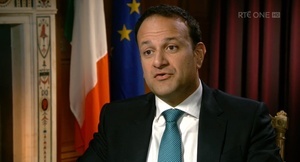
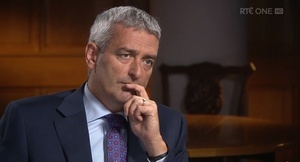
From top: David McCullagh, of RTE; Taoiseach Leo Varadkar
Tonight.
RTÉ’s Prime Time broadcast a pre-recorded interview with Taoiseach Leo Varadkar.
They discussed the Jobstown trial, Regina Doherty, abortion, women in politics and that Love Actually quote.
From the interview…
David McCullagh: “The reality of it was that Paul Murphy was actually helping the situation by getting her out of there?”
Leo Varadkar: “I don’t think, I think that’s one interpretation, you cause a protest, you harass someone, treat them badly shout at them, then after that help them get out. So that’s one perhaps interpretation of what happened.”
“But there is one thing that I would say and I have no difficulty saying it, people need to trust what the Gardai say on the stand, and I can understand that perhaps in a scenario whereby lots of things are happening quickly and people are caught up in the heat of the moment they may have a recollection that isn’t exactly as things happened but I would be very concerned if it’s the case that we would ever have Gardai on a stand in the court giving evidence that is not in line with the facts, that is not in line with the video evidence and I think that there is something there that needs to be looked at both by the Garda Commissioner and senior Garda management. We need to be able to trust that when the Gardai stand up in court and they say something happened that it did happen and it shouldn’t conflict with video evidence and if it does then that is a problem.
McCullagh: “Well should there be an inquiry into it?”
Varadkar: “I don’t think a public inquiry would actually serve any purpose, you know we’ve had a trial. There’s been a trial, went on for nine weeks, the jury heard the evidence from both sides, and they decided to acquit and nobody is disputing that. As has been the case with other things, you know for example the trial of Sean Fitzpatrick, I do think we need to consider why the prosecutions weren’t successful. I don’t think this necessarily requires a public inquiry but we do need to obviously examine these things.”
McCullagh: “I don’t know whether you’ve seen claims by a blogger that she was approached by Gardai and warned against posting criticisms of Regina Doherty on social media but if that turns out to have been true would you be concerned about that?”
Varadkar: “I actually don’t know the facts of that case and I saw something in the paper but I haven’t had a chance to talk to Minister Doherty about it. I would imagine that if anyone was cautioned by the Gardai it would be done for legitimate reason. You know, Gardai don’t caution people because of interpersonal disputes or a civil offence. If somebody is cautioned my understanding is that it has to be related to some sort of criminal offence but I actually don’t know the details of that.”
David McCullagh: “Taoiseach, one area where hard choices will have to be made is in relation to abortion. The Citizens’ Convention by a two-thirds majority recommended unlimited access to abortion. Were you surprised by that?”
Varadkar: “I was a little bit surprised. I wasn’t surprised at all that they proposed that we should repeal and replace the eighth amendment and liberalise our abortion laws. I think that’s very much in line with what we’ve seen in public opinion polls. But the recommendation that they made to allow abortion by choice up to 12 or 22 weeks, that wouldn’t be in line with public opinion polls, that did surprise me a little bit. On the other hand I appreciate that they did a lot of work and they heard a lot of evidence, a lot of personal stories, and they came to that conclusion as a considered conclusion. and it is of course possible that the Oireachtas Committee and subsequently the Irish people may yet come to the same conclusion once we have a debate about it.”
McCullagh: “What’s your view?”
Varadkar: “What I don’t want to do at this stage is to be seen in anyway to be preempting or directing the Oireachtas committee to come out with any particular wording or legislation, but it is my view that our abortion laws are too restrictive. I have said that in the past and that is my view. What we will have now next year is a referendum which will give people the option if they wish to liberalise them, and there will be a free vote on them in parliament.”
McCullagh: “You donated €200 to Women for Election at the weekend, they might have been happier if you had kept the cash and appointed more women to cabinet?”
Varadkar: “They may have been, I think it’s important though to look at the facts, we have a parliamentary system and you elect and select the ministers from members of parliament. There are 12 female TDs who support the government, seven of those 12 are ministers, including the Tanaiste and five at the Cabinet table, and three chair Oireachtas Commitees, so 10 out of the 12 women who support the government are in paid promotional positions.”
“So I don’t think anyone can argue we don’t promote women… we’ve, 10 out of the 12 are in paid promotional positions. The difficulty is we don’t have enough women members of parliament, TDs in the Dail. My party has more than any other party, we have 11, and we are the party that brought in the quotas that made that possible. But we have a long way to go. I am determined that we should do that, that we should ensure that we increase representation in the next Dail and therefore many more women to select from and make a more diverse cabinet. I am a real believer in diversity, I think diversity is good in its own right and you get better decisions if you have a diverse parliament and a diverse government.”
McCullagh: “The Love Actually reference in Downing Street, the socks for Justin Trudeau, why do you do that sort of thing – does it distract from policy?”
Varadkar: “No that’s just me, that’s just my personality. And you know every politician is different, every Taoiseach is different, we all have our own personalities and our ways of doing thing, our own style and own little quirks. I don’t think any of that distracts from policy at all. You know, of the other meetings I’ve had, needless to say, with prime ministers of other countries, presidents, have been very serious meetings, but I don’t think that means that you can’t be a human being as well.”
Watch back in full here

Garda Commissioner Noriin O’Sullivan and former Minister for Justice Frances Fitzgerald
This afternoon.
At the Disclosures Tribunal.
Legal counsel for Sgt Maurice McCabe Michael McDowell SC, while questioning Fiona Ward – a director of counselling with RIAN – claimed he was of the understanding that the former Minister for Justice Frances Fitzgerald was informed of “the whole situation” pertaining to Sgt McCabe in 2015.
Mr McDowell made the point as he was asking Ms Ward why “nobody bothered” to tell Sgt McCabe about the allegations that he said led to his reputation being “shredded in private”.
When this was queried by Supreme Court judge Peter Charleton, Mr McDowell said he could be wrong but repeated it was his recollection that Ms Fitzgerald was informed in 2015.
Readers will recall that Sgt McCabe was not made aware of the matters until December 29, 2015.
In February of this year, Ms Fitzgerald said she was not aware of the Tusla error and released a statement saying the Minister for Children Katherine Zappone had informed her in January, 2017, that she intended to meet with Sgt McCabe but that Ms Zappone did not inform Ms Fitzgerald of any details in relation to Tusla.
At the same time, Taoiseach Enda Kenny also said that he was also aware of Ms Zappone’s meeting with the McCabes and was also not made aware of the details of their meeting.
Readers will also recall how two protected disclosures were made to Ms Fitzgerald by Sgt McCabe and former head of the Garda Press Office Superintendent Dave Taylor, in relation to the same matter, in October 2016.
Ms Fitzgerald later appointed Mr Justice Iarfhlaith O’Neill to investigate the disclosures and Justice O’Neill’s report was given to Ms Fitzgerald in December 2016.
Ms Fitzgerald then announced that it was establishing the current Disclosures Tribunal on February 7, 2017.
Rollingnews
Earlier: Disclosures Tribunal: Day Two
Yesterday: Meanwhile, At Dublin Castle

Kevin Higgins tweetz:
According to Climate Central, Dublin average temperature will rise to that of Brussels within the next 80 years…
This Is How Climate Change Will Shift the World’s Cities (Climate Central)





Behold the Trondheim Trawler – the world’s first electric powered trawler – completely silent and tough enough to withstand four meter swells and 40 knot winds.
Available in three configurations from 9 to 13.5m with nautical ranges between1,500 and 4,000 km depending on powerplant.
You’ll put them all to shame above in Killybegs.
Yours from €265,000.

Head of HR at An Garda Siochana, John Barrett, speaking at a meeting of the Public Accounts Committee in May
Earlier this week.
The head of HR at An Garda Siochana John Barrett wrote an 88-page document to the Public Accounts Committee to assist it further in its inquiries into the financial irregularities at the Garda College in Templemore.
Further to this.
Fiachra Ó Cionnaith, in the Irish Examiner, reports that in his statement, Mr Barrett has told the PAC:
He was subjected to a “whispering campaign”, with his “reward for my persistence” in highlighting garda college financial concerns being “spurious criminal allegations” that he breached the Official Secrets Act by keeping notes on what he found;
That one senior garda sent him documents at the time of his discoveries about the garda college “to suggest that I was aware of all the issues at play and that I did nothing for a number of months”, a claim against Mr Barret that has been proven to be untrue;
That Ms O’Sullivan’s PAC evidence about when she was informed about the garda college concerns is contradicted by clear, private records from the period kept by Mr Barrett;
That garda head of legal affairs Ken Ruane and director of communications Andrew McLindon were subjected to “revised reporting arrangements” and different management structures after highlighting the college issue alongside Mr Barrett.
In a separate section of his 80-page letter, Mr Barrett also called for a forensic examination of the St Raphael’s Garda Credit Union since 1999, which he said is needed to uncover whether EU funds and other money related to the garda college passed through accounts.
He concluded by quoting a book called Lies In The Mirror by current Disclosures Tribunal chair Mr Justice Peter Charleton, in which the retired judge writes that “deceit is the primary instrument for doing evil”.
Claims of ‘whispering campaign’ over Garda College scandal (Irish Examiner)

