



Yearly Archives: 2017

US president Donald Trump and North Korea South Kim Jong-un
Old Trump didn’t know what to do
When Kim’s latest test missile flew
So he begged the Chinese
To sort it out please
He’s such a strong leader. It’s true.
John Moynes
Pics: Getty

Mick Caul tweetz:
‘You’re not Alone’ and all other groups feeding the homeless nightly under Central Bank are now blocked from doing so. #not1home


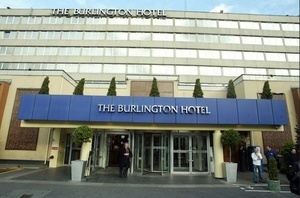
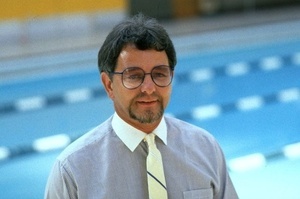
From top: The Burlington Hotel, Dublin 4; George Gibney
You may recall the ongoing efforts of US journalist Irvin Muchnick to obtain former Irish swimming coach George Gibney’s immigration and visa file through the US courts.
Gibney was charged with 27 counts of indecency against young swimmers and of carnal knowledge of girls under the age of 15 in April, 1993 – but sought and won a High Court judicial review in 1994 which quashed all the charges against him.
The judicial review was secured following a controversial landmark Supreme Court decision – during which Gibney’s counsel Patrick Gageby argued that the delay in initiating the prosecution against Gibney infringed his right to a fair trial.
Mr Gageby won this decision. His sister Chief Justice Susan Denham was on the bench that day.
Following this Supreme Court decision, Justice Declan Costello conducted a judicial review and held that Mr Gibney’s right to a fair trial would be infringed if the prosecution were to be proceeded with.
After this, Gibney left Ireland for Edinburgh, Scotland and then Florida.
Further to this…
Mr Muchnick, of Concussion Inc, reports that an Irish woman has claimed she was sexually molested by Gibney when she was 11, in 1982, in the pool of the Burlington Hotel in Dublin 4.
Mr Muchnick reports:
For the purposes of this article, we are calling the victim in the 1982 incident “Julia.”… I have no independent verification of Julia’s allegation. But I believe her. And the full context of the Irish swimming scandals and of Gibney’s checkered two-continent history supports publishing her account.
Julia told me that she was abused by both Gibney and Ger Doyle (she remembers the former calling the latter “Jerry”). The delay in Julia’s coming forward has many familiar elements — shame, possible collateral damage to loved ones, fear that she would not be believed nor her information acted upon — and some unique ones. The latter include her absence from Ireland during the period when the swimming scandals first broke in the news media there.
“I never came forward about Gibney because I didn’t see the point after the injustice the others were dealt out. I didn’t want the upheaval in my life,” Julia told me.
“I had a hard childhood and just wanted to forget about everything I went through and get on with my life. What Gibney did to me was minor in comparison to other things that were done to me so I didn’t see the big deal about it when I was young. I sometimes thought about it but never saw myself coming forward until two years ago I saw a picture of Gibney and Ger Doyle in their younger days on the Internet and recognized them.”
Julia said that on an evening in 1982 her father brought herself and her brother, who is three years older, to the pool of the Burlington, in Dublin’s affluent Ballsbridge neighborhood. The brother asked how they would get admitted to the pool of a hotel where they were not staying. The father said he would arrange it through a lifeguard he knew. Julia believes the “lifeguard” was Doyle.
“My father talked to the lifeguard for a few minutes. He then told us it was OK and waved us in and said he would come back for us in two hours. When we got to the pool there was a man and a woman there. The man started talking to my older sibling, telling him that he was an Olympic swimming coach. My brother was really excited about this and came over to tell me. The man approached us and started splashing me with water so I splashed back. I asked him was he really an Olympic coach and he said yes. We thought it was amazing that we had met somebody like this.
“The man said he lived in a luxury apartment and would bring us there to show it to us if we came back the next night. He told us that he came here every night to swim.
“He said he wanted to see me swim, so I swam up and down the pool. He said I was a good swimmer but needed some lessons to be better. He made my sibling and me have swimming races. The girl he was with sat at the edge of the pool smiling as she watched the fun.
“The lifeguard blew the whistle after an hour was up. Gibney told me to stay — that he would give me a free swimming lesson. His girlfriend and my brother left, leaving me alone with Gibney and Ger Doyle.
“Gibney became angry and bossy. He brought me to a corner of the pool where the lifeguard was sitting and put his hand inside my bathing suit. He probed me everywhere and then put his finger inside me. While he was probing inside me, the lifeguard was watching and said, ‘Enough.’ Gibney said, ‘Just give me a few more minutes, Jerry.’
“The lifeguard was getting annoyed with Gibney and said to Gibney every few minutes, ‘Time is up, enough.’ Gibney would keep answering, ‘Just give me another minute, Jerry, I’m nearly finished.’
“There was something violent about him and I was afraid so didn’t protest. He was ordering me around. I froze while he abused me.
“When he was finished he told me to come back tomorrow night and he would bring us to his apartment. He told me to get out and get dressed. I was frightened and dressed as fast as I could.
“I just wanted to get out of there. I was afraid. I met my sibling in the front hall of the hotel waiting. He asked me why I took so long to get ready. We waited for my father to pick us up. I watched Gibney from the hall, he seemed to know a few people at the hotel, the workers from the bar and the receptionist knew his name, he talked to them. He left the hotel with two other men. My brother tried to wave to him but Gibney ignored him and walked on. My father came shortly after that to pick us up.
“My father said he would bring us back there the next night. The next day I pretended to be sick and have an earache. I knew he would do something worse to me the next time and dreaded it. After protesting, I got my way. My mother was there when I was pretending to be sick and said not to bring me swimming if I had an earache.
“I was 11. I didn’t fully understand what had happened to me and just thought every man did this to girls and that it was normal. I didn’t know any different because I had been sexually abused throughout my childhood; my first memory was when I was four “
Julia ran away from home in 1987, at age 16.
“The last two years of my life have been spent putting the pieces of the puzzle together to try and make sense of everything that happened to me as a child. Gibney is just one little piece of the big puzzle.”

Yesterday’s Sunday Independent
Further to yesterday’s criticism of the Jobstown protestors by Ed Brophy, former chief of staff to Joan Burton…
David Wall writes:
Reading Ed Brophy’s response to the the Jobstown verdict clarified a number of reasons why Joan Burton’s leadership of Labour was so ill-fated and indeed why Labour continue to flounder and struggle.
Labour are meant to be the voice of the many, not the few to borrow a phrase from the British Labour Party ( a group Brophy’s Ireland Thinks represents). Labour are meant to represent the rights of workers, the people without a voice.
This is their demographic, and yet a former Chief of Staff to the Tanáiste speaks of them as the enemy. He seems to dismiss the cases of Apollo House, Repeal the 8th and the non payment of tax by Apple as populist politics aimed at a ‘whimsical section of the electorate.’
Surely homelessness, reproductive rights and corporate tax avoidance should be the bread and butter of any labour movement?
Furthermore, he seems to want to limit the voice of the Solidarity Movement. They have filled the void left by the Labour Party as they snuggled cosily into the centre of politics.
The Solidarity movement are a dissenting voice to the left, but surely this is the role that Labour should be filling. Irish politics has evolved to have a number of centrist parties with Fine Gael on the right of centre while Irish Labour have moved towards the centre in a bold move away from their grassroots support.
That cannot be denied. Propping up what was seen as a government right of centre does not conform to Labour’s beliefs, even if it was ‘ameliorate capitalism.’
This amelioration, as noble as Brophy presents it, has simply seen a major shift from public to private, increased poverty and greater divide within society. Not a successful tactic it could be argued.
Brophy’s continues by stating that the for some Labours ‘mere act of entering coalition amounted to treachery.’ This seems to be a worrying oversight.
Rather than worrying about how entering coalition was viewed it would be more beneficial to examine the role of Labour within government. The electorate are forgiving, look at the recovery of Fianna Fáil. Labour have not been forgiven for their performance in government, rather than the act of entering coalition.
Performance is key and Labour never performed.
Finally, he praises the judicial announcement of innocence as being a positive because ‘in one fell swoop, the Solidarity thesis that the entire system is a conspiracy against them and the working class they purport to represent was put to the sword.’
Again, he is wrong, firstly a guilty verdict would have been a miscarriage of justice. Secondly, rather than exonerating the system it has raised further questions about the behaviour of the embattled gardaí.
At this point Labour have a battle on their hands. The centre is over populated and they are unlikely to take votes from the major powerhouses of Fine Gael and Fianna Fáil.
They need to reestablish themselves as a voice on the left and unfortunately commentaries such as Ed Brophy’s in the Sunday Independent suggest that they have little interest in doing this.
Jobstown Verdict Is Correct But Beware Of The Backlash (Ed Brophy, Sunday Independent)


A twofer!
Yesterday.
Dublin Running Snob writes:
Sunday’s #FreeTheCycleLanes heroes in Foxrock (top) and Stillorgan (above) dualer bike lanes. I’d say Foxrock fanny was at mass….
Fight!
Previously: A Lane Again, Naturally

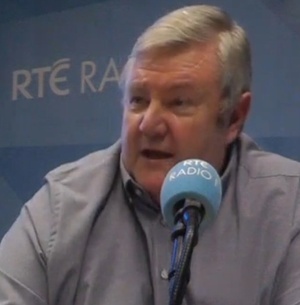
From top: Opposition benches in Dáil Éireann; Derek Mooney
Who in their right mind would want to become a TD?
The pay is good, the perks are decent and the scope for promotion (career and ‘self’) is none too bad either, but can these incentives really outweigh the forfeiture of a private life, never mind the ongoing press, public and social media opprobrium whenever you express an opinion?
Shouldn’t politics be a vocation, not a career path?
The problem with that view is not just that it is naïve, it is that it simply won’t work. Try it and we end up with a Dáil full of only those who can only afford to be there by virtue of their profession, their families’ money or simple “pull” – by the way not all of them would be on the right, a fair few would also come from the comfortable left, but that’s just an aside.
So, recognising that we are in the real world, perhaps we should be looking more at how to make entry into politics less unattractive and encourage more people who would not just see it as a long-term career option, but rather as something to contribute to after they have done and achieved other things.
Billy Connolly used to say that “The desire to be a politician should be enough to ban you from ever becoming one”. He is right, but only in one narrow sense. Wanting power for the sake of having it should be disqualification, but wanting it so you can change things, whether that be how many street lights there are in your community cycle, how waste is managed or how the cost of housing is reduced – that should be encouraged.
One of the problems is that many of political parties still include obstacles and tests that deter all but the most ambitious and politically astute. There is value in these skills, but national politics needs others too: people with wider skill sets and experiences.
Politics is not well served when it full of neophytes who have spent plenty of time as parliamentary researchers and ministerial assistants but have no genuine experience of the real world.
This applies to both left and right. Politics needs more people who have built things from houses to computers to companies and fewer people who have made placards and organised protest marches.
This is one of the reasons we have political parties. The most crucial role of any party, after policy development, is candidate selection. Political parties are there to identify, encourage, resource and support new entrants – people who may not in other circumstances have considered or pursued politics. They are there to protect them and back when they come under attack and support their work by making policy expertise available.
It can and does work. After the 2011 election massacre, Fianna Fáil was left with a lot of vacancies for prospective TDs as it had a lot of constituencies with no sitting TDs and no seat blockers.
This was a major plus, it had the capacity to rebuild and renew with a massive intake of new talent. But it also had a big problem. On the negative side, it had a poll rating that would not encourage many to see it as offering a pathway to the Dáil.
Squaring this circle was no easy task. It had both to identify potential future TDs and to reassure them that it was a sufficiently viable vehicle to help them make it to the Dáil and contribute positively.
Much of that work happened locally. In many cases the local organisations and activists were ahead of their national counterparts. By the time of the 2014 local elections the party, nationally and locally was starting to synchronise both tasks: it had sufficiently recovered in the national polls to offer a credible vehicle and also had a slate of people with a variety of backgrounds to fast track into the Dáil.
Looking back, it now looks far more organised and structured that it probably was at the time. Building a mythology around what was done and how it was achieved risks missing the real and valuable lessons of what really happened. It also risks allowing a re-emergence of all the obstacles and hurdles of the past.
Though much of Fianna Fáil managed over the past five years was much by local action as by national design, it still offers a template for how other parties can and should encourage more new entrants.
But there is one big proviso, they must also realise that the work does not end when you bring in a few new TDs. If anything, that is when it really starts. TDs are not shrinking violets, but neither can they be allowed become punching bags for any group, whether in or outside the Dáil, who want to take politics out on to the street and then abrogate all responsibility for the consequences.
Every TD has an equal right to be heard inside and outside the Dáil. Being a Fine Gael, Fianna Fáil, Labour or Sinn Féin back bencher does not lessen or reduce their mandate and should not reduce their speaking rights. Political parties are not an impediment to political progress, they are the bedrock of it.
Everyone has a right to disagree and to do so robustly and loudly, but the “What the Parliament does, the street can undo” mantra of Solidarity-PBP cannot be allowed to stand. It is a pernicious attempt to discourage wider political engagement and involvement in the guise of opening it up to those approved by Solidarity-PBP.
It is joked that France has the only “tricameral system” in the world – the National Assembly, the Senate and the Street – but history and experience shows that the Street has always been the biggest hindrance to reforms.
It is yet another reason why political parties now must ensure that many people who should be considering entering politics are given the opportunities, supports and protections to do so.
Derek Mooney is a communications and public affairs consultant. He previously served as a Ministerial Adviser to the Fianna Fáil-led government 2004 – 2010. Follow Derek on Twitter: @dsmooney