They’re back.
Are Ya Having That writes:
Leather Jacket Guy and Johnny BS open a secret package from Dayton, Ohio!



They’re back.
Are Ya Having That writes:
Leather Jacket Guy and Johnny BS open a secret package from Dayton, Ohio!

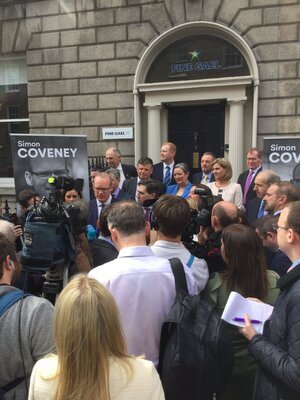
Simon Coveney launches campaign #iestaff https://t.co/sKZ1XRPLZC via @McConnellDaniel
— Irish Examiner (@irishexaminer) May 18, 2017
More as we get it.
Fight, etc.
Rollingnews
Top pic via Shane O’Reilly
Meanwhile…

BREAKING: Michael Noonan to step down from cabinet and will retire at next GE @TodayFMNews pic.twitter.com/IMQwsRMMZZ
— Gavan Reilly (@gavreilly) May 18, 2017
Don’t let the door, etc.
 Mary Black
On The Late Late Show…
Gareth Naughton writes::
The Late Late Show celebrates the career of one of Ireland’s most beloved singers this week with a Mary Black special tomorrow night.
The Black Family – Mary, Frances, Shay, Michael and Martin – will reunite for a performance. She will also be joined by the next generation for two very special performances with son Danny O’Reilly, lead singer of The Coronas, and daughter Róisín O.
Paul Burrell was Princess Diana’s rock for a decade until her untimely death almost 20 years ago. He’ll be giving viewers the inside track on the royals…
As Enda Kenny bows out as Taoiseach and a leadership battle kicks into gear in Fine Gael, Independent TD Kevin ‘Boxer’ Moran will be in studio to chat about what lies ahead for new politics…
Ryan Tubridy will be catching up with Irish garden designer Diarmuid Gavin as he prepares to bring his Chelsea Flower Show medal winning garden to Dundrum.
*plunges garden hoe through telly screen*
The Late Late Show on RTÉ One, tomorrow at 9.35pm.

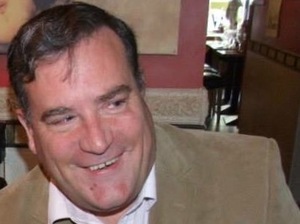
From top: Leinster House; Dan Boyle
Traditional decision making immediately casts aside those whose views haven’t convinced. Engagement should be more than a one off process.
Dan Boyle writes:
In the sadder half hours of my life, I listen British political programmes on BBC4. Earlier this week I heard a Labour Party MP (the who is irrelevant) state that “the people are always right’.
Are they?
‘The People’ is a collective expression of us as individuals. None of us as individuals is ever always right. Why should our collective expression acquire a quality of absolute wisdom?
Especially if when making such decisions, we are always divided, often deeply so.
That Labour MP was merely repeating what many believe to be a fundamental truth, a truism grounded in ‘common’ sense. That phrase, for all its homespun attachment, has in its overuse become an oxymoron, rarely ever being common or sensible.
Is this to question the central tenet of democracy? I don’t believe it is, but it is to question the fallacy that a decision, once made, is an absolute for eternity.
Every decision made should be subject to review, analysis and ongoing criticism. Neither does this mean that, on being made, decisions should be treated dismissively. All such decisions are valid at the time and in the context they have been made.
Those who have lost such arguments are not necessarily wrong, what they have failed to do is be able to convince at that particular time.
What we should be doing is giving consideration to weighted majorities, with built in review mechanisms. This, I believe, will help better decisions be made, while also getting such decisions implemented more quickly.
Traditional decision making immediately casts aside those whose views haven’t convinced. Engagement should be more than a one off process.
In the early days of The Greens in Ireland, we experimented with consensus decision making. It was deeply frustrating, a charter for those whose self-identity is wrapped up in their ability to create havoc. Those type of activists now have more comfortable political homes in which to indulge their persistent negativity.
But naysayers are not the only result of consensus decision making. For all it frustrations, it also gives space to some thoughtful, but minority views, that question the speed and direction of decisions. In ‘straight’ decision making, the views of such individuals tend to get steamrollered over.
The motivations behind any decision should always be questioned. The who benefits and why always kept to the fore.
Any victory should be seen as temporary and transient. Being on the right side of an argument, does not and should not, equate with being on the right side of history.
Democracy is a process not an end in itself. Too often we consider the who whilst forgetting the what, and more particularly the why. We should decide to do something about that. But how?
Dan Boyle is a former Green Party TD and Senator. His column appears here every Thursdyay. Follow Dan on Twitter: @sendboyle

RTE reports:
The Gay and Lesbian Equality Network is to close following a review of its operations.
…The charity was mired last month in controversy when it emerged that the Charities Regulator was looking into its finances and has requested three years of credit card statements and accounts.
Three employees are being made redundant.
The author of the report into alleged financial irregularities at Glen said the charity was facing challenges on five different fronts.
[Speaking RTÉ’s Morning Ireland, former senator Jillian] Van Turnhout stressed that there was no misappropriation of funds in Glen, but she described the use of credit cards at the charity as “incredibly poor practice”, although it came from a good intention to not leave employees out of pocket if they paid for things for the organisation.
..She said the board had always prioritised the community it serves and the helpline [1890 929 539] provided by Glen would continue.
Charity Glen to close following review after financial issues raised (RTE)

Clockwise from top left: Sgt Maurice McCabe, Mr Justice Peter Charleton, Garda Keith Harrison, Superintendent David Taylor, and Garda Commissioner Nóirín O’Sullivan
Yesterday evening.
Supreme Court judge Peter Charleton published his first interim report on the Disclosures Tribunal.
In it, he loosely outlines when certain hearings pertaining to the tribunal will take place (more on this below)
In addition, he lists the parties – including journalists – who have been represented before the tribunal so far, and who represented them.
In relation to journalistic privilege, Mr Charleton writes:
Another privilege that is claimed is in respect of those who engage with journalists in the public interest to enable them to carry out the vital role of calling democratic and executive institutions to account. Some journalists have given witness statements in which they have helpfully specified conversations that have taken place outside of what they perceived to be the cloak of any such privilege, if it exists.
Others have refused to say whether there is any relevant testimony which they might offer. The extent of that privilege and the circumstances under which is arises are both likely to occupy time.
As for his appeal for cooperation from all interested parties, when he made his opening statement about the tribunal, on February 27, 2017, Mr Charleton said:
“There were many useful pieces of correspondence received, including from concerned members of the public, though the general level of response was very disappointing.”
In addition:
“On 30 March 2017, the Tribunal sat to hear applications for representation from interested parties… On that day, several representatives of journalists indicated an intention to apply for representation but declined to answer any questions from the tribunal as to whether the individual or organisation seeking representation even had any relevant testimony to offer the tribunal.
It is important to record that not all journalists or media organisations took that approach. The full transcript of that hearing and the ruling of the tribunal as of 3 April 2017 are both available on the tribunal’s website.”
On the tribunal’s intended schedule, he writes:
The Tribunal is grateful for the co-operating of parties in its work to date and it is hoped the Tribunal will conclude hearing evidence before the end of this year.
It appears useful to the work of the Tribunal to divide its consideration of matters into about five substantial sections. What follows is only an outline.
Of pressing public concern is whether or not files in certain State agencies, who here might be identified as Rian, the Health Service Executive and the Child and Family Agency, otherwise Túsla, were created and distributed or otherwise used by senior members of our police force in inventing or furthering a false allegation of sexual abuse against Sergeant Maurice McCabe.
This will be the first section of public hearings. It is hoped to engage in these and to complete them in July of this year. Progress on this matter has moved very far but the analysis of relevant computers is essential and there are further interviews to be conducted by our investigations.
Concerns in relation to Garda Keith Harrison and his family and the same State agencies might be regarded as being similar in kind, if not in detail, and it is hoped to engage in public hearings on that issue in September of this year. Again, considerable work has been done.
As to what may have been briefed to the then Garda Press Officer, Superintendent David Taylor for dissemination to journalists by former Commissioner Martin Callinan and then Deputy Commissioner Nóirín O’Sullivan, this is the subject of an inquiry in respect of which public hearings are hoped to be held, perhaps following a short break, in November.
Allied to this section are concerns in relation to an engagement between former Commissioner Martin Callinan and John McGuinness TD that is said to have taken place on 24 January 2014, in a very specific location, according to the terms of reference.
These sections do not seem to be divisible and evidence on one may be of assistance in the determination of what attitude was taken by those senior officers to Sergeant Maurice McCabe, if any, and as to how they responded or acted.
A specific, and it would seem relatively short inquiry, is to be made in relation to broadcasts on RTE of 9 May 2016. This, in fact, consisted of several broadcasts and commentaries, and as to whether Commissioner Nóirín O’Sullivan was influencing, or had dictated, the terms of these in some way.
The O’Higgins Commission was of course the subject of the commentary in relation to these broadcasts. It may be logical to consider that with the question as to whether false allegations of sexual abuse or any other unjustified grounds were inappropriately relied upon by the Commissioner during the hearings before Mr Justice Kevin O’Higgins.
It is hoped to dispose of these matters in December of this year. It is not within the terms of reference to re-run the O’Higgins Commission but, instead, that report is part of the evidence before the tribunal. It might usefully be read by all interested parties.
Read the interim report in full here

When Noonan fell there wasn’t many
Thought FG had future but when he
Stepped up the plate
We all shared his fate
So let’s toast or curse Enda Kenny
John Moynes
Rollingnews
Unless YOU can do better?
Leave your ‘Farewell Enda’ ‘ricks below.