



Yearly Archives: 2017





MORE to folly

This evening.
Graeme Kelly writes:
No filters… 5.05pm
Meanwhile….
@broadsheet_ie Just captured by one of our ambassadors at Trinity College. #nofilter pic.twitter.com/GswqgFSoT0
— TCD Global Room (@TCDGlobalRoom) February 28, 2017

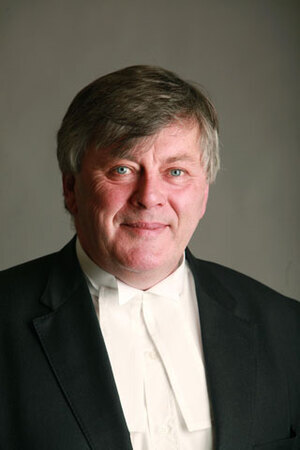
From top: Michael Noonan; Garry O’Halloran
Garry O’Halloran is a barrister, former Fine Gael councillor and former chairman of the South Eastern Health Board.
Readers may recall a previous post outlining how, in 1997, Mr O’Halloran attempted to speak with the Minister for Finance Michael Noonan – then Minister for Children – about allegations of child sex abuse in relation to Fr Jim Grennan, who had abused several children in Monageer, Co. Wexford, the diocese of Ferns.
According to Mr O’Halloran, Mr Noonan ran away from him when he attempted to speak to him about this at a Fine Gael Ard Fheis in 1997. One of Fr Grennan’s victims was with Mr O’Halloran at the Ard Fheis.
Mr O’Halloran resigned from Fine Gael following the incident.
Mr O’Halloran came forward to recall his non-meeting with Minister Noonan at the Ard Fheis in 1997 – after he heard Minister Noonan give an interview with Richard Crowley on RTÉ Radio One on Thursday, February 4, 2016.
During that interview Minister Noonan was briefly asked about the letters he received about Grace.
Mr O’Halloran knew nothing of Grace when he heard the interview – but it jogged his memory in relation to Fr Grennan. Mr O’Halloran also felt it was important to explain that the case of Grace was not an isolated incident.
Further to this, and the publication earlier today of the Conal Devine report and the Resilience Ireland report into the Grace case…
Mr O’Halloran writes:
A few questions and answers:
Q1: How many inquiries does it require to establish the truth in respect of a single event?
If the event was to overturn a lawful decision taken by social workers to remove a young woman with disabilities from her residence, and that decision was overturned following the intervention of then Health Minister Michael Noonan, the correct answer at this moment in time is ‘at least six’.
The inquiry presently being set up has been preceded by
- 2007 report of a SEHB (South Eastern Health Board) social worker;
- 2009 report of a non-SEHB social worker;
- 2012 report by Conal Devine;
- 2015 report by Resilience Ireland;
- 2016 report by Conor Dignam SC.
It is not known how many Garda reports may be in existence.
Q2: Three reasons why this issue is important:
A beautiful young woman, whose disabilities rendered her unable to verbally communicate and whose mental age remained at 12 months old, was exposed to possible daily rape and other forms of torture for an additional 9 years as a result of the Noonan intervention.
The parents/guardians of 47 other persons with disabilities who had been sent to this Kilkenny residence were never informed of the disclosures of rape and torture. Respect for the rule of law and confidence in the institutions of the State are in unequivocal jeopardy.
Q3: What actually happened?
A case conference in May 1996 on ‘Grace’ determined that she be removed from her foster-carers. This decision could not be implimented immediately as there were no placements available for persons with a disability. When arrangements were made, the foster-carers were informed in September and given the standard three days to deliver up the child.
The foster-carers appealed this decision, as was their entitlement under the 1995 Foster-Care Regulations. The oral appeal was held before Ms Marie Kennedy and Dr Marie Ryan, and the decision to remove Grace was upheld.
By letter dated August 9, 1996 (see copy exhibited in a report by the political editor of The Irish Examiner, Daniel McConnell), the foster-carers appealed directly to Minister Noonan.
Minister Noonan acted on this letter, notwithstanding that the whole area was governed by statute, and including the new Foster-Care Regulations.
Minister Noonan passed the matter on to his junior ministerial colleague, Minister Austin Curry (as again happened in the ‘Monagear’ case a few months later).
Minister Curry passed it on to an official of the Department of Health (DoH). The DoH official passed it on to the SEHB.
The SEHB operated under a hierarchical structure. At the top was the CEO, John Cooney, who was assisted by programme managers in the areas of general hospitals, special hospitals (ie psychiatric and geriatric hospitals) and community care (covers foster-care).
The Programme Manager for Community Care in the SEHB, Martin Hynes, responded to the DoH official by stating that this was possibly the first decision taken under the provisions of the Foster-Care Regulations, and the decision stood.
A further case conference late in 1996 was informed by the chair, Sandra Merity, that the decision to remove ‘Grace’ was overturned. No clear reason was given, but mutterings about legal advice and a possible three-person meeting in September have proved elusive to all those who have followed the paper-trail.
However, Dr Cathal Morgan of the HSE told Keelin Shanley on RTE’s News At One today that he knew the identity of the three as-yet unidentified persons ‘who were responsible for implimenting the decision of the case-conference’, and he further noted ‘they have left the service’.
In addition to his profuse apologies, Dr Morgan also referred to ‘a HR procedure’, that a Garda investigation is ongoing (he omitted the fact that it appears to have commenced in 2007), and he made repeated reference to the over-riding need for Due Process. This final comment is particularly ironic since it was the interference with due process which condemned Grace.
Q4: How useful are inquiries?
The ‘real news’ about inquiries is that they are invariably set up with a view to kicking the truth down the road – for years, decades, or permanently.
The ‘facts’ established by Inquiries cannot be used in criminal proceedings.
The matters at issue in the ‘Grace’ case are criminal in nature – the decision-makers who subjected Grace to daily torture for over nine years cannot claim immunity from the criminal law. That includes Minister Noonan.
Q5: How can the truth be established?
The very small number of decision-makers and facilitators could just say what happened.
When this does not happen (after the 5 previous inquiries and reports), it is necessary to personally identify the crew, get just one to free himself or herself from the glue, and then expose both the lie and the liars. After that, the truth will find its own level.
Earlier: Failing Grace
Previously: Grace, Noonan and Monageer
Rollingnews
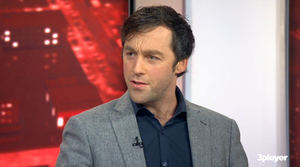
Policy analyst Dr Rory Hearne
People’s basic needs, in terms of human rights, if we look at social needs, in terms of housing, health care, childcare, jobs decent-quality jobs – are not being met.
If we just take the housing crisis for example. We have almost 7,000 people homeless in this country, record numbers. There was almost 500 children homeless in 2014, we now have over 2,000 – that’s a four-fold increase in that space of time.
We have almost 100,000 families and individuals on the social housing waiting list… the facts are that there is 8,000 social housing units, that includes local authority and housing associations, that are in some stage of planning. There’s only 1,800 – that’s a quarter of that number – actually on site that is likely to be built in the next two years.
There was about 500 local authority, plus housing association, 500 social housing units built last year. At that rate we will be 200 years before we meet the housing waiting list. [Minister for Housing Simon] Coveney Rebuilding Ireland plan and the Government’s housing plan is not actually going to deliver the social housing and the housing that’s needed…
There are between 800 to 1000 families homeless in Dublin and, at the same time there are 20,000 vacant homes, vacant houses, according to the CSO. So that’s 20 empty houses per each homeless family. And it’s just illogical that we have this situation where housing/property is treated primarily as an investment, as an asset, rather than a home and a need.
And, you know, I think this underlies part of why we’re in this crisis. Because we have vultures buying up property, we have Real Estate Investment Trusts coming in. And we’ve the Government just sitting there – yet the Government could be building, you know, 10,000 affordable rental homes every year, if it took on models like the European cost rental model – which provides, using public land for a mix of incomes – Austria does it, Denmark does it. These countries provide much more levels of affordable housing than us.
But it seems like our politicians and our Government are just obsessed with this free market approach – where the State cannot intervene – and, you know, maybe it’s not coincidental that a significant proportion of them are landlords themselves.
But there’s this real, I’d describe like it’s an unwillingness to change things radically. And what is really disappointing … in the last election, there was a very clear message of people wanted investment in public services – they wanted a more equal Ireland – that was the message back.
It was a rejection of the idea of the recovery and yet, rather than taking that energy that’s there and we saw it, the same in Apollo House recently, where we had thousands of volunteers being involved and saying ‘we want to address this crisis’. And that’s what’s really disappointing.
The people still believe in the idea of a fair Ireland, they want to get involved in helping it. Yet, what are our politicians and our Government doing? It’s like they’ve given up on the idea of an equal republic. All they are focused on is their party and them getting one better on each other.
The disconnect between politics and between people’s lives, I think, has got to the point where it is just disgusting.
…The mainstream politics and main media discussion about politics is all about personalities and about competition for the spoils of power rather than actually ‘are we dealing with the issues that affect people’?
But if you talk to the people on the street – what do they want politics to be about? They want it to be about ‘are you dealing with the housing crisis, are you dealing with those awful, awful stories of children who are waiting months and years for health care? That’s what they want politics to be dealing with.
Dr Rory Hearne speaking on Tonight with Vincent Browne last night.
Watch back in full here
Earlier: Considering The Source
Related: Fine Gael heads the landlord list as TDs cash in with property (Mark Tighe, Sunday Times)
Sad pic of homeless sleeping in tents taken from gov buildings on Min Coveney’s doorstep on a cold n wet day.! pic.twitter.com/3Te18uzYQf
— Imelda Munster TD (@ImeldaMunster) February 28, 2017
1.40pm
Gardaí in the process of evicting 4 homeless people staying in tents in a car park right nxt door 2 Government buildings. pic.twitter.com/CBq4JgA43o
— Stephen Todd (@UbuntuLad) February 28, 2017
3.56pm
Good times.

Former Fine Gael TD Peter Mathews
“When I was with the finance and public expenditure committee, meeting other committees in the Bundestag, we put to them information of which they were clearly not aware. These people are on the budgetary committee of the Bundestag, with a €300 billion budget.
I put it to them that the loan losses in our banking system were 60% of our national income or GDP. If the same problem had arisen in Germany, it would be a €300 billion part of its GDP. We were being asked, silently, to bear this load, which was wrong.
The ESRI equivalent in Germany was not aware that the three elements of debt in this economy comprised private household debt and non-financial corporate debt as well as the sovereign debt, which is the focus of the fiscal compact.
Our private household debt and non-financial corporate debt is twice the size of that of Greece, …What is happening today is really a shame. We are boxed into the old traditions.”
Peter Mathews, February 12, 2012
In fairness.
Peter Mathews, former FG and Independent TD, dies aged 65 (Irish Times)
Previously: Peter Mathews Goes Rogue
Rollingnews

On Saturday, March 4, from noon to 6pm.
At the George Bar on South Great George’s Street, Dublin 2.
A Fabulous Market.
Betzy Nina Medina writes:
A fab mix of designers, makers and collectors, products made in Ireland, jewellery, clothing, kids’ wear, home decor, pet accessories and more… All welcome!
A Fabulous Market (Facebook)
Thanks Betzy
Food Lies
at







Last night.
On TV3’s Tonight with Vincent Browne.
The panelists were: Michelle Murphy, from Social Justice Ireland; policy analyst Dr Rory Hearne; media lawyer Andrea Martin, and political correspondent at The Irish Times Harry McGee.
In the latter half of the show, they discussed the Disclosures Tribunal, following on from Judge Peter Charleton making his opening statement yesterday morning.
The tribunal will investigate allegations of a smear campaign against Sgt Maurice McCabe.
Specifically, Mr Browne raised the subject of journalists and their sources.
Vincent Browne: “There is another issue that arises and it is that a woman made, allegedly made allegations of misconduct against Maurice McCabe which she subsequently withdrew*. And which the DPP found, it couldn’t possibly prosecute on the basis of those allegations. But the name of that person was disclosed to at least two journalists who went off and got exclusives in interviews with this woman. Now that would seem to me that there’s something really insidious involved in that. And who disclosed it? And the journalists then going and interviewing those people. What do you think about that, Harry?”
Harry McGee: “Well, I don’t know if, I mean, what evidence is there that the name was disclosed to journalists?”
Browne: “Well, how else would journalists know otherwise?”
McGee: “Well, I don’t know, you’d have to ask the journalists.”
Browne: “I know but can you think how the journalists would know otherwise?”
McGee: “I can think of many ways in which journalists might know otherwise.”
Browne: “Tell us.”
McGee: “Well, they might have been told my some other people, they might have…”
Browne: “By who? Who’d know?”
McGee: “Well, I don’t know, Vincent.”
Browne: “But who’d know? A priest? A nun? A social worker? A counsellor?…”
McGee: “Well, who do you say? Who would you suggest told the journalist?”
Browne: “I would think that the likelihood is that it was the gardai, members of An Garda Siochana.”
McGee: “I just, I don’t know. I, I…”
Browne: “These are crime journalists that were…”
McGee: “But listen I wasn’t [inaudible] to that particular story, Vincent, you’re asking me to give…”
Browne: “Social workers wouldn’t have much truck with crime journalists…”
McGee: “You’re asking me to answer a question for which I have no, I have no direct knowledge.”
Browne: “Assuming, assuming that it was revealed by gardai – or that the journalists were tipped off by members of An Garda Siochana – this would be pretty insidious, wouldn’t it?”
McGee: “If they were tipped off about the…the identity of…?”
Browne: “Given the name of the person who originally made the complaint.”
McGee: “But there’s no evidence to suggest that at this particular juncture, Vincent, other than supposition. And I, I have no direct influence…”
Browne: “What do you mean there’s no evidence for it? The fact of the matter is: a woman made a claim of abuse. Subsequently, that woman’s name was released to journalists, crime journalists and they went and interviewed that person.”
McGee: “But, you, there is no direct evidence that the identity of the woman was released by gardai. They might have come to identify that woman and find out where that woman was and contact that woman from a separate source. To illicit that information. I think that you should ask…”
Browne: “But is it likely that, is it likely that, given that it was the crime journalists that were given that information – not journalists that are involved in social issues or political journalists or whatever – it’s crime journalists. Isn’t it likely that they got it from the gardai?”
McGee: “Well, there’s a possibility…”
Browne: “But anyway…”
Talk over each other
McGee: “I just can’t…”
Browne: “If that’s so, do you think that’s another dimension of insidiousness with the garda in this whole thing?”
McGee: “Well, I mean, if that were so, yes it would be. But there’s no direct evidence to suggest that, Vincent.”
Browne: “Ok, in your view, in your view, can journalists validly claim confidentiality with regard to their sources, in respect of texts they may have received, or emails, or whatever, they may have received, concerning phone calls, relating to false information concerning Maurice McCabe?”
McGee: “Well, I think that, what the judge was doing today was he was making a distinction between legal professional privilege where he said that the privilege lay with the client and that of informant privilege where it lay with the informer, as opposed to the recipient of that, which is the journalist in this case. And that’s an important distinction, that he’s making. So, I think that, from what I, he said he [Judge Peter Charleton] hasn’t reached a conclusive decision in relation to this and he’s going to receive submissions on it. But he is making the case that if the informer were to waive his or her privilege, than the privilege wouldn’t attach to the journalist who received it. Now, but, for that to work, the journalist would have to reveal who their source was and the journalist, no journalist, in my experience would reveal who the source was. The second…”
Browne: “But, on what basis?…where information was received, that was entirely false, designed to do terrible damage to a person’s reputation, all in the aim of discrediting that person, in the context of…”
McGee: “But in your own, you said that it was, in your opinion, that journalists actually believed the information that was conveyed to them. So, in this case, I think that the test will be a subjective test because if it were an objective test, if the journalist believed that what was being said to them was a calumny, detraction, was a lie – that would be ludicrous and the journalist would be in dereliction of their duties as journalists. So I think that journalists, who received that information, believed that information to be true…”
Browne: “And they should not disclose and, in your view, they should not disclose the source?”
McGee: “Well, yes, if, I think journalists are quite entitled not to disclose their source.”
Browne: “On what basis do you think that?”
McGee: “On the basis that they gave an undertaking to their source that they wouldn’t compromise that source. They believed that information that was being given to them at the time…”
Browne: “And if it then emerges that that source told them lies, and malicious lies, should the journalist still be bound by the the confidentiality arrangement?”
McGee: “Well, that would be post-hoc and so..”
Browne: “Well, we now know it was lies…”
McGee: “I think that might change the circumstances somewhat, if the informer were to waive their privilege. But the difficulty is that the journalist would then be required to reveal their source.”
Browne: “Yeah.”
McGee: “That would present a difficulty for journalists.”
Later
Andrea Martin: “[If she was a journalist] What I would do is I think that I would disclose my source. If ordered to by the court to do so, if there was no greater good going to be had by staying silent on it. But I think many, many journalists would not agree with that. And it’s a personal decision…”
Michelle Murphy: “I think if you are aware that, or if you become aware that what you have been used as a conduit to spread lies then, I think the journalist, in order to protect their integrity, might do so. If they felt that they were being used by a particular individual….in this exact situation, I think they should. But then there’s other areas where you need whistleblowers, in for example, the HSE…”
Rory Hearne: “I think in this case, yeah, they should. I think that the level of maliciousness, the extent and depth of, you know, it’s just shocking to see the corruption and the way people are treated. Our institutions are, you know, used. People who are supposed to be there to protect us are actually, you know, like the guards, are doing things like this to other guards. Tusla has appeared to be used, it’s just disgusting if you ask me. And I think if you were a journalist, and you realise that these people had done this, you know, used you, to denigrate their colleague, then I think I would say, ‘I’m going to tell who that person is’.”
*Broadsheet understands that what’s been reported thus far has been that the girl made an allegation against Sgt Maurice McCabe in 2006, it was investigated, a file was sent to the DPP – with the recommendation that there was no grounds for a prosecution – and the DPP directed that no prosecution should be taken, with the observation that it was doubtful the allegations should constitute a crime at all.
Watch back in full here