

No Stairway?
Denied.
Stephen writes:
Spotted this nice defiantly patriotic guitar display in X Music Ballyfermot, Dublin…
Name those axes anyone?


No Stairway?
Denied.
Stephen writes:
Spotted this nice defiantly patriotic guitar display in X Music Ballyfermot, Dublin…
Name those axes anyone?

Jason writes
Here is one for the broadsheet readers, what is the purpose of these roads and junctions meticulously road marked in a field in Cork.
1. Google self drive car test site
2. Bored person building a tiny town
3. A training site for drivers
Anyone?

An Onymous writes:
Fairly decent set of headphones found in the basket of a Dublin Bike on South Frederick Street Dublin 2 around 4.20 this afternoon.
Are they yours?

This afternoon.
Capel Street, Dublin
Westley Barnes writes:
The painters are in at Panti Bar after a rough weekend.
UPDATE:

This evening.
All better.
Thanks Buzz


 Details from Intimate Vestiges by Australian artist Fiona Roberts, blending traditional decor with elements of the human body. To wit:
a hair chair with ceramic mouths, a shag pile rug made up of thousands of ceramic fingers and a dark window, concealed by curtains that look back at the visitor are installed throughout the faux-bedroom. these conventional items of the house that generally go unnoticed, become here, the focus of the viewer’s attention, drawing them in to a personal narrative about everyday routines, memories, accidents, habits, and fear.
Currently on show at Kickarts Contemporary Arts in Cairns, if you’re passing.
“sup?
Bob Coggins writes:
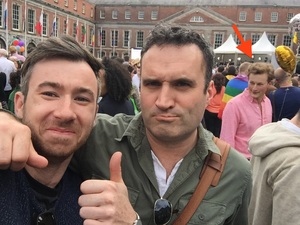
My mates (Gary Boylan, left, and Viv Chambers) sent me a picture from Dublin Castle on Saturday, where they were clearly celebrating in the company of a young, scarlet Enda Kenny… (Back right)…

https://www.youtube.com/watch?v=SjHRbQ3WWCE&feature=youtu.be
Gulp.
Starina writes:
as a lovely palate-cleanser after a week of hateful MFM [Mothers And Fathers Matter] ads – here’s the new prevideo trailer running on youtube this week; Magnum ice cream, featuring trans women and drag queens….
About time a bNOMNOMNOMNOM


James Gabriel Martin writes:
Here’s a really special man and photo I got on Saturday at Dublin Castle as the results rolled in. Eighty-year-old Charlie Mooney was there with his daughter Kate to celebrate the passing of the referendum.
STILL mmmf-ing.
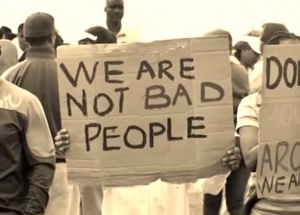


Charts from the HIQA report into child protection and welfare services provided to children living in direct provision accommodation
The Health Information and Quality Authority (HIQA) examined the child protection and welfare services provided to children and families in direct provision centres in four areas across Ireland.
The four areas – the Midlands, Sligo/Leitrim/West Cavan, Louth/Meath and Dublin North city – had approximately 650 children living in seven centres.
The HIQA inspection team did not meet with children and their families with the report stating: ‘Inspectors did not wish to raise false hopes or expectations with families in relation to accommodation arrangements or asylum applications.’
In relation to the Reception and Integration Agency – which is responsible for accommodating asylum seekers and coordinating services for asylum seekers – the inspectors met with the manager of the Child and Family Services Unit of the RIA to find out how the unit interacts with the Child and Family Agency in relation to child protection and welfare referrals.
HIQA also sent six questionnaires to the RIA and to managers of the direct provision centres involved. Just three completed questionnaires were returned.
From the report:
Data from the Child and Family Agency showed that there were 209 referrals of child protection and welfare concerns about 229 children living in direct provision accommodation in the 12 months between August 2013 and 2014. This represented approximately 14% of the population of children living in direct provision. This is a significantly higher referral rate than for the general child population of 1.6%.
Of the 209 referrals, 178 (85%) reached the relevant threshold criteria for an initial assessment. This is considerably higher than the average threshold of 50% of all referrals in 2013 that required initial assessment and, as with the higher referral rate for children in direct provision, requires further analysis by key stakeholders to determine reasons for the disparity.
Following initial assessments, the breakdown of the primary report type was 91 (51%) referrals relating to welfare concerns and 87 (49%) relating to child protection concerns which reflects the national breakdown of all referrals to the Child and Family Agency in 2013.
During fieldwork in four areas, inspectors found common themes arising from welfare concerns including physical or mental illness of parents impacting on their capacity to care for their children, children’s mental health issues, and gaps in the provision of practical support.
The child protection concerns included exposure of children to domestic violence, physical abuse due to excessive physical chastisement, protection concerns about older children left caring for younger children, and children being left alone unsupervised.
For a small number of children, action was not taken to protect them. Cases were closed prematurely and in one area, Louth/Meath, there were significant delays in completing assessments and sharing information, which placed children at risk and some children were not interviewed as part of the assessment process. In this area children did not receive the services they needed, initial assessments were not completed and some risks were not addressed.
Inspectors found that on occasion the Reception and Integration Agency moved families for safety reasons but gaps in communication between the providers and the Child and Family Agency at local level meant that this information was not always passed on and, as a result, some social work interventions were delayed or did not happen and potentially placed children at risk.
Of the 87 child protection referrals nationally in 2013 about children in direct provision accommodation, the Child and Family Agency sought and obtained care orders for 13 children, made 18 notifications to An Garda Síochána about abuse, identified 11 children as being at risk of ongoing harm and five children were placed on the child protection and notification system.
In Louth/Meath, there were significant delays in social work interventions. Of particular concern was that in 27 out of the 38 cases reviewed, children were not met with or seen by social workers to inform their decision making about the referral even though records indicated concerns about their safety and welfare. For example, in one case there were significant concerns about an allegation of physical abuse of two children and the case was closed without children being visited.
One referral about a child threatening suicide was waiting three years for a response from the team in Laois/Offaly.
Read the report in full here
HIQA concerns over children in direct provision referred to Tusla (RTE)
DryShiteDublin writes:
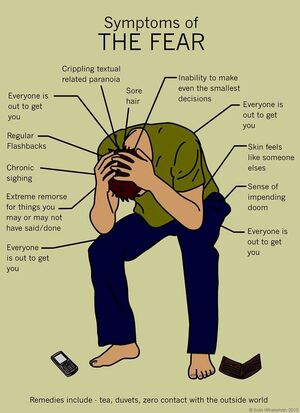
The Fear: How we accepted a self induced depressive mood swing into everyday life.
To wit:
Having ‘The Fear’ is something that I think has been rolled into the Irish weekend experience. It’s an accepted and joked about phenomenon.
I didn’t really know what this was referring to when it crept into the parlance. I dialed up the arbiter of actual everyday speech, Urban Dictionary, and found what it apparently meant. The Fear, and stop me if I’m wrong, seems to be a foreboding feeling of regret with regards to one’s drunken behaviour the night before. From my own experience and from talking to my acquaintances, cases of the fear can go one for hours or days.
It has been embraced into the weekend warriors programme of events. ‘The Fear’ enables the fear-ee (the sufferer of The Fear) to comfort ones self. A Saturday afternoon spent keeping an eye on your facebook feed should throw up statuses and pictures of people indulging themselves with pajamas, any manner of comfort food, Disney movies, and so on and so forth.
By publically glamorising ‘The Fear’ it becomes accepted into socitey and then leads the ‘fear-ees’ to feel like this is just a part of the weekend. In my experience, The Fear is a depressive mood swing brought on by aggressive consumption of alcohol.
I fear that accepting ‘The Fear’ as a cultural phenomenon is legitimising people bringing themselves into serious depressive states.
There is a real acceptance and openness to discussion of mental health in Ireland at the moment. Yet, at the same time we seem to embracing how drink effects our mood.
(Image: Eoin Whelehan)