Author Archives: Chompsky

Behold: lovely spiral galaxy NGC 289 – about 70 million light-years away and much larger than our own dear Milky Way. To wit:

Seen nearly face-on, its bright core and colourful central disk give way to remarkably faint, bluish spiral arms. The extensive arms sweep well over 100 thousand light-years from the galaxy’s centre. At the lower right in this sharp, telescopic galaxy portrait the main spiral arm seems to encounter a small, fuzzy elliptical companion galaxy interacting with enormous NGC 289. Of course spiky stars are in the foreground of the scene. They lie within the Milky Way toward the southern constellation Sculptor.

(Image: Mike Selby)

apod

Behold: a meteor, but an especially bright one (even brighter in reality than seen here), and therefore entitled to a more vivid descriptor. To wit:

The International Astronomical Union defines a fireball as a meteor brighter than apparent magnitude -4, which corresponds (roughly) to being brighter than any planet — as well as bright enough to cast a human-noticeable shadow. Pictured, an astrophotographer taking a long-duration sky image captured by accident the brightest meteor he had ever seen. Clearly a fireball, the disintegrating space-rock created a trail so bright it turned night into day for about two seconds earlier this month. The fireball has been artificially dimmed in the featured image to bring up foreground Lake Louise in Alberta, Canada. Although fireballs are rare, many people have been lucky enough to see them. If you see a fireball, you can report it. If more than one person recorded an image, the fireball might be traceable back to the Solar System body from which it was ejected.

(Image: Hao Qin)

apod

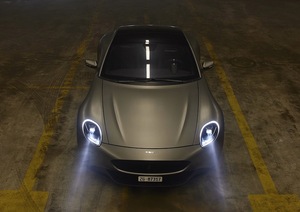
Behold: the Piech GT electric coupe – a first offering from a Swiss auto startup founded in 2017. All new, but with a sleek fastback shape redolent of 1960s European race cars.

Lightweight (at just 1.8 tonnes), charging to 80% in less than 5 minutes (provided you have access to Ccs2 standard fast-charging infrastructure) and with a 500km range, the GT is powered by three electric motors – two at the rear and one at the front axle – generating 603bhp and accelerating to 100km/h in less than three seconds. 

Delivery starts in 2024, price tba.

uncrate

Behold: the Zillers Motorcycles X NMoto Studio BMW R18 – a futuristic carbon fibre-bodied ‘power cruiser’ collaboration by customiser Zillers and bolt-on kit specialist NMoto. More proof of the R18’s status as the custom community’s Beemer of choice.  

When the 1,802cc boxer twin engine is doing its thing, custom air-ride suspension lifts the bike up off the road, dropping it down onto pegs while stationary for a kick-stand free resting stance.

Only 13 will be made worldwide and yours is available to preorder (in kit form or preassembled) from $44,900 (about €38,800)

hiconsumption

Behold: the 1975 Lamborghini Countach LP400 Periscopio – one of the most significant supercars ever built – and not just because its image adorned a billion adolescent bedroom walls (or that Rod Stewart had one).

50 years on, Lamborghini has released a new Aventador-based version of the car and remade the original 1971 Countach prototype but this vehicle is neither. This is the evolution of the LP500, fitted with a periscopic rear view mirror (hence the name), of which only 150 were produced.

Lovingly maintained with just 51,100km on the clock and its original numbers-matching 4.0L V12 engine, it was last sold in 2016 for €1,072,800.

Expect to pay more at auction at Le Castellet in France next month. Not that you care – the big wad on you.

hiconsumption

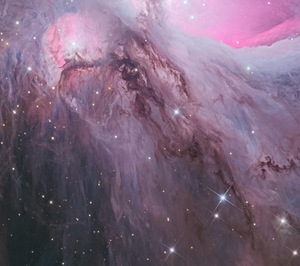
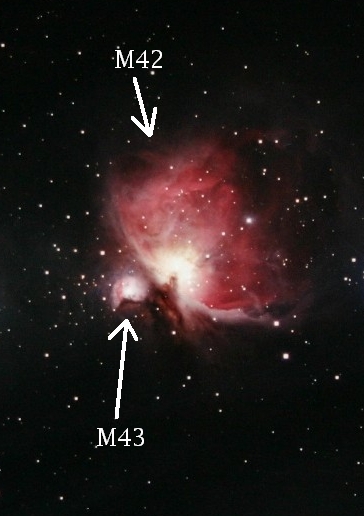
Behold: space jellyfish! dark streams of dust in the Orion Nebula. But what are they and where do they come from? Answer me, damn you! To wit:

This part of the Orion Molecular Cloud Complex, M43, is the often imaged but rarely mentioned neighbour of the more famous M42. M42, seen in part to the upper right, includes many bright stars from the Trapezium star cluster. M43 is itself a star forming region that displays intricately-laced streams of dark dust — although it is really composed mostly of glowing hydrogen gas. The entire Orion field is located about 1600 light years away. Opaque to visible light, the picturesque dark dust is created in the outer atmosphere of massive cool stars and expelled by strong outer winds of protons and electrons.

(Image: Jari Saukkonen)

apod

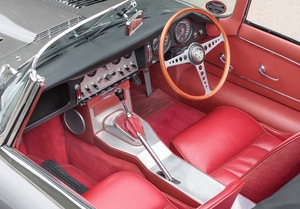
Behold: the 1961 Jaguar E-Type roadster – beautifully restored with a red leather interior, a full complement of Smiths gauges and a flawlessly resprayed exterior with minimal panel gaps.

Under the hood – the legendary 3.8-litre inline-six mated to a partially synchronised five-speed manual transmission.

In short, a considerably better vehicle than the one which rolled off the assembly line at Coventry 60 years ago. And that’s saying something.

Up for auction at Sotheby’s in London next month. Opening bids tbc.

uncrate

Behold: NGC 4676 – two mighty galaxies pulling each other apart having passed through each other, leaving long tails behind. That’s why they’re called ‘The Mice’. To wit:

The long tails are created by the relative difference between gravitational pulls on the near and far parts of each galaxy. Because the distances are so large, the cosmic interaction takes place in slow motion — over hundreds of millions of years. NGC 4676 lies about 300 million light-years away toward the constellation of Bernice’s Hair (Coma Berenices) and are likely members of the Coma Cluster of Galaxies. The featured picture was taken with the Hubble Space Telescope‘s Advanced Camera for Surveys in 2002. These galactic mice will probably collide again and again over the next billion years so that, instead of continuing to pull each other apart, they coalesce to form a single galaxy.

(Image: NASA, ESA, Hubble; Processing & Copyright: William Ostling (The Astronomy Enthusiast)

apod

Behold: the Bandit9 Supermarine – a first production model from a former Saigon-based custom shop.

Built from the ground up, the lightweight  7075 aluminium alloy frame has a 900cc or 1200cc Triumph Twin engine (capable of 210km/h) and a choice of suspension setups and ABS brakes. The wind tunnel-sculpted bodywork comes in race spec ABS plastic, high-strength resin or carbon fibre.

Each bike is made to order, so price on application.

uncrate