


Author Archives: Chompsky

Jupiter, right? But what is it with those colourful swirling bands? To wit:

Jupiter‘s top atmospheric layer is divided into light zones and dark belts that go all the way around the giant planet. It is high horizontal winds — in excess of 300 kilometers per hour — that cause the zones to spread out planet-wide. What causes these strong winds remains a topic of research. Replenished by upwelling gas, zonal bands are thought to include relatively opaque clouds of ammonia and water that block light from lower and darker atmospheric levels. One light-coloured zone is shown in great detail in the featured vista taken by the robotic Juno spacecraft in 2017. Jupiter’s atmosphere is mostly clear and colourless hydrogen and helium, gases that are not thought to contribute to the gold and brown colours. What compounds create these colours is another active topic of research — but is hypothesised to involve small amounts of sunlight-altered sulphur and carbon. Many discoveries have been made from Juno’s data, including that water composes an unexpectedly high 0.25 percent of upper-level cloud molecules near Jupiter’s equator, a finding important not only for understanding Jovian currents but for the history of water in the entire Solar System.

Now for yiz..

(Image: NASA/JPL-Caltech/SwRI/MSSS; Processing & License: Kevin M. Gill)

apod

Behold: the T. Fotiadis Ultra2 – a 91 metre concept superyacht with two onboard swimming pools,  saloon,  jacuzzi, IMAX screening room, plenty of water-toy storage, and a hybrid powertrain. But that’s not all.

The Bond villain security conscious billionaire that eventually commissions this mega-barge will also have a safe room, a diplomatic-grade secure-meeting room, and a crew trained in military counter-intelligence protocols by UK-based risk management company Romeo Foxtrot.

uncrate

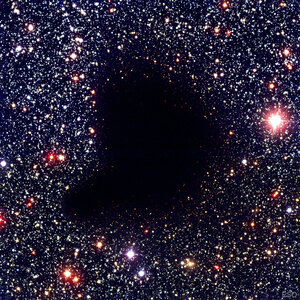
Waddaya mean you don’t see it? It’s right there – that high concentration of dust and molecular gas absorbing practically all the visible light from the background stars. To wit:

The eerily dark surroundings help make the interiors of molecular clouds some of the coldest and most isolated places in the universe. One of the most notable of these dark absorption nebulae is a cloud toward the constellation Ophiuchus known as Barnard 68, pictured here. That no stars are visible in the centre indicates that Barnard 68 is relatively nearby, with measurements placing it about 500 light-years away and half a light-year across. It is not known exactly how molecular clouds like Barnard 68 form, but it is known that these clouds are themselves likely places for new stars to form. In fact, Barnard 68 itself has been found likely to collapse and form a new star system. It is possible to look right through the cloud in infrared light.

(Image: FORS Team, 8.2-meter VLT Antu, ESO)

Obligatory bewk plug: The Broadsheet Book Of Unspecified Things That Look Like Ireland (Edited by Aidan Coughlan, New Island)

apod