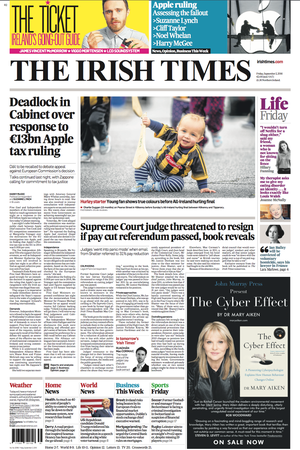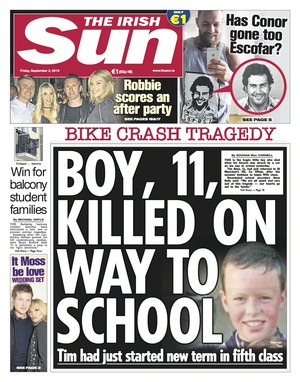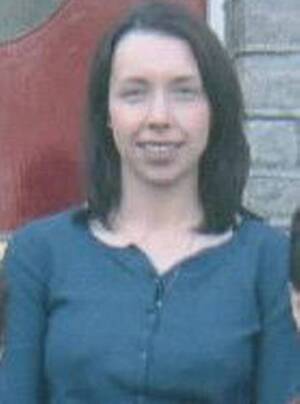

From top; Clodagh Hawe; Gary Gannon
A man can kill his partner and we care more about his ‘motives’ than her life.
Gary Gannon writes:
I was curating the @ireland account on Monday, when the story of the ‘tragic deaths’ in Cavan broke.
We heard in hushed tones how the police were ‘not looking for anyone else’ and how ‘the answers lay within the family home’, how five people had lost their lives unnecessarily like there had been some sort of unprecedented carbon monoxide incident.
In the aftermath of these ‘tragic deaths’, I learned that a man can literally get away with murder.
He can kill his partner and his children and we will still eulogise him. We will care more about his ‘motives’ than her life. We will even go so far as attribute some sort of nobility to his well-intentioned but unfortunately murderous actions.
You know what the worst thing is? Not just that the murder of a woman and her children becomes the footnote in a story about a man’s mental health, but that the woman is totally disappeared in all media discourse.
The Irish Times screamed ‘Wonderful children who will be greatly missed’. The Independent asked poignantly ‘How could he kill those boys?’
What about their mother?
Her name was Clodagh. She was a teacher. She had a life, thoughts, opinions. She mattered.
On Tuesday morning, I tweeted the Women’s Aid statistic that never fails to shock; one in two women murdered in Ireland will die at the hands of a male partner.
Men murdering women is unfortunately not unusual; an average of one woman is murdered every month and in half of resolved cases, it was by an intimate partner, someone she is supposed to be able to trust the most. In the majority of cases, this occurs in her own home.
By Tuesday evening, I was engaged in full blown @ireland Twitter rant about the media’s failure to name the murder of a woman and children as murder.
The support received was tremendous, from hundreds of people who were also sitting at home, wondering why Clodagh Hawe’s photograph was only just released when her husband’s face had been smiling at us all day.
Wondering why we knew about his job, his hobbies and his normal, everyday life, than anything about Clodagh. Wondering why we were so intent on minimising the culpability of the man who murdered Clodagh, and her children.
There was also criticism. Why was I speculating? Didn’t I know this wasn’t the time? Why couldn’t I wait until I was sure of the facts?
To these people, I ask – is there any other crime in which we hold the perpetrator’s reasons to be more important than his actions? It is not speculation that he murdered his wife but let’s be clear, it is the absolute height of a culture of violent misogyny that we are not allowed to say this.
In Ireland, our silence kills us. It enables us to lock women behind Magdalene walls, to force them to different countries for essential healthcare, to minimise the violent tendencies of abusive men and to allow coercive, controlling perpetrators of domestic abuse up and down the country to sleep easy.
In refusing to name the murder of Clodagh and her three children as the violent actions of an abusive man, we enable ourselves to reach the logical conclusion that this man was A Good Man, one who simply snapped.
We act like their murders were inevitable, that even Clodagh couldn’t have seen it coming. We let him, and all men like him, off the hook.
The reality is, many women living in abusive relationships do ultimately fear that they will be killed. Many can’t leave, because the coercive control exerted by their partners is so absolute, or because they are so isolated by silence, and a lack of support structures, that they see no way out. Heartbreakingly, for women who do leave, it is the most dangerous time for them.
The lies about ‘The Good Man Who Snapped’ allow us to continue to underfund women’s shelters and front line violence against women services.
We enable the horrendously stupid argument about USC cuts to dominate the airwaves in the lead up to the 2017 Budget. How can we afford tax cuts when we apparently cannot properly fund support services to enable women to leave abusive relationships? (I’ll leave the argument about political choices for another day.)
We can make Ireland the safest country in the world for women and their children. We can do this by facing the fact that one in five women experience domestic violence, and that for many of these women, this violence ends in their death and in cases like Clodagh’s, the deaths of her children.
In response to the murders of Clodagh, Liam, Niall and Ryan, we can and must pledge to properly resource the full and immediate ratification and implementation of the Istanbul Convention, as Women’s Aid, Safe Ireland and the National Women’s Council of Ireland have been screaming for, for years.
The Istanbul Convention leaves no room for doubt ; it is the obligation of the state to fully address it in all its forms and to take measures to prevent violence against women, protect its victims and prosecute the perpetrators.
There can be no real equality between women and men if women experience gender-based violence on a large-scale and state agencies and institutions turn a blind eye.
Gary Gannon is a Social Democrats Councillor on Dublin City Counicil for Dublin’s North Inner City. His column appears here every Friday before lunch. Follow Gary on Twitter: @1garygannon