Category Archives: Misc

9fd4826954698fa263303a8950255beb__20160314060941

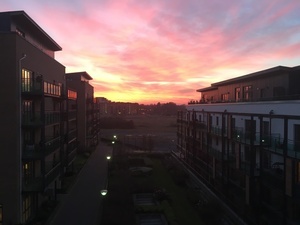
This evening

Ashtown [Dublin15] train station bridge (18:07).

Thanks Cathal

CdhwcEzW0AESFrV

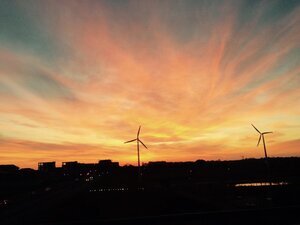
‘sup?

Royal Canal, Dublin 7 (18.05)

Thanks Simon Geraghty

ashford

Ashtown Dublin 15 (18:44)

Thanks Cathal

merrionsq

Paul Q writes:

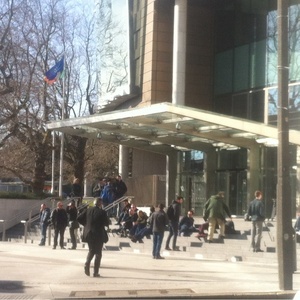
Merrion Square [Dublin 2] from the top floor of the new NewsWhip HQ. Nice day to move in….


Cdh7b5AXIAIjeIw


Sunset in Clongriffin, Dublin 13 (18.55)

Thanks Deborah Behan

Cdg4LM4WwAAtGTq

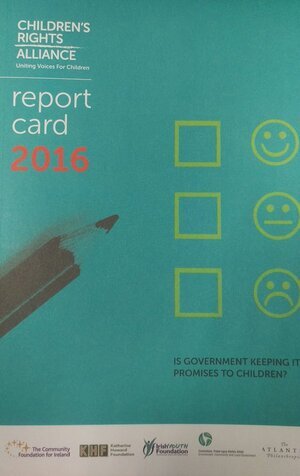
The Children’s Rights Alliance published its report card for 2016 earlier today.

It’s an assessment of how the Government has treated children and young people in Ireland.

From the report…

On school patronage and divestment:

‘Patronage and Pluralism in Primary Education’ is awarded a ‘D’ in Report Card 2016, a drop from the ‘C+’ it received last year. While acknowledging that a small number of new multi-denominational schools were opened in 2015 and a consultation on the Education in Religions and Beliefs (ERB) and Ethics was commenced, the divestment process has stalled with no clear vision or mechanism as to how it is to be progressed.

The Equal Status Acts 2000-2012, which prohibit discrimination including on religious grounds, provide an exemption that allows schools of a particular religious ethos to give preference to students of that religious denomination, or refuse admission to students of other or no religion in order to preserve the school’s ethos.

The fact that the law permits religious discrimination in school admissions has been heavily criticised by the UN Committee on the Rights of the Child,189 the UN Committee on Economic, Social and Cultural Rights, the Irish Human Rights and Equality Commission191 and the Ombudsman for Children. The publication of the Education (Admission to Schools) Bill 2015 in April 2015 was a missed opportunity to remedy this issue.

On child homelessness:

Child and Youth Homelessness’ receives an ‘F’ grade in Report Card 2016, a fall from last year’s ‘D+’ grade. Homelessness among families with children has reached crisis point with numbers increasing month on month.

The number of families experiencing homelessness has increased dramatically. In October 2015, there were 774 families, with 1,638 children, living in emergency accommodation. The number of children becoming homeless rose by 90 per cent during 2015 and children now account for almost one-third of the homeless population. The majority of these homeless families were in Dublin.

The rise in homelessness is set against the backdrop of a very large number of households on the social housing waiting list – 89,872 households in 2013, with 47 per cent waiting seven years or more.

In October 2015, the Government approved an immediate initiation of a programme for the early delivery of 500 units of modular housing. The first 22 homes were expected to be completed in Ballymun by 21 December 2015 with a further 128 units to be delivered by February 2016 on various sites in the Dublin City Council. None of the modular housing units have yet been delivered.

On Traveller and Roma children:

Traveller and Roma Children’ is awarded an ‘E-’ grade in Report Card 2016, a decrease from last year’s ‘E+’ grade. The lower grade reflects the Government’s persistent failure to implement their commitment to recognise the ethnic minority status of Travellers and the missed opportunity presented by the Carrickmines fire tragedy to uphold the rights of Traveller children. Traveller and Roma children continued to face educational disadvantage in 2015.

The coordination of delivery of services for Travellers remains very weak. In many cases whilst policies and strategies have been put in place, there is limited implementation, monitoring, evaluation or accountability. For example, the National Traveller Health Advisory Committee (NTHAC) entrusted with developing a strategy to respond to the All-Ireland Traveller Health Study in 2010 has not met since 2012.

Between 2008 and 2013, funding for interagency activities relating to Travellers was cut completely and has not been reinstated.

There are 14,913 Traveller children living in Ireland. The Traveller community has a very young population with 42 per cent of Travellers under the age of 15 years. At the end of the Programme for Government, outcomes for Traveller and Roma children continue to be among the worst for children in Ireland in areas such as equality and non-discrimination, access to social protection, health, education, and accommodation.

The Final Report of the Child Care Law Reporting Project, published in November 2015, noted that Traveller children are over-represented in child protection cases coming before the courts compared to the general population.

On 9 October 2015, a fire at a temporary Traveller halting site, in Carrickmines, Dublin, killed ten people including five children. Local residents objected to the use of a nearby green field site to re-accommodate the survivors on a temporary basis.

Legal action by residents threatened to delay the relocation decision so the Local Authority accommodated the survivors in an alternative site – a car park. The Carrickmines fire tragedy highlighted the deeply rooted racism in Irish society towards Travellers and focused national attention on the deficits of Traveller accommodation.

On migrant children:

Migrant Children’ receives a ‘D-’ in Report Card 2016. This grade represents an increase on last year’s ‘E+’ grade. The increased grade reflects the fact that the Working Group on the Protection Process completed its task and published its report, and that the first government consultation of its kind in the EU took place with children in the Direct Provision system.

Further resources are required to ensure that the Working Group recommendations that relate to children are implemented. However, the grade remains low because in spite of the report, little changed on the ground for children in 2015 and the promised Integration Strategy has not yet been published.

Census 2011 shows that one in seven children under the age of 14 is from an ethnic minority and/or migrant background. There were more than 1,200 asylum seeking children living in the Direct Provision system in Ireland at the end of December 2015. International developments have seen an increase over the last twelve months in the number of migrant and asylum-seeking families and unaccompanied children in Europe.

There is still no legal framework on the reception conditions of asylum seekers in Ireland, that is, Direct Provision. Ireland has decided to opt out of the EU Reception Conditions (Recast) Directive, which governs reception conditions for applicants for international protection.

This is disappointing as Article 23 of the Directive requires signatories to ensure that the best interests of the child are a primary consideration in decision making and States must ‘ensure a standard of living adequate for the minor’s physical, mental, spiritual, moral and social development.

The average length of stay in Direct Provision is three years and four months but almost 15 per cent of residents have been living in the system for more than seven years. This means that there are children who have spent their whole lives living in a centre, which often involves living in communal or shared accommodation not appropriate for family life.

One of the main recommendations of the Working Group relates to reducing the length of time being spent by people in the protection process and leave to remain stages.

In May 2015, the Health Inspection and Quality Authority (HIQA) issued a report that found that in one year child welfare and protection referrals had been made to Tusla – the Child and Family Agency in relation to approximately 14 per cent of the population of children living in Direct Provision. This represents a significantly higher referral rate than for the general child population of 1.6 per cent.”

Read the report in full here

Pic: Peter McVerry Trust

90412278

‘sup?

Joan Freeman, founder of [Suicide and self harm crisis centre] Pieta House at the launch of Darkness into Light 2016, supported by Electric Ireland, on the Sam Beckett bridge, Dublin.

Darkness Into Light running events will take place in over 100 venues in Ireland and across the world on Saturday May 7 at 4.15am [register at link below].

Darkness Into Light

Sasko Lazarov/Rollingnews

90377240

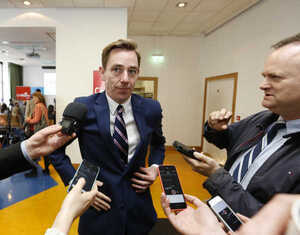
Ryan Tubridy, urging others to go ‘offline’

Ryan Tubridy.

He’s had it up to ‘here’ with the World Wide Web.

A timeline.

August 2011 Closes his twitter account, with 60,000 followers, saying he ‘was spending too much time on it’.

September 2012,Tells listeners to his 2FM show that he had contacted Twitter US headquarters to get four parody accounts shut down.

He states:

’Somebody brought it to my attention that there was a number of them being me. It was only then when it started getting rude and kind of personal that somebody said to me, “You better get those taken down” and I did. I got four of them taken down. I sent off my driver’s licence details and got them taken down. I love humour and I love fun and I love boldness but I won’t tolerate nastiness. That’s where the line gets drawn.’

‘What’s happened more recently with social networking, and particularly Twitter, is that for a long time it was fun and it was like a really nice pleasant party and then the bad guys came along and wrecked it for everyone, hiding behind stupid names,’ he said. ‘There is a whiff of the bedsit off most trolls. It is disappointing. We can’t be beyond criticism but put your name to it. Don’t be a coward.’

”For a long time it was fun. It was like a pleasant party and then the bad guys came along and they wrecked it for everyone hiding behind stupid names” and that people could be “completely moronic” when it came to tweets.”

November 2012 Backing an Irish Sun campaign against cyber bullying, he rails:

“There’s nowhere safe for children now….I worry about it – the whole anti-social network concerns me because there is no policing it. I support any initiative that is to do with trying to crush the virus of bullying. I would be very, very keen to try and highlight what’s happening on the internet. The internet is a lawless place – it’s a dangerous place – there’s no police. I think it’s the nearest thing to the Wild West that we can see in this day and age….”

“the party [Twitter) was over. I left Twitter because it was a time constraint and it was not a great place. It was fun but it was like – I had fun with it for a year and then decided ‘that’s grand’ – it’s a strange place.”

January 2015: On his RTÉ Radio One radio show discussing online trolls who abused the family of a toddler who died from a viral infection, He avers:

“[The words] “online” and “abuse” are starting to go hand-in-hand now and I don’t know what to say to that family. They’ve enough to be dealing with the loss of that little boy than having to go and worry about what’s online. I would urge nearly anyone who ends up in the public eye, for whatever reason, be it for good reasons but particularly for sad or bad reasons, or any reason, not to go online. Don’t read stuff. You don’t have to. It’s just heckling. That’s all it is. It’s heckling. And I wish that this family didn’t even find this stuff. You don’t have to go there if you don’t want to. You can just mourn in your own way without turning on a computer or finding stuff because people will always react and say something horrible. Always. Regardless of how happy or sad your story is.’ He added: ‘I hope that family have the time and the space to mourn the loss of that little boy without having to listen to the white noise of ignorance that can often show itself online.”

December 2015: Interviews the father of a six year old girl who had received criticism online following her appearance on the Late Late Toy show. He fumes:

“That is the way of online, I think … you know, there is this element that will almost be there and you know it . seems to be un-policeable… I’m an adult apparently and I don’t read online because it’s just, it’s too mean spirited and I don’t read it, even if it’s kind I don’t read it…I often say and sometimes it feels like a broken record sometimes it feels like the Wild West out there, there are no laws and there are no rules and there’s no sheriff….So you can have the good guys walking round, like you guys, you know talking about mental health but then you’ve got the he others who are, you know, psychologically challenged, I’d argue and writing this stuff down the bottom of a bottle of wine on a Friday night… I’ll tell you, I walked out of this building on Saturday with bunch of kids in here to sing for, I think it was, Sean O’Rourke, and they chased me down as far as my car singing word for word the My Little Pony song, it’s become a thing… The thing about being offline, you have the democratic choice to be offline and it’s very liberating, so I’d recommend it.”

March 13, 2016: The Sunday Independent records comments made in a recent interview with former RTÉ presenter Diana Bunici for her book, ‘The Pursuit of Awesomeness’, He rages:

“[t]hen online came along and honestly, if you want to depress yourself as a broadcaster, read online. If I could switch off the Internet sometimes I would. Especially for kids and bullying and all the things that are so easy to do for cowards…You used to go to school from 9am until 3pm and then you could switch it off. Now it follows you and the bullies can follow you now, wherever you are, if they want to.”

“I’d rather read a good book than what some guy in a bedsit watching Star Trek thinks about me. I made a decision to go offline a couple of years ago and it’s the best thing that’s ever happened to me.

Ah here.

To be continued (probably).

Rollingnews

90402848
Julien-Mercille-hi-res-233x300

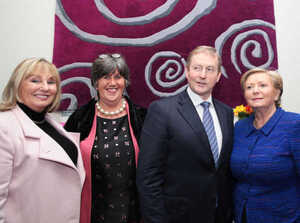
From top: Chairperson of Dublin Rape Crisis Centre (DRCC) Ann Marie Gill, CEO of the Dublin Rape Crisis Centre, Ellen O’Malley-Dunlop, Taoiseach, Enda Kenny and Minister for Justice Frances Fitzgerald at a DRCC event last year; Dr Julien Mercille

Is Enda Kenny a feminist?

Dr Julien Mercille writes:

Enda Kenny’s speechwriter wrote a piece in yesterday’s Sunday Independent declaring her boss a “feminist intellectual” and that he “went the extra mile to help women and do them justice”.

The article is so poorly written that it offers one more clue as to why Fine Gael did so badly in the election.

The speechwriter, Miriam O’Callaghan (not RTÉ’s Miriam O’Callaghan)  “admire[s] his compassion, his insight, his ordinariness, his warmth, his feminism and huge intellect”.

Is Enda Kenny a feminist? And what is a feminist anyway? I’ll define it for this piece simply as someone who is in favour of improving conditions for women as a matter of principle.

Therefore, a feminist can be a man or a woman (that will be obvious to feminists, but it’s still misunderstood in public debate). Conversely, anti-feminists can also be either men or women.

So is Enda Kenny as feminist? Well, no he’s not. It’s easy to see that he hasn’t done much at all to improve conditions for women in this country. Let’s look at a few examples (there are many more, of course).

First, abortion rights are still a scandal Abortion is criminalised even in cases of rape, incest and fatal foetal impairment, as Amnesty International explains . T

he 2013 Protection of Life During Pregnancy Act leaves this restrictive legal framework largely intact. As a result, Ireland is still an outlier—an island of conservatism within a European sea of liberalism.

Second, a number of austerity cuts have affected women negatively. Cuts to the lone parents’ payments implemented by Joan Burton’s department hit women disproportionately.

Another cut that I think represents very well the way in which this government has mistreated women is the overall 21% cut to the Rape Crisis Centres between 2008 and 2014. That’s called a direct attack on women.

In Ireland, 87% of victims of rape or sexual violence are women or girls. If you’re not a feminist yet, that statistic alone should make you one. And what about the perpetrators of those crimes? 98% are men.

But few care: try to find a single story in the media documenting in detail the cuts to the Rape Crisis Centres. The only ones I’m aware of are my own, published on Broadsheet and in the Irish Times. To this day, I have not received a single request for a media appearance or interview to talk about those things.

Third, there are fundamental issues, such as the fact that in Ireland, the gender “pay gap” is 14%. This means that on average, for one hour of work, women in Ireland are paid 14% less than men (the data is based on surveys of employees at companies with 10 or more employees—so it doesn’t include women who don’t work).

Those who think that it’s not too bad should consider that this means that women work on average seven weeks per year “for free” compared to men. And according to the available data, the gender pay gap has been widening over the last few years of austerity.

Moreover, if we look at the “earnings gap” faced by women, it is 35% (this compares the annual earnings of men and women, and so considers the fact that women on average work fewer hours and have a lower employment rate, for example because they interrupt their career to take care of children).

There are many causes for this pay gap. According to the European Commission, they include: “Management and supervisory positions are overwhelmingly held by men”; “men are more often promoted than women, and paid better as a consequence”; “less than 4% of CEOs are women”; “women spend more time than men on important unpaid tasks, such as household work and caring for children or relatives”; “pay discrimination, while illegal, continues to contribute to the gender pay gap”.

To my knowledge, the gender pay gap was not exactly a big issue on the government’s agenda.

A real feminist government would focus on issues like those just mentioned, and on a range of others.

Julien Mercille is a lecturer at University College Dublin. Follow Julien  on Twitter: @JulienMercille

Rollingnews

plunkett
01515PlunkettScanned1916(1)
underpainting
01535EamonCeanntScanned
01552CountessMarkievitz1916
JamesConnolly1916
01559ThosClarke1916

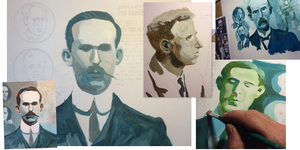
Vibrant 1916 prints by illustrator Jon Berkeley

Jon writes:

The 1916 Leaders Project was commissioned for the Irish Independent by designer Joe Coyle in late summer 2015. The ten paintings featured as covers for a series of special supplements, edited by Ger Siggins for the Independent, leading up to the centenary of the 1916 Easter Rising.
Each painting depicts a key player, surrounded by other people and events of significance in the Easter rebellion, its preparation and its momentous consequences.
The paintings are a uniform size at 360 x 305mm, and will form part of the Irish Independent’s major exhibition in Talbot Street, Dublin, to commemorate the centenary of the rising. And available to buy as prints (at link below).

From top: Joseph Plunkett; Eamonn Ceannt; Countess Markievicz; James Connolly and Thomas Clarke

1916 Portraits

Thanks Annie West