



Category Archives: Photography
Span
at




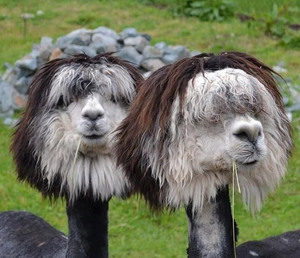


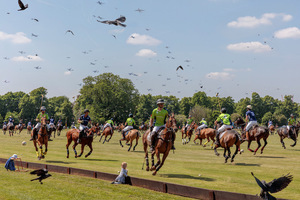



New sporty composites by photographer Pelle Cass using multiple fixed position images to create still time-lapses of hours of activity.
Previously: Crowded Field


The dancing lights of the Aurora Australis captured in time-lapse by Martin Heck, who had to mount his cameras inside special housings so the wouldn’t seize up when nighttime air temperature dropped to -70°C.
Reflective
at


Aerial views of the 1,600 hectare BrightSource Ivanpah solar plant in California’s Mojave desert by German photographer Bernhard Lang.

Behold: NGC 6543 – the brightest and most detailed known planetary nebula, from our perspective at least. The Cat’s Eye Nebula is composed of gas expelled in the death throes of a Sun-like star. To wit:
This nebula‘s dying central star may have produced the outer circular concentric shells by shrugging off outer layers in a series of regular convulsions. The formation of the beautiful, complex-yet-symmetric inner structures, however, is not well understood. The featured image is a composite of a digitally sharpened Hubble Space Telescope image with X-ray light captured by the orbiting Chandra Observatory. The exquisite floating space statue spans over half a light-year across. Of course, gazing into this Cat’s Eye, humanity may well be seeing the fate of our sun, destined to enter its own planetary nebula phase of evolution … in about 5 billion years.
(Image: NASA, ESA, Hubble Legacy Archive; Chandra X-ray Obs.; Rudy Pohl)
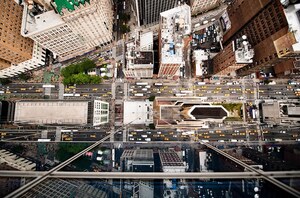


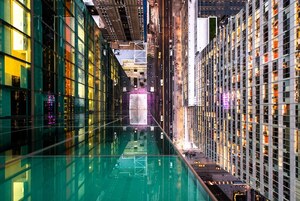
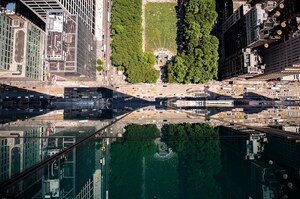


The Hidden City series of photographer Navid Baraty – vertiginous views of New York streets mirrored in the walls of glass buildings to give the impression of ‘a sort of hidden dimension or parallel universe’.
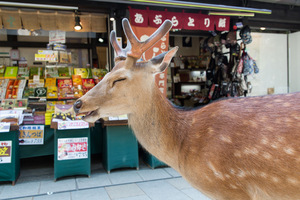


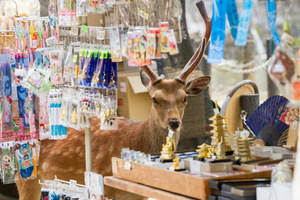

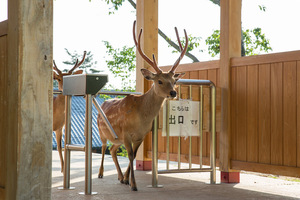
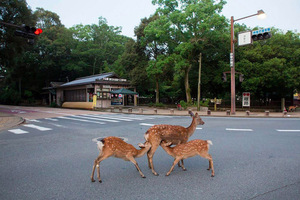
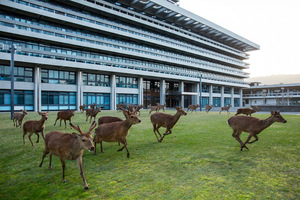
The free-roaming Sika deer of Nara – where, unlike other Japanese cities, they’re considered sacred and protected by law – documented by Kanagawa based photographer Yoko Ishii.
It could, though.
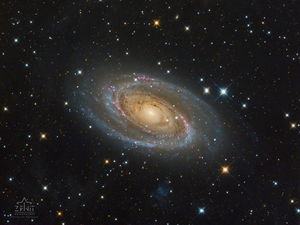
Behold the elegant swirl of Messier 81, aka NGC 3031 or Bode’s galaxy. To wit:
…this grand spiral can be found toward the northern constellation of Ursa Major, the Great Bear. The detailed telescopic view reveals M81’s bright yellow nucleus, blue spiral arms, pink starforming regions, and sweeping cosmic dust lanes. Some dust lanes actually run through the galactic disk (left of center), contrary to other prominent spiral features though. The errant dust lanes may be the lingering result of a close encounter between M81 and its smaller companion galaxy, M82. Scrutiny of variable stars in M81 has yielded one of the best determined distances for an external galaxy — 11.8 million light-years.
(Image: Paolo De Salvatore, Zenit Observatory)