
Category Archives: Photography

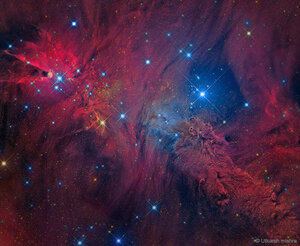
Behold: curious formations and bizarre textures visible in the vicinity of the Cone Nebula, 2,700 light years from Earth.

Well, this is how it would have been in 681BC, when – who can forget – an assassin brought the 24 year reign of Assyrian king Sennacherib to an untimely end (that’s what you get for sacking Babylon).

Anyhoo – what’s this? Some kind of interstellar dust cloud? To wit:

The unusual shapes originate from fine interstellar dust reacting in complex ways with the energetic light and hot gas being expelled by the young stars. The brightest star on the right of the featured picture is S Mon, while the region just below it has been nicknamed the Fox Fur Nebula for its color and structure. The blue glow directly surrounding S Mon results from reflection, where neighboring dust reflects light from the bright star. The red glow that encompasses the whole region results not only from dust reflection but also emission from hydrogen gas ionized by starlight. S Mon is part of a young open cluster of stars named NGC 2264, located about 2500 light years away toward the constellation of the Unicorn (Monoceros). Even though it points right at S Mon, details of the origin of the mysterious geometric Cone Nebula, visible on the far left, remain a mystery.

(Image: Chilescope; Processing & Copyright: Utkarsh Mishra)
apod

Behold: Fanjingshan, highest peak of the Wuling Mountains in Guizhou Province, southwest China: conservation area, biosphere reserve and, since last year, UNESCO World heritage site.

The mountain is home to several Buddhist temples, including two at the top of the 100m tall New Golden Summit, or Red Clouds Golden Summit. The Temple of the Buddha and Maitreya Temple are separated by a narrow gorge spanned by a short bridge.

(Photos: Costfoto / Barcroft Images / Barcroft Media via Getty Images)

theatlantic

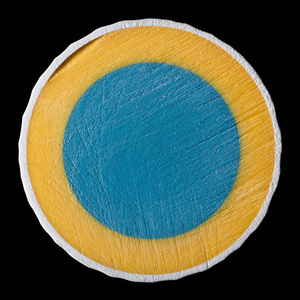
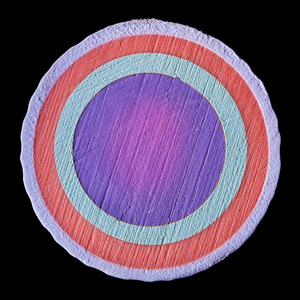
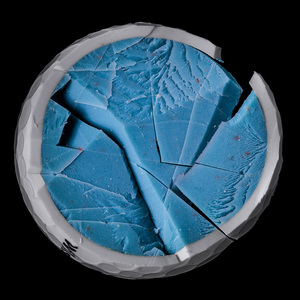
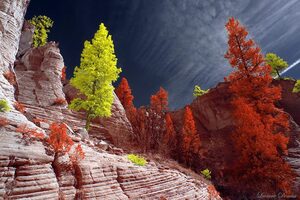
(From top: ’Lonely Tree’ by David Hall; ‘Red Velvet’ by Helen Bradshaw; ‘Invisible Paris’ by Pierre-Louis Ferrer; ‘Utah’ by Luciano Demasi; ‘Tectonic’ by Matthew Stuart Piper; ’Hong Kong: The Golden City’ by Tran Minh Dung; ‘Zabriskie’ by Beamie Young and ’The Watchman’ by Blake Rudis.)

Winners of an inaugural Infrared Photography contest organised by online store and e-learning site Kolari Vision which invited submissions thus:

What changes when we switch to infrared, and which things remain constant? What beauty lies in the light that our eyes can’t see?

See all the winners here.

mymodernmet

Well now, if it isn’t the International Space Station. To wit.

Using precise timing, the Earth-orbiting space platform was photographed in front of a partially lit gibbous Moon last month. The featured image was taken from Palo AltoCaliforniaUSA with an exposure time of only 1/667 of a second. In contrast, the duration of the transit of the ISS across the entire Moon was about half a second. A close inspection of this unusually crisp ISS silhouette will reveal the outlines of numerous solar panels and trusses. The bright crater Tycho is visible on the lower left, as well as comparatively rough, light colored terrain known as highlands, and relatively smooth, dark colored areas known as maria.

(Image: Eric Holland)

apod

Behold: IC 405, aka the Flaming Star Nebula – an apparently fiery region surrounding star AE Aurigae. But what looks like fire is not fire. To wit:

Fire, typically defined as the rapid molecular acquisition of oxygen, happens only when sufficient oxygen is present and is not important in such high-energy, low-oxygen environments such as stars. The material that appears assmoke is mostly interstellar hydrogen, but does contain smoke-like dark filaments of carbon-rich dust grains. The bright star AE Aurigae, visible just to the lower right of the image center, is so hot it glows blue, emitting light so energetic it knocks electrons away from surrounding gas. When a proton recaptures an electron, light is emitted, as seen in the surrounding emission nebulaFeatured here, the Flaming Star nebula lies about 1,500 light yearsdistant, spans about 5 light years, and is visible with a small telescope toward the constellation of the Charioteer (Auriga).

(Image: Amir Abolfath (TWAN))

apod

Behold: NGC 1333 (in blue) – a reflection nebula at the edge of a large, star-forming molecular cloud in the constellation Perseus, 1000 light years from Earth. To wit:

This striking close-up spans about two full moons on the sky or just over 15 light-years at the estimated distance of NGC 1333. It shows details of the dusty region along with telltale hints of contrasty red emission from Herbig-Haro objects, jets and shocked glowing gas emanating from recently formed stars. In fact, NGC 1333 contains hundreds of stars less than a million years old, most stillhidden from optical telescopes by the pervasive stardust. The chaotic environment may be similar to one in which our own Sun formed over 4.5 billion years ago.

(Image Credit & CopyrightSteve MilneBarry Wilson – Processing: Steve Milne)

apod

Behold: UGC 6945, aka Arp194 – a trio of merging galaxies 570 million light years from Earth. To wit:

Usually when galaxies crash, star formation is confined to galaxy disks or tidal tails. In Arp 194, though, there are bright knots of young stars right in a connecting bridge. Analyses of images and data including the featured image of Arp 194 from Hubble, as well as computer simulations of the interaction, indicate that the bottom galaxy passed right through the top galaxy within the past 100 million years. The result has left a stream of gas that is now falling toward the bottom galaxy. Astronomers hypothesize that stars form in this bridge because of the recent fading of turbulence after the rapid collision. In about a billion years, the galaxies — including a smaller galaxy superposed on the upper galaxy will all merge into one larger galaxy.

(Image Credit: NASAESAHubble; Processing & LicenseJudy Schmidt)

apod

The Northern Lights shine above the frozen surface of Lake Superior on the west coast of the Keweenaw Peninusla in a 10 shot panorama captured over the space of three hours at the start of this month. To wit:

 At left, a faint band of Zodiacal light rises sharply from the horizon crossing Mars and the Pleides star cluster. Both the distant galaxy M31 and our own Milky Way shine above the greenish auroral arc. Navigational north pole star Polaris is centered above and accompanied on the right by the northern night’s most recognizable asterism, the Big Dipper. Terrestrial lights include markers for two breakwaters on the the horizon near the center of the scene.

Full resolution image here.

(Image: Lorenzo Ranieri Tenti)

apod