


Kildare Designer Fionnuala Bourke and her range of masks
Aileen Gaskin writes:
Kildare native, Fionnuala Bourke, better known for designing costumes for international dancers, pole dancers and WWE stars, has turned her hand to designing face masks alongside her father, a fire engineer, and a team of sewers.
Three weeks ago the father and daughter designed a unique style of mask, with adjustable straps, after Fionnuala decided that she could help people in her area and turn her design studio into a mask making factory.
In the last three weeks, over 2,000 euro has been donated to Fionnuala’s GoFundMe page.
To date, they have made roughly 1,000 masks in four different washable styles. All of the non-medical masks are currently being donated all over the country by a team of volunteers.
Fionnuala has filmed a sewing tutorial to anyone who wants to sew their own masks. See @fibourkedesign.

Gordon’s asleep!
Dublin-based comedian, writer and impressionist Liam Hourican with another ‘character in isolation’.
Liam writes:
[Rage-ful chef] Gordon Ramsay has a weird lockdown dream…
Previously: Liam Hourican on Broadsheet.

Bank of Ireland CEO Francesca McDonagh and AIB CEO Colin Hunt leaving the Department of Finance after a meeting with Minister of Finance Pahal Donohoe in March
The chief executive of Bank of Ireland has said she does not envisage repayment breaks for borrowers struggling financially because of the Covid-19 crisis being extended beyond the six-month period agreed by the main banks here https://t.co/HAq0Y38Hp8
— RTÉ News (@rtenews) May 11, 2020
This morning.
Good times.
Payment breaks won’t be extended beyond 6 months – Bank of Ireland CEO (RTÉ)
Bank of Ireland falls into loss of €235m due to Covid-19 impact (Independent.ie)


This morning.
Health advisory posters at a building site in Dublin city centre,
Meanwhile…
The Health and Safety Authority (HSA) will be able to shut down workplaces which do not comply with new safety protocols aimed at preventing the spread of Covid-19, the Minister for Business Heather Humphreys has warned.
Employers will have to ensure their employees answer a survey before they return to work, and confirm whether or not they have Covid-19 symptoms or if they have been in contact with someone displaying symptoms.
Workers will also have to undertake induction training to ensure they are up to speed with public health advice.
New return to work rules will see no handshaking or sharing of cups (irish Times)
Meanwhile…
#COVID19Ireland & immunity: NPHET advised the HSE on Friday that a person who has recovered and completed their 14 days of isolation is considered immune for three months. Small but interesting development, just clarified now via email from DOH. Will be under constant review.
— Mark_Coughlan (@Mark_Coughlan) May 11, 2020

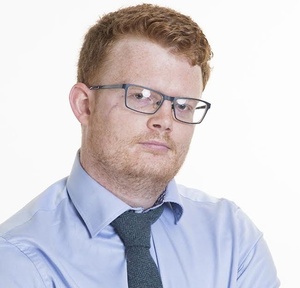
From top: Ireland’s rail network, 100 years ago vs now; Heber Rowan
Not so long ago, in the pre-virus days, Slugger O’Toole discussed building a rail line to Donegal, the far North-West of Ireland. Fair play. It is time to discuss generational public transport needs in Ireland.
There are some, this author included, who regard a working rail network, as civilisation manifest. A well run, speedy networks are something a country can be proud.They show that urban developments are made to meet needs long-term. That matters.
The Irish rail network includes 2,400km of track, of which 1,660km is used. As one of the most developed countries in the world, it’s not enough and not fit for purpose to discourage private car use. We work best together collectively, not alone.
In all public discussions around the development of our infrastructure, the business case against developing rail links is primarily one of population density. Namely, that there aren’t enough people living along the routes to justify further investment.
The Irish rail network was once a vibrant one into rural areas off the back of British development of the lines. There was even extensive planning done on the development of a Dublin metro system but the events of the Irish Easter Rising stopped it. Events!
The “Rail Review” of 2016, was the most recent public discussion about the health and future of the Irish rail network. It became a clarion call to many.
The head of Irish Rail and the Irish National Transport Authority stated that “there is no such a thing as a free lunch — the rail network is in financial jeopardy”. A funding gap of half a billion proved to be an inconvenient financial reality.
The political and public discussions at the time focused on maintaining the existing lines amid threatened closures, not improvements.
Then the €550 per passenger subvention that occurs annually for Limerick-Ballybrophy line was a hot point of political debate with the likes of Labour TD Alan Kelly at war with then Minister for Transport, Shane Ross. Ultimately no lines were closed and the panic subsided.
In fact, since then due to the growth of the Irish economy and an expansion of Dublin commuter services passenger numbers are up, however, their money is down.
The car is king.
The car remains king in Irish transport and despite some encouragement featured within the government’s Ireland 2040 infrastructure plans highlighting plans for the development of Metro-North (to Dublin airport and beyond), there is little in the way of serious ambition put forward.
In the last fifty years, Ireland has entered into what urban developers call a ‘land transport spiral’ whereby the chicken or the egg situation exacerbates congestion and a poor quality of living.
Cities grow wide with low densities and in areas dependent on having cars and away from other forms of services. It has been argued that increased private cars usage has been the death of rural towns. We don’t live or shop locally within our physical vicinity, that matters.
It is worth pondering if the lockdown will impact how both our behaviours within and perceptions of our localities will change. Transport and supporting local business matters.
Just as Galway city has been held up in decades of congestion over the potential for an outer ring road to be built with the acknowledgement that ‘if you build it, they will drive’ and not actually make matters better, development continues without developing Ireland regionally.
Economically, it’s a stark contrast with average incomes in the West of Ireland lower than €5,000 per year on average compared to Dublin. Yet there is no serious discussion about bringing Ireland together with high-speed rail even from the likes of Dublin to Belfast (arguably the most economically expedient) or to Cork.
This matters when we consider the long-term improvement of living standards in Dublin too, given that limited land and high population density ultimately decrease the standard of living for all if the majority of public transport investment is done within the greater Dublin area.
The problem for the government and the politicians that constitute it, is time. The difficulty of getting everything you need for your constituency within the short space of a five-year term. Yes, to all of those campaigning against the problems in health and housing, transport can appear to be a less important matter to go email your local TD about.
The political reality also, is that Dublin has 45 seats in the Dáil or 28% of the total. That’s power. It is no wonder that recent discussions around transport development focused on the BusConnects system and little attention was put on national infrastructure development.
Why spend money with a high-speed interlink between Dublin and Cork when you could win more Dublin voters within a lifetime of a government? Moreover, ask any Irish politician and they will say that a majority of their time is spent assisting constituents on housing or health-related matters.
When examining the problem, we often forget the time scales involved in rail developments, for instance, the Luas was initially first proposed back in 1990. Politicians need quick wins to get re-elected, and the people who proposed an idea are often forgotten amid all of the fanfare that accompanies the eventual ribbon-cutting ceremony.
The sad reality is that the narrative nationally has shifted to propel the creation of ‘Greenways’ or cycle routes along the former tracks of rural rail lines, as a good long term development.
While there are still campaigners for keeping the dream of the Western rail corridor alive (a train linking Sligo and Galway), with the smaller budget needed for construction and less time, politicians have it in their interest to back the creation of Greenways as it could save their seats.
TDs ultimately have to serve the interests of those who they elect them, a fact reflected in Green party leader Eamonn Ryan’s comments on the ‘advantage’ given to rural Ireland over the creation of the National Broadband Plan.
He and every other TD in Dáil Éireann, serve those who elected them first and foremost, national politics is a luxury only the properly powerful can do. Senior hurling.
Given that Ireland did sign up to a 7% reduction in greenhouse emissions with the Paris Climate Accord, the roll-out of an ambitious rail network (high speed or electrified) could be part of an overall solution to do just that.
Amid all of the political negotiations going on right now to form a government, how the urban-rural divide plays out with transport policy will contribute to influence the lifestyles and work of all. Maybe it is time we all get on board with a national rail network and a sense of ambition to match.
PS: Let’s remember there is a lot to celebrate about Irish Rail as a charming English couple experienced recently!
Heber Rowan is a Sligo native with a passion for politics. He works in public affairs and enjoys listening to and narrating audiobooks. He can be found on Twitter and occasionally blogs on Medium.com.

Artists and arts organisations across the country are suffering enormous financial losses and facing an uncertain future as a direct result of the Covid-19 public health crisis, new data from the Arts Council shows.
This morning.
Via The Arts Council
Surveys carried out by the Arts Council, the government agency for funding and developing the arts, show that 90 percent of artists have been impacted by cancelled or postponed events, with a great many describing the effect on their financial situation as ‘severe’ and almost half applying for the Government’s Covid-19 emergency payment.
Arts organisations estimated the loss of audience at 2.4 million people and growing, with more than 12,000 events cancelled and hundreds of staff members being laid off.
Arts Council Chair Prof. Kevin Rafter has said the information gathered from the surveys will help the Arts Council better understand the impact of jobs and livelihoods, and the responses needed to help the sector come through the months ahead….

Behold: NGC 2936 – aka, the Porpoise Galaxy – the upper of the two galaxies shown in this image. But why does it look this way? To wit:
Just a few hundred million years ago, NGC 2936, the upper of the two large galaxies shown, was likely a normal spiral galaxy — spinning, creating stars — and minding its own business. But then it got too close to the massive elliptical galaxy NGC 2937 below and took a dive. Dubbed the Porpoise Galaxy for its iconic shape, NGC 2936 is not only being deflected but also being distorted by the close gravitational interaction. A burst of young blue stars forms the nose of the porpoise toward the right of the upper galaxy, while the center of the spiral appears as an eye. Alternatively, the galaxy pair, together known as Arp 142, look to some like a penguin protecting an egg. Either way, intricate dark dust lanes and bright blue star streams trail the troubled galaxy to the lower right. The featured re-processed image showing Arp 142 in unprecedented detail was taken by the Hubble Space Telescope last year. Arp 142 lies about 300 million light years away toward the constellation, coincidently, of the Water Snake (Hydra). In a billion years or so the two galaxies will likely merge into one larger galaxy.

(Image: NASA, ESA, Hubble, HLA; Reprocessing & Copyright: Raul Villaverde)

‘sup?
Louise Williams writes:
Not my pet but my sister Dot Maxwell’s pet dog, Jinky enjoying the sunshine and the garden hose. Pic by Joey Farrell.
Meanwhile…

‘sup?
Patrick writes:
Ball will have to be surgically removed…
My pet in lockdown to broadsheet@broadsheet.ie marked ‘My Pet in Locdown’.

Merrion Street, Dublin 2
Carlosfandango writes:
On an essential journey yesterday, I snapped my bug outside the Merrion Hotel. It wasn’t till afterwards I saw Lloyd peeking out the window…

Arrgh!