
cloudsteph twaskz:
Did the boom ever leave Dunnez? €525 for an artificial tree. To pair with €60 plank?
#boomier



cloudsteph twaskz:
Did the boom ever leave Dunnez? €525 for an artificial tree. To pair with €60 plank?
#boomier


From top: 14, Windsor Road, Rathmines, Dublin 6: Justice catches up with Clara Whiteley
Diamonds are forever.
Even in Rathmines.
She thought.
Irish Historical blogger Sibling of Daedalus writes:
In 1917 the landlady of 14 Windsor Road, Dublin, let lodgings to a young, smartly dressed and affluent woman, whose husband was said to be in the American Navy.
From the first day of her arrival, she took a great interest in the garden of the house, and kept her own pet flowerbed below her window. The lady subsequently left, and her carefully tended chrysanthemums fell into disarray.
One day, two gentlemen called to the house, and asked the landlady for permission to dig in the flowerbed. A spade was produced, and a small box, wrapped in brown paper, containing diamonds of considerable value, found buried under four narcissii.
The lodger had been the famous jewel thief, 19 year old Clara Whiteley. otherwise known as the Girl with the Diamond Eyes.
She had, without any assistance, stolen the diamonds from from a jeweller in Great Portland Street, London, by pretending she wanted to show them to her husband, who was in another room. In fact, there was no husband, only Clara, long gone when the jeweller went looking.
Clara’s subsequent conviction and deportation to South Africa did not deter her from a life of crime. She was last heard of in 1934 when (as Cecilia Beresford) she was sentenced to 13 months’ hard labour for stealing a cigarette case.
That’ll learn her.
Previously: Sibling Of Daedalus on Broadsheet

You may recall a post last week about the launch of a book by Jonathan Sugarman, a former executive at Unicredit Bank Ireland in Dublin’s ISFC.
His book, The Whistleblower, explains how his warnings of liquidity breaches at Unicredit – made in 2007 – were ignored by the Central Bank, a year before the financial crash.
Further to this…
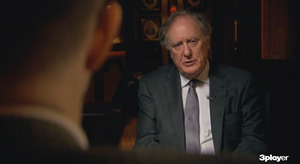
Last night, Tonight with Vincent Browne broadcast an interview Vincent Browne recorded with Mr Sugarman on the day of the book launch.
At the start of the interview, Mr Sugarman explained that he’s an Israeli citizen, whose mother was born in South Africa, and how he started to study economics after finishing his three years of military service with the Israeli army.
He said he worked briefly for banks in Israel before going on to work for the Dutch Ministry for Economic Affairs in The Hague. Later, he went back to Israel but left for good in 1999 – which was when he came to Ireland.
Mr Sugarman’s first job in Ireland was with Microsoft Finance and later he started working for banks before he was eventually headhunted by Unicredit.
Readers may wish to bear in mind that Mr Sugarman was never invited to attend the Banking Inquiry.
From the interview…
Vincent Browne: “When did problems start to arise in Unicredit?”
Jonathan Sugarman: “Probably within the first two or three weeks of the beginning of my job there. There would be a daily set of reports that had to be signed off by the CEO and senior management of the bank, this is daily practice with all banks. As the risk management department, we produce these reports. For example, who are our biggest counterparts in our daily dealings, so that we know that if, for example, we’re dealing with a bank called Lehman Brothers, when we read it in the newspaper that Lehman’s is collapsed, we know that that’s one of our biggest counterparts and we would list these risks daily. Likewise, we would list our exposure to foreign currencies, we would list our exposure to certain industries. Are we lending a lot of money to aviation? Are we lending a lot of money to governments? All of these have particular limits. We don’t just go and trade whatever we want. And so, as a risk manager, I sign off a set of reports every day – to say these are the limits, this is where we are. It’s a bit like getting the results of a blood test where you say – this is where you’re at and these are reasonable parameters. Are you ok? Or are you not ok? And, as the risk manager, it is my job to make sure that we are ok and that every senior manager in the bank is aware of the fact that this is where we’re at.”
Browne: “What were the problems you uncovered?”
Sugarman: “There was a recurring problem with the liquidity figures. These reports are produced twice a day, after the close of business, at 5pm and then once again in the morning, as a repeat performance once all of the processing has done, has been done overnight by the computers, by the head office, etc, etc, to make sure that what we saw last night, yesterday evening at 5pm, was accurate.”
“One of the key factors that we look at in these reports is: what is our liquidity. Liquidity is very simple – it’s a case of we all know how much money we have coming in as wages every month or as income from our businesses. We know that if our income exceeds a million euro a month, then we can go and buy a beamer once a month if we felt like it. But we know what our situation is. So, do we have the liquidity to go and buy something we want. In banking, it would be a case of do we have enough liquidity. Say if a deposited turned up tomorrow morning and wants his money, we have the money to give.”
“Now, obviously, because it is the basis for banking, you deposit €100 with us, of which we keep €10, and lend out €90 – to make it simple. But then if you come back and make a claim on your €100, we have to give you back your €100. We can’t say ‘we’ve only got €10’. So, at every point in time, we have to make sure that, if a reasonable number of people come looking for their money, we’ve got money to give them and that’s liquidity. And this concerns billions of euro every day. I mean we could easily have done deals for €300m, €400m, €500m per deal so we have to make sure that if our counterpart arrives tomorrow morning, to collect their money, that it’s there. You can’t just turn around and say ‘oh I don’t have it’. And the need for the overnight guarantee was because all of the Irish banks ran dry. They didn’t have it.”
Browne: “Ok. But, going back to the problems that you uncovered, what were they with regard to liquidity?”
Sugarman: “So, at the frequency of probably once or twice a week, the figures didn’t reconcile so, as a risk management department, we had our own set of reports. Obviously, every bank has its own accounting department, they have their own set of reports. There is something called prudential reporting which is required by the Central Bank of Ireland. At the end of the day, we all have to sing off the same hymn sheet, so there would be a bit of a parallel calculation being done between us, the risk department, and accounting.”
“Big discrepancies started to show and I said – ok, so which one is the correct one? Because one day this one says there’s a problem; and another day the other one says there’s a problem…”
Browne: “Discrepancies between what and what?”
Sugarman: “Between our liquidity figures and their liquidity figures. And when I said ‘ok, so which are the real liquidity figures, there can only be one set of correct figures?’ And I said ‘if the real figures are the figures that are showing breach, we have to report that breach and, invariably, I got told, ‘no, no, no, the real figures are the ones that show that we are within the limit. And I said, ‘well, how do you know that? I mean this is a €30 billion balance sheet. Do you have a little beer coaster that you keep your own…?’ [He was told] ‘No, no, no, you’re new in this job, give it a bit of a, you know, give it a couple of weeks, you’ll understand our systems better and you’ll see why it’s actually all right’. And this went on throughout the entire summer of 2007. Until one day, the breach was 20 per cent – which is 20 times the permissible deviation of 1 per cent. And, having spent three years in the Israeli army, I wasn’t going to spend five years in Mountjoy [Prison].
“The legislation that I took out earlier [at his book launch] clearly stipulates five years in Mountjoy well, perhaps not Mountjoy but five years in jail.”
“I put my foot down and said we are reporting this breach because I’m the risk manager. If, tomorrow morning, this bank collapses, I, it was on my watch that the bank collapsed. I’m the one responsible. The CEO will turn around and say ‘yes, this is why I pay Jonathan the way I do, he’s the one who’s responsible’. ‘I, the CEO, signed off because my risk manager told me it was all right’.”
“And so, we’re coming towards the middle end of, the summer of 2007. Northern Rock is collapsing; Europe, for the first time since the second World War is seeing people stand outside the banks, frightened that all of their deposits have been wiped out and I’m signing off reports, saying that everything is fine, when I know that it isn’t fine. And what shocked me even further was that, having breached, having reported a breach of 20 per cent – we’re talking about billions here – the Central Bank did absolutely nothing.”
Browne: “When did you report the breach first?”
Sugarman: “I reported this breach during August 2007”
Browne: “What was the form of your communication with the Central Bank in telling them of the breach?”
Sugarman: “I drew up a letter which notified the Central Bank. Each bank operating in Ireland has a team responsible for it in the Central Bank of Ireland. So the letter we sent was to the attention of the head of the team responsible for Unicredit Ireland, the operations of Unicredit in Ireland. So the letter was addressed to him, to notify him that, according to section so-and-so of the law, we are now informing you that we are in breach.”
Browne: “Did you send the letter? Or was it sent by the CEO?”
Sugarman: “The CEO signed the letter. At that stage, I was so adamant about the fact that I wanted to make sure that the Central Bank was going to receive the letter there and then, I hand delivered the letter to the Central Bank on Dame Street.”
Browne: “On that same evening?”
Sugarman: “Same lunch time. This is crucial. I am billions out of pocket. Now this can be…”
Browne: “How many billions was it?”
Sugarman: “I would say roughly €4bn to €5bn.”
Later
Sugarman: “The letter was addressed to the person dealing with Unicredit. I handed it in at the reception of the Central Bank of Ireland.”
Browne: “Ok, did you hear back? Or did your CEO hear back from…?”
Sugarman: “We received the letter of acknowledgement the next day from the Central Bank.”
Browne: “And, other than that, did you have contact with the Central Bank?”
Sugarman: “No.”
Browne: “Nothing?”
Sugarman: “Which is shocking but no.”
Browne: “They did nothing at all?”
Sugarman: “Nothing.”
Browne: “Then what happened?”
Sugarman: “In the meantime I had contacted an IT company in London that was recommended to me that was operating in Dublin, doing precisely what that type of liquidity calculation for other banks. Their leading client at the time was a leading Irish bank called Anglo Irish Bank. And so I thought ‘well, if you’re good enough for… and, obviously, the Central Bank were aware of that, that this consulting firm was doing the calculations for Anglo, so I said ‘well, if the Central Bank is happy for them to calculate if for Anglo, you know, I’d be more than happy for them to calculate it for us. And so, I initiated contact with this company. We arranged for them to have access to all of our records and to start producing their own sets of figures, so that we could see where the problem was – if there was a problem.”
“One night, I received a call from the person in charge in London, who said to me, and he knew that I was shocked over this breach of 20 per cent. He said, ‘Jonathan, from the figures that we’ve looked at, your breach is actually 40 per cent’. Now that is when I said ‘enough’.
Browne: “How is it that you didn’t perceive that the breach was 40 per cent?”
Sugarman: “Because of the mayhem in our computer systems and, again, this legislation I showed [at book launch] earlier stipulates very clearly that in order to run a bank you have to have adequate IT systems. You cannot have IT systems producing different figures for the same transaction. And so, this is why I contacted this company. Because I said ‘look, there are discrepancies here, almost every day’.
Browne: “OK, did you inform the regulator that the breach was not 20 per cent, it was 40 per cent.”
Sugarman: “No.”
Browne: “Why?”
Sugarman: “Because my CEO didn’t want us to and that is when I resigned.”
Browne: “What did the CEO say?”
Sugarman: “He had his own reasons, he claimed that what the London company had come up with was just a trial run. I said, ‘yes but that’s a trial run without figures. And we know that there’s a problem. ‘Yes, but it’s, their still separate to the bank’. And so what made it even more worrying is that, even after my resignation – and I maintained contact with the company in London after my resignation – they kept on working on trying to come up with a definitive set of figures for the bank. Only within a few weeks, the Central Bank of Ireland arrived for a scheduled audit of the risk management department and, within the first day of that audit, the link to London was cut off. And I know this from the company in London which, to me, would imply, that the Central Bank, their team that arrived at Unicredit was so horrified a) at the extent of the problem and b) that a third party had full visibility of the problem.”
Browne: “So, you’re saying that some weeks after you brought the letter down the Central Bank yourself in mid-August of 2007, the Central Bank did an audit of Unicredit..”
Sugarman: “Yes.”
Browne: “And found that the situation was as you described it, or even worse..”
Sugarman: “Probably worse..”
Browne: “So, it’s not true to say, that the regulator did nothing?”
Sugarman: “Well they covered up. Because, if I walked in there and said ‘heavens have fallen’, there should have been literally a raid by the Central Bank the next day – to say, how are you conducting your affairs? If we told you that a breach of 1 per cent is problematic, how can you turn up and tell us that you’ve breach by 20? I expected the Central Bank to have sent down a team the next day, if not that same afternoon, to say, ‘we gave you a licence to operate a bank in Ireland, assuming that you knew how to run a bank?’ They arrived for a scheduled audit two months later.”
Watch back in full here
Previously: Who Is Jonathan Sugarman?

An award winning black and white stop motion short made up of over 14,000 photographs, created by self taught filmmaker Simon Scheiber over the course of 7 years.To wit:
A lighthouse keeper’s surprising discovery pulls him out of his monotonous, daily routine and takes him onto a journey into uncharted territory.


‘sup?
What you’ll be wearing this season.
Ian Tilson, at Fruity Suits, writes:
We are a young Irish company making quality suits with outrageously crazy designs, All our suits are designed in Ireland and arrive within 2 business days of purchase in Ireland,
Our new Christmas Jumper Suits are perfect for 12 Pubs Shenanigans or for Christmas parties when you want to stand out, the rest of our range is great for any occasion or as a special gift.
Yours for 94 large (includes tie, fairy lights and mild dignity loss).
Irish-made stocking fillers to broadsheet@broadsheet.ie marked ‘Irish0Made Stocking Fillers


From top: INM CEO Robert Pitt and INM Chairman Leslie Buckley at the company’s extraordinary general meeting in the Alexander Hotel, Dublin 2 yesterday; the INM board vote to give shareholders a dividend while closing off the company’s pension scheme; Seamus Dooley, of the National Union of Journalists (NUJ) questions the decision.
“The manner in which this decision [ forcing a closure of the defined benefit scheme] was taken – without involvement of the trustees, with no consultation with the workers, scheme members or their unions, is a display of arrogance towards those who helped build up this company and towards the Pensions Authority.
INM is determined to break an agreement reached in 2013 with the Pensions Board and the Trustees and is giving two fingers to the regulatory authority. This case highlights the need for urgent reform of the law governing pensions in the Republic of Ireland, a fact illustrated by the fact that INM Plc could not get away with doing this in their Northern Ireland titles.
“In considering the application by INM Plc to purchase the Celtic Media Group Communications, Minister Denis Naughten must consider the record of the applicant in relation to corporate government and industrial relations, with particular reference to equality.
“We hope Denis Naughten takes note of the company’s actions in this matter in deciding the application.”
Seamus Dooley, NUJ boss, yesterday.
INM capital plan is passed despite anger on pensions (Belfast Telegraph)
Yesterday: Independent Variable
Meanwhile…


From top: yesterday’s protest; Today’s Irish Independent
Banner begone.
Morris writes:
Some careful picture editing at the Indo….

Time for another check-in with the Limerick Pigs, courtesy of voice actor (and new Chicken Hut endorser) Walshunit.
Wherein the family is tasked with setting up camp in the grand outdoors. Much cursing ensues.


From top: Former Irish swimming coach George Gibney; US journalist Irvin Muchnick
You may recall how American journalist Irvin Muchnick has been trying, via Freedom of Information requests, to obtain 20 documents, or 43 pages, of former Irish swimming coach George Gibney’s US immigration file.
All previous requests yielded only parts of this file with some pages redacted.
Gibney was charged with 27 counts of indecency against young swimmers and of carnal knowledge of girls under the age of 15 in April, 1993 – but sought and won a High Court judicial review in 1994 that quashed all the charges against him.
The judicial review was secured following a landmark Supreme Court decision – after which Gibney left Ireland for Scotland and then Florida.
On November 2, after US District Court Judge Charles Breyer reviewed the 20 documents in camera, he said he was “prepared to rule (largely) in Muchnick’s favour”.
At that time, he forwarded to the US federal government, suggestions on redactions that should be reversed – and set a 30-deadilne for Mr Muchnick and the federal government to work out an agreement around the court’s tentative order.
That deadline was yesterday.
Further to this…
Mr Muchnick writes:
The federal government has told US District Court Judge Charles Breyer that it decided not to take up his recommendation, in a November 2 “tentative order,” to release particular portions of the 43 pages of George Gibney’s immigration records that remain in dispute in Concussion Inc.’s Freedom of Information Act lawsuit against the Department of Homeland Security.
In a joint response filed today by the US attorney’s office and my attorney Roy Gordet, the judge was asked for the final and binding order that he had said he was prepared to issue if the tentative order did not succeed in resolving the case. The government said it “will decide how to proceed after reviewing the final order.”
If Judge Breyer proceeds as expected with the final ruling, which the opinion accompanying the tentative order had said would be “(largely) in Muchnick’s favour,” then there are two possible outcomes.
One possibility is that US Citizenship and Immigration Services, the agency under Homeland Security, will release the records as advised by the court.
The other possibility is that the government will decide to appeal the ruling against it to the Ninth Circuit Court of Appeals.
Read the joint response in full here
Previously: George Gibney on Broadsheet





Slane, May 16, 1992
Frenzied ‘revellers’ get ‘down’ as Guns ‘n’ Roses play Slane.on their Use Your Illusion tour.
Few would scarcely believe it might take 25 years before they would return.
All they needed was a little patience.
Never mind.
Pics: Eamonn Farrell/Rollingnews
Meanwhile…

Was this you at Slane in 1992?
If you are the glum-faced rock fan arrowed get in touch with us and claim ONE ticket to see Guns ‘n’ Roses at Slane next year, all on the ‘sheet (as soon as they go on sale).
Anyone?
Meeeeanwhile…
RTÉ News was on the scene, and the broadcaster’s Archive threw up the report on their Facebook over the weekend. Look at all that hair.