

How they do it in Brazil.



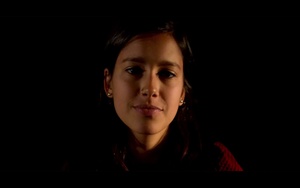
Nova Collective – New Samba
Featuring Dublin-based Brazilians being talented and hot.
Louis Ryan writes:
My [Bossa Nova] band Nova Collective have released a new video today (above). With it, we wanted to try and give a little exposure to some of the exciting and diverse talent that exists among the Brazilian community here in Dublin, through featuring Rose Silva, Kleber de Souza, Diego Piazza e Gabriela Bezerra.

Eric Lerner’s experimental short – the tale of a cartoon character ‘dreamwalking’ in the real world.
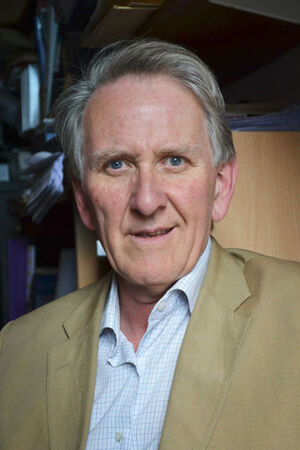 Colum Kenny
Further to the Charlie Hebdo shootings.
Colum Kenny, a professor in the Communications Department of Dublin City University and a member of the Broadcasting Authority of Ireland, spoke with Richard Crowley during RTÉ’s News At One.
Mr Kenny is also a former barrister and discussed what should be deemed unpublishable.
Richard Crowley: “Legally, what could be published?”
Colum Kenny: “Well, what you can publish is limited in the law under the provision of the Defamation Act 2009, that refers to blasphemy and you can be prosecuted for publishing or uttering a matter that’s grossly abusive or insulting in relation to matters that are held sacred by any religion. Now it does have to cause outrage among a substantial number of the followers of that religion and you have to show that it was intended to cause outrage but a person can be prosecuted for publishing something that does cause outrage among a substantial number of believers. You would, as a media organisation, you are allowed to argue that there’s genuine literary or artistic or political or scientific or academic value in the matter to which the charge relates and it would be up to the circuit court to decide whether or not they accepted your argument. ”
Crowley: “But as I understand it, any visual depiction of the prophet Muhammad is offensive to some Muslims. You don’t have to ridicule, you don’t have to present him in a derogatory sense, you simply have to produce a visual depiction and that would be offensive. Now, to the rest of us, that seems ludicrous.”
Kenny: “Well, I’m not sure it’s ludicrous. The certain religious depictions, in a number of world traditions, and even in early Christianity and Buddhism were regarded as inappropriate, so many believers thought you shouldn’t attempt to represent the sacred so it’s a cultural thing that changes with time. But certainly it’s true that in Islam today there are people who find any depiction of the prophet Muhammad offensive and I think we need to be sensitive to that as journalists and as news media organisations. It doesn’t mean we don’t do it, if it’s appropriate in certain circumstances but if it’s going to cause outrage among a substantial number of Muslims then we need to think twice before we do it.”
Crowley: “I suppose the question, Colum, becomes what is a substantial section of the population? The majority might say this is about a minority of the minority and we cannot be driven by that, if we want to protect freedom of speech and our own values.”
Kenny: “Well, we certainly can’t be driven by attacks, by physical attacks, outrages like that in Paris yesterday, which was entirely unacceptable and I think anyone who talks about this issue, should make clear their own position on that, whether they’re a Muslim or otherwise, they need to make it very clear that this is entirely unacceptable, no matter what the provocation, you don’t respond like this but the question of whether or not a substantial number of people find it offensive would be one, actually, that the circuit court judge would have to address, if there was a prosecution. They’d simply look at the evidence, they might well hear evidence from people like your previous speaker [Dr Ali Selim], one of the leaders of the Islamic community in Ireland, and that well might satisfy the court, that ‘yes’ a substantial number of Muslims find any depiction offensive. If they decided that, they’d have to go on to look at whether or not the publication intended to outrage those people and finally, they would have to look at whether or not there was any literary merit, or artistic or political merit in the publication. So you could have a situation where a magazine, such as Phoenix, for example, publishes something and was prosecuted but it could argue that this was some kind of a political statement or that it had literary merit and perhaps, at the end of the day, they’d get off for that reason. But I mean even if it got off, even if we leave aside the question of criminal prosecution, there is a requirement I think on all journalists to be sensitive to the feelings of all religious communities but that certainly doesn’t justify what happened in Paris yesterday.”
Listen back here

By p5art.

What you may need to know:
1. A small town girl dreams of fame but is unwittingly beaten to it by her dad after a video of him goes viral.
2. Another day, another indie flick with a kickstarter.
3. Director and producer David Cross wants to distribute the film via BitTorrent and GooglePlay having been inspired by Thom Yorke and Louis CK.
4. It’s Cross’ directorial debut. His uncertain career has let us enjoy the best of times and also the worst of times. This film looks somewhere in between.
5. The good news is he was able to pack it will his talented buddies Matt Walsh, David Koechner, Michael Cera and Jason Ritter so there is hope.
6. Broadsheet Prognosis: Hit and miss
Release Date: TBC

Badum.
Third Space, Smithfield, Dublin.
Thanks Barry H


From top: the French Embassy, Paschal Donohue and Jean-Pierre Thebault
This afternoon.
Minister for Tourism Paschal Donohoe joined French Ambassador to Ireland Jean-Pierre Thebault at the French Embassy, Ailesbury Road, Ballsbridge, Dublin 4 paying respects to the victims of the Charlie Hebdo shooting in Paris yesterday.
(Sasko Lazarov/Photocall Ireland)

Ladbrokes, Lower Kimmage Road, Dublin this afternoon.
Vin writes:
“Surely they have Google and could’ve checked? Also 6/1 isn’t great odds….
