



Taoiseach @MichealMartinTD on @CorkPrinces today to sample its eat on the street environment #Cork #eatonthestreet #EatShopEnjoy pic.twitter.com/4h1BPJwOZR
— Eoin English (@EoinBearla) June 8, 2021
Um.
This afternoon.
Cork city.
Meanwhile…

‘sup?
Last night.
Crumlin, Dublin.
Niamh Guckian writes:
Outdoor dining resumes for everyone…

Taoiseach Micheál Martin meeting with DUP Leader Edwin Poots and Paul Givan at Government Buildings on June 3
— Edwin Poots MLA (@edwinpootsmla) June 8, 2021
This afternoon.
Paul Givan set to be new Northern Ireland first minister (RTÉ)

Saturday.
Stephen’s Green, Dublin 2.
Twisty balloon art?
Or giggle-inducing ‘hippy crack‘?
We may never know.
Baton charge them anyway.
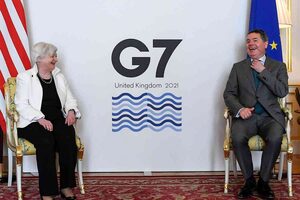

US treasury secretary Janet Yellen with Minister for Finance and Eurogroup president Paschal Donohoe at the G7 finance ministers meeting in London last week; Michael McNamara TD
Having returned from having smiling photos taken with the world’s economic leaders, Paschal Donohoe announced he was going to fight them on the beaches, on the landing grounds, etc.
Boris couldn’t do it better.
There was much talk in the media this weekend about a €2bn reduction in our tax take and that this has been foreseen for some time. All of this is true. The bigger problem, however, will be the impact on our GDP figure which, for several years has been inflated by profits channeled through Ireland for corporation tax reasons. Our borrowing (especially over the past 12 months) only look sustainable relative to that inflated GDP.
Once that deflates, the situation looks a lot less sustainable than Paschal merrily portrays. The reality is that we have the highest borrowings per capita in the EU and the highest rise in borrowing per capita over the past 12 months.
As all of this was happening, Joseph E. Stiglitz, Nobel Prize-winning economist, was accusing the government of “stealing tax revenue from its neighbours – from other members of the EU,” at an event organised by the German Friedrich Ebert Stiftung think tank to look at the transformations required to deal with the consequences of the Covid-19 pandemic.
Coming just three weeks after Paul Krugman, also a recipient of the Nobel Prize in Economics, wrote “Biden, Yellen and the War on Leprechauns” in the New York Times, it was clear that there was a concerted push against Ireland’s corporate tax regime from in high in the USA. Stieglitz, Krugman and the New York Times would all be considered to be broadly sympathetic to the Democratic Party that currently controls the White House, Senate and House of Representatives.
Meanwhile, the European Commission was calling for tax reforms as part of Ireland’s national recovery plan and Ireland was embarrassingly reduced to opposing basic tax transparency measures in the EU earlier this year, proposals designed to make sure that multinational corporations pay their fair share of taxes in all States, in developing as well as developed ones.
Ireland opposes them on the rather narrow legalistic grounds that the rules are being adopted on the wrong legal basis, the morality of the proposals being very hard to argue against – never a great indicator of the longer term viability of a state’s position.
All of this leaves the central strategy for the economic development of this State since the dark mid-80s – one that has served us well over many years but has become unsustainable during Paschal’s tenure as Finance Minister – in ruins.
Instead of developing an alternative in response, he merrily continued to assure us it was all OK. Just like Comical Ali as the detonations were getting closer, the blithe assurances remain the same.
When we first started to attract Foreign Direct Investment on a large scale in the 80s, our Government also used to speak of the attractiveness of our well-educated, young, English-speaking population.
Now, most multinationals, particularly in the tech sector, hire in from abroad. In the past year, many of those workers have been working from their homes all over the world but for tax reasons they, the tech corporations and Irish Revenue Commissioners all pretend they’re still in the empty office and apartment blocks in the Docklands.
Ireland Inc has effectively given up on presenting any basis for our economic development other than our tax code and its selective implementation.
Perhaps there was truth in Paul Krugman’s article: that “the way to create jobs is to create jobs, mainly through public investment, rather than by chasing unicorns and leprechauns”?
For our part, the biggest investment in the infrastructure that is a prerequisite for job creation is the National Broadband Plan. During the last general election, it was routinely compared to the post-War rural electrification scheme such was the scope of its ambition and the impact it would have on rural communities and the ability to build an economic future to sustain them.
Water supply limitations is the big obstacle to further economic expansion in our Capital, we’re told, with Victorian pipes leaking half of their precious potable water into the ground. Yet, the opportunity to replace those pipes posed by the hiatus of activity on the streets under which those pipes flow was spurned.
Just 4,000 homes were reached by the “national” broadband plan in the first half of this year, out of target of 115,000 for 2021.
But we’re still getting the Comical Ali assurances.
Michael McNamara is an independent TD for Clare.
Getty
Still Got It
at
The mighty Sir Tom Jones performs for NPR’s Tiny Desk Concert series yesterday on his 81st birthday.
Tom sings Bob Dylan’s ‘One More Cup of Coffee’, Malvina Reynolds’ folk tune ‘There’s No Hole In My Head’, and composer Bobby Cole’s ‘I’m Getting Old’, which was presented to him at the age of 33 but he only performs now he feels he has sufficient miles on the clock.
Eighty-one.
Reunited
at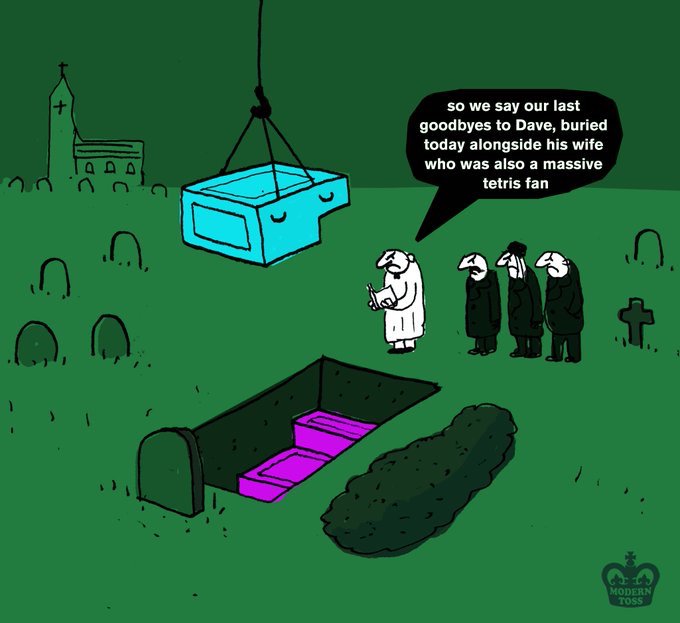
Don’t Panic
at
JUST IN: A mass web outage, believed to be caused by a data centre provider named Fastly, is impacting several popular websites.
Some websites affected include; Reddit, SMH, Age, NY Times, Twitch, Pinterest, The Guardian, AFR, BBC, Pinterest, and Financial Times. #9News pic.twitter.com/TEVivfFcVm
— 9News Australia (@9NewsAUS) June 8, 2021
The Guardian's website and app are currently being affected by a wider internet outage and will be back as soon as possible
— The Guardian (@guardian) June 8, 2021
Looks like a widespread outage among a host of news websites. BBC, NY Times, The Guardian, Australia’s SMH, The Age, AFR all affected…
— David Ramli (@Davidramli) June 8, 2021
Internet down: Widespread outage as many of world's biggest websites crash, including Amazon, UK government and Reddit pic.twitter.com/YOdUn6iqoF
— The Independent (@Independent) June 8, 2021
OK.
You actually might want to PANIC!
More as we get it.


From top Sinéad O’Connor’s memoir Rememberings; Grace Garvey
During an interview to promote her new memoir, something Sinéad O’Connor says jumps out. She believes she annoys some people because she’s like a mirror in which they see all the noes they’ve ever had to say. ‘So many people in this country, women in particular, had to say no when they wanted to say yes. They never got to say yes to themselves,’ she says. So, could Sinéad be a scapegoat for national self-denial? Now, there’s a thought for the day.
Few would blame Sinéad for saying yes to all of life’s pleasures in light of the abuse she endured as a child. She touches on it lightly in the book, as if it were the most normal thing in the world, which of course is how it must have seemed at the time. She recalls some devastating events: a family weekend away when she was left behind, locked in her bedroom without food; or picking herself off the floor after the latest beating by her mother and setting the table for breakfast. Everyday life intermingled with terror.
It always surprises me when journalists attempt to patronise Sinéad. On BBC Radio 4 Woman’s Hour last week, the interviewer referred to her reputation as ‘the crazy woman in pop’s attic’. Sinéad wasn’t having any of it, and denounced comparisons with the mad wife in Jane Eyre as abusive. Happily, it didn’t unsettle her as she went on to lambast the music business for sexualising children while calling it liberation and feminism.
She described American pop artists as looking like Donald Duck, ‘on stage with no pants on’, showing she hasn’t lost her sense of fun. When it comes to the exploitation of women in the music industry, the times are not a-changin’, she says.
Sinéad’s enduring interest in religion used to bewilder me, but having read her memoir, I appreciate how it sustained her during episodes of abuse. ‘I love Jesus because He appeared in my head one night when my mother had me on the kitchen floor,’ she writes.
She regards music as a form of priesthood – with artists such as Van Morrison as priests, ‘someone by whom you know there’s a God’ – and speaks not of faith, which relies on belief, but of fact. Listening to her hold forth, a chink appears in my own scepticism, but then I wonder why God hadn’t sent the cavalry to Arnold Grove, and any such notions of divinity fade.
I was gratified to discover that Sinéad regards Universal Mother as the most special album she’s ever made because it’s probably my own favourite too. I recall playing it so often in my London house share in the mid-90s that the entire household begged for mercy.
‘Specifically, I want to talk about the famine,’ I would shriek to Sinéad’s rapping, as my English housemates tucked into their breakfast croissants. In an album of contrasts, the tenderness of My Darling Child is all the more touching when you read of the record company executives who tried to convince her not to have the baby. She owed it to them, they said.
Of course, we’re all entitled to like who and what we like, but when detractors dismiss Sinéad as an attention seeker, it’s hard to see it as a major flaw. As a six-year-old she would wander around the neighbourhood knocking on doors and asking people if she could be their child. In the circumstances, who could begrudge her a bit of attention if they have a little to spare.
Besides, as one of the most captivating voices this country has produced, it’s not exactly a big ask. Whether as singer, song writer, truth teller or mischief maker, she never fails to reward. It comes as no surprise then that her memoir is well worth the read.
Those who call her an unreliable narrator are right on one score at least. Just a week ago, she spoke of her excitement at the prospect of touring next year. ‘I like working, I get bored,’ she told Brendan O’Connor [on RTÉ Radio One]. She sounded as enthusiastic as is possible to sound while dragging on a cigarette. In hindsight, the mention of the buzz she gets from being able to pay the electricity bill should have told us something was afoot. ‘Singers are like footballers, there’ll come a time when I’m too old to be singing,’ she said. It turns out time was on the express train.
Less than a week later, she announced she was hanging up her nipple tassels. ‘A wise warrior knows when to retreat,’ she said. The desire to put her feet up and make other dreams come true had prompted the move.
While it’s sad to see her go, Sinéad deserves to bow out whenever she wants. Only a fool would try to stop her and besides, her instincts tend to be sound. All anyone could want is for her to keep on keeping on. Or rather, to soldier on like the fighter she is. She has done it her way and she has done it well. Brava to a brave soul! Let her next chapter begin.
Rememberings by Sinead O’Connor (Penguin)
Grace Garvey is a Communications and Content Marketing Strategist. Grace can be reached at ggarvey2021@gmail.com
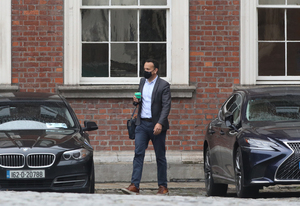
 From top: Tanaiste Leo Varadkar; Eamonn Kelly
Recently the Tánaiste had a pop at basic income. It was during a finger-wagging exercise on the need for Ireland to ratify the controversial CETA trade deal with Canada.
Misrepresenting the situation, as he likes to do, he described Ireland as “laggards”, despite the fact that Ireland is among several EU countries yet to ratify the deal, basically for the same reasons, not least of which is the fact that the deal will allow corporate entities the right to sue the state should the state interfere in any way with profits.
The Tánaiste’s angle about basic income was similar to the one he used recently to suggest that arguing for social housing is arguing against private housing. Here he was suggesting that arguing for a basic income is arguing against trade, as if the two were mutually exclusive.
A few days later he was describing social housing as “free” housing, as if social tenants don’t pay rent.
I’ll tell you what free housing is. It’s when your parents are wealthy enough to buy you the best education on the market, where you can classroom into your 20s, then hand you capital loans for your first house and car, introduce you to their influential circle of friends, guide you into politics as the best option for a lifetime of smugly lording it over the riff-raff, before eventually dying off and leaving you a free house.
Basic Income
It’s the first time I’d heard the Taniaste have a dig at basic income, and it was so out of context that I assumed that the idea is gaining in popularity and he doesn’t like it. Then, a few days later, it was announced that the long-awaited basic income pilot for artists will be given the green light starting in 2022. From this the assumption must be that FF have gone for basic income and FG are annoyed to see “free” money being released on their watch.
The announcement however was a bit dented by the news a day or two earlier that the pandemic payments would be cut in the Autumn. Along with this news came the other news that in practically everyone’s estimation €350 per week is not enough to live on, which I’m sure will interest other welfare recipients and pensioners still struggling along on €203 per week, not to mention the youths who receive less than half this in pocket money.
Tax Free
And all this in the shadow of the news that a Microsoft subsidiary with an address in Ireland paid no corporation tax on profits of €357bn. My understanding of tax breaks for corporations was that it was in return for jobs. But this particular subsidiary doesn’t have employees, just a few directors. It sounds more like some kind of elaborate money-laundering operation.
Still, it was charitable of the government to give them a “free” office here. Otherwise, they’d have been homeless in Bermuda, with only an off-shore bank to hold their hand. Corporations are frail creatures you know. That’s why they need protections, tax breaks and more rights than human beings. Otherwise, they’d just shrivel up, liquidate and get a bail out with bonuses for all their head honchos.
Above the Law
In other news, the authors of the Mother and Baby Homes report were being called to account for selectively editing survivor testimony, even allegedly altering facts to suit the “boss”, in this case the Church. The victims, unlike the Church, were given no right of reply when the report was published and were apparently kept in the dark wherever possible. Sounds familiar. A committee was asked to look into this and the authors refused to cooperate. That’s about as above the law as you can get without moving to Bermuda.
Still, it’s good news that basic income is being given a test run, even if the timing makes it seem a wee bit bribey. The danger of course is that by confining the payment to a select group, arts practitioners, there is a risk of stoking resentment elsewhere.
Ideally a basic income would be universal. That’s the accepted view if there is to be any hope of winding down capitalism, which is the underpinning idea behind basic income, as one of a range of possible ways to manage the climate crisis and somehow stop the corporations from eating up the planet.
However, it’s a good idea to test basic income on the arts community, since the positives are more likely to be immediately apparent given that arts practitioners tend to be self-motivated. This, by the way, is a characteristic of arts practitioners that the employer/employee paradigm absolutely fails to understand.
Good News and Bad Suits
There was more good news last week when a private member’s Bill on enshrining the right to housing in the constitution cleared second stage. This will hopefully lead to a referendum on the right to housing, or the right to “free” housing, as Leo would have it.
Expect lots of dillying, plenty of dallying and endless warnings about meddling with the Constitution, now that there’s a proposed change that might actually benefit non-millionaires.
The week ended on a celebratory note with massed Gardai mingling with massed revellers on Dublin’s streets, proving that there’s nothing like an onrushing line of baton-wielding cops to wreck a party vibe.
Finally, whatever about Edwin Poots’ creationist views, he desperately needs some wardrobe advice. Poots’ suit featured on RTE News as a kind of walking haberdashery tragedy. Best guestimates are that Poots’ suit is probably around 6,000 years old.
Eamonn Kelly is a freelance Writer and Playwright.
Previously: Eamonn Kelly on Broadsheet