Tag Archives: Direct Provision

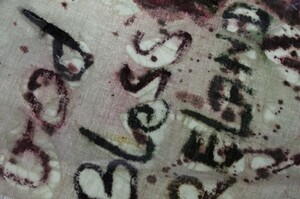
Screen-Shot-2014-09-05-at-11.05.41-1024x678A section from a ‘prayer flag’ found in The Old Convent direct provision centre in Ballyhaunis, Co. Mayo, in 2010

Brian O’Connell continued his series on direct provision this morning, on RTÉ’s Today With Seán O’Rourke show. During his discussion with Mr O’Rourke, Mr O’Connell played another interview he had with a woman who has engaged in prostitution to supplement the €19.10 she gets from the State every week.

The interview started with the woman – whose name and place of residence was not reported – saying a girl approached her and told her how some Irish men would be “looking for black girls” and how “they offer you some money. I tried it once.”

Brian O’Connell: “Was it the case that a friend of yours referred that person to you?”

Woman: “She was with a man and most Irish men know, in the centres, I know I’ve met one who asked me ‘do you come from the centre up the hill?’ And I said, ‘yeah’. And he said, ‘well would you like come clean my house?’ And I said ‘yeah, that would be OK.’ And he came and met me next to the place and then he took me around some bushes and then he told me he just wanted to feel my body and paid me €10. Yeah.”

Brian O’Connell: “And how did you feel?”

Woman: “Worthless, worth €10, for someone to feel your body, that someone would just look at you and feel you’re worth €10, how shit would that be? When you do it, you don’t do it because you want to do it, because your body wants it. You do it to get a little bit of something. A little bit of money to help you. Not for yourself, for your son – maybe he needs to go to swimming classes, school trips are very expensive, yeah.”

O’Connell: “And these men that you’re meeting, are they married?”

Woman: “They are married, of course they’re married, cause when they call you in the evenings, they ask you not to call them.”

O’Connell: “Is it fair to say that you wouldn’t be doing this if you weren’t in the [direct provision] system?”

Woman: “I don’t think I’d be doing that because I envisioned a life of freedom, going to school, get a job, contribute to the economy. You know, everyone has dreams in life and you don’t dream of selling your body, you don’t do that.”

O’Connell: “Do the men call to the centre?”

Woman: “They call outside the centre.”

O’Connell: “So they don’t go inside the centre?”

Woman: “No they don’t.”

O’Connell: “Do you think if asylum seekers, like yourself, were able to work, that it would have a huge impact on your lives?”

Woman: “If you’re given the right to work, why won’t you work and feed your kids? Why won’t you work and look after yourself? You don’t want to sponge of someone. I [inaudible] one  Irishman and he called me a parasite.”

O’Connell: “Can you tell me a little bit about the rejection?”

Woman: “He was calling me names, n*gger, bitch, whore, and I didn’t like that. And then I told him I don’t like such names. He say, ‘oh, parasite, you sponge off the country’. He called me so many names, yeah.”

O’Connell: “When I was at the centre a couple of nights ago, I think I might have seen you leave.”

Woman: “Yeah.”

O’Connell: “Can you tell me where you were going?”

Woman: “I was going to meet one of the men. Just for 20 minutes.”

O’Connell: “And was there money involved?”

Woman: “Of course.”

O’Connell: “Do you mind me asking how much?”

Woman: “Just €30 because they often tell you, it’s in the car. It’s not in a hotel, it’s not in a bed, so €30, €40.”

O’Connell: “It seems surprising to a lot of people that it took this long for women like yourself to tell your story and  the minister [for Justice, Frances Fitzgerald] that media reports could further stereotype you.”

Woman: “When someone comes out, they give you a voice to come out too because, before that, no one cared, no one really cares what we go through.”

Listen back here

Pic: Asylum Archive

DPLissywollen Athlone Direct Provision Accommodation Centre in Athlone, Co. Westmeath

RTÉ reports:

More than 200 asylum seeking residents at a centre in Athlone are refusing to accept daily food supplies in a dispute over how the centre is operated. The residents of the Lissywollen Athlone Direct Provision Accommodation Centre, along the Athlone bypass, have been refusing to accept new food supplies since yesterday. However, they are not involved in a hunger strike and are using food from alternative sources and supplies that they had built up instead.

Meanwhile, Sinéad O’Shea, of the Irish Times, has seen video footage showing the conditions within the Mount Trenchard Direct Provision Centre in Foynes, Co. Limerick, where 50 male asylum seekers live. She also spoke to some of the centre’s residents.

Readers will recall how some of the residents recently held a protest at the centre, while others went on hunger strike for a time. Three men were removed from the centre to other direct provision centres, with one man telling RTÉ’s Brian O’Connell that he was escorted by armed gardaí.

Ms O’Shea writes:

“The Irish Times has been given video footage of conditions in the centre which shows cramped sleeping conditions and beds separated by curtains.”

“There are six to eight beds in some rooms. One piece of footage shows several windows smashed after one resident lashed out at conditions there.”

“They spoke at length about mental health issues within Mount Trenchard. They say there are a number of men suffering from mental health problems there. Some of these men talk to themselves, they don’t change their clothes “for months”.

“One spends his nights sitting on the ground of the laundry room “pretending to eat and talk” with a woman in French. According to witnesses, these men had been relatively normal when they first arrived.”

Readers may wish to know that there is no independent complaints mechanism in place for asylum seekers. This means that if a resident wants to raise an issue about their security, health or welfare, they have to tell the centre’s management and/or tell the Reception and Integration Agency, which oversees the direct provision system.

Human rights group, Nasc Ireland, has previously stated that many asylees are reluctant to complain because they fear to do so would have a negative affect on their relationship with the Department of Justice.

Asylum seekers in Athlone refuse food supplies (RTÉ)

Limerick asylum seekers centre ‘a jungle and a jail’ (Sinéad O’Shea, Irish Times)

Previously: ‘We Want To Be Heard By The Irish People’

Meanwhile In Limerick

‘We Do It Out Of Desperation’

Screen Shot 2014-09-03 at 12.57.58

Justice Minister Frances Fitzgerald at a press conference in Government Buildings yesterday, launching reform of student immigration and education

That should do it.

You may recall yesterday’s post concerning RTÉ reporter Brian O’Connell’s research on how some female asylum seekers – some aged 18 – are engaging in prostitution to supplement the weekly €19.10 they receive from the State.

Yesterday afternoon, Justice Minister Frances Fitzgerald was speaking at a press conference to launch new regulations for English language schools, when she was asked about Mr O’Connell’s report.

She told reporters she will be asking the Reception and Integration Agency (RIA) – which oversees the Direct Provision system – for a report on the matter, adding:

We have no reports in relation to that, to date, but I will certainly be asking for a report and I would ask that anyone with information to make it available to the Gardaí.”

However, on this morning’s Today with Sean O’Rourke show, Mr O’Connell returned to the subject and said in 2007 and 2008, Ruhama did send a report to the Department of Justice – highlighting the issue of vulnerable women living in Direct Provision centres or hostels.

Mr O’Connell said the report states:

“On a practical level, we believe these hostels are not appropriate for this vulnerable target group. We have been advised by the women we work with, by managers of these hostels and by other service providers, throughout the country, that the hostels have become targets for pimps and other opportunists who seek to exploit the women through prostitution, recognising their poverty and vulnerability.”

Also in response to Mr O’Connell’s report yesterday, Minister Fitzgerald said:

I would be concerned as well about any stereotyping that might take place in relation to those women in any media reports that are being made in relation to the issue because that’s obviously something of huge concern. We are talking about a vulnerable group of women and I certainly don’t want to see them further stigmatised.”

However, this morning, Mr O’Connell told the Today with Seán O’Rourke show:

“A lot of people heard anecdotally this was happening. This was the first time women have come forward and, if you like, taken ownership of their own story, Seán. The women wanted their stories to be told, they wanted to realities of their situation to be out there and they wanted to give a voice to what was happening to them on a daily basis.”

Listen back to this morning’s show in full here

Previously: ‘We Do It Out Of Desperation’

Why All The Secrecy?

Mount Trenchard direct provision centre in Foynes, Co. Limerick

Screen Shot 2014-08-25 at 13.09.04

RTÉ reporter Brian O’Connell on the latest from Mount Trenchard direct provision centre in Foynes, Co. Limerick.

Brian O’Connell

Previously: Meanwhile, In Limerick

“We Want To Be Heard By The Irish People”

‘Two Residents Were Transferred’ After Speaking Out

Meanwhile, In Limerick

BvpNupxCAAAeYeJ

BvpQo0zCQAAw27B

Screen Shot 2014-08-22 at 14.09.43

BvpSO3UIcAAsI1V

BvpSO1gIMAA_IJN

BvpQ2MSIQAAKqT2

Screen Shot 2014-08-22 at 18.31.12 Screen Shot 2014-08-22 at 18.31.22

Protesters and supporters of a demonstration organised by Doras Luimní and the Foynes Asylum Seekers for Change in Limerick this afternoon.

It follows the recent removal and transfer of several asylum seekers from the Mount Trenchard Direct Provision centre in Limerick – to another direct provision centre in Cork – after they held a protest there to highlight the conditions at the centre, and the length of time they have been in the direct provision system.

The removed asylum seekers were escorted by armed Gardaí.

Pics: Nasc, Irish Refugee Council and Doras Luimní

Video: USI Ireland via Paula Geraghty

Previously: Free Friday?

“We Want To Be Heard By The Irish People”

Mount Trenchard Direct Provision centre

Further to a protests by some asylum seekers at the Mount Trenchard Direct Provision Centre, Foynes, Co Limerick yesterday

Migrant NGO Doras Luimní write:

Twenty minutes after Doras representatives left the Foynes accommodation centre where an agreement was made to address the concerns of residents, two residents were transferred by the Reception Integration Agency. One of the transferred residents was escorted by Gardai to Limerick. We are raising our concerns with RIA [Reception Integration Agency] but this inhumane treatment has to stop.”

Doras Luimni (Facebook)

Thanks Mark Malone

Mount Trenchard Direct Provision Centre

Three of the residents have gone on hunger strike in protest over the lengthy delays in the asylum process and the conditions in which they have to live while waiting for their applications to be processed. The three men – from Congo, Afganistan and Iraq – say they have all been in Ireland at least a decade waiting for their applications to be processed

…Another of the protestors – who is from the Congo – described the direct provision centre as being like “an open prison”.He said he had been in the asylum system for the past 14 years and had lived in Mount Trenchard for the past three years.
There are some people who have been waiting up to 12 years in this place,” he said.

Asylum seekers mount protest in Foynes centre (Colm Ward, Limerick Leader)

Screen Shot 2014-08-11 at 11.47.40

Meal timetable from a direct provision centre in Dublin

John McKenna, in The Guardian, writes:

Human rights ain’t what they used to be, it seems. When Denis O’Brien, the billionaire chairman of Digicel, was quoted recently in the Irish Times in March this year declaring that access to broadband was a “basic human right”, his declaration was accompanied by a call for “the international community to facilitate private sector roll-out of high-tech infrastructure”. So, basic human rights in the modern age come courtesy of profit-focused companies, allowing you to chat on Facebook with an Android system on your HTC smartphone via the Digicel network.

As with so many unexpected outcomes, I somehow doubt that this was how the original drafters of the Universal Declaration of Human Rights saw things panning out, when they finally completed their work after two years of deliberations, back in 1948.

But let’s try to be positive about this development, because I rather like the idea that we can declare a new human right. And so, following on from O’Brien’s lead, I want to suggest the creation of a new one.

That human right is the right to cook.

Should cooking be a human right? (The Guardian)

Previously: Direct Inaction

Pic: Asylum Archive

Related: How asylum became a business (Carl O’Brien, Irish Times)

DP1

A direct provision accommodation centre for asylum seekers in Lissywollen, Athlone, Co. Westmeath

Brian O’Connell spoke to Keelin Shanley on RTÉ’s Today With Sean O’Rourke this morning to discuss the direct provision system for asylum seekers.

During his discussion with Ms Shanley, Mr O’Connell referred to disturbing case file he saw involving a mother with mental health issues, in the direct provision system.

Mr O’Connell did not disclose her name or where she lives.

Brian O’Connell: “Whether or not this person’s underlying mental health issues were created or caused by direct provision, obviously is very hard to say. But what is clear from the case files that I’ve seen is that they’re certainly not being helped by the delay in their case being processed, they’re in the system for a number of years. Now this person has one child and the parent’s mental health, she suffered so much that she thought her child was a witch and she poured boiling water over them. So, a really disturbing incident. Since she was refused asylum, initially, there has been a significant deterioration in her condition and also we know the UN [Human Rights] committee said that prolonged duration in direct provision centres in Ireland is not conducive to family life. Now this parent is presently being given access to a range of supports and they’re stable. And a team is helping them deal with their issues and also to support them as a parent. But the issue here, Keelin, is that they’re still under threat of deportation, back to a country, their home country which doesn’t even recognise her underlying mental illness. They wouldn’t have any supports there. So the big issue is not only for her but also her child. Without these supports, that they’re getting currently, the child would be in danger. So I suppose the humanitarian aspect of this case is being overlooked and unless an appeal is successful, they could be deported. And this is a real mental health issue being exasperated by the length of time they’re in the direct provision system, as the medical notes that I’ve seen would show.”

Listen back here

Meanwhile