
Tag Archives: Frances Fitzgerald

Screen Shot 2016-05-18 at 10.21.33 Screen Shot 2016-05-18 at 10.22.22

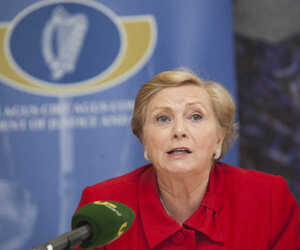
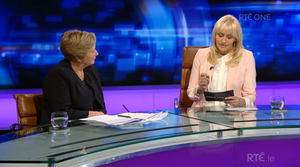
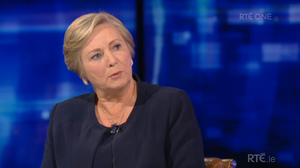
From top: Tánaiste and Justice Minister Frances Fitzgerald and RTÉ’s Miriam O’Callaghan; Ms Fitzgerald

Like a boss.

Last night, Tánaiste and Justice Minister Frances Fitzgerald appeared on RTÉ’s Prime Time.

Presenter Miriam O’Callaghan repeatedly asked Ms Fitzgerald was she either surprised or concerned by Garda Commissioner Nóirín O’Sullivan’s attempts – via senior counsel Colm Smyth – to undermine Sgt Maurice McCabe’s credibility during the commission of investigation by Justice Kevin O’Higgins into Sgt McCabe’s complaints of malpractice.

Ms Fitzgerald’s appearance came after journalist Katie Hannon revealed transcripts of the exchanges between Mr Smyth and Mr O’Higgins which can be read here.

Grab a tay.

Miriam O’Callaghan: “Were you taken aback to discover the approach that the Commissioner and her legal team took in the O’Higgins’ investigation which was to challenge the motivation and credibility of the whistleblower Maurice McCabe? Were you taken aback by that?”

Frances Fitzgerald: “Well, let’s put this into context. What we’re hearing about tonight is partial evidence, apparently, a transcript that was given at a Commission of Inquiry that interviewed 97 witnesses, took over 34 days of hearings, was held in private – nobody asked for it to be held in public – and a couple of weeks ago we had the report given to me and then published after certain legal actions, 360 pages of a report, making a lot of recommendations, having examined the issues that Sean Guerin had examined in a preliminary way two years ago.”

O’Callaghan: “Ok.”

Fitzgerald: “Now it’s illegal to publish these transcripts. For me to comment on them, I don’t know whether their partial, whether they’re full and I think it is undermining of the overall commissioned report when we select out certain transcripts. So I do have to make that point…”

O’Callaghan: “Let me come back in there. OK. But let me come back in on my  original question..”

Fitzgerald: “Yes, can I…”

O’Callaghan: “…which was: are you taken aback by the approach that the Commissioner and her legal team took at the O’Higgins investigation in relation to the whistleblower Maurice McCabe? Because, in public, the Commissioner was talking about valuing his role as a whistleblower and yet, in private, in these sessions – and they’re now public –  she was actually actively challenging the motivation and his credibility.”

Fitzgerald: “I don’t think it’s appropriate for me, as minister for justice, to go into the details of the instructions that were or weren’t given to a particular legal team…”

O’Callaghan: “But they’re in the public domain now minister.”

Fitzgerald: “Illegally and one doesn’t know how comprehensive they are, but the point I want to make…”

O’Callaghan: “But they’re true, that’s the point…”

Fitzgerald: “Well…”

O’Callaghan: “That’s the role and the approach that the Commissioner adopted. And I’m just asking you: are you surprised at that approach?”

Fitzgerald: “What I have to say to you is that you’re asking me to second guess the commission effectively by your question. Because what we have is a Justice O’Higgins who heard all of the evidence, who was in the unique position to hear everything, to see the approach of all the different legal teams, to interview witnesses and in his final report he does not include the particular points that you’ve made.”

O’Callaghan: “Are you happy that this was excluded?”

Fitzgerald: “But what I have to say…”

O’Callaghan: “No, no, actually, that’s an important point minister.”

Fitzgerald: “It is an important point.”

O’Callaghan: “Are you happy that that exchange was excluded from the final report?”

Fitzgerald: “But what you’re asking me to do and I want to go on and answer your point in relation to the Commissioner but you’re asking me to actually second guess  a commission of..”

O’Callaghan: “I’m not.”

Fitzgerald: “You are..”

O’Callaghan: “You just said it wasn’t in the final report…”

Fitzgerald: “Yes.”

O’Callaghan: “And I’m asking you are you surprised that exchange isn’t in the final report?”

Fitzgerald: “But I have to accept what Justice O’Higgins who we gave the statutory responsibility to do: to do this investigation, this Commission of Investigation. This is a methodology that’s, if you like, well tried and tested. I accept fully, as does the Government, the findings in the report and I believe we should be focusing on those now and the role of victims particularly and the changes that are needed to be made in An Garda Siochana in relation to investigations but in relation to the Commissioner, can I say that, what I have to go by, is what she said in her statement last night where she says that ‘Sgt Maurice McCabe’s contribution is valued and the service is changed for the better in response to the issues about which he complained’.”

O’Callaghan: “But minister, that is totally at variance with what her lawyers, acting on her instructions, were doing and saying about Maurice McCabe…”

Later

Fitzgerald: “For me to start commenting on that, is to take partial transcript that I don’t know the context, what happened before it, what happened after it. I have to go on what the Commission of Investigation said. What they, what Justice O’Higgins said in the 370 pages and I go on what the Commissioner said in relation to her approach..”

Watch Prime Time back in full here

Earlier: Clarifying Matters

‘We Shouldn’t Lose Sight Of The Victims’

Screen Shot 2016-05-17 at 17.12.20

11011878_10154224876147837_6298389307551373900_n

From top: Dublin Castle after the marriage referendum result last year; Sarah Clancy

Writer Sarah Clancy, from Galway, campaigned for a Yes vote in the marriage equality referendum last year.

She’s since received an invite to a photocall in Dublin Castle this Sunday – with Tánaiste and Minister for Justice Frances Fitzgerald – to mark the first anniversary of the marriage referendum.

GLEN, Marriage Equality and the Irish Council for Civil Liberties extended the invite.

But Sarah is not going.

She explained this to the organisers in the following letter:

Thanks for this invitation. I wonder though could you pass my concerns on to your fellow members of Glen and the other organisations for me.

I do not think that there is any need for Yes Equality or the other organisations involved to continue inviting members of government to celebrate what was in fact a decades long campaign for justice that was mostly instigated by members of the LGTB community.

Frances Fitzgerald, in particular in her Justice brief in the last Government, presided over extremely regressive and dangerous legislation that affects asylum seekers in the International Protection Act and she failed to honor commitments made to the Magdelene women in the Redress for Women Resident in Certain Institutions Act.

She also failed to legislate for the Victims Directive to be enacted in Ireland despite talking about it at length and being commended for it in public, and all that is on top of participating in a government that imposed severe cuts on the most vulnerable in society.

I admire the work Glen and others have done on Marriage Equality but please do not be co-opted into providing a continuing patina of equality for a government that has increased inequality to the extent that we have a spiraling crisis of homelessness.

Equality is for everyone or it is worth nothing.

It is perfectly possible and would be preferable I think to most people involved if the successful result of the referendum was celebrated by remembering and thanking those whose lives were affected by discrimination in the past and the many, many people who put their own most private selves on the line by canvassing and going public all around the country.

Many thanks.

FIGHT!

Thanks Sarah Clancy

Rollingnews

Screen Shot 2016-05-17 at 15.35.29

From top: Mary Lynch on Claire Byrne Live last night and Justice Minister Frances Fitzgerald in the Dáil this afternoon

This afternoon.

Tánaiste and Justice Minister Frances Fitzgerald fielded questions from Sinn Féin TD Jonathan O’Brien further to the reports that Garda Commissioner Noirin O’Sullivan’s senior counsel told the O’Higgins Commission of Investigation into Sgt Maurice McCabe’s complaints – that McCabe told two officers he was acting out of malice.

The allegation was proven to be false after Sgt McCabe produced a recording of his conversation with the two Gardai – and the matter wasn’t included in the final report.

Before Ms Fitzgerald took questions from Mr O’Brien, she mentioned the victims whose experiences were looked at by the O’Higgins commission – including that of taxi driver Mary Lynch who appeared on last night’s Claire Byrne Live on RTE One.

However, Ms Fitzgerald called her by the wrong name.

Ms Lynch was viciously assaulted by Jerry McGrath who was released on bail before Ms Lynch had made a statement. McGrath went on to attempt to abduct a five-year-old girl and received bail again. He then went on to kill Sylvia Roche Kelly.

Ms Fitzgerald said:

“It is disheartening to read of the experiences of victims. We saw Mary Lyons [sic] last night on RTE and we can see the horror that was visited upon her and indeed other victims.”

Following questions from Mr O’Brien, Ms Fitzgerald said:

Frances Fitzgerald: “I believe we shouldn’t lose sight of the central fact that at the heart of the report are the victims who were let down. I think that’s a very key point for all of us to note. And I think our central focus should be on doing everything possible to make sure what is outlined in those investigations doesn’t happen again.”

“There are severe constraints on what I can say about claims that have appeared in the media, under the Commission of Investigation Act of 2004, which formed the legal basis for putting the commission in place.”

“And I have a duty to respect the law and that duty is not diminished by the fact that some media reports have appeared, you know, purporting to set out a small part of what may or may not have been said.”

“I would obviously refer to the statement from Garda Commission Noirin O’Sullivan where she comments on her response to the report and says that she accepts it in full and has put as much information into the public domain as she can do – saying that she’s legally precluded under Section 11, saying any further and I would just reiterate what she said in relation to Sgt Maurice McCabe’s contribution – that it is valued and that the service is changed for the better in response to the points and the issues about which he complained.”

Jonathan O’Brien: “Thank you, minister. Minister the statement last night of clarity actually clarifies nothing in my opinion. And I think there is an issue here which needs to be clarified. Because we have a situation where we have media reports stating that they’ve seen documentation which alleges that the Garda Commissioner instructed her legal team to insinuate malice on behalf of Sgt McCabe. Now if that is the case then somebody, in my opinion, calls into question her credibility. Because is she saying one thing in public and another thing in private to her legal team, then there’s an issue. Now, the other scenario is that this documentation may not be legitimate and if that’s the case then you have a situation where somebody close to the Commission, more than likely close to the Commission has passed on documentation knowingly that is not factual and one can only presume that somebody would do that to undermine the Garda Commissioner herself…”

Meanwhile, from RTÉ’s Claire Byrne Live last night – after Ms Lynch recalled how she was attacked and how the gardaí handled her case…

Claire Byrne: “Has anyone contacted you – this Garda Commissioner, Noirin O’Sullivan? The previous Garda Commissioner Callinan?”

Mary Lynch: “No.”

Byrne: “This minister for justice, Frances Fitzgerald?”

Lynch: “No. Nobody.”

Byrne: “Minister Shatter before her?”

Lynch: “No, and I’d love to talk to some of them. I would love to talk to both of them actually. I’d like to know why nobody has been made accountable for what happened. Nobody like. Everybody walks away with their hands clean.”

Watch Claire Byrne Live back in full here

Screen Shot 2016-05-11 at 10.29.55

Justice Minister Frances Fitzgerald

Justice Minister Frances Fitzgerald will appear before the Human Rights Council, as part of the Universal Periodic Review, at 1.30pm at the UN in Geneva today, to explain what the previous Irish government ignored achieved during its tenure.

Ms Fitzgerald is expected to field questions on a variety of subjects.

These include housing and homelessness; reproductive rights; the historical abuse of women and children; the rights of persons with a disability; immigration and asylum; access to adequate healthcare and education; LGBT rights; prisons and detention; the rights of children and older people; the rights of Travellers, Roma and other minority groups in Ireland.

Ms Fitzgerald’s appearance will be live streamed here from 1.30pm.

Government facing rights leadership test at UN today (Irish Council for Civil Liberties)

0012045390396633

From top: Rooftop checks during the visit of Queen Elizabeth; Justice minister Frances Fitzgerald

With Brussels in lockdown Justice Minister Frances Fitzgerald spoke with a hawkish Audrey Carville on RTÉ Radio One at lunchtime today touching on terrorism and the capabilities of An Garda Síochána to deal with the same.

Grab a tay.

Audrey Carville: “Do you regard Ireland as being as vulnerable to attack as Paris?”

France Fitzgerald: “No, Ireland is not, at this point, from the information that we have, not as vulnerable. The alert levels are different. We have said all along that an attack, of course, is possible but not likely. And we do not have any information to suggest there is an attack planned here. But, of course, as a democracy and as a country whose values, all democratic countries’, really, their values are under attack from ISIS. But, you know, the level of threat in Belgium, for example, and in Brussels particularly, that is a serious, imminent threat. That’s what’s in place in Belgium. We obviously do not have have any information to suggest that we should be on that, we should be at that level of alert. That is to do obviously with the involvement of various people in Paris attacks, from Belgium and from the Brussels area, and other information that the Belgium authorities have consequently become informed of.”

Carville: “But have you changed the threat level here in Ireland since the Paris attacks? Or does it remain as it was before Friday the 13th?”

Fitzgerald: “Yes it does remain as it was. We have not changed it. There is no recommendation from An Garda Síochána, who are the security forces here, or from the National Security Committee, or indeed from any of the ministers involved that that needs to change at this point.”

Carville: “But does that not demonstrate a naivety at best because do you not accept that the threat has changed since Paris because IS have shown that they’re sophisticated and that they are able to launch attacks whenever and wherever.”

Fitzgerald: “What I would say is that if there was information available that would suggest that the threat level should be changed, of course it would be but we do have to be very sensitive obviously to the international situation. But equally we have to make our own national analysis of the level of threat which would be based on a broad assessment and, clearly, that assessment right now is saying that obviously we have to be extremely alert and vigilant and conscious of the current situation on the international situation. The situation in Ireland, there is no specific information that exists, at present, that suggests we need to change the threat level. But let me say, if that information became available, clearly we would do that. But the international situation does of course make us all far more conscious of the issues. From the moment this attack started in Paris, the co-ordinating committee in An Garda Síochána, who are responsible, the strategic committee who are responsible for security issues, were meeting overnight, were getting all of the information, were being given information and were giving information and if there was any question of you know [inaudible], clearly then that would have informed the ongoing assessment. And we continue by the way, it is a fluid situation…”

Carville: “Of course.”

Fitzgerald: “This is an ongoing assessment…”

Carville: “Are we not though, here in Ireland, Europe’s weakest link when it comes to security and intelligence? If you look, for example, at the UK. They have MI5, MI6, GCHQ, Border Forces, transport police, the Metropolitan Police. We have the gardaí. That’s it. Who are very under resourced and have been cut back to the bone.”

Fitzgerald: “I think that’s a very bleak assessment of the situation and it ignores the fact that for 40 years the Garda Síochána here and the security forces were dealing from both a policing and security point of view. We’ve a terrorist situation in Ireland where we had all of the elements of terrorism being displayed both north and south…”

Carville: “But the nature of the threat is fundamentally different.”

Fitzgerald: “Actually I don’t agree. Terrorism is terrorism. The goal is to kill people, to disrupt democracy, what is different is the nature of the suicide, that they are prepared to kill themselves in the course of the attack.”

Carville: “So how many of our police force, in terms of security and intelligence, how many of them can speak Arabic?”

Fitzgerald: “Well that’s clearly an area that would not be a huge resource but there is resource available…”

Carville: “But how many of them can speak Arabic?”

Fitzgerald: “I don’t have the number… Well, the point is…”

Carville: “Is it less than five?”

Fitzgerald: “I don’t have the number, Audrey, as I said. That’s an operational matter for An Garda Síochána…”

Carville: “Shouldn’t you know that though? As minister for justice?”

Fitzgerald: “I beg your pardon?”

Carville: “Shouldn’t you know that, as minister for justice?”

Fitzgerald: “What I need to know and I’ve been in discussions with An Garda Síochána. These are operational matters that the gardaí are obviously alert to, I’ve heard discussions in meetings in relation to the various language skills that are needed, and are being used and what I want to say is that we do have a police force here who are extremely conscious and they had to deal with terrorism over a long period…”

Carville: “But have they been trained… Could I just ask you… we’re limited in time but I just want to know about their level of training. Have they been trained, for example, in having to deal with someone wearing a suicide vest?”

Fitzgerald: “Of course, the gardaí are training, have been trained in and have been involved in very sophisticated training in relation to all of these issues with both international, internationally and here in Ireland with the Defence Forces. They’ve been involved in quite a number of exercises.”

Carville: “These are gardaí who would be first on the scene of any terror attack. They have received training in dealing with people wearing suicide vests or brandishing kalishnikov rifles? Because it’s our understanding that they’ve received no training in the last three years, detectives and Special Branch.”

Fitzgerald: “Well, what An Garda Síochána have told me is that they have been involved in the appropriate training exercises in recent times, that they have been involved with police forces from other countries and have done quite a number of training exercises. Of course what one has to be conscious of, is that we, you mentioned MI5 or the CIA, we’ve had a different situation here. We do not have organisations obviously of the scale and scope of those but we have an organisation proportionate to our country and proportionate to the situations we have faced in the past and which we now face. But I would say, again, that the situation obviously, we have to be remain very alert to it. It’s a fluid situation and it has to be an ongoing assessment by all of us here, in relation to the security threat and how we need to build resources and resilience to this terrifying possibility.”

Carville: “Have you, for example, as Justice Minister, along with the Defence Minister and the Taoiseach, have you sat down and gone through what decisions you would make if one of our major theatres or buildings had a hostage-type situation?”

Fitzgerald: “Well, obviously what we have is a national security committee that has been discussing all of these issues…”

Carville: “Have you attended that meeting, minister?”

Fitzgerald: “That is an official meeting, the meetings I attend are the relevant meetings in relation to discussing these issues with ministers and of course, yes, we have been having those meetings recently.”

Carville: “But I understand the national security committee, which meets to discuss these issues, politicians don’t attend it, and it met after the Paris attacks and you weren’t there. Is that correct?”

Fitzgerald: “Ministers don’t attend those meetings…”

Carville: “Why not?”

Fitzgerald: “Because we have our own meetings. We have our own separate meetings. And can I say to you Audrey that, because security, the very nature of security, is that you don’t speak publicly about every single element of what you’re discussing and how you would deal with varying situations. But, of course, as ministers and the Taoiseach, in particularly, was very concerned to ensure that the various resources and possibilities for reaction, if needed and hopefully they won’t be, were in place and all of that is being continually assessed and monitored. And just this week, for example after the meeting in Brussels, I announced that we would be joining the Schengen Information System and that is something that we… the UK joined in April of this year. That’s to exchange real-time information with other police forces across Europe…”

Listen back in full here

luciaCRY0ZmmUcAEH6Ki

A letter from Lucia O’Farrell last week to Justice Minister Frances Fitzgerald following Lucia’s repeated efforts to get justice for her son, Shane O’Farrell.

Previously: Shane O’Farrell on Broadsheet

Thanks  Gemma O’Doherty

CNLbnqfWUAAxqIucollins

From top: Minister for Justice Frances Fitzgerald; Michael Collins

 “For [Michael] Collins, disagreement was to be cherished, but interference with the people, their safety and their property was unacceptable…Fine Gael must never cease in challenging the propaganda that suggests violent protest is virtuous and effective”.

Frances Fitzgerald At the Beal na mBlath Commemoration Ceremony yesterday drawing uncomplimentary comparison between the Big Fella and some of today’s Irish Water protesters. Full speech here. “Like a One Direction fan letter,” noted a historian.

However.

‘Emma De Valera’ writes:

An examination of Collins’ career during the War of Independence belies Minister Fitzgerald’s assertion.

Although there is no reported case of Collins having killed anyone directly, he did order the killings of many people, the first of whom, Detective Sergeant Patrick Smyth, was shot on the 30th July 1919.

Patrick Smyth was the first of a number of ‘G-Men’ in the Dublin Metropolitan Police to die as a result of refusing to co-operate with demands issued by Collins, in this case an order not to disclose incriminating documents found on a Sinn Fein TD arrested for making a seditious speech. Shortly after disobeying this warning, Sergeant Smyth was shot several times on his way home from work, dying from multiple organ failure several days later.

Patrick Smyth left seven children under 16. A post on the Irish Constabulary website prompted the following comment from a great-grandchild about the effects of his death on his immediate family:

“The family moved to Blackpool where my great grandmother, Anne, opened a boarding house in the early 1920s… My grandmother. always said that the family were hounded out of Dublin by the Republicans who returned to the house in Millmount Avenue on a number of occasions and lined up my great grandmother and her children against a wall and threatened them until they left the country. The younger children also found it difficult in school as they were ostracised and victimised by pro-Republican teachers. There are many family stories surrounding Patrick’s death such as the doctors failing to remove the last bullet from his body on purpose knowing that it would kill him.

…The family never felt able to speak too openly about their father for fear of being judged as choosing the ‘wrong side’ during the Irish Civil War and it is only very recently that my generation has been able to show some pride in what Patrick Smyth did. There is no doubt that Patrick Smyth was a dogged and stubborn individual and my father claims that he had passed his Detective Inspector exams and had been offered (and turned down) a job with the Met in London as he would not be driven out of Ireland by, as is often quoted, “those young scuts”. “

On the 19th September 1919 Collins founded ‘the Squad’, an IRA unit designed to counter British intelligence efforts by means of assassination. On November 21, 1920 14 British officers, allegedly members of the ‘Cairo Gang,’ were killed and six wounded at various locations in Dublin, including the Gresham Hotel, where

“…a party of fifteen to twenty men entered the open door of the hotel, held up the boots and the head-porter with revolvers and forced the latter, Hugh Callaghan, to lead them to rooms occupied by Ex-Captain Patrick MacCormack, formerly a captain in the Army Veterinary Corps, and Lieutenant L. E. Wilde. The party, one of whom carried a huge hammer, knocked first at Room 14 occupied by Mr. Wilde. He opened the door and asked, “What do you want?” By way of answer three shots were fired into his chest simultaneously. The party then moved to Room 24, which they entered and found Mr. MacCormack sitting in bed reading the paper. Without any communication five shots were fired into his body and head as he sat there. The bed was saturated, and the body, especially the head, was horribly disfigured. It is possible that the hammer was used as well as revolver shots to finish off the victim.”

Collins justified the killings by stating that he had:

“proof enough to assure myself of the atrocities which this gang of spies and informers have committed. Perjury and torture are words too easily known to them. If I had a second motive it was no more than a feeling such as I would have for a dangerous reptile. By their destruction the very air is made sweeter. That should be the future’s judgement on this particular event. For myself my conscience is clear. There is no crime in detecting in wartime the spy and the informer. They have destroyed without trial. I have paid them back in their own coin.”

It subsequently transpired that a number of the men, including both of those killed at the Gresham Hotel, had been incorrectly targeted, a fact that was acknowledged by Collins in a letter to Defence Minister Richard Mulcahy dated the 23rd March 1922, where he stated, in relation to McCormack:

“With reference to this case, you will remember that I stated on a former occasion that we had no evidence that he was a Secret Service Agent. You will also remember that several of the 21 st November cases were just regular officers. Some of the names were put on by the Dublin Brigade. So far as I remember McCormack’s name was one of these. “

He advised Mr Mulcahy to tell the deceased’s mother, Mrs McCormack from Castlebar that ’there was no particular charge against her son, but just that he was an enemy soldier.’ McCormack had been in Dublin to buy horses for the British army in Egypt.

One of the most public of the many killings ordered by Collins was that of Alan Bell, Royal Magistrate, who was shot dead while unarmed and unprotected and travelling on his regular tram route between Monkstown [Co Dublin] to Ballsbridge [Dublin4]. According to the following statement by Vincent Byrne, one of the squad who participated in the killing:

“This man came from England. His job was to examine the banking accounts in order to find out where the Volunteer money was. As this was a danger to the movement, orders were given to the Squad that he was to be got out of the way. Information was received that Bell was living out at Monkstown… Tom Keogh was sent on his bicycle to Monkstown. The Squad, along with some Intelligence officers, proceeded to Ailesbury Road and awaited developments. Tom’s job was to watch and see what tram Bell would board; he was to follow it and give the signal to the men at Ailesbury Road that Bell was aboard. Bell boarded the tram at Monkstown and Tom, keeping pace along with it, gave the signal that he was in this particular tram. The Squad boarded the tram, the majority going inside. I was detailed to go on top. My job was to cut the trolley rope when I heard any commotion going on below.

When we got as far as Simmonscourt Road, Bell was pulled off the tram. The conductor rushed up the stairs, shouting: ” There’s going to be a man shot ! ” I said to him: ” Oh, let me down off this tram ” at the same time cutting the trolley rope. After the shooting, the Squad cleared up Simmonscourt Road. As we were going along, a cyclist, with a motor bike and sidecar, passed us. He had just gone by us, when Tom Cullen remarked: “Do you know, lads, we should have stopped that fellow on the bike “. The Squad carried on to Donnybrook. As they were running for the Donnybrook tram, the conductor remarked; “Here comes the harriers.” Some of the Squad went up towards Clonskea to get a tram there. The men on the Donnybrook tram observed, as they were passing the D.M.P.Station, that there was a motor bike and sidecar outside, which looked as if the cyclist was reporting the plugging. Unfortunately, no one got the number of the bike. The actual place where Bell was shot was the corner of Simmonscourt Road – at the corner of the Show Grounds.”

The activities of Collins’ squad were highly successful in undermining the British presence in Ireland during the War of Independence through the use of protest so far exceeding in violence that referred to by Frances Fitzgerald as to make any comparison between the two ridiculous.

Far from respecting the people of Ireland and their property, the victims of Collins’ protest included not just foreign intelligence operatives, but also any members of the Irish public who were perceived as imperiling his work. Before Fine Gael starts challenging others’ propaganda, perhaps it should re-examine its own?

FIGHT!

Top pic via Frances Fitzgerald

Screen Shot 2015-07-17 at 10.19.55

Justice Minister Frances Fitzgerald

Don’t do a ‘Merkel‘.

Yesterday, the Supreme Court said the Minister for Justice Frances Fitzgerald was entitled to make an order for the deportation a Nigerian mother and her eight-year-old son.

The boy was born in Ireland and has lived here all his life.

“The Minister, “as a matter of humanity”, might consider how she exercises her discretion concerning the orders, [Supreme Court Justice] Peter Charleton observed.”

“Adjourning the matter to October, Mr Justice John MacMenamim said the court would be “interested to see what happens in the meantime”….

Minister entitled to affirm deportation orders for woman and son (Irish Times)

Yesterday: Tomorrow Doesn’t Belong To You

Rollingnews.ie

90371427

90371428-1

Let’s PARTY!

Garda Commissioner, Noirin O Sullivan (right) and Minister for Justice Frances Fitzgerald with, in first pic: Judge Catherine McGuinness and Mark Kelly, of the Irish Council of Civil Liberties, at the ‘Womans Place in the World’ Conference in Dublin Castle this afternoon

A woman’s place?

Female wing Mountjoy anyone?

*flings imaginary brick*

(Sasko Lazarov/Photocall Ireland)

90363865-190363864-1Justice Minister Frances Fitzgerald (left) and Garda Commissioner Noirin O’Sullivan

This afternoon.

The Minister for Justice and Equality, Frances Fitzgeraldand Garda Commissioner Norin O Sullivan in Farmleigh House, Phoenix Park, Dublin marking Ireland’s second annual Missing Persons Day ceremony .

(Sam Boal/Photocall Ireland)

Meanwhile…

90363859

Lauren (left)) and Ella, nieces of Trevor Deely who went missing after leaving a Xmas party in Dublin on December 8, 2000.

(Sam Boal/Photocall Ireland)