
Tag Archives: HSE

700 Monsignor-Shine-Oliver-March-19th-009

From top: Bill Kenneally; the late Monsignor John Shine

You may recall how the victims of paedophile Bill Kenneally – an accountant from a well-known Fianna Fáil family and basketball coach in Waterford – want a Commission of Investigation.

They believe senior gardai, members of Fianna Fáil, members of the Catholic Church and staff at the South Eastern Health Board failed to act when told about the abuse.

Kenneally was convicted and sentenced to 14 years last February, for abusing 10 boys in the 1980s, after victim Jason Clancy came forward in 2012.

However, certain Gardaí knew about the abuse as far back as 1985.

Further to this…

Yesterday, Damien Tiernan, on RTÉ’s This Week, reported that after gardaí raided Kenneally’s house in December 2012, Kenneally made some admissions to gardaí and gardaí notified the HSE.

However, Basketball Ireland, and a local Waterford basketball club, say they were never contacted or made aware of the situation by the HSE or officials attached to Tusla.

Instead, it was only when one of Kenneally’s victims went to the media in April 2013, that the basketball club became aware of the matter. The club subsequently told Kenneally to leave the club’s committee and he resigned.

Kenneally’s victims now want this matter to be part of the Commission of Inquiry that they’re seeking from the Minister for Justice Frances Fitzgerald.

Kenneally abuse victims critical of Tusla for not explaining HSE’s inaction (RTE)

Meanwhile…

Readers will also recall how Kenneally’s uncle was the late Fianna Fáil TD Billy Kenneally, who died in 2009 and who was succeeded by his son Brendan Kenneally.

Brendan Kenneally was told about the abuse by a Waterford woman in 2002 but he didn’t tell gardai. Instead, he spoke to another uncle and local priest – and former chairman of the board of management at Holy Cross National School in Tramore, Co Waterford – Monsignor John Shine – and arranged counselling for Bill Kenneally.

Monsignor Shine died on Saturday, February 18.

Further to this…

The death of Monsignor Shine has prompted Kenneally’s victims to call for the establishment of an inquiry into the matter “before anyone else with crucial information dies”.

Saoirse McGarrigle writes:

[Victim] Jason Clancy says that the Tramore priest was a “central figure” in the cover-up.

It’s alleged he was told about the abuse, but did not report it to the gardai. Instead he contacted a local TD looking for help to suppress victims’ claims.

A lot of the key witnesses are elderly, do we need to wait until more die before the minister decides it’s time to get to the bottom of this?” said Mr Clancy.

Mr Clancy and other victims – Colin Power, Paul Walsh, Barry Murphy and Kevin Keating – are pushing for a commission of investigation into who knew about the abuse and allowed it continue.

The men, who are now in their 40s, were abused when they were teenagers in the 1980s.

Their solicitor Darragh Mackin has written to Frances Fitzgerald saying “the passing of Monsignor Shine, who would have undoubtedly been a key witness to any inquiry, has resulted in the loss of evidence to the investigation”.

Superintendent Sean Cashman admitted Bill Kenneally told him he was blind-folding, handcuffing and sexually abusing teenage boys in 1987, but he did not charge the basketball coach because he promised to stop.

Last month Tanaiste Frances Fitzgerald wrote to the men saying: “While I am minded towards holding some form of investigation” she was not going to launch one yet, because a fresh criminal investigation is now underway after three other men came forward making reports of abuse at the end of 2016.

There is probably another 150 men walking around Waterford that have been abused by this monster, this could go on for years,” said Mr Clancy.

He added: “It is not a valid excuse to stop her investigating the cover-up and it certainly was not an excuse given to us when we met her in November…she said that new victims coming forward wasn’t something that would stop a commission of investigation.”

Saoirse McGarrigle is a reporter at the Irish Mirror.

Previously: ‘We Need To Know Who Knew What’

HARRIS 609_90502134

‘sup?

This morning.

Royal College of Physicians, Dublin 2

Minister for Health Simon Harris speaks to reporters after giving an address to the Health Enterprise Alliance Symposium.

Mr Harris continues to deal with the fallout of the RTÉ Investigates programme on Monday that revealed the HSE operate at least two other waiting lists not published by the National Treatment Purchase Fund, the body responsible for putting together list data.

Name that physician anyone?

UPDATE: It’s Abraham Colles.

HSE fury over Simon Harris’s response on waiting lists (Irish Times)

Health Minister Simon Harris in secret hospital waiting list talks with HSE after feeling ‘ashamed’ over long delays (The Irish Sun)

Rollingnews

File Photo Simon Harris 'ashamed' and 'heartbroken' but defends government on waiting lists. End. 25/11/2016. National Maternity Hospital. Fine Gael Minister for Health Simon Harris talking to the media while meeting the parents and babies in the National Maternity Hospital (Holles St) in Dublin. Following the announcement that an agreement has been reached between the National Maternity Hospital (NMH) and St Vincents Hospital Group on the redevelopment of the NMH on the Elm Park campus. The Minister took a tour of the National Maternity Hospital (Holles St) in Dublin before the eventual plan to move it to the new National Maternity Hosptial in St. Vincent's Hosptial which the Minister hopes will be ready to accept mothers in 2021. Photo: Sam Boal/Rollingnews.ie

“The personal stories of the people waiting for treatment are deeply moving and the experiences they describe are absolutely inexcusable.

“I am keenly aware of this burden and it is for this reason that last summer I requested that the HSE put in place an Action Plan to halve the number of patients waiting over 18 months for treatment….

However, I think it is important to note that, while there are still too many people who have to wait too long for their treatment, as of last December, only 2% of patients were waiting longer than 18 months for treatment. 93% were receiving treatment within 15 months and over half were receiving treatment within 6 months.”

Minister for Health Simon Harris (top) on last night’s RTÉ Investigates (above) programme on overcrowding in Irish hosptials

Viewers shocked as people on hospital waiting lists often consider suicide (Irish Examiner)

Rollingnews

Meanwhile…

350 copy

‘sup?

Annie West writes:

A&E consultant and Totally Sound Bloke Dr. Fergal Hickey was on [RTÉ Radio One’s] Morning Ireland today about this (‘up to 350 people will die needlessly’ if things do not improve in the Irish health service over the next year)….I went off and drew 350 people just to see what that might look like.

Stark warning over ‘needless deaths’ in emergency departments (RTÉ)

hse

How much?

Ken Foxe, writes:

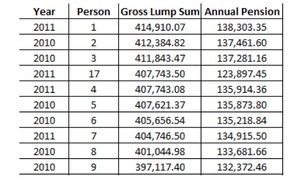
Nine former senior staff of the Health Service Executive were paid lump sums in excess of €400,000 when they retired from their jobs.

The nine pensioners were among 232 HSE employees who have walked away with golden handshakes worth more than €160,000 over the past six years.

Even at the most conservative estimate, these enormous lump sums have cost the taxpayer €58 million…

The 232 former staff are also entitled to generous pensions, with 16 of them in receipt of annual payments worth between €125,000 and €139,000.

Another 78 are paid at least €100,000-a-year in their pension, according to figures obtained under the Freedom of Information Act from the HSE.

Nine HSE pensionsers received lump sums worth more than €400,000 on retirement while 16 get annual pensions of over €125,000…(more at link below)

Nine HSE pensionsers received lump sums worth more than €400,000 on retirement while 16 get annual pensions of over €125,000 (No Expenses Spared, Ken Foxe)

Screen Shot 2016-07-15 at 10.24.57 Screen Shot 2016-07-15 at 10.43.53

From top: Director of HSE Tony O’Brien and Fine Gael TD Josepha Madigan, of Dublin Rathdown at the Public Accounts Committee this morning

Director of HSE Tony O’Brien and members of the Department of Health is before the Public Accounts Committee this morning in light of the revelations concerning the former CEO of Console, Paul Kelly.

During this morning’s meeting, Fine Gael TD Josepha Madigan repeatedly asked Mr O’Brien if the HSE took any responsibility for Console’s finances.

She was fairly dogged, in fairness.

From the meeting…

Tony O’Brien: We were not Console’s regulator, we were not its primary funder. We were purchasing a certain range of services from Console which were being received, which continued until yesterday. Which will now continue in another organisation. We have no powers over their fundraising activities or those other extraneous matters.”

Jospeha Madigan: “Just on that point that you say there, Mr O’Brien, and I heard you on Sean O’Rourke (RTE Radio One show)… you also said that you partially funded Console. To me that’s actually missing the point. The main principle still applies, you’re still giving a significant amount of money to this charity so it doesn’t matter whether its partially funded or not. The same principles still apply, the same oversight should apply in relation to that particular charity and I don’t think that’s a good enough response, in my view.”

Later

Madigan: “When you talk about value for money, it seems, putting the services to one side, it seems extraordinary that you say that you’re satisfied in relation to what’s transpired.”

O’Brien: “Well, can I explain why? And it does go back to an earlier point and I know you don’t necessarily agree with where I’m coming from on this. The services are all we paid for. Our engagement with that organisation was…”

Madigan:Are you abdicating all responsibility from oversight of Console?

O’Brien: “What I have said and what I’m saying clearly…”

Madigan: “I’m asking a question…”

O’Brien: “You’re seeking to frame it in a way that I can’t give you a yes or no answer..”

Madigan: “That’s what your implying..”

O’Brien: “What I’m saying..”

Madigan: “That’s what you’re implying…”

O’Brien: “If that was the case why would we have concocted this very extensive internal audit. What I’m saying is we…”

Madigan: “Which should have been done, with respect, many years beforehand, many years beforehand. Do you accept there’s any failings on behalf of the HSE for Console?

O’Brien: “The failings that are in the report on Console, which you’ve had an opportunity to read, are failings within Console. Clearly, at any point in time, with the benefit…”

Madigan: “Do you accept any…”

O’Brien: “Can I answer the question?”

Madigan: “No, because, no because you’re saying the failings are within Console itself. Do you, Mr O’Brien accept that the HSE had a responsibility towards Console? Do you accept any, any responsibility?”

O’Brien: “We had a responsibility to the provide funding in relation to the services they were providing to satisfy ourselves, the quality of those services, and when significant issues of concern…”

Madigan: “But why didn’t you carry out inspections when you could have done that? You..”

O’Brien:It’s very difficult for a witness to answer questions if they only get the first 50% of their answer out.”

Madigan: “Go ahead but…”

O’Brien: “If I could answer the question, it may answer the next question that you’re trying to pose to me. When issues of concern arose about financial governance, the audit was initiated. Prior to that, there had not been unresolved issues which led to that decision. Obviously, officers have to make judgements at all times. With the benefit of hindsight yes, maybe the decision could have been made earlier…”

Madigan: “OK, maybe the decision could have been made earlier. Will you accept the failings on behalf of the HSE in relation to the governance  of Console?

O’Brien: “No, I do not accept. We were not responsible for the governance of Console. Console is a separate legal entity. Our only responsibility can be in relation to the oversight..”

Madigan: “So you’re saying the HSE has absolutely, is absolutely blameless thus far?”

O’Brien: “I didn’t say that.”

Madigan: “But that is what you’re saying, Mr O’Brien.”

O’Brien: “If you were to review the transcript, you will find I didn’t say that.”

Madigan: “I have read your transcript at length..”

O’Brien: “No, no, the transcript of our discussion right now. At no point have I said the HSE is blameless.”

Madigan: “You’re not saying, you know what you’re saying, Mr O’Brien, you’re hiding behind words and you’re very good at it.”

O’Brien: “Can I say something? Chairman…If the PAC were an airline, I’d be in the top tier of the frequent fliers programme, right? So I expect to be in here a lot. As I was with the previous committee. The committee members know what I mean. We have provided all the specific documentation the committee asked us to provide. We’ve come as required, now we’re going to do our best to give you all the information that we can. But sometimes it’s very difficult if I only get the first few words of an answer out..”


Watch live here

Previously: Con Sold

90389454
rory

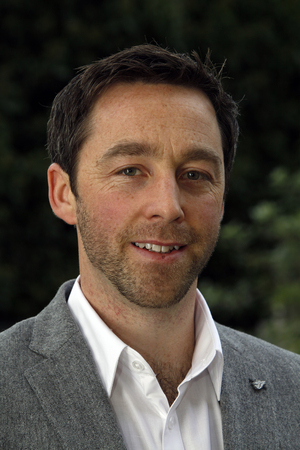
From top: Health Minister Leo Varadkar with the proposed site of the Children’s Hospital with Nathan Evans (left) and his sister Olivia; Dr Rory Hearne

Ours is a deeply unequal health system where sick children who are reliant on the public system are left waiting for months and even years while children whose families can afford it are avoiding the waiting lists and accessing care through the private system.

Dr Rory Hearne writes:

The numbers of people on hospital waiting lists in this country are truly shocking. There are now almost half a million (that’s ten per cent of our entire population!) waiting for various forms of treatment or assessment in our public hospital system.

If we look at children specifically we can see that the numbers of children waiting to be seen in hospital day cases has risen by a third (33.7%) in just over a year (from December 2014 to March 2016).

Meanwhile the number of children on inpatient (often surgery) waiting lists has increased by 18% in the same period.

This shows just how far away we are from putting in place the aspirations of the 1916 Proclamation that aimed to cherish “all children of the nation equally”.

So while the state splashed out on the recent celebrations and commemorations over ten thousand sick children (11, 145 to be exact) are waiting to be seen for an appointment in our public hospitals.

What a Republic to be proud of!

While most of the media coverage so far has looked at the overall waiting lists numbers, including both adults and children, I have analysed the waiting list figures released by the National Treatment Purchase Fund to look specifically at the numbers of children who are waiting to be seen in our hospitals. I also looked back at the figures for 2014 to see how the waiting lists have changed.

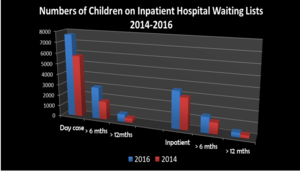
The graph below shows that things have worsened considerably in quite a short space of time. We can see that the numbers of children waiting over six months on day case lists has increased by three quarters (75%) from 1675 to 2944. While there was an increase by 40% of children waiting longer than six months for inpatient care.

Just stop and think about this for a moment. Six months is a substantial length of time in a child’s life. As a parent I know about the reality of waiting for health care (in particular for dental treatment) but fortunately my children have not required to be on a waiting list for something very serious.

I can only imagine the stress and worry on those parents and the needless suffering of children waiting month after month and in some cases, over a year, to be seen in a hospital for illnesses relating to Ear Nose and Throat, Respiratory illnesses, Cardiology, Surgery, Orthopaedics and even Radiology.

childrencarenumbers

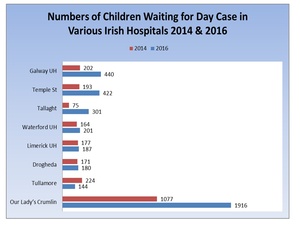
The waiting lists differ from hospital to hospital. In the graph below I show the hospitals with the highest waiting lists in 2016. We can see that for hospitals like Our Lady’s Hospital Crumlin the numbers of children waiting for day cases increased by 43%.

Some of our regional hospitals like Galway and Waterford are also notable for their high waiting lists and significant increases over the last year.

2

The reasons for waiting lists are complex but there is no doubt that the austerity cuts and the failure to provide sufficient funding to our public health system is a large part of it.

There has been some debate in the media recently about the “high” level of spending on our health services and the resultant claim that the system is the problem.

But the system is in chaos – with underpaid staff, closed beds, inadequate facilities – not because of the lack of effort or capabilities from the people working in the health system but due to its chronic under resourcing.

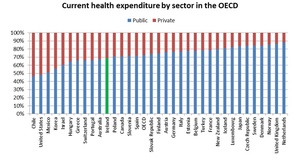
If we look at the actual numbers we can see from the graph below that Ireland’s spending on health as a % of GDP at 8.1% is below the OECD average of 8.9%.

And most importantlyy only 68.5% of health spending in Ireland is public (i.e. 31.5% is private) versus the OECD average of 72.7% and countries such as the Denmark where it is 84.3% and the UK where public spending is 86.6%.

This means that only 5.5% of GDP is spent on public health care in Ireland versus 7.3% in the UK.

3

We can see that a relatively high proportion of spending on health in Ireland is private. This means that access to health care in Ireland is strongly influenced by private individuals’ and families’ ability to pay for it privately.

The public health system in Ireland does not provide universal comprehensive accessible healthcare like the National Health Service in the UK. So those who can afford it are clearly buying a greater access to healthcare than lower income households in Ireland through the private hospitals and clinics (who highlight this point in their advertising).

Also people who don’t have a medical care or health insurance are charged for use of the public system as well.

This is a deeply unequal health system which results in these massive waiting lists and the inequality whereby sick children who are reliant on the public system are left waiting for months and even years while children whose families can afford it are avoiding the waiting lists and accessing care through the private system.

This can be classed as nothing other than an apartheid health system. This is grossly unfair and unequal. It is reinforcing an already unequal society for tens of thousands of children.

The waiting lists show that we need a properly funded universal public health system that can provide equal and timely access to high quality treatment for all our citizens.

The public demonstrated in the recent election that would rather forego tax reductions such as the USC in order to see a properly funded universal health system.

So whatever never government is formed has the public support to do it – it just has to have the political will to implement it.

Dr Rory Hearne is a policy analyst, academc, social justice campaigner and  independent candidate for the Seanad NUI Colleges Panel. He writes here in a personal capacity. Follow Rory on Twitter: @roryhearne