

Way.
Revealed: The most popular names for Irish babies born in 2018 (RTÉ)



Rory O’Farrell, of the OECD, tweetz:
Ireland has the EU’s 3rd fastest rising house prices.
Meanwhile…
Increase in supply of new homes is working. More new homes built in 2018 than any other year this decade. Hard at work creating the conditions for even more in 2019 https://t.co/Y3yci4XfPs
— Leo Varadkar (@campaignforleo) January 18, 2019
Earlier: Not Fit To Hold A Candle

Chester House in Dublin 7 was the location of an unregistered hostel for 27 separated teenage girls seeking asylum in 2009 and where the Children’s Ombudsman found the only staff present at night were two security staff
Between 2010 and 2017, 28 “unaccompanied minors” or “separated children” went missing from State care.
These are people under the age of 18 who arrive in Ireland seeking asylum without being accompanied by a parent or a guardian.
According to Tusla, four separated children went missing in 2010; six in 2011; two in 2012; two in 2013; one in 2014; five in 2015; five in 2016; and three in 2017.
Separated children don’t reside in the Direct Provision system, where other asylum seeking adults and families reside.
Instead, since 2010, separated children have been mainly cared for in foster care settings.
This followed a decade of separated children largely residing in mainly unsupervised hostels – from which hundreds such children went missing.
For example, in June 2007, five Nigerian girls, the youngest of whom was aged 11, went missing from their accommodation in Ireland and there were fears at the time that they were being used in Ireland’s sex industry.
In a 2009 report by the then Children’s Ombudsman Emily Logan, she found a stark difference between the unregistered (seven) and registered hostels (two) used by separated children in Dublin at that time.
She examined the unregistered hostels with addresses at Staircase Hostel and Brehon House, both in Dublin city centre and both of which accommodated 30 people; Sandford House, Dublin 6; Chester House, Dublin 7: Ashton House, Dublin 9; and Riversdale in Co Dublin.
The registered hostels she examined were Lansa House, Dublin 4 (which opened in 2008); and Belleview House, Dublin 24 – both of which accommodated six young people.
She found the registered hostels were run by care staff, while the unregistered hostels were run by managers who were not qualified care workers.
She found that, at night time in the unregistered hostels, the only staff present would have been security staff – while registered hostels would have had five qualified care staff at any one time during the day and two available at night time.
At the time of writing her report, Ms Logan also wrote about the “alarming” number of children who were disappearing from State care.

This Is My Life: Growing Up Undocumented In Ireland
A new film made in collaboration with Migrant Rights Centre Ireland, Young, Paperless and Powerful and Blue Hue Productions
Greg Byrne writes:
“Right now there’s no line for them to join. No form they can fill out. No way to lift the burden of growing up undocumented in Ireland. Let’s change that. Young, Paperless and Powerful are showing what it’s like to grow up undocumented in Ireland. They know the problems and they have the solution. It’s time for everyone else to listen.”
Previously: Paperless Birthday Card
“You’re Scared The People Will Take You Away”
Thanks Greg
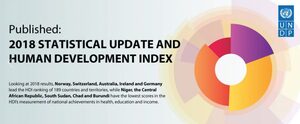
You report that the United Nations has found that Ireland is one of the best places to live. According to the UN’s Human Development Programme Index, we sit behind only Norway, Switzerland and Australia.
This is very strange because, based on a lifetime of reading The Irish Times and listening to RTÉ, I had assumed I lived in a backward, misogynistic, capitalist hellhole.
Karl Martin,
Bayside,
Dublin 13.


The European Union’s statistical organisation Eurostat has published its regional yearbook for 2018.
In relation to the GDP of countries within the EU, Eurostat has found:
“One of the most striking details of the map [top] is the presence of pockets of relatively high wealth creation that are apparent for almost every capital city region.
“Nowhere was this more apparent than in one of the two capital city regions of the United Kingdom, Inner London – West, where GDP per capita was more than six times as high as the EU-28 average in 2016 (611 %).
“The next highest ratios were recorded in Luxembourg (a single region at this level of detail; 258 %), Southern and Eastern (the Irish capital city region; 217%) and Région de Bruxelles-Capitale / Brussels Hoofdstedelijk Gewest (the Belgian capital city region; 200%).
“These were the only four regions across the EU where GDP per capita was at least twice as high as the EU-28 average, although Hamburg (Germany) had a ratio that was only slightly lower and was atypical insofar as its GDP per capita was above that recorded for the German capital region of Berlin.”
The report can be read in full here


This evening.
The Office of the Press Secretary of The White House announced that, along with taking part in a commemoration for the 100th anniversary of the armistice which ended the fighting in World War I in Paris, France, US President Donald Trump will visit Ireland in November.
Yes.
Indeed.
Quite.
Our thoughts exactly.
FIGHT!
Statement from the Press Secretary (The White House)
Via Richard Chambers
UPDATE:
The visit of President Trump does not represent the wishes of the many people in Ireland who strongly object to the regressive & damaging policies he pursues. Instead of red carpets, harps and dancing girls he must be met with strong voices of opposition to his policy platform.
— Social Democrats (@SocDems) August 31, 2018


Laura Gaynor twasks:
Genuine question: Why is Irish stew so commonly put forward as a sort of national food representing Ireland?

John Braine tweetz:
Spilt summer beer on my shorts that look like Ireland but only the 26 countries.
One for the buke.
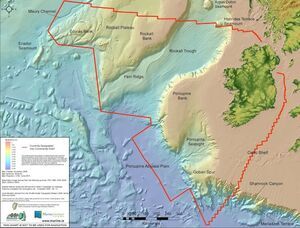
Ireland’s real coast, mapped
Via Coast Monkey:
Our marine territory extends far beyond our coastline encompassing 880,000 km2 and this huge area is more than 10 times our land mass. The map above shows this enormous area.
This map was developed by a joint venture by the Geological Survey of Ireland and the Marine Institute, and it shows Ireland’s current designated Irish Continental Shelf, which is one of the largest seabed territories in Europe.
The continental shelf is the extension of a State’s territorial waters, where the natural land extends under the sea to the outer edge of the continental margin beyond 200 nautical miles from the coastline baseline.
Well, there goes plans for a second edition of the buke.
Damn you, Coast Monkey.
Ireland’s coast: Through the eyes of the map maker (CoastMonkey)
Earlier: Gas Man, Altogether
Thanks Spaghetti Hoop