

Tag Archives: Mooney on Monday

From top a screenshot from yesterday’s Fine Gael social media campaign attacking Fianna Fáil; Derek Mooney

Being active on social media is not the same as being good at it. This is something Fine Gael learned yesterday morning.

At 9am it launched a digital attack claiming Fianna Fáil is not producing policies. Pretty basic stuff from a party in government, you’d have thought.

Hard to screw that up. Attack the main opposition party for not doing enough. Claim they are just criticising you, trying to score points and acting like an… well… an opposition.

To be fair, Fine Gael got most of the basics right. They produced a decent digital video, loaded with graphics and charts and pumped it out across social media platforms.

They backed it up with a press release in the name of Colm Brophy TD, hoping that the following day’s print media would pick up on it.

So far, so meh… yet, within barely an hour their digital campaign was not just misfiring, it was backfiring and going down in flames.

While the boffins in muppet… sorry, Fine Gael… labs got the presentation side right, they made an unholy mess of the content.

The message was not just wrong, it was badly wrong and now most of the Fianna Fáil parliamentary party was online telling everyone just how much they have been doing.

The pushback was fast and furious, but it did not come from Fianna Fáil Inc. via its official social media accounts.

It came organically, and within minutes, from individual Fianna Fáil TDs such as Jim O’Callaghan, James Lawless, James Browne, Fiona O’Loughlin posting lists of the legislation they had each produced.

They made the point that some of these initiatives, such as James Browne’s Mental Health Act, Jim O’Callaghan’s Parole Act and Michael McGrath’s Consumer Protection Act had been adopted by the Government and become law.

While others, like James Lawless’s four private members bills on Social Media transparency, Broadband, Research & Development and Drones), have been blocked by Fine Gael, despite their having support across other parties – an issue I have mentioned here before.

How dare Fine Gael accuse them of doing nothing. The first movers were soon joined online by most of their colleagues, each adding to the list of bills and reforms proposed, notably Darragh O’Brien TD who helpfully posted a list of 10 housing measures proposed by Fianna Fáil since 2017.

Within an hour or so, the Fine Gael attack had become a retreat. Even Colm Brophy, in whose name the statement appeared, was nowhere to be seen.

After two identical posts within a few minutes of each other; he scented blood in the water, realising that it may well be his, he promptly cleared off. The great Brophy attack had shown, to quote the great Paul Keating, all the ferocity and viciousness of being flogged with a warm lettuce.

This is perhaps unfair to Deputy Brophy, whose only real role in the debacle was to lend his name to this guff.

Perhaps the next time he is contacted by some Fine Gael press officer with another cunning stunt, he will do what any self-respecting government backbencher should do in such a situation and tell them to go ask some junior minister to do it, sure isn’t that what they’re there for? Failing that send them to Noel Rock.

I mention all of this because we are about to have – courtesy of the British general election – a five-week-long, big screen preview of the digital election campaign strategies, albeit on a smaller scale, we will likely see rolled out here next March, April or May.

Across the board UK parties are lining up significant online and digital campaigns. Back in 2015 British political parties spent £1.3m on the preferred platform for online political ads, Facebook, alone. That figure rose to £3.2m in the 2017 and is set to soar higher this year.

This does not include the other platforms or what the bigger parties spent in the pre-campaign period.

But paid, targeted political ads are just a portion of the digital campaigning strategy, as this BBC review of the first 24 hours of the UK digital campaigns show.

Well-produced content is reaching as many people as paid advertising and often has a bigger impact. Momentum, the Corbynite/Labour group raised £100,000 in less than 12 hours via free videos and posts shared by its supporters on Facebook and Twitter.

The last election here for which there are any figures is the 2019 European election. Though, according to ElectCheck 2019, a research report carried out by the Institute for Future Media and Journalism (FuJo) at DCU, the data from it is inconsistent making it impossible to come up with a comprehensive picture of the nature and scale of online political advertising here.

What a pity Fine Gael frustrated James Lawless’s Social Media (Transparency) Bill and stalled it back in Dec 2017. See how all this stuff comes full circle?

The little evidence there is comes from a review of the €60k spent on political ads on Facebook alone during the Europeans. To put this figure in context, it is still less than the failed Tory leadership candidate Dominic Raab spent in test ads for his bid for the top job.

Even from this anecdotal evidence you get a sense who is taking digital campaigning seriously and who is making it work. Broken down by party you find that Labour and Fine Gael each splashed out over two and a half times what Fianna Fáil spent on promoting its European Parliament candidates.

As I mentioned two weeks back, it is likely that Fine Gael will be studying the Conservatives digital playbook hard over the coming weeks and may have already planned a post-election debrief with their Tory counterparts as they did before the 2016 general election.

What Fianna Fáil will take from it is a bit more difficult to say, though if its MEP Facebook campaign spend (above) is anything to go by… it is not a lot.

While many of its spokespeople and candidates have developed solid social media and digital presences, many have not. The overall impact is less than the sum of its parts.

While yesterday’s Fine Gael limp firecracker was quickly doused by Fianna Fáil TDs piling in fast, the party will not have that facility in the throes of an election. Come the campaign TDs will be paying far more attention to the folks at the doorsteps than to posts on their smartphones.

It is then that Fianna Fáil will need its official voice across all platforms. While there were signs that the party was starting to find that voice and developing the capacity to get its message out beyond its existing audience, that work appears to have stalled, if not stopped.

Perhaps the powers that be within Fianna Fáil HQ feel that digital campaigning is not as relevant to them or their potential voters right now and that they can decide, closer to the election, to buy an off-the-shelf package or service that sorts out their presentational deficiencies while they focus on the content.

While yesterday’s fiasco – where FG got the presentation right and the content wrong – may confirm some in that view, I would still advise those to watch the UK election campaign carefully and learn just how critical digital campaigning can be in supporting traditional campaigning methods, not in replacing them.  

I could be wrong. In its defence, Fianna Fáil’s softly, softly program is seeing them make incremental polling improvements, bringing it neck and neck with Fine Gael.

It is a better than even money bet that this is probably enough to see the party increase its number of seats, but is it enough to propel it ahead of Fine Gael?  We shall see.

Derek Mooney is a communications and public affairs consultant. He previously served as a Ministerial Adviser to the Fianna Fáil-led government 2004 – 2010.  His column appears here every Monday.Follow Derek on Twitter: @dsmooney

Rollingnews


From top: Fianna Fáil Leader Micháel Martín (centre) with Timmy Dooley TD (left) and Niall Collins TD; Derek Mooney

During the Tory leadership election the YouGov polling organisation did a survey of Conservative party members to ascertain the importance of Brexit to them.

It Specifically asked how many of them would continue to back Brexit even if it meant the last of Scotland and/or the last of Northern Ireland. Remember these are paid up members of the British Conservative and Unionist Party, the clue should be in the name.

The results were surprising, though not disheartening when viewed from Dublin or Edinburgh.

Almost 60% said that they would happily see Northern Ireland or Scotland leaving the union if that was the price of Brexit. They marginally preferred seeing Scotland go (63%) over Northern Ireland (59%).

Cold comfort for the DUP after a weekend that saw it unable to persuade one single Tory MP to stick by it. 

Since Johnson has come to office it seems that he has viewed this polling result less as an indication of the current state of mind within the Tory party and more as a goal for which to aim.

Though – like the few things Johnson has succeeded in doing since becoming Prime Minister – it is better that he thinks he is saving the Union, as he usually manages to deliver the opposite of that which he set out to do.

In his latest Brexit deal, which may or may not be passed this week with an added UK wide customs union or second confirmatory referendum, Johnson has set his face firmly against Scotland with a ferocity and pig-headedness that is all but guaranteed to end in Scotland voting for independence within the next 18 to 24 months.

A Scottish vote for independence and the break up of the “precious union” of England Scotland, Wales and parts of “Northern Ireland will have consequences for all of us on this island – and it is long past time that we started preparing for them.

While these preparations must include a border poll here, it is not the starting point, nor is it near the top of the list.  While Brexit has fatally damaged trust and confidence between Edinburgh and Whitehall, it has broken down trust here in all directions.

It has damaged trust across the three sets of relationships, the three strands, crucial to progress in the North:

1. Within NI Between communities in the North,

2. Between North and South on this island, and

3. East/West, between these two islands.

While it may seem counterintuitive right now to talk about rebuilding relationships in the run up to a border poll which potentially results in reducing some of them, that is precisely what it required as the Good Friday Agreement is built on these three strands of relationships.

The Agreement, about which Boris Johnson knows so little, is hard wired to even work where the polarities are reversed, in the event of the North voting to exit the UK and join with the 26 counties in building a new all island, Ireland.

I had intended to talk at greater length about this issue and will doubtless return to the importance to Ireland of Scottish independence in the near future, however I did want to devote some space here to allow me to comment on the Votegate debacle.

As one who is not shy about kicking Sinn Féin, Fine Gael, Labour or the Greens when they transgress, I cannot just ignore what has happened and pretend that it is not deeply embarrassing to me and others who back Fianna Fáil.

I know Lisa Chambers, Niall Collins and Timmy Dooley well. I have worked with each of them. I helped Lisa while she was Defence spokesperson and worked with Niall when he played a blinder in the Marriage Equality campaign. I have the highest regard for all three.

It is why I can sincerely say that I have no doubt that there was no venality or malice in what any of them did, but it is also why I have to admit that what happened was a disgrace.

It should never have happened and none of the explanations given can excuse such a blasé attitude to the procedures and processes of our parliament.

I commend Micheál Martin for moving on Timmy Dooley and Niall Collins and temporarily taking them off the front bench (at the time of writing) while the matter is investigated, but it should not have taken Fianna Fáil 24 hours to issue a statement on this.

Surely what was clear by midday on Sunday was also clear within hours of the story appearing on the front of the Irish Independent on Saturday morning?

It does matter whether a motion before the Dáil or Seanad passes with a majority of 42, 43, 44 or 45 votes.

The essential cornerstones of our democracy are that decisions are made by the people who show up, they are made in public, and the votes cast fairly are recorded in an open and transparent manner. Every vote matters, every vote counts and they must each be counted fairly and openly.

The fault does not lie with the system of voting, after all there is a massive display board overhead where you can see the votes as they are cast, it lies with the attitude to voting and the impact of voting.

While the “ah sure, what does it matter if it passed by 10 or 11 votes” attitude can have no place in our parliamentary system, it is hard to pontificate on the absolute sanctity of every single vote when so many of them are blissfully ignored by the government.

This is a point which the mouthier Fine Gael TDs might reflect upon the next time they are just as blasé about defending the Taoiseach nonchalantly quashing another Private Members Bill that has been passed by a clear majority in the Dáil or Seanad by way of a misuse of the money message from Cabinet (an issue I raised here before).

The Votegate saga has done damage, not just to Fianna Fáil, but also to how parliamentary business is seen to be done.

My thoughts on how to tackle the former I will share with colleagues in private, but my straightforward idea on how to address the latter, I am willing to set out now.

I would suggest, as an easy to implement interim solution and pending a more detailed report to the Ceann Comhairle, that the Dáil completely abandons electronic voting for the rest of this session – up the next general election, whenever that may be – and returns to holding all votes by way of divisions.

Having all votes taken by TDs walking through the lobbies and being ticked off on lists, may be time consuming, but it could be a small first step in reassuring voters that votes are conducted fairly and that the people who are supposed to be in the Chamber and voting, truly are.

Derek Mooney is a communications and public affairs consultant. He previously served as a Ministerial Adviser to the Fianna Fáil-led government 2004 – 2010.  His column appears here every Monday.Follow Derek on Twitter: @dsmooney
Rollingnews

Earlier: Push The Button And Let Me Know

 A Limerick A Day


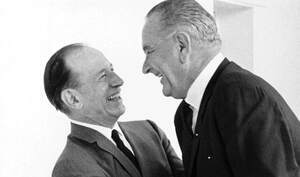
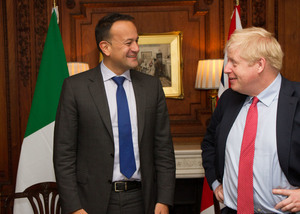
From top: US President Lyndon B Johnson (right) and with his Supreme Court choice Abe Fortas, June, 1968, :  Taoiseach Leo Varadkar and British Prime Minister Boris Johnson in Thornton Manor, Cheshire last Thursday

Visitors to the Lyndon Baines Johnson (LBJ) presidential library in Austin, Texas get to have their photos taken against a life size photo of the 6’ 4” LBJ leaning over them, appearing – figuratively – to bend them to his will. It is called “The Johnson Treatment”.

The original photo featured LBJ’s soon to be US Supreme Court justice Abe Fortas. It is just one of many photos of LBJ applying the eponymous “treatment”, once described by the pre-eminent Washington political columnist, Mary McGrory, as…

“an incredible, potent mixture of persuasion, badgering, flattery, threats, reminders of past favours and future advantages.”

In a fascinating interview at the John F Kennedy library, LBJ’s speechwriter (and husband of the great presidential historian Doris Kearns Goodwin), the late Richard Goodwin tells how LBJ worked his “treatment” on the segregationist governor of Alabama, George Wallace after the Selma marches. Wallace had come to the White House, Goodwin recounts:

“…Wallace comes in, and of course Wallace is about 5 feet 2 and Johnson is 6 feet 4, and so he’s got a big edge on him. And so, he says, “Governor, come in.” So then Johnson sits him down on the couch, where he sinks another three inches, and Johnson sits on the edge of a rocking chair, and leans over until he’s about one inch away from Wallace… he knew the beauty of invading someone’s space, and he did it.”

As Goodwin explains, LBJ set to work on getting Wallace to allow greater voter registration for Black Americans in his State. LBJ finished up saying:

“I don’t want you to think about 1964, I want you to think about 1984. We’ll be dead and gone then. Now you got a lot of poor people down in Alabama, a lot of ignorant people, a lot of folks that need different jobs. You could do a lot for them, George, what do you want after you go? Do you want a great big, marble monument that says, “George Wallace: He built?” Or do you want little piece of scrawny pine laying there across the soil that says, “George Wallace: He hated.”

LBJ gets up and leaves. Wallace is then given the statement Goodwin has prepared announcing what LBJ wants him to do. Wallace dutifully gives it to the press corps, later saying: “[If] He had me in there another hour, he [would have] had me coming out for civil rights.” He was incredibly overwhelming.

Though not remotely in the same league as LBJ in terms of ability, substance or persuasiveness, those who have met Boris Johnson remark on how effusively personable and charming he is face-to-face.

Like many modern politicians Boris Johnson hates to be hated. He desires to please and impress the person in front of him, be it by flattery or self-deprecation.

Where LBJ used his power as well as personal skills, traits and experiences to bend others to his will, Boris Johnson has just one tool: charm. A charm that the former editor of the Daily Telegraph Matthew d’Ancona, described as

“…a confection, a stage act with roots in his true nature but with many affectations and contrivances. He is, one should never forget, “Al” (for Alexander) to his loved ones. “Boris” is a persona: it is his populist Conservative version of Ziggy Stardust, The Rock or Borat. It is a means to an end – and a potent one.

One of those potent ends was getting into Number 10 and it has so far worked. A sad reflection on the state of UK politics today but, as the Guardian’s Simon Jenkins puts it, “charm is politics’ deadliest weapon”.

Boris’s charm has not only landed him the top job, it has obscured many to the reality that Johnson (in the words of Simon Jenkins):

“…emerges from his biographical record as incompetent, lazy, dissolute and a liar, yet the public’s response is that he is “our kind of liar”.

While there are rumours about what Boris said to Leo when they met alone in Cheshire last Thursday, including tales of a one-page note produced from Boris’s inside jacket pocket that set out the British proposal, only two people know for sure.

That said, I do not think it is too unreasonable or far-fetched to imagine that the full 90 minutes was not taken up with the finer points of customs union systems or consent mechanisms.

While Leo Varadkar can claim a decent grasp of such detail, it is a boast the British Prime Minister cannot make. This is the same Boris Johnson, after all, who was caught bluffing dreadfully about trade tariffs on live TV by Andrew Neil.

It is therefore difficult not to suppose that those 90 minutes of private talks focussed less on specifics and more on the general politics of their two situations.

How could it not? Here were two politicians, leaders of centre right parties who have assisted each other in the past, each now facing an election. How could they not discuss and explore the politics of what they each face, especially when it is so intertwined and dependent on what happens with Brexit.

Though some Irish pundits were wary of Leo’s heading to the meeting, it was Johnson who had the most to lose. Boris Johnson went in on the backfoot, especially after the debacle of a “senior Downing Street source” (i.e. Dominic Cummings) briefing The Spectator that the UK government was ready to punish those EU countries who back an extension beyond October 31 and that the Taoiseach “doesn’t want to negotiate”.

Besides this briefing being politically illiterate (an extension beyond Oct 31 requires EU unanimity, so any threat to punish those who backed it means all 27) it also wrong-footed the British government’s own efforts, even if they are only about avoiding blame for a no-deal.

Johnson went into the Leo encounter with no choice other than turning the charm up to a spinal tapping 11. From Boris’s less nuanced perspective he would be sitting alone with the one man who held the key to unlocking his Brexit difficulty.

Johnson (wrongly) sees Irish support for the Backstop as the main obstacle to his securing a withdrawal agreement he can get through the House of Commons. Wrongly, because binning the Backstop is not in Ireland’s gift. The EU believes in the Backstop’s purpose, the avoidance of a border across Ireland, as much as we do.

The task Johnson set himself was enormous. Charm Leo to backing down on the Backstop. If he could do that then he could offer to help ease Leo’s political woes through the removal of the threat of a hard-crash-out-Brexit.

Leo arrived under no such pressure. Unlike Boris, who did not grasp that they could not simply talk the Backstop away, Leo absolutely knew they couldn’t. His mission was twofold. Deny the Brits any chance to blame him for refusing to talk and just listen to what Johnson’s officials had to say and appraise Brussels.

This Leo and his officials did. But he did just a little bit more. He came out looking and sounding way too happy. While their joint statement was broadly positive and talked of possible pathways, it was still bland. So, where did all the post meeting hype and press talk of significant movement from British side and changing the picture substantially come from?

Was it just Irish political optimism stemming from what the officials discussed or did the Boris attempt at his own Johnson treatment have some impact? Did Leo succumb, even briefly, to Johnson’s charm and blandishments?

Even if he did, there was never any risk of it turning into anything real, though his excess of positivity did briefly deflate the hopes of those in the UK wanting a second referendum, as well as grossly inflating the desires of those in Leinster House wanting a snap election.

But while charm may be a weapon, it is not a currency. Something confirmed by the briefings coming from Brussels last night and this morning.

The signals, so far, are that no significant progress has been made and that the Brits need to move further on Northern Ireland to secure a Withdrawal Agreement by week’s end. Johnson has backed himself into a corner from which charm alone cannot release him.

Derek Mooney is a communications and public affairs consultant. He previously served as a Ministerial Adviser to the Fianna Fáil-led government 2004 – 2010.  His column appears here every Monday. Follow Derek on Twitter: @dsmooney

Pics: Getty/Noel Mullen via Rollingnews


From top: UK prime Minisister Boris Johnson; Derek Mooney

Opening his Sunday morning BBC1 show yesterday, Andrew Marr wondered if Boris Johnson’s cunning Brexit plan was to pretend that he has a cunning plan to cover the fact that he doesn’t have a cunning plan.

Mr Marr has a point. Most of Johnson’s cunning plans have thus far failed. His ruse to prorogue parliament was demolished by the Supreme Court, and he has still to win a single vote in the House of Commons.

He entered Downing Street at the head of a government with a majority (via the DUP) of one. Now, thanks to his handling of the grandest of the Tory grandees, it has a majority of minus 42.

Yet, despite these failures and setbacks, Johnson is doing well in the polls. The Tories now enjoy a steady lead over the Labour party of anywhere between 7% and 13% (YouGov polling).

As with John F Kennedy’s handling of the Cuban missile crisis, it seems that the worse he does, the more popular he gets.

This is Johnson’s cunning plan. A speedy election putting the Tories back with a solid majority, no longer dependant on the DUP and ERG. Johnson believes in nothing as deeply as he believes in his destiny to lead.

Much of the analysis of Johnson’s recent Backstop replacement pitch has concluded, wrongly in my opinion, that it is solely motivated by a desire to deliver a No Deal Brexit where the EU gets the blame.

There is some truth to this analysis, but the proposal has more depth to it than just this. We do ourselves no favours by not considering its underlying strategy.

Without question the latest British proposals do not satisfy Irish or EU demands for the protection of the Good Friday Agreement, but they are not intended to. The British have moved, not compromised, and have done it for a reason.

The proposal are not about dismantling the Backstop per se, it is about turning back the clock and rerunning the negotiations with the benefit of hindsight.

When the negotiation process started in April 2017 the UK and EU agreed it would be done in two phases. The first phase would deal with the “divorce” issues arising from the UK leaving the EU and would have three distinct elements:

* Guaranteeing citizens’ rights for EU citizens in the UK and vice-versa;

* Settling the UK’s financial commitments;

* Ireland and Northern Ireland specific issues.

Only when full agreement on these three topics was reached could negotiations move to Phase 2. Phase would deal with the future relationships between the EU and UK.

We are still at the Northern Ireland element of phase 1. 

Hard line Brexiteers, including some in Cabinet, opposed May agreeing to this timetable and sequence seeing it as a grave tactical error.

They saw the requirement to agree Irish Border issues in Phase 1 as depriving them of having the border as negotiating leverage in the future trading talks in Phase 2.

Now that the Brexiteers hold sway in Number 10 they are determined to unpick the process. The latest British proposal is their attempt to turn back the clock and move the resolution of the Irish border from Phase 1 to Phase 2.

While they may claim that kicking the fine detail of Irish border arrangements past the withdrawal agreement is because the issue is so complex and tied up with future EU/UK trading relationships, it is all about leverage.

It is why Brexiteers like Rees-Mogg and Mark Francois have fetishised the Backstop. This had nothing to do with concern for Northern Ireland, the consent of Stormont or the precious union, but had all to do instead with Britain, i.e. England, competing with the EU after Brexit as a Singapore-Sur-Thames.

The Backstop never posed a threat to Northern Ireland’s constitutional position, but Brexiteers knew they needed a highly charged argument on which to focus if they were to undo May’s denial of the border as leverage.

They quickly identified the Backstop as that focus and set about hyper charging a straight-forward matter into an issue of constitutional consequence.

How could the Backstop be such a threat when it has only ever been an insurance policy to ensure the commitments (at Paragraph 49 of 2017 EU/UK joint report) made by the British government to support the all-island economy and North/South alignment were honoured. It says:

In the absence of agreed solutions, the United Kingdom will maintain full alignment with those rules of the Internal Market and the Customs Union which, now or in the future, support North-South cooperation, the all-island economy and the protection of the 1998 Agreement.

The chances of the Backstop ever being invoked were intended to be quite low. It is only come into effect if the UK went for maximum realignment and divergence from existing EU rules and regulations.

We now know that this is precisely the route Johnson, and his financial backers, plan to go. He even said it in his August letter to EU Council President Donald Tusk, twice even:

“…the laws and regulations to deliver them will potentially diverge from those of the EU. That is the point of our exit and our ability to enable this is central to our future democracy.”

“…we cannot continue to endorse the specific commitment, in paragraph 49 of the December 2017 Joint Report, to ‘full alignment’ with wide areas of the single market and the customs union.”

His solution is to therefore offer vague and hazy, last minute proposals in the hope that an EU eager to avoid a no-deal speedily inserts them into Theresa May’s Withdrawal Agreement in place of the existing Northern Ireland protocols.

It’s a risky strategy. He may feel he can pull it off by stressing to the EU that he can get his version through Parliament and that the EU will get the twin benefits of (i) avoiding the mayhem of a no-deal-crash out and (ii) a future British negotiating partner (post UK election) with a majority to deliver what they agree at talks.

It is not a totally unattractive package, but Johnson is still the one who gets the most. He secures his position for five more years, goes down in political history as the man who delivered Brexit, but most importantly he gets the leverage he vitally needs in Phase 2.

He knows the EU is committed to protecting the Good Friday Agreement and he is happy to do that in Phase 2 in return for a trade deal that benefits England.

The ease with which he has proposed two borders is the giveaway. The border in the Irish Sea to protect the EU Single Market is a hint of how much further he is prepared to go. The Customs Border across the island is just there to be negotiated away.

Brexit Secretary, Stephen Barclay was keen to remind Marr yesterday that:

“…we are talking about 1% of the total UK-EU trade, so there needs to be a degree of proportionality about this.”

The 1% refers to Northern Ireland trade.

Barclay and David Frost, Johnson’s lead Brexit negotiator have spent weeks touring EU capitals, including Dublin. They have heard Irish concerns on protecting the all-island agri-food sector and heeded it, hence the Single Market protections they have foisted on the DUP.

What the DUP seems to have not yet realised is that this is all just a ploy.

What Johnson wants and needs is a Phase 2 process free of any dependence on the DUP or their Brexiteer allies.

Then he can deliver the Northern Ireland only backstop that May agreed, or something similar, but at a much higher price.

It’s quite a smart strategy from an English Tory point of view, but it is not one that will work. It won’t work because it repeats the same basic mistake that the UK has made since day one, it misreads the EU and fails to understand how it works.

Still, you cannot help admiring Johnson’s sheer brazenness in trying it.

Derek Mooney is a communications and public affairs consultant. He previously served as a Ministerial Adviser to the Fianna Fáil-led government 2004 – 2010.  His column appears here every Monday.Follow Derek on Twitter: @dsmooney
Pic: PA wire

From top: DUP leader Arlene Foster with  DUP MP Sammy Wilson (on crutches) after a meeting with Taoiseach leo Varadkar in 2017; Derek Mooney

Many, many years ago I went to see the great Billy Connolly perform live at the Gaiety theatre. He talked about his brief time working as a riveter in the Clyde side shipyards.

At one point he asked the audience if we recalled those old British Pathé newsreels of jaunty, merry Glasgow shipbuilders waving their hats and cheering loudly as the ship, on they had been working, was launched and slid into the Clyde.

As Connolly reminded us, though the newsreels portrayed these workers as delighting in the completion of another fine ship, the simple reality what they were actually waving goodbye to their jobs as most of them would be laid off the next day.

Today’s DUP is very much like those shipbuilders. In happily cheering-on the prospect of a hard Brexit they are celebrating the end of any economic future for Northern Ireland.

In going for hard Brexit, Arlene Foster, Sammy Wilson and most – though notably, not all – of the DUP leadership team are opting for the worst of all possible worlds.

They stand on the periphery of the UK, as currently constituted, and demand all the disadvantages of a full-on Brexit with its promise of unspecified future international trade deals, without any attempt to hold on to the advantages that the EU has brought.

What has been an offer from Michel Barnier and the EU in the withdrawal talks is a form of Special Economic Zone (SEZ) for Northern Ireland. Several months ago a colleague of mine, Tom Hayes and I, put together a short paper setting out how special economic zone for Northern Ireland might operate.

Becoming a SEZ would give the North, an economy that remains way over dependent on the public sector, the potential to become a gateway to the European Union not just for the UK, but for those with whom the UK believes it will soon be able to do great trade deals.

The advantages of a NI SEZ were not necessarily a long way down the road. Making Northern Ireland a special economic zone would make Belfast, Derry and Newry attractive locations for those small and medium companies who will need to move their operations from a-post-Brexit-GB but are finding Dublin too costly

In rejecting this proposal Arlene Foster has shattered not just the illusion that the DUP is Northern Ireland’s business-friendly political party, but also the idea that it is a party of hard political pragmatists wanting the best for their community.

It is now neither.

As its approach to Brexit has shown, the DUP is prepared to sacrifice businesses large and small, national and international and they 1000s of jobs they bring in favour of political point scoring on its artificially constructed constitutional question.

I say “artificially constructed” because the Joint EU/UK Report from December last year, as signed and agreed by the British government. writes the Good Friday Agreement into the Brexit deal, and does it several times (see articles 42 – 56).

The Good Friday Agreement underpins Northern Ireland’s constitutional position, reaffirms the principle of consent and states that the constitutional position of Northern Ireland within the UK cannot change without the support a majority. Note: this means a simple majority, not a weighted one as some try to pretend.

The EU acknowledges all of this, so what is the DUP’s problem?

Using Sammy Wilson’s arguments, surely the inability to use Northern Ireland sterling banknotes in shops, pubs or stores in London or Manchester is a threat to the Union?

Of course, it isn’t. The problem here is that the few remaining backwoodsmen who still baulk at the consent principle and the Good Friday Agreement see Brexit as a sly way to weaken that Agreement and are being facilitated by a weakened DUP leader who tries to mask her weakness by talking tough.

The DUP’s much vaunted Westminster deal which kept Theresa May in office after the last British general election is all but over, though it may take a few weeks for the formal acknowledgement of this.

The one-time party of “no surrender” has managed by political petulance and stridency to surrender any leverage it had over May and chosen instead to become fellow travellers of the Johnson and Rees-Mogg Tory rump.

Foster, who had shown signs of wanting a better relationship with the South, now seems content to now sacrifice Northern Ireland’s viability in a desperate attempt to save herself.

But, her time as DUP leader is limited. It is quite likely that she will not still be leader by the start of the second quarter of 2019.

Though Arlene’s leadership is doomed, it is not because of Brexit. It is due to her inattentiveness as First Minister as recently exposed during the RHI “Cash for Ash” inquiry.

That inquiry is due to report sometime after Easter next year. Most expect the report to be highly critical of Foster as both Minister First Minister and her stewardship of the Northern Ireland Executive.

Neither the moderate or hard-line wings of the DUP will be happy to keep a damaged and discredited Foster as leader after the report. Especially in the aftermath of Brexit with the possibility of either a Westminster election or a Second Referendum, not to mention the possible return of an Executive and Assembly in the North.

It is more than likely that Foster will – just before the report is published – be persuaded to stand aside for the good of the party and make way for new leader.

But who will that leader be?

If the DUP is wise – and there is little evidence around just now to suggest that it is – it will pick somebody from the next generation.

The months following the UK’s formal exit from the EU at the end of March are going to be very tricky, even if there is an extended transition period.

The political spotlight that now focuses on Northern Ireland will likely move to Scotland, post Brexit, as it once again looks to independence within the EU, rather than dependence within the UK.

As the UK slowly comes apart and its current intransigence is seen by Unionists, in hindsight, to have contributed to its dismantling.

While the binary nature of Northern Ireland politics means that the DUP will not disappear within the next few electoral cycles, its long-term future cannot be guaranteed.

As I have said here many times Brexit will change politics in Northern Ireland. This will have major implications, many positive, for parties on this side of the border, but hanging around and waiting to see how that works out, rather than trying to shape it now, is a strategic error.

Derek Mooney is a communications and public affairs consultant. He previously served as a Ministerial Adviser to the Fianna Fáil-led government 2004 – 2010. His column appears here every Tuesday Follow Derek on Twitter: @dsmooney

Pic: AFP


From top: Mary Lou McDonald at last year’s Sinn Féin Ard Fheis last year; Derek Mooney

There have been a few Fr Ted references here over the past few days, so let’s start off with another one. Remember that episode of Fr Ted where the lads need to raise money to fix the water leaks in the parochial house?

You know the one, they destroy the car Bishop Brennan gives them for the raffle and thus have to rig the draw to ensure that Dougal’s ticket wins it. Ted gets Fr Billy “SpinMaster” O’Dwyer to do the disco before the draw, but there’s a problem.

Fr Billy has only one record with him and it’s “Ghost Town” by The Specials. Undeterred, the Spinmaster plays it over and over and over again, oblivious to the fact that the crowd have stopped listening.

I like Ghost Town. Not only is it a good song, it is a serious piece of popular social commentary, but even the loyalist Special fan would concede that forcing anyone to listen to it over and over again could turn them against it.

This is something that Sinn Féin’s “spinmasters” Mary Lou MacDonald and Michelle O’Neill could do well to bear in mind.

Like Fr Billy, they have a flashy new rig complete with powerful amps and speakers, but they too have only one record to play. Theirs is the “unity poll call” and they belt it out over and over, because just like Fr Billy, they have nothing else to play.

But the more they go on playing and replaying it, the more they risk turning people against a really fine tune that should be heard by a wider audience.

If we have learned nothing else from the referendums held on these two islands over the past three years, we have surely learned that they only succeed when you prepare for them.

The lesson of Brexit is that you do not ask people a confused and confusing question about which a full and detailed discussion has not taken place.

In Brexit, the British held the vote first and then spent the past two years debating and analysing what it was they voted-on and agreed.

They went into the vote at a time when there was plenty of polling warning that people were not just ill-informed about the benefits of Britain’s EU membership they were startlingly misinformed about them.

A 2016 Ipsos MORI survey, conducted three months before the Brexit vote, showed, among other things, that British people wrongly thought there were three times as many EU immigrants in the UK than there really are.

Jump forward to just last week and you find a poll conducted for Queens University Belfast that shows just 21.1% of Northerners absolutely ready to vote for Irish unity post Brexit.

That is nowhere near the figure required, though the situation is not quite so bleak as the same poll found support for remaining in the United Kingdom at only 50.3%. Even so, it is hardly a great starting point from which to launch a unity/border poll.

Meanwhile, 69% of Northern Irish voters would favour remaining in the EU if there was another Brexit vote. Up from 56% in June 2016.

So, what is the point of Sinn Féin proposing a Border Poll now? Even if we were to have one – and it is not in Sinn Féin’s gift to grant – it would clearly fail. Both sides would divide further and then retrench.

Where does that get us?

Would we not be better focusing on an issue where the majority of Northern Irish voters have common cause with vast majority of Southern voters, in opposing Brexit?

As former Taoiseach Bertie Ahern said at the Oireachtas Committee on Brexit just over a year ago:

“…the last thing I want to see as a result of Brexit is any talk of border polls… Having a sectarian or political headcount is the last thing that we should do. Yes, there should be the provisions for reunification for the future…

…There will be a time for it, and we should all work as hard as possible to get to that time and convince people and win them over, but do not insert the issue into this debate.”

As I have set out here many times since the June 2016 vote, Brexit changes the political dynamic on this island and changes relationships between these islands – that includes relationships within the United Kingdom, not least between Edinburgh and London.

Re-unification is on the agenda, but so far it is primarily on the nationalist side. As the SDLP’s Colum Eastwood has stressed, if we take this calmly and constructively we have the scope to give it a much broader reach, offering not only Unity but also a return to the European Union for the majority in the North who want it.

None of this is new.

“Ireland is too small a country not to be seriously handicapped in its economic development by its division into two areas separated by a customs barrier.”

These are the words of Taoiseach, Sean Lemass TD at the Oxford Union on October 15th, 1959. His speech, entitled One Nation, was part of debate on Irish reunification. In that speech he described as “eminently practical” the idea that

“…Irish reunification could be considered on the basis of an arrangement under which the Parliament and Government of Northern Ireland would continue to function with their present powers, while an all-Ireland Parliament would exercise the powers in relation to that area now exercised at Westminster.”

In other words, Stormont would continue. In saying this Lemass was just repeating what De Valera had stated many times since 1921.

This is something that, six or seven decades later, Mary Lou and Michelle’s Sinn Féin is still unsure about. Its 2016 policy paper: Towards-a-United-Ireland says unity “…could mean:-continued devolution to Stormont and a power-sharing Executive in the North within an all-Ireland structure”

This “could” is offered alongside a “may” in the suggestion that:

A new, united Ireland may require constitutional safeguards and protections for the political identity of unionists who must be assured of their place and political influence in any new dispensation.

It surely will, at a minimum. The policy paper is worth reading as it does attempt to list the possible benefits and advantages of re-unification – and there are many. Where it fails is that it doesn’t go much beyond that.

Though the document looks weighty, with lots of pictures and nifty design work, the text itself won’t take you long to read: at under 4700 words it isn’t even four times the length of what I am writing.

Sean Lemass famously summed up his Northern policy in three key words:

“Patience, tact and goodwill.”

Demanding a unity poll every other Sunday demonstrates none of these.

Reunification is too important an aspiration to be reduced to a slogan or a logo.

The Brexit being pursued by Johnson, Gove, Rees-Mogg and Farage has made unity an idea whose moment has been brought forward, let’s not destroy that advance by having our own Brexit style ‘vote first, plan later’ fiasco.

Though I know your others records are badly scratched, damaged and warped, for the sake of the rest of us who really like this one, you gotta change this record, Mary Lou.

Derek Mooney is a communications and public affairs consultant. He previously served as a Ministerial Adviser to the Fianna Fáil-led government 2004 – 2010. His column appears here every Tuesday Follow Derek on Twitter: @dsmooney
Rollingnews

From top: Taoiseach Leo Varadkar with British Prime Minister Theresa May; Derek Mooney

I opened my third Broadsheet column with a 1962 quote from the former US Secretary of State, Dean Acheson:

“Great Britain has lost an empire and has not yet found a role”.

When that column appeared at the end of May 2016 the U.K. Brexit referendum vote was still three weeks away. We still had hope.

Almost two years later and Acheson’s quote seems truer than ever. Over the past few weeks we have seen increasing evidence that the UK Cabinet is incapable of agreeing a common and unified position on the Customs Union and the Single Market.

On one side you have the beleaguered Prime Minister and Tory leader arguing for a “customs partnership” that would see the UK just outside the existing EU Customs Union but remaining so aligned with it and EU standards as to render borders unnecessary.

On the other, you have the arch-Brexiteers like Boris Johnson, Michael Gove, and Liam Fox claiming that any form of customs partnership either renders their plans for great trade deals for the UK with China, India and Burkina Faso redundant or is tantamount to staying in the customs union and “ties” the U.K. to a E.U. that they want to leave a mensa et toro.

What is odd about the Brexiteers current manoeuvres is that some form of customs partnership or association has been on the table from the British side, almost since Day One of the Article 50 Brexit negotiations.

Speaking at Lancaster House in January 2017 from a text that had been signed-off on by her Cabinet, Theresa May said:

“But I do want us to have a customs agreement with the EU. Whether that means we must reach a completely new customs agreement, become an associate member of the Customs Union in some way, or remain a signatory to some elements of it, I hold no preconceived position. I have an open mind on how we do it. It is not the means that matter, but the ends.”

Showing that the Brexiteers are preoccupied with means, not ends, one of that faction’s spiritual heavyweights and living embodiment of what Dean Acheson was talking about, Jacob Rees Mogg, took their argument several steps further on ITV’s ‘Peston Show ‘on Sunday claiming that some architects of the Good Friday Agreement were engaging in “disgraceful” politics, seeking to keep the U.K. in the EU.

In other words, how dare anyone on this side of the Irish Sea attempt to remind the UK of its many obligations under the Good Friday Agreement, a binding international treaty between two sovereign governments.

He was not the only one at it.

The former UK Ambassador to the US, Sir Christopher Meyer was attempting to use the Good Friday Agreement to threaten Ireland and the rest of the EU 27 with a no-deal Brexit and a hard border across the island.

In a bizarrely intemperate tweet the ex- diplomat accused the EU of weaponizing the Irish issue and predicted that the EU would “either fracture the UK, betray the GFA by promoting a united Ireland through the back door, or betray the referendum-or a mix of all three.”

This is shameful stuff. One of the great achievements of the Good Friday Agreement, and its many architects, is that the Agreement explicitly recognises re-unification by consent as a legitimate aspiration.

To try to perversely claim that the momentum to re-unification that has been prompted by this Brexit madness is somehow a betrayal of the Good Friday Agreement, is reckless and indicative of desperation.

Yet, this is the level of inanity to which some British political leaders, though it would be far fairer to say English, have descended. Sadly, not all of them on the right either, but more of Corbyn and his empty opposition on another day.

But back to Acheson and his 1962 quote.

Though it was made in the wake of Suez crisis and the declining British influence on the World stage, Acheson’s wider comments are harsh but extraordinarily prescient. His analysis of Britain’s predicament is not as glib as the one-liner might suggest and could, with just a few tweaks, be applied to the current saga.

According to report of his remarks in the Guardian on December 6th 1962:

Mr Dean Acheson, former United States Secretary of State, asserted today that Britain’s role as an independent Power was “about played out.”

He told a conference on American affairs at West Point Military Academy that Britain had lost an empire and had not found a role.

H e added:”Britain’s attempt to play a separate power role – that is, a role apart from Europe, a role based on a ‘special relationship’ with the United States, a role based on being the head of a Commonwealth which has no political structure or unity or strength and enjoys a fragile and precarious economic relationship – this role is about played out.

“Great Britain, attempting to work alone and to be a broker between the United States and Russia, has seemed to conduct a policy as weak as its military power.” Mr Acheson is President Kennedy’s special adviser on NATO affairs.

Mr Acheson said that Britain’s application for membership of the Common Market was a “decisive turning point.” Should Britain join the Six, “another step forward of vast importance will have been taken.“

It is both painful and difficult to watch our nearest neighbor and onetime steadfast EU ally turning back the clock and leave the institutions of the EU that have brought us closer together, but that is their decision and they have decided that this is what they must do.

But – to revive another political (mis)quote from the 60s, though this time closer to home – we cannot be expected to stand idly by while their ill-judged and impulsive folly inflicts damage and cost on this island and this jurisdiction.

Derek Mooney is a communications and public affairs consultant. He previously served as a Ministerial Adviser to the Fianna Fáil-led government 2004 – 2010. His column appears here every Tuesday Follow Derek on Twitter: @dsmooney

Top pic: getty

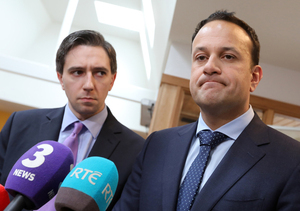
From top: Minister for Health, Simon Harris (top eft with Taoiseach Leo Varadkar will this afternoon let the Dail know what action the Cabinet has approved to deal with the ongoing crisis in CervicalCheck; Derek Mooney

Last week’s Dáil furore and the heightened tensions between Fianna Fáil and Fine Gael persuaded me to use this week’s column to discuss the worsening relations between the main government and the main opposition parties.

I still intend to do that, but in much lesser detail. The scandal engulfing the CervicalCheck scheme and the torment that Vicky Phelan, her family and hundreds of other families have been put through by the State and the HSE makes any discussion of the friction between the parties pale by comparison.

But, as experienced political commentators have noted, the screening scandal has the makings of major political crisis if it were to emerge that more was known by the Department and, by extension, by a Minister.

This is still a big “if” as I write. While it has the potential to be a political crisis, it will not become one on the back of speculation or the trailing of crumbs alone, it will require something more substantive.

Minister Harris has acted and sounded in recent days like a man determined to address the problem and unafraid to call the situation as he sees. An impression re-enforced by the HSE boss saying that he wouldn’t have gone on the media, as Minister Harris did, to express a lack of confidence in the service’s management.

It is as if Minister Harris has studied Michael Noonan’s 1996 Dáil statement on the Bridget McCole case and learned how not to handle such a crisis.

Noonan later admitted that he had made a mistake in listening to the legal advice that he should not intervene in the McCole case and acknowledged how much he regretted that decision and his role in that saga.

Harris, Varadkar and every Minister should learn from Noonan’s situation. But there are no hard and fast rules on when to heed and when to disregard legal advice. That requires political judgement. You either have that, or you don’t – something that a severe Dáil grilling will expose.

The Taoiseach and the Health Minister will come under intense pressure in the Dáil today as try to address the many questions the opposition parties and groupings will hurl at them.

They will be expected, at a minimum, to guarantee that the independent inquiry into the CervicalCheck controversy is established quickly; to ensure that all the information regarding the delayed diagnosis of cervical cancer is provided speedily to those affected and to publish the departmental note the Minister was given about the Vichy Phelan case just before the court hearing began.

They will also have to come up with a proposal for mandatory open disclosure, something that was promised by Varadkar when Minister for Health and then abandoned by him in early 2016.

This will be a big test for the Taoiseach and his ministers. There are no bonus points for coming through it, but there plenty of negative ones if you come across as ill-prepared, ill-informed or unsympathetic. It is a delicate balancing act.

You cannot throw your officials under a bus just to save your own skin, but neither can you come in and act like a departmental official, reading from a closely worded script designed to obfuscate and confuse.

It is a test they are taking against the backdrop of the soured relations with the main opposition party that I mentioned at the outset.

While the focus of the debate and exchanges will rightly be on the lives affected by the delayed and incorrect results, the politics of the past two weeks may also leach into those interactions.

While assorted pundits and political activists may be uncomfortable with the current confidence and supply arrangement, it seems that the electorate are not as disapproving or, at least, they haven’t been up to now. Indeed, successive opinion polls have shown that likely voting intentions would not significantly alter the political make-up of the Dáil.

While the poll shifts affect the margins, the core positionings remains the same – though a new permutation: a majority coalition of Fine Gael and Sinn Féin now appears more arithmetically and politically possible.

That political possibility increased with last Friday’s two Seanad by election results. These mini-elections saw Sinn Féin Oireachtas members vote for the Fine Gael leadership anointed nominees on both panels with a greater zeal than some of their Fine Gael colleagues.

While the anti-brexit, unionist, Northern Irish farmers leader, Ian Marshall, was always likely to take one of the vacancies, the other one – which most of us expected to see go to an anti-brexit northern Irish nationalist, but somehow one was never nominated – ended up as a mano-a-mano fight between two former TDs: Fine Gael’s Anthony Lawlor and Fianna Fáil’s Niall Blaney.

Sinn Féin had a simple choice to make: which candidate represented the party they hated least. The Shinners decided that it was Fine Gael.

These wins stoke up tensions for the confidence and supply deal, a deal which unlike a particular woodstain/paint, does not exactly do what it says on the tin.

As one of the main negotiators behind the Good Friday Agreement explained to me in Belfast a fortnight back, the issue with calling the arrangement between Fianna Fáil and Fine Gael a confidence and supply agreement is that it gives the wrong impression of the relationship and raises unachievable expectations.

While Fianna Fáil did secure commitments on 42 policy specifics on a range of issues such as housing, public services, crime and the economy, not to mention reversing Fine Gael’s plans for Irish Water, it is hard to categorise their implementation under Varadkar’s stewardship as anything but grudging.

My friend’s suggested description of Fianna Fáil’s role is not as a supplier of confidence, but rather as an opposition that is enabling the government to govern. Indeed, the text of the agreement itself uses similar language referring to it as facilitating a Fine Gael led Minority Government to govern. So instead of a confidence and supply arrangement, Fianna Fáil is in an enabling opposition one.

This may appear to be a Jesuitical distinction, but is an increasingly important one, now that the Taoiseach has opted to ramp up tensions and announce that he is telling Ministers and their political staff to keep lists of opposition promises.

There are two curious elements to his warning.

The first is that he feels he must tell them publicly. Irrespective of whether your party is in office or not, you keep a tally on what your opponents are promising. This is what political parties do. It is called opposition research. They don’t need to be told to do it, unless they are incompetent.

The second, is that the Taoiseach singled out Fianna Fáil. Why only Fianna Fáil? Most recent newspaper polls do not show it posing any growing threat to Fine Gael’s lead, so why these sudden shows of twitchiness and tetchiness from Merrion Street?

Could it be a case of getting your revenge in first? The Taoiseach may now fear that Fianna Fáil’s lengthy becalmed position in the polls will leave its leadership with no alternative but to up their game and increase their attacks on Leo and his ministers.

So, it is just political theatre and is for public consumption. Up to now the mantra from government and main opposition party alike is that there is no public appetite for an election.

Might the Taoiseach’s increased twitchiness be a sign of his frustration at relying for his day-to-day survival on squabbling independents and an impatient main opposition party?

Might he have concluded that the best way to bring each to heel is to start shifting the public’s “no mood for an election” disposition by hinting of the possibility of a trip to the polls before year’s end?

If it is, then the Taoiseach should be careful what you twitch for. Political momentum in politics is an odd thing, especially when so many events are beyond your control.

Derek Mooney is a communications and public affairs consultant. He previously served as a Ministerial Adviser to the Fianna Fáil-led government 2004 – 2010. His column appears here every Tuesday Follow Derek on Twitter: @dsmooney
Rollingnews

From top: Social Protection Minister Regina Doherty; Derek Mooney

“Standing right now, if nobody does anything, I don’t think this referendum will pass”

This was Minister Regina Doherty on RTÉ’s The Week in Politics last Sunday. Her comments were, as we have come to expect from the outspoken Social Protection Minister, forthright and clear cut.

Ms Doherty was responding to the results of the two latest opinion polls, showing both a narrowing of the winning margin for the Repeal the Eighth side and a growing concern about the proposed 12-week threshold.

Her observation that there was still a ‘job of work to do’ to win support for the abortion proposals led the radio and TV news for the rest of the afternoon.

By the time the RTÉ Six one TV news came around the Government sources who were reportedly concerned by her comments appeared to have gotten their way.

RTÉ’s Justin McCarthy was not only able to report on the Minister’s original comments, he was also able to tell us all about a clarification that the Minister had just issued which made it clear that the Minister did not in fact think that the referendum would fail, but rather that she was sure it could and would pass.

It was almost painful to watch, especially as the misspeak that the clarification was intended to clean up was not that much of a misspeak.

Yes, Ministers should all look and sound like they are on the same page and should try to always exude a positive air of confidence in their own invincibility, but they should also look and sound credible and give the impression that they can hear what people are saying.

In my view this is precisely what Minister Doherty was doing pre-6pm on Sunday. She was telling the public that the government is taking nothing for granted in this referendum and that it is aware that many voters – and let’s be crude about it, many of them are Fine Gael leaning – are unsure about the 12-week part.

It seems that this was Senator Catherine Noone’s view too. Senator Noone, who expertly chaired the Oireachtas Committee that considered the referendum proposals, told Breakingnews.ie that she thought Minister Doherty was just being realistic about the possible outcome and that: “Every day, those of us who understand and believe that the position should be changed legally in this country have a job of work to be done to communicate that”.

Ms Noone added:

“Any referendum even the Children’s Rights referendum, where it was a really positive thing, it wasn’t won by any major majority, so it’s a fair comment that the Minister made.”

Unlike many of those who may have been behind the “clarification”, Minister Doherty has practical and painful experience of what it is like to fight a referendum that looked set to pass, only to fail at the last minute, having served as the Deputy Director for Fine Gael’s ill-fated 2013 Seanad abolition campaign.

To her credit Minister Doherty gave her all to that campaign from the very start and fought it with a lot more zeal and tenacity than many of her party colleagues. She learned the hard way that opinion polls in referenda can be deceptive.

An Irish Times Ipsos MRBI poll taken at the end of September, just one week before polling had those voting yes to Seanad Abolition at 44% those voting No at 27%, undecideds at 21% and won’t vote at 8%. On the day the No side won 51.7% to 48.3%.

Clearly the issue this time around is far more difficult, far more personal and a lot more emotive. Many more people go into this campaign, on both sides, with deeply and sincerely held views than was the case in 2013, but Minister Doherty is right at this point to signal clearly to the undecided and the soft retain the 8th voters alike that she and other ministers recognise that they need to explain to people how the proposal to allow for terminations up to 12 weeks was arrived at. I know, as I am one of them.

There is also another important factor. Since 2013 we have seen nature of campaigning move on a pace.

We saw the results in the Trump and the Brexit campaigns where voters were convinced to doubt and reject the counsel of the established experts and to go with their newly informed, or should that be inflamed, guts.

The deployment of data analytics played a big role in both those campaigns, a lesson not lost on the Keep the 8th side who reportedly have retained the services of Kanto a UK data analytics company associated with the UK Leave campaign.

I am not saying that data analytics alone will swing the campaign one way or the other or even that only one side with be using them. Undoubtedly, both sides will use all the campaign tools available to them from traditional, to online to social media.

I am merely making the point that in today’s ever more volatile and perhaps even disruptive political environment, it is vital not to be complacent and to think that everything and everyone with play by the Marquis of Queensbury rules.

It is why I welcome the Transparent Referendum Initiative, a project run by volunteers with an expertise in social media and online marketing, that aims to enable an open and honest referendum debate by making the use of targeted, paid political ads on social media more transparent. It should not to up to volunteers to do this, this is something that should be done by the platforms and the State.

Indeed, if the government had acted last year, well ahead of the referendum, and accepted the Private Members Bill prepared by Fianna Fáil’s Science and Technology spokesman, James Lawless TD, (and let me declare that James is a friend of mine) that provided for transparency in the disclosure of information in online political advertising, then we wouldn’t need TFI to take up the slack.

But, alas, it didn’t.

Which is another reason why I think Minister Doherty was right to send up a warning flare now and call the situation as she sees it and why those unnamed sources in the shadows – the ones who tried to fix her supposed misspeak – are the ones who really misspoke.

Derek Mooney is a communications and public affairs consultant. He previously served as a Ministerial Adviser to the Fianna Fáil-led government 2004 – 2010.  Follow Derek on Twitter: @dsmooney

Rollingnews


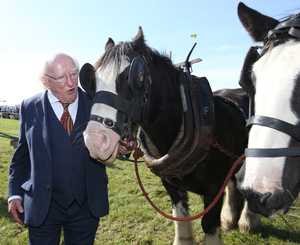
From top: President Michael D Higgins TD at the National Ploughing Championships  in Screggan, Tullamore, Co.Offally last week; Derek Mooney

To have voted in just one presidential election you would need to be at least 24 years of age now. To have voted in at least two of them; you would now be 38, at minimum.

If you voted in three presidential elections you are at least 45 and if you voted in four, then the very youngest of you will be 60 before the next one.

That, of course, is if there is a next one. Though I personally think there will.

If today’s Ireland Thinks/Irish Daily Mail poll is correct, and there is no real reason to assume it isn’t, then 76% of us would like President Higgins to continue on after his first term expires in late 2018.

That is fair enough. I, like most people, like our President. I think he is doing a good job and that he projects a positive image of Ireland as a caring, cultured and outward looking country.

I didn’t vote for him in 2011 (either first or second preference), but that does not matter. If the poll is correct then just under half of those just polled did not vote for him either.

As a candidate in the 2011 election, when we had a selection of people pick from, Michael D Higgins was the first-choice pick of just under 40% of voters.

So, it would be a bit of a stretch to read today’s poll as saying that he would automatically be the first-choice pick of 76% of voters, without knowing who those other potential candidates might be.

In the same vein, it is also a major stretch to interpret today’s result as saying that 76% of us believe that President Higgins should have a second term without an election.

That said, today’s poll will doubtless come as a bit of welcome news to those hoping that the President will run again.

They were due some good news after the recent opinions pieces in the Sunday Business Post, Irish Examiner and the Sunday Times (Ireland) urging the President to think carefully about going for a second term and to keep good to his word, as given during the 2011 elections, and only serve a single seven-year term.

While there have been other pieces written along on the same lines over the past few years, including this from Brendan Morley in June 2016, these three particular pieces from Elaine Byrne, Alison O’Connor and Justine McCarthy will hit home, as none will be seen as coming from opponents or those with political axes to grind.

Of the three, Alison O’Connor’s will have been the least well received, choosing, as she did, to go with the issue of age.

It is a tricky personal subject, but as the few of us who have experienced two or more presidential election campaign can attest: presidential elections are all about the tricky personal subjects.

There clearly is precedent, via President de Valera, of having an octogenarian as head of State, though in the case of Éamon de Valera, the voters got to have their say when he sought re-election in 1966 at the age of 83.

In contrast, Justine McCarthy’s analysis and observations may have the most impact. In essence, she warns those supporting Higgins not to play politics with this, specifically not to be cute-hoors and continually delay the announcement of the decision whether or not Michael D is running again.

The perceived wisdom is that those supporting a second term for Michael D – let us call them Team Higgins – believe their best tactic is to have a second term by acclamation.

From their viewpoint, there is no overwhelming appetite among the main parties for another election next year, especially with a likely general election and referendum on the Eight Amendment already on the cards for 2018.

They assume that Fianna Fáil and Fine Gael would be happy to see the presidency go uncontested, leaving both to focus on fighting each other. They also know that they need the two main parties to keep out if they are to coast through.

There may be some basis to this belief, but it does not factor-in the wishes of others. Presidential nominations are not the gift of the big parties that they once were.

To run you need to be nominated by 20 members of the Oireachtas (TDs/ Senators) or 4 county/city councils. This makes the independents serious players as it does Sinn Féin.

Various independent TDs and Senators have already indicated that they are determined to field a candidate and, while the candidacy of the ebullient Senator Gerry Craughwell will not be much of a worry to man nor beast, there are rumours that other independents are already talking to more substantial figures as possible contenders.

But there is a problem, it is one of timing. National presidential campaigns are complex things to design, staff and build and can take 6, 9 or even 12 months to get right.

This is probably why Team Higgins is so keen to delay its announcement for as long as it possibly can.

It knows the amount of work and resources required to mount a credible national campaign and it knows that anyone from outside the big political parties wanting to take a serious run at the park in the autumn of 2018 needs to start planning now.

If you are an aspiring non-party candidate then the next three or four months are crucial.

What seems not yet to have dawned on Team Higgins however, is that the issue of whether there is a challenger or not has already slipped out of their hands.

The best they can do now is to try to nobble a contender before their get to the starting gate – hardly the actions of a principled campaign, but this is presidential politics.

Even then, once the main parties see that there will likely be an election the internal pressure will mount to run their own candidates, at which point all bets are off and Team Higgins is in a bitter race for a second term, a second term it said clearly and repeatedly back in 2011 that it did not seek or desire.

While some in Team Higgins may still hope that they can delay an announcement well into 2018, I strongly suspect that common sense will prevail over the coming weeks and that the position will be clarified before Christmas.

If I were a betting man, I’d be putting a few euros on the President reaffirming what he originally said in 2011 and announcing that he will not be seeking a second term.

Derek Mooney is a communications and public affairs consultant. He previously served as a Ministerial Adviser to the Fianna Fáil-led government 2004 – 2010. Follow Derek on Twitter: @dsmooney
Rollingnews