Tag Archives: Newstalk

Screen Shot 2015-07-09 at 13.16.50

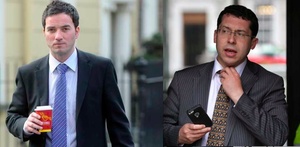
Alan Shatter, Dublin TD and former Justice Minister

Time for a ‘rick-off?

Complete this rhyme:

There was a part-time poet called Shatter…

Lines must close at 2pm 3pm

Screen Shot 2015-07-09 at 09.45.32

Marie O’Connor, of Survivors of Symphysiotomy

Marie O’Connor, chairperson of the group Survivors of Symphysiotomy, spoke with Chris O’Donoghue on Newstalk Breakfast this morning about the group’s grievances in relation to the symphysiotomy redress scheme.

Her interview came ahead of the matter being raised in the Dáil later today.

Marie O’Connor: “The scheme is demanding objective evidence of women’s injuries. Apparently they find it difficult to believe women on this subject or believe their families. So in looking for objective evidence, they’re demanding receipts for, for example, incontinence pads or prescriptions for anti-depressants going back 50 and 60 years. Now this is an impossible bar for women to meet and this is reflected in the payouts to date because it’s clear now, from the latest figures, again we see the very same patterns that 60 per cent of women are being denied payment for significant difficulties.”

Chris O’Donoghue: “Sixty per cent denied.”

O’Connor: “Sixty per cent of the payments made to date are for €50,000 which means that none of those women got a payment for significant disability and, in our experience, over 95 per cent of women suffered lifelong disability as a result of this operation of symphysiotomy.”

O’Donoghue: “So what are the women being told, ‘you’re in pain because you’re older anyway, that would, that would have happened anyway’. Is it that flippant?”

O’Connor: “It’s not flippant but it’s really saying, ‘prove it, prove it, prove it’ if you’re claiming €50,000 for disability, that seems to be the attitude and the scheme is demanding a standard of proof that would not be demanded by any High Court and, indeed, refusing to accept reports from independent medical consultants on these injuries because of course, the view is that no reliance can be placed on what these women actually say about these injuries and these doctors are speaking to the women themselves, their reports are being excluded.”

O’Donoghue: “So just so I’m straight on that Marie, that would be contemporaneous doctors, reports from doctors now who are treating the women?”

O’Connor: “Reports for doctors now, yes. Because the trouble with, if you go back 50 years, and you demand, for example, records from GPs, well those GPs are deceased, the records didn’t pass on and there are no records but the scheme is refusing to recognise these realities and is demanding, what they call, objective evidence of injury.

Later

O’Connor: “I think the fact is this was supposed to be a non-confrontational for claimants and it’s turned out to be quite the opposite. The scheme has conducted itself in a highly adversarial manner and is, in fact, demanding, for example, proof of prior surgery. They’re looking for pathological gaps in the pelvis. Now, in reality what the scheme doesn’t seem to know is that very many women, in very many cases, pelvis fused. So there is no gap to be seen and again, I mean, this is being taken as evidence of injury and yet evidence accepted by the High Court in a recent case, showed that there was no correlation whatsoever between a gap in the pelvis and pelvic pain for example, because the pelvis did fuse.

It bears no relationship to what women are continuing to suffer to this day. So, again, I mean, it’s just an example of where the scheme is actually wrong. And we feel its advisors, and the suitability of those advisors, to be advising the scheme is actually open to question. So for example a radiologist, who specialises in cancer treatment and cardiac imaging. So we would have expected the sub-speciality to be the bone/pelvis obviously in these cases. That is not the case.”

Listen back in full here

Symphysiotomy survivors criticise redress scheme ‘seeking prescriptions dating back 60 years’ (Newstalk)

Mark Stedman/Rollingnews.ie

Screen Shot 2015-03-09 at 10.12.59

Bishop Kevin Doran at his ordination as Bishop of Elphin in the Cathedral of the Immaculate Conception, Sligo, last year

But enough about Joseph and Mary.

Bishop of Elphin Kevin Doran joined Chris Donoghue on Newstalk Breakfast this morning, to discuss the upcoming gay marriage referendum on May 22 and same sex parenting.

Grab a warm tay and a hot blanket.

Kevin Doran: “The term, ‘marriage equality’, which is being used a lot is misleading in the sense that what people are actually campaigning for here is not marriage because, by definition of same-sex relationship, includes some of the elements of marriage such as love, care, affection and perhaps a long-term commitment and so on. But it doesn’t include the openness to pro-creation which is one of the essential dimensions of marriage. And I’m not just saying that, from the perspective of the Catholic church or Christian tradition. I think if you look at cultures, older than any of the main religions, you find that part and parcel of the whole reason for marriage and for the reason for the State or, if you like, society getting involved in marriage was because it had to do with the important business of children.”

Chris Donoghue: “OK, well look, first of all, the referendum, we are not being asked about marrying our mothers or our sisters, the exact wording is ‘marriage may be contracted, in accordance with the law, by two persons without distinction, as to their sex’ but I just want to go back to church teaching because you have been, I think in that comment, and any gay person listening to that, will know that you’ve been friendly, you’ve been friendly and open in your comment. But what is the Catholic church’s view of gay people? Where do gay people come from or are some people just born, and they’re gay?”

Doran: “Well I don’t think the Catholic church is particularly expert on that, I think the jury is out. My own personal perspective would be, some people perhaps have a predisposition, genetically, to being gay. Perhaps, in some cases, people are gay because of contexts, circumstances related to their own experience of life as young people. One of the things I’d suggest also, from my own experience, as working as a university chaplain, would be that many young people in their late teens are confused about their sexuality, understandably and I think I’d have to say I was myself, and the thing about it is, some young people get drawn into a gay relationship because, some how or other, they don’t feel that they’re sure about being heterosexual, so they’re trying this out..”

Donoghue: “They experiment..”

Doran: “So there’s an element of that involved in it as well.”

Donoghue: “But do you accept, cause you’ve said both things there, you’ve said nurture and you’ve also said nature, that some people are born and they just are gay, just like some people are born and they just are straight.”

Doran: “I did say that I’m not an expert on this but I made the point about it is, I think the jury is out on it. The reality is not so much about the way people are born as when you look at the meaning of human sexuality, it has both an emotional dimension to it and it has a very clear physical and biological dimension to it, which is oriented towards the generation of new life.”

Donoghue: “You see, because Bishop, what I’m getting at, in listening to the church on this debate is, the previous pope, Pope Benedict, said, in 2005, “homosexuality was an intrinsic disorder”. One of your peers, Bishop Aguilar in Spain, last year, said, ‘homosexuality is a mental disorder that could be treated’. I’m just trying to get at where the church is at, is it a sin to be gay?”

Doran: “No it’s not, no. It goes back to the kind of conversation you were having with Ivan earlier on, that sometimes technical, philosophical language is not the best way to communicate what we’re talking about. There’s obviously a difference between orientation and the way people behave and in reality, you see, what the church asks of people who are homosexual, by orientation, is exactly the same as what the church asks of people who are heterosexual, that they reserve sexual relationships to marriage. Now it’s a completely different question then to say that we believed marriage is between a man and a woman and we believe that this is not something that’s not just a religious view but it’s something that is part and parcel of what cultures, for thousands of years, have recognised as being important to society.”

Donoghue: “You see the reason I was asking about what is the church’s belief on where being gay comes from because if some people are born and they are straight and others are born and they are gay, then that’s as god intended.”

Doran: “That would be to suggest that if some people who are born with Down syndrome or Spina Bifida, that that was what god intended either. I mean I think the thing about it is, I can’t see into the mind of god…”

Donoghue: “But the things you mentioned Bishop, to be fair, are conditions, they are disabilities, your sexual orientation is not a disability.”

Doran: “Well I’m not entering into that, I’m just simply saying that it would be wrong to suggest that everything that happens, happens because god intended it, I mean if that were the case, we’d be kind of talking about a very different kind of god to the kind of god that Christianity believes in.”

Later

Donoghue: “Can we just be clear? Do you accept, Bishop, that May the 22nd has nothing to do with children? May the 22nd the referendum is about redefining marriage.”

Doran: “Oh no, I don’t accept that at all and the Government has been trying to pull the wool over people’s eyes, saying this, because what’s actually happening in the referendum on May 22, if it were to be passed, would be because there’s a redefinition of marriage, it’s also a redefinition of parenthood because, while the Government is currently putting through legislation, the Children and Family Relationships Bill, which redefines parenthood, that would still only have only the force of law but it would gain the force of the constitution in a referendum that would change the meaning of marriage.”

Donoghue: “But the referendum says nothing. The wording: ‘Marriage may be contracted, in accordance with law by two persons without distinction as to their sex.”

Doran: “Yeah, but you obviously haven’t heard what I’m saying. There’s an essential relationship between marriage and the giving of life to, and caring for, children.”

Donoghue: “What I’m saying is…”

Doran: “Ad so when you change the meaning of marriage, you change the relationships of parents because if children are now, to have say, two parents who are of the same sex, that…”

Donoghue: “But children do, Bishop. As in lesbian people, lesbians, gay men they are already parents..”

Doran: “They’re not parents. You see the point about it is…”

Donoghue: “But they are, all over Ireland. They have children.”

Doran: “They may have children but that’s the difference, you see that’s the point, people who have children are not necessarily parents. This legislation that the Government is introducing, the Children and Family Relationships Bill, seems primarily focused about making it possible for people in various different relationships to have children. It’s not about ensuring that children have their parents.”

Listen back here

Pic: Donnybrook Parish

aidan

Aidan Coughlan (with Newstalk Breakfast presenter Chris Donoghue) promoting the budget coverage on Newstalk.

2012: Fun-loving, Hawaiian shirt-wearing editor of The Broadsheet Book of Unspecified Things That Look Like Ireland (New Island, €5) and chronic tay addict.

 Today: Terrifying razor-headed digital big cheese at DenisFm.

Progress yes.

But is he happy?

*shaves skull*

newstalk

A University of Huddersfield student has proven for the first time what you’ve long suspected to be true – that people with psychopathic tendencies hide how much of a psycho they are to rise to key managerial positions.

Basically, your boss might truly be a psycho.

*cough*

Study says your boss might really be a psycho after all (Newstalk)

Screen Shot 2014-07-29 at 10.38.17

Former Garda Commissioner Martin Callinan, outgoing Secretary General of the Department of Justice Brian Purcell and former Justice Minister Alan Shatter in 2012

Further to the publication yesterday of the Report of the Independent Review Group on the Department of Justice and the revelations that Brian Purcell is to step down from his role at the Justice Department – and to be re-assigned elsewhere – Ivan Yates put forward his thoughts on the matter during Newstalk Breakfast this morning.

“These are the questions that Brian Purcell has refused to answer. On the day of the 10th of March. And remember the context of this was to save Shatter. On the 10th of March, the Garda Commissioner Martin Callinan sends a couriered letter to the Secretary General, Brian Purcell. This was no ordinary letter. It was the months of analysis of a working group involving the gardai, the attorney general, civil service about recordings of telephone conversations from the gardai.”

“The first line of the letter says, on the 10th of March, bring this letter to the minister’s [of justice] attention, in accordance with Section 41 1D of the Garda Siochana Act 2005. The question that Purcell won’t answer is why did he not bring that letter to the attention of Alan Shatter for 14 days. And, from the get go, I had serious reservations about the veracity of that.”

“The second issue that he must answer is: there is indications that on the weekend, on the 21st of March, that Callinan was prepared to withdraw the ‘disgusting’ remark and was advised not to do so. And the next set of questions he won’t ask [sic] is: Purcell was called to the Taoiseach’s office on Monday the 24th of March and asked questions in relation to the tapes controversy.”

“Now, in my view, the tapes controversy was significant for the Bailey case, but otherwise it was a bottle of smoke. It was blown out of all proportion but it was Tapegate, which led to the drive-by sacking as such. So then Purcell was then dispatched on the Monday night to the house of the Garda Commissioner and he resigned. What then happened was the next morning, on the Tuesday morning, the first the Cabinet heard of this was that they were notified at 9.30am, before the Cabinet met, that Callinan was retiring. No explanation was given.”

“Now the law, and the Constitution says, yes, a Government can fire a Commissioner but the Taoiseach does not have that power. It must be a resolution of the full Government sitting and, therefore, what then happens is it’s not what you do when you’re in a sticky spot – which was all to get rid of Callinan, to save Shatter – was the cover-up.”

“And, basically, what I’m suspicious of is: that Purcell is being paid €200,000 a year to keep his mouth shut. Now what the strategy was, to set up a Commission, under Niall Fennelly, to make sure that this investigation of Tapegate – but also the specific instances of what happened in relation to the Garda Commissioner – to kick this beyond Spring of 2016.”

Listen back in full here

Previously: The Thin Blue Timeline [Updated]

lyons and mullen

Labour TD John Lyons (left), who is gay, Independent Senator Ronan Mullen, who is not, took part in an ‘opening debate’ [chaired by Ciara McDonagh  on Newstalk today] ahead of next Spring’s same sex marriage referendum.

We join the debate after Mr Lyons’ pro same-sex submission.

Ciara McCDonagh: “Senator Ronan Mullen has joined us. Ronan, is it fair to say you are against marriage equality and why?”

Ronan Mullen: “That’s where we have to start, getting the language right so that we have a respectful debate. There are hundreds of thousands of people Ciara in this country who see that marriage equality is itself a loaded term, who see that this is a debate about whether we should keep the current definition of marriage or whether we should change it. Equality is a great thing, but, you know the mere use of the word equality can take us into situations that don’t work at all, so for example you take for example you know under age persons who are completely equal in dignity and right to protection of law and in every respect for example a crime against a child is actually worse than a crime against an adult in most people’s eyes but for example there isn’t absolute equality in terms of voting rights in that situation because an issue of maturity arises in that situation.”

McDonagh:  “But that’s slightly different, you’re talking about equality of adults…”

Mullen: “Of course it’s slightly different and this is where we have to get our issues clear and this is where journalists like yourself will, will really have to engage with the hard questions for both sides on a day to day basis. I have to say coming off a European election campaign this isn’t the burning issue for Irish society. That isn’t to say we shouldn’t deal with it, but I suppose on a day to day basis this isn’t the issue I’m dealing with with people whose kids have been forced to emigrate, who cant earn a decent living…”

McDonagh: “Well, that’s fair enough but the Taoiseach has announced it is going to happen in spring so we’re going to have to debate it now, the onus is on the politicians and the media to air all these arguments, so what we want to know is why you’re not in favour of marriage equality.”

Mullen: “No I want you to stop using marriage equality because that’s a biased term.”

 McDonagh: “Well why would you be opposed to this referendum?”

Mullen: “Would you ask me why do I support the current definition of marriage, are you happy with that formulation?”

McDonagh: “If the referendum gives people in same sex relationships the right to get married why are you against that, can you sum it up?”

Mullen: “Simply because I favour the current definition of marriage, it’s not the biggest issue for me, it’s easy for me to say yes to what everybody wants. I just have to say in all honesty and having looked at the issues as they come up from time to time that I believe that current definition of marriage has a particular social role, the role that is around the protection of children and that is why I am from the start inviting the media to ensure the highest debate. You have to realise that there are hundreds of thousands if not more decent people in our country…”

McDonagh: “There are millions of decent people.”

Mullen: “If you don’t turn it into a debating argument with me we will get more answers. The point I was trying to make, I haven’t finished the sentence, is that there are at least hundreds of thousands of decent people who have loved ones who may be in same sex relationships, for example, but who don’t feel they have to change their stance on whether marriage should be allowed or not.”

 McDonagh: “But we have to give them the option of deciding it.”

Mullen: “The people? Yes, those people, and I think many of those people will take the view that the definition of marriage works for a particular social reason, that the meaning of marriage itself has to do with the relationship between men and women because that is a socially preferred context for the upbringing of children. With great respect for other situations, that something we want to protect.”

McCDonagh: “So you’re talking about people in same-sex relationships, gay and lesbian people being parents, that sort of thing? And possibly you’re raising concerns about that children in that situation? What evidence do you have that there’s any negative effect on those children?”

Mullen: “No you’re putting words in my mouth, you probably are putting words in my mouth because if you look what the current Constitution currently says there is a reason why marriage has been defined in a particular way and the definition of marriage, it seems to me what our Constitution says is that the State pledges to guard with special care the definition of marriage on which the family is founded there is this idea that the family is somehow founded on marriage.”

McDonagh: “Ok, but Ronan, because we don’t have a lot of time here, do you have any evidence that same-sex marriage will have an impact on the family?”

Mullen: “The first impact that same sex marriage would have, or redefining marriage..”

McDonagh: “But on the family?”

Mullen: “Just let me finish. Let me finish the point please.”

McDonagh: “Just asking the question.”

Mullen: “What I have noticed already is that you haven’t been cross-examining John in the same way, and I’m trying to take the media on a journey here, it’s a journey…”

McDonagh: “John and I had a few minutes before you got here.”

Mullen: “And did you grill him?”

McDonagh: “Yes. Did you hear it?”

Mullen: “No, but..”

McDonagh: “We’re very short on time Ronan.”

Mullen: “No I’m going to answer your first question. The definition of marriage works because the international supported evidence is that the, the preferred context, with great respect for other situations is the two biological parents. That’s what the data says. I think we lose this if we go changing the definition of marriage that may, frankly, deprive a child of their rights starting off. We can’t go talking about children’s rights after they’re born if we don’t care about the circumstances in which they’re brought into the world.”

McDonagh: “Right. Ronan, one more question. John is sitting across the table from you. He currently doesn’t have the opportunity to marry the person he loves. Can you tell me why, and why that should be the case.”

Mullen: “Well…”

Lyons: “You can try and look at me, Ronan, when you answer it. I’m a human being, I’m a human being here.”

Mullen: “Don’t demonise me, John. I smile at you and address you every day of the week in Leinster house, and what I’m not going to let happen during this debate, no matter whom I debate it with, good people like you John and Ciara and anybody else, ‘m going to insist on professionalism on all sides and I’m also going to insist that nobody’s demonised. The suggestion that I can’t look you in the eye and smile at me is a lie, John, because I’ve always treated you with the utmost courtesy.You’ve come to my door canvassing a vote and Ive always treated you with the utmost courtesy. So please don’t try to send out a message or paint…”

Lyons: “I most certainly wouldn’t Ronan. I think you know me better than that.”

Mullen: “No I don’t you see, and I’m trying to set down the ground rules for this debate to make sure it has to be respectful. I’m a tough nut, you see, and I’m not doing this for myself, I’m doing this to make sure decent people aren’t frightened out of this debate because they’re being made to look like bad people….”

McDonagh: “That’s something I raised with John before you came in and I’m going to ask you it as well. The tone of this debate, we have about nine months, what are we going to do to make sure that it doesn’t descend into accusations of homophobia?”

Mullen: “Well that’s out of the question now because we know that that’s libellous, presumably we’ve learned from what happened in RTE…”

Lyons: “I think we’ll have quite a decent and respectful debate on this and it will be honest and frank and robust I presume, and people should be challenged on their views.”

Mullen: “Exactly, it’s all about playing the ball not the man or woman isn’t it. Honour one another’s right to have a particular philosophical, moral, social, view. I see the view I have as coming from the protection of children, about the presumption that children should be ideally brought into the world in a father mother biological situation. Other people will disagree with that but’s a fair argument.”

Lyons: “The debate in fairness from Ronan’s perspective has been moving away from what the Taoiseach has said already. The referendum itself will be on one point and on one point only and it will be exceptionally clear and none of the other things you’ve brought into it Ronan are going to be part of the debate. Will Irish society, will Irish society, will Irish people afford the right to civil marriage to people of same sex?”

Mullen: “Your emphasis on civil is good because this isn’t a religious matter.”

McDonagh: “Ronan, excuse me , we don’t know wording of this referendum at the moment. For now we have absolutely run out of time John Lyons, Labour TD for Dublin North West, Independent Senator Ronan Mullen, thank you both very much…”

Listen here

Thanks Paddy McDonnell

(Photocall ireland)

00145162

Brian O’Driscoll is joining Newstalk.

Commenting on the move, Brian O’Driscoll said:

“Making the decision to join the Off the Ball team was an easy one for me – it’s the nation’s leading sports show and best radio station and following a break this summer I’ll be more than ready for it come September…”

FIGHT!

Off The Ball

90330323

[GSOC chairman Simon O’Brien (left) with Kieran Fitzgerald of GSOC and on his way to attending the Public Service Oversight and Petitions Committee in February, to answer questions about the GSOC bugging story which is now the subject of an inquiry]

After the GSOC bugging story appeared in The Sunday Times on February 9, written by John Mooney, Mr O’Brien was summoned to the then Justice Minister Alan Shatter’s office on February 10, to brief him on the matter. Following that meeting, Mr O’Brien released a statement apologising for not telling Mr Shatter about the investigation that GSOC had carried out by Verrimus. Verrimus had detected three security threats.

In his statement, he said: “We did not wish to point fingers unnecessarily and we did not believe that widespread reporting would be conducive to public confidence.”

Then, on February 12, Mr O’Brien appeared before the Public Service Oversight and Petitions Committee and told the committee:

I certainly suspect or potentially suspect we may have been under some form of surveillance. I have no information in my possession that any other ombudsman’s office has ever been under this type of surveillance.

Separately, in his investigation of Sgt Maurice McCabe’s dossier of claims of Garda misconduct, Sean Guerin, SC, referred to the role of GSOC in the recent Guerin Report.

In the introduction of his report, Mr Guerin said he received no documentation from GSOC. He said on the eve of the day his report was due he received a letter from Arthur Cox Solicitors, on behalf of GSOC, stating  there were legal and practical issues with handing over, according to GSOC, “voluminous” relevant documentation.

Mr Guerin wrote:

“That has, unfortunately, been an obstacle to any assessment as part of this review of the adequacy of the investigations conducted by GSOC.”

In addition, in Chapter 18, Mr Guerin wrote:

“What is striking, however, is that in the one case in which it is clear that a GSOC investigation was pursued to a conclusion, the papers I have seen suggest that the approach adopted by GSOC was ultimately broadly similar to that of An Garda Siochana…While the independent investigative function that GSOC exercises is an important one in the public interest, it appears to be no guarantee of a disciplinary outcome.”

Further to these two matters, GSOC chairman Simon O’Brien spoke to Ivan Yates and Chris O’Donoghue on Newstalk Breakfast this morning.

Yates:  “Over recent months, part of the allegation is that that you’re part of the problem, rather than you’re part of the solution, that you’re basically not a watchdog, you’re a poodle.  Do you think the way you handled Martin Callinan – by having a cup of coffee with him – that the whole relationship was just too cosy?”

O’Brien:  “Ah gee, look, Martin and I have a professional relationship, had a professional relationship, absolutely no problem sitting down with Martin and having a cup of coffee, I did that on a number of…on a regular basis.  Just think about where we were within that – you know, there was a controversy flowing around us. Martin phoned me up and said, ‘Would you come over and we’ll have a chat about things…”  I’ve got no problem with that, I’ve got no problem with that at all.  As he has said, and as I have said in the past, there’s always been a healthy tension between the two agencies – that’s fine.  But, I have to say to you I have no problem sitting down and having a cup of coffee with Martin Callinan.”

Yates:  “How would you characterise that relationship with the Commissioner – was it too cosy, was it too submissive on your part?”Continue reading →
