


Last night.
RTÉ One’s Prime Time.
Eileen White asks:
Is it just me or does anyone else think the desk looks like a toilet pot top with black lid?



Last night.
RTÉ One’s Prime Time.
Eileen White asks:
Is it just me or does anyone else think the desk looks like a toilet pot top with black lid?


From top: The panel on last night’s Prime Time and Dr Aidan Regan, of UCD
Last night.
On RTÉ’s Prime Time.
The panel – Eoin Fahy, chief economist with KBI Global Investors, Minister for Housing Simon Coveney, Anti-Austerity Alliance TD Ruth Coppinger and Dr Aidan Regan, from the School of Politics and International Relations in UCD – discussed the Apple tax bill with presenter David McCullagh.
During the discussion…
Dr Aidan Regan: “This is the crucial point that really wasn’t picked up either, in the preceding interviews, the ruling that the Commission have issued basically states that Ireland should apply its tax laws, 12.5% consistently.
“It’s basically said that allowing Apple to set up a subsidiary, split it into two companies, allow them to transfer the sales profits to one of those companies, the head office, that is basically stateless, it’s in the cloud, ensures that they don’t pay tax – call it aggressive tax planning, call it corporate tax avoidance.”
“Now the point from the Commission’s perspective is that that’s perfectly legal and it has been legal. Now, the Government has since closed it. The argument of the Commission is that’s illegal state aid. So this is an argument about competition. The Commission is saying that Ireland has broke the laws of the European Union by facilitating a large multinational to have comparative advantage over its competitors in the market.
“So it’s not actually saying Ireland’s laws were wrong, it’s not about morality, it’s not about legality. They accept that was perfectly legal. They’re pointing out that it’s illegal to facilitate a company, like Apple.”
David McCullagh: “But that only applies if other companies didn’t get similar treatment and there doesn’t appear to be any evidence that if another company had come along and asked the same question that Apple asked, that they wouldn’t have got the same answer. In fact, it’s probably pretty obvious that they would have got the same answer.”
Dr Regan: “Possibly and this, I think, is what we don’t fully know. The full ruling is confidential and I would be very curious to see precisely what it was about those two particular tax rulings in 1991 and 2007 that clearly signal to Apple that it was OK for them to avoid paying the 12.5% by transferring their profits to another company and effectively pay zero.”
Watch back in full here
RTÉ Investigates reports on how a leading Irish charity deceived its funders. Prime Time, 9.35pm Thursday @RTEOne pic.twitter.com/gv2Z6EsZ6v
— RTÉ (@rte) June 22, 2016
RTÉ reports:
A report by RTÉ Investigates to be broadcast on Prime Time tonight reveals serious mismanagement and deception by Paul Kelly, the founder of Console Suicide Bereavement Counselling Limited.
RTÉ Investigates – Broken Trust – will reveal concerns surrounding the charity’s finances with regards to cash receipting, expense claims and financial accounts.
The report also shows that, when applying for State grants, the charity on several occasions altered accounts to omit the reference to directors’ pay and other benefits.
These amounts totalled over €215,000, according to accounts filed by Console with the Companies Registration Office for the three years 2010 to 2012.
…In documents submitted to funders, the charity also incorrectly claimed that certain people were board members.
One of these was former senator Jillian van Turnhout who told the programme that she was “stunned” that her name had been used and that it is “hugely alarming that any charity would purport that anyone is on the board who is not on their board.”
Serious ‘concerns’ about governance of charity Console (RTE)

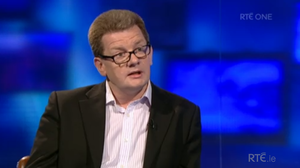
Last night.
On RTÉ’s Prime Time, presenter David McCullagh spoke to Gerry Edwards, of Termination for Medical Reasons Ireland, and Tracy Harkin, of Every Life Counts, about the UN’s criticism of Ireland’s abortion laws.
From last night’s discussion:
Tracy Harkin: “I think, myself, as a mother, who has a daughter who has been diagnosed with a life-limiting disability, I find this report from the United Nations disturbing for a number of reasons. Firstly, I suppose what’s deeply distressing for many parents involved in our support network, and other charities that work with families that have lost babies to these conditions is the language the United Nations has chosen to use.”
“Terms like ‘fatal foetal abnormality’, ‘incompatible with life’, they’re such harsh sounding, dehumanising terms. And I think for parents like myself and for the many parents throughout Ireland who have lost their little ones to these conditions, that’s not how they see their children at all.”
“Their experiences have not been heard by in this report which is deeply disturbing; parents have been speaking out, for example, in our organisation, Every Life Counts, for the last few years, calling for better support and services to be rolled out in maternity hospitals throughout Ireland to help them make the most of the time to parent their child, to love their child, to hug their child, to, you know, smell their child as any mother wants to.”
“And this is so important, such an important pathway to healing for these mothers and I think it’s alarming that the only option, or solution that the United Nations is fixated on is abortion. You know, these are children, human beings with severe disabilities and there’s not an agreed list, neither will be, and I think for us parents, for myself, before I had my little daughter Kathleen Rose, who’s now 9 years of age, you know she’s such a wonderful little character, she’s brought such joy to my life. Many of our parents didn’t have that time with their little ones and maybe only had minutes or days but they all said that that time was so important to healing. And there’s more and more research coming out to show that, in contrast, abortion increases despair and depression among mothers because they don’t have that closure.”
David McCullagh: “Tracy Harkin, sorry to cut across you, you talk about having services available to allow parents to spend time with their children, however short that time unfortunately may be. And I don’t think anybody’s suggesting that people shouldn’t be able to make that choice. But simply that others, who feel differently, shouldn’t be deprived of their choice, for what is best for their family.”
Harkin: “Well, I think the main thing here is accurate information and I think what’s missing from this whole conversation is also to look at what’s happened in other countries. What has the impact been of legislation in other countries. You look at the UK for example, over 90% of children with any disability whatsoever are aborted right up to birth. I mean most of us have their children with Down syndrome, Spina Bifida, in our communities, we love them, we fundraise for them. There’s a chilling effect to legislation here which the United Nations has chosen to ignore, time and time again. And it’s also important to mention that this case was brought forward by the Centre for Reproductive Rights which are a large, wealthy organisation with many millions at their disposal and their only focus, worldwide, is to promote abortion…”
Later
Gerry Edwards: “I think it’s very important, again in the interest of language, that we are quite clear that there is a difference between disabilities and life-limiting conditions and fatal foetal anomalies which are conditions which are not capable of sustaining independent life outside the womb.”
“Our son had a condition called severe anencephaly. Most of his skull was missing and his brain was missing. He could not sustain independent life, there was no question whatsoever of him surviving for any length of time. And that was confirmed to us by five different medical professionals in three hospitals in two jurisdictions.”
“My wife would have been forced to continue with that pregnancy for five more months in this country, not able to bear the social contact with other people, working with the people that she worked with, being stopped by people on the streets, in the full knowledge that our son would not die, or would not live, I beg your pardon. And this was the situation which was absolute torture for us and we made a decision which was in our best interest and in the best interest of our family.”
“And that decision required us to leave our carers, leave our family and travel to another state. We did spend time with our son, he was delivered naturally, he had an induced labour, we got to spend time with him but we would have got to spend more time with him had we been able to go through that process here in Ireland.”
“Our family members would have gotten to meet him, we would have had the dignity of having a funeral and a community to stand with us and support us in our loss. Instead we got a jiffy envelope, delivered by a courier a couple of weeks later. That’s unacceptable.”
Later
Edwards: “It’s the responsibility of our legislators to legislate. They also have an obligation to uphold international human rights law. This isn’t imposed upon Ireland. This is something that Ireland signed up to. There was a discussion earlier on in the programme about upholding the law and Ireland is one of those countries that has pledged to uphold international human rights law and we’ll find out very soon whether our Government is going to honour that commitment it made and actually take steps to change our legal environment soon.”
Watch Prime Time back in full here
Meanwhile,

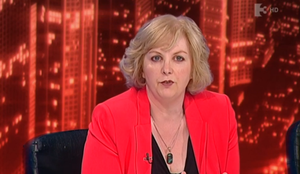
On TV3’s Tonight With Vincent Browne last night…
During the newspaper review, the panel – Senator Lynn Ruane, Breda O’Brien, of the Iona Institute; Sinéad O’Carroll, of The Journal.ie and Ger Colleran,former editor of the Irish Daily Star – also discussed the UN’s criticism.
From the discussion…
Mick Clifford: “Breda, ‘Cabinet to defy UN on abortion reforms’ [the main headline on today’s Irish Examiner]. This is not going to go away and some people would say all roads to a referendum one way or the other.”
Breda O’Brien: “Well I’m absolutely delighted if that’s an accurate headline in the Irish Examiner because this committee is part of a huge push that there is to kind of, in a sense, the UN treaty say ‘do not give any right to abortion’ but these committees have been pushing this agenda for years. And they’re stuffed with people who share a point of view which is that the baby in the womb does not have equal rights with the mother. And of course they’re going to find that something is cruel and inhumane and degrading, but I had the privilege of accompanying a friend of mine when she had a baby with a life-limiting condition and..”
Clifford: “But there’s stories like that but there’s also the other side…”
Sinead O’Carroll: “Fatal foetal abnormality is different to life-limiting…”
O’Brien: “No, life-limiting condition is the term used by hospice, it’s the term used by…”
O’Carroll: “Fatal foetal abnormality is the term used by doctors when they give diagnoses to women with fatal foetal abnormality…”
O’Brien: “But also, people, I think fatal foetal abnormality is one that people who have had babies with life-limiting conditions have asked to have it removed because it is so offensive. Your child is not a fatal foetal abnormality, no more than somebody with leukaemia is a cancer.”
Ger Colleran: “It’s the condition, not the child…”
O’Brien: “But that’s what, people have actually said in the media, they’ve said things like, ‘the fatal foetal abnormality’ as if that were, it’s a child who has a life-limiting condition…”
Clifford: “Breda, do you believe there’ll be a referendum?”
O’Brien: “I hope that there will be good sense and that people will see that this is a matter of equal rights and that they should leave it as it is.”
Lynne Ruane: “There will be.”
Clifford: “Ok, well, we’re going to have to leave it for that because that’s it now, we’ve run out of time..”
Watch back in full here
Previously: ‘The Ashes Were Unexpectedly Delivered To Her Three Weeks Later By Courier’


From top: Bill Kenneally, Former Superintendant in Waterford Sean Cashman
In February Bill Kenneally was jailed for 14 years, after he pleaded guilty to 10 sample counts of indecent assault on 10 boys between October 31, 1984 and December 31, 1987, in Waterford.
Kenneally, whose grandfather and uncle were Fianna Fáil TDs, used his position as a sports coach – basketball, soccer and tennis – to lure and abuse boys.
He was eventually charged – 25 years after Kenneally himself admitted to gardaí that he abused a boy in 1987.
Yesterday, it was reported that Kenneally lodged an appeal with the Court of Criminal Appeal against his sentence.
Further to this, several men who were abused by Kenneally spoke to Damien Tiernan on RTÉ’s Prime Time – with several of them saying some adults in Waterford at the time were aware of the abuse but did nothing about it.
In addition Mr Tiernan spoke to former superintendent Sean Cashman about when Kenneally admitted the abuse in 1987 – after a father reported that his son had been abused.
Mr Cashman recalled:
“He [the father] told me that his son, who was a student at De La Salle, aged about 15, that he was one of a number of students who were being lured to the house of a man named Billy Kenneally and that this man was coming in to the schoolyard and that he was giving them basketball lessons. In a short time, he had started to interfere with them and that there was a sexual contact, content to it and he just wanted to report it to me.”
The father told Cashman his son could not be interviewed so Mr Cashman contacted Kenneally’s uncle, the former Fianna Fáil TD, Billy Keneally, who died in 2009.
The TD arranged for Kenneally to go to the garda station when he met the then Supt Cashman and Inspector PJ Hayes.
Mr Cashman recalled:
“He was a broken man, he was absolutely emotional, he was shaking like a leaf, he was in terrible shape, I thought. He said, ‘I know why I’m here lads and I’m glad to be here because I want to be looked after’ – or words to that effect now. He might have said, ‘I want to be looked after’ or ‘I want to be treated’.”
Mr Hayes recalled:
“And he went on then to tell me that he had placed handcuffs on this young boy and I asked him, ‘where did it take place?’ and he said it was in his own home.”
Mr Cashman added:
“We did not have evidence to charge him now if I… ah, he admitted it, I’ve known a case where a man came through the station at one time and admitted murder that he hadn’t done. So you know the fact, he did admit it and I’ll have to say, I knew he was the culprit, it wasn’t a question of his imagination, I knew he was the culprit but I didn’t have a statement from an injured party.”
“And I know, I know people were talking about it, you know, it was a political family and it was a cover-up, well there was no cover-up at all. And the irony of the whole situation really is that the best help I got to try and put him where he should have been, before the court, was from his uncle.”
“I got absolutely no help from any injured party. None.“
After this, Kenneally was no longer allowed to coach at De La Salle and he was told to get counselling. He wasn’t questioned by the gardai again. He continued to live in Waterford.
Twenty five years later, one of boys who had been abused by Kenneally discovered that Kenneally was still involved in coaching basketball but not in a school capacity.
Jason Clancy went to the gardaí in 2012 to tell them about the abuse he suffered as a boy. After waiving his right to anonymity, other victims came forward.
There were originally 74 charges against Kenneally.
Watch back in full here

Prime Time.
Tonight, on RTÉ One, at 9.35pm.
Laura Fitzgerald writes:
Last April, RTÉ’s Investigations Unit revealed the full extent of the story of a young woman in foster care now known by the pseudonym ‘Grace’. ‘Grace’, who has profound intellectual disabilities, was left in a foster home in Waterford for almost 20 years despite a succession of sexual abuse allegations.
RTÉ’s Investigations Unit has now uncovered another case with similarities to the Waterford story where children were also left in the care of a foster family – in the West of Ireland – for several years despite serious allegations of sexual abuse against one family member.
However, unlike the historical nature of the Waterford story, the foster family at the centre of this case has, until recently, continued to provide some support services.
Previously: Grace, Noonan And Monageer


Last night.
Further to revelations that the Longboat Quay apartment complex (top) in Dublin developed by Bernard McNamara may be evacuated because of failure to meet fire safety standards.
Hubert Fitzpatrick, Director, Housing, Planning & Development at the Construction Federation of Ireland (above left), Robin Mandel, president of The Royal Institute of the Architects of Ireland (right) and Longboat Quay apartment owner Seamus Cullen joined Miriam O’Callaghan on last night’s Prime Time on RTÉ One.
Miriam O’Callaghan: “Hubert Fitzpatrick (Construction Federation], I mean it’s a fair point from Shay [a resident] isn’t it that, at the end of the day, he bought his apartment in good faith and it was dangerously built. It’s not fire safe proof.”
Hubert Fitzpatrick: “Certainly apartments all apartments should be built in accordance with the building regulations. The builder has a duty to build in accordance with the building regulations. I suppose between 2000 and 2008, there was about 500,000 new houses and apartments built in this country and many of those apartments were built by quality builders who are still in business today and still building today. This type of incident shouldn’t have happened. I would…”
O’Callaghan: “Can I just come in there? Is that goo enough? I mean we’re standing here, we’ve had Priory Hall, we now have Longboat Quay, how many more Longboat Quays are there?”
Fitzpatrick: “No it’s not good enough. The problem at the time is that we did not have a mandatory requirement for inspection and oversight of buildings as they were being constructed.”
O’Callaghan: “What about basic decency of a builder? That they do not put up a dangerous apartment?”
Fitzpatrick: “And there are many, many quality, reputable builders throughout the country who are still in business today, who’ve protected their reputations and they’ve built quality products. Regretfully there are incidences where shortcuts have been taken. It is not acceptable but what I would say is this is a problem that has been identified under building control regulations. With effect from last year, the construction federation worked positively and proactively with the Department of the Environment to ensure that new regulations were brought about where we have adequate oversight…”
O’Callaghan: “Ok but that’s henceforth, as they say. But what about all the apartment buildings that were built during the boom, like Shay bought, how many of those, do you think, could be facing problems like Longboat Quay?”
Fitzpatrick: “I cannot say how many might be like that but I would say…”
O’Callaghan: “A lot?”
Fitzpatrick: “But what I would say is there are many quality, reputable builders who are in business for generations…”
O’Callaghan: “Yeah but that’s not what I’m asking. We’re not talking about the good builders here though, are we?”
Fitzpatrick: “There are many, many good builders who build quality products. Unfortunately there are some incidences which have arisen, like Longboat Quay, where standards were not adhered to. We must ensure that standards are adhered to by the builders. We must ensure there’s proper oversight to give every homeowner the assurances that the buildings have been built to the required standards and that they’re certified as being fully compliant before the builders are occupied. And that is the requirement under the new building control regulations.”
O’Callaghan: “Yeah well for people who are living in buildings or apartments built before then, they will be very worried tonight. Robin Mandell [Royal Institute of Architecture], I mean your people, your architects obviously, signed off on a lot of these dodgy buildings.”
Robin Mandell: “Well I think, just to be very clear, until last year there was no provision under the Building Control Act for any sign up by anybody. The only certification that came, prior to last year, were fire safety certificates and disability access certificates, which were for design only. So there was no provision under building control, for anyone to sign anything off. And in this…”
O’Callaghan: “But can I just come in there. Surely the basic professional standards of decency of any architect is that they will not go into somewhere, like Longboat Quay, and say ‘this is safe’, ‘this is something I should be working on’.”
Mandell: “Absolutely but I don’t…”
O’Callaghan: “But they obviously did?”
Mandell: “Well I don’t know if they did in this case. I’m not sure if there was an architect involved in the construction of the development. There certainly was in the design but I don’t, I’m not aware there was one or not. I think the really important this is, as Hubert says, and really for Shay, Shay shouldn’t be standing here this evening. If there’s a problem with buildings they should be fixed. And the RIAI has consistently, repeatedly identified the elements that are required for a good system of building control. And they’re very simple. They’re inspection, independent inspection, there’s latent defects insurance which is universal across Europe, there is a register of competent contractors and there is engagement by the building control authority.”
O’Callaghan: “Can I just come back in there? I hear all that and that sounds terrific but the bottom line is that builders and architects ended up, whatever word you want to use, signing off on buildings like Longboat Quay which are dangerous firetraps that Shay, and people like him, bought.”
Mandell: “No, I think you might have…No architect signed off anything under the building control regulations…”
O’Callaghan: “Involved in the building, the design of buildings…”
Mandell: “Again, I don’t know, this one, if there was an architect involved in the construction. In the design, you can be sure that the design was compliant, if designed by an architect.”
O’Callaghan: “Shay, since we’re dealing with builders who may not be able to pay, how much more do you want Nama, and all the other State agencies to pay 100% of what is owing here?”
Shay: “Yes of course I want…the DDDA [Dublin Docklands Development Authority] and Nama to pay the €4million that’s due. And, apparently, the builder [Bernard] McNamara has 18 apartments in those blocks. So if the €4million is paid, those 18 apartments can be refurbished or done up and sold off and Nama will get their money back with those 18 apartments that McNamara apparently owns in those blocks there.”
O’Callaghan: “From your point of view, representing these builders, what do you think should happen in relation to Shay’s case in Longboat Quay? Who should pick up the full tab?”
Fitzpatrick: “I don’t know the particular detail of this particular development. But we should look at the insurances that backed up this development. You know, what type of cover did the premiere guarantee insurance provide Seamus… Did it provide for proper fire-stopping in the units? I do know that current insurance policies in place do provide for adequate fire stopping and that would provide some comfort to other users. But what I would say, from an industry perspective, we fully support proper oversight of all buildings as they are being constructed. We want to ensure that the builders’ work is checked, to ensure the builder carries out his work effectively and that no building is occupied until such a time that the building is certified as being fully compliant with the regulations.”
O’Callaghan: “What help is that to Shay tonight?”
Fitzpatrick: “It is a very difficult situation for Shay and I fully sympathise with Shay and the other residents in Longboat Quay but I suggest one should look behind the insurance policies that may have supported that building. Is there some cover available from premiere guarantee that might provide, bridge the gap between the cost of what’s required to repair it which would move the process forward satisfactorily.”
O’Callaghan: “And you slightly dodged my question, my earlier question was: how many other Priory Halls and Longboat Quays do you think there are?”
Fitzpatrick: “I don’t know Miriam.”
O’Callaghan: “Would you say there are a fair few?”
Fitzpatrick: “I don’t know MIriam. What I would say is there are many quality professional builders out there, they’ve been there for generations and they’ve respected their reputation and they’re working proactively at the moment in the industry. And they will not cut short, corners in order to make a quick buck on some development like this.”
Watch back here
Previously: Munificence Doesn’t Live Here Anymore


From top: Eurosurgical Limited; Noel Bergin, supply chain co-ordinator at Dublin’s Beacon Hospital; an invoice for a holiday to Florida for Mr Bergin and his family sent to Eurosurgical; Alan Kane, of Eurosurgical; David Byrne, contracts manager at St Vincent’s Hospital.
Last night, on Prime Time, Paul Murphy, from the RTE Investigations Unit, reported that some senior hospital staff at St Vincent’s Hospital and Beacon Hospital have received expensive holidays and gifts from Dublin surgical supply firm, Eurosurgical Limited – which is part owned by Alan Kane.
Alan Kane is also Eurosurgical’s sales director.
Noel Bergin is the supply chain co-ordinator at the Beacon Hospital.
Prime Time reported that, last August, Mr Bergin, his partner and three children went to Florida on a two-week holiday and an invoice for the holiday – amounting to €7,750 – was sent by a travel agent directly to Eurosurgical Limited.
RTE also showed emails sent by Alan Kane, referring to Mr Bergin as ‘my man.’
A lawyer for Mr Bergin told Prime Time:
“Our client was not offered and did not accept a gift…our client paid in full for the holiday in the sum of €5,000. Eurosurgical Limited had no involvement in the matter save that Mr [Alan] Kane introduced him to the travel agent…[Mr Bergin] paid Alan Kane €5,000 in cash for the holiday for transmission to the travel agent.”
In a statement, Eurosurgical told RTE the travel agents are “close personal friends” of the Kane family – which owns Eurosurgical – and that…
“…This enabled them to get the benefit of the travel agent’s purchasing power and thereby better rates than those available to the general public. Typically the travel agent invoiced Eurosurgical Limited whom the individual would then reimburse.”
It also said it would be seeking the balance of the holiday – which actually cost €8,840 – from Mr Bergin.
Meanwhile, Prime Time also alleged that some hospital staff have passed on sensitive information to Mr Kane.
Last April, Mr Kane emailed David Byrne, contracts manager at St Vincent’s Hospital, asking him for a breakdown of John Bannon Limited’s sales to St Vincent’s. John Bannon Limited is one of Eurosurgical’s main competitors:


After obtaining the figures for 11 months’ worth of sales, and forwarding them to his Hotmail address, Mr Byrne then forwarded the figures from his Hotmail account to Alan Kane.
A lawyer for Eurosurgical told Prime Time, the sharing of competitor information by hospitals is an “open and widely acknowledged practice” that is the “current industry norm”.
RTE also reported that, in June 2014, Mr Byrne emailed Mr Kane, from his Hotmail account, telling him about an impending order.
In the same email Mr Byrne asked Mr Kane for a €500 shopping voucher:

Mr Byrne didn’t respond to requests for a comment from RTE but Eurosurgical Limited said the shopping voucher was for a spot prize for the St Vincent’s Golfing Society and that the voucher was actually for €50, not €500 but “was never furnished”.
Prime Time also reported that Mr Byrne went on a four-day trip to Fota Island in Cork and Eurosurgical Limited paid for the trip – with Mr Byrne sending Mr Kane an invoice for the trip, from his Hotmail account.
In the email, Mr Byrne states he will “issue a PO to sort”. PO means a purchasing order.

Mr Byrne again refused to speak to RTE in relation to this holiday but Eurosurgical told Prime Time it did pay for it because Mr Byrne told it that he was “under a lot of pressure and would like a break”. Eurosurgical also said Mr Byrne later wrote a cheque to Eurosurgical to pay for the holiday but that the cheque was never cashed.
Watch Prime Time back in full here

Former Member of Refugee Appeals Tribunal, Seán Deegan
Seán Deegan is a former Member of Refugee Appeals Tribunal.
Asylum seekers appeal for protection from the Refugee Appeals Tribunal after their initial application for refugee status is denied.
Mr Deegan spoke to RTE journalist Brian O’Connell during a Direct Provision special report on Prime Time last night.
“I would have dealt with, I’d say, about, probably, roughly in around 500 cases. I let in two people in six years. Two ladies, one from Moldova and one from Nigeria. The majority of the cases were not refugees, within the meaning of the statute, or within the meaning of the United Nation’s declaration on refugees, that was quite obvious.”
“It is clear that the majority of people were actually trafficked into this country and then that these people obviously had to have money to get this far. And one’s to surmise that the real refugees are left back at home. Those who can’t afford to pay the trafficker.”
In 2013, Mr Deegan wrote a letter to the Irish Times after columnist Breda O’Brien wrote an article appealing for reform of the direct provision system.
Mr Deegan wrote:
Sir,
Breda O’Brien (“Inhumane asylum seeker system needs radical reform“, Opinion, March 23rd) states, “Our current system also prevents asylum seekers from finding work, and forces them to depend on the meagre bounty of the State. One man said to me that if you had worked in your own country, not even being allowed to apply for a job is like torture.”
If this gentleman she refers to had a job in his own country, why is he looking for the protection of this State – protection that he is claiming, as an asylum seeker, is not available to him in his home country, for such is what a real refugee is.
This man, clearly, is an economic migrant and not a refugee, similar to the undocumented Irish in the US.
– Yours, etc,
Sean Deegan
Thud.
Watch Prime Time in full here


Last night, Fergus Finlay, chairman of the the Stop Out-of-Control Drinking campaign – which is being funded by drinks company Diageo – was on Prime Time with Senator Jillian Van Turnout, a member of the Oireachtas Committee on Health and Children, to discuss the issues around a drinks company funding a campaign to curb problem drinking.
Here’s what was said..
Jillian Turnout: “My difficulty is that we actually have plenty of reports in Ireland, you know, on what we need to do and we need to get about doing it. And that’s why I wonder why this organisation and grouping is about. We have this Strategic Task Force and Alcohol Report from 2002, the Substance Misuse Strategy Group which the drinks industry frustrated, delayed, tried to stop that report coming out. And eventually the report came out in 2012, what does the drinks industry do? Produce a minority report. The Public Health Alcohol Bill is now on the table, I want to see that into legislation. That’s about pricing, that’s about availability..”
Fergus Finlay: “So do I, so do I, Gillian, so do we.”
Van Turnout: “But the reality is Diageo in Scotland are taking the Scottish government to court over minimum pricing. So, my belief is, with this campaign, which Diageo initiated, they’ve funded, they’re sitting on the board of it. My belief is, it’s great because Diageo can say, when minimum pricing comes in, but we’re trying to do this great thing, let us do this.”
Miriam O’Callaghan: “OK, let Fergus come in. And the Scottish point, they are part of that class action.”
Finlay: “So I believe, I don’t know how long that is going on. They have, you know, I hold no truck with them, I don’t support it, I am totally in favour, as is our campaign of the alcohol bill that Leo Varadkar produced. And I’ve said that, I’m on record as saying that.”
Van Turnout: “Not everybody on your board is in favour of it. Because Diageo are on the board of the campaign, Fergus, that’s…”
Finlay: “One vote in 12, if we ever have a vote, Jillian.”
Van Turnout: “Yes, but they hold the purse strings.”
Finlay: “Look, Jillian, we are a group of independent people.”
Van Turnout: “I have no doubt. But get behind the campaign, get behind the public…”
Finlay: “Well, I’m not sure you’ve no doubt, I’m not sure you’ve no doubt.”
Van Turnout: “I do, Fergus. I’ve never questioned that but get behind the public health experts. We see the Royal College of Physicians in Ireland today, the alcohol…”
Finlay: “You see the problem, there is a particular problem and, with the best will in the world, with all the activists, all the campaigns, all the things that we’ve been involved in now down through the years haven’t cracked this problem.”
Van Turnout: “Has got us to the stage of this bill. This bill will make the difference, we’ve got there.
Finlay: “We haven’t cracked the problem of out of control drinking and this bill won’t do it on its own.”
O’Callaghan: “People would say… the Out of Control Drinking, it’s almost the result of out- of-control marketing, as somebody said to me today. And what the drinks industry, maybe, is trying to do is make it look like it’s not their responsibility what’s happened. In fact, it’s the responsibility of a couple of crazy out-of-control drinkers. Nothing to do with them.”
Finlay: “You see, what we’re doing, what we’re doing, I’ve just come from a public meeting. A hundred ordinary people gathered in a room, full of ideas…”
O’Callaghan: “Well intentioned, I don’t doubt that.”
Van Turnout: “Absolutely.”
Finlay: “Stop being so patronising. They are decent, ordinary people…”
O’Callaghan: “They’re being funded by Diageo.”
Finlay: “They’re not being funded by anybody. The people who came up to that meeting tonight are ordinary members of the public and they came up, full of ideas about how we can change this. We’re going to produce a plan. And I really, really…”
Van Turnout: “But we’ve plenty of plans.”
O’Callaghan: “Just let him say this and I’ll bring you back in.”
Finlay: “I really think it’s kind of unfair, at this stage, to be rushing to judgement, before anybody sees the plan. We want to produce a plan that will challenge people, challenge Government, challenge the industry, challenge all of us, to do something once and for all, about a problem that is destroying Ireland.”
O’Callaghan: “Can I just say there is irrefutable, scientific evidence that upping the price of alcohol reduces consumption. Diageo and the drinks industry are against that?”
Finlay: “There’s irrefutable evidence aswell…”
Van Turnout: “Maybe I could have an opportunity to speak…”
Finlay: “Sorry. Yes, of course.”
Van Turnout: “My difficulty is, Fergus, that we already have plenty of reports. My experience is that the drinks industry love us to have reports and to discuss about having reports because then they can delay and stop us actually taking action – where we should be putting all our energies and resources. My difficulty with the campaign is that the credibility, the reputations of the organisation are a smokescreen. And I really believe, we, as civil society, should be getting behind public health experts.”
O’Callaghan: “Should you give him the benefit of the doubt?”
Van Turnout: “Well, I’d love to be doing that and maybe, Miriam, I would have done that 10 years ago but I’ve written two European reports on alcohol-related harm. And, at the first stage, the drinks industry met with me. They were charming, they said all the right things, they said everything. When I started producing the reports, based on evidence, they changed their tactics, they personally tried to undermine me, the organisation I worked for, the European Economic Social Committee, they can turn nasty, very, very quickly when you’re not on message with them.”
O’Callaghan: “Ok, let Fergus come back on that.”
Finlay: “We’re going to be on message with the people of Ireland and we’re going to be on message with our own campaign. Do you know, Gillian? The thing I’ve always admired most about you, when you left an independent job to become a Senator, you vowed that, notwithstanding taking a Senate seat from Fine Gael, that you would retain your independence and you’ve done it. You’ve been absolutely independent and honest and open and I utterly respect that. And I think you have to respect the independence of people, many of whom you know and worked with, who are sitting…”
Van Turnout: “I do and I love your energy behind the public health professionals, the doctors, the practitioners, they’re the people…”
Finlay: “Our energy is behind anything that will work…”
Van Turnout: “They’re the people, they’re not in that campaign, the doctors, the practitioners.”
Talk over each other
O’Callaghan: “Whoever pays the piper plays the tune, don’t they?”
Finlay: “Well, let’s see, Miriam, let’s see.”
O’Callaghan: “Do they talk to you at all about this controversy? About what you should say? Have you had any discussions with Diageo?”
Finlay: “I had discussions at the very start with Diageo. I said we’ll…”
O’Callaghan: “During the current controversy?”
Finlay: “We’ll do this campaign, we’ll do this campaign on the basis of a guarantee, an absolute guarantee of independence and no interference. I’ll be honest with you. I’m not going to apologise to anybody for spending as much of Diageo’s money as I possibly can with my colleagues, to try and reduce the harmful effects of alcohol abuse.”
O’Callaghan: “But have they talked to you, Fergus, about this controversy that’s going on right now.”
Finlay: “Which controversy?”
O’Callaghan: “The fact that people, like Jillian and a number of people have written letters..”
Finlay: “No, no.”
O’Callaghan: “They haven’t.”
Finlay: “No.”
O’Callaghan: “Ok.”
Finlay: “No, they’ve they haven’t…I mean, you know, I’m working around the clock with my day job and this…”
Van Turnout: “Yeah, but it’s interesting that Diageo won’t provide a spokesperson to be on any of the programmes that I’ve been on. They won’t provide somebody…”
Finlay: “You’ve been attacking the campaign and I’ve been trying to defend that campaign.”
Van Turnout: “Attacking the involvement of Diageo in a public health campaign.”
O’Callaghan: “Thank you for coming in. Fergus Finlay, I appreciate you coming in too.”
Listen back in full here