




The spirit of Giuseppe Arcimboldo lives on.



Life before the potato blight.
By actor Jeremy Irons.
Compiled by Rory Bradley.
Previously: Rory Bradley on Broadsheet


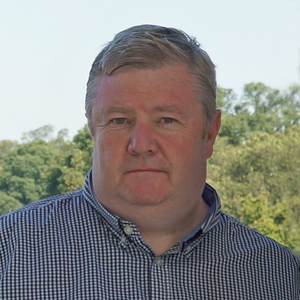
From top: Donald Trump; Jeremy Corbyn; Derek Mooney
The US presidential Election and the British Labour Party leadership race offer candidates that are so dislikeable it is a ‘no win’ whatever the results.
Derek Mooney writes:
I don’t know about you, but I am firmly of the opinion that when it comes to profane expressions; you can never have enough.
Hence my delight when I saw a post from Mentalfloss appear on my Facebook timeline last week offering 8 grand but forgotten profane expressions. Excellent, I thought, some additional material.
Sadly, the expressions – though colourful – were not that profane.
They did, however, include some handy old-fashioned phrases and analogies to sum up such predicaments as: taking forever to get to the point “Robin Hood’s Barn” or, being hesitant or indecisive: Buridan’s Ass.
The one that appealed most to me, however, was Morton’s Fork: the dilemma of being trapped no matter which way you go.
According to Mentalfloss:
“The expression refers to John Morton, Archbishop of Canterbury in 1491, servant to Henry VII. Henry was trying to restore the stability of the English monarchy by fighting The War of the Roses, and needed more money from his clergy to do it. (The clergy in question weren’t the impoverished monks and priests, but their wealthy bishops and cardinals). The clergy did not want to give away their money, so they took one of two approaches. Either they came in rags and said they were too poor to contribute, or they came in ridiculous finery saying they needed every penny to maintain the dignity of their position. Morton wasn’t having it. His “fork” led to a dead end, no matter which way you took. If you’re a high clergyman in rags, you’re obviously storing away all the money you extract from your underlings and beneficiaries. If you’re opulent, you’re obviously rich and can spare plenty of money for your King. Either way, hand it over.”
Or, to put it another way: it is a 15th century Catch-22 or Hobson’s Choice: a no-choice/no-win situation.
While Mentalfloss offers a sample usage involving a teenager looking to play an Xbox while off school sick, might I suggest (and here I reach my Robin Hood’s Barn) two better illustrations: the choices facing (a) voters in the USA and (b) members of the British Labour party.
In the case of the US, America voters are now presented with candidates from the two main parties both of whom they dislike intensely.
A recent Gallup Poll (conducted between Aug 5 and 11) showed Hillary Clinton with an unfavourable rating of 55% (and favourable of 40%) – a net un-favourability score of -15%.
The same Gallup Poll showed Donald Trump with an unfavourable rating of 63% (versus a favourable of 32%) – a net un-favourability score of -31%.
The two candidates are attaining historic levels of unfavourability. Before this election no major presidential candidate had a double-digit net negative “strong favorability” rating. Trump now holds the record for the lowest ever rating – with Hilary Clinton having the second lowest ever.
This is not the same thing as saying they are equally bad as each other. Trump is ahead of Clinton in the despicable stakes by a country mile, as veteran US news reporter Dan Rather put it in a recent Facebook post:
“…we must beware of false equivalencies. Many have construed Hillary Clinton’s statements about her email server as lies. And critics also point to other statements from her past where she has been perhaps less than truthful. Clinton should be held accountable for those statements. The press should vigorously question her and investigate where the truth lies. But the sheer amount of the verbal fertilizer being spewed by Trump must not be reported as a “he said, she said. Calling him on it is not partisanship, it’s citizenship.”
The situation is not looking a lot brighter for Labour party supporters in the UK. Last weekend the UK Independent ran a poll rating the key political players. It found that the two candidates for the leadership of the UK Labour Party both have net unfavourability ratings – and both in the double digits.
Indeed, the order of magnitude was not dissimilar to the US presidential race with the incumbent Jeremy Corbyn getting the Trump place with a net unfavourability of -28% (just one point worse than Nigel Farage) and his challenger, the relatively unknown Owen Smith taking the Clinton role with a -14% net unfavourability score.
By contrast the new UK Prime Minister and Tory party leader Theresa May scored a net favourability of +14%.
Even more worrying for Corbyn and Smith, and for the entire British Labour Party, a recent vote among members of the GMB union as to who the Union should back in the Labour leadership only attracted a turnout of 8% (for the record Owen Smith beat Corbyn 60/40 among those union members who voted).
For the record, if I had a vote in the USA I would undoubtedly vote for Clinton, just as – if I were a member of the British Labour party – I would vote for Owen Smith.
But, in both cases, I would be doing so grudgingly as the countless French voters who backed Jacques Chirac in the second round of voting in the 2002 French Presidential election.
Like them, I would not be voting positively for someone, I would be voting enthusiastically against someone – in their case the then far right leader: Jean-Marie Le Pen.
Many of them, particularly those who had voted for Socialist or Centrist candidates in Round One went to the polls with disinfectant and/or clothespin to show their reluctance to back Chirac. Chirac scored just under 20% in Round One, but won a massive 82% in Round Two.
They resolved their face-off with unappealing options, as will those faced with similar dilemma’s later this year in the own Morton’s Fork-up.
Derek Mooney is a communications and public affairs consultant. He previously served as a Ministerial Adviser to the Fianna Fáil led government 2004 – 2010. Follow Derek on Twitter: @dsmooney
Pics: PA/Getty
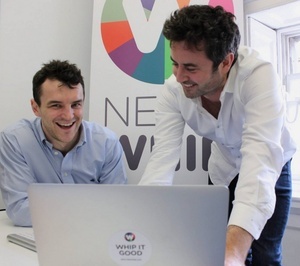
Newswhip founders Andrew Mullaney and Paul Quigley moments after widget removal
Many have asked.
Is the ‘thing’ that made the ‘sheet’s right hand side more interesting, informative and colourful no more?
Newswhip co-founder Paul Quigley writes:
You may have noticed that the trending news widget on the side of Broadsheet.ie has disappeared.
The widget was designed by the NewsWhip team to show Broadsheet readers which stories were going viral in Ireland, minute by minute. It also had the happy side effect of bringing some curious readers back to NewsWhip.com – back when it was a website showing trending news stories and massively grateful for new users.
NewsWhip has turned into a pure B2B business – our technology gives real time intelligence to the likes of the BBC, the Washington Post, Adobe and even Intel. Over that time our tech stack has changed completely. So alas: we can no longer support the widget.
So we wanted to say goodbye to Broadsheet readers. Also we wanted to say thank you to the Broadsheet team. They were incredibly sound to give us such a prominent position on their Right Hand Sidebar right when we were trying to grow users and awareness.
They’d hate to hear it and are far too modest to admit it but Broadsheet has quietly become an essential part of independent online Irish media. Broadsheet is where you get the other side of the story.
Meanwhile – if you’re interested in reading about what NewsWhip does these days – here‘s case studies with Mic.com, BuzzFeed, MasterCard and a few others.
Otherwise: farewell and love to the Broadsheet Massive
Mmf.

Olympic Council of Ireland tweetz:
Katie [Taylor] has 90 seconds to turn this around #TeamIreland
Come on, Katie!
UPDATE:
Defeat for Katie Taylor against Potkonen of Finland in their Lightweight quarter-final bout. https://t.co/4q2N0ld28u pic.twitter.com/9mEIgy62Cy
— Sportsfile (@sportsfile) August 15, 2016
Mmf.
UPDATE:

Katie Taylor admits it has been a very difficult year as she reflects on losing Olympic crown, via @rtesport.https://t.co/w1S9ppUSYE
— RTÉ (@rte) August 15, 2016
A devastatingly hard to watch post fight interview with Katie Taylor.
Via RTÉ Sport
https://www.youtube.com/watch?v=RYsoYnyZcb0&feature=youtu.be
You may recall how Independents 4 Change TD Mick Wallace told the Dáil in June of his plans to launch a website to assist those who wish to anonymously raise concerns about Nama.
The website, namaleaks.com, is now live.
Further to this…
Mr Wallace writes:
Namaleaks.com, the secure and anonymous whistle blowing platform, has launched today.
Namaleaks.com will allow for anyone who has been unfairly treated or who has witnessed poor practice by NAMA, or by any Investment Funds currently operating within Ireland, to securely and anonymously deliver information relating to same, to namaleaks.com.
This project is supported by Independents 4 Change TDs Mick Wallace and Clare Daly, former Irish Times environment editor Frank McDonald, assistant professor of geography at UCD Julien Mercille, and equity and options trader Cormac Butler.
Namaleaks.com is the first of its kind in Ireland, both in terms of security and anonymity.
Namaleaks.com was created with the assistance of the US based ‘Freedom of the Press Foundation’ along with experts who work closely with whistleblower Edward Snowden. They are world leaders in creating safe and anonymous electronic systems.
There are several ways to contact Namaleaks.com, depending on the level of security and anonymity you require.
You can communicate and deliver informatio/documents via encrypted email or encrypted mobile text.
This is explained in greater detail at namaleaks.com. If you wish to remain completely anonymous, namaleaks.com provides instructions on how to set up an anonymous email account in order to contact us.
All information received will be checked, cross-checked, and evaluated by the team of five as mentioned above, who will utilise any further necessary expertise, before deciding how best to use the information.
Since its inception in 2009, NAMA has, to quote An Taoiseach Enda Kenny, operated as a “secret society”.
It is unfortunate that our Government does not want NAMA to be accountable to the people of Ireland. Much information has already come to our attention which highlights serious problems in relation to how NAMA has operated – there is little doubt but that the best interests of the people of Ireland have not always been served by this State organisation.
Despite the fact that many worrying issues regarding NAMA have been brought to the attention of the Government and the Opposition, on the floor of the Dáil, there remains, a stubborn reluctance to hold NAMA to account, or properly address the serious concerns through a Commission of Investigation.
It is deeply disappointing that Fianna Fáil do not want an investigation – they say that there may be a need for one when all other investigations have been completed, but that will be three years from now.
Clearly, Fianna Fáil do not want an investigation into NAMA. So, while the National Crime Agency in Britain, and the Securities & Exchange in the US, have seen fit to commence investigations into NAMA’s Northern Ireland loan portfolio, Project Eagle, the jurisdiction with most cause for concern, the Republic of Ireland, wants to turn a blind eye.
It is not the citizens of Northern Ireland or America who may be paying a heavy price for how NAMA has done its business – it is the citizens of the Republic of Ireland.
Namaleaks.com intends to do what Fine Gael, Fianna Fáil and Labour do not want to do, that is, hold NAMA to account in the interests of the people of Ireland.
Previously: Screech

Human rights activist Bairbre Flood, from Cork, has created an hour-long radio documentary, The Hungry Road, in which she speaks to people seeking refuge who are subsisting in the makeshift camp in Calais, France.
Bairbre writes:
The police have stopped volunteers bringing in building materials so with the influx of around 70 new people a day, many are living in cramped tents.
One medic from Ireland, Elena Lydon, who regularly works in the camp,said that ‘for the first time people were coming up saying they were hungry to us in the first aid caravans.’
Most of us know of all this, as Calais has been substantially reported on this last year, but what are people really like in the camp? Where have they come from – geographically, culturally, personally?
‘The Hungry Road’, a reference to the Irish famine, is an attempt to get behind the statistics and hear what some individuals have to say about living in what most described as ‘hell’.
Everyone I talked to had endured incredibly traumatic events in both their original countries and along the road seeking refuge in Europe.
Blocked at the final hurdle, many are now seeking asylum in France, but have to wait in the camp while their application is being processed.
Others are trying desparately to reach family members in Britain where they feel people are more sympathetic to refugees and not as racist as the French.
Many speak English already and say that there are better job and study opportunities there.
Still, others have heard that the asylum process is much quicker than in France and they will be able to apply for family reunification for loved ones who could get no further than Lebanon, Turkey and other countries.
Whatever their reasons, and there are many – they have the right to be treated with respect and allowed to choose the country which they feel will be best for them and their families. That’s what Irish people have been doing for generations.
There are about 50,000 undocumented Irish migrants working in the US illegally. Imagine if Irish people in the States were treated the way the people in Calais are treated?
Police regularly tear-gas the camp and almost everyone I interviewed had been beaten or pepper-sprayed by the CRS. One man told me how a police officer took one of his shoes when he caught him near the town. Another, of how he was pepper-sprayed in the face at the train station.
And the utter feeling of neglect is palpable in an EU that spends more on border fences, tear-gas, scanners, dogs and razor wire than it does on caring for peoples basic needs or allowing them safe passage.
How can we justify that? What is it like for people already suffering, to have to deal with this abuse and neglect?
Bairbre created the documentary with the assistance of the Mary Raftery Journalism Fund.
Yearning Curve (Bairbre Flood)
Previously: ‘We’d Settle For Animal Rights’
Pic: Isolda Heavy
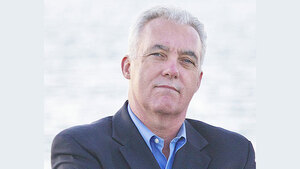
Kevin Cullen, of The Boston Globe
The three-day 2016 Kennedy Summer School will take place in New Ross, Co Wexford from Thursday, September 8 to Saturday, September 10.
The speakers will include An Tánaiste Frances Fitzgerald TD, the former governor of Maryland Martin O’Malley, the Garda Commissioner Noirin O’ Sullivan and a number of senior US Presidential campaign strategists and commentators.
In addition:
“The final event of the Summer School will be a showing of the Oscar winning movie ‘Spotlight’ followed by a panel discussion that will deliberate the implications of the clerical abuse scandal that features in the movie and the similar scandal in Ferns. Included in that panel will be, Kevin Cullen, a Boston Globe Columnist and a member of the Spotlight investigation team.”
See here for tickets and further details.
Previously: Grace, Noonan And Monageer
About That ‘Digital First’ Strategy
Thanks Ann Power


Ah here.
Doyle’s Cottage, Lawson Terrace, Sandycove, Co Dublin.
Glass Ireland tweetz:
The Black Diaries redux. Classy crowd in Sandycove on Friday night.
Context: Sandycove Remembers

