



Yearly Archives: 2016


https://www.youtube.com/watch?v=0vGORoCbpXw
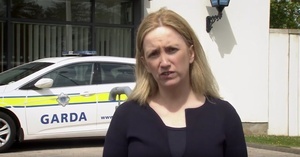
The full length documentary Mary Boyle: The Untold Story, written and directed by Gemma O’Doherty, and broadcast for the first time this evening on RTÉ You Tube.
From top: Mary Boyle’s uncle Gerry Gallagher; Twins Ann and Mary Boyle; Gemma O’Doherty.
Earlier: Staying In Tonight
Meanwhile…
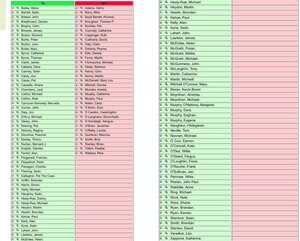
This is the sum of money RTE are attempting to charge me for using 3.5 minutes of old archive material on #MaryBoyle pic.twitter.com/SIBf1NocDK
— Gemma O’Doherty (@gemmaod1) July 4, 2016







MORE to folly.

Attorney General Máire Whelan
Last year, Clare Daly’s bill on fatal fetal abnormalities was vetoed by Fine Gael and Labour TDs, many of them pro choice, acting on unpublished advice from the Attorney General Maire Whelan,
On Thursday, another, blll sponsored by Mick Wallace, in similar terms will go before the Dáil.
Once again, the Government has stated that it should not be voted for, in view of the AG’s previous advices.
We asked Legal Coffee Drinker, what gives.
Broadsheet: “Legal Coffeee Drinker, what gives?”
Legal Coffee Drinker: “I’m not sure what you mean but what matters is whether or not these advices are correct. The courts’ view of the scope of the right to life of the unborn does not appear to be the same as the Attorney General’s.
P (P) v Health Service Executive [2014], in which it was held that the withdrawal of life support from a woman, who was brain dead, and whose foetus had no viable prospect of survival outside the womb, was not in breach of the State’s obligation to vindicate the right to life of the foetus where there was no reasonable prospect that it would be born alive.
A legislative provision like the proposed Bill, which only provides for termination in circumstances where there is no possibility of the unborn being born alive, would not therefore be unconstitutional.”
Broadsheet: “So you feel that it is wrong to oppose the bill on the basis of the AG’s advice?”
Legal Coffee Drinker: “On the basis of this advice as communicated to the public, yes. All we have is a bald assertion by the AG that the Bill is unconstitutional, based on the wording of the Constitution. No copy of the AG’s advices have been published and it’s not clear whether or not these advices took into account the P case, which would appear to make it quite possible – if not highly likely – that the Bill is constitutional.
There’s also the separate question of whether or not over-reliance on the A-G’s opinion in this matters could potentially breach the separation of powers provisions in our Constitution.
The Constitution provides for a clear division of power between the Goverment, the Oireachtas and the Courts, and also provides that the Courts – and not the Government, of which the AG is part – are the arbiters of unconstitutionality. In view of this, the Constitution even provides, in Article 26, for a special mechanism whereby a Bill may be referred to the Supreme Court, prior to being signed, to have its constitutionality ascertained.”
Broadsheet: “So over-reliance on the A-G’s opinion as to unconstitutionality may itself be unconstitutional?”
Legal Coffee Drinker: “Precisely. If bills don’t go ahead because there is too much deference to the AG’s opinion, then the constitutionality of the bill never gets to be decided on by the Supreme Court. Treating the AG’s opinion as final and conclusive – in circumstances where there is High Court authority to the contrary – is itself a breach of the separation of powers.
At the very least – given that there is authority which appears to be in direct conflict with her advices – more detail about the AG’s advices should be published to TDs before they can reasonably be expected to rely on those advices.
And attempts to discipline party or government members, who vote for a Bill opposed by the Government solely on the basis of the AG’s advice as to its constitutionality – could also be challenged on the grounds that a TD. should never be punished for seeking to uphold the principle that the courts be the sole arbiters of the Constitution…”
Broadsheet: “Thanks Legal Coffee Drinker. It’s been a while. May readers have been asking for you. Welcome back.
Legal Coffee Drinker: *click*
Previously: Unequivocal But Wrong
Rollingnews

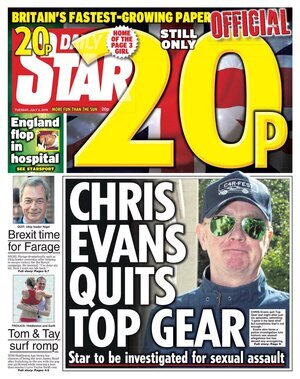
Stepping down from Top Gear. Gave it my best shot but sometimes that’s not enough. The team are beyond brilliant, I wish them all the best.
— Chris Evans (@achrisevans) July 4, 2016
Chris Evans quits Top Gear after just one series (Radio Times)

Not on SATH!
Aeneas Roman writes:
Recently erected sign at Woodbine Park, Booterstown, Co Dublin. Dun Laoghaire Rathdown Co Council penalising gaeilgeoirí...

From top: Dublin crest on the floor of City Hall, Dublin; Derek Mooney
In his column last week the author suggested re-constituting the Forum on Europe on an all island basis. Now it’s nearly government policy. He’s that good.
This week: the hazards of a directly elected Dublin Mayor.
Derek Mooney writes:
What is it about bad political ideas? When it comes to tenacity and resilience they put the cockroach to shame. While the cockroach simply trundles along looking loathsome and malodorous, bad ideas manage to get worse over time and yet somehow develop an enticing perfume.
So it is with the idea that Dublin should have a directly elected Mayor. Once again this superficially alluring proposal is being promulgated by some, including – though not exclusively – the Green Party.
It is as if its proponents had looked across the Irish sea, seen the absolute mayhem that the first two elected Mayors of London: Ken Livingstone and Boris Johnson, have wrought on the political scene so far this year and thought: hmm, how could we get some of that here.
It is not as if this is a new idea either. It has been trotted out in a couple of incarnations over the past decade and a half.
The first to run it up the flagpole was the former Fianna Fáil Minister, Noel Dempsey who provided for it in his 2001 Local Government Act. No one saluted, so it was wound back down.
It was then resuscitated by John Gormley in 2008, by way of a Green (discussion) paper and a subsequent draft piece of legislation, but it never made it into law.
Perhaps on the basis of three times is a charm, Big Phil Hogan wheeled out the proposal for a directly elected mayor again via his June 2012 local government reform document: Putting People First.
He envisaged the people of Dublin getting to vote on the idea in 2014 – but only if the members of the four Dublin Councils agreed. Three Councils did: Dublin City, Dun Laoghaire/Rathdown and South County, but the fourth: Fingal didn’t and so no plebiscite was held.
While the broad policy objective of giving more power to Dublin and having decisions about Dublin being made by people who are answerable to Dubliners is laudable, it appears to me that the directly elected mayor model is one with the least hope of delivering on that goal.
Any directly elected Mayor of the Dublin region would, after the President, have the biggest electoral mandate in the State, except that it would, unlike the President’s, be explicitly political.
Even on a turnout of only 50%, a directly elected Mayor for the Dublin Region (equal to the Dublin European constituency) would need to get over 200,000 votes.
That is some electoral mandate for one elected official to have and could potentially position them in opposition to the Taoiseach of the day, particularly where the Mayoral election was mid-way through a Dáil term.
Indeed it is hard not to imagine that Mayoral elections would be hi-jacked by opposition politicians as a platform to attack the Government of the day.
It is like having a referendum in Dublin on the policies of the government after two years, mid way through their implementation, but without the means to amend or change them?
Political gridlock in the Capital would almost be inevitable with a directly elected Mayor of Dublin, claiming to speak for about one third of the country, questioning and challenging the policies of the elected government.
Not that this capacity for political gridlock is limited to situations where the Mayor and Taoiseach were from opposite sides.
Look at the tension there was between Boris Johnson as Mayor and David Cameron as Prime Minister or between Ken Livingstone and Tony Blair/Gordon Brown as each operated what were effectively rival courts across the Thames.
Indeed the likelihood of political gridlock would be all the greater if the Dublin Mayor has no real responsibilities or powers to occupy themselves.
Most of the directly elected models that have been suggested thus far have envisaged the Mayors having co-ordinating roles, such as chairing the Transportation Authority. That is not going to keep them so busy that they won’t have time to make mischief for the government of the day.
The other question is what is to be done with the current tranche of 171 City and County Councillors across the four separate Dublin Councils?
You would hardly need all those directly elected Councillors sitting on four separate councils when you have a directly elected Mayor as that would be unnecessary duplication and waste, so how many do you cull? 80%? That would leave 34/35 to populate a regional Assembly.
Say you only cut 65% of them – leaving you with a regional consultative assembly of about 60 Councillors – that still means reducing the level of direct democracy and direct linkages between the citizens of Dublin and their elected representatives.
But isn’t part of the aim of having a directly elected Mayor to have greater linkages and answerability.
The case for greater joined up thinking and more decisions about being made by those answerable to Dublin is clear, but the directly elected mayor/super mensch is not the way to achieve that.
We need a model of city government that is based on the transfer of actual authority and finance raising power not just one individual’s ego and ambition.
Derek Mooney is a communications and public affairs consultant. He previously served as a Ministerial Adviser to the Fianna Fáil led government 2004 – 2010. Follow Derek on Twitter: @dsmooney
Park Strife
at
Helen Mullen writes:
Great parking job in Malahide. The driver hit my car door also with his door when he got out :(
There you go now.
Meanwhile….
In yesterday’s Sunday Independent, Gene Kerrigan wrote:
Fianna Fail has for ages been demanding an inquiry into Nama’s property deals. Last week, when Mick Wallace put down a motion to that effect, they voted against it.
No, no, they explained, we can’t have an inquiry – sure, isn’t the Comptroller and Auditor General looking into this?
Yes, the C&AG is looking at one aspect of it. Just as he was last time Fianna Fail demanded a full inquiry.
The thoroughness with which Fianna Fail has betrayed its own members and voters, and the interests of all of us, is impressive.
It’s doing a creditable job of helping Fine Gael keep the lid on the Nama scandal, while simultaneously posing as the main opposition party.
As long as the political correspondents facilitate this deception, so long will duplicity prosper.
…Fine Gael and Fianna Fail voted down an inquiry on the basis that any State scrutiny will somehow interfere with due process.
With exquisite comic reasoning, the very fact the PSNI, the NCA and the FBI are disturbed by the smell from Nama has become reason for the Irish establishment to ignore the smell. Question: what don’t they want us to know? What is it makes them pretend they don’t get a hint of a smell from the festering Cerberus deal?
…Meanwhile, Standards in Public Office has published details of the state money politicians receive. I’d explain why the State gives politicians this money, but I don’t know.
Fine Gael spent €200,000 of our money on secret polls before the election, all the better to manipulate the voters.
…Now, this polling, paid for with our money, gives politicians an advantage over candidates who don’t get a state subsidy. That sounds unconstitutional to me – perhaps under the ruling that prohibits one side in a referendum from using state funds to influence opinion.
Clowns to the left, jokers to the right (Gene Kerrigan, Sunday Independent)
Previously: Screech
Via Mick Wallace
