An open-air screening of The Queen of Ireland plus a panel chat involving Panti and others..
Merrion Square, Dublin 2.
Michael Le Cool writes:
Bring warm clothes and blankets etc. €5 euro entry at the gate!



An open-air screening of The Queen of Ireland plus a panel chat involving Panti and others..
Merrion Square, Dublin 2.
Michael Le Cool writes:
Bring warm clothes and blankets etc. €5 euro entry at the gate!

Youtube thing-melters Let’s Melt This reverse their M.O. in this oddly satisfying mini-chronicle of lollipop resurrection.

It is with alarm that I read Frank MacDonald’s article about the new definition of “low rise” for the purposes of the draft Dublin City Development Plan.
In any European context, and in particular in an Irish context, the idea that up to 28 metres (nine storeys) could be “low rise” is a serious abuse of language and can only be designed to confuse the average citizen.
The development plan has been called an environmental contract between the city and its citizens and there should be no room for confusion or misinterpretation.
The attempt to dissemble is made worse by the fact that this is not the first time that the description of allowable building heights has been fudged.
In the defunct policy document Maximising the City’s Potential, earlier efforts to increase building heights, without actually clearly defining what that would mean, were rejected.
The unique selling point of Dublin is its scale, with big skies and the sight of the mountains at the end of the road. We can increase density and “maximise” its potential without destroying that quality.
Let us not try to compare ourselves to London and New York but rather to cities of similar population and scale. Above all , let us not pretend that any building up to nine storeys high is “low rise”.
Jane Lanigan,
Dublin 4.
FIGHT!
Building heights in Dublin (Irish Times letters)
Pic via Gravity Bar

Weight loss teas.
A Make up tutorial.
With make-up ‘expert’ Emma Doran.
Previously: Get The Festival Look

What you may need to know:
1. Accountant Chris Wolff (Ben Affleck) leads a double life as a sleeper assassin for the world’s most dangerous criminal organisations.
2. This looks Excel-lent.
3. Sure, Batman V Superman (2016) wasn’t great, but you can’t really fault Affleck’s take on the Dark Knight.
4. Batman will be keeping Affleck occupied for the foreseeable future. The Caped Crusader is leading two Justice League movies and will have a cameo in Suicide Squad (2016).
5. In addition, Affleck’s fourth directorial effort, Live by Night, is due in October 2017. Who’s a busy boy?
6. Broadsheet prognosis: Books will be balanced.
Release Date: November 4.
(Mark writes about film and TV at WhyBother.ie)

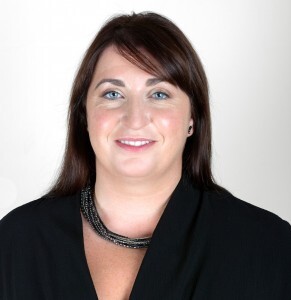
From top: Tony O’Brien, chief executive of the HSE; Anne Marie McNally
Do we want to live in a country where our wellbeing is determined by our bank balance?
Ann Marie McNally writes:
A conversation over a few pints on Saturday night went something along the lines of ‘I went the doctor last week and she sent me straight to the hospital with a letter for an urgent appointment…three days later I got a letter for an appointment in the middle of July’.
The person, my own demographic, was horrified to learn that I didn’t have private health insurance.
I don’t, I cancelled it about three years ago when, despite paying around €1800 a year, it still cost me a fortune to be treated for a broken leg in the swift clinic of which I was only entitled to claim €300 back.
The economics of it didn’t make sense to me so I cancelled. I figured, hey I get an MOT every year, I’m doing good and surely I’d be better of saving a few bob for an emergency medical fund in case it’s ever needed. Seemed rational at the time.
Fast forward three years and the visit to the doctors which resulted in the information that I was to make my way to the hospital post haste.
The Doctor (whom I’d paid €70 to see) asked me the insurance question. No, says I, but I’d be prepared to pay for the required procedure privately.
She nodded understandingly but said;
‘Can I advise that unless you have approximately €10,000 you’re prepared to spend on this then I don’t recommend you go the private route. The initial consultation may be fine but if there are further interventions and a possible hospital stay involved then the costs will rapidly mount.’
Needless to say, I was shocked and promptly reassured her I’d stick with the public system!
I trotted off to the hospital and 3 days later when I got the letter advising me of the mid-July appointment, I was pleasantly surprised. That’s not bad at all I thought, 2.5 months, that’s a hell of a lot better than I’d expected.
It was only in conversations with friends the following day that I realised my expectations were ridiculously low.
A significant health concern, a doctor’s letter with urgent written all over it and my expectation was for an appointment longer than 2.5 months into the future! Is that how conditioned to poor public services I had become?
In the meantime, had I the financial wherewithal to stump up the money that it would have cost (still an undetermined amount), I’d have been seen to that week and any potentially dangerous issues dealt with or peace of mind restored with an all-clear.
My health, and potentially my life, was to be determined by how much money was in my bank account. In a civilised democratic society my health was suddenly less important than the person who had more money than me. T
hat’s ultimately what it boils down to…your wellbeing is determined by your bank balance.
How civilised is that?
Last week a Motion the Social Democrats put forward was signed by 89 TDs. A majority of the Dáil and a mixture of deputies from across the party and independent spectrum. Soon after, the newly appointed Minister for Health intimated on national media that he supported something similar.
That Motion was a call for the establishment of a Cross-Party Forum on Health with a view to achieving a single tier universally accessible healthcare system.
A system where medical need rather than bank balance would determine your healthcare treatment. A civilised system.
In Post World War 2 Britain the Tories and Labour came together and agreed on the need for such a system.
They put their differences aside and they made it happen, for the good of the nation. It’s time our politicians took a similarly mature approach to this most fundamental of issues.
Anne Marie McNally is a founding member of the Social Democrats. Follow Anne Marie on Twitter: @amomcnally

Of the things Enda hates there is none
Worse than people, who while having fun
Tend to go a bit mad
With their phone or iPad
He’s noticed there is always one.
John Moynes
Rollingnews






MORE to folly.