Author Archives: Admin

11993277_1004251149614804_1248398319769688466_n

No Monster Club – Drinking at the Doldrums

What you may need to know…

1. Dublin lo-fi pop project and long-term ‘sheet favourite No Monster Club returns with a new single from last year’s I Feel Magic album.

2. The labour of love of Popical Island’s Bobby Aherne, NMC have been plying their bockety wares for a few years now, having toured with The Polyphonic Spree, Wavves, HEALTH, Jeffrey Lewis, Ariel Pink, and Jeff the Brotherhood, among others.

3. Streaming above is the video for Drinking at the Doldrums. In the band’s own words, it is: “The official No Monster Club videogame – the world’s first ‘choose your own adventure’ in which you are given no options whatsoever”.  Action, action, action.

4. Appearing next on the festival rounds, the band will be at Castlepalooza, Knockstockan and Galway Arts fests. More info here.

Verdict: A grin-inducer for fans of pop and/or dementedly sunshiny melodies of various stripes.

No Monster Club

Screen Shot 2016-05-18 at 10.21.33 Screen Shot 2016-05-18 at 10.22.22

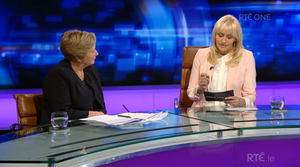
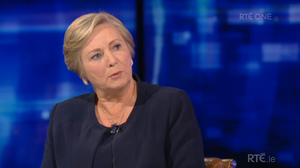
From top: Tánaiste and Justice Minister Frances Fitzgerald and RTÉ’s Miriam O’Callaghan; Ms Fitzgerald

Like a boss.

Last night, Tánaiste and Justice Minister Frances Fitzgerald appeared on RTÉ’s Prime Time.

Presenter Miriam O’Callaghan repeatedly asked Ms Fitzgerald was she either surprised or concerned by Garda Commissioner Nóirín O’Sullivan’s attempts – via senior counsel Colm Smyth – to undermine Sgt Maurice McCabe’s credibility during the commission of investigation by Justice Kevin O’Higgins into Sgt McCabe’s complaints of malpractice.

Ms Fitzgerald’s appearance came after journalist Katie Hannon revealed transcripts of the exchanges between Mr Smyth and Mr O’Higgins which can be read here.

Grab a tay.

Miriam O’Callaghan: “Were you taken aback to discover the approach that the Commissioner and her legal team took in the O’Higgins’ investigation which was to challenge the motivation and credibility of the whistleblower Maurice McCabe? Were you taken aback by that?”

Frances Fitzgerald: “Well, let’s put this into context. What we’re hearing about tonight is partial evidence, apparently, a transcript that was given at a Commission of Inquiry that interviewed 97 witnesses, took over 34 days of hearings, was held in private – nobody asked for it to be held in public – and a couple of weeks ago we had the report given to me and then published after certain legal actions, 360 pages of a report, making a lot of recommendations, having examined the issues that Sean Guerin had examined in a preliminary way two years ago.”

O’Callaghan: “Ok.”

Fitzgerald: “Now it’s illegal to publish these transcripts. For me to comment on them, I don’t know whether their partial, whether they’re full and I think it is undermining of the overall commissioned report when we select out certain transcripts. So I do have to make that point…”

O’Callaghan: “Let me come back in there. OK. But let me come back in on my  original question..”

Fitzgerald: “Yes, can I…”

O’Callaghan: “…which was: are you taken aback by the approach that the Commissioner and her legal team took at the O’Higgins investigation in relation to the whistleblower Maurice McCabe? Because, in public, the Commissioner was talking about valuing his role as a whistleblower and yet, in private, in these sessions – and they’re now public –  she was actually actively challenging the motivation and his credibility.”

Fitzgerald: “I don’t think it’s appropriate for me, as minister for justice, to go into the details of the instructions that were or weren’t given to a particular legal team…”

O’Callaghan: “But they’re in the public domain now minister.”

Fitzgerald: “Illegally and one doesn’t know how comprehensive they are, but the point I want to make…”

O’Callaghan: “But they’re true, that’s the point…”

Fitzgerald: “Well…”

O’Callaghan: “That’s the role and the approach that the Commissioner adopted. And I’m just asking you: are you surprised at that approach?”

Fitzgerald: “What I have to say to you is that you’re asking me to second guess the commission effectively by your question. Because what we have is a Justice O’Higgins who heard all of the evidence, who was in the unique position to hear everything, to see the approach of all the different legal teams, to interview witnesses and in his final report he does not include the particular points that you’ve made.”

O’Callaghan: “Are you happy that this was excluded?”

Fitzgerald: “But what I have to say…”

O’Callaghan: “No, no, actually, that’s an important point minister.”

Fitzgerald: “It is an important point.”

O’Callaghan: “Are you happy that that exchange was excluded from the final report?”

Fitzgerald: “But what you’re asking me to do and I want to go on and answer your point in relation to the Commissioner but you’re asking me to actually second guess  a commission of..”

O’Callaghan: “I’m not.”

Fitzgerald: “You are..”

O’Callaghan: “You just said it wasn’t in the final report…”

Fitzgerald: “Yes.”

O’Callaghan: “And I’m asking you are you surprised that exchange isn’t in the final report?”

Fitzgerald: “But I have to accept what Justice O’Higgins who we gave the statutory responsibility to do: to do this investigation, this Commission of Investigation. This is a methodology that’s, if you like, well tried and tested. I accept fully, as does the Government, the findings in the report and I believe we should be focusing on those now and the role of victims particularly and the changes that are needed to be made in An Garda Siochana in relation to investigations but in relation to the Commissioner, can I say that, what I have to go by, is what she said in her statement last night where she says that ‘Sgt Maurice McCabe’s contribution is valued and the service is changed for the better in response to the issues about which he complained’.”

O’Callaghan: “But minister, that is totally at variance with what her lawyers, acting on her instructions, were doing and saying about Maurice McCabe…”

Later

Fitzgerald: “For me to start commenting on that, is to take partial transcript that I don’t know the context, what happened before it, what happened after it. I have to go on what the Commission of Investigation said. What they, what Justice O’Higgins said in the 370 pages and I go on what the Commissioner said in relation to her approach..”

Watch Prime Time back in full here

Earlier: Clarifying Matters

‘We Shouldn’t Lose Sight Of The Victims’

dublin

It is with alarm that I read Frank MacDonald’s article about the new definition of “low rise” for the purposes of the draft Dublin City Development Plan.

In any European context, and in particular in an Irish context, the idea that up to 28 metres (nine storeys) could be “low rise” is a serious abuse of language and can only be designed to confuse the average citizen.

The development plan has been called an environmental contract between the city and its citizens and there should be no room for confusion or misinterpretation.

The attempt to dissemble is made worse by the fact that this is not the first time that the description of allowable building heights has been fudged.

In the defunct policy document Maximising the City’s Potential, earlier efforts to increase building heights, without actually clearly defining what that would mean, were rejected.

The unique selling point of Dublin is its scale, with big skies and the sight of the mountains at the end of the road. We can increase density and “maximise” its potential without destroying that quality.

Let us not try to compare ourselves to London and New York but rather to cities of similar population and scale. Above all , let us not pretend that any building up to nine storeys high is “low rise”.

Jane Lanigan,
Dublin 4.

FIGHT!

Building heights in Dublin (Irish Times letters)

Pic via Gravity Bar

The-Accountant

What you may need to know:

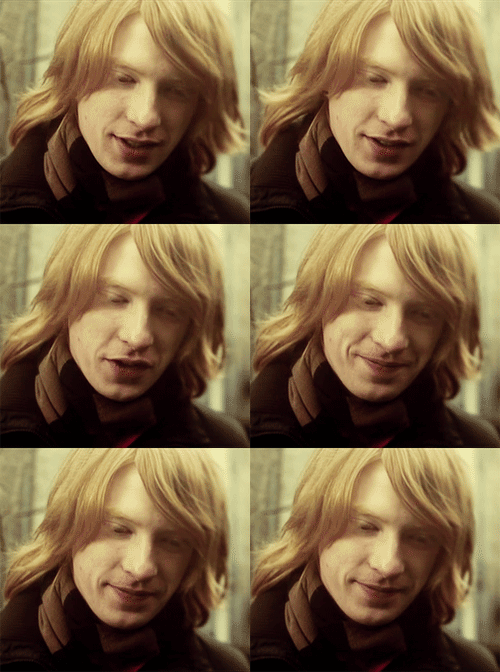
1. Accountant Chris Wolff (Ben Affleck) leads a double life as a sleeper assassin for the world’s most dangerous criminal organisations.

2. This looks Excel-lent.

3. Sure, Batman V Superman (2016)  wasn’t great, but you can’t really fault Affleck’s take on the Dark Knight.

4. Batman will be keeping Affleck occupied for the foreseeable future. The Caped Crusader is leading two Justice League movies and will have a cameo in Suicide Squad (2016).

5. In addition, Affleck’s fourth directorial effort, Live by Night, is due in October 2017. Who’s a busy boy?

6. Broadsheet prognosis: Books will be balanced.

Release Date: November 4.

(Mark writes about film and TV at WhyBother.ie)

tonyo'brien

anne-marie-291x300

From top: Tony O’Brien, chief executive of the HSE; Anne Marie McNally

Do we want to live in a country where our wellbeing is determined by our bank balance?

Ann Marie McNally writes:

A conversation over a few pints on Saturday night went something along the lines of ‘I went the doctor last week and she sent me straight to the hospital with a letter for an urgent appointment…three days later I got a letter for an appointment in the middle of July’.

The person, my own demographic, was horrified to learn that I didn’t have private health insurance.

I don’t, I cancelled it about three years ago when, despite paying around €1800 a year, it still cost me a fortune to be treated for a broken leg in the swift clinic of which I was only entitled to claim €300 back.

The economics of it didn’t make sense to me so I cancelled. I figured, hey I get an MOT every year, I’m doing good and surely I’d be better of saving a few bob for an emergency medical fund in case it’s ever needed. Seemed rational at the time.

Fast forward three years and the visit to the doctors which resulted in the information that I was to make my way to the hospital post haste.

The Doctor (whom I’d paid €70 to see) asked me the insurance question. No, says I, but I’d be prepared to pay for the required procedure privately.

She nodded understandingly but said;

‘Can I advise that unless you have approximately €10,000 you’re prepared to spend on this then I don’t recommend you go the private route. The initial consultation may be fine but if there are further interventions and a possible hospital stay involved then the costs will rapidly mount.’

Needless to say, I was shocked and promptly reassured her I’d stick with the public system!

I trotted off to the hospital and 3 days later when I got the letter advising me of the mid-July appointment, I was pleasantly surprised. That’s not bad at all I thought, 2.5 months, that’s a hell of a lot better than I’d expected.

It was only in conversations with friends the following day that I realised my expectations were ridiculously low.

A significant health concern, a doctor’s letter with urgent written all over it and my expectation was for an appointment longer than 2.5 months into the future! Is that how conditioned to poor public services I had become?

In the meantime, had I the financial wherewithal to stump up the money that it would have cost (still an undetermined amount), I’d have been seen to that week and any potentially dangerous issues dealt with or peace of mind restored with an all-clear.

My health, and potentially my life, was to be determined by how much money was in my bank account. In a civilised democratic society my health was suddenly less important than the person who had more money than me. T

hat’s ultimately what it boils down to…your wellbeing is determined by your bank balance.

How civilised is that?

Last week a Motion the Social Democrats put forward was signed by 89 TDs. A majority of the Dáil and a mixture of deputies from across the party and independent spectrum. Soon after, the newly appointed Minister for Health intimated on national media that he supported something similar.

That Motion was a call for the establishment of a Cross-Party Forum on Health with a view to achieving a single tier universally accessible healthcare system.

A system where medical need rather than bank balance would determine your healthcare treatment. A civilised system.

In Post World War 2 Britain the Tories and Labour came together and agreed on the need for such a system.

They put their differences aside and they made it happen, for the good of the nation. It’s time our politicians took a similarly mature approach to this most fundamental of issues.

Anne Marie McNally is a founding member of the Social Democrats. Follow Anne Marie on Twitter: @amomcnally