
Author Archives: Admin

Screen Shot 2016-01-26 at 15.45.28

Today, during Leaders’ Questions, Independent TD Maureen O’Sullivan raised the recent protests at Moore Street.

Ms O’Sullivan specifically asked Taoiseach Enda Kenny why the Government isn’t doing more to protect the entire Moore Street terrace and not just the buildings numbered 14-17.

Maureen O’Sullivan: “On the 1st of January in Dublin Castle, there was an impressive flag-raising ceremony to start the 100th anniversary of the Easter Rising. An amazing array of launches and events is being held not just in Ireland, but also abroad, by a wide number of organisations. A number of restorations are ongoing, for example, Kilmainham court and Pearse’s cottage. It appears to me, and others, that this and previous Governments would have preferred it had the men and women involved been airlifted from the GPO to Richmond Barracks and Kilmainham Gaol, thereby bypassing Moore Street. However, they did not bypass it and it is part of the evacuation route. It was also witness to a number of events, not just involving the leaders in Nos. 14-17 Moore Street, but the ordinary men and women who took part as well as citizens in Dublin.”

“Shaffrey Associates conducted a wider assessment of the 1916 battlefield as part of the ministerial consent to carry out work. I will cite parts of that assessment. The block exactly matches the terrace into which the majority of the GPO garrison escaped. The activities relating to the 1916 Rising that took place on Moore Street happened throughout the entire street, on adjacent lanes and within many of the buildings. The assessment specifically mentions buildings other than Nos. 14-17. Furthermore, Article 1 of the Venice Charter reads: “The concept of a historic monument embraces not only the single architectural work but also the urban or rural setting”. Article 6 reads: “Wherever the traditional setting exists, it must be kept. No new construction, demolition or modification which would alter the relations of mass and colour must be allowed.” To me, this means that the fabric of Moore Street and its area must be retained.”

“If one walked into Kilmainham Gaol or Pearse’s cottage or if one went to Brú na Bóinne, one would immediately get a sense of what it was like to have been there at the time in question. This is what we could have at Moore Street. Last week or the week before, the Taoiseach launched a virtual reality tour of Easter 1916. I do not want that to form part of what we will do for Moore Street when we have the opportunity to retain the authenticity of Moore Street now. Westport House was withdrawn from NAMA. Under section 4.1.1 of the NAMA Act, that was possible for legitimate reasons in the public interest.”

“The Government had the power to designate Nos. 14-17 Moore Street as a national monument. Why was this designation not extended to the rest of the terrace? Why has the Taoiseach abandoned what he called the “laneways of history” and why are we leaving it to a vulture capitalist to look after the rest of the battlefield site?“

Enda Kenny: “Thanks, Deputy.  I looked at this myself quite a number of years ago.  To put it mildly, the condition of the street and of the buildings on either side of what is a national monument were simply disgraceful.  I have listened to all of the rows about the national monument, about what should or should not be done about it.  For that reason, the Government purchased the national monument.”

“This has dragged on for some many years with so many different variations, given the fact that Dublin City Council, as the planning authority, has responsibility in respect of applications that come before it for planning permission both in respect of Moore Street and the lanes of history at the back of O’Connell Street and so on.”

“In respect of the centenary commemorations for 2016, Government decided to purchase this for a sum of €4million and to restore this building in a proper, authentic and time of the period fashion. As I understand it the maps show clearly other documents, buildings on either side were either non-existent or in a state of collapse before the Rising took place in 1916. And you are right, this was the centre of the end of the evacuation process from the side door of the GPO…but you know Deputy O’Sullivan what the Government wants to do for the people here and for posterity is to take the buildings where the surrender was commissioned from and preserve that as a national monument in respect of one of the first small countries to achieve its, to strike out for independence, politically and economically at the start of the 20th century.

The Government don’t own all the streets and the buildings on either side of 14-17. The Government do own, in respect of the people now, these buildings and the intention is to have that restored in a proper, fitting fashion. It is not a case of just, of the vulture capitalists, the venture capitalists or capitalists doing what they like in respect of the remainder of the surrounding area. The responsibility for planning and for approval of that lies initially with Dublin City Council and, beyond that, if there’s an objection, An Bord Pleanála and that’s independent of the process of Government…”

O’Sullivan: “When you did the right thing, with part of it, why could you not have gone further and have done the right thing with the whole area. In 2014, we had this exchange also and you said to me that commemorative events had to be inclusive, sensitive and appropriate. Now I want to go back two weeks and to just 14 to 17 first of all. The occupation should never have happened. But what happened on that Monday was completely disrespectful, undignified and insensitive to what has happened in 14 to 17. It was all cloak and dagger stuff, there was no conservation expert on hand to oversee the work that was going on, somebody happened to arrive along and heard workers there with claw hammers and, no disrespect to the workers, but they didn’t know where they were, what they were doing and the significance of the building.”

“Now there have been so many mistakes in the reports and I just take one. Number 18 is, in one conservation report saying, that the facade singled out was pre-1916. And in another report, it was omitted. And we know that once something is destroyed, it’s gone forever. And we have examples of that. Now, so far, the Government, the taxpayer, paid €9million €4million to buy and €5million has been designated for 14 to 17. My questions is: whose plan are we following? Because it doesn’t appear to be the State plan, it appears to be the plan that was drawn up by the developer, the same, failed property developer, who wanted to build over, under, around and on top of the national monument. So that seems to be the plan that we’re following.”

“Now I’ve just been to a meeting at [Dublin] City Hall – the Moore Street Forum. Dublin City Council were represented and of course they’re saying that the minister has responsibility, you’re saying Dublin City Council have responsibility. Now there was a motion passed in the city council on the 11th of January and that motion has to be taken on board by the minister and the Government. And because the Government are passing it one way, Dublin City Council are passing it another way, there is a need, and I think the Government and the minister have to take the lead on this for all of the stakeholders to come together, at the same time, so that these matters can be addressed. Because time is very much running out.”

Previously: Moore Of It

‘I Have Been Asking Questions And Not Getting Answers’

Related: Minister officially refuses to give independent conservation experts access to inspect Moore St terrace

Thanks Ciaran

Screen Shot 2016-01-26 at 14.36.07

Aidan O’Connell

Aidan O’Connell writes:

I have been diagnosed with GAD (generalised anxiety disorder), depression, OCD, borderline personality disorder, somatic illness, social anxiety disorder and panic attack disorder – all separately over the course of the 15 years.

I have doctor shopped and seen over a dozen-plus GPs, at my worst seeing multiple doctors on the same day. I have also seen multiple psychiatrists, again possibly over a dozen. That’s why there is a cluster of diagnoses above, “Doctors differ, and patients suffer”.

I am under the care of one professional now and have GAD, some elements of OCD and possibly some personality traits.

Yesterday Fiona Kennedy wrote about DBT and the lengthy period of time that people have to wait before they get help in Ireland’s public mental healthcare system.

I have experienced nothing but frustration.

I initially saw a consultant psychiatrist, to whom I was explaining my situation, when he said, “Time’s up, we will carry on next week”, before he wrote a prescription for an anti-depressant without even giving me a diagnosis.

Surely, he should have managed his time, so that, on first consultation he could at least have given me a diagnosis or a plan. In addition, throughout the session, he kept calling me “squire” and when I spoke of an incident in work, he said, “why didn’t you use a load of expletives and tell them ‘where to go?'” I didn’t return. This was a private appointment.

Next up was an appointment on the public side. I saw a registrar and not a consultant. During the course of the appointment, he chewed gum and took a mobile phone call. He then left me alone for an age and said, “The consultant would normally see you, but he is run off his feet”.

What he didn’t know was I had Googled who I was supposed to see and I saw him chatting at the reception counter a few feet from where I was sitting. The registrar then came back with a script for another anti-depressant, albeit a different one to the one referred to above.

Another stand-out appointment (this time on the private side) was with a consultant who, upon entering his room, showed me his qualifications on the wall, the Lancet magazine on his desk and made sure I knew he didn’t take credit cards.

A short while after the appointment began, he said, “I have the answer, Largactil. We need to get your sleep right in the first place and this will solve that.”

He didn’t tell me that this medication is over 50 years old and has been long left behind because of the dreadful side-effects.

I saw a consultant psychiatrist privately who smelled of cigarettes and spoke in a very, very soothing voice unless there was a disagreement and he lost his temper. The same man threatened to sue a girl I know for a comment on Twitter where she recalled a bad experience and mentioned his name.

Within minutes of meeting me, he told me I had Borderline Personality Disorder and we would have to engage in long-term DBT sessions. The problem for me, apart from the cost, was that, unbeknownst to me, he put me on an anti-psychotic drug and increased the dosage 14-fold until I tapered down and got away. I have never lost the five stone I gained on those drugs. I still need to lose this weight and I am desperate to lose it.

I am under the care of a great guy now. He’s a fantastic human being and a fantastic doctor. I admire him, his intelligence, his calmness, and his view that “less is more” in terms of medication.

He also regularly congratulates me on my defeat of alcohol and gambling. Regretfully, I still have some demons to beat. He will assist me though and I have no want nor urge to do either.

I am seeing this consultant psychiatrist privately but it’s not necessary to pay on the day of an appointment and he will see people at times of crises.

The experiences I have had are so mixed. But I firmly believe less is more in regards to medication and I do firmly believe that DBT is the answer to personality disorders (I hate the word disorder and I hate the word disability!)

I now write in reference to Dual Diagnosis – something I have had experience with in the past – following on from the death of Caoilte O Broin.

It’s astonishing that a lot of mental health services and addiction treatment centres in Ireland don’t treat people suffering with depression, anxiety or psychosis if they are also drinking and I believe the tragic case of Caoilte O Broin needs to change things in Ireland in 2016.

It’s totally inconceivable that there wasn’t more done for Caoilte. Why, when he was in such distress, did he have to fight his battle against his demons on his own?

Bearing in mind Caoilte’s experiences were related to the public system, we are all left wondering how and why wasn’t more done?

Aidan blogs at The Truth Wins. His Twitter handle is @AidanTruthWins

Previously: An Avoidable Death

Caoilte’s Story Is Not Uncommon

Turned Away

Access To Mental Health Services

90347179Michael Taft

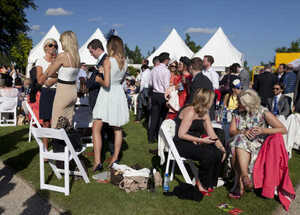
Last year’s Dubai Irish Derby, Curragh, Co Kildare ; Michael Taft

The recovering economy will lift all boats, we are assured

But beneath the surface all is not well

Michael Taft writes:

The economy is in strong growth, but if polls are anything to go by most people are not feeling the breeze. As Goodbody economist Dermot O’Leary says:

‘While people broadly accept that the country is better off than a year ago, a large majority believe that it has not yet benefited them personally. One recent survey suggested that only 15pc of people feel that they have personally benefited. Trickle-down economics appears to be clogged up.’

For many this will change over the coming months. Employment is rising, wage increases are occurring. However, social protection payments, with the exception of pensions, have been largely frozen (that is, they have been cut in real terms) and there is some evidence that wage increases are primarily going to managers and professionals.

The CSO shows that in the last two years, weekly income for managers and professionals increased while all other employees (sales, clerical, service, production, building and transport workers) saw their weekly income fall.

Trying to nail down the ‘who is benefitting’ numbers from the data can be difficult, as in many cases it lags by a year or two and in other cases it doesn’t exist. So we have to go about connecting-the-dots.

With the help of Seamus Coffey’s useful post on household income, we can make a start. This tracks the rise of household disposable income by comparing the first nine months in each of the last four years.

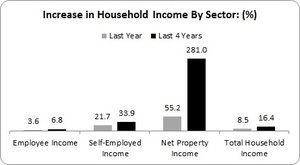
Seamus’s full table can be found here; what follows shows the increases in the main income categories.

Clogging Up the Trickle Down 1

Total household income rose by 16 percent over the last four years. Employee income rose by 7 percent, while total self-employed income rose by over a third.

Net property income – mostly dividend income according to Seamus – nearly trebled, though this is a small category.

Another way of looking at the data is:

In the last four years, employees received 32 percent of the total rise in household income (in the last year it made up 28 percent)

Self-employed took 46 percent of the rise in income (54 percent in the last year)

Net property income accounted for 22 percent of the rise in income (18 percent in the last year)

Clearly, it is self-employed income that has been the main beneficiary of the rise in total income. Who accounts for this? Farmers, professionals (doctors, lawyers, consultants), craft workers? The data is silent. Nor, from this table, do we know how the increases are distributed among different income groups.

Let’s turn to another dataset – the Survey of Income and Living Conditions (SILC). This cannot be overlaid on the above data which is taken from the national accounts – different methodologies, slightly different categories. The data from SILC refers to equivalised income – that is, it takes account of how many people are living in the household.

However, we can get a sense of who is benefitting (the CSO didn’t publish the 2011 data, and 2015 will come on stream later this year).

Clogging Up the Trickle Down 2

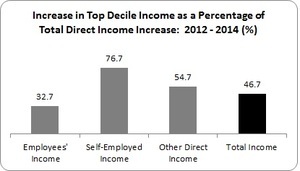
What is this table telling us?

Of the increase in all direct income (direct income excludes social transfers), the top 10 percent income group took nearly 47 percent.

Of the increase in employees’ income (wages and salaries), the top 10 percent took nearly a third of the total increase in employee income.

Regarding self-employed income, the top 10 percent took 77 percent of the rise.

And 55 percent of the total increase in Other Direct Income (in SILC this refers to interest, dividends, rent and private pensions) went to the top 10 percent. It would be reasonable to assume that increases in employee income are more widely distributed among different income groups; less so for self-employed and other direct income.

So let’s summarise:

Household income is increasing. In the last year it jumped by 8.5 percent. However, over 50 percent of this rise was taken up by the self-employed with another 18 percent going on net property income.

Within the self-employed, SILC shows that the main beneficiaries are the top 10 percent; ditto for other direct income like dividends and rent.

So we have a clear and substantial rise in overall household income. However, when we look below the surface we find evidence (not necessarily conclusive evidence but certainly persuasive) that most of it is landing in the pockets of the self-employed and capital/private pension income – and most of that is landing in the pockets of the top 10 percent.

Maybe that’s why people are not feeling it. Because the money is not heading in their direction; nor is there any uplift in social transfers.

In any recovery boats lift at different times and at different rates. That’s why in the upcoming election it’s not enough to learn about what parties will do about growing the economy.

Just as importantly, we need to learn how they are going to spread that growth around, how they are going to ensure that all boats are lifted; and what special attention they will give to the many, many small boats that are in bad need of repair.

Otherwise the economic pond will be dominated by a few big boats which will sail right over the rest of us.

Michael Taft is Research with Unite the Union. His column will appear here every Tuesday. He is author of the political economy blog, Unite’s Notes on the Front. Follow Michael on Twitter: @notesonthefront

sheahan

Oh.

Anne writes:

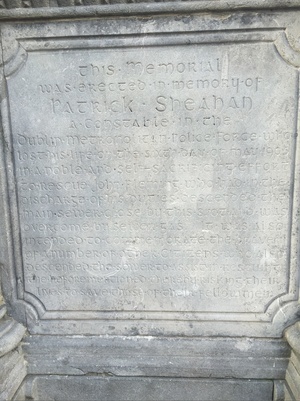
Memorial in central Dublin I never noticed before. A nasty way to go. Perhaps of interest to Broadsheet readers?

Update:

sheahan

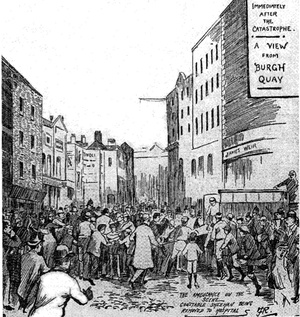
The Burgh Quay Sewege Catastrophe, May 6, 1905

What kind of man would do that for a fellow man?

Wade through poo smelling foulness we can’t even imagine or maybe we just don’t want to?

 Sibling of Daedalus writes:

Constable Patrick Sheahan was a well known figure in the turn-of-the-century Dublin Metropolitan police force, indeed he may have been the Dublin equivalent of Captain Carrot in Terry Pratchett’s ‘Men at Arms‘ books.

The Constable’s obliging nature and impressive size – 6 foot 4 inches tall and 18 stone in weight – resulted in him being called up for the jobs no one else in the force felt able for, such as – on one famous occasion – wrestling a runaway bull to the pavement of Grafton Street.

He also regularly rescued old ladies from collapsing buildings and received a reward for recovering a city flag from a group of Trinity students in Dawson Street and restoring it to the Mansion House.

Constable Sheahan’s luck ran out in the labyrinthine sewers of Burgh Quay on Saturday May 6, 1905, when – having gone on duty to cover for a friend who had wanted to go to the theatre – he died of suffocation trying to rescue a Dublin corporation workman overcome by deadly gas.

His funeral in Mount Argus was a grand affair and the streets along which the cortege proceeded to Kingsbridge Station – from which his body was taken by train to his native Limerick for burial – were thronged with Dubliners respectful of his courage.

Mmf.

Any excuse.

illustration: Limerick City Journal


CZpOl0aWcAEnh4X

Today’s Irish Times.


Be Your Own Reason tweetz:

“Plain Cockamamie Part 2 [Part 1 at link below], on steroids…”

Survey finds 95% of homes for rent too high for rent allowance (Irish Times)

Cockamanie Part 1

Meanwhile:

904063119040631690406309

This afternoon.

Glasnevin, Dublin 9

Minister for the Enviornment Alan Kelly (above left) at the Fold housing development Agency development with new resident Hilda Hickey Wrenn (above centre) and local Labour TD John Lyons TD .

Sam Boal/Rollingnews

12400852_1211492198865231_4933677503807372976_n

An artist at studio space in Block T, Smithfield, Dublin 7

You may recall a post last week about how the people of Block T [inexpensive studio space for artists] have to vacate their premises in Smithfield, Dublin 7 – after six years – due to rent increases.

Further to this.

“This week, the team at BLOCK T are sad to announce to members the date they will be vacating their premises in Smithfield, which currently houses over 70 creative studios and workshop facilities. Our organisation is now presented with a new challenge of rehousing their 120 members, who create and produce their work from this hub on a daily basis and have been supported by BLOCK T’s independent subsidies since 2010.”

“Established in the midst of the economic recession, BLOCK T was one of the first creative projects to seize the opportunity of the many vacant spaces in Smithfield, breathing a new lease of life into the area. When funding was hard to come by BLOCK T provided a new and unique model of operating artist-led initiatives and advocating for independently run cultural spaces not solely reliant on public funding.”

“Our co-founding team worked voluntarily during the start-up years, allowing it to grow into a primarily self-funded organisation.

This team of creative entrepreneurs collaborated with open-minded landlords, local businesses and arts organisations, and developed a variety social and cultural initiatives over the years, with public funding making up only 2% of its annual turnover.”

“BLOCK T has played a crucial role in the rejuvenation of the Smithfield area, welcoming over 150,000 visitors throughout the past six years. Alongside its cultural partners such as Lighthouse Cinema, Jameson Distillery, Generator Hostel Dublin, Brown Bag Films, Cobblestone and other old and new enterprises, it has fought the uphill battle to establish Smithfield and its surrounding area as a dynamic cultural destination in the city.”

“…To date BLOCK T holds an impressive list of accolades, having been the recipient of multiple awards and an instigator of unique partnerships in the city, nationally and internationally. It has facilitated and collaborated with some of Ireland’s finest cultural influencers such as Nialler9, Ensemble Music, Body & Soul, Dublin Flea, Upstart, All City Records, Knockanstockan Festival, Red Bull Music Academy, Darklight Festival, Spirit of Folk Festival, SCOOP Foundation, Hollywood Babylon, Slipdraft, Steve Doogan, Mary Cremin, Sven Anderson, Rhona Byrne, Aoibheann Greenan, Chequerboard, Patrick Kelleher, Alarmist, Meltybrains?, Fringe Festival, Innovation Dublin, Electric Picnic Festival, Bottlenote Festival, and many many more. For these partnerships, BLOCK T provided a much needed platform for creating, showcasing and exchange, which often saw new projects springboard into existence.”

“We have seen the influence of the economic turn in the market with the closure of more than half of the much loved and successful artist-led initiatives over the course of the past two years including Broadstone Studios, Basic Space, The Joinery, Moxie Studios, Mabos and Bio Space. Their presence in the cultural landscape of the city is already sorely missed.”

“…We’re inviting advocates, champions for Irish culture, interested patrons, local TDs, mentors and entrepreneurs to support us through this time of transition with advocacy, space provision and capital.

We’re looking for new partners who understand the value of social and creative enterprises, and who share our vision for sustainable creative communities for Dublin. We believe these independent spaces are not only necessary in times of economic decline, but also in time of growth.

“Alternative and independent cultural spaces are what makes a city a vibrant, authentic place. Their programmes and projects enrich and diversify the output of Irish culture, which greatly contributes to its tourism industry and global reputation.

More importantly these projects play an integral role in community development, offering innovative ways to nurture and support the talent of this industry that will help fuel our economy in the years ahead.”

“…We are now facing the biggest challenge to date, and are putting out an S.O.S to the city, culture is calling!”

Public announcement (Block T)

Previously: Meanwhile, In Smithfield

Buyuktas-Aydin_Grand-Bazaar Buyuktas-Aydin_Bus-Station Yeni_Cami Screen Shot 2016-01-26 at 14.09.31 SultanAhmet Kurbagli_dere

The streets, plazas and canals of Istanbul warped by Turkish photographer Aydın Büyüktaş., using stitched together images of the city, gathered by aerial drones.

Büyüktaş claims to have been influenced not by Christopher Nolan’s Inception (2010) but by the two dimensional geometric world of the 19th century satirical novella, Flatland, after which this series is named.

More of his work here.

colossal