

This morning.
Clew Bay, County Mayo.
Thanks Sauvignon Blanc



This morning.
Clew Bay, County Mayo.
Thanks Sauvignon Blanc


This afternoon.
Dublin city centre.
Not all superheroes wear robin egg blue roll-top backpacks .
Most preferring your standard cape.
*claps wildly*

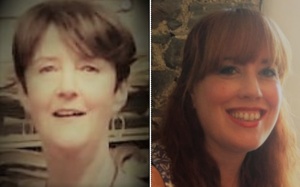
From top A Dublin nursing home; Dr Marita O’Brien (left) and Dr Sarah Donnelly
Dr Marita O’Brien (left) and Dr Sarah Donnelly write:
The Covid 19 crisis has raised questions as to why older people, particularly those living in
nursing homes were not to the forefront in our planning to tackle this pandemic.
The tragic outcomes from this virus for older people in nursing homes are now the focus of media attention and public interest and outrage. How can we ensure that the lost lives do not just become statistics, but instead a beacon for social change in how we as a society provide care and support for older people?
State resources will always be limited. Prioritizing resources to be made available for spending on public services, like homecare, is – to a large extent – a political choice made by the Government of the day in accordance with their interests and political agenda.
It is evident that past policy and funding decisions on meeting the care and support needs of older people have been guided by social and political philosophy based on the principle of ‘subsidiarity’.
Long-term care and support of older people still remains predominantly the responsibility of the individual and his or her family, with the State intervening only when the level of care is beyond the family’s capacity.
Family members provide the majority of community-based care; Care Alliance Ireland
estimate that 89.5% of both personal care and household tasks are provided by family carers.
Public spending on the Nursing Home Support Scheme to support 23,000 people in 2019 amounted to €999 million compared to €450 million allocated for home care to support 53,000 people.
State intervention focuses on supporting the market to meet care needs. Tax breaks were given to developers of private nursing homes and hospitals the estimated cost of State subsidy to be €10 billion. Many of the investors were attracted by tax breaks, rather than an interest or understanding of older people and their care.
In recent times, the move towards larger nursing homes to take advantage of greater economies of scale, ageing demographics, and a long-term care system underpinned primarily by the State-funded Fair Deal scheme, is attracting large institutional investors to the sector.
Many millions have been spent in acquiring nursing homes, e.g. IMMAC spent €33 million acquiring Beechfield Care, InfraVia €70 million acquiring Carechoice.
There has been a casual ‘turning a blind eye’ to the ongoing human rights violations which our older citizens have been subject to.
As a society, we seem to accept it as the norm for older people to live in hospitals for months while waiting for homecare to be made available; for older people to ‘have to go’ into nursing homes as they live in an area where the HSE homecare budget has been used up.
There was no outcry, when the chief executive of the HSE, Mr Paul Reid told an Oireachtas committee meeting, that one of his main tasks would be getting the overall health budget under control, how a set budget would be allocated to home help hours for this year, and that the HSE would not be breaching it. This resulted in long waiting lists for home support, with 7,217 older people on the list at the end of June 2019.
While this did make headlines and generate some debate among politicians, there was little public interest or outrage. Yet, some of these older people waiting for homecare in June 2019, may now be on the list of those who died in nursing homes due to Covid 19.
Ireland has ratified the European Convention on Human Rights (ECHR) and the United Nation Convention on the Rights of People with Disabilities (CRPD). The State including all public bodies and authorities have an obligation to treat everyone equally and protect human rights, yet these principles and obligations are not reflected in current age care policy and practice.
Everyday older people are deprived of their autonomy when making decisions about where they will live as the necessary support to enable them to age in place cannot be accessed.
Many are deprived of their right to family life, having to live separate from their spouses of 50 years. People with dementia are denied homecare as they do not have personal care needs so their right to live independently is ignored.
The State is failing in its duty to protect the lives and wellbeing of our older people. It’s arm’s length approach of abdicating responsibility for the provision of care and support to private bodies and families has raised issues about their ability to intervene where there are protection issues.
For example, where there are allegations of abuse, HSE Adult Safeguarding Social Work Teams do not have a right of entry into private nursing homes; nor can they enter the home of an older person, where a family member acts as gatekeeper and refuses entry.
The Covid19 crisis has thrown up particular challenges in the care of older people and shed a spotlight on our nursing home and long term care sector. Large ‘congregated settings’ such as nursing homes having been shown to be particularly difficult to manage in this pandemic.
The term crisis refers to change and/or opportunity. Let’s seize the opportunity which this crisis has created to reframe aged care as a collective responsibility.
We all need care and support at some stage in our lives so aged care should be recognised as a public good. Like any public good, the principle of proportionality should apply to decision-making about the allocation of resources.
A government knowingly allocating insufficient resources to meet not alone projected, but even current demand for homecare is not proportionate, as it deprives many older people and families of their right to respect for private and family life.
By reframing care and support of older people as a collective responsibility and a public good, we can put in place the policy and resources we aspire to for when we are older and need support.
Like Denmark, care and support at home, in sheltered and assisted living and nursing homes built in small clusters of apartments could become the norm underpinned by public funds with state involvement in service provision and planning at local area level. .
Covid19 above anything else has shown up how fragile life is. It demands a new normal, a society which promotes human rights, prioritises each person’s needs and provides the necessary resources and support to enable all older people to age in place.
As individuals we must take action, use our voice, be tenacious to shift political attitudes and push for significant policy and funding reform if we want a different future as an older person.
Dr Marita O’Brien is an Independent Health Policy Analyst and Co-Director of Co-Creation Support CLG Follow her @Cocreatesupport
Dr Sarah Donnelly is an Assistant Professor of Social Work, School of Social Policy, Social Work and Social Justice, UCD Follow her @sarahmdonnelly1

This afternoon.
Minister for Education Joe McHugh explains ‘his’ decision to cancel the leaving Cert.
There will be four layers to the calculated grades system:
1) An estimation of scores and rankings by a student’s teacher. The teacher will estimate a percentage mark for each student, and also their ranking compared to classmates. This will happen for each individual subject.
2) This will then be subjected to an in-school alignment process, in which subject teachers will work together to finalise their estimated marks and rankings.
3) The school principal will review and sign off on marks, and may return estimated ranking or marks to teachers for further consideration.
4) A process of national standardisation using statistical methods to ensure a common national standard is applied.
What could possibly go wrong?
Meanwhile…

#LeavingCert2020 – How calculated grades work. https://t.co/sjOvCYM6eq @Education_Ire @McHughJoeTD pic.twitter.com/WLEJcmyc3f
— MerrionStreet.ie #StayAtHome (@merrionstreet) May 8, 2020


This afternoon.
Fairview Park, Dublin 3.
Meanwhile…


This afternoon.
Stephen’s Green, Dublin 2.

Gulp.
Purchased this morning.
Paul McCarthy writes:
I seem to have lost my appetite…
It does seem a bNOMNOMNOMNOM

F
This afternoon.
The National Maternity Hospital may be built on State-owned lands following a decision of the Vatican to hand the lands at the St Vincent’s site over to St Vincents Holdings CLG.
Via The Sisters of Charity:
“Today, marks the final movement towards completion of all legal, financial and regulatory matters involved in the transfer of the Sisters’ 186-year involvement in the hospital.
In line with Canon Law, formal approval for the decision to complete the transfer of ownership was requested and was received. “
This, however, does not constitute public ownership of the site.
Social Democrats co-leader Róisín Shortallsaid today’s development should be seen as the ‘first stage’ in a process where SVH CLG transfer ownership of the site to the State.
Ms Shorthall said:
“The new National Maternity Hospital is badly needed and it is regrettable that it is taking so long to get to a situation where this much needed project can proceed. Today’s announcement can only be seen as stage one of a process where the State can legally own this site and stage two must entail the ownership of the site transferring to State.
We also need assurances that the governance structure of the new Maternity Hospital will be fully independent and separate to the corporate structure of St Vincent’s Holdings CLG. The governance structure proposed in the Mulvey report does not provide that independence.
“It has always been patently clear that there could not be full public ownership of a hospital that was on privately owned grounds – whether religious or otherwise – and that such ownership would have significant implications for both the ethos of the hospital and the protection of the public purse.
It would be a serious error for the Government to contemplate the handing over this valuable asset and would repeat the mistakes of the past where taxpayer funded health and education infrastructure is gifted to private interests.”
Meanwhile, could savings be passed on to the victims of the Sisters of Charity?

Then-presidential candidate Donald Trump with retired Lt. Gen. Michael Flynn during a September 2016 town hall meeting
Yesterday was a BIG day for Justice in the USA. Congratulations to General Flynn, and many others. I do believe there is MUCH more to come! Dirty Cops and Crooked Politicians do not go well together!
— Donald J. Trump (@realDonaldTrump) May 8, 2020
This morning/afternoon.
Following the United States Justice Department decision to drop the criminal case against US President Donald Trump’s first national security adviser, Michael Flynn.…
CBS News reporter Catherine Herridge: “The last thing most Americans remember about General Flynn is that he was fired. And that he admitted lying to the FBI. Does the fact remain that he lied?”
US Attorney General William Barr: “Well, you know, people sometimes plead to things that turn out not to be crimes. … And the Department of Justice is not persuaded that this was material to any legitimate counterintelligence investigation. So it was not a crime.”
Herridge: “When a special counsel report was released last year, you were accused by critics of putting your thumb on the scale in the president’s favor. Are you doing the president’s bidding in General Flynn’s case?”
Barr: “No, I’m doing the law’s bidding. I’m doing my duty under the law, as I see it.”
Herridge: “You know you’re going to take a lot of incoming … for this decision. Are you prepared for that?”
Barr: “Yea, I’m prepared for that. I also think it’s sad that nowadays these partisan feelings are so strong that people have lost any sense of justice.”
Herridge: “What should Americans take away from your actions in the Flynn case today?”
Barr: “I was concerned people were feeling there were two standards of justice in this country. … I wanted to make sure that we restore confidence in the system. There’s only one standard of justice.”
Attorney General Barr says what Michael Flynn did “was not a crime” (CBS News)
Getty

Camden Street South, Dublin: Summer 2019

Camden Street South, Dublin: May 2020
Meanwhile…

Westland Row, Dublin: October, 2017

Westland Row, Dublin: May 8, 2020
This afternoon.
Alan Downey writes:
I BIKE Dublin thanks all of our many volunteers for helping create the awareness that has led to upgrades to cycle lanes at Westland Row, Camden Street Upper and Ranelagh village.
Since 2017, we’ve been creating “people-protected cycle lanes” at several locations across the city where people illegally park on cycle lanes.
In the last 3 days (6th May – 8th May), Dublin City Council have carried out quick-build physical segregation at the most popular locations for I BIKE Dublin actions. It’s another success story for I BIKE Dublin and follows previous successful interventions on Andrew’s Street, O’Connell Street, Alfie Byrne Road and Customs House Quay….
In fairness.
Earlier: College Green New Deal

Seán O’Rourke at the first broadcast of Today with Seán O’Rourke after taking over from Pat Kenny on RTÉ Radio 1 at The RTE Radio Centre on September 2, 2013
Today is Sean O’Rourke’s last day on Radio 1. 💙
It’s hard to fit 7 great years into one video. Thank you Sean, you’ll be missed. #TodaySOR @TodaySOR pic.twitter.com/pu1UnS294x— RTÉ Radio 1 (@RTERadio1) May 8, 2020
This morning.
Farewell then Today with Seán O’Rourke.
Our most transcribed radio show.
Often biased, sometimes brilliant, usually professional, in fairness.
FIGHT!
Previously: Sean O’Rourke on Broadsheet