

This afternoon.
Merrion Square, Dublin 2
Susan Whelan asks
Is the [British[ Queen back for another visit?
Or Lord Mayor’s carriage?
Merkel visit?
Miriam O’Callaghan’s ‘runabout’?
We may never know.



This afternoon.
Merrion Square, Dublin 2
Susan Whelan asks
Is the [British[ Queen back for another visit?
Or Lord Mayor’s carriage?
Merkel visit?
Miriam O’Callaghan’s ‘runabout’?
We may never know.

The Transition: From Direct Provision To Life In The Community report, published today
Earlier today.
The results of a study looking at the challenges facing former asylum seekers – who lived in direct provision for several years before making the transition to live in the wider community – were published.
This report, Transition: From Direct Provision to Life in the Community, was funded by the Irish Research Council and involved teams from University College Dublin, Trinity College Dublin, the Irish Refugee Council and asylum seekers.
It was written by Dr Muireann Ní Raghallaigh, of UCD; Maeve Foreman, of Trinity College Dublin and Maggie Feeley, with assistance from Siphathisiwe Moyo, Gabriel Wenyi Mendes and Clíodhna Bairéad.
The study involved interviews with 22 people who had experience living in Direct Provision – 14 men and eight women, ranging in age from 20 to 45.
They came from Algeria, Angola, Cameroon, DR Congo, Guinea, Iran, Nigeria, Somalia, Sudan, Uganda and Zimbabwe. At the time of interview, 12 had already moved out of Direct Provision and ten were in the process of trying to make the transition. The shortest time a participant had lived in DP was 11 months; the longest was 11 years.
There were also interviews with people who work with asylum seekers.
Readers will recall how, since 2000, asylum seekers have been living in Direct Provision centres across the country where they generally share a room and are provided with meals.
They are not allowed to work and adults receive an allowance of €19.10 per week, while €15.60 is now given to each child. The allowance for children was €9.60 a week until January of this year.
When a person is notified by the Minister of Justice that they have been granted permission to live and work in Ireland, they usually receive another letter, usually two weeks later, from the Reception Integration Agency – saying they must leave their direct provision centre within two to three weeks.
The study found, upon former asylum seekers getting this protection, the major struggles facing them include knowing what to do next, finding a place to live and getting the money together for a deposit and the first month’s rent – having not being able to work, and save, while in the Direct Provision system.
The authors of the study noted:
Getting access to social welfare and accommodation are interlinked, yet the systems seem to obstruct one another in allowing people to transition from DP into the community. In order to register with the Department of Social Protection to be able to claim Jobseeker’s Allowance or other entitlements, proof of address is required, but the majority of participants were told that the DP hostel was not acceptable as an address.
“In keeping with the research by Crosscare et al, which found that misinformation or ommission of information was a problem for immigrants accessing social protection, in our study people were often not informed of their full entitlements, including Exceptional Needs Payments and the fact that they could get a reduced rate of Jobseeker’s Allowance while in the hostel. Most of the participants continued to receive the minimal DP rate while they attempted to make the transition, although there were a few exceptions, thus suggesting inconsistency in the system.”
…One participant, who was under 25 years of age and in receipt of just €100 unemployment allowance per week, was paying €93 for rent and electricity, which left him with €7 a week for food and other essentials. This was significantly less than he had been getting in the DP system, where he was provided with all his food.
Having been dependent on the DP system for several years, he was now forced to be reliant on food vouchers from the Society of Saint Vincent de Paul, and the kindness of friends. Even when the Rent Supplement came through, the amount of money provided was usually not sufficient to cover the rent, as is often the case for the general population.
…The net result of an inhospitable and often obstructive social welfare system is increased likelihood of cycles of poverty, where people cannot access their entitlements and are forced to borrow while they wait for the state systems to function appropriately.
Meanwhile, the study’s participants said the following, in their own words:
On a sense of futility while living in Direct Provision:
“It’s just like wasting of life, wasting of years. You wake up in the morning. All you have to do is go for your breakfast. Go back to your room, sleep or watch TV. Come for your lunch. Same thing everyday.”
On a lack of autonomy in the centres:
“You have no say. You lose your self-esteem and this is the thing that is needed to build up again, to feel that you belong. I think that is where the problem is, because after so long when you’re being controlled, when you’re being told to do this way. You can’t cook for yourself. You can’t go and buy food. These are all challenges. What do I buy? Where do I buy? What do I need?”
On mental health issues arising out of living in the centres:
“There’s a huge apathy; there’s going to be huge mental health issues and basically nothing to get up for. There is absolutely nothing [for children] they’ve been playing in the corridors. They’ve been playing on the stairs. They’ve got a big huge field right beside them that they’re not allowed into. DP has a detrimental effect on long term children’s mental health. And there are women we are not seeing…”
“It was hard for me as a man. There were just three men in that hostel, with family. Most of them were single men from Africa. Very lovely people and all, very warm and friendly. After two, three years I tried to go out. I got frustrated about the situation. I feel I am going to be mad. Depression.”
On women and poverty:
“The women are very vulnerable to trafficking and prostitution because of income
poverty.”
On getting refugee protection:
“…before I got my papers I was telling my friends, you know, telling them when we’re all talking about it “if I got my papers I would scream. Everybody would not sleep in the hostel and I would be shouting, I would be knocking on everyone’s door” But that day when I got my paper, I was just so quiet. I was so speechless. I was like, “After all these years.” I just sat down and everyone was crying, everyone was screaming, I just sat down, I called my parents at home. My mom, she couldn’t believe me. She was like, “Don’t joke with me.” And I was like, “I’m not joking, why am I joking, this is very serious”, then she screamed.”
“You don’t believe it because you have been expecting for the paper for a long time. Maybe we imagine something big, but it’s just one paper. One letter and the letter can just give you permission. You read and you read again. Repeat reading.”
On knowing what to do next:
“That’s the thing. It’s a surprise. There’s no structure to inform you what you are supposed to do.”
“I’m just finding that it’s difficult because you don’t know anything. We don’t even have a list what to do next really, like even stage number one when you get your papers, you don’t know where to go and collect the form. We don’t totally have that information.”
On the most vulnerable people not knowing what to do:
“It’s a whole spectrum of people with different needs, different abilities. I would say that there is quite a portion of people there that just don’t know how to deal with it because of the institutionalisation and because of the problems they have brought with them. The ones who need help may be the ones you don’t see.”
“Those that are struggling the most are the ones that are least likely to look for or access services. They are least likely to engage in research or study reports and therefore it’s more difficult to reach the need of those that are furthest removed from services.”
“I told them [the Direct Provision centre manager] I can’t leave because I have a baby. They said to me you have three weeks, you have time. That’s the answer they give me.”
On trying to find the money for a deposit:
“This, I think, just for me. Most people, they don’t have this chance. They are completely stuck in hostels. How the people can pay, for example, €1,000 or €1,200 deposit when they pay you weekly €19 or something …”
On trying to set up a bank account:
“I don’t have any account, bank account. They want a utility bill. I don’t have nothing. Even the letter they gave me from Justice is not helping me. They have to look for the travel document, travel document is not helping me. It’s like useless so you have to get the letter…”
“In Dublin, the first thing that they ask me, they ask me bank account. I couldn’t make that bank account, because all the bank here ask me for proof of address. I was new in that home, and I couldn’t make any address. My friend told me it’s better to make contact with one of these internet [companies] like UPC or something… I called to UPC and I give all my things, all my details. Even the UPC asked me [for] the proof of address. I said, “You are my proof of address.” They asked me, “You have to give us the proof of address.” I was stuck in that situation. I couldn’t make any proof of address to make a bank account…. I couldn’t get any money from the social.”
On trying to get a job:
“Job issue in Ireland is hell, that one is another big challenge, hell. They will always favour their Irish citizens before they think of black people, that one is clear and certain. They will prefer to train an Irish person and give the Irish person the job, rather than accepting a person who got their certificate that will offer the person a job.
“October will make me four years into the country, I have never worked. It’s not that I don’t have the experience or I don’t have the certificate, I got the certificate. I’ve given so so many CVs out, so many CVs outside, I have not attended even two interviews. I don’t know I can say it’s something like racist, I cannot say it’s racist, but the issue of getting a job in this country is one of the greatest challenges I face and even after leaving the hostel.”
Read the report in full here



From top: IBRC logo; Senator Michael McDowell; Tom Hunerson
Yesterday.
In the Seanad.
Senators discussed the Commission of Investigation (Irish Bank Resolution Corporation) Bill 2016 which is at its second stage.
This is the Cregan commission which is examining sales of assets by State-owned IBRC, including the sale of Siteserv to Denis O’Brien €45.4million, while Siteserv owed Anglo €150million.
During the Seanad discussion, Senator Michael McDowell said the following:
As Senator Diarmuid Wilson stated, this commission of investigation arises mainly out of the Siteserv controversy. It is notable that on 25 April 2015, the former chairman of IBRC [Alan Dukes] stated that the board had rejected a Department of Finance proposal to appoint a senior civil servant to the board on the basis that such an appointment would be unsuitable.
In the same article in The Irish Times, he stated a Mr Woodhouse had been kept out of discussions regarding Siteserv because he personally handled Mr Denis O’Brien’s relationship with IBRC. He stated a different executive in IBRC, Mr Tom Hunersen, had handled the Siteserv transaction.
This is worrying because, three years earlier, a posting (in comments) appeared on the broadsheet.ie website suggesting Mr Aynsley, Mr Hunersen and Mr O’Brien were socialising together at the time when the transaction in case was taking place.
It is also worrying that Mr O’Brien was reported in 2014 by The Irish Times as having made a major investment in a Massachusetts-based IT firm in which Mr Hunersen was one of the moving parties. The former chairman of the IBRC claimed Mr Woodhouse had stepped aside from this transaction.
He seems to have re-emerged recently in the context of the story in The Irish Times that many Members of this House read last week. Again, the question arises as to whether there is a connection between him and Mr O’Brien.
A more fundamental question arises as to who is organising the campaign of intelligence-gathering of Mr [Mark[ Hollingsworth, the so-called journalist engaged in coming to Members of this House, among others, and passing himself off as one seeking to identify the source of leaks about Mr O’Brien’s dealings with IBRC. These are very serious issues.
This matter is particularly relevant because, according to the story in The Irish Times, a major British security firm was the recipient of the material collected by Mr. Hollingsworth in Dublin.
We heard later, according to evidence given in the High Court, that a USB key appeared on the desk of Mr O’Brien and that he, for the first time, discovered the material that Mr Hollingsworth was privy to in Dublin.
The use of an English security firm in this respect is not a new phenomenon in Ireland. We should remember also that there was elaborate industrial espionage and surveillance in the context of the takeover of the Independent News & Media group at the time between the O’Reilly interests and the O’Brien interests, if I may use that term.
In that case, newspaper reports indicated that 11 operatives operating from a Dublin hotel were engaged in fairly extensive surveillance of the then managing director of Independent News & Media and that it was eventually determined that an English espionage firm or intelligence-gathering firm called Esoteric lay behind that.
Surprisingly, Independent News & Media, which later came under the control of Mr O’Brien, largely speaking, has been unable to work out who commissioned that investigation.
I am also worried in another respect. It was reported in the media that Irish Water had concluded an extensive contract with a company in the Isle of Man [Another 9 or A9 Business Recovery Services] chaired by Mr Leslie Buckley and, in which, Mr Denis O’Brien was a large investor. He is described in its publicity material as a leading Irish entrepreneur.
The function of that company is to advise Irish Water against the hacking of its sites. It appears the main business of this company in the Isle of Man, which is owned by Mr O’Brien and chaired by Mr Buckley, an associate of Mr. O’Brien, concerns computer security and countermeasures against computer hacking.
Although no particular figure was put on the computer security services of Irish Water, it is interesting that it was suggested in the media at the time that, over five years, €1.2 million was spent on this kind of activity on the part of Irish Water.
One must bear in mind also that at least one of the newspapers controlled by Mr O’Brien has, since the emergence of the dispute about water charges and the legislation we considered in this House some days ago, run a fairly heavy campaign, with many editorials and articles, on the subject of Irish Water. This is a serious matter.
I will finish on two points. Last week in a different context, although Mr O’Brien had a walk-on part in it, the Ceann Comhairle, as Chairman of Dáil Éireann, publicly queried whether it would be necessary to introduce a system of fines to strengthen the powers of the Chair to prevent the abuse of Dáil privilege.
This House has its own Standing Orders, its independence and its own Committee on Procedure and Privileges.
As a member of that committee, I do not believe Members of this House are disposed to abusing their privilege at all, nor do I believe the use of financial penalties to preserve the privacy of important people the Irish political and economic environment should be permitted by this House. I do not believe we should go down that road. It is for the other House to make up its own mind on fines for its Members.
We must remember that these Houses are the defendants in a court action brought by Mr O’Brien. He has sued the institutions of this State. He has also sued individual Members of these Houses on occasion and has threatened to do so on many more occasions.
Free speech is very important. As far as I am concerned, the Cregan commission is dealing with just one set of issues, the activities of the IBRC, only some of which involve Mr O’Brien or companies connected with him.
However, there are other major issues to be borne in mind arising from the Moriarty report, which found Mr O’Brien had indirectly channelled the guts of €1 million to former [Fine Gael] Minister, Deputy [Michael] Lowry, after the awarding of a telecommunications licence to him.
It found that elaborate efforts to deceive the Moriarty tribunal had been made, including the falsification of letters to cover up the involvement of the relevant parties. I wish all speed and every success to the Cregan commission.
I welcome this legislation. Members have an obligation to be fair but not to be entirely impartial but it is important that these issues be dealt with in a process that is fair and impartial and, above all, has the means of establishing the truth, because the Irish people do deserve the truth.
Transcript via Oireachtas.ie
Previously: The Journalist Who Came In From The Cold

RTÉ
Seán McCárthaigh, in The Times (Ireland edition) reports:
RTE has warned that it will remain financially challenged unless there is reform of its public funding model after reporting a loss of €2.8 million last year.
Managers at the national broadcaster, which reported a net surplus of €0.2 million in 2014, have expressed concern at its deteriorating financial position.
RTE blamed last year’s losses on flat income from licence fees combined with the €5 million reduction in state funding in the 2014 budget and exchange rate fluctuations.
It said that cost pressures had caused its finances to slip into the red, despite commercial revenue growth of 4 per cent during 2015, and an emphasis on keeping operating costs under control.
Moya Doherty, the chairwoman, said the resolution of the issues of a national media charge and licence fee evasion would be key to the broadcaster’s funding.
RTE calls for fee reform after €2.8m loss (The Times Ireland edition)
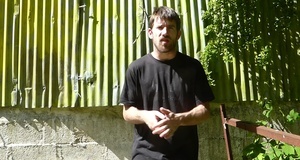
Before You Push The Chair.
By Stephen Murphy, who writes:
The truth of it is that I’ve spent a large part of the past 20 years bitten by the black dog, but I think more people have than will ever let on, but much of the time is spent ‘keeping the best side out’. The days of either being mad or sane are thankfully over, & if we sat down for a chat we’d probably find that we’re only as mad as each other.
I don’t expect many people to watch this to be honest, nor does it matter one way or another. My only hope is that it might find its way to somebody in the darkness, and possibly bring them some bit of light along the way.
Thanks Dublin Says No
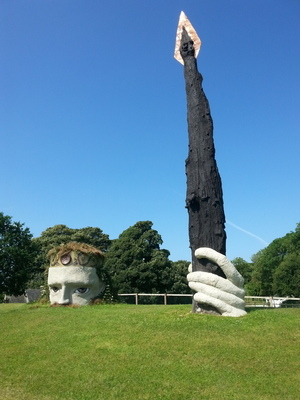
‘sup?
Yesterday.
Moiura Cardiff writes:
Himself did a great job for the last few days. Here he is in the Heritage Park Moate [Co Westmeath] yesterday.


The Casement Sonata is a long poetic work in musical form examining the life, imprisonment and death of Roger Casement (above) by Gavin Friday and Dublin poet James McCabe, at Dublin City Gallery at Hugh Lane, .Charelmont House, Parnell Square N, Dublin 1. To wit:
The Casement Sonata is a long-form ambient poem exploring the life and death of
Sir Roger Casement, one-time knight of the British Empire and the establishment’s most threatening rebel spirit. By transforming the age-old argument between Celt and Saxon into a global conversation about human rights,Roger Casement upended nationalist rhetoric just as much as imperial reasoning, and set the scene for his own isolation and execution. Like Parnell and Wilde before him, Casement was a sophisticated Irishman who threatened the fabric of British hegemony and was deliberately targeted for his sexual behaviour as a reactionary countermove.
FIGHT!
The Casement Sonata will be played twice daily in the Hugh Lane Gallery at 12pm and 3pm from July 21- August 21.
The Casement Sonata (Gavin Friday)
Thanks Noel at Dublin City Council

Yikes.
Mick McGrane writes:
We were only delighted to get a free pair of sunglasses for my nine-year-old daughter when we got her a top from Abercrombie & Fitch [in California]. Then we see the warning written in black text on a black background so I’ll type it here for those who can’t make it out in the photo…
“This product contains a chemical known to the state of California to cause cancer and birth defects or other reproductive harm” What. The. Fupp.
Anyone?

https://www.youtube.com/watch?v=usez7AFB45I
Time Bomb.
A new sketch from Aidan Lawlor and Luan James Geary.
Previously: An Exchange Of Fire
Thanks Aidan
