If you have a daughter or son,
And they don’t think religion is fun,
Then show them this sign,
God’s word’s now online
With emojis you’ll have their hearts won.
John Moynes
Pic: bibleemoji



If you have a daughter or son,
And they don’t think religion is fun,
Then show them this sign,
God’s word’s now online
With emojis you’ll have their hearts won.
John Moynes
Pic: bibleemoji


From top: Frank O’Rourke TD; Mr O’Rourke’s journey from Celbridge, Co Kildare to Leinster House, Dublin 2 according to Google Maps.
Intrepid expenses hound Ken Foxe writes:
A Newly-elected TD is being paid an extra €16,000-a-year in tax-free expenses because his drive to work is 500 metres above the threshold for politicians that live close to the Dáil.
Fianna Fáil’s Frank O’Rourke, who was elected in the Kildare North constituency, is being paid travel and accommodation expenses of more than €2,100 per month.
Under current rules, TDs who live less than 25 kilometres from the Dáil are paid €9,000 a year tax-free to cover their travel costs to work, and also for travel within their constituency.
However, once they live above a threshold of 25 kilometres – their rate of payment makes a dramatic jump of more than 180 per cent.
In the claim form submitted by Mr O’Rourke to authorities at Leinster House, he has said the distance that he must travel to the Dáil each day is exactly 25.5 kilometres.
However, when the trip from his home to Leinster House is entered into Google Maps, the distance is said to be 24 kilometres.
Despite that, Mr O’Rourke is correct and when the trip was measured independently, it came in at just above 25 kilometres.
Mr O’Rourke said:
“I was asked for the distance. I set the clock on my car and on three occasions and following the only way I can go – no long way or manipulation of it whatsoever, I got 25.5 kilometres and on another day I got 26. I averaged it at 25.5 kilometres.
“If it was 22, it would have gone down [as that]. I’m not into that sort of carry-on or stuff whatsoever.…”

Ah here.
By Mick Flavin

What you may need to know:
1. Successful business tycoon Tom Brand (Kevin Spacey) is turned into a cat called Mr. Fuzzypants.
2. Ah here.
3. The double Academy Award winner and artistic director of the Old Vic plays a talking cat.
4. Christopher Walken seems to do an awful lot of these “magical shopkeeper” roles. If there’s ever a Mr. Benn movie or a remake of Gremlins (1984) he’s sure to be involved.
5. Tim Allen must’ve passed.
6. Broadsheet prognosis: We need to talk about Kevin.
Release Date: August 5.
(Mark writes about film and TV at WhyBother.ie)
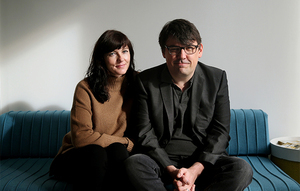
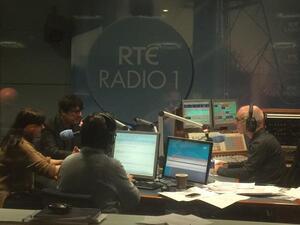
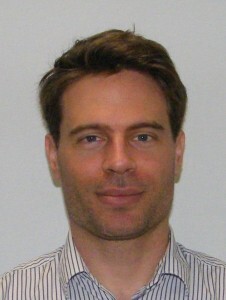
From top: Graham Linehan and Helen Linehan; The couple on the Ray’ D’Arcy show on Radio One, October 19, 2015; Dr Julien Mercille
Talk of ‘balance’ is usually used to push the media further toward the conservative end of the spectrum.
Dr Julien Mercille writes:
Last week, the Broadcasting Authority of Ireland (BAI) upheld a complaint against RTÉ’s The Ray D’Arcy Show over an interview on abortion.
In October, Ray D’Arcy interviewed the creator of Father Ted, Graham Linehan, and his wife Helen. The couple talked about their decision to have an abortion because their foetus had a fatal abnormality.
Two people made formal complaints to the BAI that the show was not “balanced” because anti-abortion views were not given enough weight.
It’s not the first time such complaints were made.
This brings up again the issue of “balance” in journalism. Do we need it? Should it be something that is measured by an authority like that BAI, with powers to sanction broadcasters that do not balance their shows with two opposing viewpoints when an issue is discussed?
In Ireland, those matters are regulated by the BAI’s Code of Fairness, Impartiality and Objectivity that draws on the Broadcasting Act 2009.
It is stipulated that broadcasters must present news in a way that is “impartial”, “independent” and “objective”. In other words, when a viewpoint is presented, it needs to be balanced with an opposing view.
However, it is not difficult to show that such rules are completely misplaced. The job of journalists is not to report in a “balanced” way—it’s to report the truth, as far as possible.
Think about it. Imagine RTÉ broadcasts a one-hour show on World War 2 and insisted on the inclusion of 30-minutes on the pro-Nazi view.
Or, during a hour-long show on nature, do we need 30 minutes about creationism so that we are told how the Bible understands the evolution of species to provide “balance” to the scientific consensus on evolution? It doesn’t make any sense to me.
Opposite viewpoints should be presented when there is a legitimate debate to be had on a given topic, but that’s in cases where the truth is disputed or murky.
In any case, there’s no balance at all in the media. It presents mostly viewpoints that reflect the interests of economic and political elites. This is why it was strongly pro-austerity and never bothered questioning the housing bubble seriously.
And by the way, you don’t need to be a so-called “radical” to observe this. Journalist Pat Leahy said not so long ago in the Sunday Business Post exactly the same.
He wrote:
“Newspaper proprietors are usually rich men whose chief political agenda is to see governments make the world safe for rich men to become richer.”
But the BAI won’t hold the media to account because it doesn’t present enough progressive viewpoints. In fact, talk of “balance” is usually used to push the media further toward the conservative end of the spectrum.
In any case, two other issues are rather outrageous about the Broadcasting Act 2009. It states that broadcasters should not present anything (1) that “undermine[s] the authority of the State” or (2) anything that is “likely to promote, or incite to, crime”.
The first is beyond belief.
It amounts to saying that broadcasters cannot challenge what the State does (sure, you’ll hear all sorts of denials that “no, journalists can still challenge the government”, but just read the line above again, it’s plainly obvious).
So here the whole rhetoric of “an aggressive media holding the government into account” crumbles. It’s amazing that the State is arrogant enough to state explicitly that it doesn’t allow journalists to challenge it.
The second is also dangerous when one considers that what is deemed “legal” and “illegal” is in many respects decided by the powerful.
The implications are revealing. It means, for example, that the media cannot promote abortion, since it is a crime in Ireland. It cannot either promote illegal drugs, I suppose. Nor can it promote any form of civil disobedience such as challenging the water charges.
Sure, you’ll hear that in practice, we do hear all sorts of views about abortion and illegal drugs. But the principle that the media must uphold the law across the board is very revealing about the sheepish character that is expected of journalists.
In short, codes of conduct like the BAI’s have a chilling effect on media organisations and journalists who would like to take a more dissenting stance toward the establishment.
Julien Mercille is a lecturer at University College Dublin. Follow him on Twitter: @JulienMercille
Top Pic: Brian Lawless/PA Wire


MORE to folly.



Yesterday.
Dollymount Beach at Bull Island, Clontarf, Dublin 3.
Donal Moloney writes:
Mercury rises as punters & paddlers ‘Battle for the bay’ at Dollyer

Blimey.
Stephen Devine writes:
Beautiful sunset over Dublin yesterday….
Meanwhile, tonight in Howth…

Via Adrian Wreckler

Today.
Location unspecified.
(Thanks James)