

Now.
leecrutchley/thisisnthappiness



Hmmm.
Off-hire?
Anyone?
Via Gombeens on the rise (Rabble)
Pic: Ciaran Tierney
Thanks Marklar and Squid

‘sup?
This morning.
Garsehole writes:
Great Scott! DMC-12 in Clifden , Co Galway
Meanwhile, in Strandhill, Co. Sligo yesterday…

Murtles writes:
Here’s another picture of five DeLoreans which visited Strandhill yesterday and left this morning. They’re on a tour of Ireland I think. Heading North today.



From top: Patricia King, general secretary of the Irish Congress of Trade Unions this morning at the Labour Court; Luas commuters; Jimmy Dignam
As Siptu and Transdev meet at the Labour Court to resolve the Luas driver’s dispute a Workers’ Party activist sets out the case against Transdev.
Jimmy Dignam writes:
The LUAS strike is not about how big the pie is – it’s about agreeing the fairest way of sharing the spoils.
And Transdev’s behaviour shows that privatising our services means increasing spoils for corporations – at the expense of workers and the state.
Over the past twelve years, the Luas service has been a stunning success – not only for the commuters it serves, but also for its operator, multinational transport giant Transdev.
In 2013, the company’s EBITDA (Earnings before Interest, Taxes, Depreciation, and Amortization – a useful proxy for company profitability) were €1.54 million, while in 2014 they were €1.24 million.
In 2013 it paid a dividend of €1.68 million to its shareholders while its parent companies, Veolia and Caisse des Dépôts et Consignations, generated profits of €246 million and €1.8 billion, respectively, in 2014.
In addition, Irish profits are likely to rise significantly when the Red and Green lines are joined in 2017. And given that Transdev is reportedly considering bidding for bus routes when they are put out to tender later this year, they obviously still view Ireland as a lucrative transport market.
Transdev have succesfully manipulated the public mind into seeing them as a struggling company, burdened by unreasonable pay claims. But what we can be sure of is that the shareholders are getting their fair share – why not the workers?
So the current dispute is not about workers bringing an ailing company to its knees. Rather, it is about workers seeking to negotiate with a profitable company for an improvement in their terms and conditions. As one worker put it last week when interviewed by The Journal: “We’re looking for a fair slice of the company we’ve helped build”.
After years of listening to voices in the establishment decrying the plight of the private sector worker in comparison to their ‘overpaid’ public-sector counterpart, one might have expected the media to swing in behind the Luas workers in their struggle for better conditions.
Yet, the artificial, media-constructed divide between public and private sector workers has taken a 180 degree turn over the last number of months.
From the vilification of public sector workers at the height of the economic crisis we must now listen to denunciations of greedy private sector tram drivers holding the population to ransom. Nurses, doctors and teachers, once denounced, are now lauded in comparison – one suspects there is a more general anti-worker agenda at play here.
The divide and conquer tactics are transparent and almost farcical – we hear that a Junior Doctor is paid less than a Luas Driver – The Journal debunks this one showing that a Junior Doctor’s average starting pay (including average bonus and overtime) is greater than that of a Luas Driver in year 1 and by year 10 is almost two times greater.
When I joined them on the picket line last month I was struck by the conviction of the Luas workers’ beliefs.
They recounted the intense concentration required while driving through Smithfield at midnight, as drunk young people stumbled out onto the tracks – and how a seemingly small increase in unbroken driving time, as proposed by Transdev, would in fact go against best practice health and safety advice.
They also spoke passionately about how unfair it is that a worker is paid less in the private sector than the public sector for doing fundamentally the same work.
Luas Drivers wages are ‘significantly lower than those of Dart, Suburban or Irish Rail Mainline drivers’.
How is it that, for those at the top, we hear enormous public salaries justified by a need to compete with the private sector, but for the ordinary workers, it’s considered acceptable to earn less in a private company?
Meanwhile, LUAS workers accused of greed and self-interest rejected outright proposals from Transdev that new entrants would earn less in real terms than colleague who started five years ago. Its an admirable demonstration of solidarity with young, precarious workers.
The contrast between this solidarity, and the profit-hunger of Transdev is worth dwelling on.
Why is it we believe that a massive, profitable multinational company has the right to increase its profits indefinitely, while workers’ demands for a commensurate increase in wages is regarded as greed?
Transdev’s consistent profitability over successive years shows that the LUAS is one of the most profitable elements of our transport system.
But currently, as a state we lease the provision of this profitable service out to a private company to benefit from. It will always generate more revenue than an isolated bus route in rural west Cork – I imagine Transdev won’t be leasing that service provision from the state any time soon.
If Transdev are not willing to pay workers a decent wage to do a valuable job, then let us do them a favour; end the state’s contract with Transdev, and take LUAS provision into public ownership, a valuable asset we’d be happy to manage, pay workers a decent wage, and improve the financial sustainability of Ireland’s public transport system as a whole.
Jimmy Dignam is a member of UNITE’s Youth Committee and a Workers’ Party representative for Dublin Northwest Follow him on Twitter: @JimmyDignamWP

https://www.youtube.com/watch?v=9Bsh4O3quHQ
The art of exer sphering.
With a sliothar.
Naoise writes
A statue dedicated to Kilkenny hurling is being unveiled today in the city…meanwhile a young Kilkenny man, called the Black Gambit, has released this video (above) of sliothar manipulation….

Tuesday night/Wednesday morning.
Cian Walsh writes:
Watching Fungi under moonlight. Dingle. Co.Kerry


Oh.
Last night.
Leinster House , Kildare Street, Dublin 2
An Irish Water protestor attempts an impromptu interview with former Minister for the Environment Alan Kelly with unwelcome consequences.
Sam Boal/Rollingnews
Meanwhile…

Fair enough.
Sam Boal/Rollingnews

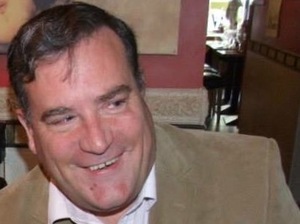
From top: Enda Kenny unveiling his junior ministers last week: Dan Boyle
The Taoiseach has missed the opportunity to promote each of his party’s TDs to ministerial rank.
Dan Boyle writes:
Twenty seven of the fifty Fine Gael TDs in Dáil Éireann now hold ministerial rank. Its backbenchers now constitute a minority of its parliamentary party.
In the days of old politics some of these could be partially placated by being appointed to chair one of the many Oireachtas committees that existed.
Oireachtas committees are not as numerous as they once were. This though could change. What will certainly change is the chair of these committees being in the gift of the government of the day.It’s more likely the majority of these roles will be played by opposition TDs. In a more accountable system they all should be.
There are other baubles to appeal to the injured ego. Heading delegations to British Irish Parliamentary Assembly, to the OSCE, to the World Parliamentary Forum; gives potential for foreign travel to mitigate the slighted self importance of some.
The problem for Taoiseach is that he doesn’t seem to be all that interested in accountability. He does care a lot about managing his party. He now has twenty three TDs who are not seen to be that important ‘up in Dublin’.
He should have seen through the courage of his (slight) convictions. He has missed the opportunity of promoting each of his party’s TDs to ministerial rank.
Finding suitable titles might prove a challenge. He could start by resurrecting some of the department headings he has thought now longer necessary for a cabinet position. There are other templates in place that might also help.
The role of Minister of State has in the past been used to develop a cross departmental approach to specified, often minority, interest groups.This approach has been used for women, for older people and younger people and for people with disability.
There hasn’t always been a sensitivity in how these offices should be titled. At a time, pre-politics, when I was involved in youth work, I thought that having a Minister for State for Youth Affairs was only asking for trouble.
A brave Taoiseach would appoint a Minister for State with special responsibility for the Travelling Community.
Once, in the Rainbow Government of 94-97 Liz McManus as a Democratic Left Minister of State, played something of this role but it related mainly to accommodation.
If the Taoiseach was honest about the political intent behind Minister of State appointments he would give them more appropriate titles.
I would like to suggest a Minster of State with responsibility for Funeral Attendances. Located in the Department of the Taoiseach, this Minister of State could assist in the Chief Whip’s office to ensure that all the appropriate funerals are attended, without key votes being missed.
Don’t laugh. It will save some civil servant reading the death notices.
Dan Boyle is a former Green Party TD and Senator. Follow Dan on Twitter: @sendboyle
Rollingnews


