




MORE to folly.



MORE to folly.


This afternoon.
Citywest Hotel
Labour Party General Election candidates arrive for a post mortem on the election and to discuss the future of the party’s leader, Joan Burton.
From top: Brendan Howlin; Pat Rabbitte and Alan Kelly
Sam Boal/Rollingnews

The Save Our Community Meeting in the Anner Hotel Thurles, Co Tipperary last October
Up to 1,500 people gathered at a meeting in Thurles on Thursday night to call for urgent reforms of bail laws to help tackle a growing “epidemic” of rural crime
Senior gardaí were present for the meeting, including Assistant Commissioner Jack Nolan and Chief Supt Catherine Kehoe for the Tipperary division.
The gathering heard calls for a series of tough measures to help combat the problem, such as electronic tagging of convicted criminals, stronger trespass laws and greater Garda resources.
Calls for bail law reform to tackle rural crime ‘epidemic’ (Irish Times, October 8, 2015)
Burglaries were down by 5 per cent, 26,246 report crimes last year. That development will come as a relief to the Garda and Government who had both been under pressure over the continued rise in burglaries.
The debate about rural crime was a feature of the election campaign, with claims that burglaries were occurring most frequently in rural areas, despite data showing the problem was growing much faster in Dublin.
…Like drugs offences, gun crime has declined significantly, halving in some areas…
Murder rate falls to 21 year low but threats to kill rise, CSO finds (Irish Times, today)


Mmmf.
Annie West writes:
Thanks to the gifted Sligo photographer James Connolly we can now bring you the Benbulben 1916 flag…
UPDATE:

The flag up close.
The reason?
As part of our ongoing centenary celebrations, some members of the Fr Michael O’Flanagan Memorial Group made it to the summit of Benbulben at lunchtime on Easter Monday to fly a tri-colour.
Fr O’Flanagan instigated the seditious practice of displaying the tri-colour in Cliffoney in the summer of 1915.
In her book Crossing Highbridge, Maureen Waters describes how her father, a member of the Grange Volunteers, climbed Benbulben and planted a tri-colour there in 1916 to let the people of North Sligo know the Rising had begun.
Cliffoney Remembers Fr Michael O’Flanagan (Facebook)
Thanks David Lawless

‘sup?
Shane Rooney writes:
I know you don’t normally do this but my coach left a runner behind on Dun Laoghaire pier [Dun Laoghaire, Co Dublin, the other one (above) looks lonely. HELP…
UPDATE:
Shane writes:
MIA location has been confirmed:”left shoe was last seen Monkstown Dart Station at approx 4pm on Easter Monday”


From top: Anne Marie McNally and fellow Soc Dem Gary Gannon and with Erica Fleming on Patrick Street, Dublin on Easter Sunday
How do you celebrate the birth of the Republic when its ideals have essentially been cast aside by successive Governments.
Anne Marie McNally writes:
I’m conflicted. I’ve friends who are conflicted. We’re conflicted see, about the conflict – or more accurately-the commemoration of the conflict, the 1916 conflict to be precise.
I want to celebrate it. I, quite literally, was raised on songs and stories about heroes of renown. I could spit from my house to Kilmainham Gaol and many afternoon strolls with my dad ended with a pint in The Patriots Inn.
Luke Kelly’s Foggy Dew was the background to many a family evening. I was surrounded by and steeped in the history, the heroism and the patriotism of those who fought and died for the cause of Irish freedom in 1916.
Last Sunday I walked up Patrick Street following the Military parade and feeling a real sense of occasion. I got to College Green and I stood and watched the big screen as Captain Kelleher read the Proclamation to a deathly silent Dublin city.
I won’t lie, I shed a tear. It was a powerful moment that will stay with me for the next hundred years – and that was the point wasn’t it? – to create a memory of our past for the current generation and to keep our history alive within us. In my case, it worked.
From College Green I pushed past the throngs of people and circumnavigated the various barricades and found a circuitous route to Marlborough Street where people were gathering to highlight another facet of our nation’s legacy – our homelessness crisis.
Erica Fleming, the young mother who featured on RTÉ’s documentary ‘My Homeless Family’, had organised the protest to lay bare the stark reality between the Republic that was proclaimed in 1916 and the Republic we find ourselves living in today in 2016.
While those dignitaries who were actually allowed onto O’Connell Street on the day sat and celebrated the visionary men and women of 1916, just two streets over we stood and lamented the fact that their vision has never been achieved.
Never was that more manifest for me than standing surrounded by parents and their children who had arrived from various hostels and hotel rooms across the city while a triumphant flypast soared overhead.
There has been harsh criticism in recent days of those of us who sought to use the words of the proclamation to highlight its unfulfilled promise.
They shout at us about it not literally meaning children when it spoke of cherishing all the children of the nation equally. Well d’uh, but you know what – those visionaries certainly weren’t excluding actual children from that phrase and why wouldn’t you use it to highlight the horrific injustice of 1800 of our children living in a 2016 Republic without a home?
When they spoke of cherishing the children they referred to every person in Ireland, the 1800 homeless children are just the tip of the iceberg, if we take it at its most literal and use it to highlight where we have failed across the board then your eyes would water.
It has therefore made very little sense to me that those detractors would seek to jeer those of us using the ideals of the proclamation to make a statement about the absence of those ideals from our society today.
So my conflict was thus – I wanted to commemorate, I wanted to remember, and I wanted to burst with pride in memory of our strike for freedom and the brave men and women who made the ultimate sacrifice to deliver the Irish Republic.
I also wanted to shout from the rooftops about how we have failed to deliver that Republic, how a Republic that fails to ‘cherish all the children of the nation equally’ is one not worthy of the name, and how I felt hypocritical celebrating the birth of that Republic when its ideals have essentially been cast aside by successive Governments.
I’m not filled with romanticism for the 1916 figures, I realise that their beliefs and many of their aspirations were founded in conservative religious ideologies that I would eschew and which – as DeValera’s reign proved – had a warped vision of what equality actually was, however, their words and actions about equality and civil and religious freedoms, taken separate to their own personal beliefs, were visionary and 100 years later I still desire a Republic based on those ideals.
So while I honoured and commemorated the events and the people, I celebrated the vision not the delivery and that allowed me to stand side by side with Erica and my colleagues and continue the fight that began 100 years ago – the fight for the delivery of a true Republic
Anne Marie McNally is a founding member of the Social Democrats. Follow Anne Marie on Twitter: @amomcnally
.
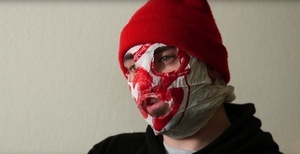
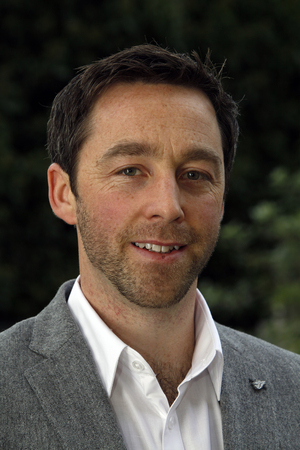
From top: Blind Boy of The Rubber Bandits on Channel 4 News; Dr Rory hearne
Ireland’s ‘millennials’ are a generation in crisis.
But they are fighting back.
Dr Rory Hearne writes:
Last week Blindboy Boatclub of The Rubberbandits was on Channel 4 News talking about how the recession has stolen ‘their 20s’ from young people and that there’s “huge amounts of suicide, jumping into rivers, and emigration” and for “a lot of young Irish people, they don’t see a future.”
Blindboy is absolutely correct. Ireland is no country for young people and families.
The recession and austerity had a devastating impact on younger generations (particularly those now in their 20s and 30s – the so-called ‘Millennial’ Generation or Generation Y) and the recovery has failed to improve things.
A global debate is taking place about the plight of the Millennial Generation and the ‘intergenerational inequalities’ they face. The Guardian ran a series of articles on ‘The Trials of Generation Y’ where it described how they face “a perfect storm of debt, housing and joblessness.”
From high unemployment in Spain and Greece, and massive debt and stagnant wages in the US, to the UK where they face high house prices locking them out of home ownership and into extortionate, dismal rental arrangements .
They are the the Jilted Generation – set to be the first generation to do worse than its parents. Studies have also shown this generation to suffer from anxiety at much higher rates than previously.
The Millennial generation in Ireland have it even worse with the biggest impacts in terms of ‘generational inequality’ hitting them from the austerity related public sector recruitment embargo, lower pay rates for new public sector employees, casualisation of employment, exorbitant child care costs and an unprecedented housing crisis.
The public and civil service (e.g. guards, nurses, teachers, civil servants) have traditionally been a huge area of employment for new college graduates but it was effectively shut off to young people with the public sector recruitment moratorium introduced in 2009 by the Fianna Fail/Green government.
It was continued by the Fine Gael/Labour government until just last year when it was lifted in some areas.

The impact of this can be seen in the dramatic fall in numbers employed in the public sector from 369,000 in 2008 to 327,100 in 2015 (see graph above).
The result is a generation shut out from the public sector. We now have the situation where the average age of staff in the Civil Service is close to 50 and just 4 per cent are under 30.
To make matters worse the younger generation faces a further discrimination. New entrants to the public sector since 2011 are on a 10% lower pay scale than those employed prior to 2011 (this is on top of the 14% cuts to all public sector employees).
This issue was raised at the teacher’s conferences this week where they spoke of the inequality and unfairness of this two-tier pay scale which will result in young teachers receiving up to €300,000 less than their older colleagues over their career.
TUI General Secretary John MacGabhann explained to the Irish Times that these young teachers “cannot afford rents, are being forced – by poverty – to give up part-time jobs, to emigrate…they cannot plan, have no creditworthiness, have their personal independence compromised. Why? Because government marked them out for especially punitive treatment.”
On top of the public sector moratorium and the lower pay rates – new entrants to the public sector have also faced a growing problem of ‘casualisation’ or ‘precarious’ contract work.
This is where workers are employed on short term temporary or fixed contracts – often for six months or a year – and then either let go or the contract is extended on a further short term basis.
The campaign group Third Level Work Place Watch explains that younger researchers and teaching staff (tutors and lecturers) have no job security at all, face exploitative rates of pay and worse working conditions. This casualisation also erodes academic freedom and is a major threat to higher education.
This problem of precarious and low paid work is affecting younger workers across the economy. It is part of a ‘race to the bottom’ as employers reduce wages, hours of employment, benefits, and job security.
The most extreme form of casualisation has been experienced by those forced into unpaid internships and Jobbridge schemes which are being used by employers as cheap labour for restaurant staff and even teachers, community workers and psychologists.
I experienced this precarious work as a community worker and contract lecturer. I went from short term contract to short term contract and I felt forced to leave lecturing as it was explained to me that there was little prospect of my contract being extended ‘because of the impact of austerity cuts to the university budgets’.
It is hugely stressful working in such situations, particularly if you have significant financial responsibilities such as young children and a mortgage (both of which I have).
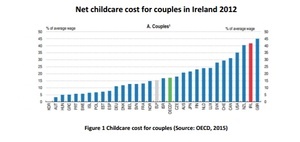
Childcare costs I can tell you for certain are a huge impact on parents. Ireland has the second highest childcare costs in the OECD for couples and the highest in the OECD for lone parents.
For others it is extremely difficult to plan your future such as getting a mortgage or even having a family while you are in such an insecure employment situation. And of course it’s much worse for those unemployed – our youth unemployment rate is still 20%.
Housing is a crisis for this generation. Whether it is being stuck in mortgage arrears, facing escalating and unaffordable rents with no long term security of tenure or an inability to purchase your own home. The harshest end of this is felt by those pushed into homelessness.
All of these issues have created a gaping hole in our generation as it has forced 250,000 (mainly young people aged in their 20s and 30s) to emigrate between 2010 and 2015.
But it doesn’t have to be like this.
These all result from political choices and, therefore, different political choices can achieve equality for all generations and all households. This means prioritising affordable housing and childcare, secure and well paid jobs, a top class public health system and a genuinely free and fair education system.
There is hope for this jilted generation from the increasing numbers of young people involved in campaigning for social justice and equality.
These can be seen in the Marriage Referendum, growing housing campaigns (e.g. Dublin Tenants Association, Housing Action Now, the Irish Housing Forum), Third Level Work Place Watch, the young workers network, young teachers, new student activists (e.g. Seanad candidate Lynn Ruane), Right2Water, mental health campaigners and the Repeal the 8th Campaign.
The courage of this new generation was most evident last weekend when the young homeless mother Erica Fleming organised a protest at the housing crisis and how it represents a failure to achieve the Republic of Equality that is outlined in the Proclamation.
[I am hoping to raise awareness of these issues by making them central to my campaign for election to the Seanad. In a short video I explain the reality for Generation rent, debt and job insecurity. You can watch it here]
Dr Rory Hearne is a policy analyst, academic & social justice campaigner. His column appears here every Wednesday. Rory is an independent candidate for the Seanad NUI Colleges Panel. He writes here in a personal capacity. Follow Rory on Twitter: @roryhearne


Three Ireland roaming charge changes (top) and Three UK’s free roaming promo (above)
Roaming Rob writes:
Just received a text from 3 advising me that roaming charges are to be reduced from April 30th. And yet the same company in the uk offers free roaming: In their own words “roaming charges suck”
Anyone?
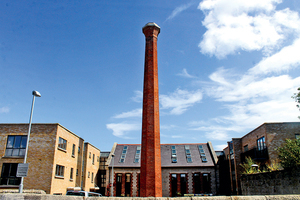

The former Donnybrook laundry compound in Dublin 4 (top) is currently up for sale (centre) and is expected to sell for around €3million.
The Sisters of Charity ran the laundry from 1883 until 1992 when the order sold it to a private owner who, in turn, ran it as a commercial laundry until 2006.
A former resident, who didn’t wish to disclose her name, spoke to RTÉ journalist Brian O’Connell about the year she spent in the former Donnybrook magdalene laundry in the 1970s. Independent Dublin City Councillor Mannix Flynn was also interview.
The woman returned to the laundry with Mr O’Connell – her first time back at the laundry in around 40 years.
As they walked, she explained how she was in the Navan Road mother and baby home until she was two and a half, before living in several different Catholic-run institutions before eventually being sent to Donnybrook in her late teens.
After she left Donnybrook she didn’t really speak about the magdalene laundry until the Residential Institutions Redress Board got in contact with her.
“I wasn’t allowed in to talk to them [the redress board]. The solicitor talked to the redress board for me, which I was annoyed [about] because I wanted to go in and tell my story. And the way I was treated in the magdalene laundries, and in industrial schools, do you know what I mean? In the orphanage it was very bad, very bad. We were starving and we never got proper food to eat, not proper clothes. I never had proper jumpers, I used to darn all the jumpers.
“And my hair used to be shaved to the scalp. We used to rob the orchards, do you see, you know? And if you were caught robbing in the nun’s orchard, your hair would be shaved. I was locked into a press for three or four days without a bit to eat. That’s the truth, I wouldn’t tell you a lie.”
The woman was locked in the press because she robbed apples out of hunger.
She then described what life was like in the Donnybrook laundry.
“[It was] torture, torture. The work in there, we were so tired at night going to bed, do you know what I mean? And then up at six or half six in the morning to scrub the floors… and then marched in to church for prayers. And then down to work again. You might get bread and dripping or bread and Stork margarine or a cup of cocoa for breakfast in the morning….They ruined our lives. On my deathbed I’ll be thinking about it. I’ll never forgive them [the orders].”
“We were never allowed to talk to each other, even in the dorms at night, we were never allowed to talk. We had no education, they took away my childhood, I was just traumatised. I got electric shock [treatment], I went to commit suicide when I came out, over the convents. I took an overdose of tablets and everything. Thinking back on all this, what had happened me: why my mother left me?”
The woman is still looking for her mother.
“I asked nuns where’s my mother. ‘Who’d have the likes of you’ – that’s what I was told.”
Listen back in full here
Meanwhile…
[Buyers] might well have included businessman Denis O’Brien, who has already assembled a valuable development portfolio in Donnybrook…
Magdalene site in Donnybrook on market for €3 million (Irish Times)
Pic: NewsFour.ie
